

P0442 on 1998-2002 Subaru Forester: EVAP Small Leak Causes and Fixes
For a first-generation Subaru Forester, a P0442 code is most often caused by a rusted fuel filler neck, which creates a small leak in the emissions system. This is an extremely common failure for these vehicles, especially in the 'salt belt'. The second most likely cause is a worn-out or loose gas cap. Inspecting the filler neck for corrosion behind the rear passenger-side wheel is the first vehicle-specific step.
- Always check the gas cap first; ensure it's tight and the seal isn't cracked. Use an OEM replacement if needed.
- The most likely cause specific to a 1998-2002 Forester is a rusted fuel filler neck. You must inspect it visually by removing the rear passenger wheel and splash guard.
- If the vehicle is hard to start after getting gas, the EVAP purge valve is a strong suspect.
- If you can't find the leak visually, a smoke test performed by a mechanic is the fastest way to a definitive diagnosis.
What's Unique About the 1998-2002 Subaru Forester
While many vehicles can trigger a P0442 from a simple loose gas cap, first-generation Foresters (and other Subarus of this era like the Impreza and Legacy) are particularly known for a specific failure point: the fuel filler neck. This metal pipe, which connects the gas cap to the fuel tank, is highly susceptible to rusting through, especially in regions that use road salt. Moisture and debris get trapped behind the plastic splash guard in the rear passenger-side wheel well, causing corrosion that creates pinhole leaks and triggers this code. This issue is so prevalent that it should be the primary suspect after the gas cap has been ruled out.
Symptoms You May Notice
- Check Engine Light is on
- A faint smell of gasoline, especially when parked in an enclosed space like a garage or after filling up.
- Difficulty starting the vehicle immediately after refueling (this can point to a faulty purge valve).
- Replacing the gas cap repeatedly when the actual problem is a rusted filler neck. The symptoms are identical, but a new cap won't fix a leak in the pipe it screws into.
- Replacing the wrong EVAP valve. The system has both a purge valve (engine bay) and a vent valve (near canister). Symptoms like hard starting after refueling point specifically to the purge valve.
Most Likely Causes
- Rusted Fuel Filler Neck 🔴 High Probability → Shop Fuel Filler Neck The design allows moisture and road salt to collect behind the wheel well splash guard, leading to accelerated corrosion of the metal filler pipe. This is a very common, well-documented issue on Foresters and other Subarus of this generation.
How to confirm: Remove the rear passenger-side wheel and the plastic splash guard. Visually inspect the entire length of the filler neck for rust, flaking metal, and pinholes. The rust is often worst on the backside of the pipe and the smaller breather hose that runs alongside it.
Typical fix: The filler neck must be replaced. 🎬 Watch: Step-by-step tutorial on replacing your Forester's fuel filler neck. It is recommended to also replace the associated small valves and hoses attached to it at the same time, as they are often brittle or rusted as well.
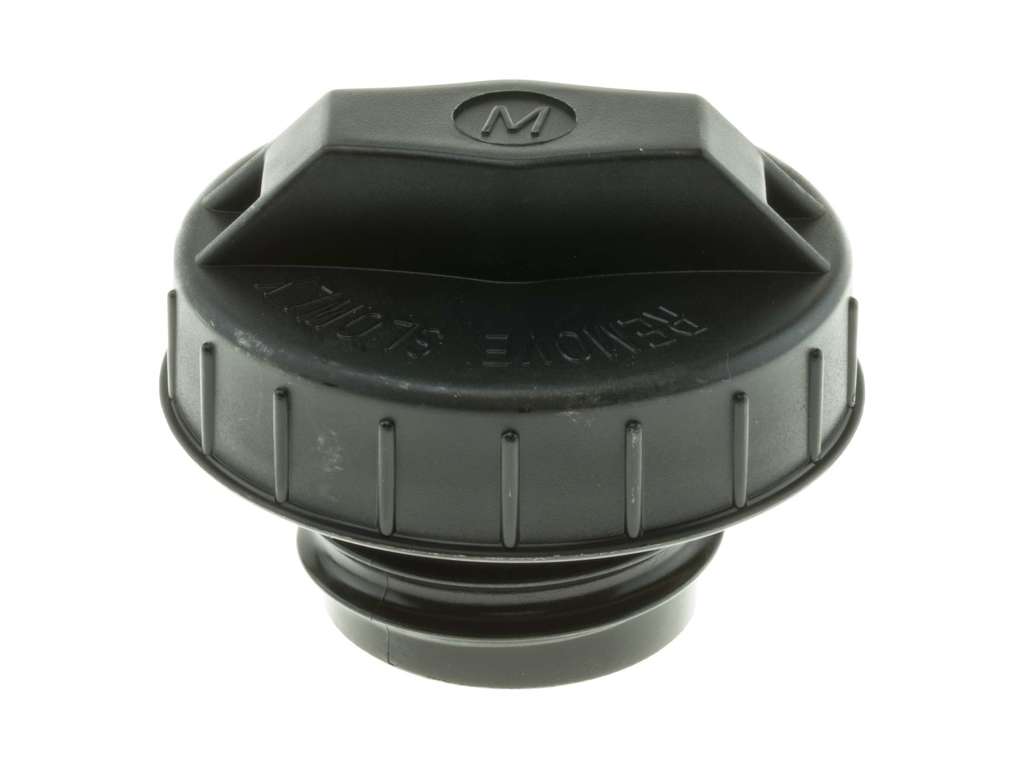
Est. part cost: $100-$250 - Loose or Faulty Gas Cap 🟡 Medium Probability → Shop Fuel Tank Cap The rubber O-ring on the gas cap can dry out, crack, or become hard over time, preventing a proper seal. This is a common failure on all vehicles, but should always be the first check.
How to confirm: First, ensure the cap is tightened until it clicks several times. If the light returns, remove the cap and inspect the rubber seal for any cracks, brittleness, or damage. Also, check the lip of the filler neck for rust or debris that could prevent a seal.
Typical fix: Replace the gas cap. It is highly recommended to use an OEM (Original Equipment Manufacturer) cap from Subaru, as some aftermarket caps may not seal correctly.
Est. part cost: $20-$40 - Cracked or Disconnected EVAP Hoses ⚪ Low Probability After 20+ years, the rubber and plastic hoses in the EVAP system become brittle with age and exposure to heat and fuel vapors, leading to small cracks.
How to confirm: Visually inspect all accessible EVAP lines, especially the small rubber elbows and connectors near the charcoal canister (located behind the driver's side rear wheel) and the purge valve in the engine bay. A smoke test is the most effective way to find a hard-to-see leak.
Typical fix: Replace the cracked section of hose or the entire hose if it is extensively damaged. Ensure new clamps are used.
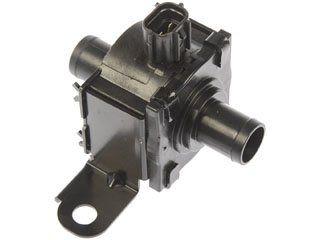
Est. part cost: $5-$30 - Faulty EVAP Purge Control Solenoid Valve ⚪ Low Probability → Shop Vapor Canister
How to confirm: The valve, typically located in the engine bay, should be normally closed. Remove the valve and try to blow through it; if air passes, it is stuck open and faulty. A long crank or rough idle after refueling is a strong symptom of a stuck-open purge valve.
Typical fix: Replace the purge control solenoid valve.
Est. part cost: $50-$110
Rare But Worth Checking
- Faulty EVAP Vent Valve/Solenoid: → Shop Vapor Canister This valve is part of the charcoal canister assembly. It can get stuck or fail, but is less common than a purge valve failure for this specific code.
- Cracked Charcoal Canister: → Shop Vapor Canister The plastic housing of the canister itself can develop cracks over time, but this is less frequent than hose or filler neck leaks. The canister is located behind the driver's side rear wheel on a 2002 Forester.
- Leaking Fuel Pump Gasket: → Shop Fuel Pump The gasket that seals the fuel pump assembly to the top of the gas tank can degrade and cause a leak, which can be found with a smoke test. This is more likely if the fuel pump has been replaced recently.
- Rusted Fuel Tank Seams: → Shop Fuel Tank In some cases, the metal fuel tank itself may corrode. NHTSA ODI #11535637 describes a situation where a vehicle threw a P0442 code and was found to have a strong gas smell and a leak originating from where the steel tank is seamed due to rust.
Diagnosis Steps
- Read the code with an OBD-II scanner to confirm P0442 is present.
- Inspect the gas cap. Ensure it is tight. Remove it and check the rubber seal for cracks or hardness. Clean the sealing surface on the filler neck.
- If the gas cap looks suspicious, replace it with an OEM part (Part # 42031AE020 is often cited for this generation, but verify with VIN), clear the code, and drive for a few days to see if the light returns.
- If the code comes back, perform a visual inspection of the fuel filler neck. This is the most likely culprit. Remove the rear passenger-side wheel and the plastic splash shield to get a clear view. Look for heavy rust, flaking, or wet spots on the pipe and its smaller accompanying tubes.
- Inspect all visible EVAP hoses in the engine bay and around the charcoal canister (behind the driver's side rear wheel) for cracks, especially at connection points.
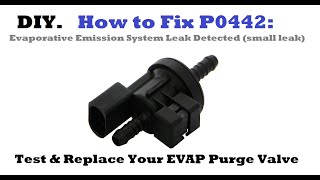
- Test the purge control solenoid valve in the engine bay. If the vehicle is hard to start after filling with gas, this part is highly suspect. Remove it and see if you can blow air through it; 🎬 Watch: How to test and replace a faulty purge valve. you should not be able to.
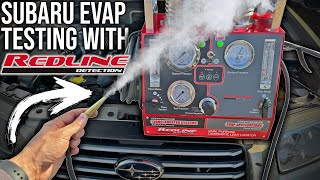
- If the leak source is still not found, the most effective next step is to have a professional mechanic perform a smoke test. This involves filling the EVAP system with a harmless, visible smoke to pinpoint the exact location of the leak. 🎬 See how a professional smoke test identifies tricky EVAP leaks.
Parts You'll Likely Need
- Fuel Filler Neck
(OEM #42066FA140 (Verify with VIN, may also be 42066FA140))— This is the most common failure point on this specific vehicle for a P0442 code due to its susceptibility to rust.
Trusted brands: Subaru (OEM), Spectra Premium (FN664), Dorman (577-086)
OEM price range: $180-$250
Aftermarket price range: $100-$180 - Fuel Cap
(OEM #42031AE020 (Verify with VIN))— A worn seal on the gas cap is a very common cause for EVAP leaks on any vehicle and is an inexpensive first step in diagnosis.
Trusted brands: Subaru (OEM), Stant
OEM price range: $25-$40
Aftermarket price range: $15-$25 - EVAP Purge Control Solenoid Valve — Can get stuck open, causing a constant small leak and often leading to difficulty starting after refueling.
Trusted brands: Denso, Bosch, Subaru (OEM)
OEM price range: $80-$110
Aftermarket price range: $40-$70
Related Codes That Often Appear With This One
- P0457 — This code specifically means 'EVAP Leak Detected (Fuel Cap Loose/Off)'. It often appears for the same reasons as P0442, such as a bad cap seal or a rusted filler neck that prevents the cap from sealing.
- P0455 — This indicates a 'Large EVAP Leak'. A small crack in a hose or filler neck that triggers P0442 can worsen over time, eventually becoming large enough to trigger P0455.
- P0440 — This is a general EVAP system malfunction code that can accompany specific leak codes like P0442 when the system fails its self-test. A rusted filler neck is a common cause for both codes on this vehicle.
Platform-Specific Known Issues
- First-generation Foresters used in 'salt belt' regions are almost guaranteed to have a rusted fuel filler neck at some point in their life, making P0442 a very common code.
- The plastic shield in the passenger-side rear wheel well is often cited by owners as a 'salt trap' that holds moisture against the filler neck, accelerating the corrosion process.
Mechanic-Grade Diagnostic Values
- EVAP Purge Control Solenoid resistance — expected: 30 - 36 ohms at room temperature. Failure: A reading significantly outside this range, or an open/shorted circuit, indicates a faulty solenoid coil.
- EVAP Vent Control Solenoid resistance — expected: 30 - 50 ohms. Failure: A reading outside this range suggests the solenoid coil is failing. One documented failure occurred at 26.1 ohms.
- Fuel Tank Pressure (FTP) Sensor voltage (Key On, Engine Off) — expected: ~2.5 Volts with gas cap off (at atmospheric pressure). Failure: Voltage stuck at 0V or 5V, or a reading that does not change when light vacuum is applied to the sensor.
Scan Tool Commands That Help
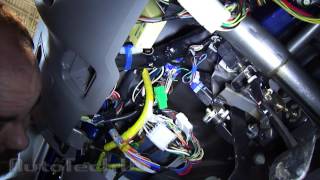
- Manual Diagnostic Connector: Green Connector 'Test Mode' — For this vehicle generation, this is the primary method for actively testing EVAP components without a high-end scan tool. Locate the two green, single-pin connectors under the driver's side dash and connect them. With the key in the 'ON' position, the ECU will enter a diagnostic mode, cycling all relays and solenoids (including the EVAP purge and vent valves) at one-second intervals. This allows a technician to listen for the audible 'click' of each component to verify it is receiving a signal and mechanically actuating. The connectors MUST be disconnected before driving.
Wiring & Ground Locations
- ECU Ground Path — The main ground path for the Engine Control Unit (ECU) is through the engine block to the top of the intake manifold.. If the intake manifold's ground connection to the block is poor (e.g., due to corrosion or installation of non-conductive TGV spacers), it can cause a host of bizarre electrical issues, potentially affecting sensor readings and solenoid operation for the EVAP system. Ensuring this path is clean and secure is a critical, often overlooked step.
- G203 — Right kick panel.. This is a shared ground distribution point that could potentially serve components related to the EVAP system or other dash-related warning lights.
- G302 — Below the center console.. Another central ground distribution point that could be a source of intermittent electrical faults if corroded or loose.
- Forward Chassis Grounds — Near the bumper shock absorbers on both the left and right sides of the front of the vehicle.. These are major ground choke points for forward-harness components. While less likely to be directly related to the rear-mounted EVAP canister, they are important for overall system health and could affect the engine-bay-mounted purge solenoid.
Real Owner Repair Stories
- YouTube user 'Long Roof Lifestyle' (2000 Subaru Forester) — Extremely low, rough idle (under 500 RPM) and stalling immediately after refueling. The car would start on the second try but idle very low before slowly recovering.
❌ Tried (didn't work) The user was on their second purge valve, implying a previous replacement had also failed over time.
✅ What actually fixed it The EVAP Purge Control Solenoid Valve was stuck open. The owner confirmed this by removing the old valve and being able to blow air straight through it. A new, functioning valve did not allow air to pass. Replacing the valve resolved the hard-starting symptoms after refueling. - NHTSA ODI #11535637 — An owner reported a strong gas smell and gasoline leaking when the vehicle was driven on an incline. After checking for the cause of a P0442 "evap leak small" code, it was discovered that the steel fuel tank had rusted at the seam.
"I Checked Everything" — The Actual Cause
- In some cases, a smoke test may show smoke originating from the top of the fuel tank area, but the source is impossible to pinpoint. After replacing an accessible fuel pump gasket with no success, the actual leak was found to be from inaccessible plastic valves on the top of the fuel tank itself. This requires dropping the entire fuel tank, rear subframe, and differential to access and repair, making it a very labor-intensive fix that is often missed during initial diagnosis.
OEM Part Supersession History
42032AC000, 42032AC030→42032FC000— Standard part consolidation and updates by the manufacturer.
Heads up: Part number 42032FC000 is the correct OEM fuel cap for the 1998-2002 Forester. Using a cap for a newer generation (like 42031AE020 for the 2005-06 models) may result in an improper seal.
Model Year Variations Within This Range
- Mid-1998 and newer: Around mid-1998, the Forester's EJ-series engine was updated with different heads and a plastic intake manifold, replacing the earlier alloy version. While the primary EVAP components remained similar, this could lead to slight differences in vacuum hose routing and purge valve location compared to very early 1998 models.
Diagnostic Flowchart
Other Known Issues on This Vehicle
Issues unrelated to this code that are worth knowing about as an owner of this generation:
- Head Gasket Failure 🔴 High — Very common on the 2.5L SOHC and DOHC engines of this era (EJ25). Failures can occur as external oil/coolant leaks or internal breaches.
- Premature Wheel Bearing Failure 🟠 Medium — Rear wheel bearings in particular are known to wear out, causing a humming or grinding noise that increases with speed.
- Oxygen (O2) Sensor Failure 🟡 Low — Front or rear oxygen sensors can fail, leading to a check engine light, poor fuel economy, and failed emissions tests.
Used vs. New Parts: Buying Guide for This Vehicle
When a used part is the smart pick: A used fuel filler neck can be a cost-effective option ONLY if it is sourced from a vehicle in a dry, rust-free climate (e.g., Southwestern US). Inspect it thoroughly for any signs of corrosion, especially on the back side and around hose connections, before purchasing.
Donor-vehicle mileage cap: roughly under 150000 miles for the part to have meaningful remaining life.
What to inspect on the donor part:
- For a filler neck, check for zero rust, flaking, or pitting on the main pipe and all smaller breather pipes.
- Ensure the surface where the gas cap seals is perfectly smooth and free of defects.
- Verify all mounting brackets are intact and not rusted.
- For any used part, check for a return policy from the seller (junkyard or online).
OEM-only on this vehicle (don't cheap out):
- Fuel Cap: It is strongly recommended to use a genuine OEM Subaru gas cap (part #42032FC000). Forum members and mechanics frequently report that aftermarket caps, even from reputable brands like Stant, may not seal correctly on this vehicle and fail to resolve the P0442 code.
Aftermarket brands forum-validated for this vehicle:
- Spectra Premium (for Fuel Filler Neck)
- Dorman (for Fuel Filler Neck)
Brands owners have reported issues with on this vehicle:
- Aftermarket Gas Caps (General): While brands like Stant are often reliable, for this specific vehicle and code, the consensus points towards using OEM to guarantee a proper seal.
Real Owner Stories
Aggregated from forums and TSBs cited above. Mileages and costs reflect what owners reported in those sources.
2001 Subaru Forester L
Symptoms: Check Engine Light with P0442 code.
What fixed it: While the owner was investigating, the consensus from the community was that the filler neck and its associated components were likely rusted out due to northern climates with snow and salt.
Source hint: reddit.com - 2001 Subaru Forester with P0442 code
2001 Subaru Forester L
Symptoms: Check Engine Light with P0442 code appearing every few days; already replaced the knock sensor and gas cap.
What fixed it: The owner was directed to inspect the fuel filler neck for rust under the cover in the back right wheel well, as it is a very common failure point for this model.
Source hint: r/subaru thread titled 'p0442_code'
Documented NHTSA Report
Symptoms: Strong gas smell and gasoline leaking when driven on an incline; P0442 code present.
What fixed it: According to NHTSA ODI #11535637, the owner found that the steel fuel tank had rusted where the seam of the tank is located, causing the leak and the EVAP small leak code.
Related OBD-II Codes
Frequently Asked Questions
Why is the fuel filler neck so prone to rusting on my 1998-2002 Forester?
Should I buy an aftermarket gas cap to fix my P0442 code?
Where is the charcoal canister located on this generation Forester?
Why does my Forester have trouble starting only after I fill it with gas?
I've replaced my gas cap but the light is still on; what is the next most likely cause?
Helpful Videos
We Have This Part in Stock


The information in this article is provided for general reference and educational purposes only. Vehicle specifications, procedures, and part compatibility can vary by production date, trim level, and region. Always consult your vehicle's factory service manual and verify part numbers before purchasing or performing repairs. Safety-critical components such as airbags, seat belts, and braking systems should be installed by a qualified professional.
- Subaru Forester:
- 🧭 Diagnostic Flowchart
- 🎬 Helpful Videos
- 🛍️ Shop This Part
- What's Unique About the 1998-2002 Subaru Forester
- Symptoms You May Notice
- Most Likely Causes
- Rare But Worth Checking
- Diagnosis Steps
- Parts You'll Likely Need
- Related Codes That Often Appear With This One
- Platform-Specific Known Issues
- Mechanic-Grade Diagnostic Values
- Scan Tool Commands That Help
- Wiring & Ground Locations
- Real Owner Repair Stories
- "I Checked Everything" — The Actual Cause
- OEM Part Supersession History
- Model Year Variations Within This Range
- Other Known Issues on This Vehicle
- Used vs. New Parts: Buying Guide for This Vehicle
- Real Owner Stories
- 2001 Subaru Forester L
- 2001 Subaru Forester L
- Documented NHTSA Report
- Related OBD-II Codes
- Frequently Asked Questions
- 🎟️ Get 5% Off