

P0442 on 2007-2011 Toyota Camry: EVAP Small Leak Causes and Fixes
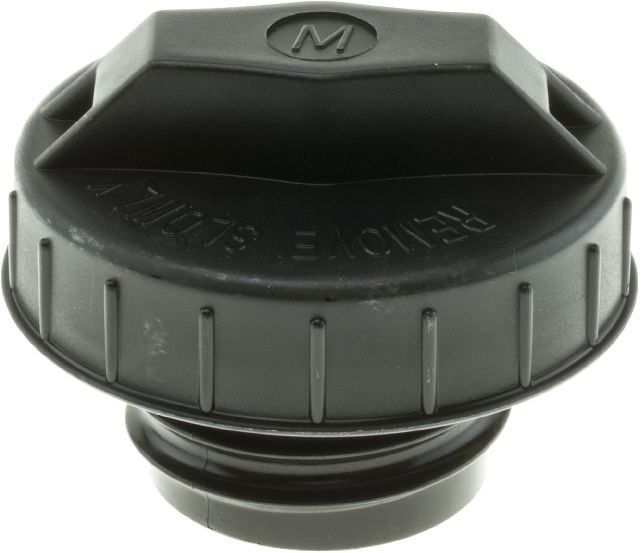
For a 2007-2011 Camry, code P0442 is most often caused by a loose or worn-out gas cap. A genuine Toyota replacement cap is about $25 and fixes the issue a majority of the time. If that doesn't work, suspect a cracked vacuum hose in the engine bay, especially on higher-mileage vehicles.
- Always start with the simplest fix: ensure your gas cap is tight. If the light returns, spend the ~$25 on a new genuine Toyota gas cap (part # 77300-06050) before attempting any other repairs.
- The next most likely cause is a small, cracked vacuum hose in the engine bay. Carefully inspect all hoses connected to the EVAP purge valve.
- Do not replace the expensive charcoal canister unless a smoke test has definitively proven it is the source of the leak.
- This code will not affect how your car drives, but it will cause an automatic failure on an emissions test.
- Using a non-Toyota (aftermarket) gas cap is a very common reason for this code to appear.
What's Unique About the 2007-2011 Toyota Camry
The 2007-2011 (XV40 generation) Camry is generally very reliable, and its EVAP system is no exception. However, with age, the rubber and plastic components become brittle. A very common failure point on these cars, after the gas cap, is small, hard-to-see cracks in the vacuum hoses connected to the purge valve in the engine bay. While the charcoal canister can fail, it's a much more frequent issue on older or different Toyota platforms; for the XV40 Camry, starting with the simple, inexpensive parts first is almost always the correct approach. One owner on a forum chased a P0442, replacing the gas cap and even the charcoal canister for $500, only to have the light return, demonstrating the importance of proper diagnosis. Additionally, NHTSA ODI #10354544 notes that failures represented by codes P0440, P0441, and P0442 have been reported frequently across various Toyota models built through the mid-2000s.
Symptoms You May Notice
- Check Engine Light is on.
- A faint fuel smell may be noticeable, though this is not always present.
- Slightly reduced fuel economy over time.
- Rough or low idle in rare cases if the leak is from a component like a stuck-open purge valve.
- Replacing the charcoal canister before performing a smoke test. The canister is expensive and less likely to be the cause than a simple hose leak or bad gas cap.
- Replacing oxygen (O2) sensors. This code is strictly related to the EVAP system and has no connection to the exhaust sensors.
- Using a cheap, aftermarket gas cap. Many forum posts from owners show that non-OEM caps often fail to seal properly and do not resolve the P0442 code.
Most Likely Causes
- Loose, Worn, or Incorrect Gas Cap 🔴 High Probability → Shop Fuel Tank Cap The rubber O-ring on the gas cap hardens, cracks, and flattens over time, preventing a proper seal. Using a non-OEM (generic aftermarket) cap is also a very frequent cause of this code as they may not meet Toyota's precise sealing specifications. Many owner forums and repair videos stress using a genuine OEM cap first.
How to confirm: First, ensure the current cap is tightened until it clicks at least once. Inspect the rubber seal for any visible cracks, stiffness, or damage. If the seal looks worn, you are using an aftermarket cap, or the light came on after refueling, this is the prime suspect.
Typical fix: Replace the gas cap with a new, genuine OEM part.
Est. part cost: $20-$30 - Cracked EVAP System Hoses 🟡 Medium Probability After more than a decade of heat cycles, the small rubber vacuum hoses in the engine bay become hard and brittle. They often develop small, hairline cracks, especially at the ends where they connect to plastic nipples on valves and sensors. This is a very common failure on many aging Toyota models.
How to confirm: Visually inspect all accessible EVAP hoses in the engine bay, particularly those connected to the purge valve (often labeled VSV for Vacuum Switching Valve). Bend the hoses slightly to reveal hidden cracks. A smoke test is the definitive way to find a leak if it's not visually apparent. A YouTube video shows this exact issue on a similar Toyota, where a cracked hose near the air filter box was the culprit after a new gas cap didn't solve the problem.
Typical fix: Replace the cracked section of hose. It is often sold by the foot or as a pre-formed OEM part.
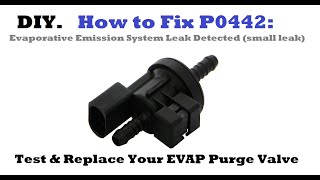
Est. part cost: $10-$50 - Faulty Purge Valve (Vacuum Switching Valve - VSV) ⚪ Low Probability → Shop Vapor Canister The purge valve is a solenoid that can fail electrically or mechanically, sometimes getting stuck slightly open, causing a small leak. While not as common as a bad cap or hose, it is a known failure point on Toyota vehicles.
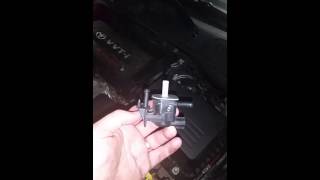
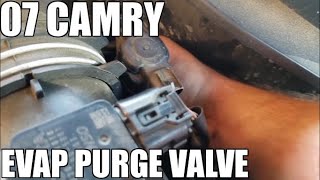
How to confirm: With the engine off, the valve should be closed. You can test this 🎬 See how to test and replace a faulty purge valve. by removing it and trying to blow through it (it should not allow air to pass). With a scan tool, you can command the valve to open and close to check its function. A multimeter can be used to check the resistance of the solenoid coil. You can also check for vacuum at the hose leading to the intake manifold immediately after a cold start; there should be no vacuum until the engine warms up and the valve is commanded open.
Typical fix: Replace the purge valve. It is typically located in the engine bay and is easy to access.
Est. part cost: $70-$180
Rare But Worth Checking
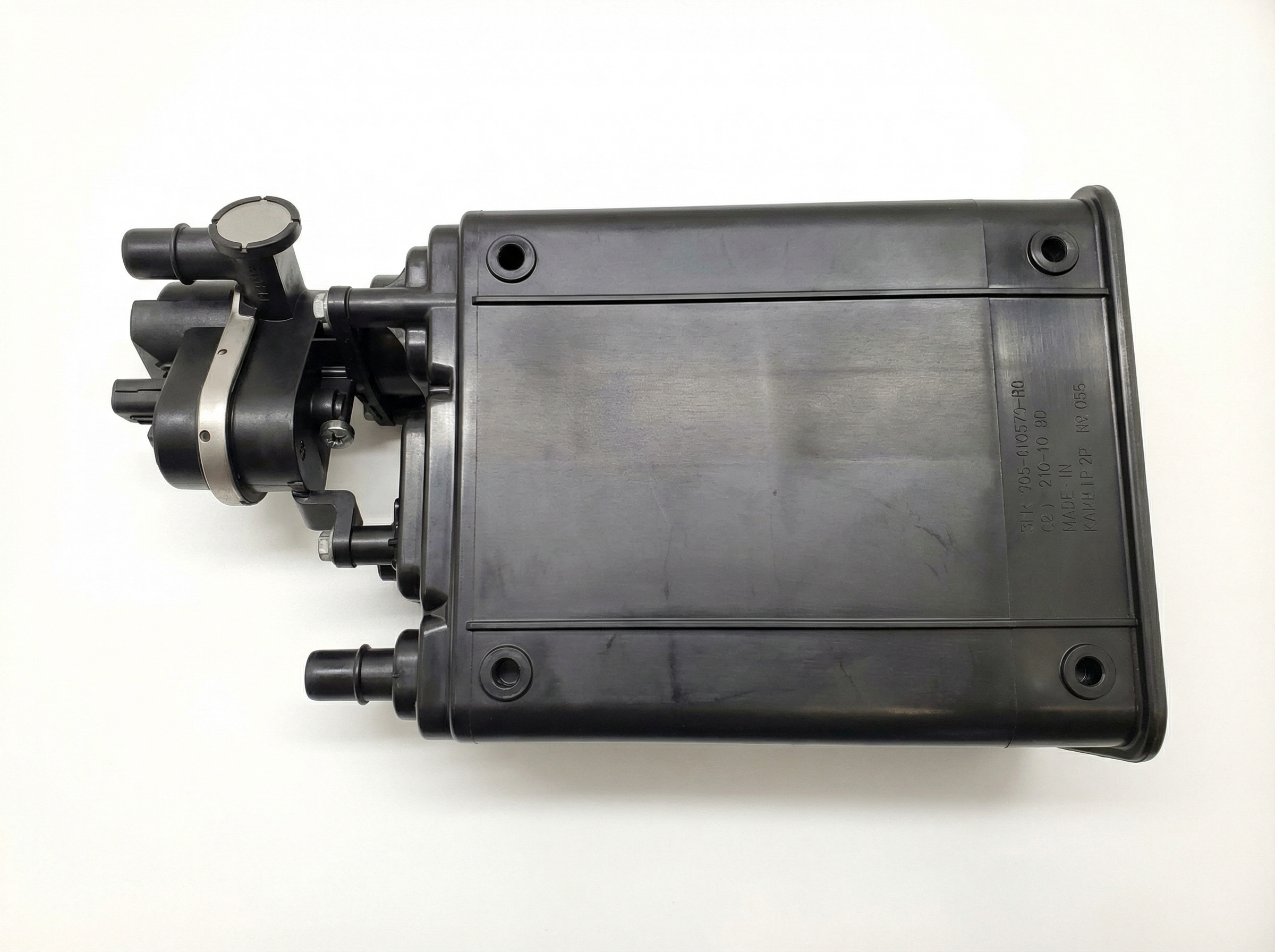
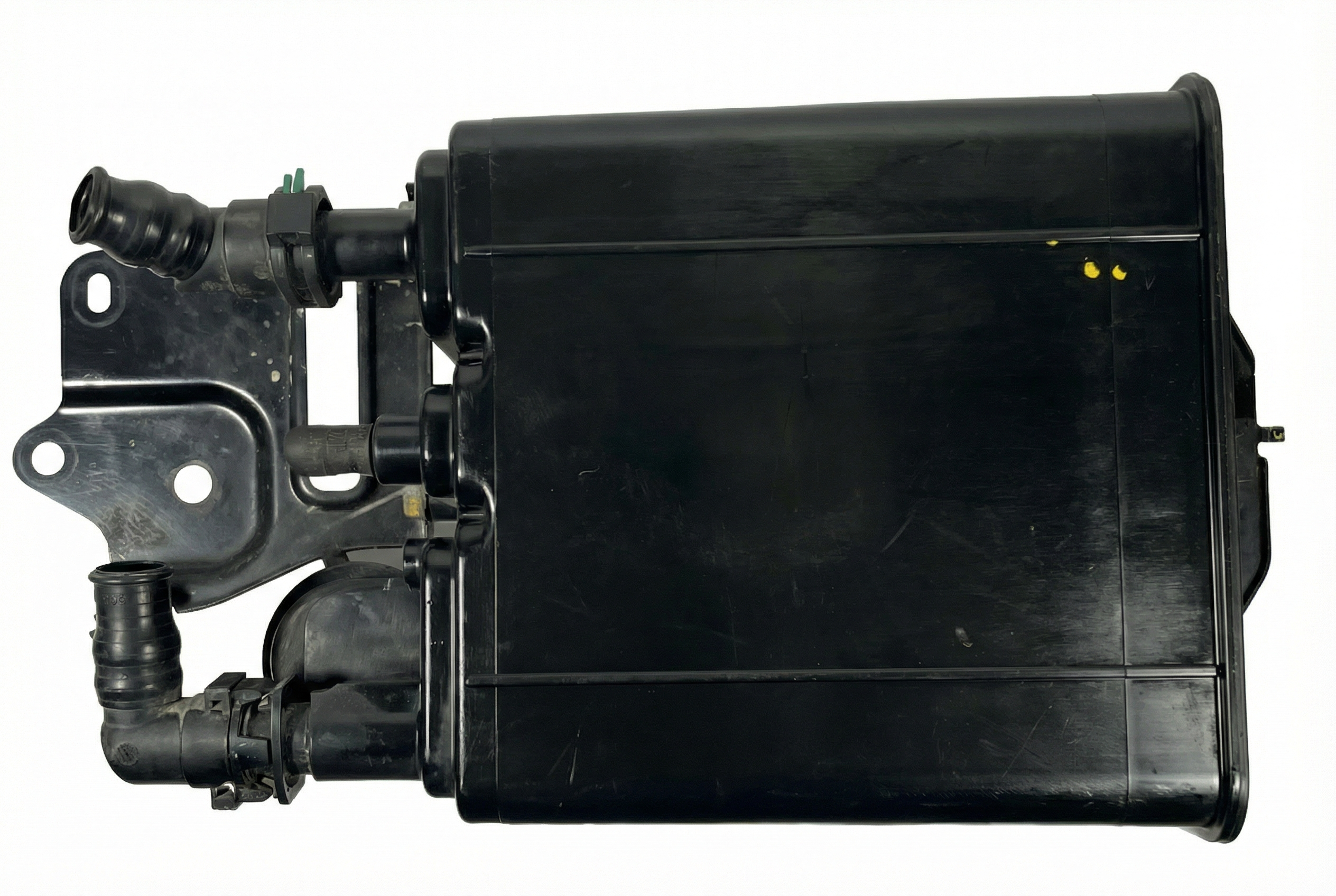
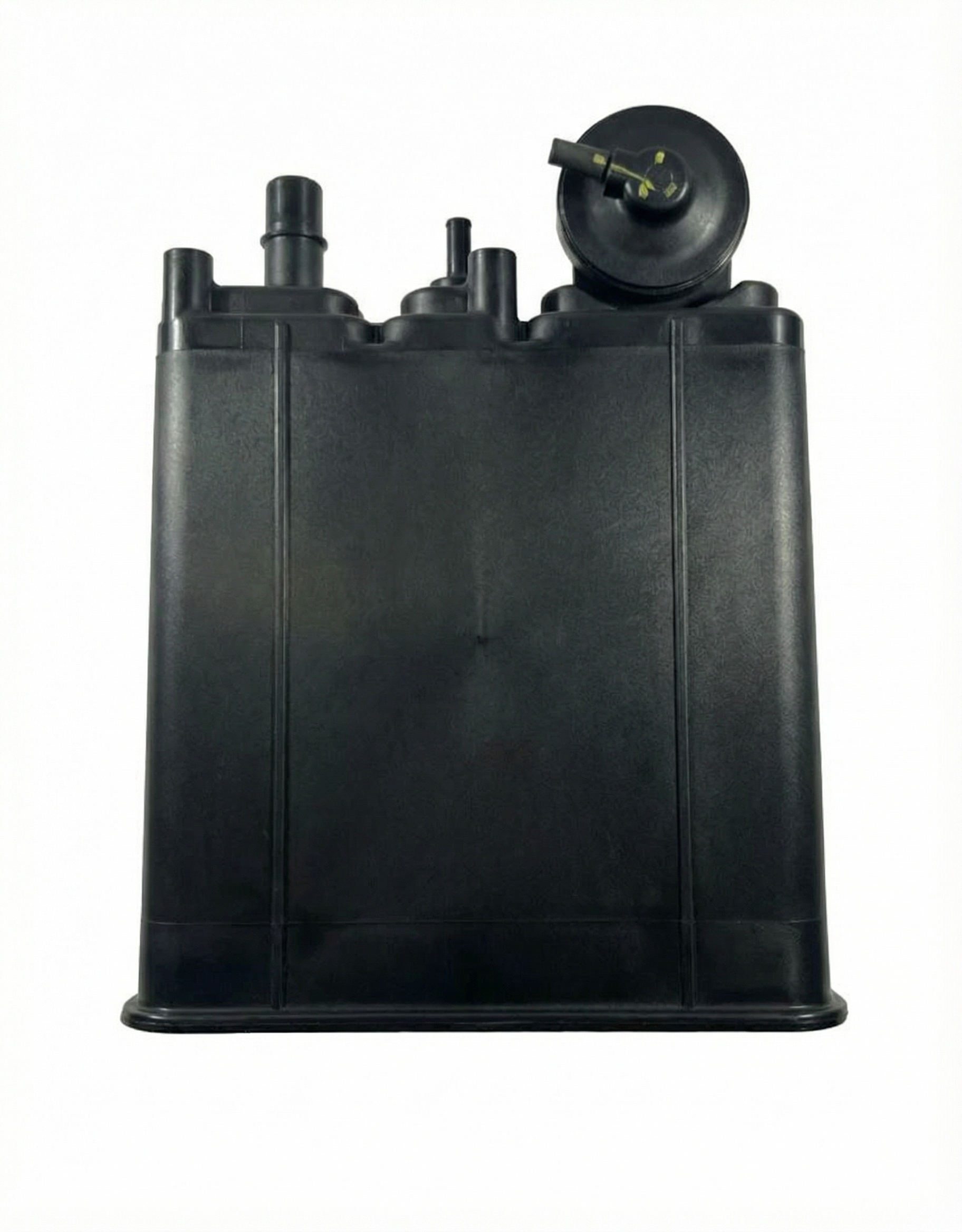
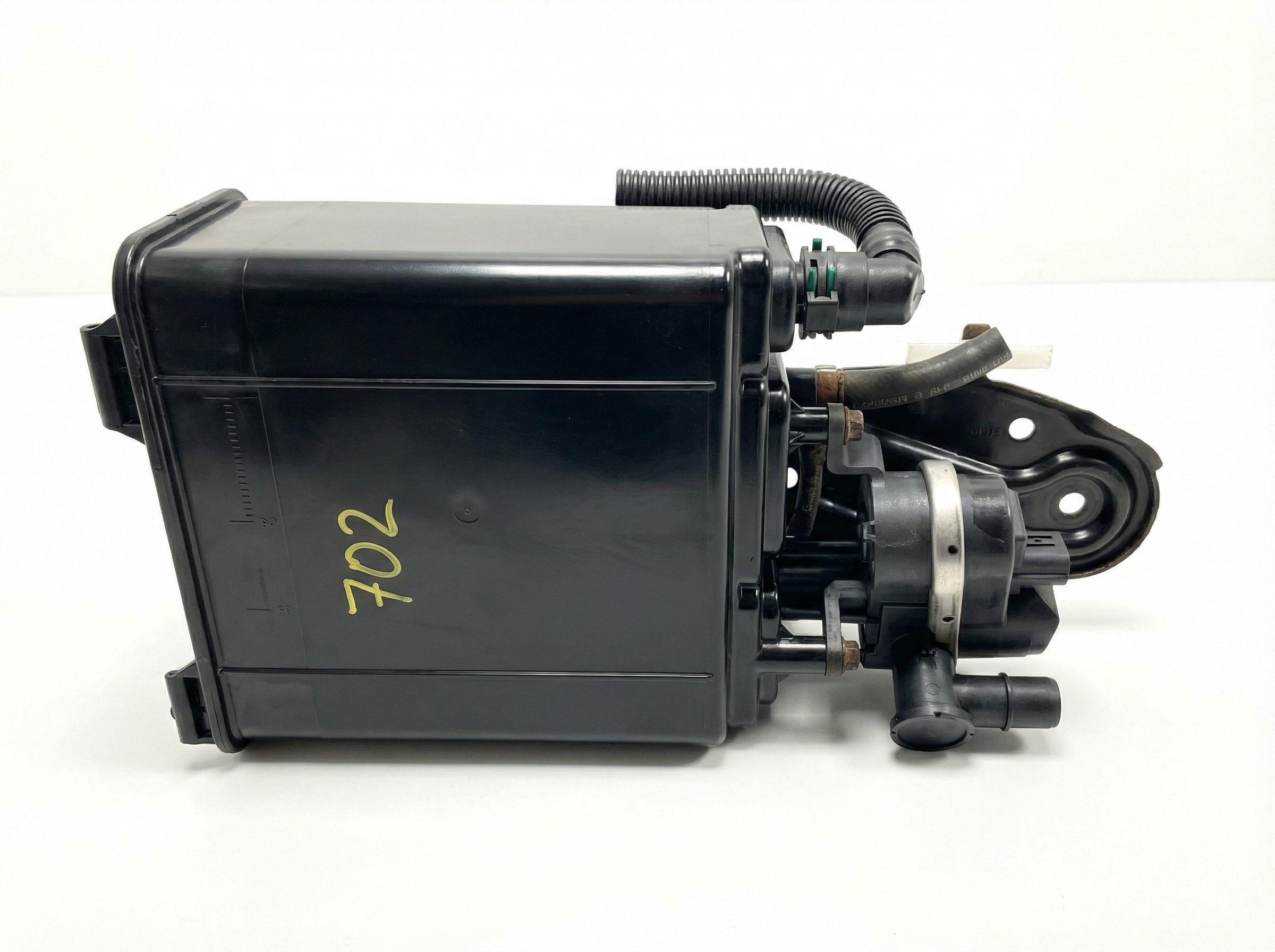
- Leaking Charcoal Canister Assembly: → Shop Vapor Canister This component is located near the fuel tank. It can develop cracks in its plastic housing or the integrated vent valve can fail. This is an expensive part, so a smoke test should be performed to confirm the canister is the source of the leak before replacement. One owner spent $500 replacing this part on a high-mileage Camry only to find it didn't solve the P0442, highlighting the need for accurate diagnosis.
- Cracked Fuel Filler Neck: → Shop Fuel Filler Neck Less common on this generation than on some other vehicles, but rust or corrosion on the filler neck where the gas cap seals can prevent a proper seal, causing a persistent P0442 code even with a new cap. A Toyota TSB for other models (EG051-06) specifically calls out inspecting the filler neck for corrosion as a cause for EVAP codes. Furthermore, NHTSA ODI #10276828 mentions that a P0442 code can indicate the fuel filler is defective, referencing manufacturer bulletin EG022-06.
Diagnosis Steps
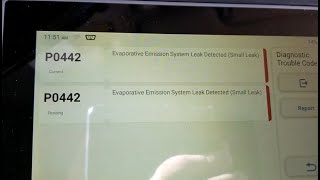
- Read the code with an OBD-II scanner and confirm P0442 is present. Note any other codes. 🎬 Watch: A complete guide to troubleshooting and fixing P0442 codes.
- Inspect the gas cap. Ensure it is tight. Remove it and check the rubber seal for cracks, stiffness, or damage. If it's an aftermarket cap or looks old, this is your primary suspect.
- Clear the code and drive for a few days. If the code does not return after tightening the cap, the problem is solved. If it does, proceed to the next step.
- If the cap is suspect, replace it with a genuine OEM Toyota cap (Part No. 77300-06040), clear the code, and drive again to see if the light stays off. A Reddit user noted that even after replacing with an OEM cap, the code came back, indicating the problem lay elsewhere.
- If the code returns, perform a thorough visual inspection of all EVAP hoses in the engine compartment. Pay close attention to the hoses connected to the purge valve/solenoid. Bend them gently to expose any fine cracks.
- Locate the charcoal canister near the fuel tank (rear of the vehicle) and inspect the hoses connected to it for any obvious damage or loose connections.
- If no visual leaks are found, the most effective next step is to have a smoke test performed. A mechanic will inject low-pressure smoke into the EVAP system, and the leak will be revealed by the escaping smoke. This is the 🎬 Watch: How a smoke test identifies small EVAP leaks. definitive way to find small leaks in hoses, the canister, or valves.
- If the smoke test reveals a leak from the purge valve or charcoal canister, replace the faulty component.
Parts You'll Likely Need
- Fuel Tank Cap
(OEM #77300-06040)— This is the most common cause of a P0442 code. The seal fails over time, and aftermarket caps often don't seal correctly. This part number supersedes older versions like 77300-52040.
Trusted brands: Toyota (Genuine)
OEM price range: $22-$30
Aftermarket price range: $10-$20 - Vapor Canister Purge Valve / Solenoid (VSV)
(OEM #90910-12276 or 25860-0V040 (varies by engine/year))— The second most likely component to fail after hoses. It can get stuck partially open, causing a small leak. It's located in the engine bay and is relatively easy to replace.
Trusted brands: Toyota (Genuine), Denso, Dorman
OEM price range: $95-$140
Aftermarket price range: $40-$110 - Charcoal Canister Assembly
(OEM #77740-06210)— This part can develop cracks in its housing over time, causing a leak. It's an expensive part and should only be replaced after a smoke test confirms it is the source of the leak. Note: Hybrid models use a different, more expensive canister (p/n 77740-33190).
Trusted brands: Toyota (Genuine)
OEM price range: $230-$340
Aftermarket price range: $150-$250
Related Codes That Often Appear With This One
- P0455 — Indicates a large EVAP leak. If a component fails significantly, it might initially set a P0442 and then a P0455 as the leak worsens.
- P0456 — Indicates a very small EVAP leak. These codes are closely related, differing only by the size of the leak detected by the ECM. You might see one or the other depending on the test conditions.
- P0441 — Indicates incorrect purge flow. A faulty purge valve can cause both a flow issue (P0441) and a leak (P0442) simultaneously.
Platform-Specific Known Issues
- Engine Bay Vacuum Hoses: → Shop Vacuum Hose The small vacuum hoses connected to the purge valve (VSV) in the engine bay are a very common failure point. After years of heat cycles, they become brittle and develop small cracks at the connection points, which are often hard to see without bending the hose. This is frequently the next most likely cause after a faulty gas cap.
Mechanic-Grade Diagnostic Values
- Purge Valve (VSV) Coil Resistance (2AZ-FE Engine) — expected: 30 - 34 Ω at 20°C (68°F). Failure: No continuity (open circuit) or resistance significantly outside this range indicates a faulty valve.
- Canister Closed Valve (CCV) VSV Resistance (2AZ-FE Engine) — expected: 24 - 30 Ω at 20°C (68°F). Failure: No continuity (open circuit) or resistance outside this range indicates a faulty valve.
- Purge Valve (VSV) Connector Voltage — expected: Pin 1 should have ~12V with ignition ON. Pin 2 is the ground signal from the ECM.. Failure: No voltage on Pin 1 points to an issue with the EFI relay or fuse. A constant ground on Pin 2 with the engine off could indicate a short or a stuck driver in the ECM.
Hidden / Shadow Codes Worth Checking
- Mode $06, MID:$3c, TID:$80: This is the monitor test result for the 0.040" leak check, which corresponds to code P0442. Viewing this data can show if the system is passing, failing, or borderline before a code is set. (see via An advanced OBD-II scan tool capable of displaying Mode $06 data. The value is compared against a minimum and maximum limit set by the manufacturer.)
- Mode $06, MID:$3b, TID:$80: This is the monitor test result for the 0.090" leak check, which corresponds to a large leak (P0455). It can be useful to check this value as well, as a large leak may sometimes be detected intermittently. (see via An advanced OBD-II scan tool capable of displaying Mode $06 data.)
Scan Tool Commands That Help
- Toyota Techstream: Active Test: Evaporative System Check — This utility allows a technician to manually command the EVAP valves (Purge VSV, Vent Valve/CCV) to open and close, sealing the system and monitoring the fuel tank pressure sensor's vacuum reading to pinpoint a leak. The test can isolate the canister side from the tank side to narrow down the leak's location.
- Toyota Techstream: Active Test: Control the Purge VSV — This command directly opens and closes the purge valve in the engine bay. A technician can use this to verify the valve clicks when commanded and to check if it holds vacuum when commanded closed, confirming its mechanical and electrical operation without removing it from the vehicle.
Wiring & Ground Locations
- Purge Valve (VSV) Connector — In the engine bay, typically near the air filter housing (4-cyl) or on the intake manifold (V6).. The connector has two pins. Pin 1 is 12V power from the EFI relay (Key On). Pin 2 is the control wire (labeled 'PRG' in diagrams) that the ECM pulses to ground to open the valve. Testing these pins is crucial for diagnosing a faulty valve vs. a wiring issue.
- Ground Point C4 — On the top rear of the engine (cylinder head).. This is a primary ground point for multiple engine sensors. A loose or corroded ground here can cause erratic sensor readings and intermittent, hard-to-diagnose issues across various systems, including emissions.
- Ground Point A1 — On the front left fender.. This is a major chassis ground point for the engine room wiring harness. A poor connection here can affect the power supply and grounding of various components controlled by the ECM.
Real Owner Repair Stories
- YouTube channel 'fixerGOod' (2004 Toyota Sienna (V6 engine with similar EVAP design)) — P0442 small leak code returned after replacing the gas cap for a previous large leak code.
❌ Tried (didn't work) Replacing the gas cap.
✅ What actually fixed it The mechanic found multiple small, age-related cracks in the brittle EVAP vacuum hoses in the engine bay. He demonstrated that the old hoses were so brittle they would break just by bending them. Replacing the affected sections of 5/16" hose resolved the code. - YouTube channel 'Diagnosing with Dan' (2004 Toyota Highlander (similar EVAP system)) — P0442 code with VSC light on. Code returned after being cleared.
❌ Tried (didn't work) Initially suspected a loose gas cap.
✅ What actually fixed it After connecting a smoke machine, a leak was found from a cracked vacuum hose hidden under the plastic engine cover. The rubber had become hard and brittle from heat. Replacing the small section of hose fixed the leak and cleared the code. - Southern Maryland Community Forums (2004 Toyota Camry) — Persistent P0442 code.
❌ Tried (didn't work) Replacing the gas cap with a genuine Toyota part., Paying for a 'computer re-flash'., Replacing the entire charcoal canister assembly for $500 based on a shop's smoke test diagnosis.
✅ What actually fixed it The story is a cautionary tale; the user reported that even after spending over $650 on multiple failed fixes, the light came back on. This highlights that even a smoke test can be misinterpreted and that throwing expensive parts at the problem without 100% confirmation is a common misdiagnosis. The final fix was not posted, but the experience itself is a valuable lesson. - NHTSA ODI #10735783 — An owner reported a check engine light with code P0442. They initially replaced a faulty gas cap, but later records indicate ongoing EVAP system issues involving the charcoal canister at higher mileage.
When the Usual Fixes Don't Work
- While a bad gas cap is the most common cause, many owners have fixed their P0442 code only after finding and replacing brittle, cracked vacuum hoses in the engine bay, even after a new OEM gas cap did not solve the problem. In one case, a shop diagnosed a bad charcoal canister via a smoke test, but replacing the $500 part did not fix the light, indicating the true cause was a smaller, overlooked leak elsewhere in the system.
OEM Part Supersession History
77300-52030, 77300-52040→77300-06040— Standard part consolidation and design updates by Toyota.
Heads up: 77300-06040 is the correct current replacement for most 2007-2010 models. The part number from Pass 2, 77300-06050, may be for 2011 and newer models and might not be compatible with earlier years in the range. Always verify by VIN.
Model Year Variations Within This Range
- 2010-2011: For the 2010 model year, Toyota introduced the new 2.5L 4-cylinder engine (2AR-FE). While many EVAP parts are shared, the engine-bay purge valve and its hoses may have different part numbers or locations compared to the 2007-2009 2.4L (2AZ-FE) engine.
- 2007-2011: Vehicles were built to either Federal (ULEV) or California (PZEV) emissions standards. These versions can have different charcoal canister assemblies and other minor component variations. This is important to check when ordering replacement parts.
Diagnostic Flowchart
Other Known Issues on This Vehicle
Issues unrelated to this code that are worth knowing about as an owner of this generation:
- Excessive Oil Consumption (2.4L 2AZ-FE Engine) 🔴 High — Very common on 2007-2009 models with the 2AZ-FE engine, often starting around 60,00-95,000 miles. Caused by defective piston ring design. (Ref: Toyota Warranty Enhancement Program ZE7 addressed this issue, but has since expired.)
- Melting / Sticky Dashboard 🟡 Low — Widespread issue in hot, humid climates where the dashboard material degrades, becoming shiny, sticky, or cracking. (Ref: Toyota Customer Support Program ZLG / ZE6 extended the warranty for this repair, but it has expired.)
- Transmission Shutter / Hesitation (6-Speed Automatic) 🟠 Medium — Some 2007-2009 models with the 6-speed automatic transmission can exhibit a hesitation or shudder, particularly when shifting at low speeds. Sometimes resolved with a fluid change, other times indicates internal wear.
- Water Pump Failure (V6 2GR-FE Engine) 🟠 Medium — The water pump on the V6 engine is a known failure point, often starting as a slow coolant seep. It's a common maintenance item as the vehicle ages.
Used vs. New Parts: Buying Guide for This Vehicle
When a used part is the smart pick: For this vehicle, buying used EVAP components is generally not recommended. The most common failures (gas cap seal, brittle hoses, canister cracks) are due to age and heat cycles. A used part from a donor vehicle of similar age is likely to have the same wear and could fail soon after installation.
Donor-vehicle mileage cap: roughly under 40000 miles for the part to have meaningful remaining life.
What to inspect on the donor part:
- If considering a used charcoal canister, only source it from a very low-mileage, collision-damaged vehicle.
- Inspect the plastic housing of any used component for hairline cracks, especially around hose nipples and mounting tabs.
- Check that any included rubber hoses are still soft and pliable, not hard or stiff.
OEM-only on this vehicle (don't cheap out):
- Fuel Tank Cap: Aftermarket caps are a notorious cause of P0442 codes on Toyotas as their seals often do not meet the precise pressure requirements. Always use a genuine Toyota cap.
Aftermarket brands forum-validated for this vehicle:
- Denso: Denso is the original equipment manufacturer for many Toyota electronic parts, including the purge valve (VSV). A Denso-branded part is often identical to the genuine Toyota part but at a lower cost.
Brands owners have reported issues with on this vehicle:
- No-name or generic 'white box' gas caps and electronic solenoids from online marketplaces should be avoided as their quality and sealing performance are often poor.
Real Owner Stories
Aggregated from forums and TSBs cited above. Mileages and costs reflect what owners reported in those sources.
2004 Toyota Camry
Symptoms: Frustrating experience chasing a P0442 code; the owner replaced the gas cap but the light persisted.
What fixed it: The source indicates the owner was still in the process of chasing the leak after the gas cap failed to fix it, highlighting that P0442 often requires looking beyond the cap.
Source hint: somd.com Forums (Southern Maryland Community Forums)
2007-2011 Toyota Camry
Symptoms: Check engine light on; a new gas cap (even an OEM one) did not solve the problem.
What fixed it: Replacing a cracked vacuum hose near the air filter box.
Source hint: YouTube (Fix it Angel, Check Engine Secrets)
2007-2011 Toyota Camry
Symptoms: P0442 code returned even after the owner replaced the original cap with a genuine OEM Toyota cap.
What fixed it: The problem lay elsewhere in the system, such as the hoses or valves, as the OEM cap did not resolve the issue for this specific user.
Source hint: Reddit user noted in diagnosis_steps
Related OBD-II Codes
Frequently Asked Questions
Which specific gas cap part number should I use for my 2007-2011 Toyota Camry to fix P0442?
Is there a TSB for the excessive oil consumption I'm noticing alongside the check engine light on my 2008 Camry 2.4L?
My dashboard is becoming sticky and shiny; is this related to the EVAP system or P0442?
Where is the purge valve (VSV) located on the Camry, and how can I test it for a small leak?
I replaced my gas cap but the P0442 code returned. What is the next most likely vehicle-specific failure point?
Can a faulty water pump on my V6 Camry cause an EVAP code like P0442?
Helpful Videos
Used OEM Parts in Stock
New Aftermarket Parts Available


The information in this article is provided for general reference and educational purposes only. Vehicle specifications, procedures, and part compatibility can vary by production date, trim level, and region. Always consult your vehicle's factory service manual and verify part numbers before purchasing or performing repairs. Safety-critical components such as airbags, seat belts, and braking systems should be installed by a qualified professional.
- Toyota Camry:
- 🧭 Diagnostic Flowchart
- 🎬 Helpful Videos
- 🛍️ Shop This Part
- What's Unique About the 2007-2011 Toyota Camry
- Symptoms You May Notice
- Most Likely Causes
- Rare But Worth Checking
- Diagnosis Steps
- Parts You'll Likely Need
- Related Codes That Often Appear With This One
- Platform-Specific Known Issues
- Mechanic-Grade Diagnostic Values
- Hidden / Shadow Codes Worth Checking
- Scan Tool Commands That Help
- Wiring & Ground Locations
- Real Owner Repair Stories
- When the Usual Fixes Don't Work
- OEM Part Supersession History
- Model Year Variations Within This Range
- Other Known Issues on This Vehicle
- Used vs. New Parts: Buying Guide for This Vehicle
- Real Owner Stories
- 2004 Toyota Camry
- 2007-2011 Toyota Camry
- 2007-2011 Toyota Camry
- Related OBD-II Codes
- Frequently Asked Questions
- 🎟️ Get 5% Off