

P0442 on 2022 Volkswagen Arteon: EVAP Small Leak Causes and Fixes
For a 2022 VW Arteon, the P0442 code is most often caused by a faulty seal on the capless fuel filler neck or a failing EVAP purge valve (N80). Inspecting and cleaning the filler neck seal is the first step. If that's not the issue, the N80 purge valve (OEM Part #06M-906-517-E) is the next likely culprit, costing around $30-$70 for the part.
- P0442 on a 2022 Arteon means a small leak has been detected in the emissions system.
- Before buying any parts, inspect and clean the seal on the capless fuel filler neck.
- The most likely faulty parts are the EVAP purge valve (N80) in the engine bay or the Leak Detection Pump (LDP) in the rear of the car.
- The presence of codes like P2402, P0456, or P04F0 can help pinpoint the problem area.
- While the car is safe to drive, the issue must be fixed to pass any state emissions inspection.
What's Unique About the 2022-2022 Volkswagen ARTEON
The 2022 Arteon uses a capless fuel filler system, so the most common cause for this code on other cars—a loose gas cap—translates to a faulty or dirty seal on the filler neck flap. This flap must seal perfectly to prevent a leak. Furthermore, official Technical Service Bulletins (TSBs) for the 2022 Arteon specifically mention P0442 occurring with other codes like P2402, pointing towards potential issues with the Leak Detection Pump (LDP) assembly. The EVAP purge valve (N80) is also a well-documented common failure item on VW's MQB platform, on which the Arteon is built, often failing internally while appearing fine.
Diagnostic Flowchart
Tap your situation to follow the diagnostic path that matches what you're seeing on this vehicle.
Symptoms You May Notice
- Check Engine Light is on
- A faint fuel smell may be noticeable, but this is not common with small leaks.
- Slightly reduced fuel economy.
- Replacing the charcoal canister when the actual fault is a much cheaper and more common N80 purge valve or LDP.
- Assuming a major repair is needed before thoroughly cleaning and inspecting the capless fuel filler neck seal.
Most Likely Causes
- Faulty or Dirty Capless Fuel Filler Neck Seal 🔴 High Probability → Shop Fuel Filler Neck The capless system's spring-loaded flap seal can wear out, get stuck, or accumulate dirt and debris, preventing a proper seal after refueling. This is the direct equivalent of a loose or bad gas cap on older cars.
How to confirm: Visually inspect the fuel filler neck for debris, damage, or any obstruction preventing the flap from sealing completely. Ensure it moves freely and closes flush. The sealing surface can be gently cleaned with a cloth and a mild degreaser.
Typical fix: Clean the sealing surface of the flap and the filler neck. If the seal is damaged or worn, the entire fuel filler neck housing may need to be replaced.
Est. part cost: $150-$250 - Faulty EVAP Purge Valve (N80 Valve) 🔴 High Probability → Shop Vapor Canister This solenoid valve is a very common failure point on modern VW/Audi platforms. It can fail to close completely, creating a small, permanent leak in the system that triggers the P0442 code.
How to confirm: With the engine off, disconnect the valve's electrical connector and hoses. Try to blow through it. If any air passes, the valve is stuck open and is faulty. It is a normally-closed valve and should not allow air to pass when de-energized. A multimeter can also be used to check the coil resistance, which should be between 15 and 35 Ohms.
Typical fix: Replace the N80 purge valve. It is typically located in the engine bay, mounted on or near the intake manifold, and is relatively easy to access and replace.
Est. part cost: $30-$70 - Faulty Leak Detection Pump (LDP) 🟡 Medium Probability → Shop Evaporative Emissions System Leak Detection Pump TSBs for the 2022 Arteon link P0442 with LDP-related codes (P2402), indicating this is a known issue area. The pump itself can develop internal leaks or electrical faults, causing it to fail the EVAP system self-test.
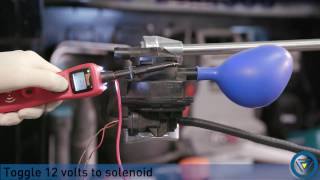
How to confirm: Diagnosis often requires a bi-directional scan tool to command the pump to run and check its status. The presence of code P2402 alongside P0442 strongly points to a faulty LDP. A smoke test may also reveal a leak from the pump housing itself. A bench test can be performed by applying vacuum and 12V power to see if the pump holds pressure.
Typical fix: Replace the Leak Detection Pump assembly, which is located in the rear of the vehicle near the charcoal canister, usually behind the passenger-side rear wheel well liner.
Est. part cost: $150-$250 - Cracked or Disconnected EVAP Hoses ⚪ Low Probability Plastic and rubber hoses can become brittle over time and develop small, hairline cracks, especially at connection points or elbows that are exposed to engine heat.
How to confirm: A visual inspection may reveal obvious damage, but finding a small leak often requires a smoke test. A mechanic will fill the EVAP system with visible vapor to pinpoint the exact source of the leak, which may appear as a thin wisp of smoke from a cracked hose or fitting.
Typical fix: Replace the specific section of hose that is leaking. Sometimes just replacing a small, cracked rubber elbow is all that is needed.
Est. part cost: $20-$100
Rare But Worth Checking
- Cracked Charcoal Canister: → Shop Vapor Canister While not a frequent failure, the plastic housing of the charcoal canister can develop hairline cracks from road debris or age, causing a leak. This is usually a last resort after checking more common components and is best found with a smoke test.
- Cracked Fuel Tank Fitting: → Shop Fuel Tank In some cases, a plastic nut or fitting on top of the fuel tank (under the rear seat or trunk floor) can crack, causing an EVAP leak. This is difficult to find without removing interior components and performing a smoke test.
Diagnosis Steps
- Read the codes: Use an OBD-II scanner to confirm P0442 and check for any other related codes.
- Inspect the Fuel Filler Neck: Open the fuel door and carefully inspect the capless filler neck seal for any dirt, debris, or damage. Clean it with a soft cloth and a small amount of degreaser, ensuring the flap moves freely and seats properly.
- Clear Codes and Drive: After cleaning the filler neck, clear the codes with the scanner and drive the vehicle for a few days to complete a drive cycle and see if the code returns.
- Test the N80 Purge Valve: If the code returns, locate the N80 valve in the engine bay. Disconnect its electrical connector and hoses. Try to blow through it; if air passes, it is faulty and needs replacement. For a more definitive test, use a multimeter to check the resistance across the valve's two pins. A reading between 15-35 Ohms is expected.
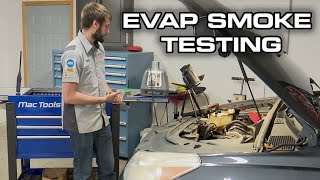
- Perform a Smoke Test: If the filler neck and purge valve are good, the next step is to perform a smoke test. This involves injecting low-pressure smoke into the EVAP system to visually locate the source of the leak. This is the most effective way to find cracked hoses or a leaking LDP or canister.
- Inspect the Leak Detection Pump (LDP): If a smoke test is inconclusive or if code P2402 is present, inspect the LDP and its wiring, located behind the rear passenger wheel well liner. A bi-directional scanner can also be used to command the LDP to run for further testing.
Parts You'll Likely Need
- EVAP Purge Valve (N80)
(OEM #06M-906-517-E)— This is a very common failure item on modern VWs that causes a small leak when it fails to seal properly. It's often the first part to replace after checking the fuel filler neck.
Trusted brands: Bosch, Pierburg, Genuine Volkswagen
OEM price range: $35-$70
Aftermarket price range: $25-$50 - Evaporative Emissions System Leak Detection Pump
(OEM #7L0-906-243-A)— Cited in TSBs as a potential issue for this vehicle when P0442 is present. The pump itself can leak or fail its self-test.
Trusted brands: Bosch, Genuine Volkswagen
OEM price range: $160-$250
Aftermarket price range: $100-$180 - Fuel Filler Neck Housing — The seal on the capless filler system is the equivalent of a traditional gas cap. If it fails or is damaged, the entire housing must be replaced to seal the system.
Trusted brands: Genuine Volkswagen
OEM price range: $150-$250
Related Codes That Often Appear With This One
- P0456 — Indicates a 'very small leak.' The same faulty component can trigger either P0442 or P0456 depending on the exact size of the leak detected during the system test. This code is mentioned in TSB #VIN4APIN20230330.
- P2402 — Indicates a fault in the Leak Detection Pump (LDP) control circuit. Its appearance with P0442 strongly suggests the LDP is the root cause. This is cited in TSBs #VIN4APIN20230522, #VIN4APIN20230518, and #VIN4APIN20230330.
- P0441 — Indicates incorrect purge flow, which often points directly to a malfunctioning N80 purge valve that is stuck open or closed.
- P04F0 — Indicates a high-pressure purge line performance issue, also pointing towards a problem in the purge valve or associated lines. This is cited in TSB #VIN4APIN20230518.
Technical Service Bulletins (TSBs) & Recalls
- VIN4APIN20230522: Customer states MIL-on, P0442 stored in ECM memory
- VIN4APIN20230518: Customer states MIL-on, P0442 stored in ECM memory
- VIN4APIN20230330: Customer states MIL-on, fault P0456 and/or P0442 stored in ECM memory
- 01-23-07 (Transaction No: 2070785/1): For the 2.0T engine, faults P0456, P0442, or P2407 may be stored due to sensitive software. Recommends a software update as a first step.
Platform-Specific Known Issues
- NHTSA Technical Service Bulletins (TSBs) #VIN4APIN20230522, #VIN4APIN20230518, and #VIN4APIN20230330 all document customer complaints of the Check Engine Light with code P0442 stored in the ECM memory for the 2022 VW Arteon.
- A separate TSB for the 2022 Arteon (01-23-07) notes that P0442 can be stored due to overly sensitive ECM software and advises performing a software update before replacing any parts.
Mechanic-Grade Diagnostic Values
- N80 Purge Valve Coil Resistance — expected: 15 to 35 Ohms. Failure: A reading of infinite resistance (open circuit), zero resistance (short circuit), or a value significantly outside the expected range indicates a failed coil. One failing valve was noted to have a reading of 17.8 Ohms, which is technically within some specs but on the low end.
- N80 Purge Valve Connector Voltage (Key On, Engine Off) — expected: Approximately 12V (Battery Voltage) at Pin 1. Failure: Low or no voltage (e.g., 1.25V) points to a wiring issue, blown fuse, or a problem with the power supply from the Engine Control Module (ECM).
Hidden / Shadow Codes Worth Checking
- 16826: This is the VAG-specific fault code number that corresponds to the generic OBD-II code P0442. Seeing this on a VCDS or ODIS scan confirms the same 'EVAP System Small Leak' fault. (see via VCDS (VAG-COM), ODIS (dealer software), or other advanced VW/Audi specific scan tools.)
Scan Tool Commands That Help
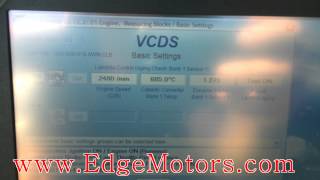
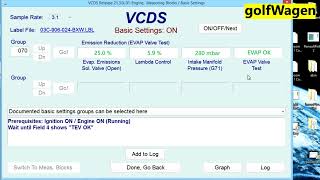
- VCDS (VAG-COM) or ODIS: Basic Settings - Group 070 or 071 (for older controllers) — This function initiates the EVAP system's self-test. It can be used to force the system to check for leaks after a repair, helping to verify the fix without waiting for a full drive cycle.
- VCDS (VAG-COM) or ODIS: Basic Settings - IDE00744 (EVAP Valve test) (for UDS controllers) — On newer UDS-protocol controllers like in the Arteon, tests are selected by name. This specific test activates the N80 purge valve to check its function. Other tests like 'Automatic Test Procedure' may also be available to run a full system check.
- Bi-directional Scan Tool: Vent Valve Activation/Sealing — During a smoke test, the EVAP system vent valve is normally open. A scan tool is required to command it closed, sealing the system and allowing it to be filled with smoke to find the leak source.
Wiring & Ground Locations
- Leak Detection Pump (LDP) Location — In the rear of the vehicle, typically located near the charcoal canister behind the passenger's or driver's side rear wheel well liner.. The LDP is a common failure point mentioned in TSBs. Knowing its location is essential for visual inspection, checking its wiring connector, and replacement.
- Earth Point 3 on Front Left Longitudinal Member — Under the hood, on the frame rail on the driver's side of the vehicle.. This is a major grounding point in the engine compartment. While not exclusive to the EVAP system, a poor ground here can cause erratic behavior in various electronic components, including solenoids like the N80 valve.
Helpful Videos


Used OEM Parts in Stock
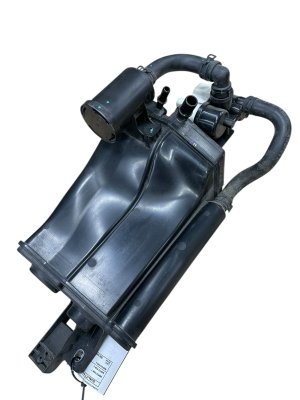
New Aftermarket Parts Available


The information in this article is provided for general reference and educational purposes only. Vehicle specifications, procedures, and part compatibility can vary by production date, trim level, and region. Always consult your vehicle's factory service manual and verify part numbers before purchasing or performing repairs. Safety-critical components such as airbags, seat belts, and braking systems should be installed by a qualified professional.
- Volkswagen ARTEON:
- 🧭 Diagnostic Flowchart
- 🎬 Helpful Videos
- 🛍️ Shop This Part
- What's Unique About the 2022-2022 Volkswagen ARTEON
- Symptoms You May Notice
- Most Likely Causes
- Rare But Worth Checking
- Diagnosis Steps
- Parts You'll Likely Need
- Related Codes That Often Appear With This One
- Technical Service Bulletins (TSBs) & Recalls
- Platform-Specific Known Issues
- Mechanic-Grade Diagnostic Values
- Hidden / Shadow Codes Worth Checking
- Scan Tool Commands That Help
- Wiring & Ground Locations
- 🎟️ Get 5% Off