

P0443 on 2003-2013 Audi A3: EVAP Purge Valve Circuit Causes and Fixes
On a 2003-2013 Audi A3, code P0443 almost always means the EVAP Purge Valve (N80 Valve) has failed electrically. This is a very common issue across the VW/Audi lineup from this era. Expect to pay $30-$80 for a quality replacement part from a brand like Bosch, and the repair is a simple DIY task that takes less than 30 minutes.
- P0443 is an electrical circuit code, not a system leak code. Do not replace the gas cap or perform a smoke test.
- The most likely cause on a 2003-2013 Audi A3 is a failed EVAP Purge Valve, also known as the N80 valve.
- Diagnosis is simple with a multimeter by testing the resistance of the N80 valve; a reading outside of 20-40 ohms indicates failure.
- The correct OEM part number is 06E906517A, and the Bosch equivalent is 0280142431.
- If a new valve doesn't fix the code, inspect the wiring harness and connector for damage or corrosion before considering rarer causes.
What's Unique About the 2003-2013 Audi A3
On the Audi A3 from this era (primarily the 8P generation), the N80 purge valve is a well-documented, common failure item. The internal solenoid coil is prone to failing, which creates an open circuit and immediately triggers the P0443 code. Unlike many other EVAP codes, this fault is rarely caused by anything other than the valve itself or its direct wiring, making diagnosis relatively straightforward for A3 owners. The same valve and issue are common on platform mates like the VW Golf/GTI of the same generation.
Generation note: The 2003-2013 model years primarily cover the Audi A3 (8P) generation. The N80 purge valve is a known common failure point across the various engines used in this platform, such as the 2.0T FSI. The issue is so prevalent that it also affects many other Volkswagen Auto Group (VAG) vehicles that share the EA113 engine and associated platforms.
Symptoms You May Notice
- Check Engine Light is on
- Rough or unstable engine idle
- Difficulty starting the engine immediately after refueling
- Slight decrease in fuel economy
- Audible rapid clicking or ticking noise from the engine bay (louder than the normal faint ticking)
- Inability to pass an emissions/smog test 🎬 Watch: P0443 code causes, symptoms, and easy fixes explained
- Replacing the gas cap. A loose or faulty gas cap will cause a leak-related EVAP code (like P0455 or P0442), not a circuit code like P0443.
- Performing a smoke test. A smoke test is used to find physical leaks in the EVAP system. P0443 points to an electrical fault, so a smoke test is not a valid diagnostic step for this code.
- Replacing the wrong valve. Some users may confuse the N80 purge valve with the N75 pressure converter valve, which is related to the turbocharger system.
Most Likely Causes
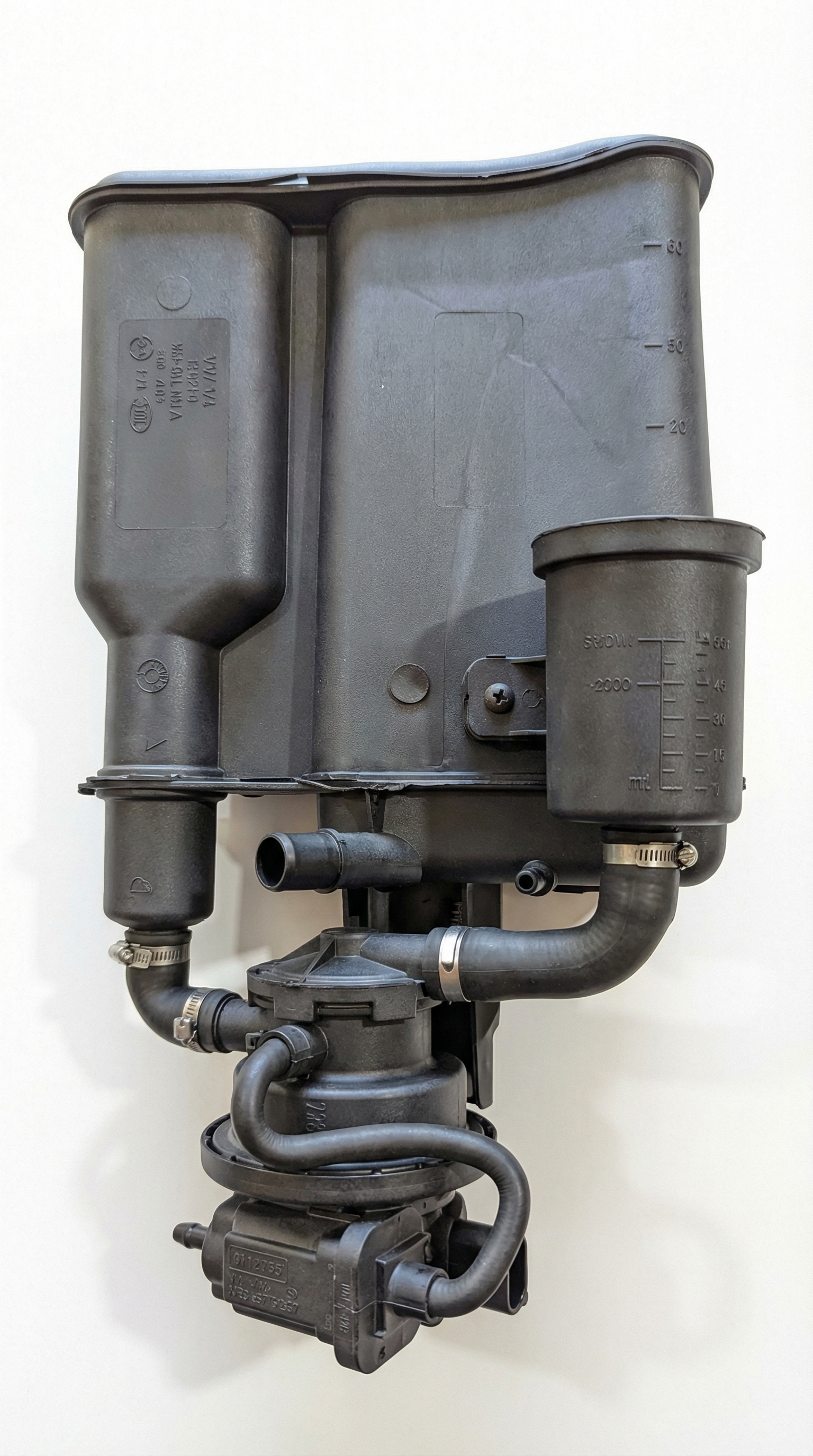
- Failed EVAP Purge Valve (N80 Valve) 🔴 High Probability → Shop Vapor Canister The internal coil winding of the solenoid is a frequent failure point on this specific part used in many VW/Audi models of this era. It's a widely reported issue in owner forums for the A3 and its platform mates.
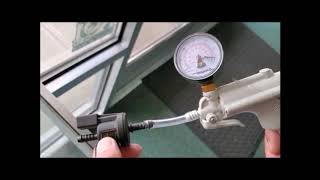
How to confirm: Disconnect the electrical connector and measure the resistance across the two pins on the valve with a multimeter. 🎬 Watch: How to test the N80 valve with a multimeter A healthy valve should read between 22-30 ohms. If it reads infinite resistance (open circuit) or zero resistance (short circuit), it has failed. You can also try to actuate it with a capable scan tool; if it doesn't click, it has failed.
Typical fix: Replace the N80 purge valve. It is located on top of the engine, often near the intake manifold, held by a rubber grommet or small bracket. It has two vacuum lines (often secured with one-time-use crimp clamps) and one electrical connector. The crimp clamps can be replaced with standard worm-gear hose clamps. 🎬 See this step-by-step N80 valve replacement walkthrough
Est. part cost: $30-$80 - Damaged Wiring or Connector 🟡 Medium Probability Engine bay heat and vibration can cause wires to become brittle and crack over time, or the connector's locking tab can break. The wiring harness is a known point of failure in other areas on the A3 8P, such as in the door jambs.
How to confirm: Visually inspect the wiring harness leading to the N80 valve for any signs of cracking, chafing, or melting. Wiggle the connector while the engine is running to see if it affects the idle. Check for 12V power on one pin of the connector with the ignition on and check for continuity to the ECM on the other wire.
Typical fix: Repair the broken wire using a butt connector or solder. If the connector is damaged, replace it with a new pigtail connector (part number may vary).
Est. part cost: $10-$25 - Blown Fuse ⚪ Low Probability
How to confirm: Check the vehicle's fuse box diagram for the fuse related to the emissions system or EVAP system. On many VAG vehicles, the N80 valve gets power via the Fuel Pump (FP) relay or the Engine Component Power Supply Relay (J757). Pull the fuse and visually inspect if it is blown or test for continuity with a multimeter.
Typical fix: Replace the blown fuse with a new one of the same amperage rating. If the fuse blows again, it indicates a short circuit in the system that needs to be traced, possibly in the N80 valve itself or the wiring to it.
Est. part cost: $1-$5
Rare But Worth Checking
- Faulty Powertrain Control Module (PCM): → Shop Engine Control Module (ECM) This is extremely rare. Before condemning the PCM, all other possibilities, including the valve, wiring, and fuses, must be exhaustively tested and ruled out. A PCM failure would typically be accompanied by other fault codes and more significant drivability issues.
Diagnosis Steps
- Read the code with an OBD-II scanner to confirm P0443 is present.
- Visually inspect the N80 purge valve and its electrical connector for any obvious damage, corrosion, or loose connections.
- Inspect the wiring harness leading to the valve for cracks, chafing, or heat damage.
- Locate and check the fuse for the EVAP system in the vehicle's fuse panel.
- If the visual inspection passes, disconnect the electrical connector from the N80 valve.
- Use a multimeter set to Ohms (Ω) to measure the resistance between the two pins on the valve itself. A good valve should read between 22-30 ohms. An open circuit (OL) or shorted (near 0 ohms) reading indicates a failed valve.
- With the connector still disconnected and the ignition key in the 'On' position, use a multimeter set to DC Volts to check for battery voltage (approx. 12V) at one of the pins in the connector harness.
- If voltage is present and the valve's resistance is bad, replace the N80 valve.
- If voltage is not present at the connector, the problem lies in the wiring harness or the fuse. Trace the wiring back to the ECM.
- After repair, clear the fault code with the scanner and perform a drive cycle to ensure the Check Engine Light does not return.
Parts You'll Likely Need
- EVAP Canister Purge Valve (N80 Valve)
(OEM #06E906517A)— This is the most common failure point for code P0443 on this vehicle due to internal coil failure. The Bosch equivalent part number is 0280142431.
Trusted brands: Bosch (OEM), Vemo, Standard Motor Products
OEM price range: $60-$100
Aftermarket price range: $30-$80
Related Codes That Often Appear With This One
- P0441 — P0441 (Incorrect Purge Flow) can appear if the N80 valve is electrically faulty and therefore not opening/closing correctly to regulate flow. It is common to see both codes together.
- P0444 — P0444 (EVAP Purge Control Valve Circuit Open) is a more specific version of P0443 and points directly to an open circuit, often caused by the same N80 valve internal failure or a broken wire.
- P0445 — P0445 (EVAP Purge Control Valve Circuit Shorted) is another specific version of P0443, indicating the circuit has shorted to ground or power.
Platform-Specific Known Issues
- On some A3 models, particularly the A3 e-tron of a later generation, a cracked semi-rigid EVAP hose near the coolant expansion tank can cause EVAP leak codes, though this is a separate issue from the P0443 circuit fault.
Mechanic-Grade Diagnostic Values
- N80 Purge Valve internal resistance — expected: 22 to 30 Ohms. Failure: Infinite resistance (OL) indicates an open coil; near-zero resistance indicates a shorted coil.
- Voltage at N80 valve connector (harness side) — expected: Approximately 12V (battery voltage) on one pin with ignition on, engine off.. Failure: Low or no voltage points to a problem with the power supply, which could be a blown fuse, a faulty relay (J757), or a break in the wiring.
- Continuity from N80 valve connector to ECM — expected: Maximum of 1.5 Ohms. Failure: A reading higher than 1.5 Ohms indicates excessive resistance or an open circuit in the control wire between the valve and the ECM.
Scan Tool Commands That Help
- VCDS (VAG-COM): Engine -> Basic Settings -> Group 070 (EVAP System Test) — This test runs a full diagnostic sequence on the EVAP system. It can help confirm if the system is functioning correctly after a repair, but a P0443 circuit fault will likely prevent the test from running or cause it to fail immediately.
- VCDS (VAG-COM): Engine -> Output Tests -> Select "EVAP Purge Valve (N80)" — This is a direct bidirectional test that commands the N80 valve to cycle on and off. You should hear an audible clicking from the valve. If there is no click, and the wiring/voltage has been verified as good, the valve itself is faulty.
Wiring & Ground Locations
- ECM Pin T94/49 — At the Engine Control Module (ECM) connector.. This is the specific pin on the ECM that provides the ground-side control for the N80 purge valve on some Audi engines. Checking for continuity between this pin and terminal 2 of the N80 valve connector is a definitive way to test the control wire.
- Ground Point 12 — On the left side of the engine compartment.. This is a primary engine compartment ground point. While not directly for the N80 valve (which is ECM-grounded), a poor main engine ground can cause a variety of electrical issues and erratic sensor readings.
- Ground Point 671 — On the front of the left longitudinal member (frame rail).. This is another critical chassis ground in the engine bay. Verifying that main ground points are clean and tight is a good practice when diagnosing any electrical fault code.
- N80 Connector Pin 1 — The electrical connector on the N80 valve itself.. This pin receives power (approx. 12V) from a relay (like J757 or the fuel pump relay) when the ignition is on.
- N80 Connector Pin 2 — The electrical connector on the N80 valve itself.. This pin is the control circuit wire that runs to the ECM. The ECM pulses a ground signal on this wire to open the valve.
Real Owner Repair Stories
- golfmk6.com forum user (VW GTI (platform mate with shared 2.0T engine)) — Check Engine Light and EPC light.
❌ Tried (didn't work) The N80 valve itself was tested and found to have correct resistance (~34 Ohms), ruling out a failed valve coil.
✅ What actually fixed it The user diagnosed the root cause as low voltage at the N80 valve's electrical connector. The faulty car showed only 1.25V with the ignition on, while a working comparison car showed 9V. The problem was traced to the power supply side of the circuit, not the valve itself. - Go-Parts Forum Synthesis (2013 Kia Sportage 2.4L (different vehicle, but illustrates a common wiring failure mode)) — Check Engine Light with P0443, no other symptoms.
❌ Tried (didn't work) Replacing the EVAP Purge Control Valve with a new aftermarket part.
✅ What actually fixed it The code returned after replacement. A detailed inspection of the wiring connector revealed a female pin had backed out slightly, causing a poor connection. Reseating the pin firmly into the connector housing until it clicked was the final fix.
OEM Part Supersession History
Unknown→06E906517A— Standard part evolution and supplier changes.
Heads up: This part is specific to certain engine families, primarily the EA113 2.0T FSI engine. It is not compatible with the later EA888 2.0T TSI engines found in some models within the same year range, which use a different valve design. Always verify by engine code (FSI vs. TSI).
Model Year Variations Within This Range
- 2006-2008.5 vs 2009+: The Audi A3 8P platform used both the EA113 ('FSI') and later the EA888 ('TSI') 2.0T engines. While the P0443 code applies to both, and the N80 valve is a common failure on both, the exact part number and location can differ. The 06E906517A part number is most commonly associated with the EA113 FSI engine. It is critical to verify the engine code before ordering parts.
Diagnostic Flowchart
Other Known Issues on This Vehicle
Issues unrelated to this code that are worth knowing about as an owner of this generation:
- DSG Mechatronic Unit Failure 🔴 High — Common on S-Tronic/DSG transmissions, especially as mileage increases. Can cause jerky shifting, loss of drive, or complete transmission failure. (Ref: Various TSBs and a recall on earlier models exist.)
- 2.0T FSI Cam Follower Wear 🔴 High — A well-known issue on the EA113 2.0T FSI engine. The cam follower for the high-pressure fuel pump (HPFP) can wear out, leading to damage to the camshaft and HPFP if not replaced preventatively (every 20-40k miles).
- Intake Valve Carbon Buildup 🟠 Medium — Common to all direct-injection engines of this era, including the 2.0T FSI. Causes misfires, rough idle, and loss of power. Typically requires walnut blasting to clean every 60-80k miles.
- PCV Valve Failure 🟠 Medium — The Positive Crankcase Ventilation (PCV) valve is prone to failure, causing high oil consumption, rough idle, and a whistling noise from the engine bay.
- Diverter Valve (DV) Failure 🟡 Low → Shop Turbocharger — The original diaphragm-style diverter valve on turbocharged models is weak and can tear, causing a loss of boost pressure under acceleration. An updated piston-style valve is the common fix.
- Rust on Front Fenders/Arches 🟠 Medium — A foam insert inside the front wheel arch liner can trap moisture, leading to rust forming from the inside out. This was a common issue shared with the MK5 Golf platform. (Ref: A 10-year paint warranty existed but has since expired for these vehicles.)
Used vs. New Parts: Buying Guide for This Vehicle
When a used part is the smart pick: Given the low cost of a new, high-quality aftermarket part (around $30-$50) and the high failure rate of the original part's internal coil, buying a used N80 valve is generally not recommended. The risk of the used part failing soon after installation is high. A used part should only be considered as a temporary, budget-strapped measure if it can be tested with a multimeter before purchase.
Donor-vehicle mileage cap: roughly under 50000 miles for the part to have meaningful remaining life.
What to inspect on the donor part:
- Test with a multimeter: The resistance across the two pins must be between 22-30 Ohms.
- Inspect the plastic housing for cracks or heat damage.
- Ensure the electrical connector pins are clean, straight, and free of corrosion.
- If possible, apply 12V power to the pins and listen for a distinct 'click' to confirm the solenoid actuates.
OEM-only on this vehicle (don't cheap out):
- For this specific P0443 repair, there are no components that are strictly OEM-only. High-quality aftermarket parts are widely available and considered reliable.
Aftermarket brands forum-validated for this vehicle:
- Bosch (often the Original Equipment Manufacturer)
- Standard Motor Products
- Dorman
- URO Parts
Brands owners have reported issues with on this vehicle:
- Unbranded, no-name parts from online marketplaces should be avoided. Forum users sometimes report that extremely cheap parts fail to resolve flow-related codes (like P0441) even if they fix the P0443 circuit code, or they fail prematurely.
Real Owner Stories
Aggregated from forums and TSBs cited above. Mileages and costs reflect what owners reported in those sources.
Audi A3
Symptoms: The user experienced a P0443 fault code and was advised that replacing the N80 valve might not be the solution if the wiring is the true cause.
What fixed it: The user was advised to check the wiring harness after a valve replacement failed to resolve the circuit issue.
Source hint: AudiSRS.com - P0443 Fault Code Help
Audi A3
Symptoms: The Check Engine Light remained on with a P0443 code even after the owner replaced the purge valve.
What fixed it: The issue required further diagnosis of the wiring or connector rather than just the valve replacement.
Source hint: Reddit r/MechanicAdvice - P0443 Issue?
2006-2009 Volkswagen GTI (MK5)
Symptoms: Recurring emissions light and potential issues with the charcoal canister being affected by the EVAP fault.
What fixed it: Replacement of the N80 valve (Part 06E906517A), though the owner noted the light could return if associated components were affected.
Source hint: golfmkv.com - Consequences of a faulty N80 valve
Related OBD-II Codes
Frequently Asked Questions
Where is the N80 purge valve located on my Audi A3?
Can I use standard hose clamps if I replace the N80 valve myself?
What is the correct resistance for a healthy N80 valve on an Audi A3?
Why does my A3 have trouble starting specifically after I fill up the gas tank?
Is there a specific fuse I should check for P0443 on my Audi?
I replaced the N80 valve but the P0443 code is still there. What else could it be?
Helpful Videos



We Have This Part in Stock

The information in this article is provided for general reference and educational purposes only. Vehicle specifications, procedures, and part compatibility can vary by production date, trim level, and region. Always consult your vehicle's factory service manual and verify part numbers before purchasing or performing repairs. Safety-critical components such as airbags, seat belts, and braking systems should be installed by a qualified professional.
- Audi A3:
- 🧭 Diagnostic Flowchart
- 🎬 Helpful Videos
- 🛍️ Shop This Part
- What's Unique About the 2003-2013 Audi A3
- Symptoms You May Notice
- Most Likely Causes
- Rare But Worth Checking
- Diagnosis Steps
- Parts You'll Likely Need
- Related Codes That Often Appear With This One
- Platform-Specific Known Issues
- Mechanic-Grade Diagnostic Values
- Scan Tool Commands That Help
- Wiring & Ground Locations
- Real Owner Repair Stories
- OEM Part Supersession History
- Model Year Variations Within This Range
- Other Known Issues on This Vehicle
- Used vs. New Parts: Buying Guide for This Vehicle
- Real Owner Stories
- Audi A3
- Audi A3
- 2006-2009 Volkswagen GTI (MK5)
- Related OBD-II Codes
- Frequently Asked Questions
- 🎟️ Get 5% Off