

P0443 on 2009-2016 Audi A4 2.0T: EVAP Purge Valve Circuit Causes and Fixes
On a 2009-2016 Audi A4 2.0T, code P0443 almost always means the EVAP Purge Valve (N80) has failed. This is an electrical circuit code, not a leak. Expect to pay $30-$70 for a quality aftermarket part and replace it yourself in under 30 minutes.
- P0443 on your A4 2.0T points to an electrical problem with the N80 EVAP purge valve, not a gas cap issue or a system leak.
- The most likely cause by far is a failed N80 valve, which can be confirmed with a simple resistance test using a multimeter.
- This is a simple and inexpensive DIY repair that can be completed in under 30 minutes with basic tools.
- Using a quality OEM-supplier part (like Bosch) is highly recommended to prevent the code from returning prematurely.
What's Unique About the 2009-2016 Audi A4
For the B8/B8.5 generation Audi A4 with the 2.0T TSI (EA888) engine, the N80 purge valve is a very common failure point. The valve is mounted directly on the engine, making it susceptible to heat and vibration, which can lead to the internal solenoid coil failing over time. While the code is generic, on this specific platform, the cause is overwhelmingly the valve itself rather than complex wiring issues, making for a straightforward diagnosis and repair.
Generation note: The 2009-2016 year range covers the Audi A4 B8 and the facelifted B8.5 generation. The engine (EA888 Gen 2), N80 valve location, and repair procedure for this code are virtually identical across this entire range.
Symptoms You May Notice
🎬 Watch: A quick guide to common bad purge valve symptoms.- Check Engine Light is on.
- Difficulty starting the engine, especially right after filling the gas tank. This may present as extended cranking before the engine starts, or the engine starting and immediately stalling.
- Rough or unstable idle, as a stuck-open valve creates a vacuum leak.
- Slight decrease in fuel economy.
- A faint fuel odor in some cases.
- Audible, rapid clicking from the valve that is louder than normal or present at all times.
- Replacing the gas cap. A faulty gas cap will typically cause a code for a small or large EVAP leak (like P0456 or P0455), not a circuit malfunction code like P0443.
- Performing a smoke test. A smoke test is used to find physical leaks in the EVAP system. P0443 is an electrical circuit code, meaning the computer has detected a problem with the wiring or the solenoid coil inside the valve, not a vapor leak.
Most Likely Causes
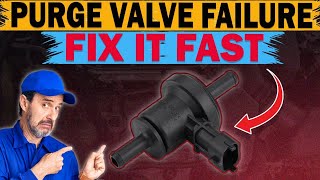
- Faulty EVAP Purge Valve (N80 Valve) 🔴 High Probability → Shop Vapor Canister The valve is a known common failure item on many VW/Audi products of this era. The internal solenoid coil can fail from heat and vibration, causing an open or shorted circuit. It can also get clogged with charcoal particles from a deteriorating EVAP canister.
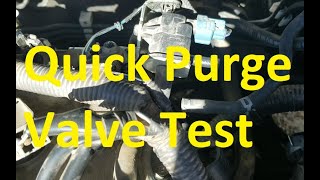
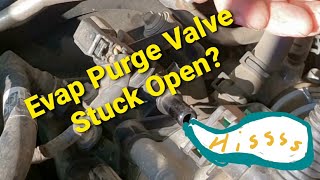
How to confirm: Disconnect the electrical connector and measure the resistance across the two pins on the valve with a multimeter. A reading of infinite resistance (open) or zero resistance (short) indicates a bad valve. A typical good valve should have a resistance between 22 and 30 ohms. You can also use a scan tool to command the valve to open and close; you should hear an audible clicking sound. With the engine off, you should not be able to blow air through the valve; 🎬 Watch: See how to perform this quick stuck-open valve test. if you can, it's stuck open.
Typical fix: Replace the N80 purge valve. 🎬 Watch: See this Audi 2.0T purge valve replacement walkthrough. It is located on top of the engine and is held in place by a rubber mount and two hose connections.
Est. part cost: $30-$80 - Damaged Wiring or Connector ⚪ Low Probability The wiring harness in the engine bay is exposed to heat and vibration, which can cause wires to become brittle or chafe over time. The connector pins can also corrode.
How to confirm: Visually inspect the wiring going to the N80 valve for any signs of cracking, chafing, or breaks. Check the connector for corrosion or bent/pushed-back pins. Use a multimeter to check for battery voltage (approx. 12V) at one pin of the connector with the key on. The other wire is the ground, which is controlled by the ECM.
Typical fix: Repair the damaged section of the wiring harness or clean/replace the connector.
Est. part cost: $5-$25
Rare But Worth Checking
- Blown Fuse: The EVAP system is protected by a fuse, often shared with other engine components. While not common for it to blow without another issue, it's a quick and easy check before replacing parts. Check your owner's manual for the specific fuse location.
- Faulty Engine Control Module (ECM): → Shop Engine Control Module (ECM) This is extremely rare, but if the valve and wiring are confirmed to be good, the driver circuit within the ECM could be faulty. This should be the last consideration after all other possibilities are exhausted.
Diagnosis Steps
- Read the code with an OBD-II scanner to confirm P0443 is present.
- Check the fuse for the EVAP system in the vehicle's fuse box.
- Locate the N80 purge valve on top of the 2.0T engine, near the intake manifold.
- Inspect the electrical connector and wiring harness for any visible damage, corrosion, or loose connections.
- With the ignition on (engine off), use a multimeter to verify that one pin on the harness-side connector has battery voltage (approx. 12V). This power is often supplied by the Engine Component Power Supply Relay (J757).
- Disconnect the connector and measure the resistance of the N80 valve itself. A good valve will read between 22-30 ohms. An open circuit (infinite resistance) or short circuit (near zero resistance) means the valve is bad.
- If you have a capable scan tool (like VCDS), use the output test function to command the N80 valve to cycle. You should hear a distinct clicking from the valve. If it doesn't click, and it has power, the valve is faulty.
- If the valve and wiring test good, the issue may be an intermittent connection or, in very rare cases, the ECM itself.
Parts You'll Likely Need
- EVAP Canister Purge Valve (N80 Valve)
(OEM #06H906517H (supersedes 06H906517AA, 06H906517B, 06H906517K))— This is the most common component to fail, causing the P0443 code on this specific vehicle.
Trusted brands: Bosch (OEM supplier), Pierburg, Genuine Volkswagen/Audi
OEM price range: $60-$90
Aftermarket price range: $30-$70
Related Codes That Often Appear With This One
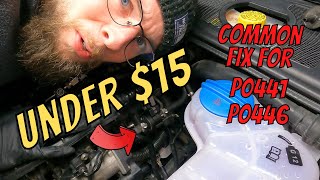
- P0441 — P0441 (EVAP System Incorrect Purge Flow) is often seen with P0443. P0441 indicates the system is not flowing correctly, which can be a direct result of the electrical failure (P0443) preventing the valve from opening or closing as commanded.
- P0444 — P0444 (EVAP Purge Control Valve Circuit Open) is a more specific version of P0443, pointing directly to an open circuit in the wiring or, most commonly, a failed internal coil in the N80 valve solenoid.
Technical Service Bulletins (TSBs) & Recalls
- While not for the A4 specifically, VW TSB #201306 / V201306 for the Eos addresses diagnosis of the N80 purge valve, showing it is a recognized issue by the manufacturer across the EA888 engine family.
Platform-Specific Known Issues
- Importance of OEM/OES Parts: Some owners have reported that using very cheap, non-branded aftermarket N80 valves can lead to a quick return of the P0441 or P0443 code. It is recommended to use a Genuine VW/Audi part or a part from an Original Equipment Supplier (OES) like Bosch for longevity.
Mechanic-Grade Diagnostic Values
- N80 Purge Valve internal resistance — expected: 22 to 30 Ohms. Failure: Infinite resistance (open circuit) or near-zero resistance (short circuit).
- Voltage supply at N80 connector (harness side) — expected: Battery Voltage (approx. 12V). Failure: No voltage indicates a problem with the fuse, wiring, or the Engine Component Power Supply Relay (J757).
- N80 Valve ground-side control signal (with scan tool) — expected: A fluctuating signal (duty cycle) when commanded by a scan tool, which can be observed with a test light or oscilloscope.. Failure: No fluctuation when commanded indicates a wiring issue to the ECM or a faulty ECM driver.
Scan Tool Commands That Help
- VCDS (VAG-COM) or equivalent: Engine -> Output Tests -> Evaporative Emission (EVAP) Canister Purge Regulator Valve (N80) — This command directly cycles the N80 valve, allowing you to listen for the audible click of the solenoid activating. If the valve has power but does not click during this test, it is confirmed to be faulty.
Wiring & Ground Locations
- G18 — On the engine block, at the left rear of the engine compartment for the 2.0L engine.. This is a primary engine ground point. A loose or corroded connection here can cause intermittent electrical issues for various engine components, potentially including the EVAP system.
- Engine Component Power Supply Relay (J757) — Located in the engine compartment electronics box (E-box), typically under the plenum cover near the base of the windshield.. Service manuals indicate that this relay supplies the 12V power to the N80 valve. A failure of this relay or its wiring would cut power to the valve, triggering a P0443.
Real Owner Repair Stories
- Reddit user on r/Volkswagen (2009 VW Tiguan (with same 2.0T TSI CCTA engine as A4)) — P0441 code (Incorrect Purge Flow), which is functionally related to P0443.
❌ Tried (didn't work) N/A, went for professional diagnosis first.
✅ What actually fixed it The dealership diagnosed a bad N80 purge valve and quoted $1000 for the repair. A commenter with a GTI (same engine) noted their independent shop charged $12 for the Bosch part and $35 for labor. The original poster was advised to buy the part (Bosch or other OEM brand) for under $100 and perform the simple replacement themselves.
OEM Part Supersession History
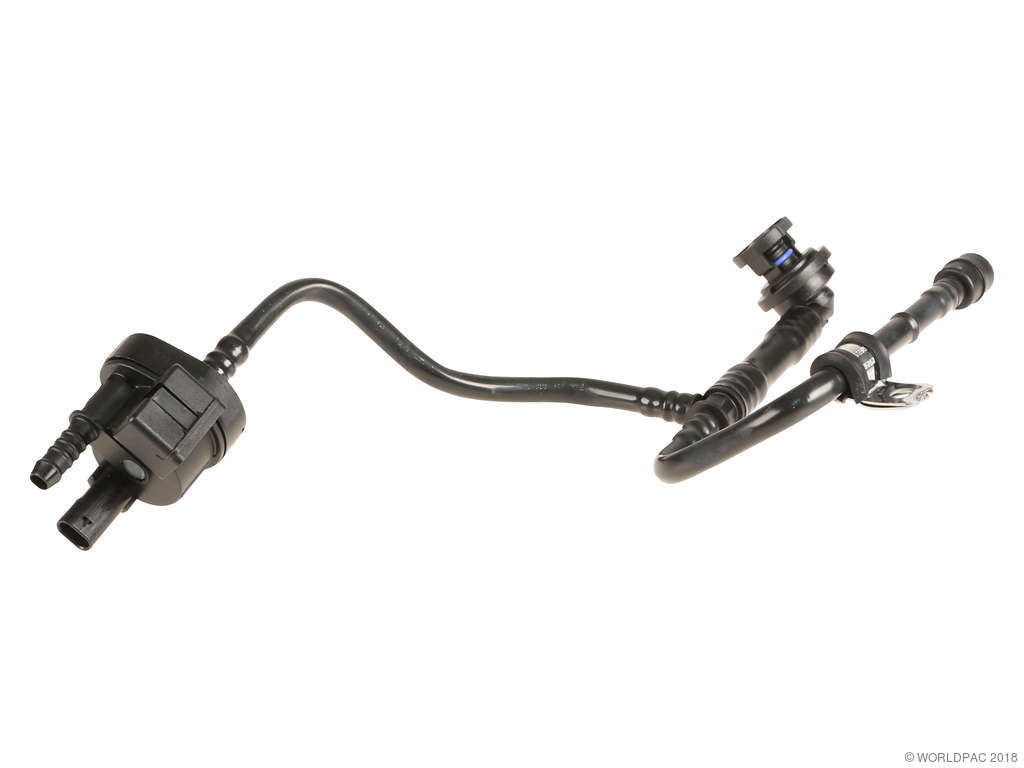
Various older revisions (e.g., 06H906517B, 06H906517K)→06H906517H— Standard part revision and improvement by the manufacturer.06H906517H (Valve Only)→06J133781CE (Valve with Hoses)— The dealer often sells the valve as a complete assembly with pre-formed plastic hoses for easier, faster replacement.
Heads up: If you buy an aftermarket valve-only part (e.g., from Topran), you may need to carefully cut the old valve off the original hard plastic line and secure the new valve with a hose clamp, as the original is often heat-shrunk onto the line.
Diagnostic Flowchart
Used vs. New Parts: Buying Guide for This Vehicle
When a used part is the smart pick: For this specific repair, a used part is NOT recommended. The N80 valve is a known high-failure item and is inexpensive to buy new from an OEM supplier. The risk of a used part failing shortly after installation outweighs the minimal cost savings.
OEM-only on this vehicle (don't cheap out):
- While not strictly 'OEM-only', it is highly advisable to use either a Genuine VW/Audi part or one from an OEM supplier like Bosch or Pierburg. Cheap, unbranded aftermarket valves are widely reported on forums to fail quickly, sometimes within weeks, causing the P0443 or P0441 code to return.
Aftermarket brands forum-validated for this vehicle:
- Bosch (OEM supplier)
- Pierburg
Brands owners have reported issues with on this vehicle:
- Unbranded, no-name parts from online marketplaces like eBay or Amazon.
Real Owner Stories
Aggregated from forums and TSBs cited above. Mileages and costs reflect what owners reported in those sources.
2013 Audi A4 2.0T
Symptoms: A persistent P0441 code that returned after installing a cheap aftermarket part.
What fixed it: Replacing a faulty aftermarket N80 valve with an OEM part (06H906517AA) resolved the code.
Source hint: YouTube: '2013 Audi A4 2.0T p044100 code fix replace n80 valve and hoses.'
Audi A4 (B6 Platform)
Symptoms: A P0455 (large leak) code and a check engine light.
What fixed it: The owner replaced the N80 valve, which took less than 5 minutes. After the replacement, the system test passed and the check engine light was resolved.
Source hint: AudiWorld Forums: 'N80 Evap purge valve'
Audi A4 (B5 Platform)
Symptoms: The owner was experiencing P0441 and hard starts after refueling.
What fixed it: The issue was resolved by diagnosing and replacing the N80 purge valve.
Source hint: AudiForums.com: 'N80 Purge Valve'
Related OBD-II Codes
Frequently Asked Questions
Where is the N80 purge valve located on my 2009-2016 Audi A4 2.0T?
My A4 is hard to start right after I get gas. Is this related to the P0443 code?
What resistance reading should I get from a good N80 valve on my A4?
Is it okay to use a cheap aftermarket N80 valve from Amazon or eBay for this repair?
How can I test the N80 valve if I don't have a professional scan tool?
Is this N80 valve failure a known issue on the VW/Audi 2.0T engine?
Helpful Videos


Used OEM Parts in Stock


New Aftermarket Parts Available

The information in this article is provided for general reference and educational purposes only. Vehicle specifications, procedures, and part compatibility can vary by production date, trim level, and region. Always consult your vehicle's factory service manual and verify part numbers before purchasing or performing repairs. Safety-critical components such as airbags, seat belts, and braking systems should be installed by a qualified professional.
- Audi A4:
- 🧭 Diagnostic Flowchart
- 🎬 Helpful Videos
- 🛍️ Shop This Part
- What's Unique About the 2009-2016 Audi A4
- Symptoms You May Notice
- Most Likely Causes
- Rare But Worth Checking
- Diagnosis Steps
- Parts You'll Likely Need
- Related Codes That Often Appear With This One
- Technical Service Bulletins (TSBs) & Recalls
- Platform-Specific Known Issues
- Mechanic-Grade Diagnostic Values
- Scan Tool Commands That Help
- Wiring & Ground Locations
- Real Owner Repair Stories
- OEM Part Supersession History
- Used vs. New Parts: Buying Guide for This Vehicle
- Real Owner Stories
- 2013 Audi A4 2.0T
- Audi A4 (B6 Platform)
- Audi A4 (B5 Platform)
- Related OBD-II Codes
- Frequently Asked Questions
- 🎟️ Get 5% Off