

P0443 on 2015-2020 Cadillac Escalade: EVAP Purge Valve Circuit Causes and Fixes
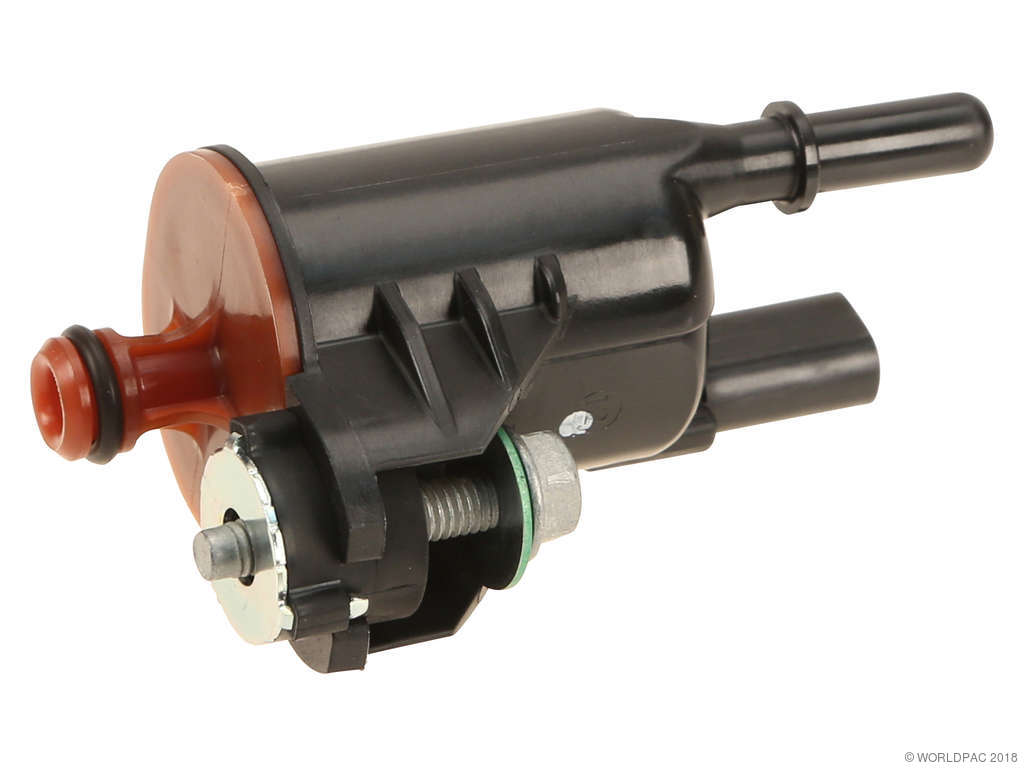
For a 2015-2020 Cadillac Escalade, code P0443 almost always indicates a failed EVAP Purge Solenoid Valve located on the engine. This is a common failure item that is easy to replace. The OEM part number is 12690512, which has been superseded by 12610560. Expect to pay between $25 and $60 for the part. If a new valve doesn't fix it, check for a blown fuse or chafed wiring per TSB 21-NA-149.
- P0443 on a 2015-2020 Escalade is an electrical circuit code, not a leak code.
- The most likely cause is a failed EVAP purge solenoid valve (Part #12690512 or its successor #12610560), which is an inexpensive part and very easy to replace.
- The valve is located directly on top of the engine, making access simple for a DIY repair.
- Do not replace the gas cap or the EVAP canister/vent valve near the tank for this specific code.
- If a new valve doesn't fix the issue, check the 'EMISS' fuse, then carefully inspect the wiring harness for damage near the ECM bracket and shock tower, as this is a known, though less common, issue per TSB 21-NA-149.
What's Unique About the 2015-2020 Cadillac Escalade
The 2015-2020 Cadillac Escalade, built on the GM K2XX platform with the 6.2L L86 V8 engine, has the EVAP purge solenoid conveniently located right on top of the engine intake manifold, making it exceptionally easy to access and replace compared to many other vehicles. While the part itself is a common failure point across many GM trucks and SUVs, the Escalade's straightforward layout simplifies diagnosis and repair. Some GM TSBs exist for this platform regarding wiring harness chafing, which can also trigger this code, but a faulty valve is far more common.
Symptoms You May Notice
- Check Engine Light is on.
- Slightly rough idle, sometimes more noticeable when the engine is cold or right after starting.
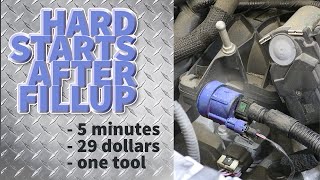
- Difficulty starting the engine immediately after refueling. 🎬 Watch: Why your car struggles to start after getting gas. This happens because the stuck-open purge valve allows raw fuel vapor to flood the intake manifold.
- A faint fuel odor may be noticeable.
- In some cases, no noticeable symptoms other than the Check Engine Light.
- Replacing the gas cap. A loose or faulty gas cap typically causes large leak codes like P0455, not a circuit code like P0443.
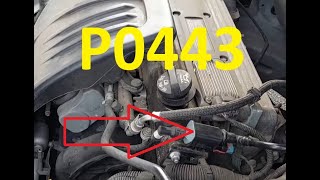
- Replacing the EVAP Vent Solenoid or Charcoal Canister. The P0443 code specifically points to the purge valve circuit 🎬 See this breakdown of P0443 causes and common fixes. in the engine bay. The vent solenoid and canister are located near the fuel tank and are associated with different codes (e.g., P0446, P0449). A user on a GMTNation forum made this mistake, highlighting the confusion.
Most Likely Causes
- Failed EVAP Purge Solenoid Valve 🔴 High Probability → Shop Vapor Canister This is a very common failure part across many GM vehicles of this era. The internal solenoid coil can fail (creating an open or short circuit) or the valve can get stuck open or closed. Owners on forums frequently report this as the definitive fix for P0443.
How to confirm: The valve is located on top of the engine. Disconnect the electrical connector and measure the resistance across the two pins with a multimeter. A reading outside of the 22-32 Ohm range (or an open/infinite reading) confirms a bad solenoid. You can also use a scan tool to command the valve to open and close; you should hear an audible click. A simple test is to remove the valve and try to blow through it; if air passes, it is stuck open and faulty.
Typical fix: Replace the EVAP purge solenoid valve. It is held on by one 10mm bolt and has one hose connection and one electrical connector, making for a 5-10 minute DIY job. 🎬 Watch: How to fix the P0443 code fast.
Est. part cost: $25-$60 - Damaged Wiring or Connector 🟡 Medium Probability GM has issued TSB 21-NA-149 for potential engine wiring harness chafing on this vehicle platform. The harness can rub against sharp edges on the ECM/TCM bracket or the driver-side shock tower, causing a short or open circuit. Rodents chewing wires is also a possible cause.
How to confirm: Visually inspect the wiring harness leading to the purge solenoid for any signs of rubbing, melting, or breaks, paying close attention to the areas mentioned in TSB 21-NA-149. Check the connector for corrosion, backed-out pins, or a loose fit. With the key on, check for 12V power at the Pink wire (Pin B) on the connector.
Typical fix: Repair the damaged section of wire using approved methods or replace the connector pigtail. Secure the harness away from sharp edges with clips and anti-abrasion tape.
Est. part cost: $10-$30 - Blown Fuse ⚪ Low Probability The EVAP purge solenoid shares a fuse with other emissions components. A short circuit in the purge valve itself or another component on the same circuit can cause the fuse to blow.
How to confirm: Consult the owner's manual for the fuse box diagram and locate the fuse for emissions components (often labeled 'EMISS' or similar). Visually inspect the fuse. If it is blown, it confirms a circuit issue.
Typical fix: Replace the blown fuse. If the fuse blows again immediately, it indicates a persistent short circuit in the wiring or one of the components (most likely the purge valve) that must be found and fixed.
Est. part cost: $1-$5
Rare But Worth Checking
- Faulty Engine Control Module (ECM): → Shop Engine Control Module (ECM) This is extremely rare and should only be considered a last resort. The ECM's internal driver for the purge valve circuit can fail, but all other possibilities (valve, wiring, fuse) must be exhaustively tested and ruled out first. A Reddit user with a P0443 that persisted after a valve replacement was advised to check wiring before suspecting the PCM.
Diagnosis Steps
- Read the code with an OBD-II scanner to confirm P0443 is the primary code.
- Locate the EVAP purge solenoid valve on top of the engine intake manifold.
- Inspect the electrical connector and wiring harness for any visible damage, such as chafing, melting, or corrosion. Pay special attention to the areas near the ECM bracket and shock tower as noted in TSB 21-NA-149.
- Check the fuse for the EVAP/emissions system in the vehicle's fuse box (typically in the underhood fuse block).
- Disconnect the electrical connector from the solenoid. With the ignition on (engine off), use a multimeter to verify that one pin has 12V power.
- With the connector still off, measure the resistance between the two pins on the solenoid itself. A typical reading for a good GM valve is between 22-32 ohms. An open circuit (infinite resistance) or a direct short (near zero resistance) indicates a failed solenoid.
- If you have a capable scan tool, perform an output test to command the purge solenoid on and off. Listen for an audible click from the valve. The valve should not click when commanded off.
- If the valve and power supply test good, check the ground control wire for continuity back to the ECM. Wiggle the harness while testing to check for intermittent breaks.
- If a new valve is installed and the code immediately returns, re-verify the fuse and wiring integrity before considering the rare possibility of a faulty ECM.
Parts You'll Likely Need
- EVAP Vapor Canister Purge Solenoid Valve
(OEM #12690512 (Superseded by 12610560))— This is the most common failure point for a P0443 code. The internal coil winding fails, causing an electrical circuit fault. Part number 12610560 is the updated replacement for the original 12690512.
Trusted brands: ACDelco (GM Genuine), Standard Motor Products (SMP), Delphi, Wells
OEM price range: $40-$60
Aftermarket price range: $25-$45
Related Codes That Often Appear With This One
- If the fuse for the emissions circuit is blown, you may see codes for other components on the same circuit, such as P0403 (EGR Circuit) or P0030 (HO2S Heater Control Circuit), depending on the specific vehicle wiring.
Technical Service Bulletins (TSBs) & Recalls
- 21-NA-149: Malfunction Indicator Lamp (MIL) Illuminated with DTCs Set, Engine Wiring Harness May Be Chafed.
- Bulletin #PIP5552: This manufacturer service bulletin notes a concern of a MIL on with P0459 or P0443 setting, indicating that engineering has investigated this specific condition on related GM platforms.
Platform-Specific Known Issues
- GM issued Technical Service Bulletin 21-NA-149 which notes that on 2019-2022 GM trucks and SUVs (including Escalade with the 6.2L L87 engine, but the issue is relevant to earlier K2XX models as well), the engine wiring harness may chafe. Specific chafe points include sharp edges on the ECM/TCM bracket and the driver-side upper control arm/shock tower area. This can cause a short or open circuit for various components, including the purge solenoid, triggering a P0443 code.
Mechanic-Grade Diagnostic Values
- EVAP Purge Solenoid Coil Resistance — expected: 22 to 32 Ohms. Failure: Infinite resistance (open circuit) or near-zero resistance (short circuit) indicates a failed solenoid coil.
- Voltage at Purge Solenoid Connector (Key On, Engine Off) — expected: Battery Voltage (~12.6V) on the Pink wire (Pin B).. Failure: No voltage indicates a blown fuse or open in the power supply wire. Voltage on the control wire (Pin A) with the key on would indicate a short to power.
- Ground Control Signal at Purge Solenoid Connector (Engine Running) — expected: A fluctuating or pulsing ground signal commanded by the ECM, visible with a test light or multimeter.. Failure: A constant ground or no ground when the valve is commanded ON by a scan tool indicates a wiring issue or a faulty ECM driver.
Scan Tool Commands That Help
- GDS2 (GM Global Diagnostic System 2): EVAP Purge/Seal or Output Control > Purge Solenoid — This bidirectional control allows a technician to command the purge solenoid ON, OFF, or to a specific duty cycle percentage. It is used to verify that the solenoid clicks audibly, that the ECM driver is functioning, and that the wiring can carry the command signal. This test definitively confirms if the solenoid is capable of actuating and if the control side of the circuit is working.
Wiring & Ground Locations
- Purge Solenoid Connector — On the EVAP Purge Solenoid, top of the intake manifold.. This is the connection point for the component. Pin B (Pink wire) is the 12V+ supply from the fuse block. Pin A (Dark Green/White wire) is the ground-side control wire from the ECM. Testing for power and ground control happens here.
- G103 / G104 — On the front and rear of the passenger-side cylinder head.. These are primary engine block grounds. While not directly for the purge solenoid, a poor engine ground can cause a host of electrical issues and erratic behavior from sensors and solenoids controlled by the ECM. Verifying these grounds are clean and tight is a good practice when diagnosing any electrical fault code.
- TSB 21-NA-149 Chafe Points — Engine wiring harness may chafe on the ECM/TCM bracket or the driver-side shock tower/upper control arm area.. This TSB specifically identifies areas where the harness can rub through, causing an open or short in the purge solenoid circuit (among others), directly leading to a P0443 code.
Real Owner Repair Stories
- GM-Trucks.com Forum User 'MileHiSierra' (Silverado (similar K2XX platform and EVAP system)) — Persistent P0443 code, engine shudder between 1500-2500 RPM.
❌ Tried (didn't work) Replaced EVAP purge valve solenoid (twice), Replaced intake manifold, Replaced purge valve hose, Replaced vent valve and solenoid, Replaced EVAP tank, Replaced gas cap
✅ What actually fixed it The ground wire in the pigtail connector for the purge solenoid was found to be brittle and corroded. It snapped upon inspection. Replacing the connector pigtail with one from a donor vehicle resolved the code.
OEM Part Supersession History
12690512→12610560— Standard part revision and update by GM. The new part is a direct replacement with the same form, fit, and function.
Heads up: There are no known incompatibilities. 12610560 is the correct and current service part.
Model Year Variations Within This Range
- 2015-2018 (L86) vs 2019-2020 (L87): The 2015-2018 models use the 6.2L L86 engine with Active Fuel Management (AFM). The 2019-2020 models transitioned to the 6.2L L87 engine, which features Dynamic Fuel Management (DFM) and Auto Start/Stop technology for improved efficiency. For the P0443 code, the EVAP purge solenoid, its location, and the diagnostic procedure remain identical as the core EVAP system design did not change between these engine versions.
Diagnostic Flowchart
Other Known Issues on This Vehicle
Issues unrelated to this code that are worth knowing about as an owner of this generation:
- 8L90 Transmission Shudder/Harsh Shifting 🔴 High — Very common, especially in 2015-2018 models. Can occur at various mileages, often described as driving over rumble strips. (Ref: Multiple TSBs issued, including 18-NA-355 (recommending a fluid flush to a specific Mobil 1 fluid) and PIP5337G. Subject of class-action lawsuits.)
- AFM/DFM Lifter Failure 🔴 High — A known issue with Gen V V8s (L86 included). Can occur at any mileage but becomes more common over 60,000 miles. Often presents as a ticking noise and a misfire code (P0300-P0308). (Ref: TSB 15-06-01-002E addresses diagnosis for collapsed AFM lifters causing misfires.)
- CUE Infotainment Screen Delamination/Failure 🟠 Medium — Extremely common across all models in this generation. The touchscreen becomes unresponsive, cracks, or shows 'ghost touches'. (Ref: No recall, but a well-known problem. Repair involves replacing the screen/digitizer, not the whole unit.)
- Carbon Buildup on Intake Valves 🟠 Medium — Inherent to direct-injection engines like the L86. Can cause rough idle, hesitation, or misfires over time, typically noticeable after 50,000-80,000 miles.
- A/C Condenser Failure 🟠 Medium — Commonly reported failure, leading to loss of air conditioning. The condenser is prone to leaks. (Ref: GM issued Special Coverage Adjustment N182206610 for some other models, but Escalade owners frequently report the same issue.)
Used vs. New Parts: Buying Guide for This Vehicle
When a used part is the smart pick: A used OEM purge solenoid from a low-mileage donor vehicle is a reasonable budget-friendly option. Since failure is electrical (coil burnout) rather than mechanical wear, a tested used part from a reputable auto recycler can be reliable. It's a simple part to test before purchase if possible.
Donor-vehicle mileage cap: roughly under 80000 miles for the part to have meaningful remaining life.
What to inspect on the donor part:
- Check for cracks or damage to the plastic housing.
- Ensure the electrical connector pins are clean, straight, and free of corrosion.
- If possible, test resistance with a multimeter; it should be within the 22-32 Ohm range.
- Ask the recycler for the donor vehicle's mileage.
OEM-only on this vehicle (don't cheap out):
- For this specific P0443 repair, there are no parts that absolutely must be OEM. The purge solenoid is a simple component.
Aftermarket brands forum-validated for this vehicle:
- ACDelco (GM Genuine/Original Equipment)
- Standard Motor Products (SMP)
- Delphi
- Wells
Brands owners have reported issues with on this vehicle:
- No-name, unbranded parts sold on marketplace sites at exceptionally low prices may have questionable quality control and are best avoided.
Real Owner Stories
Aggregated from forums and TSBs cited above. Mileages and costs reflect what owners reported in those sources.
2019 Cadillac Escalade 6.2L L87
Symptoms: Malfunction Indicator Lamp (MIL) illuminated with circuit-related DTCs.
What fixed it: Inspected the engine wiring harness and found chafing against the ECM/TCM bracket; repaired the wiring and secured it away from sharp edges per TSB 21-NA-149.
Source hint: TSB 21-NA-149
2015-2020 Cadillac Escalade 6.2L
Symptoms: Check Engine Light on; code P0443 persisted even after replacing the purge valve.
What fixed it: Diagnosis of the electrical circuit, specifically inspecting the wiring and connector for an open or short circuit rather than replacing more EVAP parts.
Source hint: Reddit r/MechanicAdvice - P0443 Issue?
2015-2020 Cadillac Escalade 6.2L
Symptoms: P0443 code triggered by damaged electrical lines.
What fixed it: Repairing wiring that had been chewed through by rats.
Source hint: Reddit r/chevyspark - Code P0443
Related OBD-II Codes
Frequently Asked Questions
Does TSB 21-NA-149 apply to my 2019-2020 Cadillac Escalade regarding the P0443 code?
Where is the EVAP purge solenoid located on the 6.2L engine in my Escalade?
How can I test if the purge valve on my Escalade is actually bad before buying a new one?
Why does my Escalade struggle to start only after I fill up the gas tank?
Is there a specific fuse I should check for the P0443 circuit on this vehicle?
Could a bad battery cable cause the P0443 code on my Cadillac?
Helpful Videos

Used OEM Parts in Stock

New Aftermarket Parts Available


The information in this article is provided for general reference and educational purposes only. Vehicle specifications, procedures, and part compatibility can vary by production date, trim level, and region. Always consult your vehicle's factory service manual and verify part numbers before purchasing or performing repairs. Safety-critical components such as airbags, seat belts, and braking systems should be installed by a qualified professional.
- Cadillac Escalade:
- 🧭 Diagnostic Flowchart
- 🎬 Helpful Videos
- 🛍️ Shop This Part
- What's Unique About the 2015-2020 Cadillac Escalade
- Symptoms You May Notice
- Most Likely Causes
- Rare But Worth Checking
- Diagnosis Steps
- Parts You'll Likely Need
- Related Codes That Often Appear With This One
- Technical Service Bulletins (TSBs) & Recalls
- Platform-Specific Known Issues
- Mechanic-Grade Diagnostic Values
- Scan Tool Commands That Help
- Wiring & Ground Locations
- Real Owner Repair Stories
- OEM Part Supersession History
- Model Year Variations Within This Range
- Other Known Issues on This Vehicle
- Used vs. New Parts: Buying Guide for This Vehicle
- Real Owner Stories
- 2019 Cadillac Escalade 6.2L L87
- 2015-2020 Cadillac Escalade 6.2L
- 2015-2020 Cadillac Escalade 6.2L
- Related OBD-II Codes
- Frequently Asked Questions
- 🎟️ Get 5% Off