

P0443 on 2010-2016 Cadillac SRX: EVAP Purge Control Circuit Causes and Fixes
For a 2010-2016 Cadillac SRX, code P0443 almost always points to a failed EVAP Purge Solenoid Valve on the engine. It's a straightforward DIY replacement that typically costs between $25 and $60 for the part. This part is a known high-failure item on many GM vehicles with the 3.0L and 3.6L V6 engines.
- P0443 on your SRX is an electrical circuit code, not a leak code.
- The most likely cause is a faulty EVAP purge solenoid valve located on the engine.
- This is an easy and inexpensive DIY repair, typically taking less than 30 minutes with basic tools.
- When buying a replacement part, verify it fits your specific engine (3.0L for 2010-11, 3.6L for 2012-16) using your VIN.
- Before replacing the part, it's wise to quickly check the associated fuse and the wiring connector for any obvious damage.
What's Unique About the 2010-2016 Cadillac SRX
On the second-generation Cadillac SRX, the P0443 code is a very common issue, with the purge solenoid valve itself being the overwhelming point of failure. While the code indicates a circuit problem, the solenoid's internal electronics are most often the cause. This repair is considered a common maintenance item by many owners. The vehicle used two main V6 engines during this period (3.0L LF1 from 2010-2011 and 3.6L LFX from 2012-2016), but the cause and repair process for P0443 are nearly identical for both, as they share the same part design.
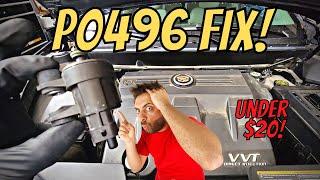
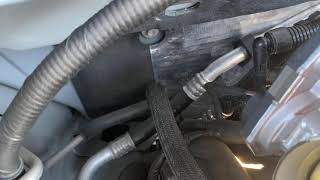
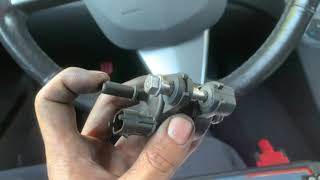
🎬 Watch: A quick walkthrough of the 2010 SRX purge valve replacement.Symptoms You May Notice
- Check Engine Light is on
- Remote start may be disabled by the vehicle's software as a default for many emissions-related fault codes.
- Slightly rough idle (if the valve is stuck open or closed)
- Minor decrease in fuel economy
- Possible fuel odor, especially if the valve is stuck open
- Difficulty starting the engine immediately after refueling (more common if paired with code P0496) 🎬 See why a bad valve causes hard starting after fueling.
- Replacing the gas cap. A loose or bad gas cap typically causes a P0455 (large leak) or P0442 (small leak) code, not a P0443 circuit code.
- Replacing the EVAP vent solenoid. The vent solenoid is located near the fuel tank and charcoal canister and has its own set of trouble codes (e.g., P0446, P0449). P0443 points specifically to the purge solenoid circuit on the engine.
- Performing a smoke test. A smoke test is used to find physical leaks in the EVAP system (for codes like P0442/P0455), whereas P0443 is an electrical circuit fault. A smoke test will not identify the cause of a P0443 code.
Most Likely Causes
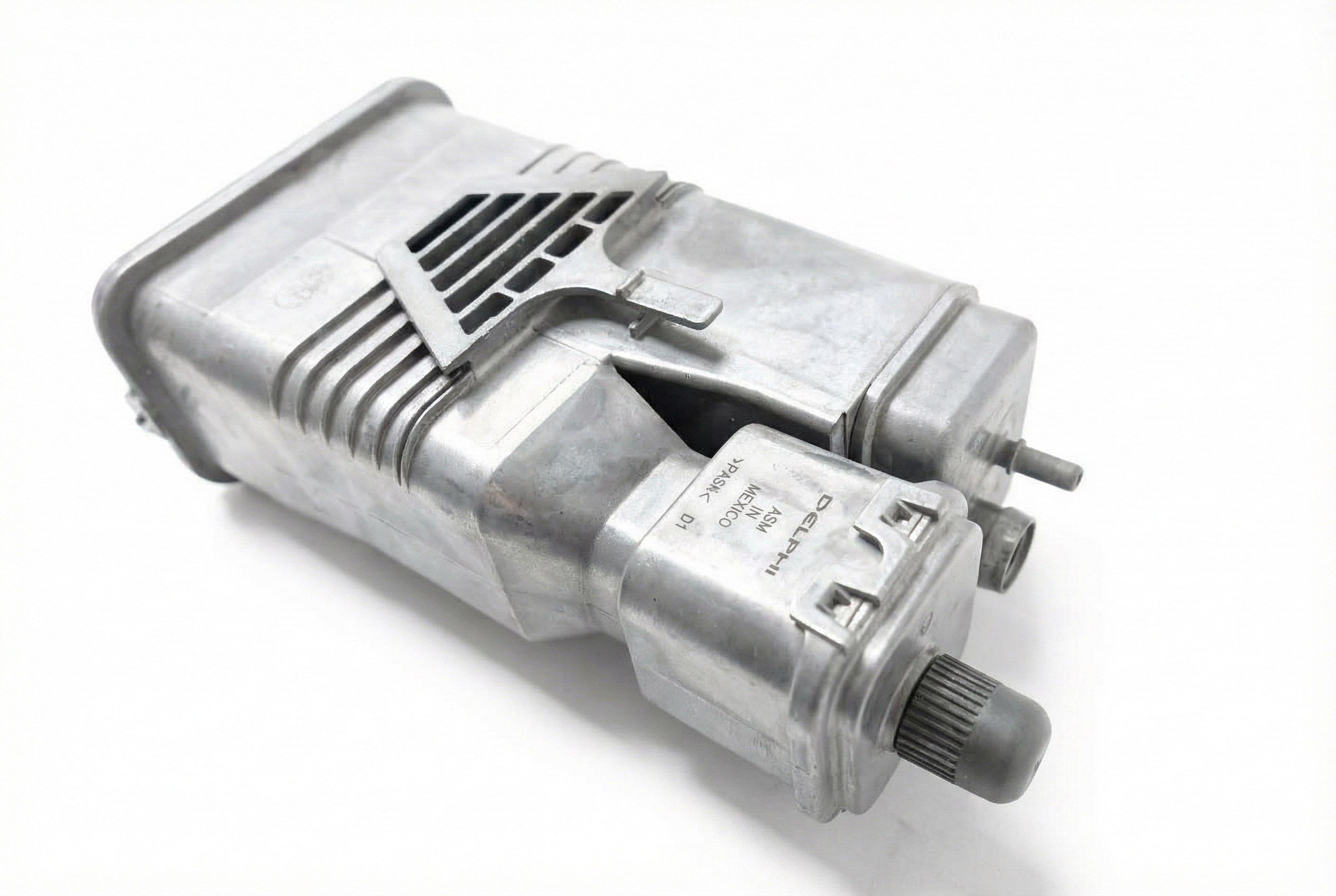
- Faulty EVAP Purge Solenoid Valve 🔴 High Probability → Shop Vapor Canister The internal coil of the solenoid can fail, creating an open or short in the circuit. This is a common failure mode for this part on many GM vehicles, including the SRX and its platform mates. The part is often manufactured by Bosch for GM.
How to confirm: Use a multimeter to check for resistance across the two pins of the solenoid. A good solenoid on these GM engines will typically have a resistance between 15-30 ohms. An open circuit (infinite resistance) or a short (very low resistance) indicates a bad solenoid. A scan tool can also be used to command the valve on/off; if it doesn't produce an audible click and the wiring is confirmed good, the valve is faulty.
Typical fix: Replace the EVAP purge solenoid valve. It is mounted on the engine intake manifold and held by a single 10mm bolt.
Est. part cost: $25-$60 - Damaged Wiring or Electrical Connector 🟡 Medium Probability The wiring harness in the engine bay is exposed to heat and vibration, which can cause wires to chafe or break over time, often near bends or where the harness is clipped. The connector pins can also corrode or the locking tab (often a red or white plastic piece) can break.
How to confirm: Visually inspect the wiring harness leading to the purge solenoid for any signs of damage, melting, or chafing. Disconnect the connector and check for corrosion or bent/broken pins. Use a multimeter to check for 12V power on one wire (with ignition on) and for a ground signal from the PCM on the other when the valve is commanded on by a scan tool.
Typical fix: Repair the damaged section of wire or clean/replace the electrical connector pigtail.
Est. part cost: $5-$30 - Blown Fuse ⚪ Low Probability A short in the purge valve itself or in the wiring harness can cause the associated fuse to blow. On some GM platforms, this is labeled as the 'Emission 1' fuse in the underhood fuse block.
How to confirm: Check the fuse box for the fuse that supplies power to the EVAP system components. A test light or multimeter can confirm if the fuse is blown. Consult the owner's manual for the specific fuse location.
Typical fix: Replace the blown fuse. If the fuse blows again immediately, it indicates a persistent short circuit in the system that must be found and repaired.
Est. part cost: $1-$5
Rare But Worth Checking
- Faulty Powertrain Control Module (PCM): → Shop Engine Control Module (ECM) This is very rare. The internal driver circuit in the PCM that controls the purge solenoid can fail. This should only be considered after all other possibilities (valve, wiring, fuse) have been definitively ruled out by testing.
Diagnosis Steps
- Read the Code: Use an OBD-II scanner to confirm P0443 is the active code and check for any other related codes like P0496 or P0444.
- Check the Fuse: Locate the fuse for the EVAP system (may be labeled 'EMISSIONS') in your owner's manual and inspect it. Replace if blown.
- Inspect Wiring: Visually inspect the electrical harness and connector at the purge solenoid valve, which is located on top of the engine near the throttle body. Look for obvious signs of damage, chafing, or corrosion.
- Test the Circuit: With the ignition on, disconnect the connector. Use a multimeter to verify that one pin has 12-volt power. The other pin is the ground-side control from the PCM.
- Test the Solenoid: Measure the resistance between the two pins on the purge solenoid itself. A reading of infinite resistance (open) or near-zero resistance (short) confirms the solenoid is bad. A good solenoid will have a specific resistance value, typically 15-30 ohms for these GM vehicles.
- Command a Test: If you have an advanced scan tool, command the purge solenoid to open and close. You should hear a distinct clicking sound from the valve. If it doesn't click and the wiring has power, the solenoid is faulty. You can also do this manually by applying 12V and ground to the solenoid pins.
- Replace the Part: If the solenoid is confirmed bad, replace it. It is held by one 10mm bolt and has one hose connection and one electrical connector. The new part often comes with a new bolt.
Parts You'll Likely Need
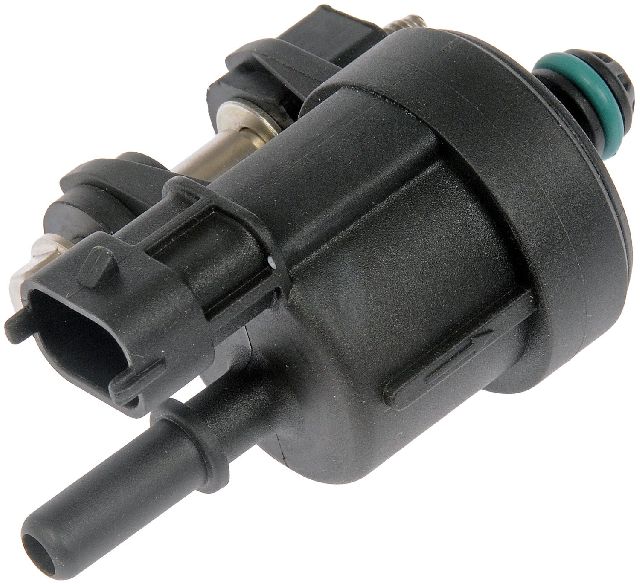
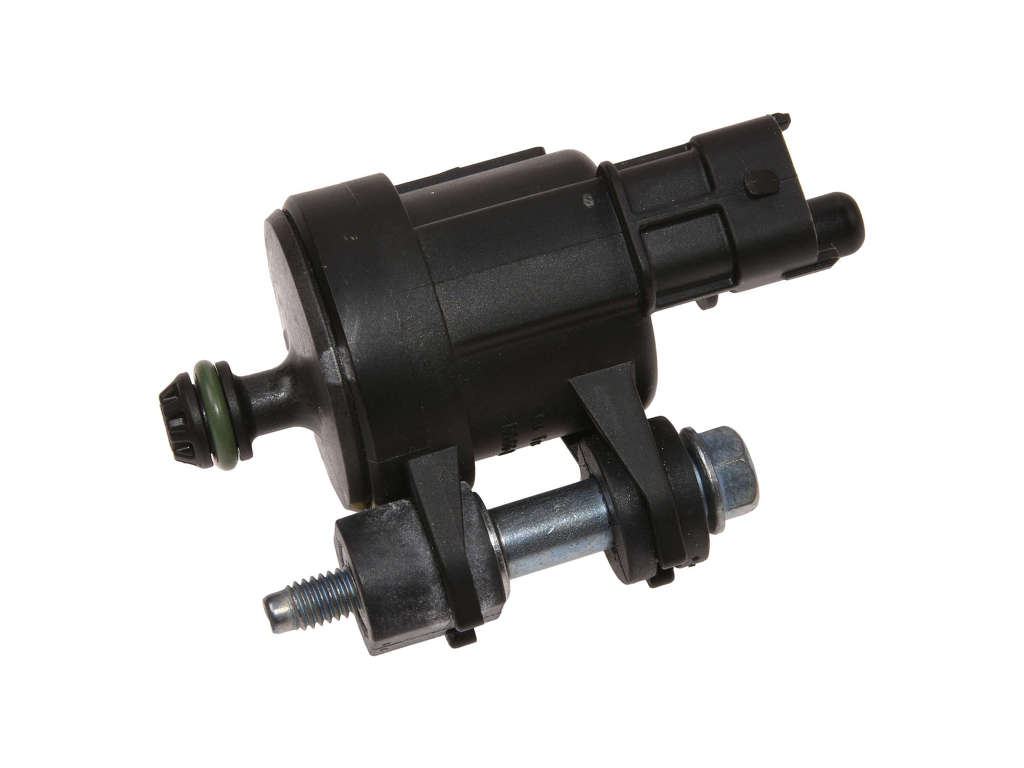
- Vapor Canister Purge Solenoid Valve
(OEM #12610560 (original), 12690512 (superseded), ACDelco 214-2137 (GM OE))— This is the most common component to fail and trigger a P0443 code. The internal electronics fail, causing a circuit malfunction. It is a known high-failure part across many GM platforms.
Trusted brands: ACDelco (GM Original Equipment), Bosch (Often the OEM manufacturer), Dorman (911-082), Standard Motor Products (SMP) (CP612, PV479)
OEM price range: $40-$80
Aftermarket price range: $20-$50
Related Codes That Often Appear With This One
- P0496 — P0496 indicates 'EVAP Flow During a Non-Purge Condition.' This often means the purge valve is mechanically stuck open. It's extremely common to see both codes if the valve has failed both mechanically and electrically, or if the PCM detects the electrical fault first.
- P0444 — P0444 means the 'EVAP Purge Control Circuit is Open.' This is a more specific version of P0443 and points directly to a broken wire or a failed-open solenoid coil.
- P0445 — P0445 means the 'EVAP Purge Control Circuit is Shorted.' This is another specific version of P0443, indicating the control circuit has shorted to ground or to another wire.
Technical Service Bulletins (TSBs) & Recalls
- While no TSB is specific to P0443 on the SRX, related TSBs for other GM vehicles with the same engines exist. For example, TSB #PIT5336 mentions that damaged wires in the engine harness can cause a short, blow the 'Emission 1' fuse, and trigger P0443 on vehicles like the Chevy Traverse, which shares its V6 engine architecture.
- Manufacturer TSB Bulletin #PIP5552 notes that engineering has investigated conditions where the Malfunction Indicator Lamp (MIL) is illuminated with code P0443 or P0459 setting, indicating a documented concern with this circuit on related Cadillac platforms.
Platform-Specific Known Issues
- Owner Experience: DIY Replacement for P0496/P0443: Multiple owners on YouTube and forums demonstrate the replacement of the purge valve to fix EVAP codes. A video by 'ItsMechaniCole' on a 2016 SRX with code P0496 shows the entire process, confirming it takes less than 15 minutes with a 10mm socket and is a very common fix for hard starting after refueling.
- Part Supersession: The original GM part number 12610560 is frequently superseded by 12690512 or the ACDelco equivalent 214-2137. Aftermarket cross-references include Dorman 911-082. It's important to verify fitment, but these parts generally cover the 3.0L and 3.6L engines in the SRX.
Mechanic-Grade Diagnostic Values
- EVAP Purge Solenoid Connector Voltage — expected: One pin should show battery voltage (>10.5V) with the key in the ON position.. Failure: Voltage below 10V or 0V indicates an open in the power supply circuit or a blown fuse.
- EVAP Purge Solenoid Coil Resistance — expected: 15-30 Ohms. Failure: A reading of infinite resistance (OL) indicates an open coil. A reading near 0 Ohms indicates a shorted coil.
- EVAP Purge Solenoid Control Wire — expected: This wire is ground-side controlled by the PCM. A test light connected to B+ should flash as the PCM commands the solenoid to pulse (duty cycle).. Failure: No flashing or a steady light when the solenoid should be active can indicate a wiring issue or a faulty PCM driver.
Scan Tool Commands That Help
- GM Tech2 / GDS2: EVAP Purge/Seal — This command seals the EVAP system by closing the vent valve and then allows the technician to manually command the purge solenoid on and off to verify it is opening and can draw a vacuum, which is monitored with the Fuel Tank Pressure (FTP) sensor.
- GM Tech2 / GDS2: EVAP System Bay Test — This is a service function to force the EVAP monitor to run and complete its self-test. It requires holding the engine RPM steady (e.g., 1800-2200 RPM) for several minutes. It's useful after a repair to verify the fix and clear the readiness monitor without extensive driving.
Wiring & Ground Locations
- EVAP Purge Solenoid Connector — On the purge solenoid itself, located on the engine intake manifold.. This is the primary connection point to test. It has two pins: one for ignition power (often a pink or orange wire on GM vehicles) and one for the ground control signal from the ECM.
- G101 — On the lower left front of the engine block.. This is a primary ground location for the Engine Control Module (ECM). A poor connection here can cause erratic behavior and false circuit codes for any sensor or solenoid controlled by the ECM, including the purge solenoid.
- Underhood Fuse Block — Located in the engine compartment, typically on the driver's or passenger's side.. This block contains the fuse that provides power to the purge solenoid circuit, often labeled 'EMISSIONS' or similar. A shorted solenoid or wire can blow this fuse, creating an open circuit and a P0443 code.
Real Owner Repair Stories
- YouTube video from channel 'Ah Duuu' (2012 Cadillac SRX 3.6L) — Check Engine Light with code P0496 (EVAP Flow During Non-Purge).
✅ What actually fixed it The owner replaced the EVAP purge solenoid valve on the engine (new part number shown was 55593172). He demonstrated that the old valve was faulty by being able to blow air through it, while the new valve was properly sealed shut. After replacement and clearing the code, the issue was resolved.
"I Checked Everything" — The Actual Cause
- This pattern is not applicable to a P0443 code. P0443 is an electrical circuit fault, not a physical leak. A smoke test is used for leak codes like P0442 or P0455. If the solenoid, wiring, and fuse all test good for P0443, the root cause is almost certainly the PCM's internal driver circuit, which a smoke test cannot identify.
OEM Part Supersession History
12610560→12690512, 12661763, 55593172, and ultimately 12737252.— Standard part evolution for cost, reliability, or manufacturing changes.
Heads up: No incompatibility is noted. These parts are listed as direct replacements for both the 3.0L and 3.6L V6 engines used in the 2010-2016 SRX.
Model Year Variations Within This Range
- 2010-2011 vs 2012-2016: The primary engine changed from the 3.0L V6 (LF1) in 2010-2011 to the 3.6L V6 (LFX) in 2012-2016. However, for the P0443 code, the cause, location of the purge solenoid, and repair procedure are virtually identical as they use the same fundamental part design.
Diagnostic Flowchart
Used vs. New Parts: Buying Guide for This Vehicle
When a used part is the smart pick: A used purge solenoid from a junkyard can be a cost-effective option for this repair, as it is an external, non-critical, and easily accessible part. The risk is low compared to more complex electronic modules or internal engine components.
Donor-vehicle mileage cap: roughly under 60000 miles for the part to have meaningful remaining life.
What to inspect on the donor part:
- Check for cracks or damage to the plastic body.
- Inspect the electrical connector pins for corrosion or damage.
- Ensure the hose ports are not cracked or broken.
- Verify the connector and hose locking tabs are intact.
Aftermarket brands forum-validated for this vehicle:
- ACDelco (GM's Original Equipment brand)
- Bosch (Often the OEM supplier for this part)
- Dorman (Part 911-082 is a widely used and reviewed alternative)
- Standard Motor Products (SMP)
Brands owners have reported issues with on this vehicle:
- Unnamed or 'white-box' brands from online marketplaces may have a higher rate of premature failure or inconsistent quality control compared to established brands.
Real Owner Stories
Aggregated from forums and TSBs cited above. Mileages and costs reflect what owners reported in those sources.
2011 Cadillac SRX
Symptoms: The owner experienced a rough idle and the car shut off while refueling. The code present was P0496.
What fixed it: Replaced the EVAP purge solenoid valve.
Source hint: youtube_comment by Kenny Nhan Nguyen
2016 Cadillac SRX
Symptoms: The vehicle was hard to start after refueling and had an active P0496 code.
What fixed it: Replacement of the EVAP purge solenoid valve, which took less than 15 minutes.
Source hint: YouTube video by 'ItsMechaniCole'
2010-2016 Cadillac SRX
Symptoms: Check Engine Light was on with codes P0443 and P0496.
What fixed it: Owners confirmed that replacing the purge solenoid on the engine, using part number 12610560 or its successors, resolved the codes.
Source hint: cadillacforums.com
Related OBD-II Codes
Frequently Asked Questions
Where is the EVAP purge solenoid located on my 2010-2016 Cadillac SRX?
What part number do I need to replace the purge valve on my SRX?
Is replacing the purge valve a difficult DIY job?
How can I test the purge solenoid myself to confirm it's the problem?
My remote start stopped working when the Check Engine Light came on. Is this related to P0443?
My SRX is hard to start right after I get gas. Is P0443 the cause?
Is there a specific Technical Service Bulletin (TSB) for P0443 on the SRX?
Helpful Videos

Used OEM Parts in Stock
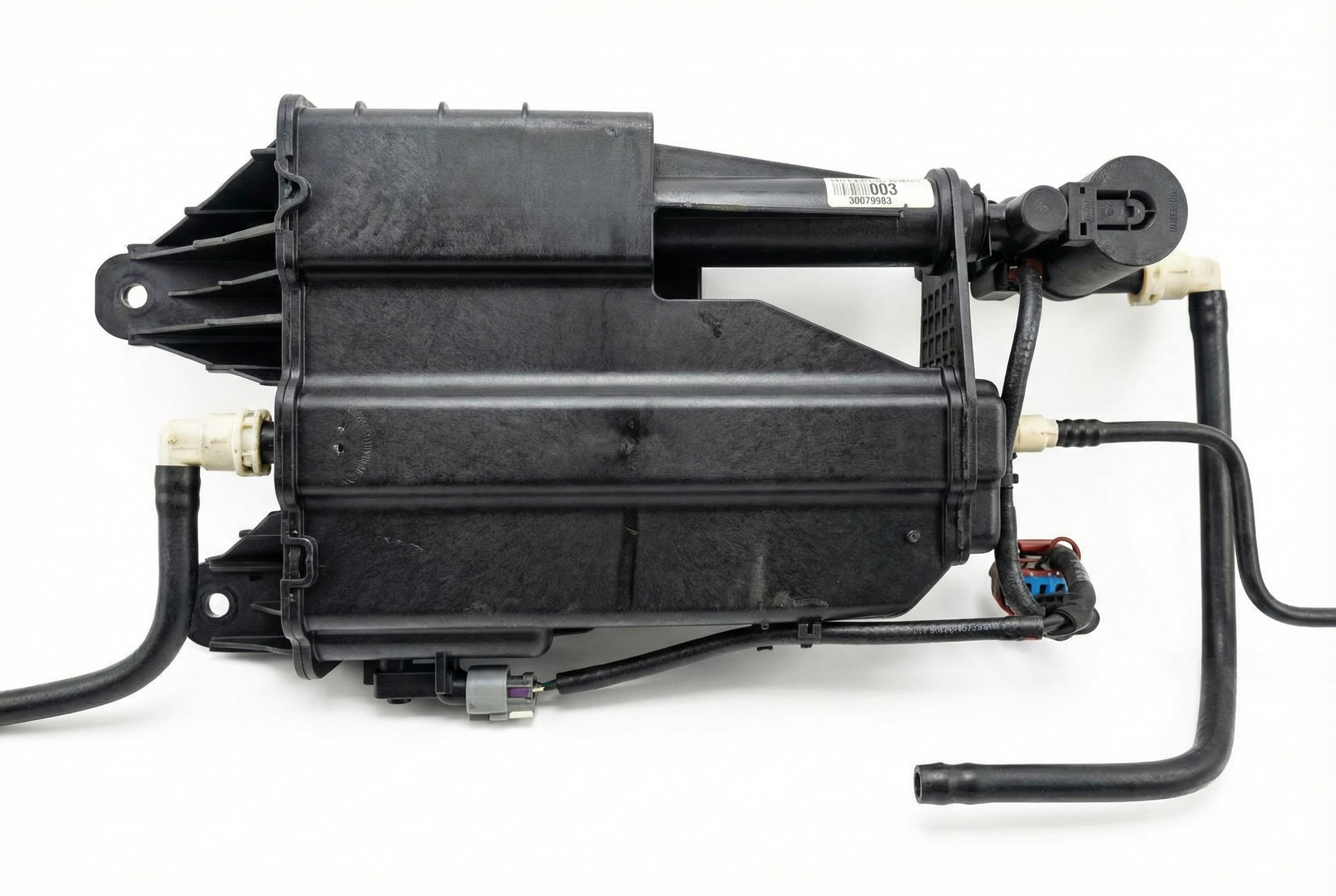
New Aftermarket Parts Available


The information in this article is provided for general reference and educational purposes only. Vehicle specifications, procedures, and part compatibility can vary by production date, trim level, and region. Always consult your vehicle's factory service manual and verify part numbers before purchasing or performing repairs. Safety-critical components such as airbags, seat belts, and braking systems should be installed by a qualified professional.
- Cadillac SRX:
- 🧭 Diagnostic Flowchart
- 🎬 Helpful Videos
- 🛍️ Shop This Part
- What's Unique About the 2010-2016 Cadillac SRX
- Symptoms You May Notice
- Most Likely Causes
- Rare But Worth Checking
- Diagnosis Steps
- Parts You'll Likely Need
- Related Codes That Often Appear With This One
- Technical Service Bulletins (TSBs) & Recalls
- Platform-Specific Known Issues
- Mechanic-Grade Diagnostic Values
- Scan Tool Commands That Help
- Wiring & Ground Locations
- Real Owner Repair Stories
- "I Checked Everything" — The Actual Cause
- OEM Part Supersession History
- Model Year Variations Within This Range
- Used vs. New Parts: Buying Guide for This Vehicle
- Real Owner Stories
- 2011 Cadillac SRX
- 2016 Cadillac SRX
- 2010-2016 Cadillac SRX
- Related OBD-II Codes
- Frequently Asked Questions
- 🎟️ Get 5% Off