

P0443 on 1995-2005 Chevrolet Cavalier: EVAP Purge Valve Circuit Causes and Fixes
On a 1995-2005 Cavalier, P0443 almost always points to a failed EVAP Purge Solenoid Valve. It's an inexpensive part, typically under $50, located on the engine and is very easy to replace for most DIYers. Ensure you get the correct part number, as there was a design change around the 1999 model year.
- P0443 is an electrical circuit code, not a leak code. Do not start by replacing the gas cap.
- The most likely cause on a 1995-2005 Cavalier is a failed EVAP purge solenoid valve.
- It is critical to verify the correct part number for your vehicle's year and engine, as a design change occurred around 1999.
- This is a simple and inexpensive DIY repair for most owners, typically taking less than 30 minutes.
What's Unique About the 1995-2005 Chevrolet Cavalier
For the third-generation Chevrolet Cavalier (1995-2005) and its twin, the Pontiac Sunfire, the P0443 code is a very common and straightforward issue. The EVAP purge solenoid is a known failure point due to age and heat cycles. Unlike some vehicles where this code can lead to complex electrical diagnosis, on the Cavalier, the fix is almost always replacing the easily accessible and affordable purge valve itself. There was a significant part change around the 1999 model year, so verifying the correct part for your specific year and engine is critical.
Symptoms You May Notice
- Check Engine Light is on
- Slightly rough idle or engine hesitation, especially if the valve is stuck open
- Reduced fuel economy
- Possible fuel odor
- Difficulty starting the engine, particularly after filling the gas tank (less common)
- Replacing the gas cap. A bad gas cap typically causes EVAP leak codes (like P0442 or P0455), not a circuit code like P0443.
- Replacing the charcoal canister. The canister is a storage device and is not part of the electrical circuit indicated by P0443.
- Replacing the EVAP vent solenoid. This is a different valve located near the charcoal canister at the rear of the vehicle and has its own set of diagnostic codes (e.g., P0446, P0449).
Most Likely Causes
- Failed EVAP Purge Solenoid Valve 🔴 High Probability → Shop Vapor Canister The internal electronic coil of the valve fails over time from heat and normal wear. It is the most common point of failure for this code on this vehicle and its platform mate, the Pontiac Sunfire.
How to confirm: Locate the valve on or near the intake manifold. With the engine off, disconnect the electrical connector. Use a multimeter to test the two pins on the solenoid for resistance. A good valve should read between 15-35 Ohms. An open circuit (infinite resistance) or a short (near zero resistance) indicates a failed coil. You can also apply 12V directly to the pins to listen for an audible 'click'.
Typical fix: Replace the EVAP purge solenoid valve. This is typically held on by one bolt and has two hoses and one electrical connector.
Est. part cost: $20-$60 - Damaged Wiring or Connector 🟡 Medium Probability After 15-25 years, engine bay heat and vibrations can make the wiring leading to the purge solenoid brittle and cause it to crack or break, often right at the connector. The plastic connector itself can also become brittle and fail.
How to confirm: Visually inspect the wiring harness and connector for the purge solenoid. Look for any breaks, corrosion, or loose pins. Use a multimeter to check for 12V power at the connector with the key on (engine off). Wiggle the harness while testing to see if the connection is intermittent.
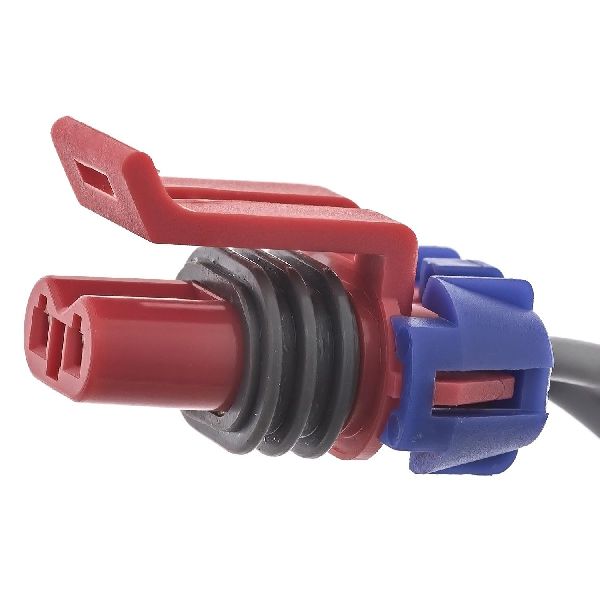
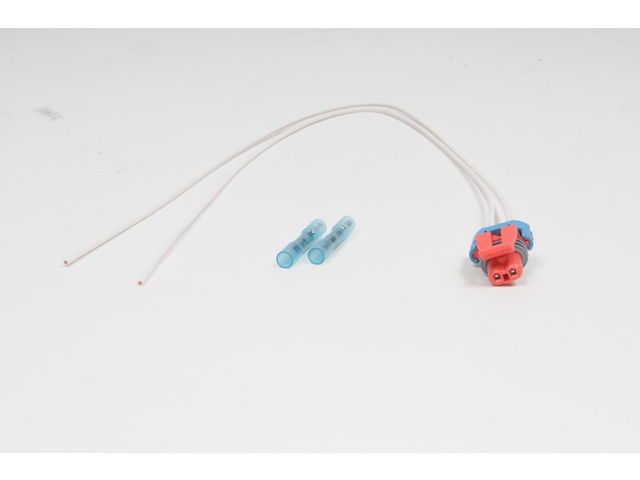
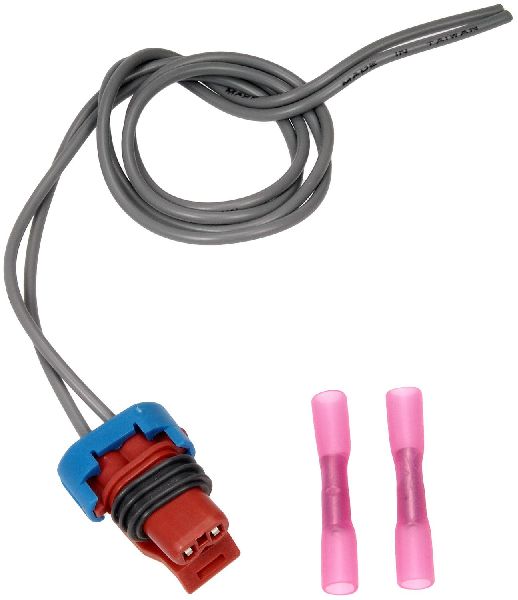
Typical fix: Repair the damaged section of wire or replace the connector pigtail. Common pigtail part numbers include Dorman 645-213 or ACDelco PT2138.
Est. part cost: $10-$30
Rare But Worth Checking
- Blown Fuse: The EVAP purge solenoid circuit is protected by a fuse, often shared with other emissions components. While not common for it to blow without another issue, it's a quick check in the under-hood or interior fuse panel.
- Faulty Powertrain Control Module (PCM): → Shop Engine Control Module (ECM) This is extremely rare. The PCM contains the driver circuit that grounds the solenoid to activate it. A failed driver can mimic a circuit fault. This should only be considered after the solenoid and all wiring have been definitively proven to be good.
Diagnosis Steps
- Read the code: Use an OBD-II scanner to confirm P0443 is the active code.
- Visually inspect: Locate the EVAP purge solenoid on the engine. Check its electrical connector and wiring for any obvious damage, corrosion, or loose connections.
- Check for power: Turn the ignition to the 'ON' position (engine off). Disconnect the purge solenoid connector and use a multimeter to verify that the power wire (often pink or red on GM vehicles) has 12-volt power.
- Test the solenoid: If power is present, test the solenoid itself. Measure the resistance between the two pins on the valve. A good reading is typically between 15 and 35 ohms. A reading of infinite resistance (open) or near-zero resistance (short) means the valve is bad. Alternatively, apply 12V and ground directly to the pins to listen for a 'click'. No click means it's failed.
- Check the ground/control wire: If the solenoid tests good, check the other wire in the connector (the control wire) for continuity back to the PCM. A break in this wire will also set the code.
- Replace the part: If the solenoid is confirmed bad, replace it. It is usually held by a single 10mm bolt.
- Clear and re-test: After repair, clear the code with the scanner and drive the vehicle through a full drive cycle to ensure the Check Engine Light does not return.
Parts You'll Likely Need
- EVAP Vapor Canister Purge Solenoid Valve
(OEM #For 1996-1998: 24574755. For 1999-2005: 1997278 (superceded by ACDelco 214-641).)— This is the component that most frequently fails electrically, directly causing the P0443 code.
Trusted brands: ACDelco, Delphi, Dorman, Standard Motor Products (SMP)
OEM price range: $45-$75
Aftermarket price range: $20-$50
Related Codes That Often Appear With This One
- P0444 — This code for 'EVAP Purge Control Valve Circuit Open' is a more specific version of P0443 and points to the exact same failed purge valve (open coil) or a complete break in the wiring.
- P0445 — This code for 'EVAP Purge Control Valve Circuit Shorted' is another specific version of P0443, indicating the wiring has shorted to ground or power, or the coil inside the valve has shorted.
- P0496 — This code indicates 'High Purge Flow' and can be triggered if the purge valve fails by sticking in the open position, which is a mechanical failure of the same part that can also have an electrical failure (P0443).
Technical Service Bulletins (TSBs) & Recalls
- While no TSBs directly address P0443 on the Cavalier, TSB #PIP5529B discusses loose intake manifold bolts on various GM engines, which can cause vacuum leaks and various codes. While not a direct cause for P0443, it's a related issue in the same area of the engine bay worth noting.
- Manufacturer TSB Bulletin #PIP5552 notes that engineering has investigated concerns regarding the MIL being illuminated with P0443 setting on other GM models, reinforcing that this is a known diagnostic focus for the manufacturer.
- Manufacturer TSB Bulletin #PIT5336 indicates that a technician may find the Emission 1 Fuse open in conjunction with P0443, and advises inspecting and repairing any wire damage on the engine harness.
Platform-Specific Known Issues
- There is a known part change for the purge solenoid around the 1999 model year. It is critical to use a VIN or year/engine lookup to get the correct part. The early style (1996-1998) and late style (1999-2005) are physically different and not interchangeable.
Mechanic-Grade Diagnostic Values
- EVAP Purge Solenoid Coil Resistance — expected: 15 - 35 Ohms. Failure: A reading of OL (infinite resistance) indicates an open coil. A reading near 0 Ohms indicates a shorted coil.
- Voltage at Purge Solenoid Connector (Power Wire) — expected: Battery Voltage (~12V) with key on, engine off.. Failure: No voltage indicates a blown fuse or an open in the power supply wire.
- Voltage at Purge Solenoid Connector (Control Wire) — expected: This is a PCM-controlled ground. Using a test light connected to battery positive, the light should flash or pulse when the PCM commands the valve on (using a scan tool's bidirectional test).. Failure: No flashing light during the command test (when power is confirmed present) points to an open in the control wire or a faulty PCM driver.
Scan Tool Commands That Help
- Tech2 / Professional Scan Tool: EVAP Purge/Seal or EVAP Purge Solenoid Output Control — This bidirectional command allows the technician to manually open and close the purge solenoid. It is used to verify the solenoid clicks, the wiring is intact, and the PCM driver is functioning. While commanding the valve on and off, you can check for voltage changes at the control wire.
Wiring & Ground Locations
- Purge Solenoid Control Wire — For 2002 models with the 2.2L Ecotec engine, this is a Dark Green/White wire located at Pin 5 of the C2 (Black) PCM connector.. If the solenoid and power supply are good, testing for continuity on this specific wire from the solenoid connector to the PCM pin can find a wire break, which is a common cause of P0443.
- Purge Solenoid Power Wire — Typically a Pink wire on many GM vehicles of this era. It receives power from a fuse in the underhood fuse block (often labeled 'EMISSIONS' or similar).. A lack of 12V power at this wire is the first electrical check. It immediately points the diagnosis toward a blown fuse or a break in the power feed, not the solenoid or PCM.
- Engine Block / Firewall Grounds — Check for ground straps and wire packs bolted to the engine block (often near the back of the cylinder head) and the firewall. Specific J-body locations are not well-documented with designators, but these are common areas for all vehicles.. The PCM and its related sensors rely on clean ground connections. A corroded or loose main engine or body ground can cause erratic behavior and set various circuit codes, including P0443.
Real Owner Repair Stories
- TimtheTech Blog Post (2002 Chevrolet Cavalier 2.2L) — P0440 (a related EVAP code)
❌ Tried (didn't work) Visual inspection initially showed nothing obvious.
✅ What actually fixed it The tech noted that the short wiring harness pigtail for the EVAP *vent* solenoid is notorious for fraying and breaking due to rear-end movement. While a different part, this highlights a common failure pattern on the J-body platform: short wiring pigtails in high-vibration areas are prone to failure and should be inspected closely, even if the main harness looks good. - YouTube video by 'FordTechMakuloco' (1998 Mercury Sable (different vehicle, same code and principle)) — P0443, plus rich running conditions (P0172, P0175)
❌ Tried (didn't work) The purge solenoid was tested and found to be functional., The wiring for power and control was tested and found to be intact.
✅ What actually fixed it The technician diagnosed an internal short-to-ground within the Powertrain Control Module (PCM). The PCM's driver circuit for the purge solenoid had failed, causing the valve to be commanded open at all times. Replacing the PCM resolved the P0443 code and the related rich condition. This serves as a real-world example of the rare but possible PCM failure.
Documented NHTSA Reports
- An owner reported in NHTSA ODI #11448862 that their vehicle displayed a P0443 code alongside several other circuit codes, noting that the vehicle had very little gas mileage as it was primarily operating on electric power.
- NHTSA ODI #11681144 describes a situation where P0443 was pulled among a list of several other CEL codes, including P06DB and P0030, following a failure to circulate coolant properly.
- In NHTSA ODI #11632222, an owner reported a "Reduced Propulsion" message and a blown fuse [F03] for the EGR valve, which occurred alongside a P0443 code, suggesting a sticking EGR valve may have caused the fuse to fail.
OEM Part Supersession History
24574755→ACDelco 215-642— Standard part lifecycle replacement.
Heads up: This is the early style valve. Note that some parts catalogs incorrectly label ACDelco 215-642 as a 'Vent Valve', but application guides confirm it is the correct service part for the engine-mounted *Purge Valve* on these early third-generation Cavaliers.1997278→ACDelco 214-641— Standard part lifecycle replacement.
Heads up: This is the later style valve and is physically different from the early style. The two are not interchangeable. This part was used on the 2.2L OHV, 2.4L LD9, and 2.2L Ecotec engines from 1999 onwards.
Model Year Variations Within This Range
- 1995-2002: These models could be equipped with the 2.2L OHV (LN2) or 2.4L DOHC (LD9) 'Twin Cam' engine. The purge valve is located on the intake manifold, but the specific position and bracket may differ slightly due to manifold design.
- 2002-2005: The 2.2L Ecotec (L61) engine became the primary engine starting in late 2002. On the Ecotec, the purge solenoid is typically mounted prominently on the front of the plastic intake manifold, making it extremely easy to access.
- 1998 vs 1999: This was the changeover year for the purge solenoid design. A 1998 model uses the early style (GM 24574755 / ACDelco 215-642), while a 1999 model uses the late style (GM 1997278 / ACDelco 214-641). Always verify by year and engine, as mid-year production changes can occur.
Diagnostic Flowchart
Other Known Issues on This Vehicle
Issues unrelated to this code that are worth knowing about as an owner of this generation:
- Instrument Cluster Failure 🟠 Medium — Very common, especially on 2000-2005 models. Gauges (speedometer, tachometer, fuel, temp) become erratic, get stuck, or stop working entirely.
- Lower Intake Manifold (LIM) Gasket Leaks 🔴 High — A notorious issue on the 2.2L OHV (1995-2002) and 3.1L V6 engines, though less common on the 2.4L. The gasket degrades, causing coolant to leak externally or internally, which can lead to engine overheating and failure if not addressed. (Ref: While many TSBs exist for similar GM engines (e.g., 01-06-01-007A for the 3.8L), this specific issue on the Cavalier is primarily addressed through standard repair procedures.)
- Ignition Switch Failure 🟠 Medium — Common across many GM models of this era. A faulty ignition switch can cause the vehicle to fail to start, stall while driving, or have intermittent electrical issues with accessories.
- Power Window Motor/Regulator Failure 🟡 Low — Frequently reported by owners. The window may become slow, get stuck in one position, or make grinding noises, requiring replacement of the motor or regulator assembly.
- Passlock Anti-Theft System Issues 🟠 Medium — A common source of frustration, the Passlock system can malfunction, preventing the car from starting even with the correct key. The 'THEFT' light will often flash.
Used vs. New Parts: Buying Guide for This Vehicle
When a used part is the smart pick: For this specific repair, buying a used part from a junkyard is NOT recommended. The EVAP purge solenoid is a known high-failure item, and the cost of a new, warrantied aftermarket part is very low (often $20-$40). The risk of getting a used part that has already failed or is near the end of its life is too high to justify the minimal cost savings.
What to inspect on the donor part:
- Not applicable as used parts are not recommended.
OEM-only on this vehicle (don't cheap out):
- No parts for this specific P0443 repair require OEM-only sourcing. Quality aftermarket parts are widely available and perform well.
Aftermarket brands forum-validated for this vehicle:
- ACDelco (Professional or GM Original Equipment)
- Delphi
- Standard Motor Products (SMP)
- Dorman
Brands owners have reported issues with on this vehicle:
- Unbranded, no-name parts from online marketplaces should be avoided. While they may be cheaper, they often have high failure rates and may not meet the PCM's specific electrical resistance requirements, causing the code to return.
Real Owner Stories
Aggregated from forums and TSBs cited above. Mileages and costs reflect what owners reported in those sources.
2000-2005 Chevrolet Cavalier
Symptoms: Gauges (speedometer, tachometer, fuel, temp) becoming erratic, getting stuck, or stopping entirely while dealing with other electrical gremlins.
What fixed it: The owner was investigating electrical circuit problems related to the PCM's ability to monitor voltage levels, which is the same logic used to trigger P0443.
Source hint: Reddit r/Chevycavalier - A user describes their gauges going 'wonky,' a common issue with these cars, while also dealing with other electrical gremlins
Related OBD-II Codes
Frequently Asked Questions
Does TSB #PIP5529B mean my P0443 code is caused by loose intake manifold bolts?
I have a 1998 Cavalier; can I use a purge solenoid from a 2000 model?
Is there a specific replacement connector pigtail for the purge solenoid on my Cavalier?
My Pontiac Sunfire has a P0443 code; is the repair the same as the Cavalier?
What resistance should I look for when testing the purge solenoid with a multimeter?
Can I use a used purge solenoid from a junkyard to save money?
Helpful Videos
Used OEM Parts in Stock
New Aftermarket Parts Available


The information in this article is provided for general reference and educational purposes only. Vehicle specifications, procedures, and part compatibility can vary by production date, trim level, and region. Always consult your vehicle's factory service manual and verify part numbers before purchasing or performing repairs. Safety-critical components such as airbags, seat belts, and braking systems should be installed by a qualified professional.
- Chevrolet Cavalier:
- 🧭 Diagnostic Flowchart
- 🎬 Helpful Videos
- 🛍️ Shop This Part
- What's Unique About the 1995-2005 Chevrolet Cavalier
- Symptoms You May Notice
- Most Likely Causes
- Rare But Worth Checking
- Diagnosis Steps
- Parts You'll Likely Need
- Related Codes That Often Appear With This One
- Technical Service Bulletins (TSBs) & Recalls
- Platform-Specific Known Issues
- Mechanic-Grade Diagnostic Values
- Scan Tool Commands That Help
- Wiring & Ground Locations
- Real Owner Repair Stories
- Documented NHTSA Reports
- OEM Part Supersession History
- Model Year Variations Within This Range
- Other Known Issues on This Vehicle
- Used vs. New Parts: Buying Guide for This Vehicle
- Real Owner Stories
- 2000-2005 Chevrolet Cavalier
- Related OBD-II Codes
- Frequently Asked Questions
- 🎟️ Get 5% Off