

P0443 on 2015-2022 Chevrolet Colorado 3.6L V6: EVAP Purge Valve Circuit Causes and Fixes
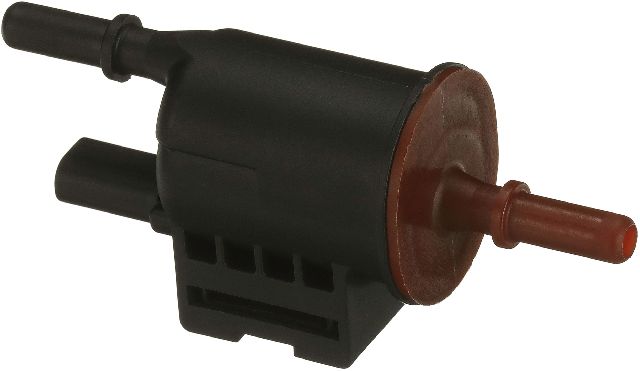
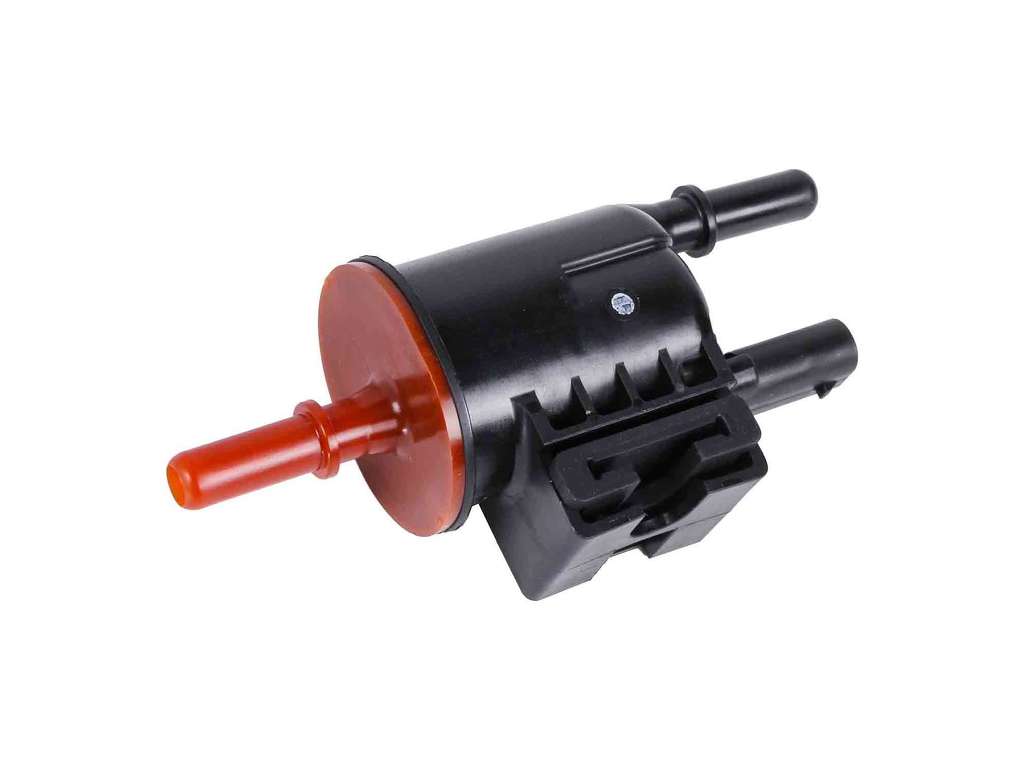
For the 2015-2022 Colorado 3.6L, code P0443 almost always points to a failed EVAP Purge Valve Solenoid on top of the engine. It's a very common issue and an easy 15-minute DIY fix. The OEM part costs around $30-$55. The issue was common enough for GM to issue a special warranty extension for 2015 models.
- P0443 on a 2015-2022 Colorado 3.6L almost always means the EVAP purge valve has failed.
- This is a very simple and inexpensive DIY repair that takes less than 30 minutes with basic tools.
- The correct updated OEM part number is 12737252. Using a genuine GM or ACDelco part is recommended to prevent repeat failures.
- If you own a 2015 model, contact a GM dealer with your VIN to check if your truck is covered under Special Coverage 18029 for a free repair.
What's Unique About the 2015-2022 Chevrolet Colorado
On this generation of the Colorado with the 3.6L V6 engine (LFX and LGZ variants), the EVAP purge valve solenoid is a known high-failure item. The issue is so common that General Motors issued Special Coverage Adjustment 18029 for 2015 models specifically for this part, covering a wide range of vehicles using this engine family. While P0443 is an electrical circuit code, it is most often triggered by the internal failure of the solenoid's coil winding rather than a problem with the vehicle's external wiring harness. Manufacturer TSB Bulletin #PIP5552 further confirms that engineering has investigated conditions where P0443 or P0459 sets, specifically for newer equipment in this generation.
Symptoms You May Notice
- Check Engine Light is on
- Rough idle (less common, but possible if valve is stuck open)
- Slight hesitation during acceleration (rare)
- Hard starting or prolonged cranking immediately after refueling 🎬 Watch: See how a failed valve causes hard starting after refueling. (a classic symptom if the valve fails in the open position, often triggering P0496 as well)
- Audible ticking noise from the engine bay, which may change or stop when the fault occurs
- Replacing the gas cap. While a loose gas cap can cause other EVAP codes (like P0455 or P0457), it does not cause a P0443 circuit code.
- Replacing the EVAP vent solenoid or charcoal canister. These components are part of the EVAP system but are located near the fuel tank and are tested by different circuits. A P0443 code specifically points to the purge valve circuit on the engine.
Most Likely Causes
- Failed EVAP Canister Purge Valve/Solenoid 🔴 High Probability → Shop Vapor Canister This specific part has a high failure rate on this engine platform, leading GM to issue warranty extensions for some model years. Owner forums are filled with accounts of this part failing, sometimes at relatively low mileage like 45,000 miles.
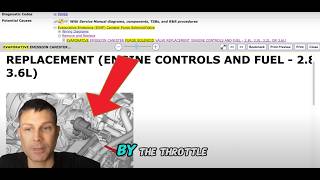
How to confirm: With the engine running, disconnect the EVAP line from the purge valve. If you can feel vacuum suction from the valve's port when it should be closed (it is commanded closed at idle), the valve is stuck open 🎬 Watch: A quick 3-minute guide to diagnosing the P0496 code. and has failed. You can also test for resistance across the two pins on the valve with a multimeter; an open circuit (OL) or very high resistance indicates an internal electrical failure. A good valve should measure between 15-30 Ohms.
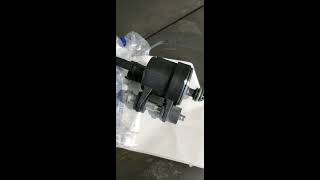
Typical fix: Replace the EVAP canister purge valve. It is located on top of the engine and held by a single bolt 🎬 See this walkthrough: How to replace the purge valve yourself. (often 10mm or a Torx head). Using an OEM ACDelco part is highly recommended, as some owners report premature failure from aftermarket alternatives.
Est. part cost: $30-$55 for an OEM part, $20-$40 for aftermarket. - Wiring Harness or Connector Issue ⚪ Low Probability
How to confirm: Visually inspect the wiring and two-pin connector going to the purge valve for any signs of damage, corrosion, or loose pins. Use a multimeter to check for battery voltage on the power wire (typically pink/purple) with the key on. The other wire (control wire, often green) is ground-side controlled by the PCM. A rare but documented issue on similar GM platforms is the engine harness rubbing against an A/C hose coupling, causing a short and blowing the 'EMISSIONS 1' fuse (see TSB PIT5336).
Typical fix: Repair the damaged section of wiring or clean/replace the connector. If a fuse is blown, inspect the harness for shorts before replacing the fuse.
Est. part cost: $5-$25 for wiring or connector repair supplies.
Rare But Worth Checking
- Powertrain Control Module (PCM) Fault: → Shop Engine Control Module (ECM) This is extremely rare. The PCM should only be considered after the purge valve and its entire circuit have been thoroughly tested and confirmed to be good.
- Blown 'EMISSIONS 1' Fuse: As noted in GM TSB PIT5336 for other vehicles with this engine, a short in the engine harness can blow the 15A 'EMISSIONS 1' fuse. If the purge valve circuit has no power, check this fuse in the under-hood fuse block before assuming a broken wire.
Diagnosis Steps
- Read the code with an OBD-II scanner to confirm P0443 is present. Note any other codes like P0496 or P0458.
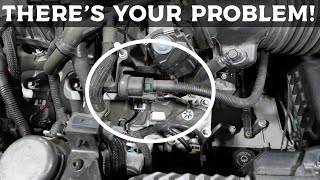
- Locate the EVAP purge valve on the top of the 3.6L engine, near the throttle body.
- Visually inspect the electrical connector and wiring going to the valve for any obvious damage, fraying, or corrosion.
- Test the valve itself. With the engine OFF, disconnect the vapor line from the valve. Try to blow through the valve. If air passes, it is stuck open and has failed. Alternatively, with the engine running at idle, disconnect the vapor line and feel the port on the valve; if you feel suction, the valve is stuck open and needs to be replaced.
- Test the circuit. Disconnect the electrical connector. With the ignition on, use a multimeter to confirm there is battery voltage at the power wire (usually pink/purple).
- Check the relevant fuse (e.g., 'EMISSIONS 1' 15A fuse) in the fuse box if no power is present at the connector.
- If the valve tests good and the power supply is present, the issue may be in the ground-side control wire leading back to the PCM, or a faulty PCM (which is very rare).
- Given the extremely high failure rate of the valve on this truck, if the wiring appears undamaged, the most probable cause is the valve itself.
Parts You'll Likely Need
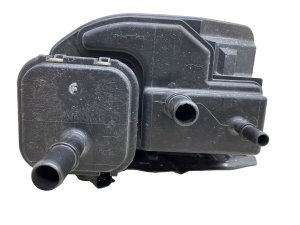
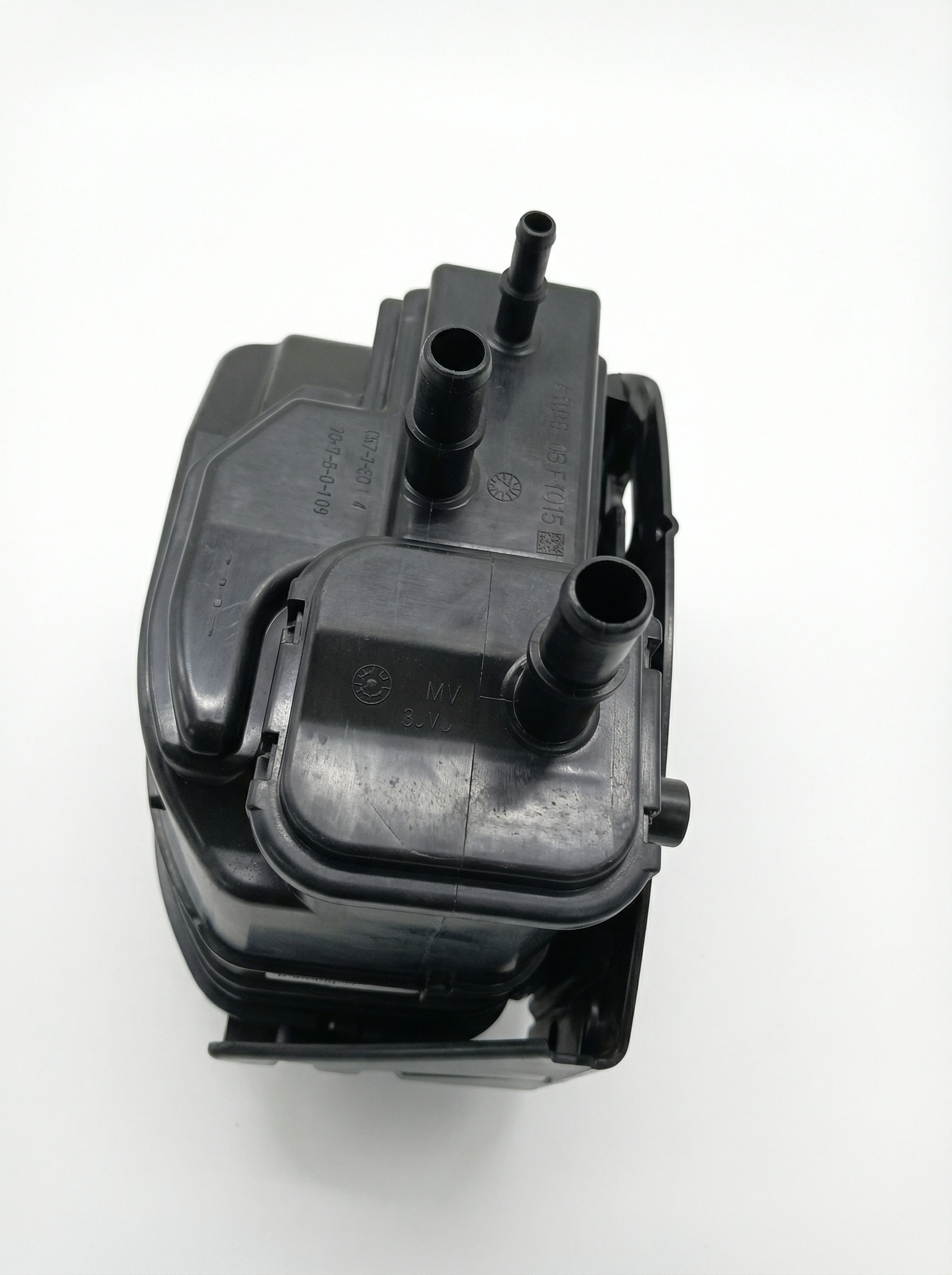
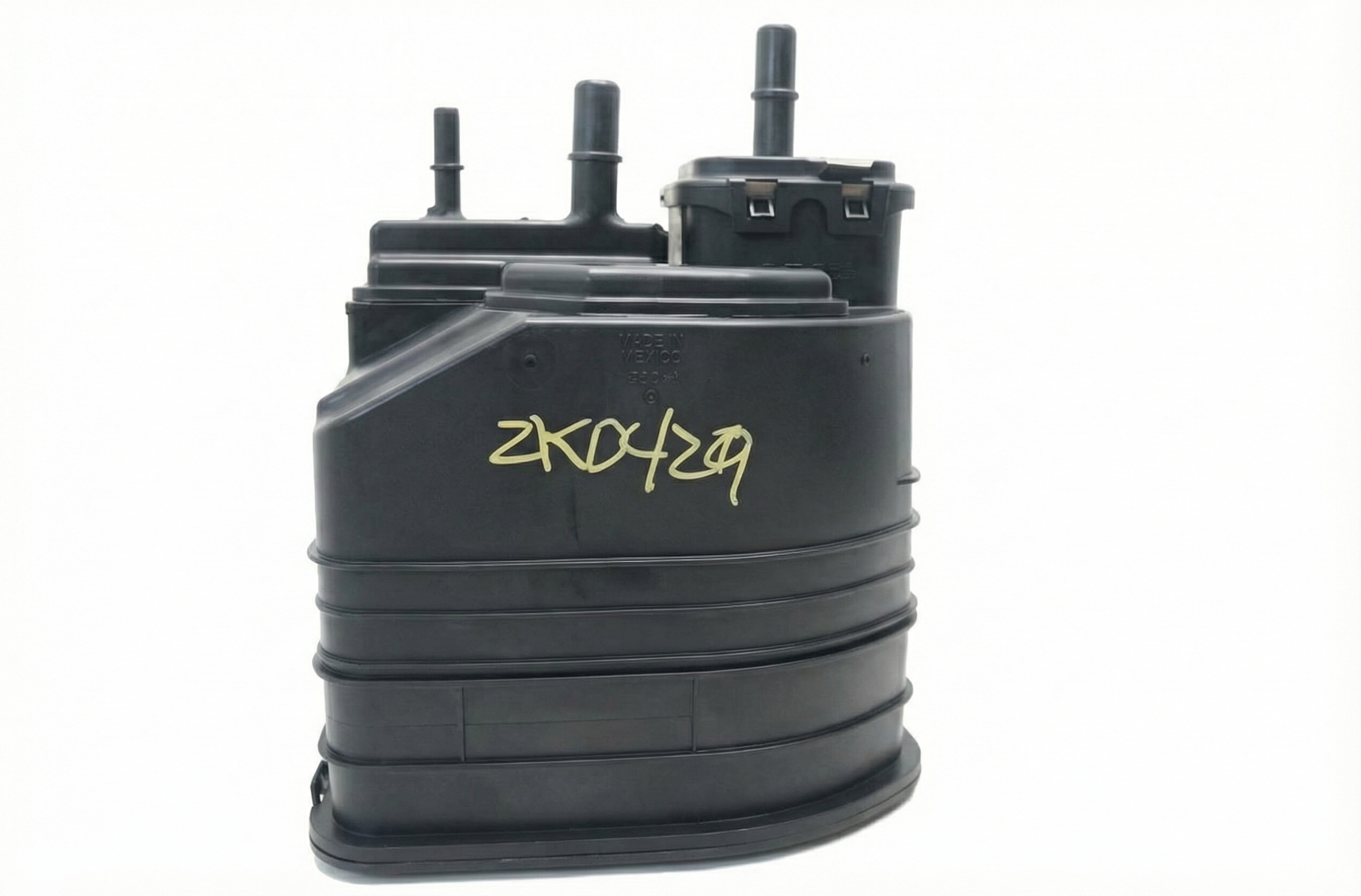
- Vapor Canister Purge Valve
(OEM #12737252)— This is the overwhelming cause of code P0443 on this vehicle. The original part is prone to failure, and GM has released updated versions. This part number supersedes 12690512, 12661763, and 12610560. Using a genuine GM or ACDelco part is strongly recommended to avoid premature failure.
Trusted brands: ACDelco, GM Genuine Parts
OEM price range: $30-$55
Aftermarket price range: $20-$40
Related Codes That Often Appear With This One
- P0496 — P0496 (EVAP Flow During a Non-Purge Condition) is often caused by the same failed purge valve sticking open. P0443 is the electrical circuit fault, and P0496 is the resulting incorrect flow. They frequently appear together.
- P0458 — This code indicates 'EVAP Purge Control Valve Circuit Low'. Like P0443, it points to an electrical issue with the purge valve or its wiring, and they can sometimes appear together, as documented by owners.
Technical Service Bulletins (TSBs) & Recalls
- GM Special Coverage Adjustment 18029: This extends the warranty on the EVAP purge solenoid for certain 2015 model year Chevrolet Colorado vehicles to 10 years or 120,000 miles. It addresses an 'inoperative purge solenoid' that can cause a Check Engine Light, no-start, idle stall, hesitation, and ticking noises. Owners of affected vehicles may be eligible for a free replacement at a GM dealer.
- TSB Bulletin #PIP5552: This bulletin addresses a Check Engine Light (MIL) with P0443 or P0459 setting on 2017 equipment, noting that engineering has been investigating this specific condition.
- TSB Bulletin #PIT5336: While originally issued for the Chevrolet Traverse, this bulletin notes that a P0443 can be accompanied by an open "Emission 1" fuse, requiring technicians to inspect and repair damaged wires on the engine harness.
Platform-Specific Known Issues
- The EVAP purge valve is a very common failure point on the 3.6L V6 engine used in the Colorado and many other GM vehicles.
- On some GM platforms, the engine wiring harness can chafe on an A/C line bracket, causing a short that can blow the emissions fuse and trigger a P0443. While not specifically documented for the Colorado, it is a known possibility for this engine family (Ref: TSB PIT5336).
Mechanic-Grade Diagnostic Values
- EVAP Purge Valve Solenoid Coil Resistance — expected: 15 - 30 Ohms. Failure: A reading of infinite resistance (OL) indicates an open coil, while near-zero Ohms indicates a shorted coil. Both necessitate replacement.
- Purge Valve Connector - Power Wire Voltage (Key On, Engine Off) — expected: Battery Voltage (~12V). Failure: No voltage indicates a problem upstream, such as a blown fuse (e.g., 'EMISSIONS 1') or a break in the power wire.
- Purge Valve Connector - Control Wire Voltage (Key On, Engine Off) — expected: Near battery voltage when OFF, near 0V when commanded ON by PCM.. Failure: A constant, intermediate voltage (e.g., 3.15V as reported by one owner) can be suspicious and may indicate a wiring short or PCM driver issue. The wire should be ground-switched by the PCM.
Scan Tool Commands That Help
- GDS2 / Tech2 / Professional Scan Tool: EVAP Purge/Seal or similar Output Control/Bidirectional Test — This command allows a technician to manually open and close the purge valve while the engine is running. It's used to verify if the valve is physically responding to electrical commands from the PCM and to check if the PCM driver is functioning correctly.
Wiring & Ground Locations
- EVAP Purge Valve Control Wire — The Green wire at the two-pin connector on the purge valve solenoid. This wire runs to Pin 51 of the ECM's X2 connector on the 3.6L V6.. This is the specific wire the PCM uses to ground-switch the purge valve solenoid. Testing continuity on this wire from the valve connector to the ECM connector is the definitive way to rule out a broken wire.
- EVAP Purge Valve Power Wire — The Pink/Purple wire at the two-pin connector on the purge valve solenoid.. This wire supplies ignition power to the solenoid. A lack of battery voltage here points to a blown fuse or a break in the power supply harness, not a faulty valve or PCM control issue.
- Under-hood Fuse Block — Located in the engine compartment on the driver's side.. This fuse block contains the fuse that powers the EVAP purge valve circuit, often labeled 'EMISSIONS 1' (15A). A blown fuse here will cause a P0443 and is a critical check if no power is found at the valve connector.
Real Owner Repair Stories
- Reddit user mexxmann in r/chevycolorado (2016 GMC Canyon SLT (3.6L V6)) — Check Engine Light with codes P0443 and P0458.
❌ Tried (didn't work) Cleaning the gas cap., Replacing the purge valve (the code returned a few months later).
✅ What actually fixed it After the code returned, the owner tested the new purge valve and found it had failed with an open circuit (infinite resistance). Replacing the purge valve *again* with another new part was the final fix. This highlights that even new parts can be faulty.
Documented NHTSA Reports
- An owner reported in NHTSA ODI #11632222 that a Check Engine Light and "Reduced Propulsion" message were accompanied by P0443 and P0458; a blown fuse was found, likely caused by a sticking EGR valve.
- NHTSA ODI #11448862 describes a vehicle where the engine went offline with a large cluster of codes including P0443, P0458, and P0135, despite the vehicle having very low mileage.
- In NHTSA ODI #11681144, an owner listed P0443 and P0458 among several other codes pulled after the vehicle failed to circulate coolant properly, leading to a "Reduced Propulsion" warning.
OEM Part Supersession History
12610560, 12661763, 12690512→12737252— Standard part revision and consolidation. This is common for high-failure rate parts as the manufacturer makes design or material improvements to increase reliability.
Model Year Variations Within This Range
- 2015-2016 vs 2017-2022: The engine was updated from the 3.6L LFX (2015-2016) to the 3.6L LGZ (2017-2022). While the P0443 failure is common to both, some parts catalogs list different purge valve part numbers for the LFX vs. LGZ engines. However, the main updated part (12737252) is specified for a wide range of these models, superseding earlier numbers. Always verify the part number by VIN.
Diagnostic Flowchart
Other Known Issues on This Vehicle
Issues unrelated to this code that are worth knowing about as an owner of this generation:
- 8-Speed Automatic Transmission Shudder 🟠 Medium — Very common on 2017-2019 models with 8L45 transmission. Feels like driving over rumble strips during light acceleration. (Ref: TSB 18-NA-355 recommends a transmission fluid flush with Mobil 1 Synthetic LV ATF HP fluid.)
- Timing Chain Stretch 🔴 High — A well-known issue across the entire GM 3.6L engine family (LFX/LGZ). Onset is often accelerated by extended oil change intervals or low oil levels. Can lead to catastrophic engine failure if ignored. (Ref: TSB PIP3423P and others address related diagnostic codes (P0008, P0017, P0018).)
- Loss of Power Steering Assist 🔴 High — Common on early 2nd-gen models, particularly 2015-2016. Can cause a sudden and dangerous increase in steering effort. (Ref: NHTSA Recall 16V054000 was issued to fix a poor electrical connection in the power steering torque sensor.)
- Carbon Buildup on Intake Valves 🟡 Low — A common side effect of all Gasoline Direct Injection (GDI) engines, including the 3.6L LGZ. Can cause misfires (P0300) and rough running over time, typically after 60,000+ miles.
Used vs. New Parts: Buying Guide for This Vehicle
When a used part is the smart pick: For this specific repair, a used part is NOT recommended. The EVAP purge valve is a known high-failure component on this platform. The low cost of a new OEM part (around $30-$55) makes the risk of purchasing a used part that is already failed or near the end of its service life a poor value proposition.
OEM-only on this vehicle (don't cheap out):
- Vapor Canister Purge Valve
Brands owners have reported issues with on this vehicle:
- General non-OEM/unbranded parts. Forum consensus strongly suggests that aftermarket purge valves for this application have a higher-than-average rate of premature failure, leading to the code returning. Sticking with ACDelco or GM Genuine Parts is the most reliable option.
Real Owner Stories
Aggregated from forums and TSBs cited above. Mileages and costs reflect what owners reported in those sources.
2015 GMC Canyon 3.6L V6
Symptoms: Check engine light came on with codes P0443 and P0458. After replacing the purge valve, the light and codes returned within a day of driving.
What fixed it: The initial replacement did not resolve it, suggesting a potential faulty new part or underlying wiring/harness issues.
Source hint: GM-Trucks.com thread titled 'Check Engine Codes P0443 and P0458'
2016 GMC Canyon 3.6L V6
Symptoms: Received codes P0443 and P0458; performed diagnostic voltage readings from the harness to troubleshoot the circuit.
What fixed it: Diagnostic steps included checking harness voltage and seeking ECM pinout for continuity testing.
Source hint: Reddit (r/chevycolorado) thread titled 'GMC Canyon 2016 SLT - Code P0443'
2015 Chevrolet Colorado 3.6L V6 — ~45000 miles
Symptoms: Check Engine Light, no-start, idle stall, hesitation, and ticking noises.
What fixed it: Replacement of the EVAP purge solenoid (covered under Special Coverage Adjustment 18029).
Source hint: GM Special Coverage Adjustment 18029
Related OBD-II Codes
Frequently Asked Questions
Is there a warranty extension for the purge valve on my 2015 Chevrolet Colorado?
Why does my Colorado have trouble starting only after I fill up the gas tank?
I hear a ticking noise from the engine bay of my 3.6L V6; is this related to P0443?
Can a blown fuse cause the P0443 code on my truck?
Should I use an aftermarket purge valve or the OEM ACDelco part?
How can I quickly test if the purge valve is the problem on my 3.6L Colorado?
Helpful Videos
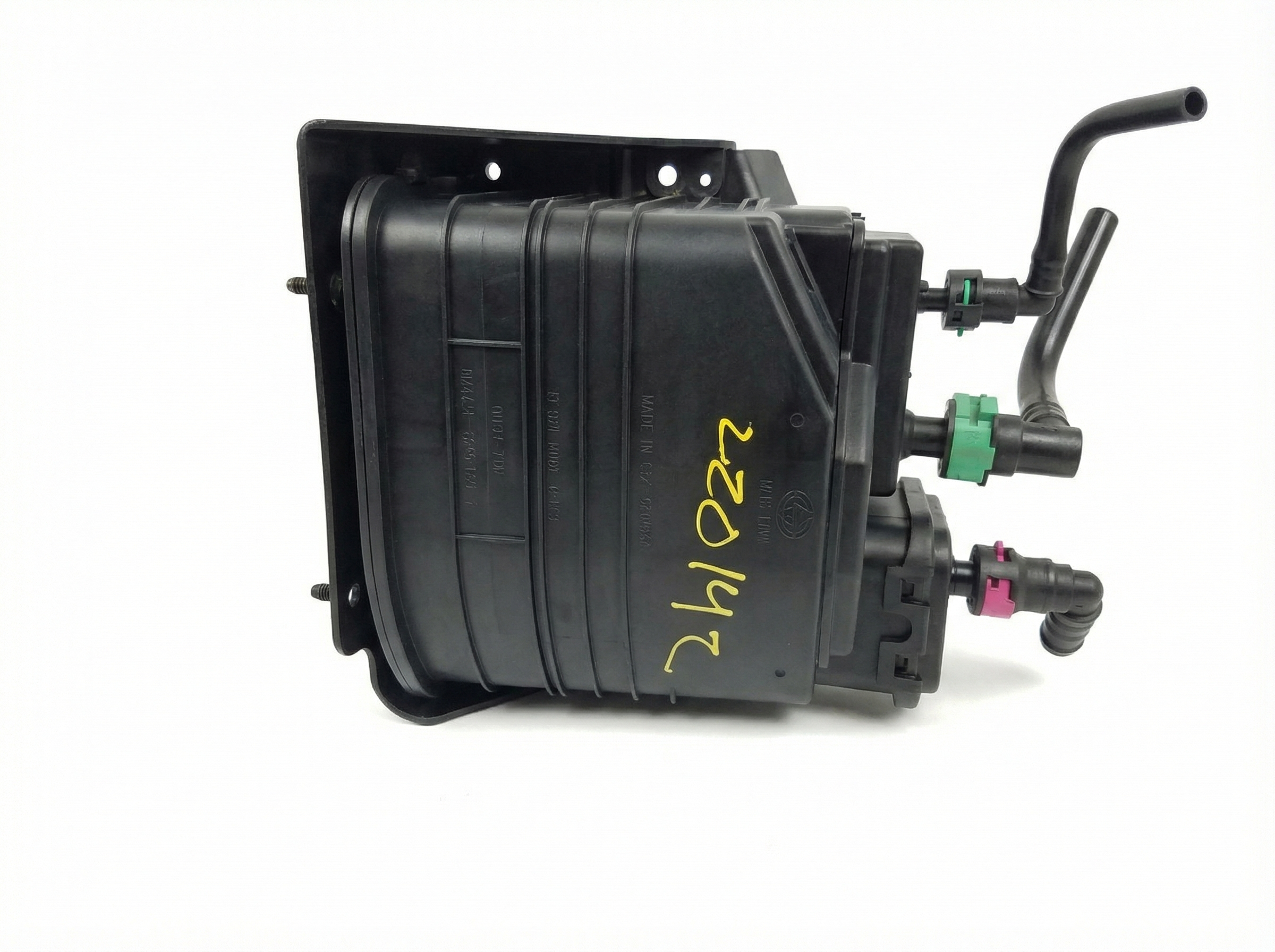
Used OEM Parts in Stock

New Aftermarket Parts Available


The information in this article is provided for general reference and educational purposes only. Vehicle specifications, procedures, and part compatibility can vary by production date, trim level, and region. Always consult your vehicle's factory service manual and verify part numbers before purchasing or performing repairs. Safety-critical components such as airbags, seat belts, and braking systems should be installed by a qualified professional.
- Chevrolet Colorado:
- 🧭 Diagnostic Flowchart
- 🎬 Helpful Videos
- 🛍️ Shop This Part
- What's Unique About the 2015-2022 Chevrolet Colorado
- Symptoms You May Notice
- Most Likely Causes
- Rare But Worth Checking
- Diagnosis Steps
- Parts You'll Likely Need
- Related Codes That Often Appear With This One
- Technical Service Bulletins (TSBs) & Recalls
- Platform-Specific Known Issues
- Mechanic-Grade Diagnostic Values
- Scan Tool Commands That Help
- Wiring & Ground Locations
- Real Owner Repair Stories
- Documented NHTSA Reports
- OEM Part Supersession History
- Model Year Variations Within This Range
- Other Known Issues on This Vehicle
- Used vs. New Parts: Buying Guide for This Vehicle
- Real Owner Stories
- 2015 GMC Canyon 3.6L V6
- 2016 GMC Canyon 3.6L V6
- 2015 Chevrolet Colorado 3.6L V6 — ~45000 miles
- Related OBD-II Codes
- Frequently Asked Questions
- 🎟️ Get 5% Off