

P0443 on 2006-2013 Chevrolet Impala: EVAP Purge Valve Circuit Causes and Fixes
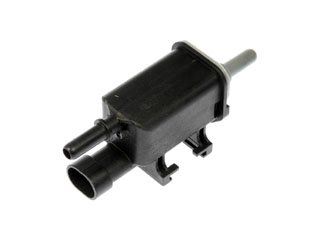
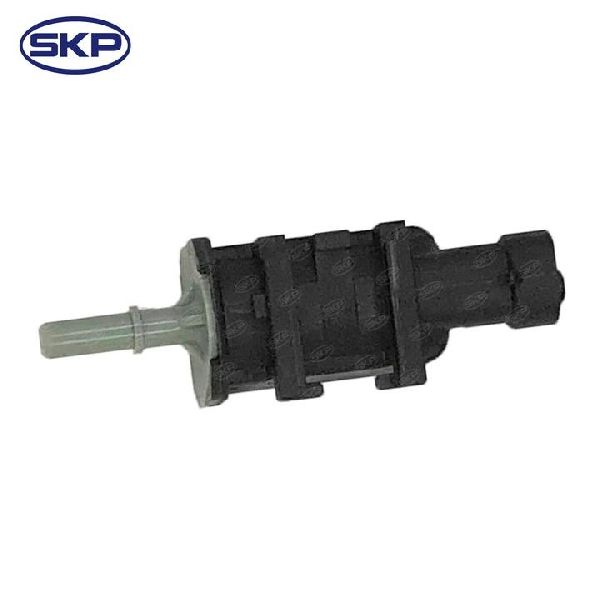
For a 2006-2013 Impala, code P0443 almost always points to a bad EVAP purge solenoid valve on the engine. It's an easy DIY fix, with the part costing around $25-$50. Verify the correct part number for your engine (3.5L/3.9L vs 3.6L).
- P0443 on a 2006-2013 Impala is almost certainly a bad EVAP purge solenoid valve.
- This is a very simple and inexpensive DIY repair that requires basic tools and about 15-20 minutes.
- The part is located directly on top of the engine, held by a single 10mm bolt.
- Verify the correct part number for your engine: 2006-2011 (3.5L/3.9L) use a different part than 2012-2013 (3.6L).
- Replacing this valve will likely also fix other related codes like P0496 (improper flow), P0171/P0174 (lean condition), and P0300 (random misfire).
- A simple way to confirm the failure is to remove the valve and see if you can blow air through it. If you can, it's bad.
What's Unique About the 2006-2013 Chevrolet Impala
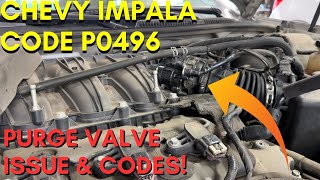
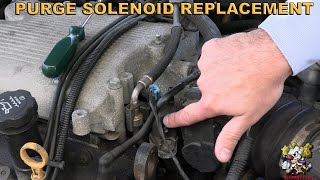
On the ninth-generation Impala, the EVAP purge solenoid is a very common failure item. It's conveniently located on top of the engine, making it much easier to access and replace than on many other vehicles where it might be buried. A failure of this part often triggers not just the P0443 electrical code, but also a P0496 'no flow' code if it gets stuck, which can then cause a vacuum leak leading to rough running and even misfire codes. There are two different primary part numbers depending on the engine: one for the 2006-2011 3.5L/3.9L engines 🎬 Watch: Step-by-step purge valve replacement for the 3.5L engine. and another for the 2012-2013 3.6L LFX engine.
Symptoms You May Notice
- Check Engine Light is on.
- Rough idle or engine hesitation, especially if the valve is stuck open.
- Difficulty starting the engine, particularly after filling the gas tank.
- Slightly reduced fuel efficiency.
- A faint fuel odor near the vehicle.
- A "Reduced Propulsion" or "Engine Offline" message may appear on the dash in some GM platforms when multiple circuit codes are present (NHTSA ODI #11632222).
- Replacing the gas cap. While a loose gas cap can cause other EVAP codes (like P0455 or P0442), it does not cause the P0443 circuit code.
- Replacing the EVAP vent solenoid. This is a different part, usually located near the charcoal canister by the fuel tank. P0443 specifically refers to the purge solenoid on the engine.
Most Likely Causes
- Failed EVAP Purge Solenoid Valve 🔴 High Probability → Shop Vapor Canister This component is a very common failure point on many GM vehicles of this era, including the Impala. The internal solenoid coil can fail, creating an open or short in the circuit, or the valve can become mechanically stuck. Manufacturer Bulletin #PIP5552 indicates that engineering has investigated conditions where P0443 sets due to component concerns.
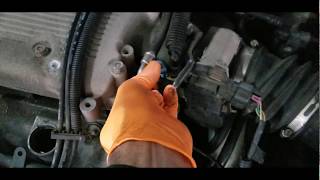
How to confirm: Disconnect the valve and attempt to blow through it. A good valve should be closed when no power is applied, meaning no air should pass through. 🎬 See how to perform a bench test on the solenoid. If you can blow through it, it's stuck open and needs replacement. You can also check for vacuum at the engine port with the valve connected and the engine running; there should be no suction at idle.
Typical fix: Replace the EVAP purge solenoid valve. It is located on top of the engine and held by a single 10mm bolt.
Est. part cost: $25-$60 - Damaged Wiring or Connector ⚪ Low Probability Engine vibration and heat can cause the wires leading to the solenoid to become brittle and break, often right at the connector. TSB Bulletin #PIT5336 notes that technicians may find the Emission 1 fuse open and should inspect for damaged wires on the engine harness.
How to confirm: Visually inspect the two wires and the electrical connector attached to the purge solenoid. Look for any breaks, corrosion, or loose pins. Use a multimeter to check for 12V power on the pink wire at the connector with the key on. The fuse is typically the #15 (10A) EMISS fuse in the underhood fuse block.
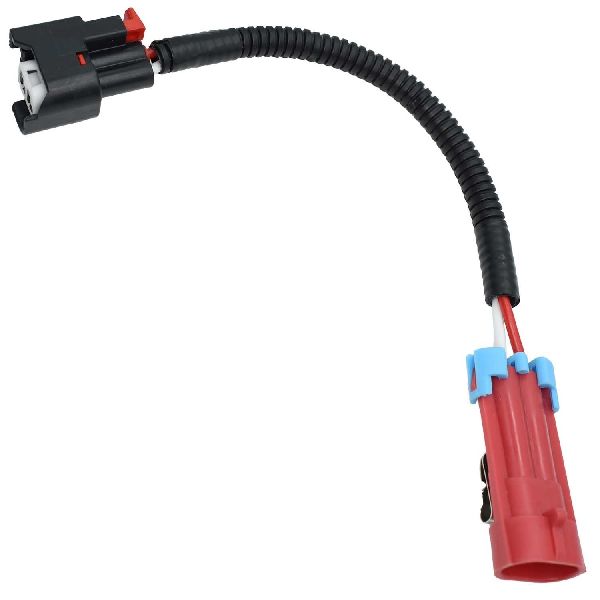
Typical fix: Repair the broken wire or replace the connector pigtail. The pigtail for the 3.6L LFX engine is ACDelco PT2875.
Est. part cost: $15-$35
Rare But Worth Checking
- Blown Fuse: The EVAP system circuit is protected by a fuse. On these Impalas, check the 10-amp EMISS fuse #15 in the underhood fuse block. TSB Bulletin #PIT5336 confirms that an open Emission fuse is a known factor in P0443 cases.
- Faulty Powertrain Control Module (PCM): → Shop Engine Control Module (ECM) This is extremely rare. The PCM is the last thing to suspect after thoroughly checking the valve and its wiring. A faulty driver inside the PCM can fail to ground the circuit or detect its status correctly.
Diagnosis Steps
- Retrieve all codes from the PCM using an OBD-II scanner.
- Remove the plastic engine cover (requires removing the oil cap first).
- Locate the EVAP purge solenoid on the top of the engine.
- Inspect the electrical connector and wiring going to the solenoid for any visible damage, corrosion, or breaks.
- Disconnect the electrical connector and the two EVAP lines from the solenoid.
- With the solenoid removed, try to blow air through it. If air passes through, the valve is stuck open and has failed.
- If the valve seems okay, use a multimeter to check for 12-volt power at the connector's pink wire with the ignition on (Key On, Engine Off).
- If power is present and the valve passed the blow-through test, the issue may be intermittent or in the ground control wire from the PCM. A wiggle test on the harness while monitoring the circuit can help find intermittent breaks.
- Given the high failure rate, if codes P0443 and P0496 are present together, the most likely cause is a faulty purge solenoid.
Parts You'll Likely Need
- Vapor Canister Purge Solenoid Valve (for 3.6L LFX V6, 2012-2013 🎬 Watch this walkthrough for replacing the valve on 3.6L models.)
(OEM #12690512 (supersedes 12610560))— This is the most common part to fail on the 3.6L engine, causing the P0443 code.
Trusted brands: ACDelco, Delphi, Dorman (911-082)
OEM price range: $35-$55
Aftermarket price range: $25-$45 - Vapor Canister Purge Solenoid Valve (for 3.5L/3.9L V6, 2006-2011)
(OEM #12597567 or ACDelco 214-1680)— This is the most common part to fail on the earlier 3.5L and 3.9L engines.
Trusted brands: ACDelco, Dorman (PV443)
OEM price range: $40-$60
Aftermarket price range: $25-$45
Related Codes That Often Appear With This One
- P0496 — P0496 (EVAP Flow During a Non-Purge Condition) is often seen with P0443 because a common failure mode is for the purge valve to get stuck open, causing both an electrical fault (P0443) and an improper flow condition (P0496).
- P0171 / P0174 — If the purge valve sticks open, it creates a vacuum leak, allowing unmetered air into the intake manifold. This can make the engine run lean and trigger 'System Too Lean' codes.
- P0300 — A significant vacuum leak from a stuck-open purge valve can disrupt the air-fuel mixture enough to cause random engine misfires, especially at idle.
- P0403 / P0458 / P0597 — These circuit-related codes are frequently documented alongside P0443 when a shared fuse or harness issue occurs (NHTSA ODI #11681144).
Technical Service Bulletins (TSBs) & Recalls
- TSB 17-NA-409: Notes that on some 3.6L engines, a leaking camshaft cover gasket can cause oil contamination of the purge valve, leading to repeat failures.
- Bulletin #PIP5552: Engineering information regarding investigations into P0443 and P0459 codes setting on GM vehicles.
- Bulletin #PIT5336: Advises technicians to inspect the engine harness for damaged wires and check for an open Emission 1 fuse when P0443 is present.
Platform-Specific Known Issues
- For 2012-2013 models with the 3.6L LFX engine, be aware of TSB 17-NA-409. It notes that a leaking camshaft cover gasket can allow oil to enter the EVAP system, contaminating and destroying the purge valve. If you have repeat failures, inspect for oil in the EVAP line.
- The physical part and part number are different between the 2006-2011 models (3.5L/3.9L V6) and the 2012-2013 models (3.6L V6). Ensure you purchase the correct valve for your specific engine.
Mechanic-Grade Diagnostic Values
- EVAP Purge Solenoid Coil Resistance — expected: 15 to 40 Ohms. Some sources cite a tighter range of 22-38 Ohms.. Failure: A reading of infinite resistance (open circuit) or near-zero resistance (short circuit) indicates a failed solenoid coil.
- Voltage at Purge Solenoid Connector (Key On, Engine Off) — expected: Approximately 12V (Battery Voltage) on the power supply wire (typically Pink or Pink/Black).. Failure: No voltage suggests a blown fuse (e.g., EMISS #15) or an open in the power supply circuit.
- Voltage at Purge Solenoid Control Wire (via Scan Tool Command) — expected: When the purge valve is commanded ON by a scan tool, the voltage on the control wire (typically Dark Green/White) should drop to near 0V as the PCM provides ground.. Failure: If voltage does not drop when commanded, it points to a break in the control wire or a faulty PCM driver.
Scan Tool Commands That Help
- GDS2 / Tech2 (or equivalent professional scan tool): EVAP Purge Solenoid Output Control — This bidirectional command allows a technician to manually command the purge solenoid ON and OFF (or to a specific percentage). It is used to verify if the solenoid 'clicks' audibly and to confirm the PCM driver is correctly sending the ground signal to the control wire, which is essential for confirming the integrity of the circuit and PCM.
Wiring & Ground Locations
- Purge Solenoid Power Wire — Pin A on the purge solenoid connector.. This wire, typically Pink, should have constant battery voltage with the key in the ON position. Lack of power here points to a blown fuse (EMISS #15) or a break in the power feed wire.
- Purge Solenoid Control Wire — Pin B on the purge solenoid connector.. This wire, typically Dark Green with a White stripe, is the ground control wire leading back to the PCM. The PCM pulses ground on this wire to operate the solenoid. A break in this wire will cause a P0443.
- G111 (for 3.5L/3.9L) — On a transmission-to-engine bolt, located above the starter.. This is a major ground point for the engine control module on the earlier V6 engines. While not a direct ground for the solenoid itself (which is PCM-grounded), a poor connection here can cause erratic PCM behavior and potentially trigger driver circuit codes like P0443.
- G103 (for 3.6L) — On the driver's side of the engine block, often near the thermostat housing.. This is a primary engine ground point. A loose or corroded G103 can cause a host of intermittent electrical issues, including faulty operation of PCM drivers which could lead to a P0443 code.
Real Owner Repair Stories
- YouTube - Falcon's Garage (2012 Chevrolet Impala 3.6L V6) — Check Engine Light with codes P0443, P0496, P0174 (lean bank 2), and P0300 (random misfire).
❌ Tried (didn't work) The technician went straight to testing the purge valve based on the combination of codes.
✅ What actually fixed it The technician confirmed the purge valve was stuck open by feeling for vacuum at the valve's port with the engine running (a bad valve will have suction at idle). Replacing the EVAP purge solenoid valve resolved all four codes and the associated lean/misfire conditions.
Documented NHTSA Reports
- An owner reported a "Reduced Propulsion" message on the dashboard along with P0443 and several other circuit codes, which was traced to a blown fuse likely caused by a sticking EGR valve (NHTSA ODI #11632222).
- NHTSA ODI #11448862 describes a scenario where a vehicle displayed an "engine offline" message with P0443 and multiple oxygen sensor and emission codes found simultaneously.
- A report filed under NHTSA ODI #11681144 lists P0443 among a series of codes including P06DB and P0030, noting the issue prevented the vehicle from circulating coolant properly.
OEM Part Supersession History
12610560→12690512— Standard part number update by GM for the valve used on the 3.6L LFX engine.12690512→12737252— Further part number update by GM. Parts are interchangeable.
Model Year Variations Within This Range
- 2006-2011: These models use the 3.5L or 3.9L V6 engines, which utilize purge valve part number 12597567 (ACDelco 214-1680). The wiring colors and ground locations (G111) may also differ from the later 3.6L engine.
- 2012-2013: These models use the 3.6L LFX V6 engine, which utilizes purge valve part number 12690512 (or its successors). This engine is also subject to TSB 17-NA-409 regarding potential oil contamination of the EVAP system.
Diagnostic Flowchart
Other Known Issues on This Vehicle
Issues unrelated to this code that are worth knowing about as an owner of this generation:
- Transmission Pressure Control Solenoid (PCS) Failure 🔴 High — Very common on the 4T65-E transmission, especially after 70,000 miles. Can cause harsh shifting, slipping, and code P1811 (Max Adapt/Long Shift).
- Intermediate Steering Shaft Clunk 🟡 Low — Extremely common across all model years. A clunking or popping noise is heard and felt through the steering wheel during low-speed turns. The shaft needs replacement. (Ref: Multiple TSBs issued, including #00-02-35-003E.)
- HVAC Blend Door Actuator Failure 🟠 Medium — Very common. Results in a loud clicking/ticking noise from the dashboard and/or inability to control cabin temperature. The plastic gears inside the actuator fail.
- Reduced Engine Power due to Accelerator Pedal Position (APP) Sensor/Circuit 🔴 High — Common enough to warrant a TSB. Can be caused by a faulty pedal sensor or a water leak into a body harness connector near the kick panel, setting a P2138 code. (Ref: TSB #07-06-04-019E.)
- Power Steering and Oil Cooler Line Leaks 🟠 Medium — Common on 3.5L/3.9L models. The lines are prone to rusting and leaking power steering fluid and engine oil, which can be a labor-intensive repair. (Ref: TSB #070232002 addresses power steering rack leaks.)
Used vs. New Parts: Buying Guide for This Vehicle
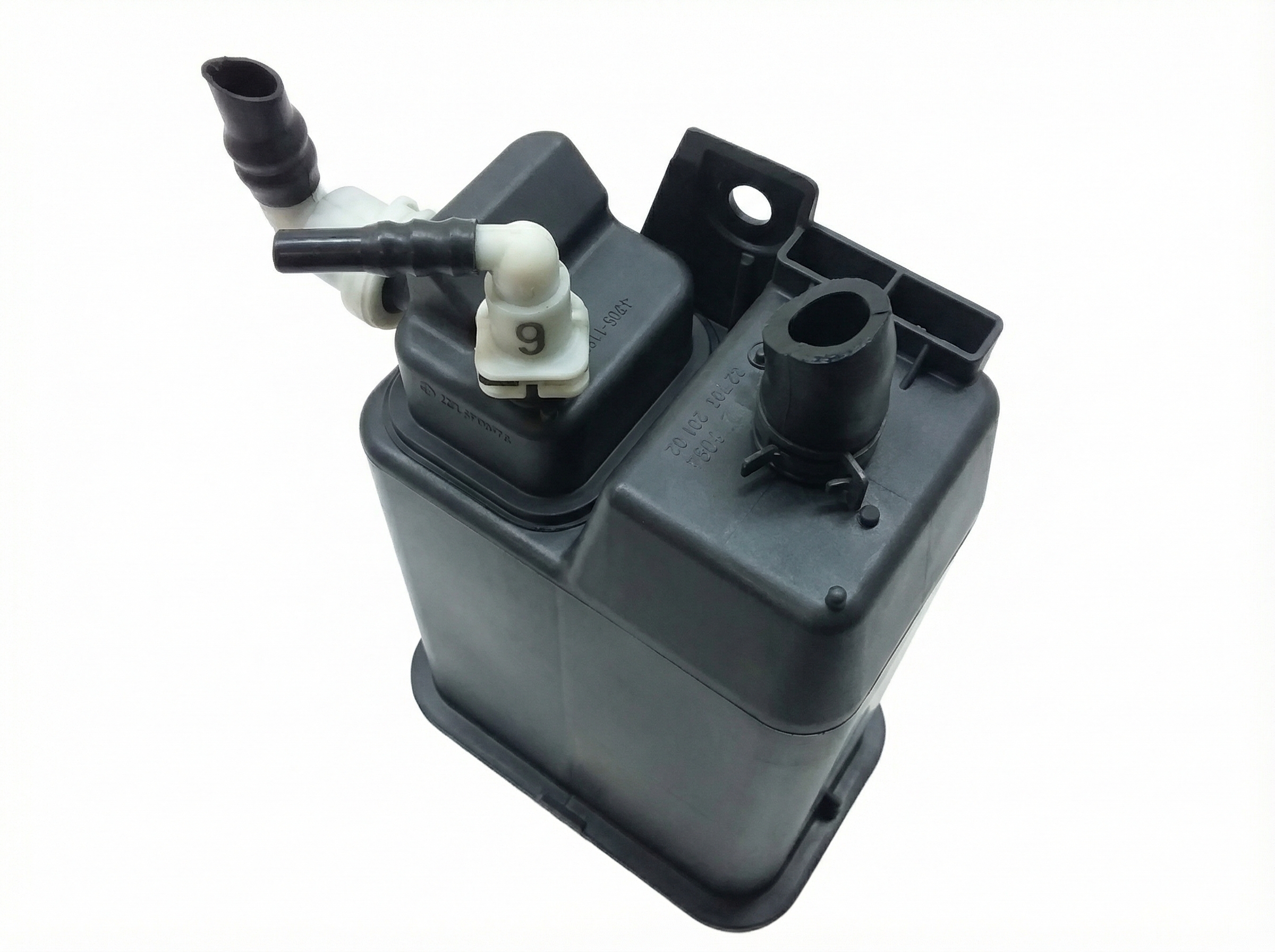
When a used part is the smart pick: A used purge solenoid is generally not recommended for this repair. The part is a very high-failure item and is relatively inexpensive to buy new. The labor to replace it is minimal, so the risk of a used part failing shortly after installation outweighs the small cost savings.
Donor-vehicle mileage cap: roughly under 30000 miles for the part to have meaningful remaining life.
What to inspect on the donor part:
- If considering a used part, ensure it comes from a low-mileage, late-model donor.
- Perform a 'blow-through' test before purchase; no air should pass through the valve when it is not powered.
- Check the electrical connector pins for any signs of corrosion or damage.
- Inspect the plastic housing for any cracks or signs of heat damage.
Aftermarket brands forum-validated for this vehicle:
- ACDelco (OEM)
- Delphi
Brands owners have reported issues with on this vehicle:
- Some user reviews for Dorman (911-082) have reported issues like rattling or premature failure, though many have had success. Given the small price difference, sticking with OEM/OES brands like ACDelco or Delphi is a safer bet.
Real Owner Stories
Aggregated from forums and TSBs cited above. Mileages and costs reflect what owners reported in those sources.
2012 Chevrolet Impala 3.6L V6
Symptoms: Check Engine Light with codes P0174 (Lean Bank 2), P0300 (Random Misfire), P0443 (Purge Solenoid Circuit), and P0496 (Incorrect Purge Flow). The technician noted that with the engine running, the faulty valve was sucking air through the purge port.
What fixed it: Replacing the vapor canister purge valve solved all four codes. The technician confirmed the new valve was not sucking air at idle before clearing the codes.
Source hint: youtube_comment - Falcon's Garage
2012 Chevrolet Impala 3.6L V6
Symptoms: Reported codes P0443, P0496, P0171, and P0174, along with a rough idle.
What fixed it: Replacing the purge solenoid valve (part number 12610560, now 12690512) resolved all four codes and the rough idle.
Source hint: ImpalaForums.com - Thread: 'P0443, P0496, P0171, P0174'
2012 Chevrolet Impala 3.6L V6
Symptoms: P0496 code, difficulty starting after fueling, and a rough idle.
What fixed it: Replacing the vapor canister purge solenoid.
Source hint: Reddit r/MechanicAdvice
Related OBD-II Codes
Frequently Asked Questions
I have a 2012 Impala with the 3.6L engine and keep having purge valve failures. Is there a known reason for this?
Which fuse should I check for the P0443 circuit on my 2006-2013 Impala?
Is the purge solenoid the same for all 2006-2013 Impala models?
Why does my Impala struggle to start specifically after I fill up the gas tank?
How can I quickly test if the purge valve is the cause of my P0443 code?
Are there other common electrical issues on the Impala that might trigger 'Reduced Engine Power' along with EVAP codes?
Helpful Videos
Used OEM Parts in Stock
New Aftermarket Parts Available


The information in this article is provided for general reference and educational purposes only. Vehicle specifications, procedures, and part compatibility can vary by production date, trim level, and region. Always consult your vehicle's factory service manual and verify part numbers before purchasing or performing repairs. Safety-critical components such as airbags, seat belts, and braking systems should be installed by a qualified professional.
- Chevrolet Impala:
- 🧭 Diagnostic Flowchart
- 🎬 Helpful Videos
- 🛍️ Shop This Part
- What's Unique About the 2006-2013 Chevrolet Impala
- Symptoms You May Notice
- Most Likely Causes
- Rare But Worth Checking
- Diagnosis Steps
- Parts You'll Likely Need
- Related Codes That Often Appear With This One
- Technical Service Bulletins (TSBs) & Recalls
- Platform-Specific Known Issues
- Mechanic-Grade Diagnostic Values
- Scan Tool Commands That Help
- Wiring & Ground Locations
- Real Owner Repair Stories
- Documented NHTSA Reports
- OEM Part Supersession History
- Model Year Variations Within This Range
- Other Known Issues on This Vehicle
- Used vs. New Parts: Buying Guide for This Vehicle
- Real Owner Stories
- 2012 Chevrolet Impala 3.6L V6
- 2012 Chevrolet Impala 3.6L V6
- 2012 Chevrolet Impala 3.6L V6
- Related OBD-II Codes
- Frequently Asked Questions
- 🎟️ Get 5% Off