

P0443 on 2008-2012 Chevrolet Malibu: EVAP Purge Valve Circuit Causes and Fixes
On a 2008-2012 Malibu, code P0443 almost always points to a failed EVAP Purge Solenoid Valve located on the engine. It's an inexpensive part and a straightforward DIY replacement that usually takes less than 30 minutes. Before replacing, check the wiring connector for damage, as chafing is also a known issue.
- P0443 on a 2008-2012 Malibu is an electrical circuit code, not a leak code.
- The most likely cause by far is a failed EVAP purge solenoid valve on top of the engine.
- A chafed wire at the solenoid connector is the second most likely cause and should be inspected carefully.
- This is a very DIY-friendly repair that requires basic hand tools and can be completed in under 30 minutes.
- Before buying the part, check the wiring connector for damage and test the old part with a multimeter if possible.
- Ensure you purchase the correct part (OEM #12597567 is common for this generation) for your engine, though they often use the same solenoid.
What's Unique About the 2008-2012 Chevrolet Malibu
The 2008-2012 Chevrolet Malibu (7th generation) uses a common GM EVAP purge solenoid that is known to fail. The part is shared across many GM vehicles from this era, including models from Buick, GMC, and Cadillac. Fortunately, its location on both the 4-cylinder and V6 engines is highly accessible, making it one of the easier and more common repairs for owners of this vehicle. The wiring harness near the solenoid is also a known weak point, sometimes chafing and causing the circuit fault.
Symptoms You May Notice
- Check Engine Light is on
- Rough idle
- Slightly reduced fuel economy
- Difficulty starting the engine, especially after refueling
- Engine stalling when coming to a stop
- Fluctuating RPMs at idle.
- Replacing the gas cap. While a loose gas cap can cause other EVAP codes (like P0455 or P0457), it does not cause P0443, which is an electrical circuit code.
- Replacing the EVAP vent solenoid. The vent solenoid is a different part located near the charcoal canister by the fuel tank. P0443 specifically refers to the purge solenoid circuit on the engine. The vent solenoid is typically part number 13575701.
Most Likely Causes
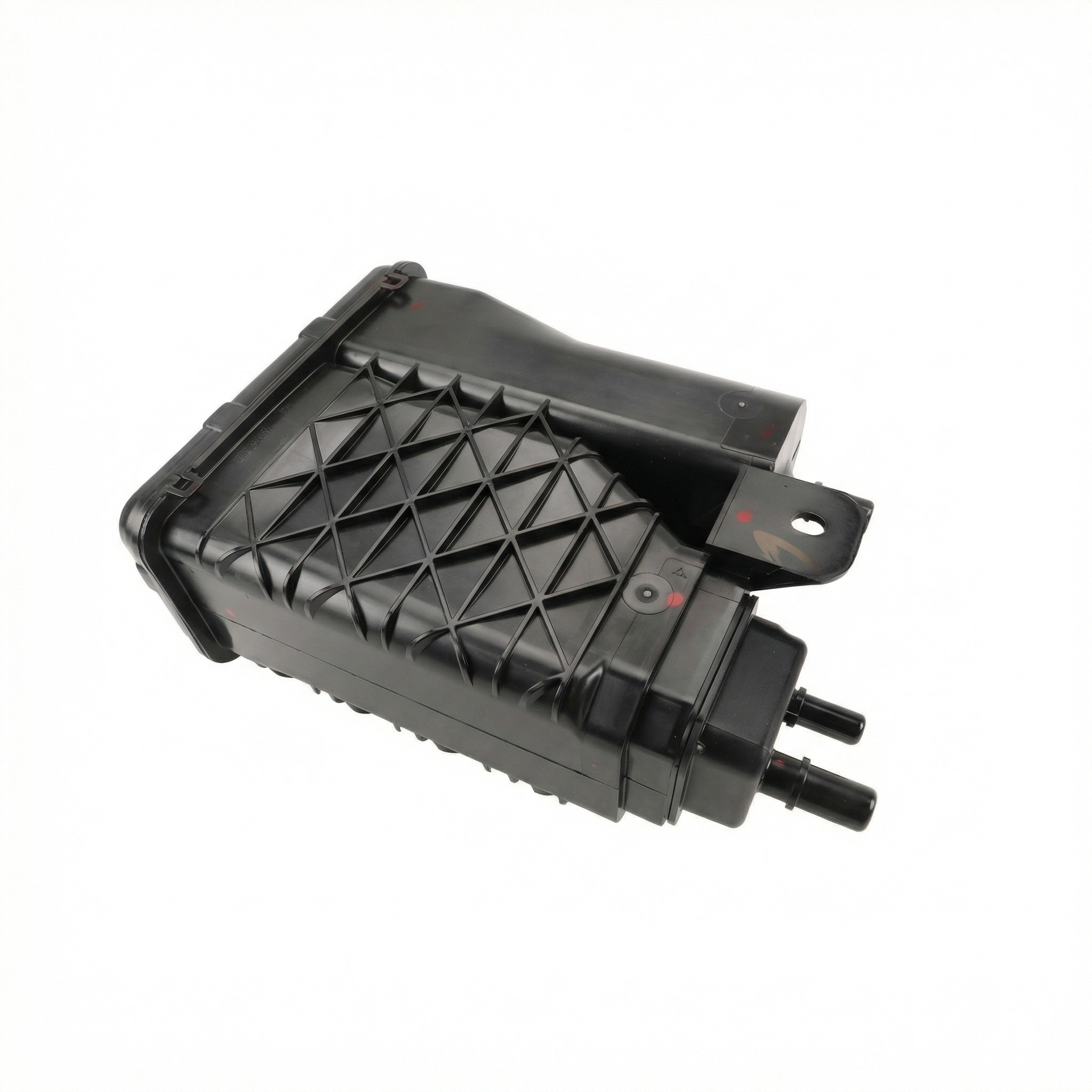
- Failed EVAP Purge Solenoid Valve 🔴 High Probability → Shop Vapor Canister The solenoid is a very common failure item on many GM vehicles of this period. Over time, the internal coil can fail electrically (open or short circuit) or the valve can become stuck, leading to this and other EVAP codes. Manufacturer Bulletin #PIP5552 notes that engineering has investigated concerns of the MIL illuminating specifically for P0443.
How to confirm: With the engine off, disconnect the electrical connector and test the two pins on the solenoid with a multimeter set to ohms. A reading outside the manufacturer's specification (typically 20-30 ohms) or an open (infinite) / short (zero) circuit indicates a bad solenoid. You can also command the valve with a bi-directional scan tool and listen for a clicking sound; no click means it's likely failed. A simple test is to remove the valve and try to blow through it; it should be closed by default, so if air passes, it has failed mechanically.
Typical fix: Replace the EVAP purge solenoid valve.
Est. part cost: $20-$50 - Damaged Wiring or Connector 🟡 Medium Probability The wiring harness leading to the purge solenoid can become brittle or chafe against other components in the engine bay, causing a short or open circuit. The connector pins can also corrode or become loose.
How to confirm: Visually inspect the wiring harness and connector leading to the purge solenoid for any signs of cracking, chafing, or corrosion. With the ignition on and connector unplugged, use a multimeter to verify that one pin has battery voltage (often a pink wire). Wiggling the connector while the engine is running or while commanding the valve with a scan tool can help identify an intermittent connection.
Typical fix: Repair the damaged section of wire or replace the connector pigtail. A common pigtail is Standard Motor Products #S2860.
Est. part cost: $10-$30 - Blown Fuse ⚪ Low Probability
How to confirm: Check the fuse panel for the fuse related to the emissions system (often labeled 'EMISS' or similar). A related TSB for other GM vehicles suggests checking the 'Emission 1' fuse. If the fuse is blown, it indicates a short circuit in the system that needs to be found, which could be the solenoid itself or the wiring. In some instances, as noted in NHTSA ODI #11632222, a blown fuse (such as F03) can be caused by a sticking EGR valve, which may trigger P0443 alongside other codes.
Typical fix: Replace the blown fuse after diagnosing and fixing the underlying short circuit.
Est. part cost: $1-$5
Rare But Worth Checking
- Faulty Engine Control Module (ECM): → Shop Engine Control Module (ECM) This is extremely rare. The ECM's internal driver for the purge solenoid circuit can fail, but this should only be considered after all other possibilities, including the valve, wiring, and fuses, have been thoroughly tested and ruled out.
Diagnosis Steps
- Verify the code with an OBD-II scanner.
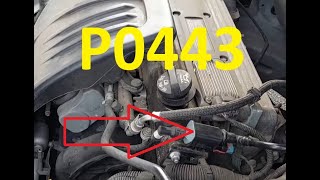
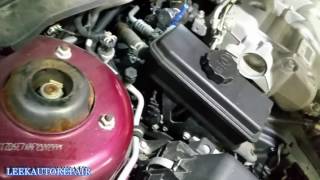
- Locate the EVAP purge solenoid valve. On both 4-cylinder and V6 engines, it's on the top of the engine and easily accessible after removing the plastic engine cover.
- Visually inspect the electrical connector and wiring going to the solenoid for any obvious damage, corrosion, or loose connections. Pay close attention to where the harness might rub against other components.
- If a bi-directional scan tool is available, command the purge solenoid to cycle. You should hear an audible clicking from the valve. If it doesn't click, wiggle the connector to see if it starts clicking, which would indicate a bad connection.
- If no scan tool is available, disconnect the electrical connector. Use a multimeter to check for battery voltage at one of the pins in the connector with the ignition on.
- Test the solenoid itself. Measure the resistance between the two pins on the solenoid. A normal reading is typically between 20 and 30 ohms. An infinite reading (open) or zero reading (short) means the solenoid is bad.
- If wiring and the solenoid test good, check the emissions-related fuses in the underhood fuse box.
- If all other tests pass, the issue may be with the ECM driver circuit, but this is very uncommon.
Parts You'll Likely Need
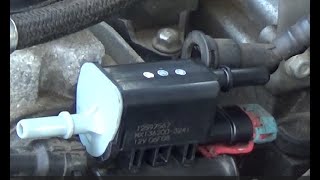
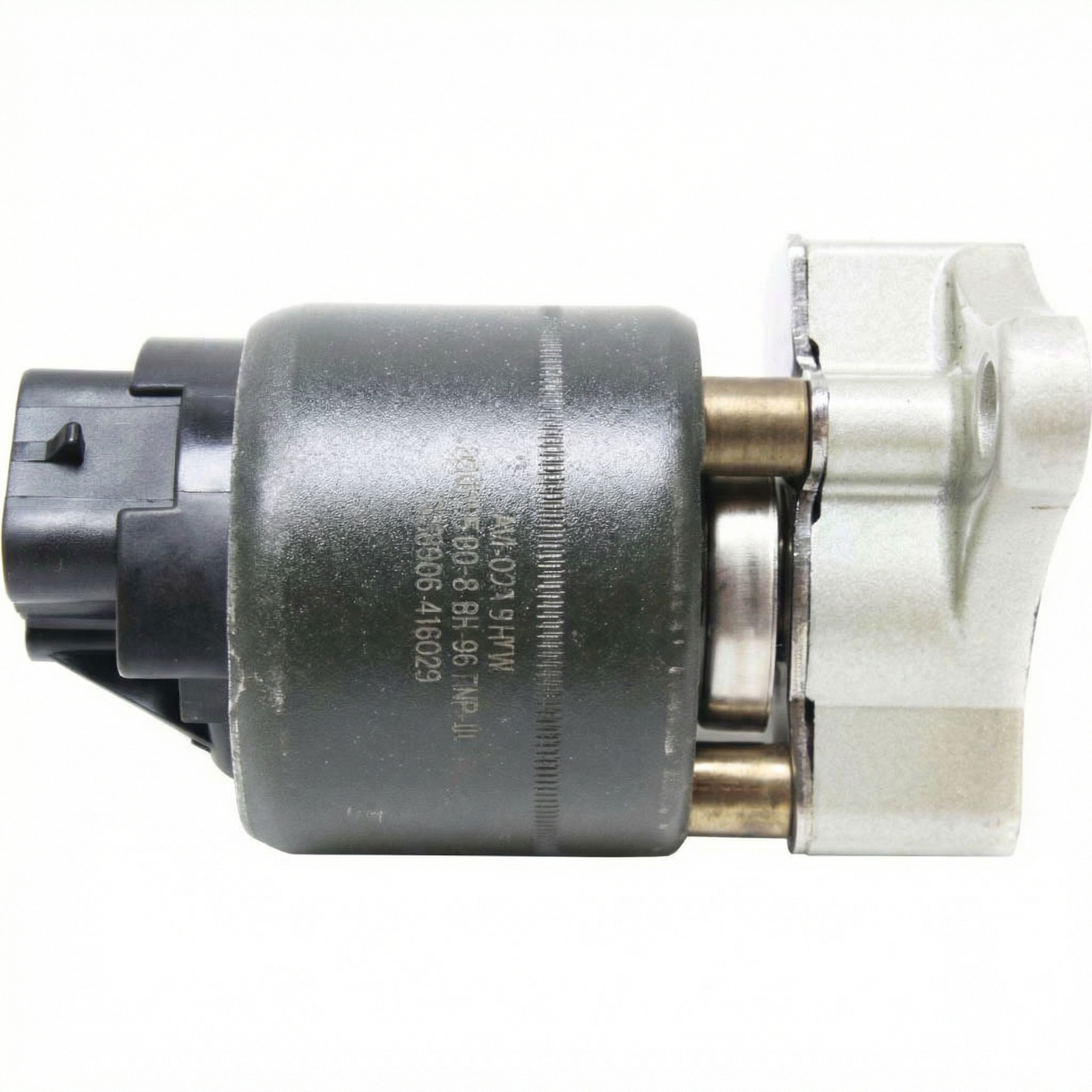
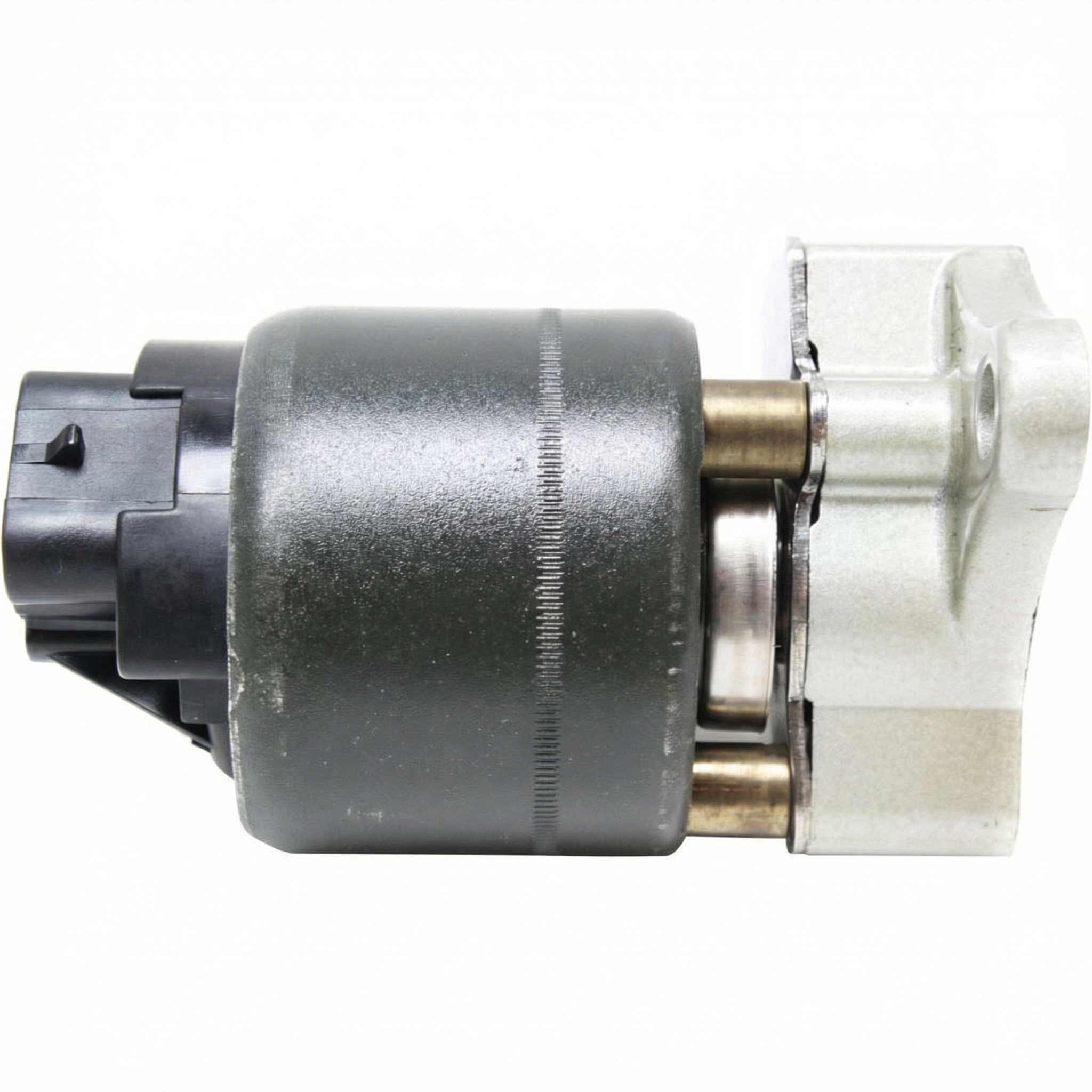
- EVAP Canister Purge Solenoid Valve
(OEM #12597567)— This is the most common failure point for code P0443. The internal electronics of the solenoid fail, causing an open or short in the circuit.
Trusted brands: ACDelco (GM Original Equipment), Standard Motor Products (SMP), Delphi, Dorman
OEM price range: $30-$70
Aftermarket price range: $20-$50
Related Codes That Often Appear With This One
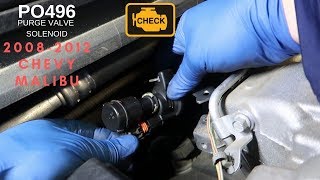
- P0496 — P0496 indicates 'EVAP Flow During a Non-Purge Condition,' which often happens when the purge valve sticks open. It's common to see both codes if the valve is failing mechanically and electrically.
- P0442 — P0442 indicates a small EVAP system leak. A faulty or stuck purge valve can sometimes be interpreted by the system as a small leak, causing both codes to appear.
- P0444 — P0444 indicates the 'EVAP Purge Control Valve Circuit Open'. This is a more specific version of P0443 and points directly to a broken wire or an open coil inside the solenoid.
Technical Service Bulletins (TSBs) & Recalls
- While no TSB is specific to the Malibu for P0443, TSB #PIT5336 for other GM vehicles is relevant. It suggests checking the 'Emission 1' fuse and inspecting the engine wiring harness for chafing, which are valid diagnostic steps for the Malibu as well.
- NHTSA Recall 13036 (GM Campaign 14V252000): While not for P0443, this recall addresses increased resistance in the Body Control Module (BCM) connector, which can cause various electrical issues. It highlights the platform's sensitivity to wiring and connection problems.
- Bulletin #PIP5552: This manufacturer bulletin communicates a concern regarding the Check Engine Light illuminating with code P0443, noting that engineering has investigated this specific circuit condition.
Platform-Specific Known Issues
- Wiring Chafing Near Solenoid: On the V6 models, in particular, the wiring harness for the purge solenoid can rub against the engine or other components, eventually wearing through the insulation and causing a short or open circuit. A YouTube video by user 'Ray Berry' specifically documents finding a chafed wire right at the connector as the cause for P0443 on a 2011 Malibu V6.
- Owner Experience: Simple Swap Fix: Multiple forum threads and YouTube videos confirm that for the vast majority of owners, simply replacing the purge solenoid valve (Part No. 12597567) resolves the P0443 code. The repair is consistently described as taking less than 15-30 minutes, requiring only basic tools like a 10mm socket.
Documented NHTSA Reports
NHTSA ODI #11448862 describes a scenario where P0443 appeared alongside a "engine offline" console message and a long list of other electrical codes. Similarly, NHTSA ODI #11681144 reports P0443 occurring with a "Reduced Propulsion" message and a failure to circulate coolant properly, indicating that in complex electrical failures, this code may be part of a larger cluster of circuit faults.
Mechanic-Grade Diagnostic Values
- EVAP Purge Solenoid Coil Resistance — expected: 20 to 30 Ohms. Failure: A reading of infinite resistance (open circuit) or near-zero resistance (short circuit).
- Voltage at Purge Solenoid Connector (Key On, Engine Off) — expected: One pin (typically Pink wire) should have battery voltage (~12V).. Failure: No voltage suggests a blown fuse or an open in the power supply wire from the fuse block.
- Control Circuit Voltage (Back-probed at connector, engine running) — expected: The ECM provides a pulse-width modulated (PWM) ground. Voltage will fluctuate. When commanded ON with a scan tool, voltage should drop near 0V.. Failure: Voltage does not change when commanded, or is always at 0V (short to ground) or always at battery voltage (open circuit/bad driver).
Scan Tool Commands That Help
- GM Tech2 / GDS2 or equivalent professional scanner: EVAP Purge/Seal — This function allows the technician to manually command the purge solenoid ON, OFF, or to a specific duty cycle percentage, and to seal the EVAP system by closing the vent valve. It's used to verify the solenoid clicks when commanded and to check if the ECM driver is functioning correctly.
- GM Tech2 / GDS2: EVAP Service Bay Test — This is an automated test that runs the vehicle's own internal EVAP leak test procedure on command, rather than waiting for the natural drive cycle conditions to be met. It can be used to verify a repair has been successful without extensive driving.
Wiring & Ground Locations
- Purge Solenoid Connector — On the EVAP purge solenoid, located on top of the engine.. This is the primary connection point. The Pink wire is typically the 12V ignition supply, and the other wire (often Green) is the ground control from the ECM. Testing for power and signal occurs here.
- G105 — On the 2.4L Ecotec, this ground is often located on the front left (driver's side) of the engine block, sometimes near the starter or behind cooling fan relays. On some platforms, it's on an engine-to-transmission stud.. This is a critical ground point for the Engine Control Module (ECM). A loose or corroded G105 can cause erratic sensor readings and incorrect fault codes, as the ECM may not have a stable ground reference.
OEM Part Supersession History
12597567→12735397— Standard part evolution and consolidation by GM.
Heads up: The original part number 12597567 has been superseded multiple times, with previous numbers including 12606684 and 12597341. The current replacement is generally compatible with all specified applications.
Other Known Issues on This Vehicle
Issues unrelated to this code that are worth knowing about as an owner of this generation:
- 2.4L Ecotec Timing Chain Stretch & Guide Failure 🔴 High — Very common, especially over 100,000 miles. Often accelerated by oil consumption issues. Symptoms include a startup rattle and codes like P0016/P0017. (Ref: No direct recall, but related to oil consumption TSBs like 10-06-01-008G.)
- Sudden Loss of Electric Power Steering (EPS) 🔴 High — Widespread issue affecting many 2008-2009 models, leading to sudden high steering effort. (Ref: NHTSA Recall 14V153000 / GM Recall 14116. Repair involves replacing the torque sensor assembly.)
- 6T70/6T40 Automatic Transmission Failures 🟠 Medium — Common issues include broken 3-5-R wave plates, causing harsh shifting or loss of gears, and TCM failures. (Ref: Multiple TSBs exist. A common failure point is the 35R drum wave plate.)
- Brake Light Malfunction / BCM Connector Issues 🟠 Medium — Common issue where brake lights may not work or may stay on, also affecting cruise control and shift interlock. (Ref: NHTSA Recall 14V252000 / GM Recall 13036. Fix involves securing and lubricating the BCM connector.)
- Transmission Shift Cable Failure (4-Speed Auto) 🟠 Medium — Affects vehicles with the 4-speed automatic transmission. The cable end tab can break, causing a mismatch between the shifter position and the actual gear. (Ref: NHTSA Recall 12V460000.)
- Excessive Oil Consumption (2.4L Ecotec) 🟠 Medium — A known issue with the piston rings on the 2.4L engine, leading to low oil levels that can cause further damage, especially to timing components. (Ref: TSB 10-06-01-008G addresses this issue for some GM vehicles.)
Used vs. New Parts: Buying Guide for This Vehicle
When a used part is the smart pick: For this specific repair, a used part from a junkyard is NOT recommended. The EVAP purge solenoid is a very common failure item with a low cost for a new aftermarket or OEM part. The risk of getting a used part that has already failed or is near the end of its service life is very high.
What to inspect on the donor part:
- Not applicable as used part is not recommended.
OEM-only on this vehicle (don't cheap out):
- No parts in this specific P0443 repair require strictly OEM. Quality aftermarket solenoids are widely available and function correctly.
Aftermarket brands forum-validated for this vehicle:
- ACDelco (OEM)
- Standard Motor Products (SMP)
- Delphi
- Dorman
Brands owners have reported issues with on this vehicle:
- No-name, unbranded parts from online marketplaces may have a higher failure rate, but no specific brand is consistently cited as problematic.
Real Owner Stories
Aggregated from forums and TSBs cited above. Mileages and costs reflect what owners reported in those sources.
2011 Chevrolet Malibu LTZ V6
Symptoms: P0443 engine code for an EVAP purge solenoid circuit fault.
What fixed it: Found and repaired a chafed wire right at the electrical connector.
Source hint: YouTube - Ray Berry - 'P0443 engine code 2011 Malibu LTZ v6. Evap purges solenoid circuit fault.'
2010 Chevrolet Malibu 3.6L V6
Symptoms: P0443 code present; ECM monitoring the circuit detected a fault.
What fixed it: Diagnostic walkthrough and replacement of the purge solenoid.
Source hint: YouTube - '2010 Chevy Malibu P0443 Diagnostic & Fix (HD)'
2008-2012 Chevrolet Malibu V6
Symptoms: Trouble code P0443 or P0496.
What fixed it: Simple and inexpensive replacement of the purge solenoid valve, a repair taking less than 15-30 minutes.
Source hint: YouTube - 'Chevy Malibu with trouble code P0443 or P0496 -- The simple and inexpensive fix anyone can perform'
Related OBD-II Codes
Frequently Asked Questions
Where is the EVAP purge solenoid located on my 2008-2012 Malibu?
Is there a specific part number I should look for to fix the P0443 code?
Could a blown fuse be causing my P0443 code?
I have a 2011 Malibu V6; is there a specific wiring issue I should check?
Does the NHTSA recall for the BCM connector (14V252000) relate to my P0443 code?
How can I test the solenoid myself before buying a new one?
Helpful Videos

Used OEM Parts in Stock
New Aftermarket Parts Available


The information in this article is provided for general reference and educational purposes only. Vehicle specifications, procedures, and part compatibility can vary by production date, trim level, and region. Always consult your vehicle's factory service manual and verify part numbers before purchasing or performing repairs. Safety-critical components such as airbags, seat belts, and braking systems should be installed by a qualified professional.
- Chevrolet Malibu:
- 🎬 Helpful Videos
- 🛍️ Shop This Part
- What's Unique About the 2008-2012 Chevrolet Malibu
- Symptoms You May Notice
- Most Likely Causes
- Rare But Worth Checking
- Diagnosis Steps
- Parts You'll Likely Need
- Related Codes That Often Appear With This One
- Technical Service Bulletins (TSBs) & Recalls
- Platform-Specific Known Issues
- Documented NHTSA Reports
- Mechanic-Grade Diagnostic Values
- Scan Tool Commands That Help
- Wiring & Ground Locations
- OEM Part Supersession History
- Other Known Issues on This Vehicle
- Used vs. New Parts: Buying Guide for This Vehicle
- Real Owner Stories
- 2011 Chevrolet Malibu LTZ V6
- 2010 Chevrolet Malibu 3.6L V6
- 2008-2012 Chevrolet Malibu V6
- Related OBD-II Codes
- Frequently Asked Questions
- 🎟️ Get 5% Off