

P0443 on 2005-2010 Chrysler 300: EVAP Purge Valve Circuit Fixes
Code P0443 on a 2005-2010 Chrysler 300 almost always points to a failed EVAP purge solenoid or its wiring. It's an electrical circuit code, not a leak. A new solenoid costs about $30-$80 and is a straightforward DIY replacement located on the engine. The most common cause is the solenoid itself failing internally.
- P0443 is an electrical circuit code, not a leak. Do not waste money on a new gas cap.
- The most likely cause is a bad EVAP purge solenoid, which is an inexpensive and easy part to replace yourself.
- Verify the correct part number for your specific model year. The part changed between the 2007 and 2008 model years.
- Test the old part with a multimeter before buying a new one. A good part will have a resistance of 14-30 ohms.
- The location of the valve differs between V6 and V8 engines, so confirm the location before starting the repair.
What's Unique About the 2005-2010 Chrysler 300
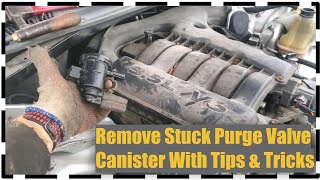
On the first-generation Chrysler 300 and its LX platform mates, the P0443 code is a very common and straightforward issue. Unlike some vehicles where this code can be intermittent or caused by complex software issues, on the 300 it's almost always a hard failure of the purge solenoid itself. There are two different primary part numbers depending on the model year group (2005-2007 vs. 2008-2010), so verifying the correct part is crucial before purchasing. The connector's locking tab is also known to become brittle and break 🎬 Watch: How to safely remove a stuck or stubborn purge valve. during removal.
Symptoms You May Notice
- Check Engine Light is on
- Slightly rough idle or engine hesitation (if valve is stuck open)
- Minor decrease in fuel economy
- Vehicle will fail an emissions inspection
- Possible faint fuel odor, especially if the valve is stuck open
- Difficulty starting the engine immediately after filling the gas tank (if valve is stuck open)
- Replacing the gas cap. P0443 is an electrical circuit code, not a system leak code (like P0455 or P0456). A bad gas cap will not cause P0443.
- Replacing the charcoal canister. While topping off the gas tank can damage the canister and cause other EVAP codes, P0443 points specifically to the electrical control circuit for the purge valve, not the canister itself.
Most Likely Causes
- Faulty EVAP Purge Solenoid 🔴 High Probability → Shop Vapor Canister The solenoid is an electromechanical part with an internal coil that can burn out or develop high resistance over time. Being mounted on the engine exposes it to constant heat cycles and vibration, leading to eventual failure.
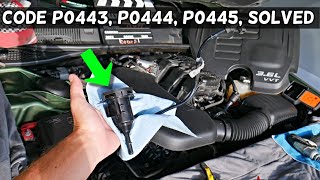
How to confirm: Disconnect the electrical connector. Use a multimeter to check the resistance between the two pins on the solenoid. A good solenoid for this platform should read between 14 and 30 ohms. An open circuit (infinite resistance, 'OL') or a short circuit (near zero resistance) indicates a failed solenoid. Alternatively, you can apply 12V and ground directly to the pins; a healthy solenoid will make an audible 'click'.
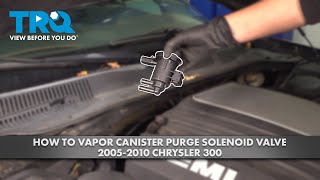
Typical fix: Replace the EVAP purge solenoid. This involves disconnecting the electrical connector, two hoses, and sliding the old valve out of its rubber mounting bracket. 🎬 Watch: Step-by-step guide to replacing the purge solenoid valve.
Est. part cost: $30-$80 - Damaged Wiring or Connector 🟡 Medium Probability The wiring harness in the engine bay is exposed to heat and vibration, which can cause wires to become brittle, chafe against other components, or break internally near the connector. The connector's plastic locking tab often breaks, leading to a poor connection.
How to confirm: Visually inspect the wiring going to the purge solenoid for any signs of cracking, chafing, or melting. Wiggle the connector while the engine is running to see if it affects idle. Use a multimeter to check for battery voltage (around 12V) at the power supply pin in the connector with the key on. Then, check the control wire for a pulsed ground signal from the PCM when the valve is commanded on with a scan tool.
Typical fix: Repair the broken or shorted wire. If the connector is damaged, it can be replaced with a pigtail connector (e.g., Dorman 645-523).
Est. part cost: $15-$40 - Blown Fuse ⚪ Low Probability
How to confirm: Check the fuse box (Front Power Distribution Center) under the hood for any blown fuses. The fuse may be shared with other emissions components or the PCM. A wiring diagram for your specific year is the best way to identify the exact fuse. For later models, fuse 31 in the front fuse box is often related to emissions components.
Typical fix: Replace the blown fuse. If the fuse blows again immediately, it indicates a short circuit in the wiring or the solenoid itself that must be found and repaired.
Est. part cost: $1-$5
Rare But Worth Checking
- Faulty Powertrain Control Module (PCM): → Shop Engine Control Module (ECM) This is extremely rare. The PCM driver that controls the solenoid can fail, but this should only be considered after the purge solenoid, its wiring, and fuses have all been thoroughly tested and confirmed to be good.
Diagnosis Steps
- Read the code: Use an OBD-II scanner to confirm P0443 is the primary code. Note any other codes, but P0443 is often solitary.
- Locate the Purge Solenoid: On V8 models (5.7L, 6.1L), it's on the passenger side of the engine, mounted to a bracket near the firewall. On V6 models (2.7L, 3.5L), it's typically on the driver's side, near the rear of the engine.
- Visual Inspection: Check the electrical connector for a secure fit and look for any obvious damage to the wiring harness leading to the solenoid, such as cracks, melting, or chafing against engine parts.
- Test the Solenoid Resistance: Disconnect the electrical connector. Set a multimeter to Ohms (Ω) and measure the resistance across the two pins on the solenoid itself. A good reading is between 14-30 Ohms. A reading of OL (over-limit/infinite) or near 0 ohms indicates a failed solenoid.
- Test the Circuit Power: With the solenoid disconnected and the ignition key in the 'On' position (engine off), use a multimeter to test the electrical connector. One pin should have battery voltage (~12V). This confirms the power supply and fuse are good.
- Test the Control Circuit: The other pin is the control wire that the PCM pulses to ground. The most definitive test is to use a scan tool to command the purge valve 'On' while checking for ground on this pin with a test light connected to battery positive. The light should illuminate or flash.
- Replace the Faulty Component: If the solenoid fails the resistance test, replace it. If power is missing, trace the circuit back to the fuse box. If the control signal is missing but power is present, the issue is in the wiring to the PCM or, rarely, the PCM itself.
- Clear the Code: After the repair, use the OBD-II scanner to clear the trouble code and turn off the Check Engine Light. Drive the vehicle to allow the EVAP monitor to run and confirm the fix.
Parts You'll Likely Need
- EVAP Purge Solenoid (2005-2007 Models)
(OEM #4591733AA)— This is the correct part for all engines in the 2005, 2006, and 2007 model years. It is the most common failure point for code P0443.
Trusted brands: Mopar, Dorman (911-211), Standard Motor Products (CP524)
OEM price range: $50-$70
Aftermarket price range: $30-$50 - EVAP Purge Solenoid (2008-2010 Models)
(OEM #4891738AA)— This is the correct part for all engines in the 2008, 2009, and 2010 model years. It is the most common failure point for code P0443.
Trusted brands: Mopar, Dorman (911-223), Standard Motor Products (CP642)
OEM price range: $40-$60
Aftermarket price range: $25-$45
Technical Service Bulletins (TSBs) & Recalls
- TSB 25-001-07: Relates to P0441 (Incorrect Purge Flow) on some 2007 models due to PCM software, but does not directly address the P0443 circuit code.
- TSB 18-011-08: Pertains to updating PCM software to improve the detection logic for small EVAP leaks (P0456), not directly related to the P0443 electrical fault.
Platform-Specific Known Issues
- Owner Experience: 2006 300C 5.7L: A user on 300cforums.com with a 2006 300C reported getting code P0443. After confirming the solenoid was bad with a multimeter (it showed an open circuit), they replaced it with a new Mopar part. The repair took less than 15 minutes and immediately resolved the Check Engine Light.
- DIY Repair on LXForums: A thread on lxforums.com details a 2007 Dodge Charger (platform mate) owner fixing P0443. They noted the part was difficult to reach on the 5.7L HEMI but was a simple 'pull-off, push-on' replacement after removing the engine cover. The fix was successful.
Mechanic-Grade Diagnostic Values
- EVAP Purge Solenoid Coil Resistance — expected: 14 to 30 Ohms. Failure: A reading of OL (infinite resistance) or near 0 Ohms indicates a failed solenoid.
- EVAP Purge Solenoid Connector - Power Pin Voltage — expected: ~12V (Battery Voltage) with Key On, Engine Off. Failure: No voltage indicates a problem with the power supply circuit, likely a blown fuse or broken wire.
- EVAP Purge Solenoid Connector - Control Pin Voltage — expected: The PCM provides a pulsed ground. When commanded ON with a scan tool, voltage should drop close to 0V.. Failure: Voltage that does not drop when commanded ON indicates an open in the control wire or a faulty PCM driver.
- Continuity of Control Circuit Wire — expected: Below 5.0 Ohms. Failure: Resistance above 5.0 Ohms indicates an open or high resistance in the wire between the PCM and the solenoid connector.
Scan Tool Commands That Help
- DRB III / WiTECH: EVAP Purge Solenoid Activation / Test — This command allows the technician to manually cycle the purge solenoid on and off. It is used to verify if the solenoid clicks audibly and to test the control circuit's integrity without having to wait for the PCM to command purge under normal driving conditions. This is a critical step to confirm if the solenoid is physically responding to the electrical command.
Wiring & Ground Locations
- Purge Solenoid Connector Pin 1 — On the two-pin connector at the EVAP purge solenoid.. This is the power supply wire. It should have battery voltage with the key on. Lack of voltage here points the diagnosis toward the fuse and power distribution, not the solenoid itself.
- Purge Solenoid Connector Pin 2 — On the two-pin connector at the EVAP purge solenoid.. This is the control circuit wire, which the PCM pulses to ground to activate the solenoid. Testing this pin with a test light or scope during a scan tool activation test confirms if the PCM is commanding the solenoid and if the wiring to the PCM is intact.
- G102 — Right side of the engine compartment.. This is a primary engine compartment ground. While the purge solenoid is ground-controlled by the PCM, a poor main ground at G102 can cause floating voltages and erratic behavior in various sensor and actuator circuits, including the one for the purge solenoid. It should be checked for corrosion and tightness if other electrical issues are present.
- Chrysler Purge Sense System — N/A (System architecture). Unlike most ground-side controlled systems, some Chrysler PCMs (including NGC controllers used in this era) use a high-side driver for the purge solenoid and monitor the ground for current flow. This is a critical distinction for advanced diagnosis; a technician expecting a simple ground pulse might misinterpret the readings if they are unaware of this specific control strategy.
OEM Part Supersession History
4591733AA→Discontinued— End of life for the part number for 2005-2007 models.
Heads up: This part is specific to 2005-2007 models. While now discontinued by Mopar, aftermarket equivalents like Dorman 911-211 and SMP CP524 are the correct replacements.4891738AA→4891738AB, then 4891738AD— Standard part revision and improvement over time for 2008-2010 models.
Heads up: Part number 4891738AD is the current, backward-compatible replacement for 4891738AA and 4891738AB. Aftermarket equivalents include Dorman 911-223 and SMP CP642.
Model Year Variations Within This Range
- 2005-2007: Uses purge solenoid part number 4591733AA.
- 2008-2010: Uses purge solenoid part number 4891738AA (and its supersessions).
Diagnostic Flowchart
Other Known Issues on This Vehicle
Issues unrelated to this code that are worth knowing about as an owner of this generation:
- Shifter Stuck in Park ('Pink Thingy' Failure) 🔴 High — Very common on 2005-2007 models. A small plastic lever in the shifter assembly breaks, preventing the shifter from moving out of Park. (Ref: No recall exists for this specific issue. The fix is to replace the broken plastic piece with a more durable metal aftermarket part.)
- Front Suspension Clunking/Noise 🟠 Medium — Extremely common. Worn tension struts (forward lower control arms), sway bar links, and outer tie rod ends cause clunking, popping, or rattling noises over bumps.
- NAG1 Transmission Shifting Problems 🟠 Medium — Fairly common at higher mileage. Can present as harsh shifts, shuddering, or getting stuck in gear. Often caused by a faulty conductor plate, solenoids, or a leaking electrical connector plug wicking fluid into the wiring. (Ref: TSB 21-002-05A addresses the leaking electrical connector plug.)
- Alternator Failure (Especially 5.7L HEMI) 🔴 High — A well-documented weak point. The alternator can fail, causing charging system warnings, dimming lights, and a dead battery. In some cases, a failing alternator can create a voltage spike that damages the PCM.
- Carbon Buildup on Intake Valves (5.7L HEMI) 🟡 Low — Can occur over time, leading to a Check Engine Light for multiple cylinder misfires, especially at idle.
Used vs. New Parts: Buying Guide for This Vehicle
When a used part is the smart pick: A used OEM purge solenoid from a junkyard is a reasonable choice for this repair. The part is not a high-precision component, and its failure is typically a simple electrical burnout. A used part from a low-mileage donor vehicle can offer OEM quality at a significantly lower price than a new aftermarket part.
Donor-vehicle mileage cap: roughly under 80000 miles for the part to have meaningful remaining life.
What to inspect on the donor part:
- Check the plastic housing for cracks or signs of extreme heat stress.
- Inspect the electrical connector pins to ensure they are straight and free of corrosion.
- If possible, bring a 9V battery or a 12V power pack to the junkyard. Briefly apply power to the two pins on the solenoid; a healthy unit will produce an audible 'click'.
- Examine the locking tab on the electrical connector portion; they are known to become brittle and break.
OEM-only on this vehicle (don't cheap out):
- Powertrain Control Module (PCM) - Due to VIN programming and security requirements, a used PCM cannot be easily swapped.
Aftermarket brands forum-validated for this vehicle:
- Standard Motor Products (SMP) is generally well-regarded in forums for electrical components.
- Dorman is a common choice and often works well, though quality can sometimes be inconsistent across their product lines.
Brands owners have reported issues with on this vehicle:
- No-name, unbranded parts from online marketplaces should be avoided. While the initial cost is low, they have a high rate of premature failure, and some may not have the correct internal resistance, which can prevent the P0443 code from being resolved.
Real Owner Stories
Aggregated from forums and TSBs cited above. Mileages and costs reflect what owners reported in those sources.
2006 Chrysler 300C 5.7L
Symptoms: Check Engine Light was on with code P0443.
What fixed it: Confirmed the solenoid had an open circuit using a multimeter and replaced it with a new Mopar part.
Source hint: 300cforums.com thread titled 'P0443 - Purge Solenoid Circuit...'
2007 Dodge Charger 5.7L HEMI
Symptoms: P0443 code; noted the part was difficult to reach but was a simple 'pull-off, push-on' replacement once the engine cover was removed.
What fixed it: Replaced the EVAP purge solenoid.
Source hint: lxforums.com thread titled 'Code P0443'
Chrysler 300 (V6 or V8)
Symptoms: P0443 and rough idle.
What fixed it: The owner found that topping off the gas tank caused the charcoal canister to fail, sending debris into the purge solenoid and holding it open.
Source hint: dodgeforum.com
Related OBD-II Codes
Frequently Asked Questions
Where is the purge solenoid located on my 2006 Chrysler 300C with the 5.7L HEMI?
I have a 2007 Chrysler 300; does TSB 25-001-07 fix my P0443 code?
Is there a specific fuse I should check for EVAP issues on later 2005-2010 models?
Can I use a multimeter to test the solenoid on my Chrysler 300?
My 300 is hard to start only after I fill up the gas tank. Is this related to P0443?
If my connector tab is broken, is there a specific replacement part number?
Helpful Videos
Used OEM Parts in Stock
New Aftermarket Parts Available


The information in this article is provided for general reference and educational purposes only. Vehicle specifications, procedures, and part compatibility can vary by production date, trim level, and region. Always consult your vehicle's factory service manual and verify part numbers before purchasing or performing repairs. Safety-critical components such as airbags, seat belts, and braking systems should be installed by a qualified professional.
- Chrysler 300:
- 🧭 Diagnostic Flowchart
- 🎬 Helpful Videos
- 🛍️ Shop This Part
- What's Unique About the 2005-2010 Chrysler 300
- Symptoms You May Notice
- Most Likely Causes
- Rare But Worth Checking
- Diagnosis Steps
- Parts You'll Likely Need
- Technical Service Bulletins (TSBs) & Recalls
- Platform-Specific Known Issues
- Mechanic-Grade Diagnostic Values
- Scan Tool Commands That Help
- Wiring & Ground Locations
- OEM Part Supersession History
- Model Year Variations Within This Range
- Other Known Issues on This Vehicle
- Used vs. New Parts: Buying Guide for This Vehicle
- Real Owner Stories
- 2006 Chrysler 300C 5.7L
- 2007 Dodge Charger 5.7L HEMI
- Chrysler 300 (V6 or V8)
- Related OBD-II Codes
- Frequently Asked Questions
- 🎟️ Get 5% Off