

P0443 on 2011-2023 Chrysler 300: EVAP Purge Valve Circuit Malfunction Causes and Fixes
For a 2011-2023 Chrysler 300, code P0443 almost always points to a failed EVAP purge solenoid valve. This is an inexpensive part, typically costing $25-$60 for an aftermarket replacement, and is very easy to replace for most DIYers. On some models, a faulty PCM may disable the remote start feature when this code is active.
- P0443 is an electrical circuit code for the EVAP purge valve, not an EVAP system leak code.
- The most likely cause on a 2011-2023 Chrysler 300 is a failed purge valve solenoid.
- This is a very simple and inexpensive repair that most car owners can perform themselves in under 15 minutes with basic tools.
- Before replacing the valve, it's wise to quickly check the fuse and look for any obvious damage to the wiring connector.
- Do not waste money replacing the gas cap for this specific code.
What's Unique About the 2011-2023 Chrysler 300
On the second-generation Chrysler 300 (2011-2023), which shares its platform with the Dodge Charger and Challenger, the P0443 code is a very common and straightforward issue. The purge valve itself is the most frequent point of failure. The part is generally easy to access on top of the engine for both the 3.6L V6 and the Hemi V8 engines, making this a popular DIY repair for owners. The 3.6L Pentastar V6, used across many Chrysler, Dodge, and Jeep vehicles, is well-known for this specific issue.
Generation note: This guide covers the second generation (LD) of the Chrysler 300, from 2011 to 2023. The location and general replacement procedure for the purge valve are similar across the different engines offered (3.6L V6, 5.7L Hemi, 6.4L Hemi), though the specific part and its exact placement on the engine may vary slightly. The procedure is nearly identical on its platform mate, the Dodge Charger.
🎬 See how to locate and remove the valve on a Charger.Symptoms You May Notice
- Check Engine Light is on.
- Slightly rough idle if the valve is stuck open.
- Difficulty starting the engine, especially after refueling (if the valve is stuck open).
- A faint fuel odor near the vehicle.
- Failing a vehicle emissions test.
- Slight decrease in fuel economy.
- Remote start feature is disabled.
- Replacing the gas cap. While a loose gas cap can cause other EVAP codes (like P0455 or P0456 for leaks), P0443 specifically points to an electrical circuit issue, not a system leak.
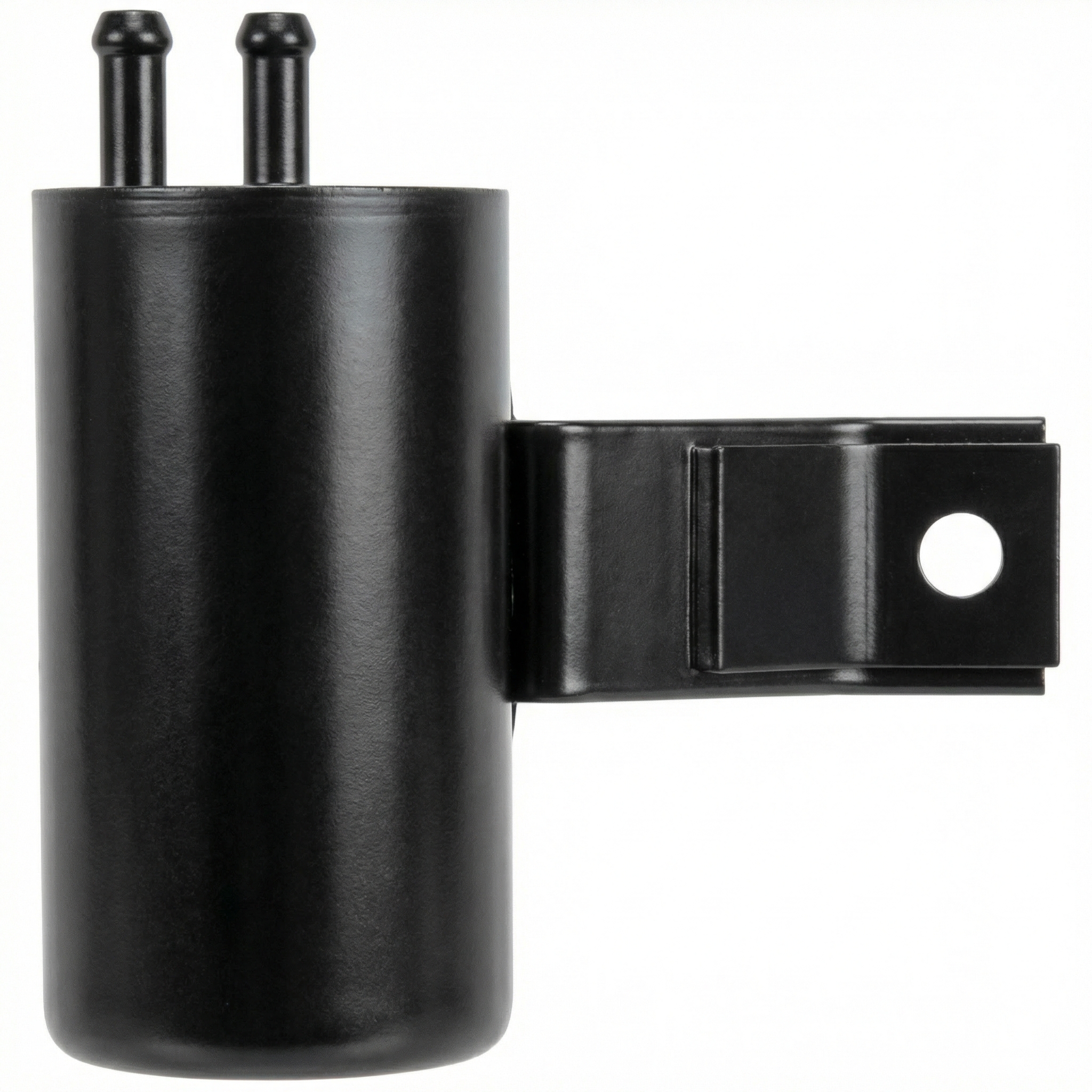
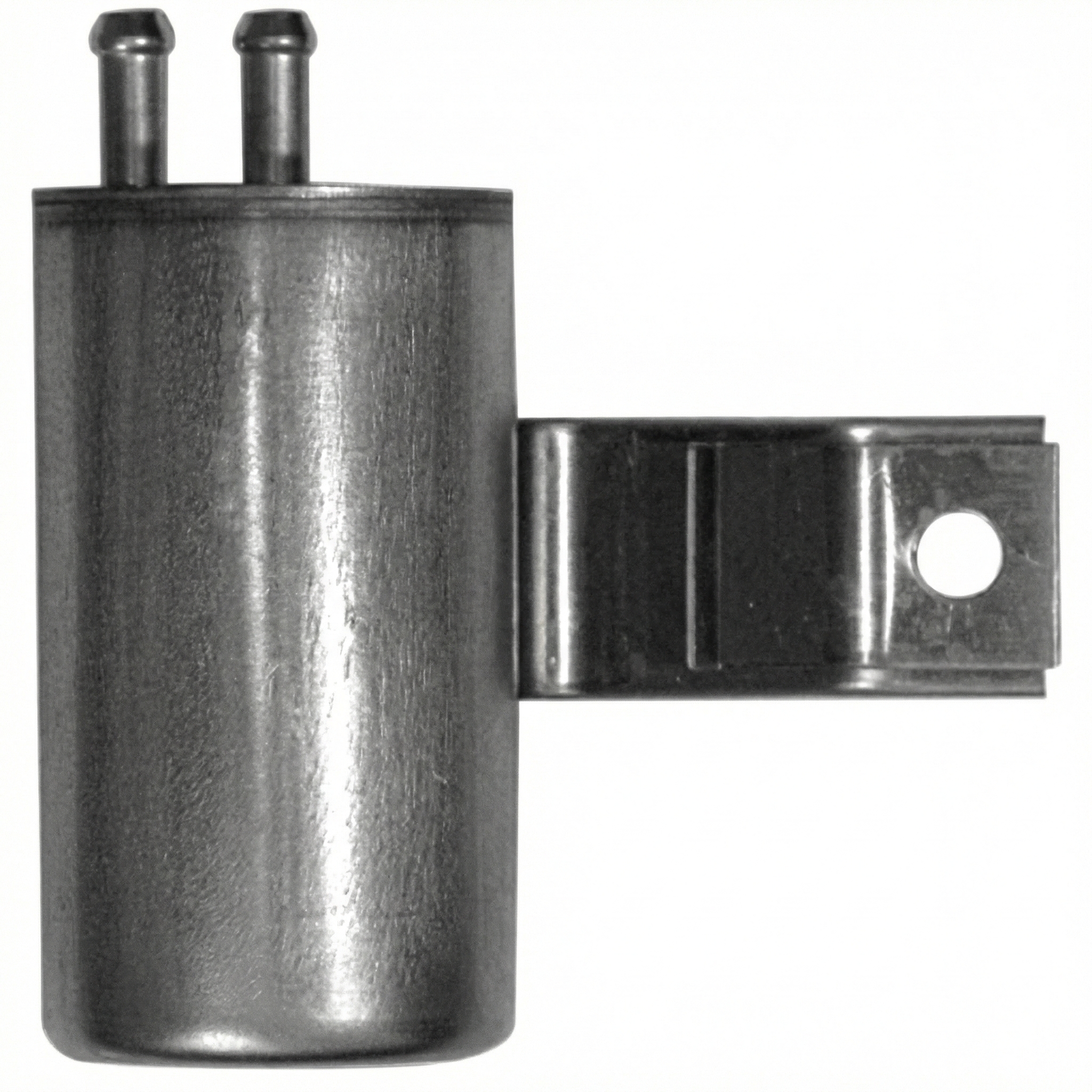
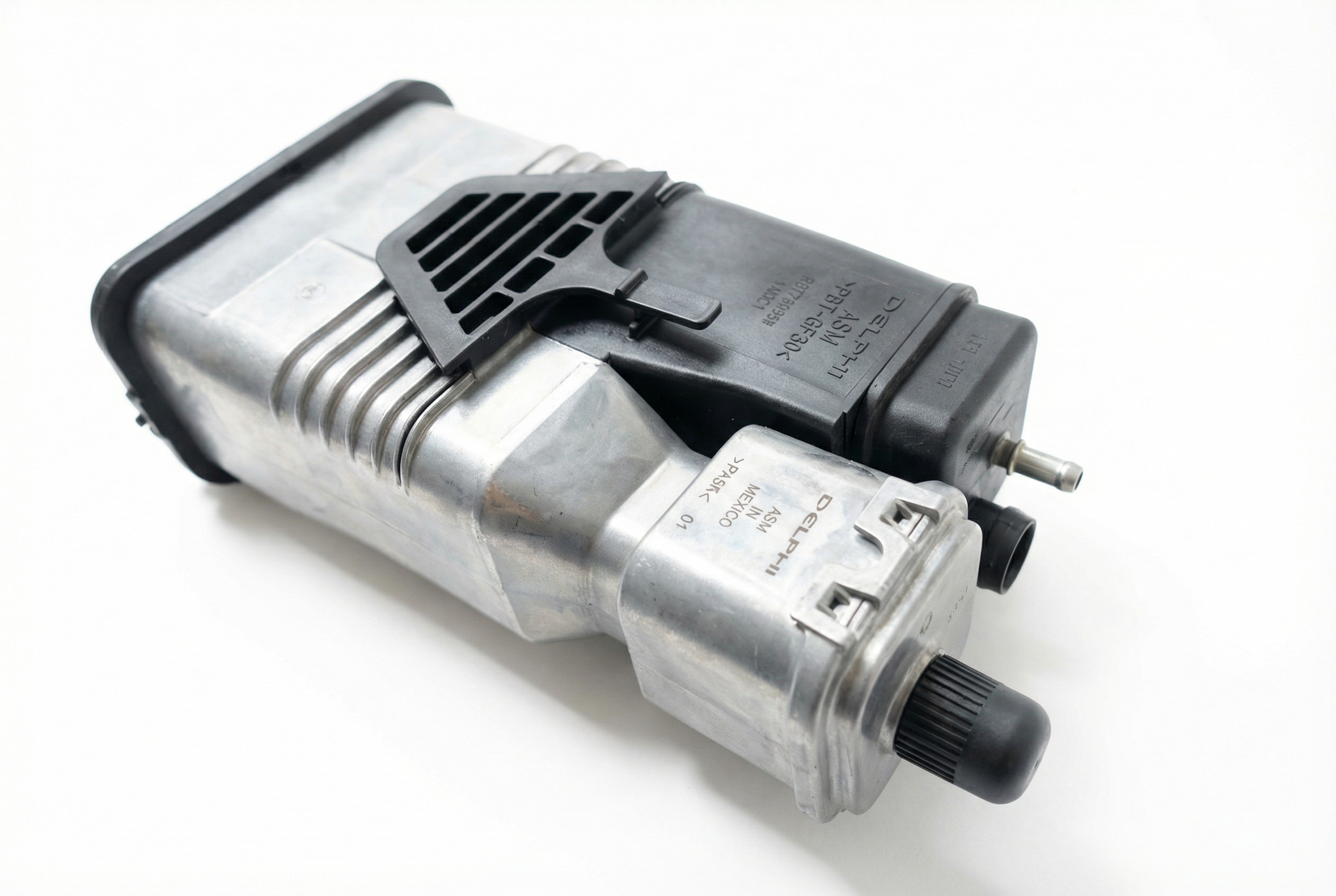
- Replacing the charcoal canister. The charcoal canister is a different component of the EVAP system and is not directly related to a P0443 circuit code.
Most Likely Causes
- Failed EVAP Purge Solenoid/Valve 🔴 High Probability → Shop Vapor Canister The solenoid is an electromechanical part that cycles frequently and is exposed to engine heat and vibration, leading to eventual wear and failure of its internal coil or mechanical valve. 🎬 Watch: A breakdown of common P0443 causes and fixes. This is a very common failure item on the 3.6L Pentastar and 5.7L/6.4L Hemi engines.
How to confirm: Use a scan tool to command the purge valve to open and close; you should hear an audible click. You can also test the solenoid's internal resistance with a multimeter (typically 15-35 ohms). A simple test is to remove the valve and try to blow through it; if air passes freely when it's unpowered, it's stuck open and has failed. Conversely, with the engine running at idle, you can disconnect the hose from the valve that leads to the charcoal canister and feel for suction; if there is no suction when the engine is warm, the valve may be stuck closed.
Typical fix: Replace the EVAP purge solenoid valve.
Est. part cost: $25-$75 - Damaged Wiring or Connector 🟡 Medium Probability The wiring harness is located in the engine bay and is subject to heat and vibration, which can cause wires to become brittle, chafe, or break over time. The connector pins can also corrode. Sometimes the connector is simply not plugged in all the way after previous service.
How to confirm: Visually inspect the wiring harness and connector for any signs of damage, melting, or corrosion. Ensure the connector is fully seated. Use a multimeter to check for 12V power and a proper ground signal from the PCM at the connector. A user on DodgeForum.com found a broken signal wire between the solenoid connector and the PCM connector, requiring a new wire to be run.
Typical fix: Repair the damaged section of wiring or clean/replace the electrical connector.
Est. part cost: $5-$50 - Blown Fuse ⚪ Low Probability
How to confirm: Locate the fuse for the EVAP system in the vehicle's fuse box (consult the owner's manual for the specific location). Visually inspect the fuse or use a multimeter/test light to check for continuity. The fuse may be shared with other components, so a schematic can be helpful.
Typical fix: Replace the blown fuse. If the fuse blows again, it indicates a short circuit in the system that needs to be diagnosed.
Est. part cost: $1-$5
Rare But Worth Checking
- Faulty Powertrain Control Module (PCM): → Shop Engine Control Module (ECM) This is extremely rare. The PCM's internal driver for the purge solenoid circuit can fail, but this should only be considered after all other possibilities (valve, wiring, fuses) have been thoroughly tested and ruled out.
Diagnosis Steps
- Read the trouble codes with an OBD-II scanner to confirm P0443 is present.
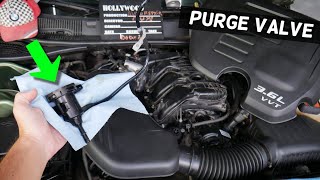
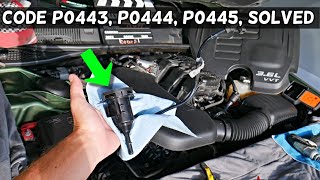
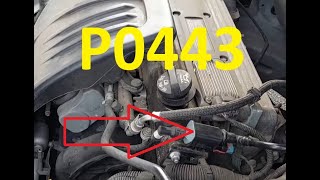
- Locate the EVAP purge solenoid. On the 3.6L V6, it's on the top of the engine near the passenger side, often under the engine cover. On 5.7L/6.4L Hemi engines, it's typically on the passenger side of the intake manifold, near the firewall.
- Visually inspect the purge valve, its connector, and the associated wiring for any obvious signs of damage, such as cracks, melting, or frayed wires. Ensure the connector is plugged in securely.
- Check the fuse for the EVAP system. Consult your owner's manual for the correct fuse panel and location.
- With the ignition on (engine off), use a multimeter to verify that one of the pins in the connector has 12V power.
- Check the other wire for a ground signal. The PCM provides a pulsed ground to operate the valve. You can use a scan tool's bi-directional controls to command the valve on and check for this ground signal with a test light connected to battery positive.
- If power and ground are present, the fault is likely the solenoid itself. You can test its resistance with a multimeter; a reading far outside the 15-35 ohm range or an open circuit (OL) indicates a bad solenoid.
- If power or ground is missing, trace the wiring back to the fuse box or PCM to find the break or short in the circuit. A wiring diagram is highly recommended for this step.
Parts You'll Likely Need
- EVAP Purge Solenoid Valve
(OEM #04891731AB)— This is the most common failure point for code P0443. The internal coil winding can fail, creating an open circuit, or the valve can become mechanically stuck.
Trusted brands: Mopar, Bosch, Delphi, Standard Motor Products (SMP), Dorman
OEM price range: $50-$75
Aftermarket price range: $25-$60
Related Codes That Often Appear With This One
- P0444 — P0444 indicates 'EVAP Purge Control Valve Circuit Open', which is a more specific version of the P0443 general circuit fault.
- P0445 — P0445 indicates 'EVAP Purge Control Valve Circuit Shorted', another specific fault that can be logged alongside the general P0443 code.
Platform-Specific Known Issues
- Owner experience: A user on DodgeForum.com with a P0443 code traced the issue to a broken signal wire between the purge valve connector and the PCM. After subscribing to a service with wiring diagrams, they ran a new wire and resolved the code. This highlights that while the valve is the most common cause, wiring faults do happen.
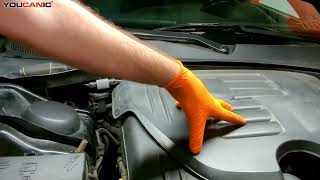
- DIY Repair Story: A YouTube video for a 2015 Chrysler 300 with a 3.6L engine shows the entire replacement process. The valve is located under the plastic engine cover, held by one 10mm bolt. The repair involves removing the oil cap, pulling off the engine cover, disconnecting two hoses and one electrical connector, unbolting the old valve, and installing the new one in reverse order. The entire process took minutes. 🎬 Watch this step-by-step P0443 repair on a Chrysler 300.
Mechanic-Grade Diagnostic Values
- EVAP Purge Solenoid Coil Resistance — expected: 14 to 30 Ohms. Failure: An infinite reading (Open Loop/OL) or a near-zero reading indicates a failed solenoid coil.
- Purge Solenoid Connector Power Pin Voltage (Key On, Engine Off) — expected: ~12 Volts (Battery Voltage). Failure: Voltage significantly below 10V points to a problem in the power supply circuit, such as a blown fuse or damaged wire.
- Purge Solenoid Control Wire Continuity to PCM — expected: Less than 5.0 Ohms. Failure: A resistance reading higher than 5.0 Ohms or an open circuit (OL) indicates a break in the control wire between the solenoid connector and the PCM.
- Purge Solenoid Control Wire Voltage (Back-probed, during scan tool test) — expected: Near 0 Volts when commanded ON (PCM supplies ground), near battery voltage when OFF.. Failure: Voltage does not change when commanded, indicating a wiring fault or a failed PCM driver.
Scan Tool Commands That Help
- Chrysler wiTECH or equivalent professional scanner: EVAP Purge Solenoid Actuation Test / Active Test — This bi-directional command allows the technician to manually cycle the purge solenoid on and off. It is used to listen for an audible click from the valve and to test for correct voltage and ground signals at the connector while the circuit is being commanded, confirming if the fault is with the valve, wiring, or PCM driver.
Wiring & Ground Locations
- EVAP Purge Solenoid Connector — On the purge solenoid itself, located on the top rear of the 3.6L engine near the firewall, or on the passenger side of the intake manifold for Hemi V8s.. This is the primary test point for checking voltage, ground, and solenoid resistance. Corrosion on the pins or a loose connection here is a common cause of P0443.
- K52 Circuit (Dark Blue/White wire) — Runs from Pin 2 of the EVAP Purge Solenoid connector to a specific pin at the Powertrain Control Module (PCM).. This is the specific control wire that the PCM uses to provide a pulsed ground to activate the solenoid. A break or short-to-ground on this wire will directly cause a P0443 code and is a known, though less common, failure point.
- Engine/Chassis Grounds — Multiple points exist, including a primary ground from the engine block to the chassis frame rail, often near the passenger side motor mount, and another under the airbox.. While not a direct cause of a P0443 circuit code, a poor engine-to-chassis ground can cause a variety of electrical issues and incorrect sensor readings. Verifying these grounds are clean and tight is good practice during any electrical diagnosis.
Real Owner Repair Stories
- ScannerDanner Forum (Dodge vehicle with a similar Chrysler powertrain) — EVAP codes present, but not P0443 initially.
❌ Tried (didn't work) Initial diagnosis pointed towards other EVAP components.
✅ What actually fixed it The technician found that the PCM driver for the purge solenoid was faulty. When testing, the PCM could supply 6-7 volts with no load, but the voltage would drop to near zero millivolts under any load (like connecting the solenoid or a test light). The PCM driver could not supply the necessary current to operate the circuit, requiring PCM replacement. This was confirmed after verifying the solenoid and wiring were good.
OEM Part Supersession History
04891731AA→04891731AB, 04891731AC, 04891731AD— Standard part revision and improvement over the vehicle's long production run.
Heads up: The latest revision (04891731AD) is generally backward compatible with earlier models that used the AA, AB, or AC versions. Always confirm fitment with a VIN.
Diagnostic Flowchart
Other Known Issues on This Vehicle
Issues unrelated to this code that are worth knowing about as an owner of this generation:
- Uconnect 8.4" Screen Delamination & Ghost Touch 🟠 Medium — Very common on 2017+ models. The adhesive behind the digitizer fails, causing bubbles and phantom screen presses.
- 5.7L Hemi Lifter/Camshaft Failure ('Hemi Tick') 🔴 High — A well-documented issue, particularly on engines with the MDS (Multi-Displacement System). Can occur at various mileages, often preceded by a distinct ticking noise.
- 3.6L Pentastar Oil Filter Housing/Cooler Assembly Leaks 🟠 Medium — Extremely common. The plastic housing, located in the 'V' of the engine, can crack from heat and over-tightening, causing significant oil and/or coolant leaks.
- Alternator Failure 🔴 High — A recall (NHTSA #14V-634) was issued for 2011-2014 models with 160 amp alternators, which could fail suddenly, leading to stalling. (Ref: NHTSA Recall #14V-634)
- Leather Dashboard Peeling/Warping 🟡 Low — Common on higher-trim models, especially in hot climates. The leather dash cover shrinks and pulls away from the windshield vents.
- ZF 8-Speed Transmission Shifting Issues 🟠 Medium — Some owners report harsh 1-2 shifts, especially when cold. More severe issues like shuddering or failure are less common but can be expensive to fix. (Ref: Software updates have been issued to address some shift quality complaints.)
Used vs. New Parts: Buying Guide for This Vehicle
When a used part is the smart pick: Never. The EVAP purge solenoid is an inexpensive, high-wear electromechanical part. The cost savings of a used part (typically $10-$20) are negligible compared to the risk of premature failure and the labor to replace it again. Always buy this part new.
What to inspect on the donor part:
- Not applicable as used parts are not recommended.
OEM-only on this vehicle (don't cheap out):
- Powertrain Control Module (PCM) - Due to VIN programming and security requirements, a used PCM cannot be installed without specialized tools and dealer-level programming. If the PCM is the confirmed cause, a pre-programmed unit from a reputable supplier or a new OEM unit is required.
Aftermarket brands forum-validated for this vehicle:
- Bosch
- Delphi
- Standard Motor Products (SMP)
Brands owners have reported issues with on this vehicle:
- While Dorman is a common option, some technicians report occasional issues with aftermarket connector fitment, requiring extra effort to ensure a secure connection compared to OEM or premium brands.
Real Owner Stories
Aggregated from forums and TSBs cited above. Mileages and costs reflect what owners reported in those sources.
2015 Chrysler 300 3.6L V6
Symptoms: The Check Engine Light was on. The repair involved removing the engine cover and a single 10mm bolt.
What fixed it: Replacement of the EVAP purge solenoid valve located under the plastic engine cover.
Source hint: YouTube video for a 2015 Chrysler 300 with a 3.6L engine
2010 Dodge Ram (Shared Platform/Engine)
Symptoms: Code P0443 was present. The owner replaced the gas cap and the purge valve, but the code remained.
What fixed it: Traced the fault to a broken signal wire between the solenoid connector and the PCM connector.
Source hint: DodgeForum.com thread 'Code P0443'
Chrysler LD Platform (300/Charger/Challenger)
Symptoms: P0443 code described as a 'nightmare' diagnosis.
What fixed it: Identified a broken wire between the valve and the PCM using pinout diagrams.
Source hint: DodgeForum.com thread 'p0443 nightmares'
Related OBD-II Codes
Frequently Asked Questions
Where is the EVAP purge solenoid located on my 2015 Chrysler 300 with the 3.6L Pentastar engine?
I have a Hemi-powered Chrysler 300; is the purge valve in the same spot as the V6?
Why is my Chrysler 300's remote start no longer working since the Check Engine Light came on?
Could a bad gas cap be causing my P0443 code on my Chrysler 300?
Is there a recall for the electrical issues causing my P0443 code?
What is the typical resistance for a Chrysler 300 purge solenoid if I test it with a multimeter?
Helpful Videos
We Have This Part in Stock

The information in this article is provided for general reference and educational purposes only. Vehicle specifications, procedures, and part compatibility can vary by production date, trim level, and region. Always consult your vehicle's factory service manual and verify part numbers before purchasing or performing repairs. Safety-critical components such as airbags, seat belts, and braking systems should be installed by a qualified professional.
- Chrysler 300:
- 🧭 Diagnostic Flowchart
- 🎬 Helpful Videos
- 🛍️ Shop This Part
- What's Unique About the 2011-2023 Chrysler 300
- Symptoms You May Notice
- Most Likely Causes
- Rare But Worth Checking
- Diagnosis Steps
- Parts You'll Likely Need
- Related Codes That Often Appear With This One
- Platform-Specific Known Issues
- Mechanic-Grade Diagnostic Values
- Scan Tool Commands That Help
- Wiring & Ground Locations
- Real Owner Repair Stories
- OEM Part Supersession History
- Other Known Issues on This Vehicle
- Used vs. New Parts: Buying Guide for This Vehicle
- Real Owner Stories
- 2015 Chrysler 300 3.6L V6
- 2010 Dodge Ram (Shared Platform/Engine)
- Chrysler LD Platform (300/Charger/Challenger)
- Related OBD-II Codes
- Frequently Asked Questions
- 🎟️ Get 5% Off