

P0443 on 2017-2024 Chrysler Pacifica: EVAP Purge Valve Circuit Causes and Fixes
On a 2017-2024 Chrysler Pacifica, code P0443 is almost always caused by a failed EVAP Purge Valve Solenoid. It's a relatively inexpensive part (Mopar P/N 4627694AB) located on top of the engine, making for an easy DIY fix that typically costs between $25 and $75. The most telling symptom is the engine stalling or running rough immediately after refueling.
- P0443 is an electrical circuit code, not a gas cap or leak code.
- The most likely fix is replacing the EVAP purge valve (Mopar P/N 4627694AB), which is an easy and affordable DIY job on the Pacifica.
- Before buying parts, always check the wiring and fuse first, as a simple electrical issue can also trigger the code.
- If your Pacifica stalls or idles poorly right after you fill the gas tank, a stuck-open purge valve is the probable cause of your P0443 code.
What's Unique About the 2017-2024 Chrysler Pacifica
For the 2017-2024 Chrysler Pacifica, including both the 3.6L V6 and Hybrid models, the P0443 code points to a very common failure item: the purge valve solenoid. The part is used across both powertrain variants, and its location on top of the engine makes it more accessible than in many other vehicles. While the code itself is generic, Pacifica owners frequently resolve it with a straightforward part replacement, often after experiencing stalling immediately after refueling—a classic sign of a purge valve stuck open, flooding the intake with fuel vapors.
Symptoms You May Notice
- Check Engine Light is on.
- Engine stalling or running rough immediately after refueling.
- Slightly reduced fuel economy.
- Rough idle.
- A faint fuel odor near the vehicle.
- Remote start feature is disabled.
- Replacing the gas cap. A bad gas cap will cause an EVAP leak code (like P0455 or P0456), not a P0443 electrical circuit code.
- Replacing the charcoal canister. The canister is a passive component and does not have the electrical connections that would trigger a P0443 circuit code.
Most Likely Causes
- Failed EVAP Purge Valve/Solenoid 🔴 High Probability → Shop Vapor Canister The solenoid is an electromechanical part that cycles frequently and is a common failure point across many Stellantis vehicles using the 3.6L Pentastar engine. 🎬 Watch: Understanding the P0443 circuit code on Chrysler engines The internal coil can fail, creating an open circuit, or the valve can become mechanically stuck.
How to confirm: Locate the valve on top of the engine. With the engine off, disconnect the electrical connector and test the two pins on the valve for resistance using a multimeter; a reading between 14 and 30 Ohms is expected. An open circuit (infinite resistance) or a short (near-zero resistance) indicates a failed solenoid. You can also apply 12V directly to the pins to see if it clicks open and closed. A normally closed valve should not allow you to blow air through it when unpowered.
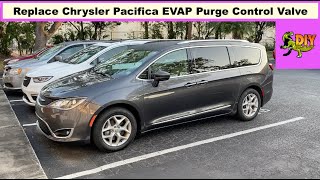
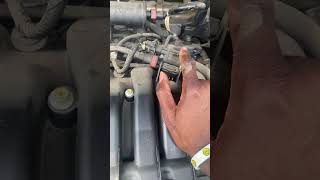
Typical fix: Replace the EVAP purge valve solenoid. The Mopar part number is 4627694AB. 🎬 See this quick 2018 Pacifica purge valve replacement walkthrough
Est. part cost: $25-$75 - Damaged Wiring or Electrical Connector 🟡 Medium Probability Engine bay heat and vibration can cause wires to become brittle or chafe over time. Rodents can also chew through wiring. Work performed elsewhere in the engine bay can sometimes lead to accidentally damaging or disconnecting the harness.
How to confirm: Visually inspect the wiring harness leading to the purge valve for any signs of cracking, chafing, or breaks. Check the connector for corrosion, bent/spread pins, or a loose fit. Use a test light or multimeter on the connector (with the key on, engine off) to confirm one wire is receiving battery voltage. The other wire is the control wire, which the PCM pulses to ground to activate the solenoid; check it for continuity back to the PCM (should be < 5.0 ohms).
Typical fix: Repair the damaged section of wire or replace the connector pigtail.
Est. part cost: $5-$20 - Blown Fuse ⚪ Low Probability
How to confirm: Consult the owner's manual or the fuse box diagram to identify the fuse related to the emissions or EVAP system. On some related vehicles, this is fuse F87. Visually inspect the fuse to see if it has blown.
Typical fix: Replace the blown fuse. If the fuse blows again immediately, it indicates a short circuit in the system that needs to be diagnosed.
Est. part cost: $1-$5
Rare But Worth Checking
- Faulty Powertrain Control Module (PCM): → Shop Engine Control Module (ECM) This is extremely rare and should only be considered after the purge valve, wiring, and fuses have all been thoroughly tested and confirmed to be good. A faulty PCM driver for the purge circuit would be the specific internal failure.
Diagnosis Steps
- Read the code with an OBD-II scanner to confirm P0443 is present.
- Remove the plastic engine cover to access the purge valve, located on the top of the engine.
- Visually inspect the EVAP purge valve and its electrical connector for any obvious damage, such as cracked plastic, loose connections, or green corrosion.
- Inspect the wiring harness leading to the valve for any signs of chafing, melting, or rodent damage.
- Check the fuse for the EVAP/emissions circuit in the vehicle's fuse box (possibly F87). Replace if blown.
- If the wiring and fuse are okay, disconnect the electrical connector from the purge valve. Use a multimeter to check for battery voltage (~12V) at the power supply pin in the connector with the ignition on.
- Test the purge valve itself. Measure the resistance between the two pins on the valve. A reading between 14-30 ohms is good. A reading of infinite resistance (open) or near-zero resistance (short) confirms the valve has failed electrically.
- If the valve's resistance is within spec, you can try applying 12V and ground directly to its pins to listen for an audible 'click'. If it doesn't click, the valve is mechanically stuck.
- If the valve and wiring test good, the fault may lie with the PCM's driver circuit, but this is very uncommon and professional diagnosis is recommended at this point.
Parts You'll Likely Need
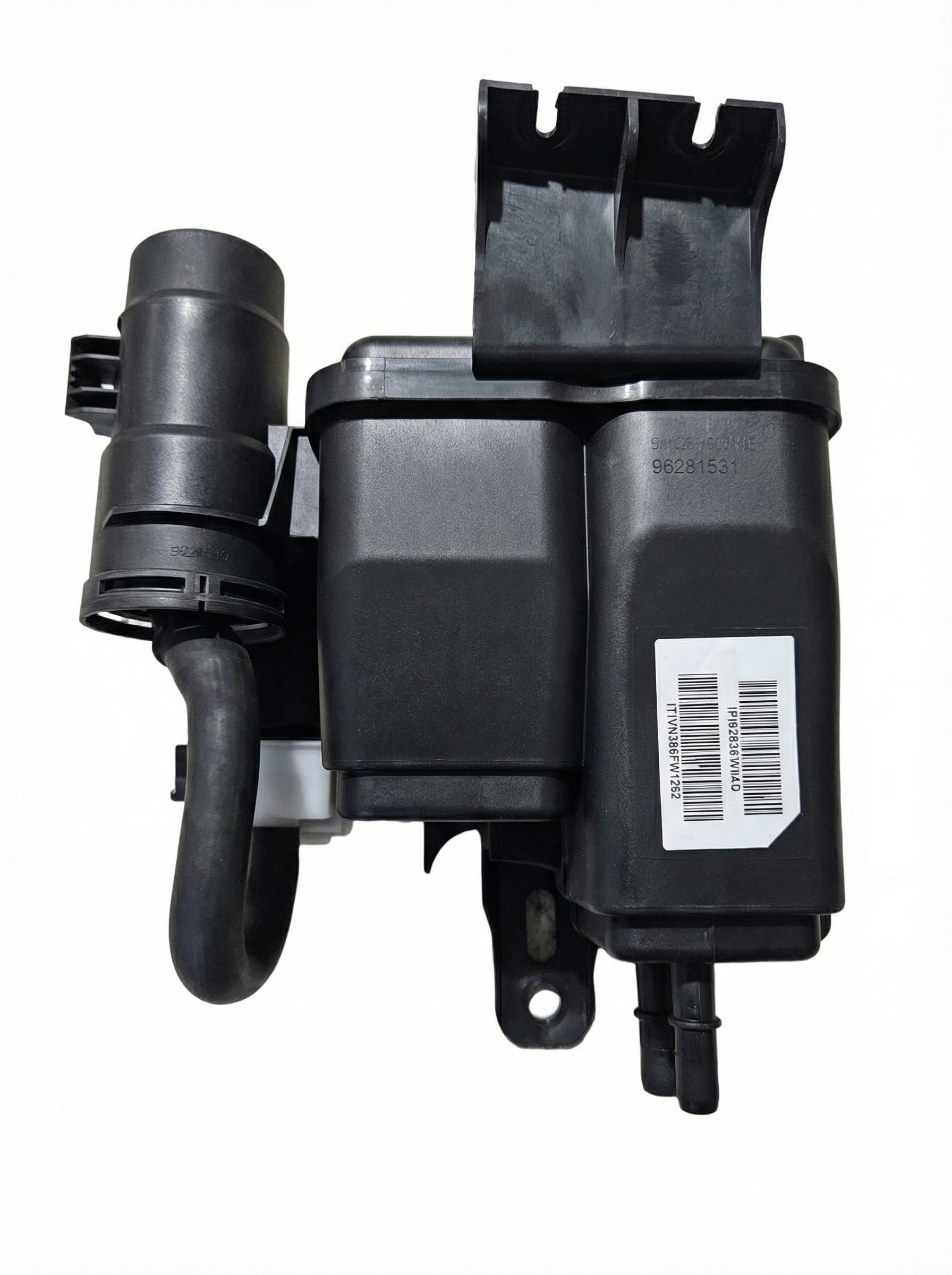
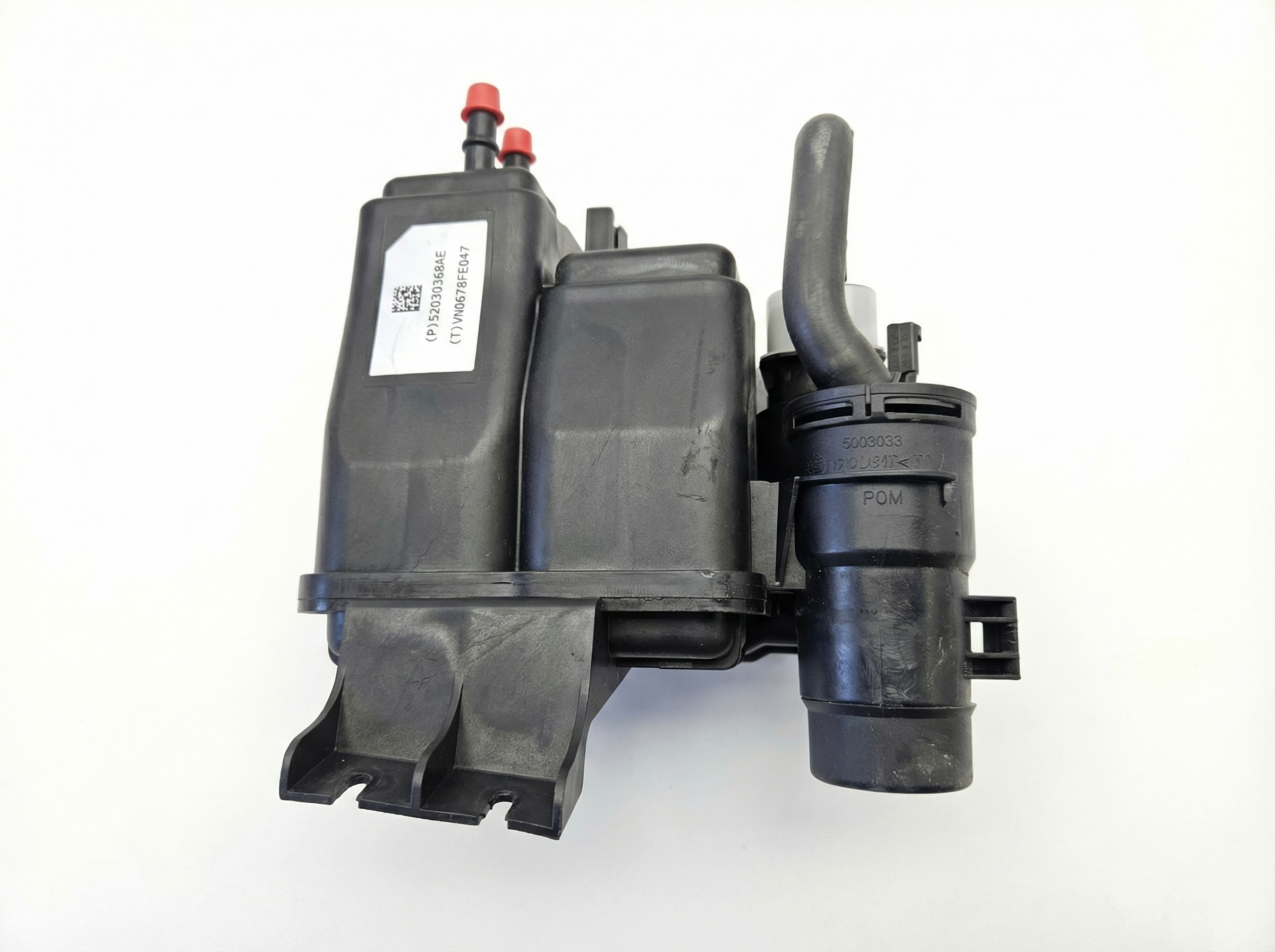
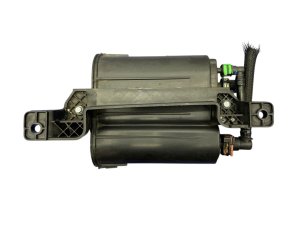
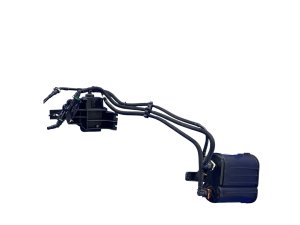
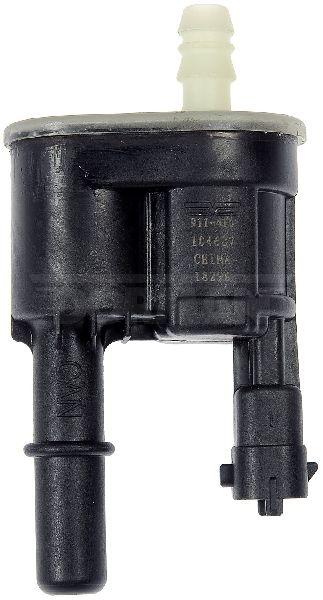
- Vapor Canister Purge Valve / Solenoid
(OEM #4627694AB)— This is the most common failure point for code P0443. The internal solenoid coil fails electrically or the valve becomes mechanically stuck.
Trusted brands: Mopar, Dorman (P/N: 911-410), Standard Motor Products (P/N: CP796), Wells (P/N: 2M1383)
OEM price range: $50-$90
Aftermarket price range: $25-$75
Related Codes That Often Appear With This One
- P0441 (Incorrect Purge Flow): Can be triggered if the electrical fault in P0443 causes the valve to be stuck open or closed, leading to the PCM detecting improper vapor flow.
- P0456 (Very Small EVAP Leak): A user on a forum reported that after fixing a P0456 leak, a P0443 code appeared, suggesting that work on the EVAP system can sometimes disturb the purge valve circuit wiring. A failing purge valve can also cause a P0456 code.
Mechanic-Grade Diagnostic Values
- EVAP Purge Valve Solenoid Coil Resistance — expected: 14 to 30 Ohms. Failure: An infinite reading (OL) indicates an open coil; a near-zero reading indicates a shorted coil.
- Purge Valve Connector Power Wire Voltage (Key On, Engine Off) — expected: ~12 Volts (Battery Voltage). Failure: Voltage significantly below 10V suggests a problem in the power supply circuit (fuse, relay, or wiring), not the valve itself.
- Purge Valve Connector Control Wire Voltage (Back-probed, during scan tool active test) — expected: Voltage should pulse, dropping near 0V when commanded ON (grounded by PCM) and returning to battery voltage when OFF.. Failure: Voltage does not change when commanded, is always 0V (short to ground), or is always at battery voltage (open circuit in control wire or faulty PCM driver).
- Control Wire Continuity to PCM — expected: Less than 5.0 Ohms. Failure: A reading higher than 5.0 Ohms or an open circuit (OL) indicates a break in the wire between the solenoid connector and the PCM.
Scan Tool Commands That Help
- wiTECH or equivalent professional scanner: EVAP Purge Solenoid Active Test / Duty Cycle Command — This bidirectional command allows the technician to manually cycle the purge solenoid on and off. It is used to listen for an audible 'click' to confirm mechanical function and to simultaneously test the control circuit's voltage response with a multimeter or test light, verifying the wiring and PCM driver are working.
Wiring & Ground Locations
- EVAP Purge Solenoid Connector — On the purge solenoid itself, located on the top, center-rear of the engine under the plastic cover.. This 2-pin connector is the primary test point. One pin is power, the other is the control ground from the PCM. On related 3.6L engines, wire colors are often Dark Blue/White (power) and Dark Blue/Orange or Dark Blue/Brown (PCM control), though colors should be verified.
- G903A — Right front of the engine compartment.. This is a major engine compartment ground point identified on wiring diagrams for the 3.6L engine family. A poor connection here can cause various electrical issues, and while the purge solenoid is grounded through the PCM, the PCM itself relies on clean chassis and engine grounds to function correctly.
Real Owner Repair Stories
- YouTube video by 'U Can Do It' (2017+ Chrysler Pacifica) — Check Engine Light with code P0456 (Small EVAP Leak).
❌ Tried (didn't work) Not specified, but the owner proceeded directly to replacing the purge valve.
✅ What actually fixed it Replacing the EVAP Purge Control Valve (Mopar P/N 4627694AB) resolved the check engine light. This is valuable for P0443 because it shows the same part can cause multiple EVAP codes and confirms the part number and replacement procedure on the correct vehicle. - Carly Community Forum User (2021 Chrysler Pacifica Hybrid) — Persistent Check Engine Light, stalling issues, fuel smell when tank is full, and EVAP system pressure sensor issues.
❌ Tried (didn't work) Initial diagnosis was unclear.
✅ What actually fixed it Diagnostics at a workshop revealed a completely clogged activated charcoal filter was causing improper ventilation. Replacing the charcoal filter resolved all symptoms. This is a key misdiagnosis scenario, as a purge valve stuck open (a potential cause of P0443) can flood the canister with fuel vapor, eventually clogging it and causing similar stalling symptoms.
OEM Part Supersession History
4627694AA→4627694AB— Standard part revision, likely for improved durability or material changes.
Diagnostic Flowchart
Other Known Issues on This Vehicle
Issues unrelated to this code that are worth knowing about as an owner of this generation:
- Harsh Shifting or Transmission Failure (ZF 9-Speed) 🔴 High — Commonly reported on earlier model years (2017-2020). Can manifest as rough shifting, jerking, hesitation, or complete failure. (Ref: Multiple TSBs exist for software updates to improve shift quality, such as TSB 21-043-20.)
- Premature Engine Mount Failure 🟠 Medium — Relatively common across all model years. The lower torque strut mount ('dogbone') is often the first to fail, causing a 'clunk' on acceleration or when shifting. (Ref: No specific recall, but it is a widely discussed issue in owner forums.)
- Hybrid Transmission Failure (eFlite eCVT) 🔴 High — Affects 2017-2023 Hybrid models. Can lead to sudden loss of power or stalling. (Ref: Covered by recall 03A (NHTSA 23V-010) and an extended warranty (D-23-07 / XE1) for internal wiring or bearing failures.)
- Uconnect Infotainment System Glitches 🟡 Low — Frequently reported by owners. Issues include screen freezing, unresponsiveness, and problems with Bluetooth/Apple CarPlay/Android Auto connectivity. (Ref: Software updates are periodically released by dealers to address bugs.)
- Sudden Engine Stalling (Gas and Hybrid) 🔴 High — Reported across various model years, can be caused by multiple issues including transmission faults or fuel system problems. (Ref: Some stalling issues on hybrid models are addressed by recall 03A (NHTSA 23V-010).)
Used vs. New Parts: Buying Guide for This Vehicle
When a used part is the smart pick: For this specific repair, buying a used purge valve is NOT recommended. It is a low-cost, high-failure electromechanical part. The risk of purchasing a part that is already at or near the end of its service life is very high, offering poor value even if the initial cost is low.
Donor-vehicle mileage cap: roughly under 15000 miles for the part to have meaningful remaining life.
What to inspect on the donor part:
- If forced to buy used, source from the lowest mileage donor vehicle possible.
- Ensure there is no cracking on the plastic housing or hose ports.
- Check that the electrical pins are clean, straight, and free of any corrosion.
Aftermarket brands forum-validated for this vehicle:
- Mopar (OEM) is the safest choice with a proven track record.
- Standard Motor Products (SMP) and Wells are generally considered reliable aftermarket alternatives.
Brands owners have reported issues with on this vehicle:
- Dorman (P/N: 911-410) has a mixed reputation. While some users report it works fine and is identical to OEM, others have experienced premature failure of Dorman EVAP components on other vehicles. It should be considered a budget option with some risk.
Real Owner Stories
Aggregated from forums and TSBs cited above. Mileages and costs reflect what owners reported in those sources.
2019 Chrysler Pacifica — 55798 miles
Symptoms: CK ENGINE LIGHT ON VEHICLE HAS NO ACCELARATION BEING TOWED.
What fixed it: Replacement of the purge valve, eism switch, and capless filler neck.
Source hint: owner_reports: Chicago Driveline Inc
Jeep Grand Cherokee 3.6L (Platform Mate)
Symptoms: Owner received a P0443 code immediately after performing repairs to fix a P0456 small leak code.
What fixed it: The owner highlighted how work performed in the engine bay area can affect the circuit, leading to the P0443 code.
Source hint: Reddit - r/JeepGrandCherokee
2017-2024 Chrysler Pacifica
Symptoms: Check engine light and stalling specifically after refueling.
What fixed it: Replacing the purge valve solenoid (part number 4627694AB).
Source hint: pacificaforums.com
Related OBD-II Codes
Frequently Asked Questions
What is the specific Mopar part number for the purge valve on my 2017-2024 Chrysler Pacifica?
Why does my Pacifica stall or run rough specifically after I fill up the gas tank?
Which fuse should I check for the P0443 circuit on my Pacifica?
Is the P0443 code related to the recall for stalling on Pacifica Hybrids?
Can I test the purge valve myself with a multimeter?
Does the P0443 code affect my Pacifica's remote start?
Helpful Videos
Used OEM Parts in Stock
New Aftermarket Parts Available


The information in this article is provided for general reference and educational purposes only. Vehicle specifications, procedures, and part compatibility can vary by production date, trim level, and region. Always consult your vehicle's factory service manual and verify part numbers before purchasing or performing repairs. Safety-critical components such as airbags, seat belts, and braking systems should be installed by a qualified professional.
- Chrysler Pacifica:
- 🧭 Diagnostic Flowchart
- 🎬 Helpful Videos
- 🛍️ Shop This Part
- What's Unique About the 2017-2024 Chrysler Pacifica
- Symptoms You May Notice
- Most Likely Causes
- Rare But Worth Checking
- Diagnosis Steps
- Parts You'll Likely Need
- Related Codes That Often Appear With This One
- Mechanic-Grade Diagnostic Values
- Scan Tool Commands That Help
- Wiring & Ground Locations
- Real Owner Repair Stories
- OEM Part Supersession History
- Other Known Issues on This Vehicle
- Used vs. New Parts: Buying Guide for This Vehicle
- Real Owner Stories
- 2019 Chrysler Pacifica — 55798 miles
- Jeep Grand Cherokee 3.6L (Platform Mate)
- 2017-2024 Chrysler Pacifica
- Related OBD-II Codes
- Frequently Asked Questions
- 🎟️ Get 5% Off