

P0443 on 2008-2023 Dodge Challenger: EVAP Purge Valve Circuit Causes and Fixes
On a Dodge Challenger, code P0443 is almost always caused by a failed EVAP purge valve/solenoid. This is a common, inexpensive, and easy DIY repair. The part typically costs between $25 and $80. The PCM has detected an electrical fault in the purge valve circuit, not a system leak.
- P0443 is an electrical circuit code, not a leak code. Do not replace the gas cap to fix it.
- The most likely cause is a failed EVAP purge valve, which is a simple and affordable part to replace yourself.
- The purge valve is located on top of the engine and is easily accessible on all Challenger engine types.
- Before replacing parts, check the fuses for the emissions or engine management system in both the front and rear fuse boxes.
- If you experience difficulty starting your car right after getting gas, it's a strong indicator the purge valve is stuck open.
What's Unique About the 2008-2023 Dodge Challenger
The Dodge Challenger, across its V6 and V8 engines, commonly experiences this code due to the failure of the purge valve solenoid itself. The part is a frequent replacement item on many Chrysler/Dodge/Jeep products, including those with the 3.6L Pentastar and 5.7L/6.1L/6.4L HEMI engines. Unlike some complex EVAP issues, P0443 on a Challenger points with high probability to a simple component failure or a related wiring issue, making it a straightforward diagnosis. Forum users on Challengerforumz.com and Challengertalk.com frequently cite replacing the purge valve as the immediate and successful fix for this code.
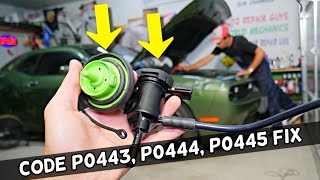
🎬 Watch: A quick walkthrough of the Challenger purge valve replacement.Generation note: The 2008-2023 model years cover the entire third generation (LC) of the Dodge Challenger. This generation had a significant interior and exterior facelift in 2015. However, the function and general location of the EVAP purge valve on top of the engine remain consistent across pre-facelift (2008-2014) and post-facelift (2015-2023) models, as well as across different engine options (V6 and V8s). The part itself is easily accessible on all engine variants.
Symptoms You May Notice
- Check Engine Light is on
- Difficulty starting the engine, especially right after refueling
- Slightly rough or unstable idle
- Slight decrease in fuel economy
- Remote start feature may be disabled
- Possible faint fuel odor
- Replacing the gas cap. P0443 is an electrical circuit code, not an EVAP leak code. A loose or faulty gas cap will trigger other codes (like P0456 or P0455), but not P0443.
- Replacing the charcoal canister. While a recall (UB4) existed for the canister on some 2013-2016 models for an emissions issue, the canister itself does not cause a P0443 circuit fault.
Most Likely Causes
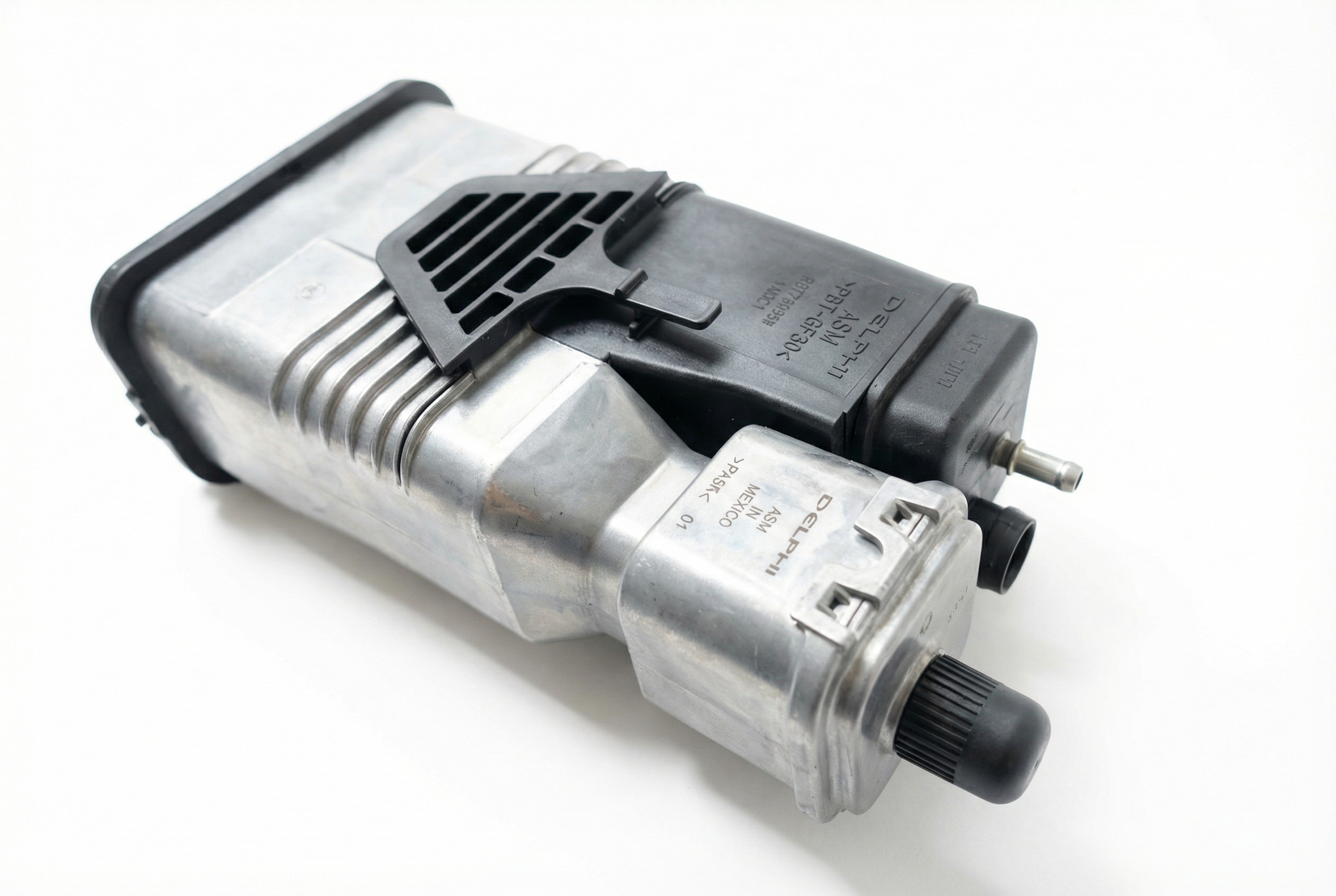
- Failed EVAP Purge Solenoid/Valve 🔴 High Probability → Shop Vapor Canister This is a very common failure part across the Chrysler/Dodge lineup, including all Challenger engines. The internal coil of the solenoid can burn out, creating an open circuit (P0444), or short circuit (P0445), or the valve can become mechanically stuck open or closed.
How to confirm: Disconnect the valve and test the resistance between the two electrical pins with a multimeter. A good valve will have a specific resistance (typically 15-30 ohms, but check service manual). An infinite reading (OL) indicates an open coil, and a zero reading indicates a short. You can also try to blow through the valve with it disconnected; if air passes, it is stuck open and faulty.
Typical fix: Replace the EVAP purge solenoid/valve. It is typically mounted on the engine with one or two bolts and has two hoses and one electrical connector.
Est. part cost: $25 - $80 - Wiring or Connector Issue 🟡 Medium Probability The wiring harness in the engine bay is exposed to heat and vibration, which can lead to chafed or broken wires over time. The connector itself can also become corroded or the pins can loosen, causing an intermittent connection.
How to confirm: Visually inspect the wiring going to the purge valve for any signs of damage, chafing, or melting. Disconnect the connector and check for corrosion or bent/loose pins. With the key on, engine off, use a multimeter to confirm one wire in the connector has battery voltage (approx. 12V). The other wire is the control wire, which the PCM pulses to ground to activate the solenoid.
Typical fix: Repair the damaged section of wire or clean/replace the electrical connector. Ensure the harness is secured away from hot or moving parts.
Est. part cost: $5 - $25 - Blown Fuse ⚪ Low Probability
How to confirm: Check the fuses related to the engine management or emissions systems. For 2014+ models, check fuses F31, F34, F35, and F36 in the front fuse box (engine bay) and potentially relay R63 in the front box and R29 in the rear fuse box (trunk). The owner's manual or a factory service manual will have the exact fuse layout for your specific year and model.
Typical fix: Replace the blown fuse. If the fuse blows again immediately, it indicates a short circuit in the wiring that needs to be found and repaired.
Est. part cost: $1 - $5
Rare But Worth Checking
- Faulty Powertrain Control Module (PCM): → Shop Engine Control Module (ECM) This is very rare. The driver circuit inside the PCM that controls the purge solenoid can fail, but this should only be considered after the purge valve, wiring, and fuses have all been confirmed to be good.
Diagnosis Steps
- Read the code with an OBD-II scanner to confirm P0443 is present. Note any other codes like P0444 or P0445.
- Check for blown fuses. On 2014+ models, inspect fuses F31, F34, F35, and F36 in the engine bay fuse box. Consult your owner's manual for the correct fuse for your year.
- Locate the EVAP purge valve. It is on top of the engine, near the intake manifold, with two hoses and an electrical connector.
- Inspect the electrical connector and nearby wiring for any visible damage, corrosion, or loose connections.
- Test for power at the connector. With the ignition on (engine off), use a multimeter to check for battery voltage (around 12V) at one of the pins in the harness-side connector.
- Test the valve's internal coil. Disconnect the connector and measure the resistance between the two pins on the valve itself. A reading of 'OL' (over limit/open) or near 0 ohms (short) means the valve is bad. A good valve should read between 15-30 ohms (verify spec for your specific part). 🎬 Watch: How to test the purge control circuit with a multimeter.
- If voltage is present and the valve's resistance is within spec, the problem may be in the ground-side control wire going back to the PCM or, rarely, the PCM itself.
- If the valve is confirmed faulty, replace it, clear the code, and drive the vehicle to see if the light returns.
Parts You'll Likely Need
- EVAP Purge Solenoid / Purge Valve
(OEM #04891731AA (Common for 3.6L/5.7L), 4861963AA, 5035244AA. Always verify with VIN.)— This is the most common point of failure for the P0443 code on this vehicle.
Trusted brands: Mopar, Bosch, Standard Motor Products (SMP), Dorman
OEM price range: $50-$100
Aftermarket price range: $25-$80
Related Codes That Often Appear With This One
- P0444 — P0444 indicates the purge control circuit is open. This can be triggered by the same faults as P0443, such as a broken wire or a failed (open) solenoid coil.
- P0445 — P0445 indicates the purge control circuit is shorted. This can be caused by a shorted wire or a shorted solenoid coil, which are related electrical failures.
- P0441 — P0441 indicates 'Incorrect Purge Flow'. If the P0443 circuit fault prevents the valve from opening or closing correctly, the PCM will detect the resulting incorrect flow rate and set P0441 as well.
Platform-Specific Known Issues
- Emissions Recall UB4 was issued for some 2013-2016 Challengers for a faulty evaporative emissions canister that could not properly absorb fuel vapors. While this does not directly cause P0443, it is a related EVAP system issue worth noting for those model years.
- On some related Dodge/Chrysler vehicles, outdated PCM software has been known to falsely trigger P0443. While less documented for the Challenger specifically, it's worth checking for TSBs related to PCM updates if the valve and wiring test good.
Mechanic-Grade Diagnostic Values
- EVAP Purge Solenoid Coil Resistance — expected: 15 - 35 Ohms (Ω). Failure: A reading of infinity/OL (Open Loop) or near zero ohms indicates a failed coil.
- Voltage at Purge Solenoid Connector (Power Pin) — expected: Approximately 12V (Battery Voltage) with Key On, Engine Off.. Failure: No voltage indicates a problem with the power supply circuit, such as a blown fuse or bad relay.
- Voltage at Purge Solenoid Connector (Control Pin) — expected: This is a ground-side switched circuit. Voltage should be near battery voltage when the valve is commanded OFF and drop to near 0V when the PCM commands it ON (via a scan tool).. Failure: Voltage does not change when the valve is commanded ON/OFF, suggesting a wiring issue to the PCM or a faulty PCM driver.
- Continuity of Control and Return Wires to PCM — expected: Less than 5.0 Ohms (Ω) resistance.. Failure: Resistance higher than 5.0 Ohms indicates an open or high resistance in the wiring harness between the solenoid and the PCM.
Scan Tool Commands That Help
- DRB III / WiTech (Dealer-level scan tool): Actuate EVAP Purge Solenoid / EVAP Purge Test — This bidirectional command allows the technician to manually turn the purge solenoid on and off. It's used to verify if the solenoid clicks (actuates) and to check for the corresponding voltage change on the control wire, confirming the PCM driver and wiring integrity.
Wiring & Ground Locations
- K52 (EVAP Purge Control Circuit) — This is the control wire that runs from a pin on the PCM harness connector to pin 2 of the EVAP purge solenoid connector.. An open or short to ground on this specific wire is a direct cause of P0443. Technicians test continuity and for shorts on this wire between the PCM and the solenoid.
- K70 (EVAP Purge Return Circuit) — This wire runs from a pin on the PCM harness connector to the EVAP purge solenoid. Its exact function can vary, but it's part of the monitored circuit.. A service manual diagnostic procedure for a Ram 1500 (with a similar system) involves checking this circuit for opens or shorts to ground.
- Purge Solenoid Power Supply — This wire runs from the fuse/relay box (Totally Integrated Power Module - TIPM) to pin 1 of the EVAP purge solenoid connector.. This wire supplies the 12V power to the solenoid. A break in this wire or a fault in the TIPM will prevent the solenoid from having power, triggering the circuit code.
Real Owner Repair Stories
- ChallengerTalk Forum User (2016 Dodge Challenger) — Check Engine Light with code P0443.
❌ Tried (didn't work) Replaced the EVAP purge solenoid/valve twice with new parts.
✅ What actually fixed it The problem was an intermittent break in the wiring harness leading to the purge valve. The technician had to wiggle the harness while monitoring the circuit to find the fault, then repaired the broken wire.
OEM Part Supersession History
Not specified, but 04891731AA is a long-standing number.→The part number 04891731AA is a widely used Mopar part for this application across many model years and engines, including Dodge, Jeep, and Chrysler vehicles.— Standard production part.
Heads up: While this part number is very common, always verify the correct part number for your specific vehicle's VIN before purchasing, as minor variations can exist.
Model Year Variations Within This Range
- 2014-2023: The fuse and relay layout for the EVAP system differs from earlier models. Post-2014 Challengers have specific fuses (F31, F34, F35, F36) and relays (R63, R29) in the front and rear fuse boxes that should be checked for this code.
Diagnostic Flowchart
Other Known Issues on This Vehicle
Issues unrelated to this code that are worth knowing about as an owner of this generation:
- HEMI Tick (Camshaft/Lifter Failure) 🔴 High — Common on 5.7L and 6.4L HEMI engines, particularly 2009-2016 models, but can affect all years. Often starts as a light tick and can progress to misfires and engine failure if untreated. (Ref: Multiple internal STAR cases exist, but no widespread recall. Lawsuits have been filed regarding this issue.)
- Uconnect 8.4" Screen Delamination 🟠 Medium — Very common on 2017+ models with the 8.4-inch touchscreen. The screen bubbles and separates, causing 'ghost touches' and loss of functionality. (Ref: No recall, but many owners have received out-of-warranty assistance from FCA/Stellantis on a case-by-case basis.)
- Cracked Oil Filter/Cooler Housing (3.6L Pentastar) 🔴 High — Extremely common on the 3.6L V6. The plastic housing, located in the engine valley, cracks from heat cycles, causing a major oil leak often misdiagnosed as a rear main seal leak. (Ref: No recall. Upgraded all-aluminum aftermarket parts are a popular, permanent fix.)
- Trunk Water Leak 🟡 Low — Reported across many model years. Water enters the trunk, often pooling in the spare tire well near the battery. Common causes include failed taillight seals, bad trunk weatherstripping, or unsealed body seams.
- Totally Integrated Power Module (TIPM) Failure 🔴 High → Shop Fuse Box — More common on earlier 2008-2014 models. A faulty TIPM can cause a wide range of bizarre electrical issues, including no-start conditions, fuel pump issues, and random activation of accessories. (Ref: Subject of a class-action lawsuit, but no universal recall was issued for the Challenger.)
Used vs. New Parts: Buying Guide for This Vehicle
When a used part is the smart pick: A used EVAP purge solenoid from a junkyard is a reasonable choice for this repair. It is an external, easily accessible, electro-mechanical part that is not subject to internal engine wear. Failure is typically electrical (coil burnout) and not related to mileage.
Donor-vehicle mileage cap: roughly under 80000 miles for the part to have meaningful remaining life.
What to inspect on the donor part:
- Ensure the plastic housing is not cracked or brittle.
- Check that the electrical connector pins are clean, straight, and free of corrosion.
- Verify the hose ports are not broken or clogged with debris.
- If possible, ask for a part from a vehicle that was in a collision, as this suggests the part was likely functional before the accident.
OEM-only on this vehicle (don't cheap out):
- Powertrain Control Module (PCM) - Due to the need for VIN-specific programming, a used PCM is often not a plug-and-play solution and requires specialized tools to adapt to the vehicle.
Aftermarket brands forum-validated for this vehicle:
- Bosch
- Standard Motor Products (SMP)
- Dorman
Brands owners have reported issues with on this vehicle:
- No-name, unbranded parts from online marketplaces have a higher reported failure rate according to forum discussions.
Real Owner Stories
Aggregated from forums and TSBs cited above. Mileages and costs reflect what owners reported in those sources.
2013-2016 Dodge Challenger
Symptoms: The vehicle had a faulty evaporative emissions canister that could not properly absorb fuel vapors, which is a known related EVAP issue for these specific model years.
What fixed it: Emissions Recall UB4 service.
Source hint: vehicle_specific_issues section regarding Emissions Recall UB4
2008-2014 Dodge Challenger
Symptoms: Experienced a wide range of bizarre electrical issues, including no-start conditions and fuel pump issues, alongside emissions-related faults.
What fixed it: Replacement of the Totally Integrated Power Module (TIPM).
Source hint: known_issues section regarding Totally Integrated Power Module (TIPM) Failure
Related OBD-II Codes
Frequently Asked Questions
Is there a recall for the EVAP system on my 2013-2016 Dodge Challenger?
Which fuses should I check on my 2014 or newer Challenger for a P0443 code?
Why is my Challenger's remote start not working when the Check Engine Light is on?
Can I use a used purge solenoid from a Charger or Chrysler 300 to fix this?
Where is the EVAP purge valve located on the Challenger's engine?
What resistance should I see when testing the purge solenoid with a multimeter?
Helpful Videos
We Have This Part in Stock


The information in this article is provided for general reference and educational purposes only. Vehicle specifications, procedures, and part compatibility can vary by production date, trim level, and region. Always consult your vehicle's factory service manual and verify part numbers before purchasing or performing repairs. Safety-critical components such as airbags, seat belts, and braking systems should be installed by a qualified professional.
- Dodge Challenger:
- 🧭 Diagnostic Flowchart
- 🎬 Helpful Videos
- 🛍️ Shop This Part
- What's Unique About the 2008-2023 Dodge Challenger
- Symptoms You May Notice
- Most Likely Causes
- Rare But Worth Checking
- Diagnosis Steps
- Parts You'll Likely Need
- Related Codes That Often Appear With This One
- Platform-Specific Known Issues
- Mechanic-Grade Diagnostic Values
- Scan Tool Commands That Help
- Wiring & Ground Locations
- Real Owner Repair Stories
- OEM Part Supersession History
- Model Year Variations Within This Range
- Other Known Issues on This Vehicle
- Used vs. New Parts: Buying Guide for This Vehicle
- Real Owner Stories
- 2013-2016 Dodge Challenger
- 2008-2014 Dodge Challenger
- Related OBD-II Codes
- Frequently Asked Questions
- 🎟️ Get 5% Off