

P0443 on 2006-2010 Dodge Charger: EVAP Purge Circuit Causes and Fixes
For a 2006-2010 Dodge Charger, code P0443 almost always points to a faulty EVAP purge solenoid valve. It's an electrical circuit code, not a leak. Expect to pay $25-$60 for an aftermarket part, and it's a straightforward DIY replacement for most owners. The solenoid is typically located on the engine itself, near the intake manifold.
- P0443 is an electrical circuit problem, not a gas cap or EVAP leak issue.
- The most likely culprit is the EVAP purge solenoid itself, which is a relatively inexpensive and accessible part to replace.
- Always inspect the wiring and connector to the solenoid for damage before buying parts, as this is another common cause.
- A simple test for a stuck-open solenoid is to remove it and try to blow through it; if air passes, it's bad.
- This is a DIY-friendly repair that requires basic hand tools and potentially a multimeter for diagnosis.
What's Unique About the 2006-2010 Dodge Charger
On the 2006-2010 Dodge Charger, the P0443 code is a straightforward electrical fault. Unlike some other Dodge models where software glitches can falsely trigger this code, for this generation of Charger the cause is almost always a physical component failure. The system uses a common and reliable design, making diagnosis logical and typically leading to a failed purge solenoid or a wiring issue. The purge solenoid is used across a wide range of Chrysler, Dodge, and Jeep vehicles from this era, making it a well-understood and common failure point.
Symptoms You May Notice
- Check Engine Light is on
- Slightly rough idle
- Difficulty starting the engine, especially after refueling
- Slight decrease in fuel economy
- Fuel odor near the vehicle
- Remote start may be disabled
- Failing an emissions test
- Replacing the gas cap. P0443 is an electrical circuit code, not an EVAP leak code (like P0455 or P0456), so a bad gas cap will not cause it.
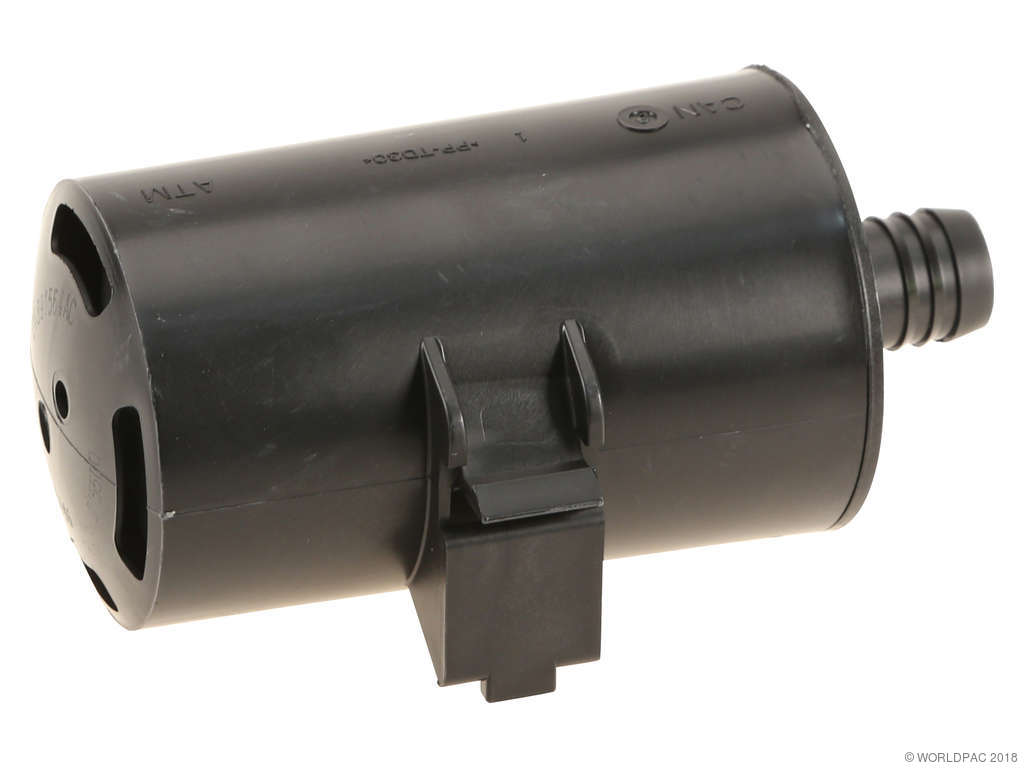
- Replacing the EVAP charcoal canister. The canister is a passive component for vapor storage and is not part of the electrical circuit indicated by P0443. However, a failing canister can shed charcoal bits that destroy the new purge solenoid.
Most Likely Causes
- Faulty EVAP Purge Solenoid 🔴 High Probability → Shop Vapor Canister The internal coil of the solenoid can burn out over time, or the valve can become mechanically stuck open or closed due to age and contamination from fuel vapors. Sometimes, charcoal pellets from a deteriorating charcoal canister can get sucked into the lines and jam the valve open.
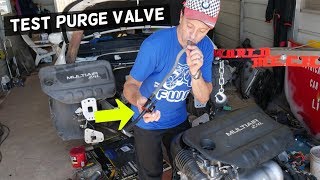
How to confirm: Remove the solenoid. With no power applied, try to blow through it; no air should pass. If it does, the valve is stuck open and bad. You can also test the coil's resistance with a multimeter (typically 15-30 ohms) or apply 12V power from the battery to its two pins to see if it clicks open. 🎬 Watch: How to test if your purge valve is good or bad.
Typical fix: Replace the EVAP purge solenoid valve.
Est. part cost: $25-$80 - Wiring or Connector Issue 🟡 Medium Probability Wires in the engine bay are exposed to heat and vibration, which can lead to chafing, breaks, or corrosion over time. The connector itself can become loose, have corroded pins, or be damaged by rodents.
How to confirm: Visually inspect the wiring harness leading to the purge solenoid for any signs of damage. Use a multimeter to check for 12V power at the connector with the key on. The other wire is the ground-side control from the PCM. A user on DodgeForum.com reported finding a broken signal wire between the solenoid plug and the PCM connector, requiring a new wire to be run.
Typical fix: Repair the damaged section of wire or clean/replace the electrical connector.
Est. part cost: $5-$25 - Blown Fuse ⚪ Low Probability A short circuit in the purge valve or its wiring can cause the corresponding fuse to blow, cutting power to the component.
How to confirm: Locate the fuse for the emissions or EVAP system in your vehicle's fuse box (consult the owner's manual) and visually inspect it to see if it has blown. The EVAP system may share a fuse with other components.
Typical fix: Replace the blown fuse. If the new fuse blows immediately, it indicates a persistent short circuit that must be found and repaired.
Est. part cost: $1-$5
Rare But Worth Checking
- Faulty Powertrain Control Module (PCM): → Shop Engine Control Module (ECM) This is very rare. The PCM driver for the purge solenoid circuit can fail. This should only be considered after the solenoid and all wiring have been thoroughly tested and confirmed to be good.
Diagnosis Steps
- Scan the vehicle for trouble codes to confirm P0443 is present and note any other codes.
- Perform a thorough visual inspection of the EVAP purge solenoid, its connector, and the wiring harness for any visible damage, corrosion, or loose connections.
- Check the fuse for the EVAP system. Replace if blown.
- Disconnect the purge solenoid and test the valve itself. Try blowing through it; it should be closed when unpowered.
- Use a multimeter to test the resistance of the solenoid coil between its two pins. A reading far outside the 15-30 ohm range indicates a bad solenoid.
- Test the electrical connector for power. With the ignition on, one pin should have 12V. The other is the control wire that the PCM pulses to ground.
- If you have a capable scan tool, command the purge solenoid on and off to check its response. You should hear it click and see the voltage on the control wire change.
- If the solenoid and wiring test good, the issue may be with the PCM, but this is extremely unlikely and should be the last resort.
Parts You'll Likely Need
- EVAP Canister Purge Solenoid / Valve
(OEM #4891738AD)— This is the most common component to fail, either electrically or mechanically, directly causing the P0443 circuit code. This part number supersedes previous versions 4891738AA and 4891738AB.
Trusted brands: Mopar, Dorman, Standard Motor Products (SMP)
OEM price range: $40-$70
Aftermarket price range: $25-$60
Related Codes That Often Appear With This One
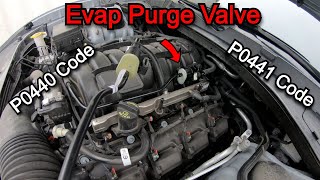
- P0441 — P0441 indicates 'Incorrect Purge Flow'. If the PCM cannot electrically control the purge valve due to a P0443 fault, it can't regulate the flow of vapors, leading to this code.
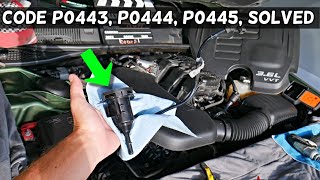
- P0444 / P0445 — These codes are also specific electrical faults for the purge control circuit. P0444 indicates an 'Open Circuit' and P0445 indicates a 'Shorted Circuit'. They often point to the same root causes as P0443 and may be displayed instead of, or alongside, P0443 depending on the exact nature of the electrical failure. 🎬 Watch: Understanding codes P0443, P0444, and P0445 on your Charger.
Mechanic-Grade Diagnostic Values
- EVAP Purge Solenoid Coil Resistance — expected: 15-35 Ohms. Failure: A reading of infinite resistance (open circuit) or near-zero Ohms (short circuit) indicates a failed solenoid coil.
- Voltage at Purge Solenoid Connector (Power Wire) — expected: Battery Voltage (approx. 12.0V) with ignition on.. Failure: No voltage indicates an open circuit in the power supply wire, a blown fuse, or a faulty relay.
- Continuity of Control Wire to PCM — expected: Less than 5.0 Ohms. Failure: Resistance higher than 5.0 Ohms indicates an open or high-resistance in the control wire between the solenoid connector and the PCM.
Scan Tool Commands That Help
- Chrysler DRB/wiTECH or equivalent professional scan tool: EVAP Purge Solenoid Active Test / Actuate Solenoid — This command allows the technician to manually cycle the purge solenoid on and off. It is used to verify PCM control over the circuit and to audibly check if the solenoid is clicking. While commanding the solenoid on, you can check for ground on the control wire, confirming the PCM driver is working.
Wiring & Ground Locations
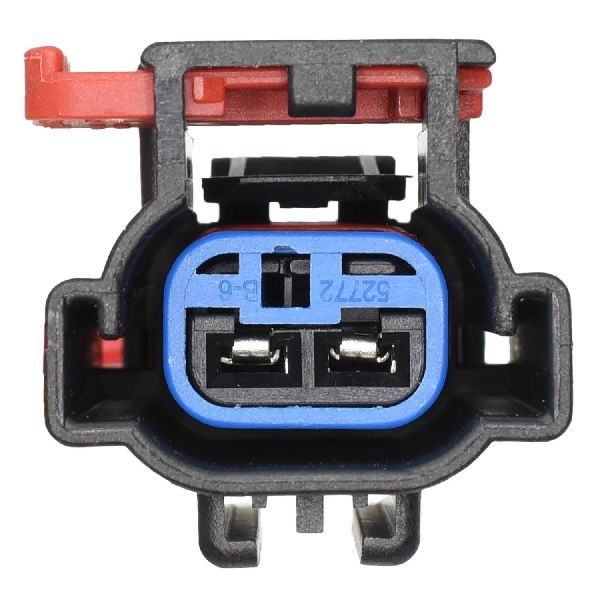
- Purge Solenoid Connector Pin 1 (Power) — On the two-wire connector at the EVAP purge solenoid, located on the engine near the intake manifold.. This pin supplies battery voltage to the solenoid. A multimeter test here (with key on) should show ~12V. Lack of voltage points to a break in the power feed wire or a blown fuse, not a faulty solenoid or PCM.
- Purge Solenoid Connector Pin 2 (Control) — On the two-wire connector at the EVAP purge solenoid, located on the engine near the intake manifold.. This wire runs directly to the PCM. The PCM provides a pulsed ground on this pin to activate the solenoid. An open or short-to-ground on this specific wire will set P0443. A continuity test from this pin to the corresponding pin at the PCM connector is a definitive wiring test.
Real Owner Repair Stories
- YouTube video from 'P0443 Code Fix, PCM Replacement' (1998 Mercury Sable (demonstrates a universal principle applicable to the Charger)) — P0443 code, plus rich running condition codes (P0172, P0175).
❌ Tried (didn't work) Replacing the EVAP purge solenoid did not fix the issue.
✅ What actually fixed it The Powertrain Control Module (PCM) had an internal short to ground on the purge solenoid driver circuit. This caused the purge valve to be stuck open constantly. Measuring voltage on the control wire showed a 2-volt drop when grounded through the faulty PCM compared to a direct battery ground. Replacing the PCM resolved all codes.
OEM Part Supersession History
4891738AA, 4891738AB→4891738AD— Standard part revision and improvement by the manufacturer.
Heads up: The newer part number 4891738AD is a direct replacement for the older versions and is fully compatible with all 2006-2010 Dodge Charger models.
Model Year Variations Within This Range
- 2006-2007 vs 2008-2010: While the function and failure mode are identical, some parts suppliers list different aftermarket part numbers for the 2006-2007 models versus the 2008-2010 models. However, the OEM Mopar part 4891738AD is specified for 2008 and later but is commonly used and fits the earlier years as well, indicating a high degree of cross-compatibility.
Diagnostic Flowchart
Other Known Issues on This Vehicle
Issues unrelated to this code that are worth knowing about as an owner of this generation:
- Front Suspension Clunks and Rattles 🟠 Medium — Very common. Worn tension struts, sway bar links, and control arm bushings are frequent failure points, especially on heavier V8 models. (Ref: TSB 02-007-14 addresses tension strut noise on police vehicles, but the issue is widespread on civilian models too.)
- Shifter Stuck in Park ('Pink Thingy' Failure) 🔴 High — Extremely common on 2005-2007 models with the NAG1 5-speed transmission. A small plastic lever in the shifter assembly breaks, immobilizing the vehicle. (Ref: No recall, but it is a widely documented failure. Aftermarket metal replacement parts are the recommended permanent fix.)
- 5.7L HEMI MDS Lifter/Camshaft Failure ('Hemi Tick') 🔴 High — A known potential issue, though frequency is debated. A ticking noise can develop, which may be a sign of a failing lifter for the Multi-Displacement System (MDS), potentially leading to camshaft damage.
- Transmission Hard Shifting / Shudder 🟡 Low — Reported by some owners. Can sometimes be resolved with a software update to the Transmission Control Module (TCM). (Ref: Software updates were released to address some shifting complaints.)
- Alternator Failure 🟠 Medium — A relatively common failure item across the LX platform, sometimes leading to various electrical gremlins before complete failure.
Used vs. New Parts: Buying Guide for This Vehicle
When a used part is the smart pick: A used EVAP purge solenoid from a junkyard is a reasonable choice for this repair. It is a simple, external, electro-mechanical part that is not a major wear item and is easy to access and replace if the used part is also faulty. Given the low cost of new aftermarket parts, the savings may be minimal, but it is a viable option.
Donor-vehicle mileage cap: roughly under 80000 miles for the part to have meaningful remaining life.
What to inspect on the donor part:
- Check the plastic housing for cracks or signs of extreme heat stress.
- Ensure the electrical connector pins are clean, straight, and free of corrosion.
- If possible, perform a quick resistance test with a multimeter before purchase; it should be within the 15-35 Ohm range.
- Try to blow through the solenoid; no air should pass through when it is unpowered.
OEM-only on this vehicle (don't cheap out):
- Powertrain Control Module (PCM) - Due to the need for VIN-specific programming and security key matching, a used PCM is not a simple plug-and-play solution and an OEM or professionally programmed unit is required.
Aftermarket brands forum-validated for this vehicle:
- Standard Motor Products (SMP)
- Dorman
Brands owners have reported issues with on this vehicle:
- No-name, unbranded parts from online marketplaces have a higher reported failure rate, though many function correctly. It is safer to stick with recognized brands.
Real Owner Stories
Aggregated from forums and TSBs cited above. Mileages and costs reflect what owners reported in those sources.
2nd Gen Dodge Durango (Platform Mate)
Symptoms: P0443 code present.
What fixed it: Found a broken signal wire between the solenoid plug and the PCM connector; repaired by running a new wire.
Source hint: https://www.dodgeforum.com/forum/2nd-gen-durango-discussions/262500-code-p0443.html
2nd Gen Dodge Ram (Platform Mate)
Symptoms: P0443 code, rough idle, and the vehicle will not stay running.
What fixed it: The purge solenoid was jammed open by debris from a deteriorating charcoal canister, which was caused by overfilling the gas tank.
Source hint: https://www.dodgeforum.com/forum/2nd-gen-ram-tech/336333-p0443-code-rough-idle-and-will-not-stay-running.html
Related OBD-II Codes
Frequently Asked Questions
Can I use a used EVAP purge solenoid from a junkyard for my Dodge Charger?
Is there a TSB for the 'Hemi Tick' or lifter failure on the 2006-2010 Charger 5.7L?
My Charger is stuck in Park; is this related to the P0443 code?
Does TSB 02-007-14 apply to the EVAP system?
Can I swap the PCM from another Charger to fix a P0443 wiring issue?
Why does my Charger have a rough idle and difficulty starting specifically after I fill up the gas tank?
Helpful Videos
Used OEM Parts in Stock
New Aftermarket Parts Available


The information in this article is provided for general reference and educational purposes only. Vehicle specifications, procedures, and part compatibility can vary by production date, trim level, and region. Always consult your vehicle's factory service manual and verify part numbers before purchasing or performing repairs. Safety-critical components such as airbags, seat belts, and braking systems should be installed by a qualified professional.
- Dodge Charger:
- 🧭 Diagnostic Flowchart
- 🎬 Helpful Videos
- 🛍️ Shop This Part
- What's Unique About the 2006-2010 Dodge Charger
- Symptoms You May Notice
- Most Likely Causes
- Rare But Worth Checking
- Diagnosis Steps
- Parts You'll Likely Need
- Related Codes That Often Appear With This One
- Mechanic-Grade Diagnostic Values
- Scan Tool Commands That Help
- Wiring & Ground Locations
- Real Owner Repair Stories
- OEM Part Supersession History
- Model Year Variations Within This Range
- Other Known Issues on This Vehicle
- Used vs. New Parts: Buying Guide for This Vehicle
- Real Owner Stories
- 2nd Gen Dodge Durango (Platform Mate)
- 2nd Gen Dodge Ram (Platform Mate)
- Related OBD-II Codes
- Frequently Asked Questions
- 🎟️ Get 5% Off