

P0443 on 2011-2023 Dodge Charger: EVAP Purge Circuit Fault Causes and Fixes
For a 2011-2023 Dodge Charger, the P0443 code almost always points to a failed EVAP Purge Solenoid Valve. It's an electrical circuit code, not a leak. The PCM detects an open or short in the solenoid's control circuit. Replacing the valve is a simple DIY fix, with the Mopar part (P/N 04891731AA/AC for V6, 4861963AD for V8) costing between $25 and $75.
- P0443 is an electrical circuit code, not an EVAP leak. Do not replace the gas cap.
- The most likely cause is a failed EVAP purge solenoid valve, which is a common and inexpensive part to replace.
- The repair is very DIY-friendly, typically requiring only basic hand tools and taking less than 30 minutes.
- Verify the correct Mopar part number for your engine (3.6L V6 vs 5.7L/6.4L V8) before purchasing.
What's Unique About the 2011-2023 Dodge Charger
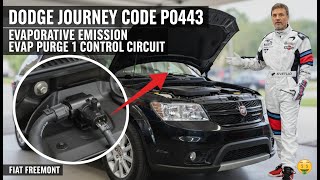
On modern Dodge platforms like the Charger, the P0443 code is a straightforward electrical fault. The EVAP purge solenoid is a common failure point across many Chrysler, Dodge, and Jeep vehicles that share similar engine architectures (like the 3.6L Pentastar and 5.7L HEMI). While some other EVAP codes on Dodge vehicles have been addressed by software updates (TSBs), P0443 on the Charger most frequently leads directly to a hardware replacement of the purge valve itself. For example, TSB 18-033-16 for the 2015 Dodge Journey with the 3.6L engine addresses P0443 via a PCM flash, but this is less common for the Charger.
Generation note: The 2011-2023 year range covers the entire LD generation of the Dodge Charger. While there was a significant facelift in 2015 with interior and exterior changes, the core powertrains (3.6L, 5.7L, 6.4L) and the function of the EVAP system related to this code remained consistent. The location and appearance of the purge valve are very similar across all engine types in this generation, typically mounted on the engine near the intake manifold.
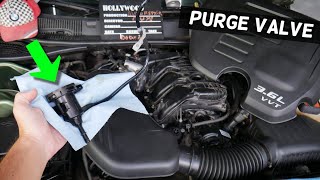
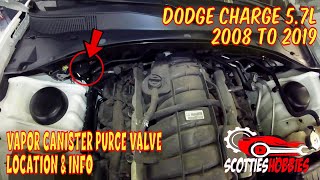
🎬 Watch: How to locate and remove the purge valveSymptoms You May Notice
- Check Engine Light is on
- Slightly rough idle
- Slight decrease in fuel economy
- Possible stalling if the valve is stuck open
- Vehicle will not pass an emissions inspection
- Fuel smell around the vehicle
- Replacing the gas cap. A faulty gas cap typically causes a P0455 (large leak) or P0456 (small leak) code, not a P0443 circuit code. Forum users frequently report being incorrectly told to replace the cap by shops.
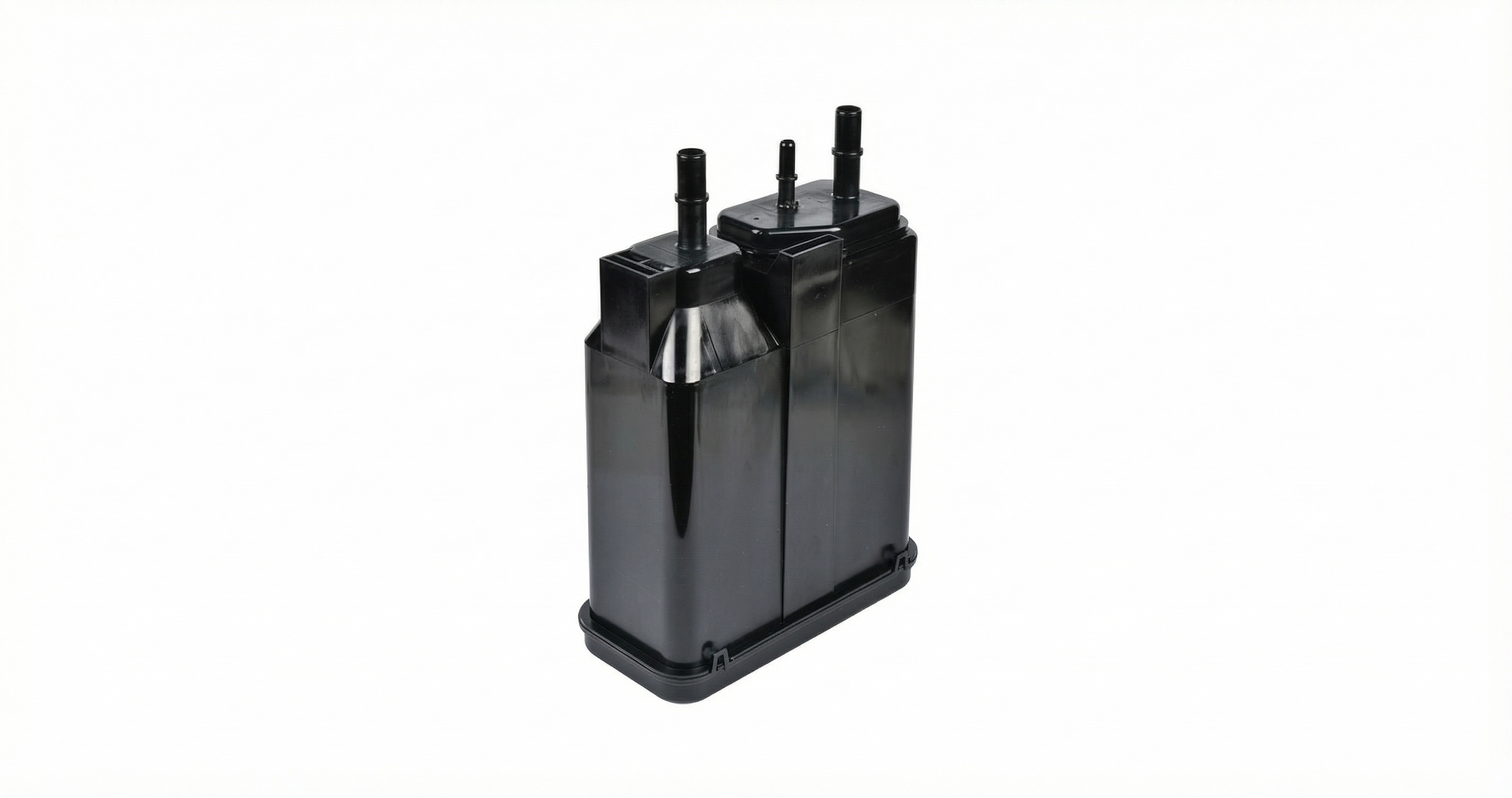
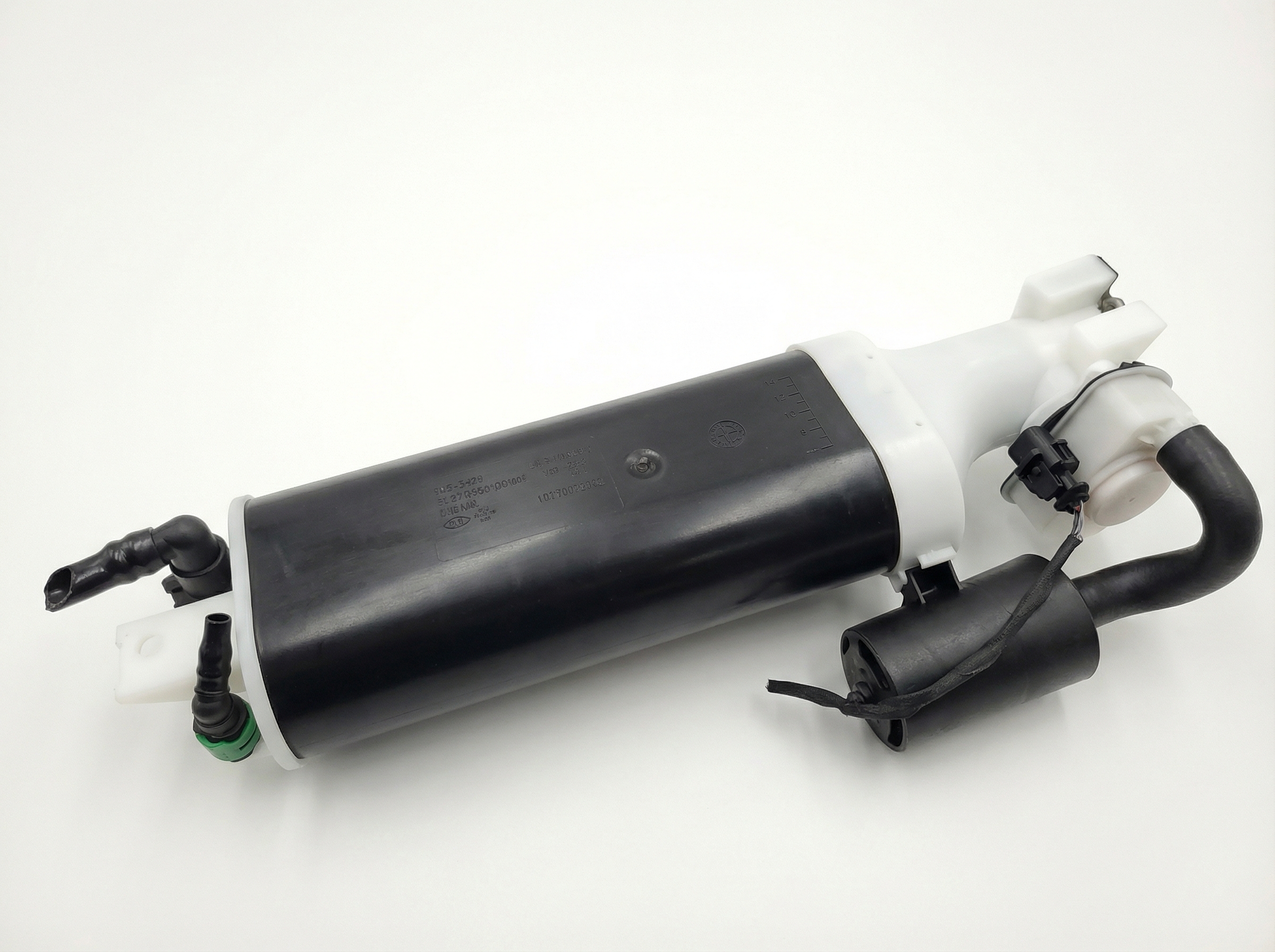
- Replacing other EVAP system components like the charcoal canister or vent solenoid. P0443 is specific to the purge valve *circuit*.
Most Likely Causes
- Faulty EVAP Purge Solenoid Valve 🔴 High Probability → Shop Vapor Canister The purge solenoid is an electromechanical part that cycles thousands of times. The internal coil can fail (creating an open or short circuit) or the valve can become physically stuck, often from charcoal pellets from a deteriorating canister, a problem noted on some Dodge vehicles.
How to confirm: Disconnect the valve and test the resistance between the two electrical pins with a multimeter; a reading outside the manufacturer's spec (often around 14-30 ohms) or an open (infinite) / short (zero) circuit indicates failure. You can also try to blow through the valve when it's removed; no air should pass when it is unpowered. A running test involves checking for vacuum at the port with the engine on; if you feel suction, the valve is stuck open.
Typical fix: Replace the EVAP purge solenoid valve.
Est. part cost: $25-$75 - Wiring or Connector Issue 🟡 Medium Probability The wiring harness in the engine bay is exposed to heat and vibration, which can cause wires to break or insulation to chafe over time. The connector pins can also corrode. Often, the connector is simply not plugged in all the way after previous service.
How to confirm: Visually inspect the wiring harness leading to the purge valve for any signs of damage, melting, or corrosion. Disconnect the connector and check for bent or corroded pins. With the key on (engine off), use a multimeter to confirm that one of the pins in the connector has battery voltage (~12V).
Typical fix: Repair the broken wire or clean/replace the electrical connector.
Est. part cost: $5-$25
Rare But Worth Checking
- Blown Fuse: The EVAP purge solenoid circuit is protected by a fuse. While not common for this fuse to blow on its own, a short circuit in the harness could cause it. Always check the fuse before replacing more expensive components.
- Faulty Powertrain Control Module (PCM): → Shop Engine Control Module (ECM) This is very rare. The internal driver circuit in the PCM that controls the purge solenoid can fail. This should only be considered after the valve, wiring, and fuses have been thoroughly tested and confirmed to be good. Some older Dodge/Chrysler vehicles had TSBs for PCM replacement for related O2 sensor circuit codes, indicating PCM driver failure is a possibility.
Diagnosis Steps
- Scan the vehicle for codes to confirm P0443 is present and see if any other related codes (like P0444 or P0445) are stored.
- Locate the EVAP purge solenoid. On both V6 and V8 engines, it is mounted directly on the engine near the intake manifold, with two hoses and a two-wire electrical connector.
- Inspect the electrical connector and wiring harness going to the solenoid. Look for any signs of damage, corrosion, or loose connections. Ensure it is fully seated.
- Test the circuit for power. Disconnect the connector. Turn the ignition to 'ON' (engine off). Use a multimeter to verify that one pin in the connector has battery voltage (~12V). The other pin is the control wire from the PCM.
- Test the solenoid. If power is present at the connector, the issue is likely the solenoid itself. Measure the resistance across the two pins on the solenoid. Compare this to the manufacturer's specification (typically 14-30 ohms). An infinite reading (open) or a zero reading (short) confirms a bad solenoid.
- Perform a functional test. If resistance is good, you can (carefully) apply 12V and ground to the solenoid pins; you should hear a distinct click as it actuates.
- If the solenoid and wiring test good, check the associated fuse in the vehicle's fuse box (consult the owner's manual for location).
- If all other steps fail, the issue may be with the PCM, which requires professional diagnosis.
Parts You'll Likely Need
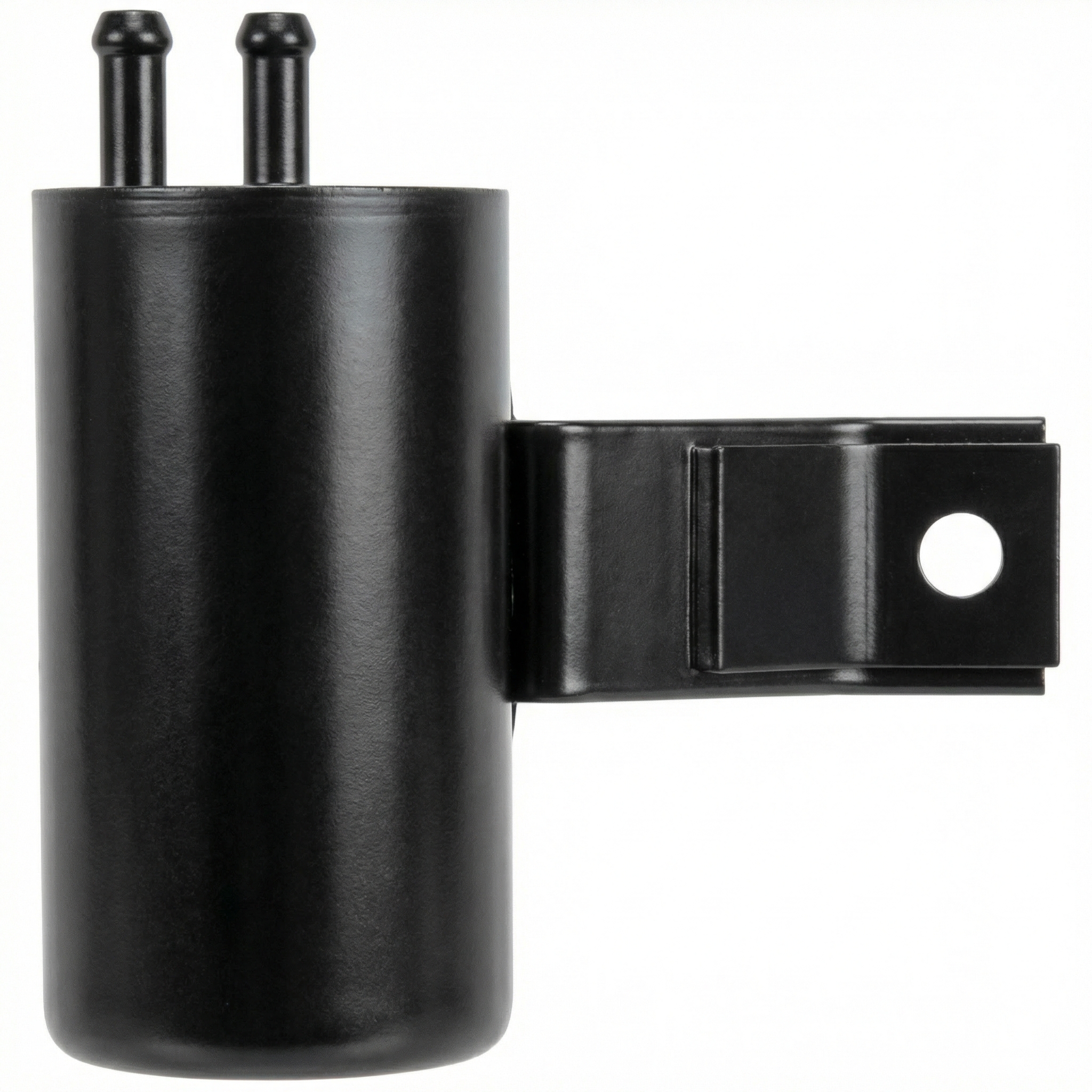
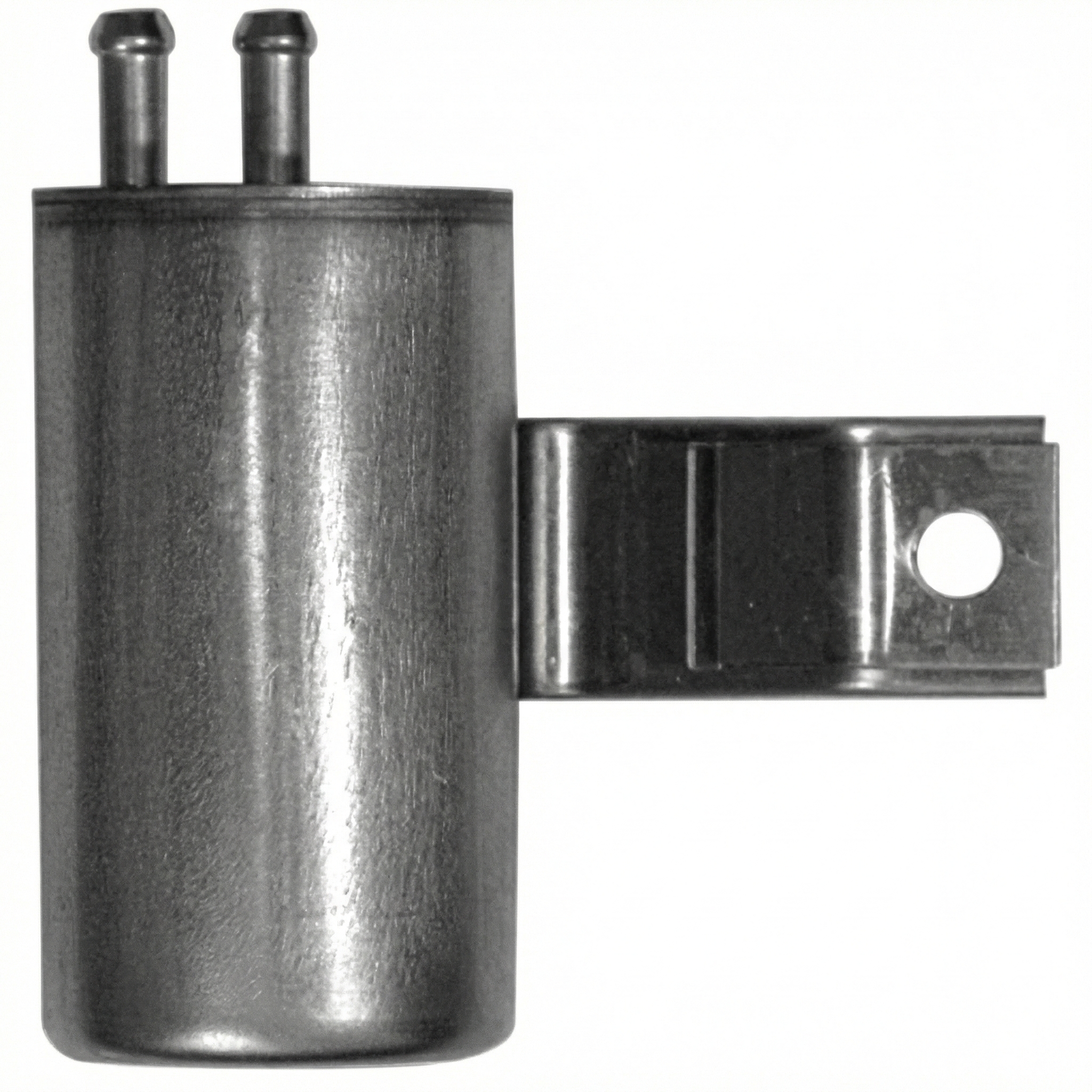
- EVAP Purge Solenoid Valve
(OEM #Mopar 04891731AA (or superseding 04891731AC) for 3.6L V6; Mopar 4861963AD for 5.7L/6.4L V8)— This is the most common failure point for the P0443 code. The internal coil fails electrically, triggering the circuit code.
Trusted brands: Mopar, Dorman, Standard Motor Products (SMP), Bosch
OEM price range: $50-$90
Aftermarket price range: $25-$60
Related Codes That Often Appear With This One
- P0444 — P0444 indicates the 'Purge Control Valve Circuit Open'. This is a more specific version of the P0443 fault and often appears alongside it, pointing directly to a broken wire or a failed-open solenoid coil.
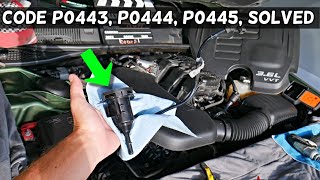
- P0445 — P0445 indicates the 'Purge Control Valve Circuit Shorted'. This points to a short circuit in the wiring or the solenoid coil and can also accompany P0443. 🎬 Watch: Troubleshooting P0443, P0444, and P0445 codes
Technical Service Bulletins (TSBs) & Recalls
- TSB 18-033-16: For 2015 Dodge Journey with 3.6L engine, addresses P0443 and other DTCs with a PCM software update.
Platform-Specific Known Issues
- Emissions Recall UB4: Affects some 2015-2016 Dodge Charger models. The recall is for the Evaporative Emissions Canister's inability to properly absorb fuel vapors. While this does not directly cause the P0443 electrical code, it indicates a potential weakness in the broader EVAP system for those model years.
- TSB 18-033-16: While for a 2015 Dodge Journey, this TSB shows that for the same 3.6L engine, a P0443 code could be resolved with a PCM software update, indicating a potential logic issue in some cases.
Mechanic-Grade Diagnostic Values
- EVAP Purge Solenoid Coil Resistance — expected: 14 to 35 Ohms. Some sources state a tighter range of 20-30 Ohms.. Failure: An open circuit (infinite resistance) or a short circuit (near-zero resistance) indicates a failed solenoid.
- EVAP Purge Solenoid Connector Voltage (Key On, Engine Off) — expected: One pin should have battery voltage (~12V). This is the power supply from the ASD relay or TIPM.. Failure: No voltage suggests a blown fuse, bad relay, or a break in the power supply wire.
- Wiring Continuity (Solenoid Connector to PCM Connector) — expected: Less than 5.0 Ohms on both the power and control wires.. Failure: Resistance higher than 5.0 Ohms indicates a corroded or broken wire in the harness that needs to be repaired.
- Control Wire Voltage (Backprobed, Scan Tool Commanding Purge ON) — expected: Near 0 Volts. The PCM provides a ground to activate the solenoid.. Failure: Voltage that does not drop to near zero when commanded ON indicates a problem with the PCM driver or a break in the control wire.
Scan Tool Commands That Help
- wiTECH or equivalent bidirectional scanner: EVAP Purge Solenoid Actuation Test / EVAP Purge Test — This command allows a technician to manually cycle the purge solenoid on and off. It is essential for confirming if the solenoid is mechanically responding (audible click) and for testing the control circuit's integrity by observing voltage changes while the command is active.
Wiring & Ground Locations
- EVAP Purge Solenoid Connector — On the purge solenoid itself, mounted on the engine near the intake manifold.. This 2-pin connector is the primary point for electrical testing. One pin is the power feed (often from the ASD relay), and the other is the ground-side control wire from the PCM. Corrosion or pushed-out pins here are a common cause of P0443.
- Engine/Chassis Ground — On 3.6L V6 models, a key ground point is located under the airbox on the passenger side, attached to the chassis. Another is on the driver's side cylinder head via a threaded stud.. The entire EVAP circuit relies on a solid ground path back to the battery. A corroded or loose engine or chassis ground can introduce resistance and cause intermittent electrical faults, including P0443, even if the component and its direct wiring are good.
- PCM Connector C1 — At the Powertrain Control Module (PCM).. This is the termination point for the purge solenoid control circuit. When diagnosing a persistent P0443 where the valve and wiring at the component test good, a continuity check is performed between the solenoid connector and the specific pin at this PCM connector to rule out a break in the middle of the harness.
Real Owner Repair Stories
- YouTube video 'Toyota Wigo P0443 Fix' (Toyota Wigo (similar simple EVAP circuit)) — Check Engine Light with code P0443.
❌ Tried (didn't work) Replacing the purge solenoid valve.
✅ What actually fixed it The final cause was a broken ground wire for the purge solenoid. The wire was located inside the main wiring harness near the ECU, where it had chafed against other wires over time and eventually broke, creating an open circuit.
"I Checked Everything" — The Actual Cause
- P0443 is an electrical circuit code, so a smoke test (which is for finding physical leaks) will almost always come back clean and is not the correct primary diagnostic step. Technicians who perform a smoke test for P0443 are misinterpreting the code's definition. The fault lies in the wiring, the solenoid's coil, or the PCM driver, not a hose leak.
OEM Part Supersession History
04891731AA→04891731AC— Standard part revision, likely for improved durability or material change.
Heads up: The parts are fully interchangeable for the 3.6L V6 engine across the specified model years.
Diagnostic Flowchart
Other Known Issues on This Vehicle
Issues unrelated to this code that are worth knowing about as an owner of this generation:
- Cracked Oil Filter/Cooler Housing (3.6L Pentastar V6) 🔴 High — Extremely common, often occurs between 60,000 and 120,000 miles. The plastic housing warps and cracks, causing significant oil and/or coolant leaks into the engine valley. (Ref: No recall has been issued, despite widespread complaints.)
- HEMI Lifter/Camshaft Failure (5.7L & 6.4L V8) 🔴 High — Common, particularly on pre-2016 models but can affect all years. Often presents as a persistent ticking noise ('Hemi tick') that can progress to a misfire and requires replacement of lifters and often the camshaft. (Ref: No official recall, but multiple internal service communications exist. Engine replacement may be required if metal debris is found.)
- Uconnect 8.4" Screen Delamination & Ghost Touch 🟠 Medium — Very common on 2017+ models equipped with the 8.4-inch screen. The screen bubbles and separates, causing phantom screen presses, especially in heat. (Ref: No recall, but many owners have reported receiving goodwill replacements from Dodge Cares even out of warranty.)
- Premature Alternator Failure 🟠 Medium — Frequently reported across all engines, but especially noted on HEMI models. Can cause sudden shutdown of the vehicle. A recall was issued for some earlier model years. (Ref: Recall issued in 2014 for some models to address alternator issues.)
- Transmission Shifting Issues (8-Speed ZF) 🟡 Low — Some owners report rough shifting or shuttering. This is often not a mechanical failure. (Ref: Software updates for the Transmission Control Module (TCM) or PCM often resolve the issue.)
Used vs. New Parts: Buying Guide for This Vehicle
When a used part is the smart pick: For this specific repair, buying a used EVAP purge solenoid is generally not recommended. The part is a common failure item due to internal electrical wear. A used part from a salvage yard has an unknown history and may fail soon after installation. Given the low cost of a new aftermarket part ($25-$60), the savings from a used part do not justify the risk and labor.
Donor-vehicle mileage cap: roughly under 40000 miles for the part to have meaningful remaining life.
What to inspect on the donor part:
- Ensure the plastic housing is not cracked or showing signs of extreme heat stress.
- Check that the electrical connector pins are straight and free of corrosion.
- Verify the vacuum ports are clear and not clogged with debris or charcoal pellets.
Aftermarket brands forum-validated for this vehicle:
- Standard Motor Products (SMP)
- Bosch
Brands owners have reported issues with on this vehicle:
- Dorman has a mixed reputation; while some of their parts are identical to OEM, others, particularly rubber components, have been reported to have a short service life. For a critical emissions component, it may be worth choosing a different brand if the price is comparable.
Real Owner Stories
Aggregated from forums and TSBs cited above. Mileages and costs reflect what owners reported in those sources.
2015 Dodge Journey 3.6L (Engine Shared with Charger)
Symptoms: The vehicle triggered a P0443 code despite the hardware appearing functional.
What fixed it: A PCM software update as described in TSB 18-033-16.
Source hint: TSB 18-033-16
2011-2023 Dodge Charger
Symptoms: Check engine light on; multiple shops suggested replacing the gas cap.
What fixed it: Replacement of the purge solenoid valve.
Source hint: DodgeForum.com - 'p0443 trouble code help please'
2011-2023 Dodge Charger
Symptoms: Rough idle and the vehicle will not stay running; P0443 stored.
What fixed it: Addressing a jammed purge valve caused by charcoal pellets from a failed canister.
Source hint: DodgeForum.com - 'P0443 code, rough idle and will not stay running.'
Related OBD-II Codes
Frequently Asked Questions
Does TSB 18-033-16 apply to my 2015 Dodge Charger with the 3.6L engine?
Is there a recall for the EVAP system on my 2015-2016 Dodge Charger?
I've been told to replace my gas cap for a P0443 on my Charger; will that fix it?
Where is the purge solenoid located on the 2011-2023 Charger V6 and V8 engines?
Can a bad charcoal canister cause my purge valve to fail and trigger P0443?
What should the resistance be when testing the purge solenoid on a Dodge Charger?
Helpful Videos
We Have This Part in Stock

The information in this article is provided for general reference and educational purposes only. Vehicle specifications, procedures, and part compatibility can vary by production date, trim level, and region. Always consult your vehicle's factory service manual and verify part numbers before purchasing or performing repairs. Safety-critical components such as airbags, seat belts, and braking systems should be installed by a qualified professional.
- Dodge Charger:
- 🧭 Diagnostic Flowchart
- 🎬 Helpful Videos
- 🛍️ Shop This Part
- What's Unique About the 2011-2023 Dodge Charger
- Symptoms You May Notice
- Most Likely Causes
- Rare But Worth Checking
- Diagnosis Steps
- Parts You'll Likely Need
- Related Codes That Often Appear With This One
- Technical Service Bulletins (TSBs) & Recalls
- Platform-Specific Known Issues
- Mechanic-Grade Diagnostic Values
- Scan Tool Commands That Help
- Wiring & Ground Locations
- Real Owner Repair Stories
- "I Checked Everything" — The Actual Cause
- OEM Part Supersession History
- Other Known Issues on This Vehicle
- Used vs. New Parts: Buying Guide for This Vehicle
- Real Owner Stories
- 2015 Dodge Journey 3.6L (Engine Shared with Charger)
- 2011-2023 Dodge Charger
- 2011-2023 Dodge Charger
- Related OBD-II Codes
- Frequently Asked Questions
- 🎟️ Get 5% Off