

P0443 on 2011-2024 Dodge Durango: EVAP Purge Control Valve Circuit Causes and Fixes
On a 2011-2024 Dodge Durango, code P0443 almost always points to a faulty EVAP Purge Solenoid/Valve. It's an electrical circuit code, not a system leak. Expect to pay $25-$60 for an aftermarket part, and it's a simple DIY fix for most owners, located on top of the engine.
- P0443 is an electrical circuit code for the EVAP purge valve, not a gas cap or leak issue.
- The most likely cause is a failed EVAP purge solenoid, which is a relatively inexpensive and easy part to replace, located on top of the engine.
- Before replacing the part, perform a quick visual inspection of the wiring and connector for any obvious damage or a loose connection.
- Diagnosis is straightforward with a basic multimeter to check for power and test the solenoid's resistance.
- This is a very DIY-friendly repair that can be completed in under an hour with basic tools.
What's Unique About the 2011-2024 Dodge Durango
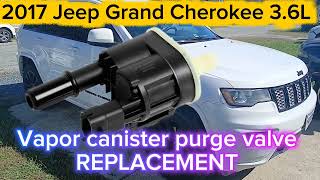
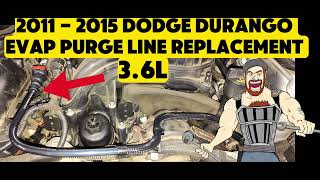
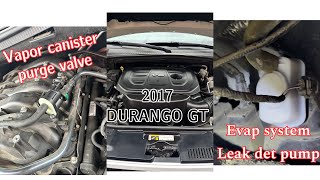
For the 2011-2024 Dodge Durango and its platform-mate, the Jeep Grand Cherokee WK2, the P0443 code is a straightforward circuit fault. The purge valve is easily accessible on top of the engine for both the 3.6L V6 and 5.7L HEMI, making it a particularly easy DIY repair. On the 3.6L, it's on the driver's side of the intake manifold. On the 5.7L Hemi, it's on the front of the intake manifold. The most common failure is simply the purge valve solenoid itself wearing out.
Symptoms You May Notice
- Check Engine Light is on
- Slightly rough idle
- Slight decrease in fuel economy
- Difficulty starting immediately after refueling
- Possible fuel odor
- Remote start may be disabled
- Replacing the gas cap. A bad gas cap typically causes a leak-related code (like P0455, P0456, or P0457), not a circuit code like P0443.
Most Likely Causes
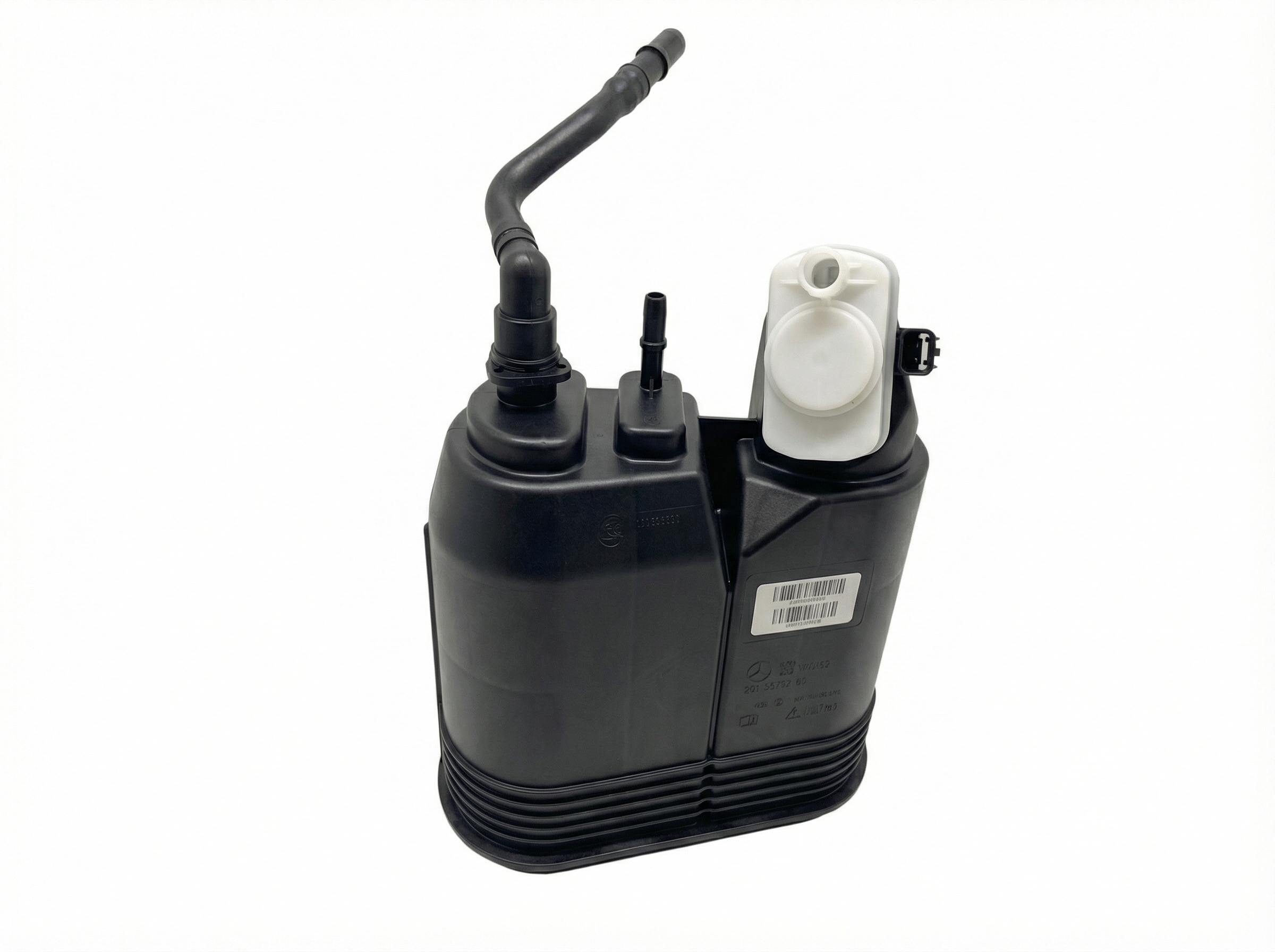
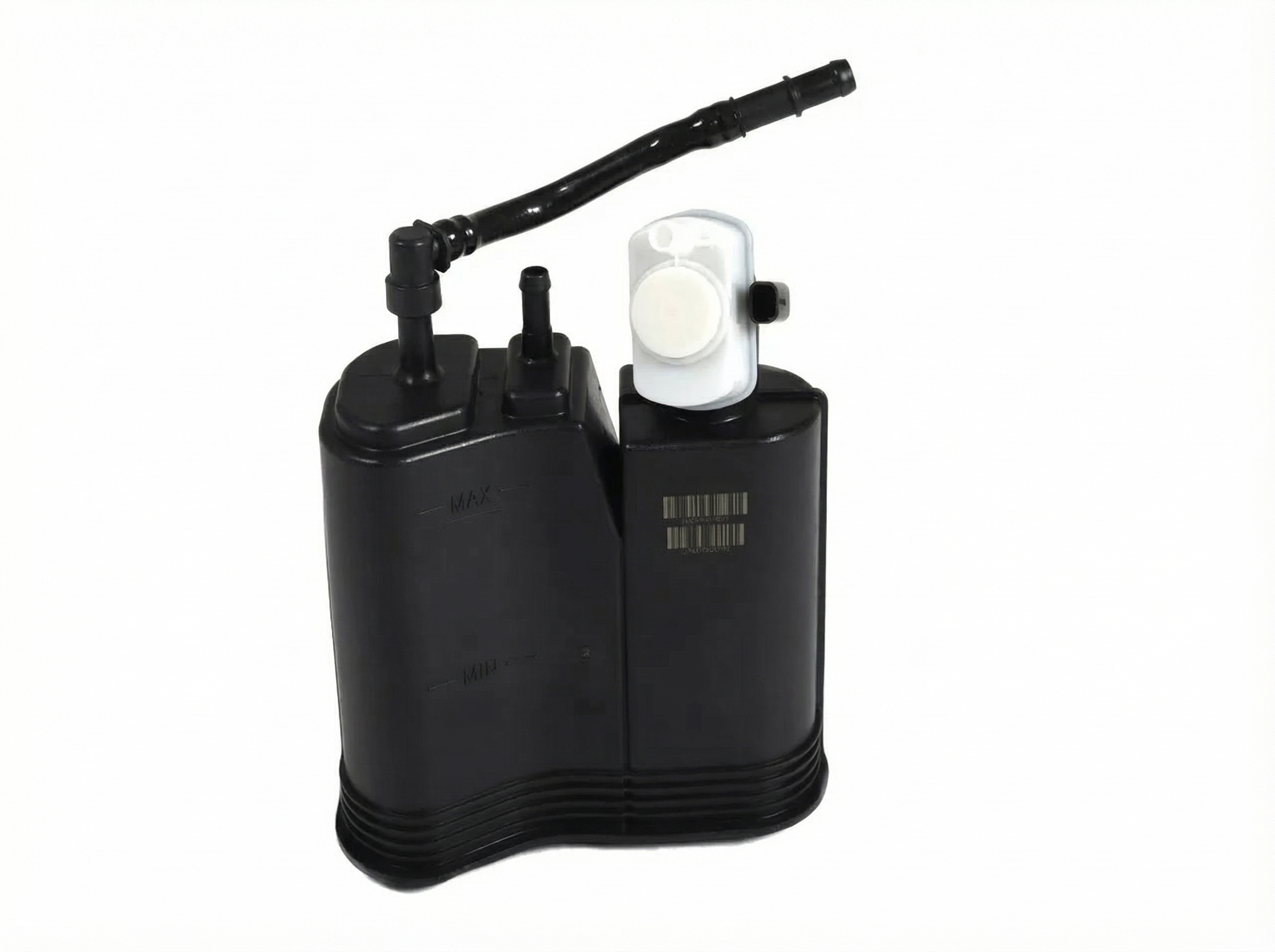
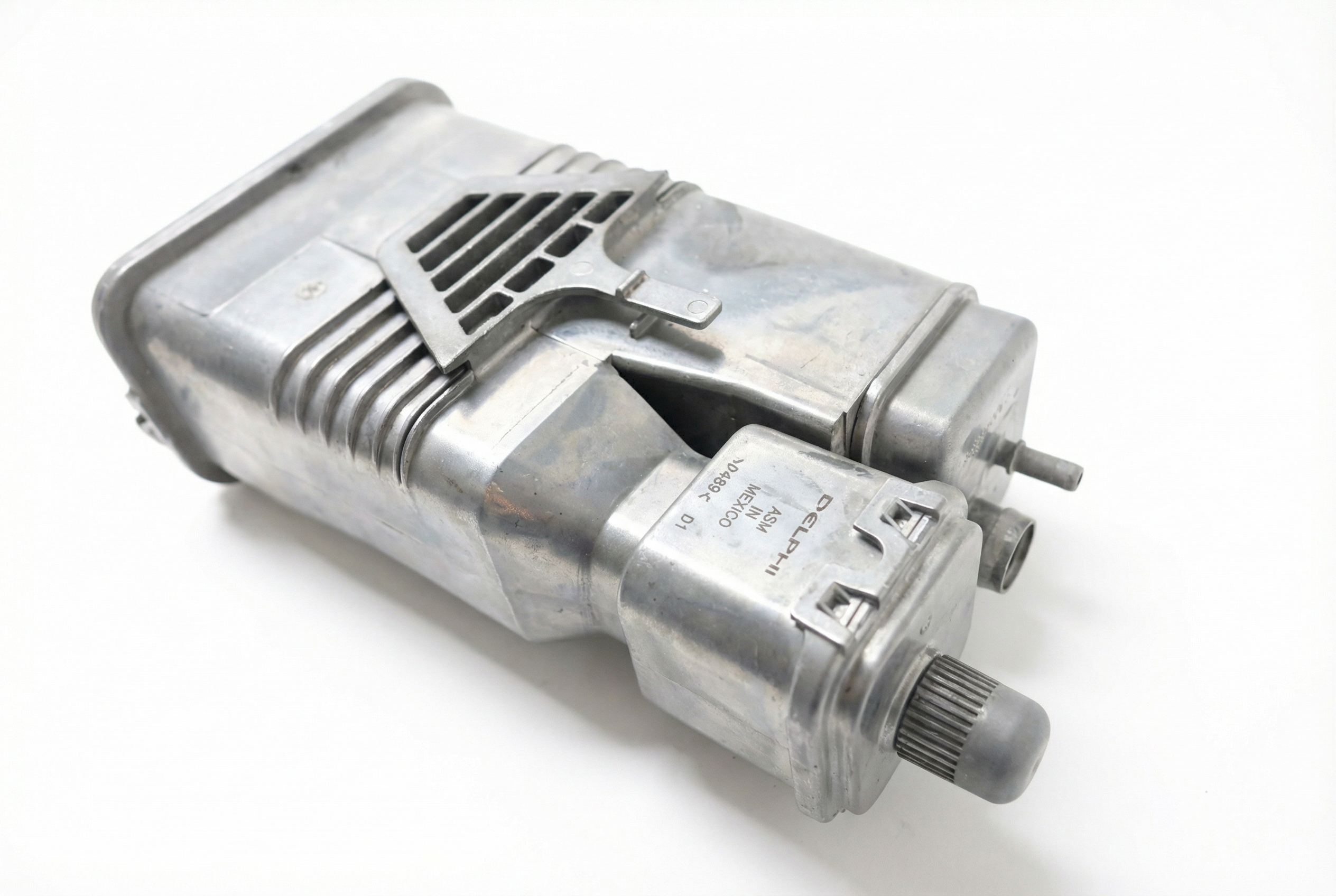
- Faulty EVAP Purge Solenoid/Valve 🔴 High Probability → Shop Vapor Canister The solenoid is an electromechanical part with a coil that can fail over time due to heat cycles and constant use. Additionally, repeatedly topping off the fuel tank can force liquid fuel into the charcoal canister, which can then send carbon pellets or debris into the purge valve, causing it to stick or fail.
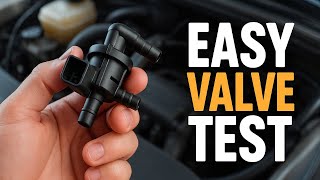
How to confirm: Disconnect the valve and measure the resistance across its two pins with a multimeter; an open circuit (infinite resistance) or a dead short (zero resistance) indicates a bad coil. A good valve should have a resistance between 14 and 18 ohms. You can also apply 12V power and ground to see if it 'clicks' open and closed. A stuck-open valve can be tested by removing it and trying to blow through it; it should be closed by default. 🎬 Watch: A DIY guide on how to test an EVAP purge valve.
Typical fix: Replace the EVAP purge solenoid/valve.
Est. part cost: $25-$60 - Damaged Wiring or Connector 🟡 Medium Probability Engine bay heat and vibration can cause wires to become brittle, frayed, or chafe against other components. The connector pins can also corrode. In one documented case, a shop had left the connector unplugged and tucked away after a previous repair, causing the code.
How to confirm: Visually inspect the wiring harness leading to the purge valve for any signs of damage, melting, or corrosion. With the key on, check for 12V power at one pin of the connector and check for continuity to the PCM on the other (control) wire. Ensure the connector is securely plugged in.
Typical fix: Repair the damaged section of the wire or clean/replace the connector.
Est. part cost: $5-$20 - Blown Fuse ⚪ Low Probability The purge solenoid circuit is protected by a fuse. While not common to blow without another issue (like a shorted solenoid), it should be checked as a simple first step.
How to confirm: Locate the fuse for the EVAP system or PCM in the owner's manual and visually inspect it or test it for continuity.
Typical fix: Replace the blown fuse. If it blows again, investigate for a short circuit.
Est. part cost: $1-$5
Rare But Worth Checking
- Faulty Powertrain Control Module (PCM): → Shop Engine Control Module (ECM) This is extremely rare. The PCM's internal driver for the purge solenoid circuit can fail. This should only be considered after all other possibilities (valve, wiring, fuses) have been exhaustively ruled out.
Diagnosis Steps
- Scan the vehicle for codes. Confirm P0443 is present and note any other codes.
- Visually inspect the EVAP purge solenoid and its electrical connector and wiring. Look for obvious damage, corrosion, or loose connections. Ensure the connector is fully seated.
- Check the fuse for the EVAP system. Consult your owner's manual for its location in the fuse box (TIPM).
- With the ignition on (engine off), use a multimeter to check for battery voltage at the purge valve connector on the power supply wire.
- Test the purge solenoid itself. Disconnect it and measure the resistance between the two pins. A reading outside the manufacturer's specification (typically 14-18 ohms for the 3.6L) or an open/short circuit indicates a faulty solenoid.
- If the solenoid and power are good, check the control wire for continuity between the solenoid connector and the PCM. Also check the control wire for a short to ground or a short to voltage.
- If a scan tool is available, use its bidirectional controls to command the purge solenoid on and off. You should hear an audible click from the valve and see a change in the circuit status on the scan tool.
Parts You'll Likely Need
- EVAP Purge Solenoid / Valve
(OEM #Varies by engine/year. Common Mopar numbers include 4627694AB (5.7L & 3.6L), which supersedes 4627694AA. Always verify with VIN.)— This is the most common failure point for code P0443, as the internal coil winding can fail or the valve can become stuck.
Trusted brands: Mopar, Dorman, Standard Motor Products (SMP), Bosch
OEM price range: $50-$80
Aftermarket price range: $25-$60
Related Codes That Often Appear With This One
- P0441 — P0441 indicates 'Incorrect Purge Flow'. If the PCM detects the P0443 circuit fault, it cannot control the valve, leading to an incorrect flow condition. Seeing them together strongly points to the purge valve or its circuit.
- P0456 — P0456 indicates a 'Very Small EVAP Leak'. In some cases, owners have reported that a P0443 code appeared immediately after performing repairs (like replacing the charcoal canister) to fix a P0456 code, suggesting work on the EVAP system can sometimes disturb the purge valve circuit.
Technical Service Bulletins (TSBs) & Recalls
- No relevant TSBs were found for the 2011-2024 Dodge Durango for code P0443. An older TSB (18-35-98) exists for 1998 models but does not apply to this generation.
Platform-Specific Known Issues
- Topping Off Fuel Tank: → Shop Fuel Tank A known issue in the broader Mopar community is that consistently overfilling or 'topping off' the fuel tank after the pump clicks off can force liquid gasoline into the charcoal canister. This can saturate the canister and cause carbon pellets to be drawn through the EVAP lines, contaminating and destroying the purge solenoid.
Mechanic-Grade Diagnostic Values
- EVAP Purge Solenoid Coil Resistance — expected: 14 to 18 Ohms. Failure: An infinite reading (open circuit) or near-zero reading (short circuit). Some general guides suggest a broader 14-30 Ohm range is acceptable.
- Purge Solenoid Connector - Power Wire Voltage (Key On, Engine Off) — expected: Battery Voltage (~12 Volts). Failure: 0V or significantly low voltage, indicating a problem with the fuse, relay (TIPM), or the power supply wire itself.
- Purge Solenoid Connector - Control Wire (Back-probed, Engine Running) — expected: A fluctuating ground signal from the PCM. A test light connected to battery positive will flicker as the PCM pulses the ground. A multimeter may show an average voltage between 8-10V when active.. Failure: Voltage does not change when the solenoid is commanded on/off with a scan tool, or the circuit is permanently grounded.
- Control Wire Continuity to PCM — expected: Less than 5.0 Ohms. Failure: Resistance is higher than 5.0 Ohms, indicating an open or high resistance in the (K52) EVAP Purge Solenoid Control circuit.
Scan Tool Commands That Help
- Witech (or equivalent professional scan tool): EVAP Purge Solenoid Actuator Test / Control — This bidirectional command allows the technician to manually cycle the purge solenoid on and off. It's used to verify PCM control, wiring integrity, and to listen for the audible 'click' of a functioning solenoid. The PCM may disable the actuator if the DTC is active, so the code may need to be cleared first.
- Witech (or equivalent professional scan tool): Monitor Fuel Tank Pressure (FTP) PID — While monitoring the FTP sensor, a technician can command the purge valve and vent valve to test the system. If the purge valve is commanded OFF and the vent valve is commanded ON (closed), the fuel tank pressure should remain stable. A drop in pressure (into a vacuum) indicates the purge valve is mechanically stuck open.
Wiring & Ground Locations
- (K52) EVAP Purge Solenoid Control Circuit — This is the ground-side control wire running from a pin on the Powertrain Control Module (PCM) connector to Pin 2 of the EVAP purge solenoid connector.. An open (break) or a short to ground/voltage in this specific wire is a direct cause of the P0443 circuit code. Service manuals specify checking this wire's continuity back to the PCM.
- Purge Solenoid Power Supply Circuit — This wire runs from the integrated fuse/relay box (TIPM) to Pin 1 of the EVAP purge solenoid connector. It is often an orange wire on related platforms.. This wire supplies the 12V power needed for the solenoid to operate. A lack of voltage here will cause P0443, and the fault would be upstream (fuse, TIPM, or the wire itself), not the solenoid or PCM control side.
Real Owner Repair Stories
- Reddit r/JeepGrandCherokee (Jeep Grand Cherokee (platform mate)) — Check Engine Light with code P0443 immediately after fixing a P0456.
❌ Tried (didn't work) Replacing the charcoal canister and ESIM module (this fixed the original P0456 leak code), Replacing the EVAP purge solenoid
✅ What actually fixed it A mechanic found and repaired a damaged section of the wiring harness leading to the purge valve, which was likely disturbed during the initial repair.
OEM Part Supersession History
4627694AA→4627694AB— Standard part revision by manufacturer.
Heads up: The parts are interchangeable. 4627694AB is the current recommended replacement for vehicles that used the 'AA' version.
Diagnostic Flowchart
Other Known Issues on This Vehicle
Issues unrelated to this code that are worth knowing about as an owner of this generation:
- Totally Integrated Power Module (TIPM) Failure 🔴 High → Shop Fuse Box — Very common on 2011-2013 models. Can cause random stalling, no-start conditions, fuel pump issues, and other electrical gremlins. (Ref: Multiple recalls issued, including NHTSA recalls 14V530, 15V115, and 19V813000 (V62).)
- 5.7L HEMI Lifter/Camshaft Failure ('Hemi Tick') 🔴 High — Common across all years with the 5.7L engine, often appearing after 80,000 miles. Starts as a ticking noise and can progress to misfires and catastrophic engine damage if not addressed. Repair is very expensive. (Ref: No recall, but it is a widely known design flaw.)
- 3.6L Pentastar Oil Filter Housing & Cooler Leak 🟠 Medium — Extremely common on the 3.6L V6. The plastic housing cracks or warps from heat cycles, causing oil and/or coolant to leak into the engine valley. Often occurs between 60,000 and 120,000 miles. (Ref: No recall, but it is a well-documented design flaw. Upgraded aluminum replacement parts are available in the aftermarket.)
- Uconnect 8.4-inch Screen Delamination 🟡 Low — Very common on models equipped with the 8.4-inch touchscreen. The screen layers separate, causing bubbles and 'ghost touches' that make the infotainment system unusable. Can happen at any mileage. (Ref: No recall, but acknowledged by FCA in internal document S2108000130.)
- Rear Spoiler Misalignment / Detachment 🟠 Medium — Affects 2021-2023 models. Improper alignment can cause the spoiler to be damaged during liftgate use or detach from the vehicle. (Ref: NHTSA Recall 23V115000.)
Used vs. New Parts: Buying Guide for This Vehicle
When a used part is the smart pick: A used OEM purge solenoid from a low-mileage donor vehicle is a reasonable choice. The part is not a major wear item, is easy to access, and failure is typically electrical rather than mechanical wear. Given the low cost of new aftermarket parts, however, the savings may be minimal.
Donor-vehicle mileage cap: roughly under 60000 miles for the part to have meaningful remaining life.
What to inspect on the donor part:
- Check the plastic housing for cracks or signs of extreme heat exposure.
- Ensure the electrical connector pins are straight and free of corrosion.
- Ask the seller if the part was tested or if it came from a running vehicle with no check engine lights.
Aftermarket brands forum-validated for this vehicle:
- Standard Motor Products (SMP)
- Bosch
- Delphi
Brands owners have reported issues with on this vehicle:
- While Dorman is a common brand, owner experiences are mixed; some report their EVAP components fail prematurely compared to OEM or other premium aftermarket brands.
Real Owner Stories
Aggregated from forums and TSBs cited above. Mileages and costs reflect what owners reported in those sources.
2018 Dodge Durango
Symptoms: Check engine light came on.
What fixed it: The owner provided an update suggesting a fix that could save a few hundred bucks, though the specific component in the snippet was cut off, it relates to the P0443 purge circuit.
Source hint: youtube_comment - Icewood Cell
2nd Gen Dodge Durango
Symptoms: Rough idle and the vehicle will not stay running.
What fixed it: The owner identified that topping off the gas tank caused the charcoal canister to disintegrate, sending pellets into the purge solenoid and causing it to stick open.
Source hint: DodgeForum.com - Thread: 'P0443 code, rough idle and will not stay running.'
2nd Gen Dodge Durango
Symptoms: P0443 trouble code.
What fixed it: Discovered the electrical connector to the purge solenoid had been left unplugged by a previous mechanic.
Source hint: DodgeForum.com - Thread: 'p0443 trouble code help please'
2011-2021 Jeep Grand Cherokee (WK2)
Symptoms: Immediately started getting a P0443 circuit code after performing other EVAP repairs.
What fixed it: The owner replaced the charcoal canister to fix a P0456 leak, which then triggered the P0443 circuit code.
Source hint: Reddit r/MechanicAdvice - Thread: 'Fixed EVAP leak (P0456) but now getting P0443'
Related OBD-II Codes
Frequently Asked Questions
Does the older TSB 18-35-98 apply to my 2011-2024 Dodge Durango for code P0443?
Why is my Durango's remote start disabled when the P0443 code is active?
Can topping off my gas tank really cause a P0443 circuit code?
What is the specific resistance I should look for when testing the purge solenoid on a 3.6L Durango?
Could my Durango's TIPM be related to EVAP issues?
Is there a simple way to check if a vacuum issue is causing my Durango's rough idle?
Helpful Videos
We Have This Part in Stock


The information in this article is provided for general reference and educational purposes only. Vehicle specifications, procedures, and part compatibility can vary by production date, trim level, and region. Always consult your vehicle's factory service manual and verify part numbers before purchasing or performing repairs. Safety-critical components such as airbags, seat belts, and braking systems should be installed by a qualified professional.
- Dodge Durango:
- 🧭 Diagnostic Flowchart
- 🎬 Helpful Videos
- 🛍️ Shop This Part
- What's Unique About the 2011-2024 Dodge Durango
- Symptoms You May Notice
- Most Likely Causes
- Rare But Worth Checking
- Diagnosis Steps
- Parts You'll Likely Need
- Related Codes That Often Appear With This One
- Technical Service Bulletins (TSBs) & Recalls
- Platform-Specific Known Issues
- Mechanic-Grade Diagnostic Values
- Scan Tool Commands That Help
- Wiring & Ground Locations
- Real Owner Repair Stories
- OEM Part Supersession History
- Other Known Issues on This Vehicle
- Used vs. New Parts: Buying Guide for This Vehicle
- Real Owner Stories
- 2018 Dodge Durango
- 2nd Gen Dodge Durango
- 2nd Gen Dodge Durango
- 2011-2021 Jeep Grand Cherokee (WK2)
- Related OBD-II Codes
- Frequently Asked Questions
- 🎟️ Get 5% Off