

P0443 on 2000-2005 Dodge Neon: EVAP Purge Solenoid Circuit Causes and Fixes
On a 2000-2005 Dodge Neon, code P0443 is almost always caused by a failed EVAP purge solenoid located in the engine bay. This is an electrical circuit code, not a leak, so do not replace the gas cap. The solenoid itself is the most common failure point, costing around $30-$60 for an aftermarket part.
- P0443 on a 2000-2005 Neon is an electrical fault with the EVAP purge solenoid circuit, not a system leak.
- The solenoid is located in the engine bay, usually on the passenger side, not in the rear of the car.
- The most likely cause by far is a failed purge solenoid. Test it with a multimeter (expect 14-22 ohms) before replacing.
- Do not waste money on a new gas cap; it will not fix a P0443 code.
What's Unique About the 2000-2005 Dodge Neon
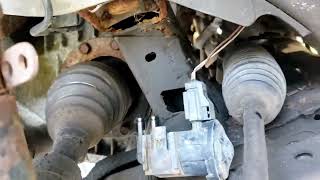
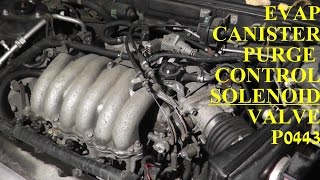
For the second-generation Dodge Neon (2000-2005), the P0443 code is a very common and straightforward fault. Unlike on some other vehicles where software glitches can be a cause, on the Neon this code almost always points directly to a hardware failure. The most frequent culprit is the purge solenoid itself. Crucially, for most Neons, this solenoid is located in the engine bay, typically on the passenger side near the firewall or strut tower, 🎬 Watch: Locate and replace the Neon purge valve making it relatively easy to access, contrary to some sources that confuse it with the rear-mounted canister.
Symptoms You May Notice
- Check Engine Light illuminated
- Rough or uneven idle
- Difficulty starting the engine, especially right after getting gas
- Hesitation or poor engine performance
- Reduced fuel economy
- A faint smell of fuel around the vehicle
- Replacing the gas cap. P0443 is an electrical circuit code, not a system leak code. A loose or faulty gas cap will trigger different codes, such as P0455 or P0457.
- Replacing the rear charcoal canister or Leak Detection Pump (LDP). While part of the EVAP system, a P0443 code specifically points to the purge solenoid circuit, which is typically in the engine bay.
Most Likely Causes
- Faulty EVAP Purge Solenoid 🔴 High Probability → Shop Vapor Canister This is a very common failure part on the second-generation Neon due to age and wear of the internal electrical coil or mechanical valve. It's a widely used Chrysler part from the era known for failing.
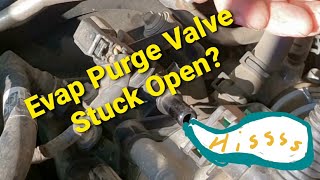
How to confirm: Disconnect the solenoid and test the resistance across its two electrical pins with a multimeter. A reading of infinity (OL) or zero ohms indicates a failed coil. 🎬 Watch: How to test and replace the solenoid A typical good coil will have a resistance between 14-22 ohms. You can also try to blow through it with the power disconnected; if air passes freely, it is stuck open and faulty. 🎬 Watch: Quick test for a stuck open valve
Typical fix: Replace the EVAP purge solenoid.
Est. part cost: $30-$60 - Damaged Wiring or Connector 🟡 Medium Probability The wiring harness in the engine bay is exposed to heat and vibration, which can cause wires to become brittle and crack or connectors to corrode over time.
How to confirm: Visually inspect the entire length of the wiring harness from the PCM to the solenoid for any breaks, chafing, or corrosion. Check that the connector is clean, free of corrosion, and makes a secure connection. One wire should have 12V with the key on (often from the ASD relay), and the other is a ground controlled by the PCM.
Typical fix: Repair the damaged section of wire or replace the corroded connector pigtail.
Est. part cost: $5-$25 - Cracked Vacuum Hoses at Solenoid ⚪ Low Probability → Shop Vacuum Hose After many years, the rubber vacuum hoses connected to the solenoid can become brittle from engine heat and crack, creating a vacuum leak.
How to confirm: With the engine running, listen for a hissing sound near the solenoid. Visually inspect the hoses for cracks or splits. You can also spray soapy water or a small amount of brake cleaner near the hoses and listen for a change in engine idle.
Typical fix: Replace the cracked vacuum hoses. This is often done at the same time as solenoid replacement.
Est. part cost: $5-$15
Rare But Worth Checking
- Faulty Powertrain Control Module (PCM): → Shop Engine Control Module (ECM) This is very rare. The PCM's internal driver for the purge solenoid circuit can fail. This should only be considered after the solenoid and its entire wiring circuit have been tested and confirmed to be good.
Diagnosis Steps
- Read the Code: Confirm P0443 is the only code present. If other codes exist, address them first.
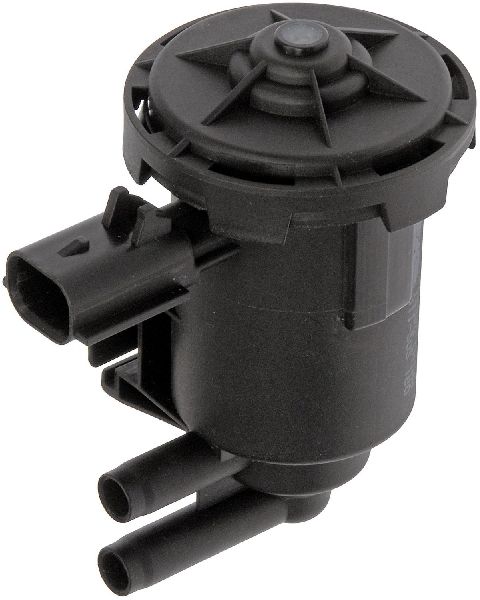
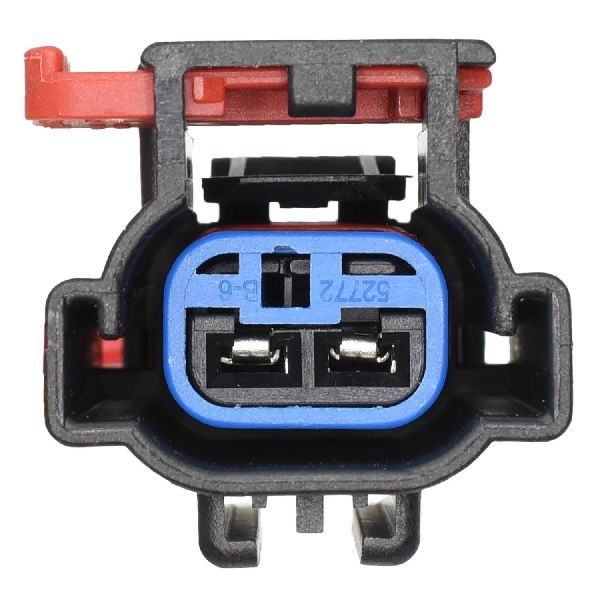
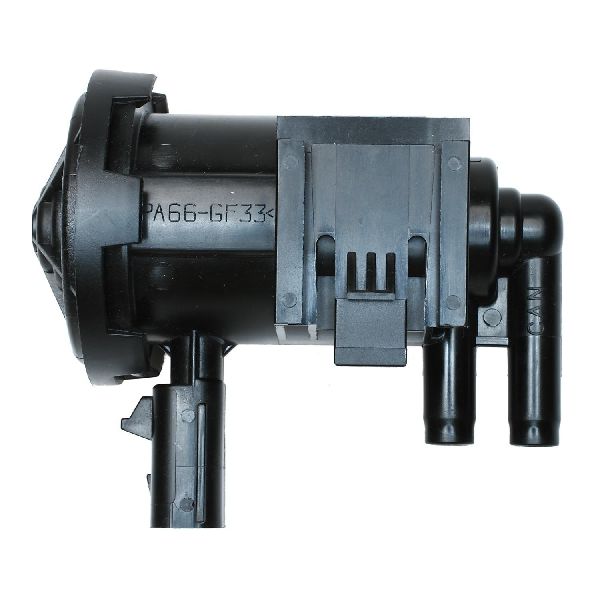
- Locate the Purge Solenoid: On 2000-2005 Neons, this is located in the engine bay. Look on the passenger side, often mounted to the firewall or near the strut tower. It's a small, black, cylindrical component with two vacuum hoses and a two-wire electrical connector.
- Inspect Wiring and Hoses: Visually inspect the electrical connector and wiring going to the solenoid for any signs of corrosion, damage, or loose connections. Check the small rubber hoses attached to the solenoid for cracks or brittleness.
- Test the Solenoid: Disconnect the electrical connector. Use a multimeter to measure the resistance between the two pins on the solenoid. A reading of OL (open) or near 0 ohms (short) confirms the solenoid is bad. A good solenoid should have a resistance between 14-22 ohms.
- Test the Circuit: If the solenoid tests good, check for power at the connector. Turn the ignition to the 'On' position (engine off). One of the pins in the connector should have battery voltage (12V). If not, there is an issue with the power supply or wiring, potentially a blown fuse in the dash-end fuse block. If power is present, the other wire is the control circuit from the PCM, which can be checked for continuity back to the PCM.
- Replace the Faulty Component: Based on your findings, replace the faulty purge solenoid, repair the wiring, or replace the cracked hoses.
Parts You'll Likely Need
- Vapor Canister Purge Solenoid
(OEM #4669569 (superseded by 04669569AB))— This is the most common component to fail, causing the P0443 electrical circuit fault.
Trusted brands: Mopar, Standard Motor Products (CP428), Dorman (911-202), Wells
OEM price range: $60-$90
Aftermarket price range: $30-$60
Technical Service Bulletins (TSBs) & Recalls
- No specific, widely-cited TSB exists for P0443 on the 2000-2005 Dodge Neon. The issue is almost always a straightforward hardware failure rather than a software problem requiring a PCM reflash.
Platform-Specific Known Issues
- Owner experience: A user on DodgeForum.com with a P0443 code on a similar Chrysler product found the issue was a blown 10A fuse in the fuse block at the driver's end of the dashboard, which powered the purge solenoid circuit. This is a good first check before replacing parts.
Mechanic-Grade Diagnostic Values
- EVAP Purge Solenoid Coil Resistance — expected: 14-22 Ohms. Failure: An open circuit (OL/infinite resistance) or a dead short (near 0 Ohms) indicates a failed solenoid coil.
- EVAP Purge Solenoid Connector Voltage (Key On, Engine Off) — expected: ~12V (Battery Voltage) on the power supply pin.. Failure: No voltage on the power pin indicates an issue with the fuse, Auto Shutdown (ASD) relay, or wiring.
- Continuity between PCM and Solenoid Connector — expected: Less than 5.0 ohms. Failure: Resistance above 5.0 ohms indicates an open or high-resistance in the control wire.
Scan Tool Commands That Help
- Chrysler DRB III or equivalent professional scanner: EVAP Purge Solenoid Active Test (On/Off Command) — This is a critical diagnostic step to verify if the PCM can control the solenoid. While commanding the valve ON and OFF, a technician can listen for an audible click from the valve and simultaneously measure voltage changes on the control wire, confirming the entire circuit's integrity from the PCM to the solenoid.
- Professional Scan Tool with Live Data: Monitor Fuel Tank Pressure (FTP) Sensor PID — After commanding the purge solenoid closed and the vent valve closed, the FTP sensor reading should remain stable. If vacuum increases (pressure drops), it indicates the purge solenoid is stuck open mechanically, even if it tests good electrically.
Wiring & Ground Locations
- PCM Connector C2, Pin 68 (K52 circuit) — The Powertrain Control Module (PCM) is in the driver's side front of the engine bay. C2 is one of the main connectors.. This specific pin provides the pulsed ground signal that activates the purge solenoid. A damaged wire (typically Pink/Black) or a bad connection at this pin will cause a P0443.
- G102 — Located at the left front of the engine compartment, near the strut tower and PCM.. This is a primary engine compartment ground point. A poor connection here can cause a variety of electrical issues, including erratic behavior of PCM-controlled components like the purge solenoid.
- Auto Shutdown (ASD) Relay — Located in the Power Distribution Center (PDC), which is the main fuse/relay box in the engine compartment, near the battery.. The ASD relay supplies the 12V power to the EVAP purge solenoid. A faulty relay or poor connection can cut power to the solenoid, triggering a P0443 code.
- Splice S107 — Located in the wiring harness near the breakout for the EVAP purge solenoid.. This is a factory splice in the wiring. While not a common failure point, corrosion at this splice could cause an open or high resistance in the circuit.
Real Owner Repair Stories
- DodgeForum.com user (Dodge Dakota (similar Chrysler electrical architecture)) — Check Engine Light with P0443 code.
❌ Tried (didn't work) Initial diagnosis pointed towards replacing the solenoid.
✅ What actually fixed it The problem was a blown 10A fuse in the fuse block located at the driver's end of the dashboard. The fuse was for the overhead console but was on a shared circuit with the purge solenoid's power feed. Replacing the fuse resolved the code.
OEM Part Supersession History
4669569→04669569AB— Standard part number update and potential minor revision by Mopar.
Diagnostic Flowchart
Other Known Issues on This Vehicle
Issues unrelated to this code that are worth knowing about as an owner of this generation:
- Premature Head Gasket Failure 🔴 High — Very common, especially on the 2.0L SOHC engine. Can occur at any mileage but is frequently reported between 60k-100k miles. An updated multi-layer steel (MLS) gasket is the recommended fix.
- Motor Mount Collapse 🟠 Medium — Extremely common. The rubber in the factory mounts (especially the passenger side and front/rear torque struts) deteriorates, causing excessive engine vibration at idle and clunking noises.
- Clear Coat / Paint Peeling 🟡 Low — Widespread issue where the clear coat and sometimes paint delaminates and peels off in large sheets, particularly on horizontal surfaces like the roof and trunk.
- Oil in Spark Plug Tubes 🟠 Medium — The spark plug tube seals integrated into the valve cover gasket are known to fail, allowing oil to fill the spark plug wells, leading to misfires. Most reported on 2000 models.
Used vs. New Parts: Buying Guide for This Vehicle
When a used part is the smart pick: A used purge solenoid is generally not recommended. It is an inexpensive electro-mechanical part with a finite lifespan. The cost savings of a junkyard part (around $10-$20) are minimal compared to the price of a new aftermarket part ($30-$60), and the risk of premature failure is high.
Donor-vehicle mileage cap: roughly under 60000 miles for the part to have meaningful remaining life.
What to inspect on the donor part:
- Check for cracks in the plastic housing or vacuum ports.
- Ensure the electrical connector pins are clean, straight, and free of corrosion.
- If possible, test the resistance with a multimeter before purchase; it should be between 14-22 ohms.
Aftermarket brands forum-validated for this vehicle:
- Standard Motor Products (SMP) - Often considered a reliable OE-equivalent brand by forum users and professionals.
- Dorman - A widely available and generally acceptable option for this part, though quality can sometimes be inconsistent across their product lines.
Brands owners have reported issues with on this vehicle:
- No-name, unbranded parts from online marketplaces should be avoided. While very cheap, they have a high reported failure rate and may not meet OE specifications for flow or electrical resistance, potentially causing the code to return quickly.
Real Owner Stories
Aggregated from forums and TSBs cited above. Mileages and costs reflect what owners reported in those sources.
2000 Dodge Neon
Symptoms: Check engine light with codes appeared after the car was in a flood where the water level was above the tires. The owner tried disconnecting the battery to clear the codes, but they reappeared.
What fixed it: The suggested fix involved checking for a faulty EVAP purge control solenoid, an open or short in the solenoid harness, or a poor electrical connection.
Source hint: Opinautos owner report
2000 Dodge Neon
Symptoms: The owner received a P0443 code and sought help identifying the component and how to test it.
What fixed it: The community identified the purge solenoid as the culprit and recommended testing the resistance with a multimeter.
Source hint: neons.org: 'P0443 help'
2000-2005 Dodge Neon (Chrysler product)
Symptoms: P0443 code present; the owner investigated the power source for the solenoid circuit.
What fixed it: Replacing a blown 10A fuse in the fuse block at the driver's end of the dashboard.
Source hint: DodgeForum.com: 'P0443 - EVAP Purge Solenoid Circuit Malfunction'
Related OBD-II Codes
Frequently Asked Questions
Where is the EVAP purge solenoid located on my 2000-2005 Dodge Neon?
Is there a specific TSB for the P0443 code on the second-generation Neon?
What resistance should I see when testing the purge solenoid with a multimeter?
Could a blown fuse cause the P0443 code on my Neon?
Why does my Neon have trouble starting specifically after I fill up the gas tank?
Are there other Chrysler vehicles that share this specific EVAP issue?
Helpful Videos
We Have This Part in Stock


The information in this article is provided for general reference and educational purposes only. Vehicle specifications, procedures, and part compatibility can vary by production date, trim level, and region. Always consult your vehicle's factory service manual and verify part numbers before purchasing or performing repairs. Safety-critical components such as airbags, seat belts, and braking systems should be installed by a qualified professional.
- Dodge Neon:
- 🧭 Diagnostic Flowchart
- 🎬 Helpful Videos
- 🛍️ Shop This Part
- What's Unique About the 2000-2005 Dodge Neon
- Symptoms You May Notice
- Most Likely Causes
- Rare But Worth Checking
- Diagnosis Steps
- Parts You'll Likely Need
- Technical Service Bulletins (TSBs) & Recalls
- Platform-Specific Known Issues
- Mechanic-Grade Diagnostic Values
- Scan Tool Commands That Help
- Wiring & Ground Locations
- Real Owner Repair Stories
- OEM Part Supersession History
- Other Known Issues on This Vehicle
- Used vs. New Parts: Buying Guide for This Vehicle
- Real Owner Stories
- 2000 Dodge Neon
- 2000 Dodge Neon
- 2000-2005 Dodge Neon (Chrysler product)
- Related OBD-II Codes
- Frequently Asked Questions
- 🎟️ Get 5% Off