

P0443 on 2007-2014 Ford Edge: EVAP Purge Valve Circuit Malfunction Causes and Fixes
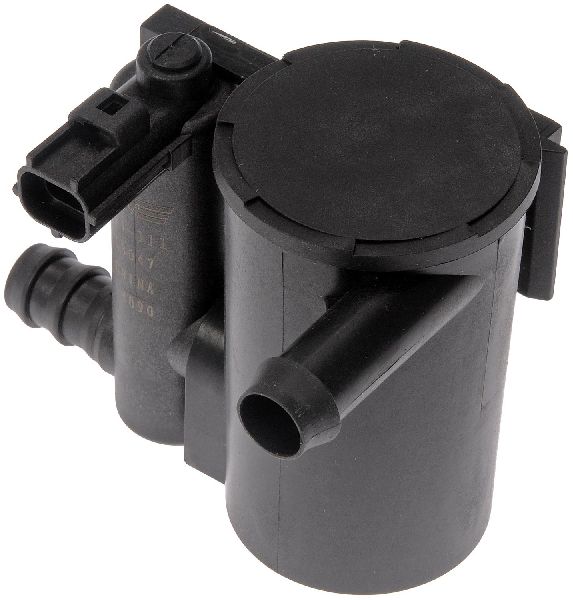
For a 2007-2014 Ford Edge, code P0443 is almost always caused by a failed EVAP purge valve/solenoid. It's a straightforward DIY replacement located on the firewall, with the part costing approximately $30-$60 for an aftermarket version or $70-$120 for an OEM Motorcraft part. The repair is common and well-documented in owner forums and videos.
- P0443 points to an electrical fault in the purge valve circuit, not a system leak.
- The most likely culprit on a 2007-2014 Edge is the purge valve solenoid itself, which is an accessible and affordable DIY replacement.
- The OEM part number is 9U5Z-9C915-H, which cross-references to several other part numbers like AU5Z-9C915-B and Dorman 911-222.
- This issue is also common on platform mates like the Lincoln MKX, Ford Flex, and Ford Taurus with the same V6 engines.
What's Unique About the 2007-2014 Ford Edge
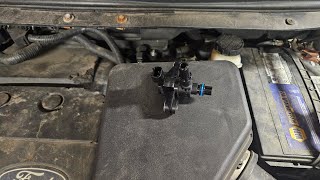
On the first-generation Ford Edge, particularly those with the popular 3.5L and 3.7L V6 engines, the purge valve is conveniently located on the firewall, making it more accessible than in some other vehicles. 🎬 Watch: A quick walkthrough of the 2007 Edge purge valve location. The issue is so commonly the valve itself that it's often replaced without extensive electrical diagnosis. While the 2007-2014 model years span a significant mid-cycle refresh in 2011, the cause and fix for P0443 remain consistent across the different engines offered (3.5L, 3.7L, and 2.0L EcoBoost).
Generation note: The 2007-2014 Ford Edge is the first generation, but it received a major facelift in 2011. Pre-facelift models (2007-2010) primarily used the 3.5L V6. Post-facelift models (2011-2014) introduced the 2.0L EcoBoost and 3.7L V6 alongside the 3.5L V6. The location and function of the purge valve are similar across these engines, and the diagnostic process for P0443 does not significantly differ.
Symptoms You May Notice
- Check Engine Light is on
- Slightly rough idle
- Minor decrease in fuel economy
- Difficulty starting immediately after refueling (less common) 🎬 See how a faulty valve causes these hard-start issues after fueling.
- Fuel odor (rare)
- Engine hesitation or stalling (rare)
- Inaccurate or erratic fuel gauge indication or distance to empty (DTE) readings, as noted in some Ford EVAP system failures (NHTSA ODI #11443669)
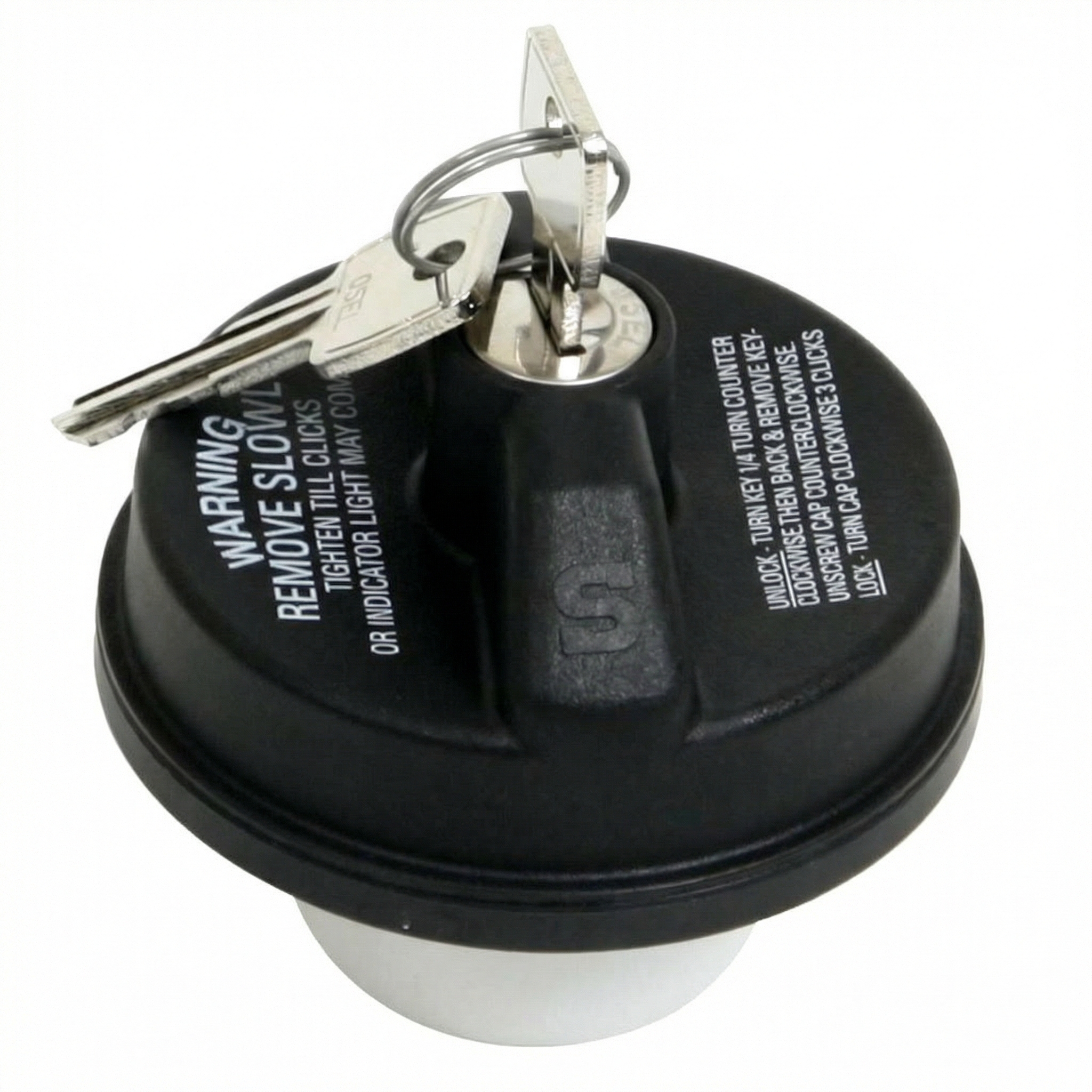
- Replacing the gas cap. A bad gas cap typically causes a large leak code (like P0455 or P0456), not a circuit code like P0443.
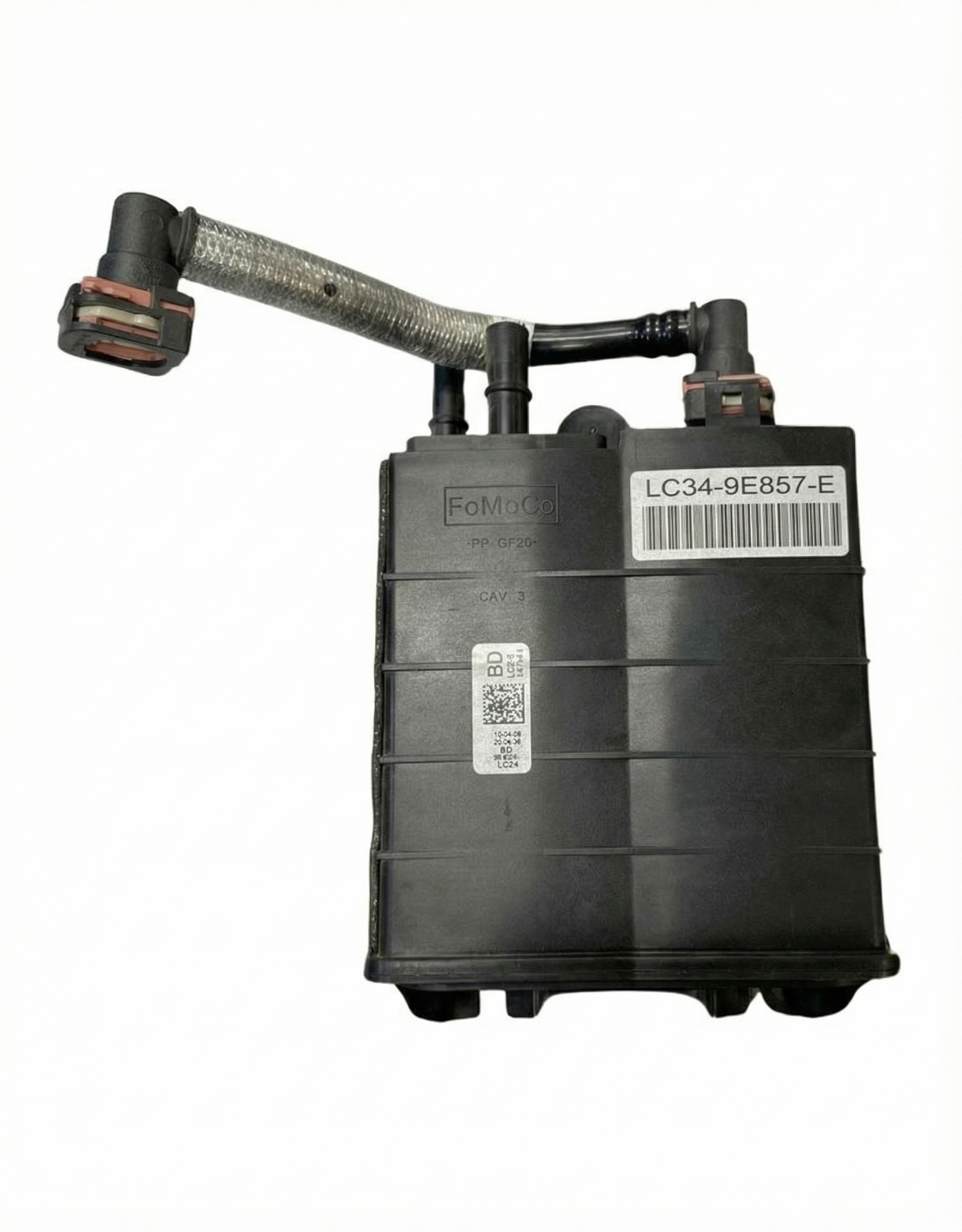
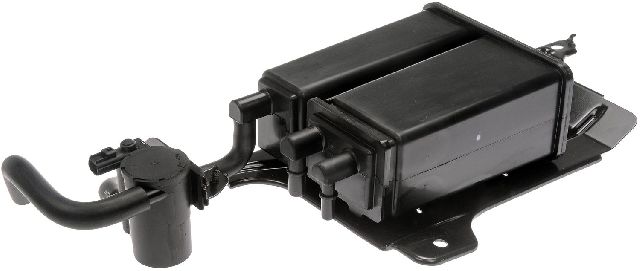
- Replacing the charcoal canister. The canister is a storage device and is not part of the electrical circuit monitored by P0443.
Most Likely Causes
- Failed Vapor Canister Purge Valve (Solenoid) 🔴 High Probability → Shop Vapor Canister The purge valve is an electromechanical part that cycles thousands of times, and the internal coil windings or mechanical pintle can fail over time from heat and vibration. It is one of the most common failure points on this platform leading to a check engine light.
How to confirm: Disconnect the electrical connector and measure the resistance across the two pins on the valve with a multimeter. A typical reading is between 20-30 ohms. An infinite reading (open circuit) or zero reading (short circuit) confirms failure. You can also apply 12V directly to the pins to listen for an audible click. Another test is to remove the valve and try to blow through it; when unpowered, it should be closed and not allow air to pass.
Typical fix: Replace the purge valve assembly. On the 3.5L/3.7L V6, it is mounted to the firewall and secured by a simple bracket, with two hoses and one electrical connector. 🎬 Watch: Step-by-step replacement on the 3.5L Duratec engine.
Est. part cost: $30 - $120 - Damaged Wiring or Connector 🟡 Medium Probability The wiring harness in the engine bay is exposed to heat and vibration, which can cause wires to become brittle, chafe, or break over time. The connector's locking tab can also become brittle and break.
How to confirm: Visually inspect the wiring leading to the purge valve for any signs of cracking, melting, or chafing. Unplug the connector and check for corrosion or bent/damaged pins. With the key on, use a multimeter to confirm that one pin has 12V power. The other wire is the ground control wire, which the PCM will pulse to activate the solenoid.
Typical fix: Repair the damaged section of wire using butt connectors and heat shrink. If the connector itself is damaged, it can be replaced with a new pigtail connector.
Est. part cost: $5 - $25 - Blown Fuse ⚪ Low Probability
How to confirm: Consult the owner's manual to identify the fuse that supplies power to the EVAP system components. Pull the fuse and visually inspect if the internal filament is broken or check for continuity with a multimeter.
Typical fix: Replace the blown fuse with a new one of the same amperage rating. If the fuse blows again immediately, it indicates a short circuit in the system that needs to be diagnosed.
Est. part cost: $1 - $5
Rare But Worth Checking
- Faulty Powertrain Control Module (PCM): → Shop Engine Control Module (ECM) This is extremely rare. The PCM is the last item to suspect after all other possibilities (valve, wiring, fuses) have been exhaustively tested and ruled out. A failure of the PCM's internal driver circuit can cause this code.
Diagnosis Steps
- Read the codes with an OBD-II scanner to confirm P0443 is present and check for any other related codes.
- Locate the purge valve. On the 3.5L/3.7L V6, it's typically mounted on the firewall, behind the intake manifold.
- Inspect the electrical connector and wiring harness going to the purge valve. Look for any obvious signs of damage, corrosion, or loose connections.
- Check the fuse for the EVAP system in the vehicle's fuse box. Replace if blown.
- If the wiring and fuse are okay, disconnect the connector from the purge valve. Test the valve's resistance with a multimeter. A reading outside the 20-30 ohm range suggests the valve is faulty.
- Test the connector for power. With the ignition on, one of the pins in the connector should have battery voltage (approx. 12V). If not, there is a problem with the power supply wire.
- If power is present and the valve's resistance is good, the issue may be in the ground control wire running back to the PCM. This is less common.
- Based on the high probability, if tools for electrical testing are unavailable, replacing the purge valve is the most likely fix.
Parts You'll Likely Need
- Vapor Canister Purge Valve / Solenoid
(OEM #9U5Z-9C915-H)— This is the component that fails most frequently, triggering the P0443 circuit code.
Trusted brands: Motorcraft (OEM), Dorman, Standard Motor Products, Wells
OEM price range: $55-$120
Aftermarket price range: $25-$60
Related Codes That Often Appear With This One
- P0444 — P0444 indicates the purge control valve circuit is open, which can be triggered by the same root causes as P0443, such as a broken wire or failed valve coil.
- P0445 — P0445 indicates the purge control valve circuit is shorted. This points to a wiring issue or an internal short in the valve's solenoid, which are also potential causes for P0443.
- P1450 — This Ford-specific code means 'Unable to Bleed Up Fuel Tank Vacuum'. It often appears when the purge valve is mechanically stuck open, causing excessive vacuum in the fuel tank that the system cannot vent, a condition that can also be flagged by the P0443 circuit monitor under certain conditions.
Technical Service Bulletins (TSBs) & Recalls
- TSB 18-2013: Addresses the persistent 'Door Ajar' light staying on for 2011-2013 models, which can drain the battery.
- Bulletin #TSB 16-0163: While issued for other Ford models, this manufacturer bulletin includes P0443 in a list of diagnostic trouble codes requiring specific service procedure steps to correct the engine condition.
Mechanic-Grade Diagnostic Values
- Vapor Canister Purge Valve Solenoid Resistance — expected: 20-30 Ohms. Failure: An open circuit (infinite/OL reading) or a short circuit (near 0 Ohms) indicates a failed solenoid coil.
- Voltage at Purge Valve Connector (Power Pin) — expected: Battery Voltage (~12V) with Key On, Engine Off.. Failure: No voltage or significantly low voltage points to a blown fuse or a break in the power supply wire (VPWR circuit).
- Scan Tool PID: EVAPCP (EVAP Canister Purge Duty Cycle) — expected: 0% when commanded closed (e.g., at idle on startup). Increases as the PCM commands it to open.. Failure: If the PCM commands a duty cycle but the valve doesn't operate (verified by other means), the valve is likely faulty.
- Scan Tool PID: EVMV (EVAP Canister Purge Valve Current) — expected: 0 mA when closed, up to 1,000 mA (1A) when commanded fully open.. Failure: If the PCM commands the valve open but the current remains at 0 mA, it indicates an open circuit in the valve or wiring.
- Scan Tool PID: FTP (Fuel Tank Pressure) Voltage — expected: Static value around 2.6V with key on, engine off, system vented.. Failure: If the purge valve is commanded closed but this voltage begins to drop (indicating vacuum), the valve is mechanically stuck open.
Scan Tool Commands That Help
- Ford IDS (or capable aftermarket tool like FORScan): EVAP System Test / Purge Valve Command — This is a bidirectional control that allows a technician to manually command the purge valve solenoid on and off. You can use this to listen for the valve clicking, and while monitoring PIDs like Fuel Tank Pressure (FTP) and fuel trims, you can confirm if the valve is opening and closing correctly.
- Ford IDS (or capable aftermarket tool like FORScan): Output State Control: Command EVAPCP duty cycle — This allows for precise control over the purge valve's opening percentage. A technician can command it to 50% or 100% and check for a corresponding voltage drop on the control wire and changes in fuel trims to verify the entire circuit, from PCM to the valve, is functioning.
Wiring & Ground Locations
- Purge Valve Connector — On the purge valve itself, located on the firewall behind the intake manifold on V6 models.. This is the primary point for electrical testing. Pin 1 (Red wire) should have battery voltage with the key on. Pin 2 (Gray with Yellow stripe wire) is the control circuit that is ground-pulsed by the PCM.
- PCM Connector — The Powertrain Control Module is typically located in the engine bay, often near the firewall or inner fender.. This is the termination point for the control wire. A continuity test between the purge valve connector's control pin and the corresponding pin at the PCM connector can rule out a broken wire. A short to ground on this wire can also be checked from here.
Real Owner Repair Stories
- YouTube video diagnosis (Ford vehicle with 3.5L engine, applicable to Edge) — P0443 code present, along with P0172 and P0175 (System Too Rich).
❌ Tried (didn't work) Confirmed battery voltage was present at the purge valve connector., Confirmed the purge valve solenoid had correct resistance (35 ohms).
✅ What actually fixed it The PCM was faulty. The technician diagnosed this by noticing the voltage on the control side of the circuit was only 10V when it should have been closer to battery voltage (11.6V). The 1.6V drop was happening internally within the PCM, indicating a partial short to ground in the PCM's driver circuit. Replacing the PCM resolved all codes.
"I Checked Everything" — The Actual Cause
- A smoke test is the incorrect procedure for a P0443 code. This is an electrical circuit code, not a leak code (like P0455/P0456). Performing a smoke test for P0443 indicates a misunderstanding of the code's meaning. The diagnosis must focus on electrical testing of the valve, wiring, and PCM.
OEM Part Supersession History
9U5Z-9C915-H→9U5Z-9C915-J— Standard part number evolution and potential minor revisions by the manufacturer.
Heads up: 9U5Z-9C915-H is also listed as being replaced by 9U5Z-9C915-D. The current service part is 9U5Z-9C915-J. All are generally interchangeable for this application.
Model Year Variations Within This Range
- 2011-2014: The 2011 facelift introduced the 2.0L EcoBoost and 3.7L V6 engines. While the P0443 code's cause and fix are consistent, the exact location of the purge valve on the 2.0L EcoBoost may differ slightly from the V6 models, though it remains in the engine bay near the intake manifold.
Diagnostic Flowchart
Other Known Issues on This Vehicle
Issues unrelated to this code that are worth knowing about as an owner of this generation:
- AWD Power Transfer Unit (PTU) Failure 🔴 High — Common, especially on vehicles over 75,000 miles. The 'lifetime' fluid overheats due to proximity to the exhaust, breaks down, and leads to gear/bearing failure. (Ref: No recall, but a widely known issue. Early symptoms include a burning gear oil smell in the cabin.)
- Door Ajar Light Stays On 🟡 Low — Very common across all model years. Caused by a faulty switch inside the door latch assembly. (Ref: Ford TSB 18-2013 addresses this for 2011-2013 models, but the problem is widespread. The fix is to replace the entire latch assembly or attempt to clean/bypass the switch.)
- Brake Booster Failure 🔴 High — Common enough to warrant a warranty extension. The internal diaphragm can tear, causing a hissing noise and a hard or spongy brake pedal. (Ref: Ford Customer Satisfaction Program 13N02 extends the warranty for the brake booster to 10 years or 150,000 miles.)
- Water Leaks into Cabin 🟠 Medium — Frequently reported issue, often from poorly sealed A-pillars, sunroof drains, or the rear liftgate area, leading to wet carpets and potential electrical issues.
- Internal Water Pump Failure (3.5L/3.7L V6) 🔴 High — A significant design flaw where the water pump is located internally and driven by the timing chain. When it fails, it can leak coolant directly into the engine oil, causing catastrophic engine damage if not caught immediately.
Used vs. New Parts: Buying Guide for This Vehicle
When a used part is the smart pick: A used OEM (Motorcraft) purge valve from a low-mileage donor vehicle is a reasonable choice. The part is not a major wear item prone to rapid failure, and an OEM used part is often more reliable than a new, cheap aftermarket alternative. Given the low cost of a new part, however, most owners opt for new.
Donor-vehicle mileage cap: roughly under 80000 miles for the part to have meaningful remaining life.
What to inspect on the donor part:
- Check for cracks or damage to the plastic housing and hose ports.
- Ensure the electrical connector pins are clean, straight, and free of corrosion.
- If possible, test the resistance with a multimeter before purchase; it should be between 20-30 ohms.
OEM-only on this vehicle (don't cheap out):
- While not strictly 'OEM-only', forum users and technicians often report higher satisfaction and fewer repeat failures with Motorcraft purge valves compared to some aftermarket brands.
Aftermarket brands forum-validated for this vehicle:
- Standard Motor Products (SMP)
- Wells
Brands owners have reported issues with on this vehicle:
- Dorman has mixed reviews; some users report premature failures or fitment issues with connectors, while others have success. It is often considered a lower-tier option compared to OEM.
Real Owner Stories
Aggregated from forums and TSBs cited above. Mileages and costs reflect what owners reported in those sources.
2013 Ford Edge 3.5L
Symptoms: Check engine light with code P0443.
What fixed it: Replacing the purge valve canister (stuck open).
Source hint: Ford Edge Forum: 'P0443 code on 2013 Ford Edge 3.5 L'
2009 Ford Edge 3.5L
Symptoms: Check engine light on with codes P0443 and P0444.
What fixed it: Replacement of the purge valve located on the firewall.
Source hint: YouTube: 'ENGINE LIGHT ON CODE P0443 P0444 FIX FORD EDGE, LINCOLN MKX'
2014 Ford Edge AWD — ~80000 miles
Symptoms: Whining noise, burning smell, shuddering, and smoke from the engine bay.
What fixed it: This report describes a PTU (Power Transfer Unit) failure, a common platform issue, rather than the P0443 fix.
Source hint: Reddit r/FordEdge: 'PTU, (power transfer unit)'
2011-2013 Ford Edge
Symptoms: Door Ajar warning light stays on at all times, potentially draining the battery.
What fixed it: Cleaning the internal door latch switch with brake cleaner or replacing the latch assembly.
Source hint: Ford Edge Forum: 'Door Ajar Warning on at all times Fix'
Documented NHTSA Reports
Ford Owner Report
Symptoms: An owner reported that the check engine light comes on often after getting fuel, specifically identifying the P0443 evap purge control valve "a" circuit.
Source hint: NHTSA ODI #11725076
Ford Owner Report
Symptoms: A diagnostic test revealed multiple default codes including P0443, P0456, and P1450, leading to an inspection of the Evap system.
Source hint: NHTSA ODI #11633558
Ford Owner Report
Symptoms: A vehicle exhibited an illuminated malfunction indicator lamp (MIL) with diagnostic trouble codes P0420, P1450, P0443, P0452, P0456, P0460, and/or P2196.
Source hint: NHTSA ODI #11427851
Related OBD-II Codes
Frequently Asked Questions
Where is the purge valve located on my 2009 Ford Edge with the 3.5L V6?
Does TSB 18-2013 for the Ford Edge relate to the P0443 EVAP code?
Can I test the purge valve on my Edge myself before buying a new one?
Is there a warranty extension for common failures on this generation of Ford Edge?
Why does my Ford Edge have trouble starting specifically after I fill up the gas tank?
Are there any other major issues I should watch for on my 2014 Edge AWD while fixing this code?
Helpful Videos
Used OEM Parts in Stock

New Aftermarket Parts Available


The information in this article is provided for general reference and educational purposes only. Vehicle specifications, procedures, and part compatibility can vary by production date, trim level, and region. Always consult your vehicle's factory service manual and verify part numbers before purchasing or performing repairs. Safety-critical components such as airbags, seat belts, and braking systems should be installed by a qualified professional.
- Ford Edge:
- 🧭 Diagnostic Flowchart
- 🎬 Helpful Videos
- 🛍️ Shop This Part
- What's Unique About the 2007-2014 Ford Edge
- Symptoms You May Notice
- Most Likely Causes
- Rare But Worth Checking
- Diagnosis Steps
- Parts You'll Likely Need
- Related Codes That Often Appear With This One
- Technical Service Bulletins (TSBs) & Recalls
- Mechanic-Grade Diagnostic Values
- Scan Tool Commands That Help
- Wiring & Ground Locations
- Real Owner Repair Stories
- "I Checked Everything" — The Actual Cause
- OEM Part Supersession History
- Model Year Variations Within This Range
- Other Known Issues on This Vehicle
- Used vs. New Parts: Buying Guide for This Vehicle
- Real Owner Stories
- 2013 Ford Edge 3.5L
- 2009 Ford Edge 3.5L
- 2014 Ford Edge AWD — ~80000 miles
- 2011-2013 Ford Edge
- Documented NHTSA Reports
- Ford Owner Report
- Ford Owner Report
- Ford Owner Report
- Related OBD-II Codes
- Frequently Asked Questions
- 🎟️ Get 5% Off