

P0443 on 2008-2012 Ford Escape 3.0L: EVAP Purge Valve Circuit Fixes
This code almost always points to a failed vapor canister purge valve (or purge solenoid). It's a common, inexpensive, and easy-to-replace part located on top of the engine. Expect to pay $25-$60 for the part and replace it yourself in about 15 minutes.
- P0443 on your 2008-2012 Escape 3.0L is an electrical fault with the purge valve circuit.
- The most likely cause by a wide margin is a failed purge valve, which is inexpensive and very easy to replace.
- The purge valve is located on top of the engine near the firewall and is held on by two small bolts.
- You can continue driving with this code, but you won't pass an emissions test until it's fixed.
- This is a great DIY repair for beginners, typically taking less than 30 minutes with basic hand tools.
What's Unique About the 2008-2012 Ford Escape
For the second-generation Ford Escape with the 3.0L V6, the P0443 code is a very common and straightforward issue. The primary failure point is almost always the purge valve solenoid itself, which is conveniently located on the top of the engine near the firewall, making it exceptionally easy to access and replace compared to many other vehicles where it might be buried. Owner forums and repair videos consistently point to this single part as the solution for this specific platform.
Symptoms You May Notice
- Check Engine Light is on.
- Slightly rough idle in some cases, particularly if the valve is stuck open.
- Difficulty starting the engine immediately after refueling (rare).
- Audible clicking or buzzing from the engine bay near the failed valve.
- Slight decrease in fuel economy.
- Sudden loss of power while driving, especially at speeds of 55 MPH or higher (reported in NHTSA ODI #11099930).
- Replacing the gas cap. While a faulty gas cap can cause other EVAP codes (like P0455 or P0457 for leaks), it will not cause a P0443 circuit code.
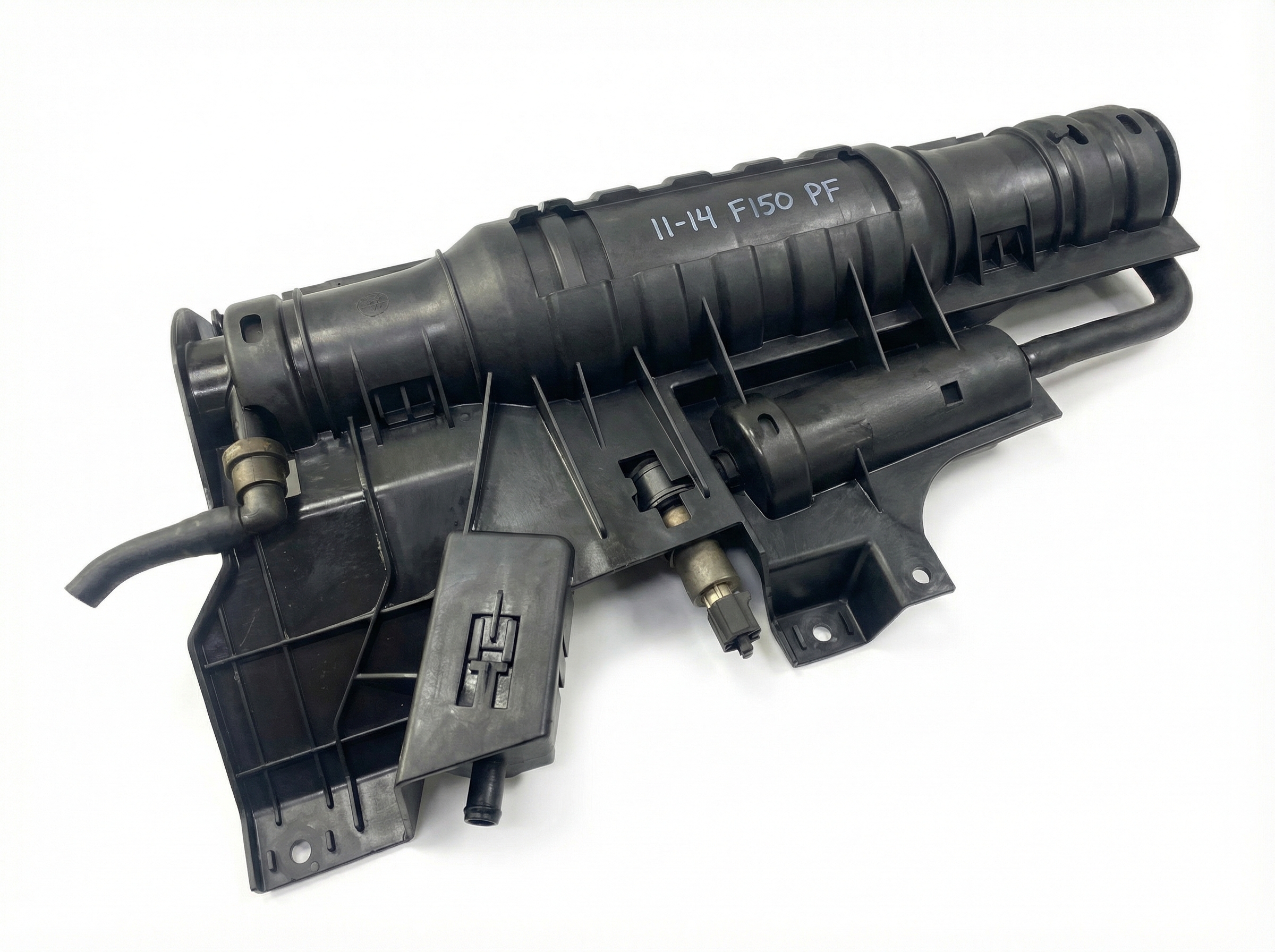
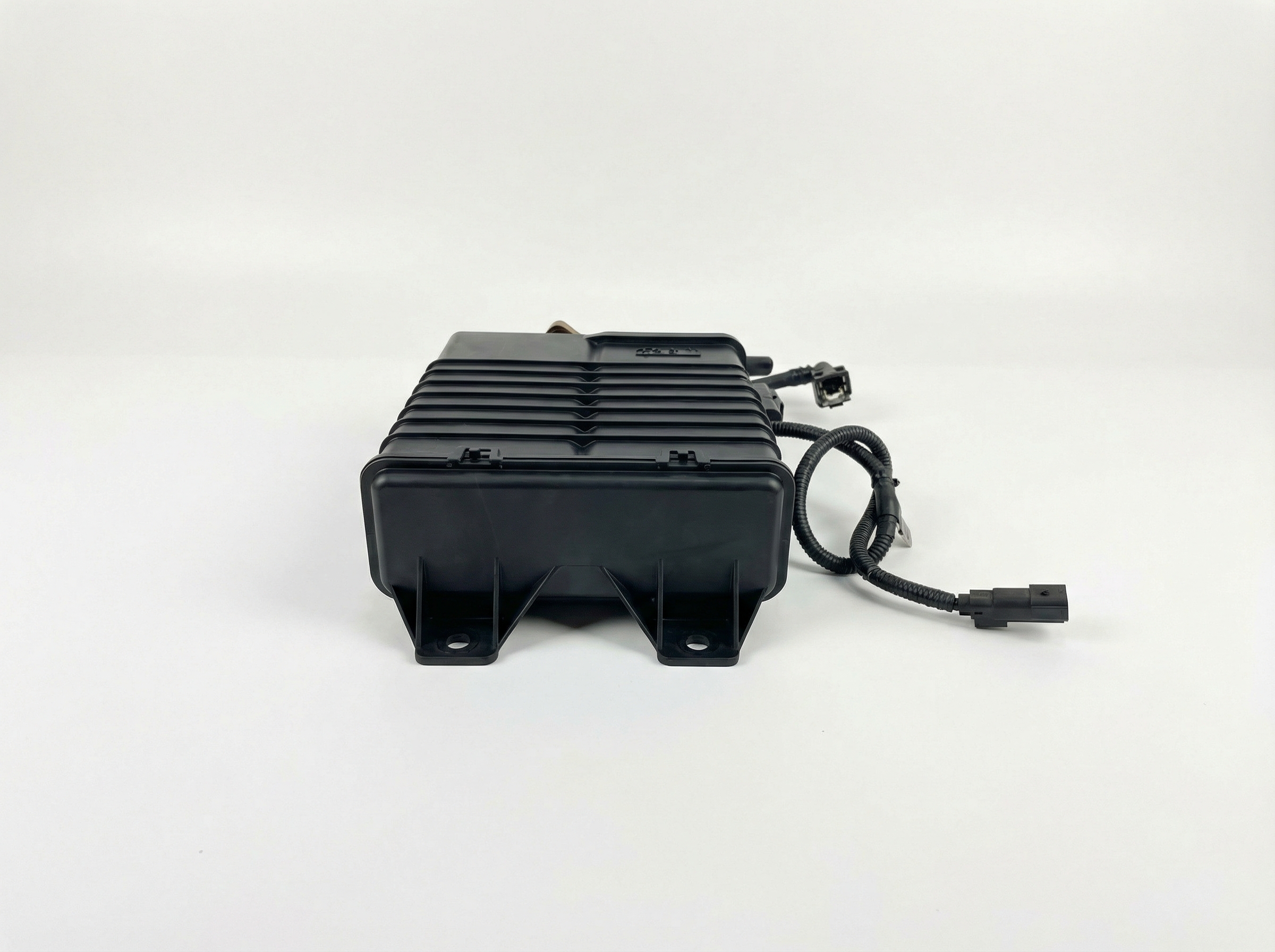
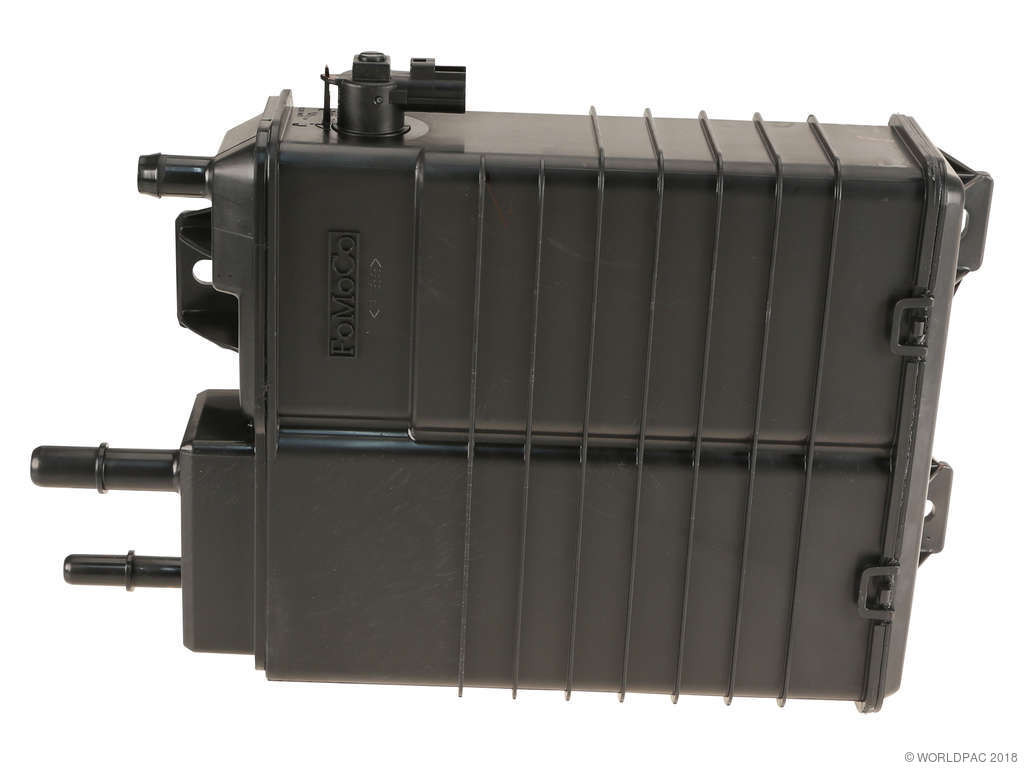
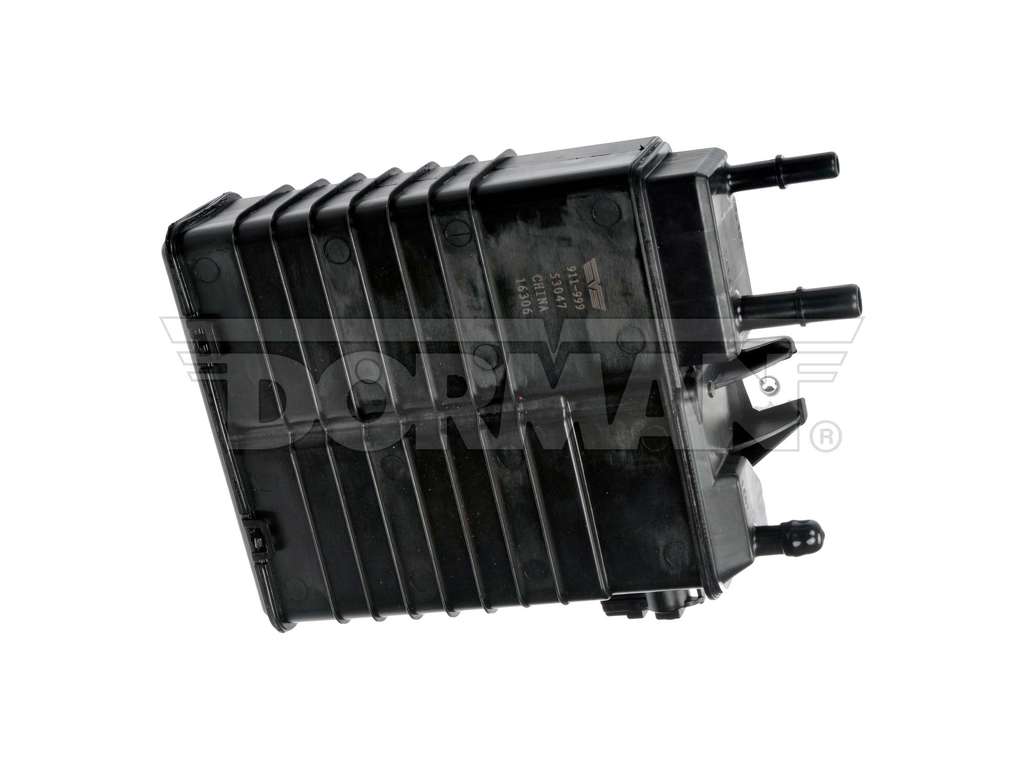
- Replacing the charcoal canister or vent solenoid. These components are part of the EVAP system but are located near the fuel tank and are related to different codes (e.g., P0446). P0443 specifically points to the purge valve *circuit* located on the engine.
Most Likely Causes
- Failed Vapor Canister Purge Valve/Solenoid 🔴 High Probability → Shop Vapor Canister The part is made of plastic and contains an electronic solenoid and valve that are subject to constant heat cycles and vibration, leading to eventual failure of the internal coil winding. It's a very common failure item on this and many other Ford vehicles.
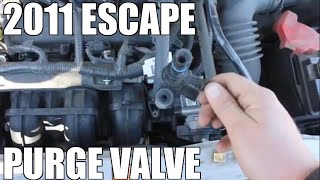
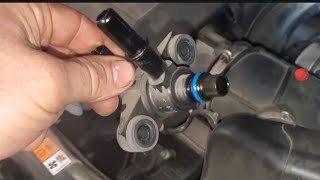
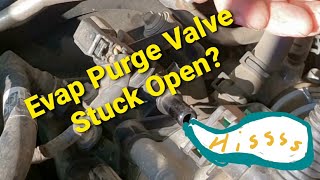
How to confirm: Locate the valve on the top, rear side of the engine. With the engine running, disconnect the electrical connector and the EVAP line from the valve. Place your finger over the inlet port; if you feel any vacuum suction, the valve is stuck partially open and has failed. 🎬 Watch: See how to test for a stuck open valve. A more definitive test is to check the resistance across the two pins on the valve with a multimeter; a reading outside the expected range (typically 20-30 ohms for Ford parts) or an open/short circuit indicates a failed solenoid. You can also command the valve to cycle using a capable scan tool and listen for clicking.
Typical fix: Replace the vapor canister purge valve assembly. The Motorcraft OEM part number is AU5Z-9C915-E, which supersedes previous part numbers.
Est. part cost: $25-$60 - Damaged Wiring or Connector ⚪ Low Probability While less common than valve failure, the wiring harness in the engine bay is exposed to heat and vibration, which can lead to chafing or broken wires over time. The connector pins can also corrode.
How to confirm: Visually inspect the electrical connector and wiring harness leading to the purge valve for any signs of cracking, fraying, or corrosion. Use a multimeter to check for battery voltage on one pin of the connector with the key on, engine off. The other wire is the ground-side control from the PCM; you can check for continuity back to the PCM if the power side is good.
Typical fix: Repair the damaged section of the wiring harness or clean/replace the electrical connector.
Est. part cost: $5-$25
Rare But Worth Checking
- Faulty Powertrain Control Module (PCM): → Shop Engine Control Module (ECM) This is extremely rare. The PCM driver that controls the purge valve can fail, but this should only be considered after the valve and its entire circuit have been tested and proven to be good. A PCM failure would likely be accompanied by other trouble codes.
Diagnosis Steps
- Scan the vehicle for trouble codes to confirm P0443 is the primary code present. 🎬 Watch: A professional mechanic's guide to P0443 diagnosis.
- Locate the vapor canister purge valve. On the 3.0L V6, it is mounted on the top, rear of the engine, near the firewall, often with two 8mm or 10mm bolts.
- Inspect the electrical connector and wiring going to the valve for any visible damage, corrosion, or loose connections.
- Test for a leaking valve (most common failure). With the engine running, disconnect the EVAP hose from the valve and place your finger over the port. If you feel any vacuum suction, the valve is mechanically failed and must be replaced.
- If no leak is present, test the electrical circuit. Disconnect the connector. With the key on, use a multimeter to confirm one wire has battery voltage. The other wire is the control wire from the PCM.
- Optional: Test the old valve's coil. Disconnect the electrical connector and use a multimeter to check the resistance between the two pins on the valve. An open circuit (infinite resistance) or short circuit (near-zero resistance) confirms the valve's electrical failure. A typical good reading is 20-30 Ohms.
- Replace the purge valve. It is held in place by two bolts (typically 8mm or 10mm) and has two push-connect hose fittings and one electrical connector. 🎬 Watch: See this quick and easy replacement walkthrough.
- After replacing the valve, clear the trouble code with a scan tool. Driving the vehicle through a complete drive cycle will allow the computer to re-run its self-tests and confirm the fix.
Parts You'll Likely Need
- Vapor Canister Purge Valve
(OEM #AU5Z-9C915-E (Motorcraft CX-2695). Supersedes: 9L8Z-9C915-A, AU5Z-9C915-A/B/C/D.)— This is the component that fails in over 90% of cases for a P0443 code on this vehicle. The internal solenoid coil fails electrically (open/short) or the valve fails mechanically (stuck open/closed).
Trusted brands: Motorcraft, Dorman, Standard Motor Products (SMP)
OEM price range: $50-$75
Aftermarket price range: $25-$60
Mechanic-Grade Diagnostic Values
- Vapor Canister Purge Valve Solenoid Resistance — expected: 20-30 Ohms. Failure: A reading outside of 15-35 Ohms, an open circuit (infinite resistance), or a short circuit (near-zero resistance) indicates a failed solenoid coil.
- Purge Valve Connector - Power Wire Voltage (Key On, Engine Off) — expected: Battery Voltage (approx. 12-14V). Failure: No voltage or low voltage points to a blown fuse or an open in the power supply wire (VPWR).
- Purge Valve Connector - Control Wire Voltage (Back-probed, Key On, Engine Off) — expected: Approximately battery voltage when the valve is commanded OFF (closed).. Failure: Voltage significantly lower than battery voltage suggests a short to ground in the control wire or a faulty PCM driver.
- Scan Tool PID: EVAPCP (EVAP Canister Purge Command) — expected: 0% when closed, duty cycle percentage increases as PCM commands it open.. Failure: A commanded percentage above 0% with no corresponding voltage drop on the control wire indicates a circuit or valve issue.
- Scan Tool PID: EVMV (EVAP Purge Valve Current) — expected: 0 mA when closed. Should rise towards 1,000 mA (1A) when commanded fully open.. Failure: No current draw when commanded open indicates an open circuit in the valve or wiring.
Scan Tool Commands That Help
- Ford IDS (or equivalent professional scanner): EVAP System Test / Active Test — This function allows the technician to manually command the purge valve (and vent valve) to open and close. By commanding the purge valve open while monitoring engine RPM or short-term fuel trim, a technician can confirm if the valve is physically responding to the PCM's command. A change in idle quality or fuel trim indicates the valve is opening. No change suggests the valve is stuck closed or the circuit is open.
Wiring & Ground Locations
- Purge Valve Connector Pin 1 (VPWR) — At the purge valve connector on top of the engine.. This is the power supply pin. On a 2008 Escape, this wire is typically Gray/Violet (GY/VT). It should have battery voltage with the key on. Lack of voltage points to a blown fuse (e.g., SJB Fuse 13) or a break in the power wire.
- Purge Valve Connector Pin 2 (EVAPCP / VMV) — At the purge valve connector on top of the engine.. This is the control circuit wire from the PCM. On a 2008 Escape, this wire is typically Brown/Yellow (BN/YE). The PCM grounds this wire with a duty cycle to open the valve. Testing here can identify an open/short in the control wire or confirm if the PCM driver is functioning.
- G109 / G110 — Rear of engine compartment, on the firewall, or left front corner of the engine compartment.. These are primary engine and PCM ground points. While not directly in the purge valve circuit, a corroded or loose main ground can cause a variety of intermittent electrical faults and codes, including P0443, due to floating voltages and poor PCM reference.
OEM Part Supersession History
9L8Z-9C915-A→AU5Z-9C915-A, B, C, D, and finally AU5Z-9C915-E— Standard part evolution for improved durability, material changes, or manufacturing process updates.
Heads up: All listed superseded part numbers are interchangeable with the latest AU5Z-9C915-E (also sold as Motorcraft CX-2695). There are no known incompatibilities for this specific application.
Model Year Variations Within This Range
- 2008-2012: There are no significant variations in the cause or repair for a P0443 code within this model year range for the 3.0L V6. The purge valve part number and location remain consistent.
Diagnostic Flowchart
Other Known Issues on This Vehicle
Issues unrelated to this code that are worth knowing about as an owner of this generation:
- Rear Shock Tower Rust 🔴 High — Extremely common in regions that use road salt. The upper mount for the rear shock absorber rusts through, causing the shock to detach from the body. Can occur after 8-10 years. (Ref: No TSB or recall, but widely documented. Aftermarket repair panels are readily available (e.g., Dorman 924-358).)
- 6F35 Automatic Transmission Failure 🔴 High — A significant number of owners report issues like harsh shifting, slipping, delayed engagement, or complete failure, sometimes at relatively low mileage (under 100k miles). (Ref: Multiple TSBs exist for related symptoms, such as TSB 16-0043 for a leaking axle seal and TSB 09-19-5 for certain shift solenoid codes.)
- Electronic Power Steering (EPS) Failure 🔴 High — Widespread issue leading to a sudden loss of power steering assist, making the vehicle difficult to steer at low speeds. (Ref: Subject to Ford Safety Recall 14S05, which involved a software update to the Power Steering Control Module (PSCM) and, in some cases, replacement of the steering column or torque sensor.)
- Leaking Driver's Side Axle Seal 🟠 Medium — Commonly reported on 2009-2012 models with the 6F35 transmission, causing a transmission fluid leak from the left side halfshaft seal. (Ref: Covered by Ford TSB 16-0043, which addresses wear on the transmission case bushing leading to the leak.)
- Cracked Front ABS Tone Ring 🟡 Low — The metal ring on the CV axle can crack or break due to corrosion, causing the ABS and Traction Control lights to illuminate and the ABS to activate erratically at low speeds.
Used vs. New Parts: Buying Guide for This Vehicle
When a used part is the smart pick: A used purge valve from a junkyard is a reasonable option for this repair, as it is an external, easily accessible, and low-cost component. The failure mode is typically electrical (solenoid burnout) or mechanical (stuck valve), which can sometimes be tested before purchase.
Donor-vehicle mileage cap: roughly under 80000 miles for the part to have meaningful remaining life.
What to inspect on the donor part:
- Check the plastic housing for cracks or signs of extreme heat stress.
- Ensure the electrical connector pins are clean, straight, and free of corrosion.
- If possible, bring a multimeter to the junkyard. A good valve should have a resistance of approximately 20-30 ohms between the two pins.
- Ask for the donor vehicle's mileage; lower is always better.
OEM-only on this vehicle (don't cheap out):
- Powertrain Control Module (PCM)
Aftermarket brands forum-validated for this vehicle:
- Motorcraft (OEM)
- Dorman
- Standard Motor Products (SMP)
Brands owners have reported issues with on this vehicle:
- No-name, unbranded parts from online marketplaces should be avoided as their internal coil quality and valve materials can be inconsistent, leading to premature failure.
Real Owner Stories
Aggregated from forums and TSBs cited above. Mileages and costs reflect what owners reported in those sources.
2010 Ford Escape 3.0L V6
Symptoms: Check engine light came on. Owner initially misdiagnosed the issue by pulling the EVAP canister assembly and testing the vent solenoid instead of the purge valve.
What fixed it: The owner was guided to focus on the purge valve circuit rather than the vent valve, as P0443 specifically indicates a purge valve circuit fault.
Source hint: Ford Truck Enthusiasts Forums
2003 Ford Escape
Symptoms: Check engine light with code P0443.
What fixed it: Replacing the canister purge solenoid.
Source hint: Reddit r/MechanicAdvice - '03 Ford Escape code P0443 troubleshooting.'
2008-2012 Ford Escape — ~100000 miles
Symptoms: Harsh shifting, slipping, or delayed engagement.
What fixed it: Repairs related to TSB 09-19-5 for shift solenoid codes or addressing 6F35 transmission failure.
Source hint: vehicle_specific_issues - 6F35 Automatic Transmission Failure
Documented NHTSA Reports
NHTSA ODI #11099930
Symptoms: An owner reported that the car suddenly loses power while driving, with the check engine light displaying codes P2112, P0443, and C1963. This issue occurred while driving at 55 MPH or higher.
NHTSA ODI #11633558
Symptoms: A diagnostic test revealed multiple default codes including P0443, P0456, and P1450. Upon inspection at a dealership, the diagnosis confirmed an issue related to the EVAP system line.
Related OBD-II Codes
Frequently Asked Questions
What is the specific Motorcraft replacement part number for the purge valve on my 3.0L V6 Escape?
Is there a recall for the power steering issues on the 2008-2012 Ford Escape?
I have a P0443 and a transmission leak on my 2009 Escape; is there a TSB for the leak?
Can I test the purge valve resistance myself with a multimeter?
My 2010 Escape is making a clicking noise near the engine; could this be the P0443 code?
Does the Mercury Mariner share the same EVAP components as my Ford Escape?
Helpful Videos
Used OEM Parts in Stock

New Aftermarket Parts Available


The information in this article is provided for general reference and educational purposes only. Vehicle specifications, procedures, and part compatibility can vary by production date, trim level, and region. Always consult your vehicle's factory service manual and verify part numbers before purchasing or performing repairs. Safety-critical components such as airbags, seat belts, and braking systems should be installed by a qualified professional.
- Ford Escape:
- 🧭 Diagnostic Flowchart
- 🎬 Helpful Videos
- 🛍️ Shop This Part
- What's Unique About the 2008-2012 Ford Escape
- Symptoms You May Notice
- Most Likely Causes
- Rare But Worth Checking
- Diagnosis Steps
- Parts You'll Likely Need
- Mechanic-Grade Diagnostic Values
- Scan Tool Commands That Help
- Wiring & Ground Locations
- OEM Part Supersession History
- Model Year Variations Within This Range
- Other Known Issues on This Vehicle
- Used vs. New Parts: Buying Guide for This Vehicle
- Real Owner Stories
- 2010 Ford Escape 3.0L V6
- 2003 Ford Escape
- 2008-2012 Ford Escape — ~100000 miles
- Documented NHTSA Reports
- NHTSA ODI #11099930
- NHTSA ODI #11633558
- Related OBD-II Codes
- Frequently Asked Questions
- 🎟️ Get 5% Off