

P0443 on 2011-2019 Ford Explorer: EVAP Purge Valve Circuit Causes and Fixes
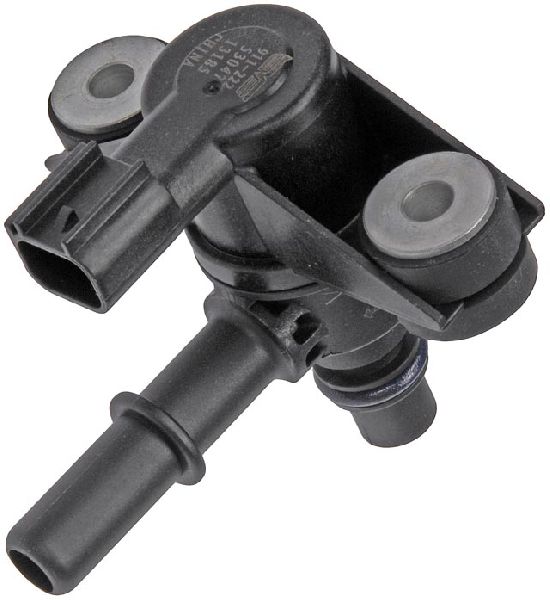
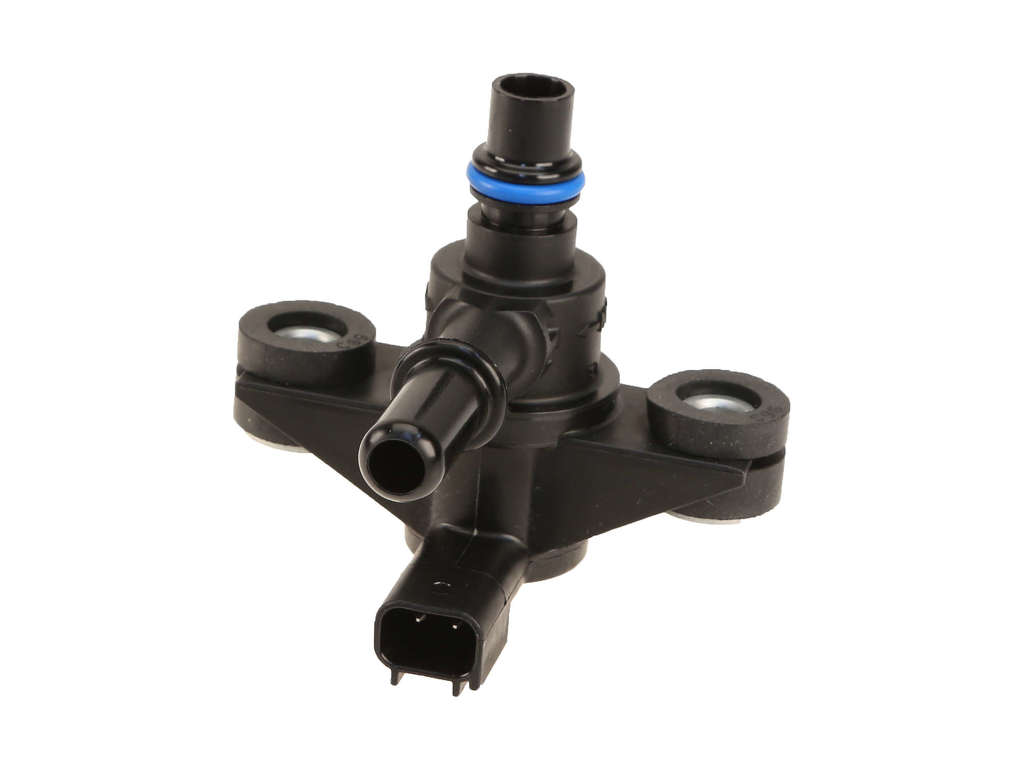
This code almost always points to a failed EVAP canister purge valve. It's an electrical circuit fault, not a leak. Replacing the valve is a common DIY fix, with the part costing between $30 and $80 for aftermarket and $55 to $150 for OEM Motorcraft. The valve is typically located on the engine's firewall or intake manifold.
- P0443 is an electrical circuit code for the EVAP purge valve, not a system leak code.
- The most likely cause is a failed purge valve solenoid, which is a common and relatively inexpensive part to replace.
- Before replacing the valve, always check the fuse and visually inspect the wiring harness for damage.
- Confirm the correct part number for your specific engine (3.5L V6 vs 2.3L EcoBoost) as they are different.
What's Unique About the 2011-2019 Ford Explorer
For the 2011-2019 fifth-generation Explorer, the P0443 code is a straightforward and very common issue. The primary cause is typically the purge valve solenoid itself failing electrically. While the underlying engines (3.5L V6, 2.3L EcoBoost, etc.) are used across many Ford models, the specific purge valve part number and its location on the engine can differ, so it's crucial to get the correct one for your Explorer's specific engine. For example, on the 3.5L V6, the valve is often found on the firewall, near the back of the engine.
🎬 Watch: Step-by-step purge valve replacement for the 3.5L V6 engine.Symptoms You May Notice
- Check Engine Light is on.
- Slightly rough idle or engine hesitation, particularly if the valve is stuck open.
- Difficulty starting the engine, especially after refueling.
- Potential for a faint fuel odor.
- Guaranteed failure of an emissions/smog test.
- Slightly reduced fuel economy.
- Inaccurate or erratic fuel gauge indication or distance to empty (DTE) readings, as noted in some Ford EVAP system failures (NHTSA ODI #11443669).
- Replacing the gas cap. A P0443 is a circuit code, not a leak code (like P0455 or P0456). A bad gas cap will not cause a P0443.
- Replacing other EVAP system components like the charcoal canister or vent solenoid. The code specifically points to the purge valve circuit, making the valve itself or its wiring the primary suspects.
Most Likely Causes
- Failed Canister Purge Valve (Solenoid) 🔴 High Probability → Shop Vapor Canister The purge valve is an electromechanical part that cycles continuously and is subject to heat and vibration in the engine bay, leading to eventual failure of its internal coil. It is a very common failure point on many Ford vehicles.
How to confirm: With a multimeter, disconnect the valve and measure the resistance across its two pins. A good valve should have a resistance between 30 and 38 ohms. An open circuit (infinite resistance) or a short (near-zero resistance) indicates a bad valve. You can also use a capable scan tool to command the valve to open and close while listening for an audible click. Another simple test is to remove the valve and try to blow through it; if air passes through when it's unpowered, it's stuck open and faulty. 🎬 See how to test your purge valve without any special tools.
Typical fix: Replace the canister purge valve assembly. This is the most common resolution for P0443.
Est. part cost: $30-$150 - Damaged Wiring or Electrical Connector 🟡 Medium Probability Engine bay wiring can become brittle over time from heat cycles or be damaged by rodents. The connector pins can also corrode. On some Ford platforms, wiring harnesses are known to chafe against other components, leading to shorts or open circuits.
How to confirm: Visually inspect the wiring harness leading to the purge valve for any signs of cracking, melting, or breaks. Unplug the connector and check for corrosion or bent pins. Use a multimeter to check for battery voltage on one wire and test for a pulsing ground signal from the PCM on the other wire with the key on and engine running (or using a scan tool to command the valve on).
Typical fix: Repair the damaged section of wire or replace the pigtail connector if it is corroded.
Est. part cost: $15-$40 - Blown Fuse ⚪ Low Probability
How to confirm: Consult your owner's manual to locate the fuse for the EVAP system or related emissions components. On a 2016 Explorer, for example, this might be fuse F47 in the under-hood fuse box. Visually inspect the fuse to see if it is blown.
Typical fix: Replace the blown fuse. If the new fuse blows immediately, it indicates a short circuit in the system that needs to be diagnosed.
Est. part cost: $1-$5
Rare But Worth Checking
- Faulty Powertrain Control Module (PCM): → Shop Engine Control Module (ECM) This is very rare. Before condemning the PCM, all other possibilities (valve, wiring, fuses) must be exhaustively ruled out. A failure of the internal driver circuit for the purge valve within the PCM can cause this code.
Diagnosis Steps
- Read the code with an OBD-II scanner to confirm P0443 and check for any other related codes like P0444 or P0445.
- Locate the canister purge valve in the engine bay. On the 3.5L V6, it's typically mounted on the firewall with two hoses and a two-wire electrical connector.
- Inspect the electrical connector and wiring harness for any visible damage, corrosion, or loose connections.
- Check the fuse for the EVAP system in the vehicle's fuse box (e.g., F47 in the engine bay fuse box for some models). Replace if blown.
- Disconnect the electrical connector. With the ignition on, use a multimeter to verify that one pin has battery voltage (power).
- Check the other pin for the ground signal from the PCM. A test light connected to battery positive should illuminate or flash when the PCM commands the valve on (using a scan tool's bidirectional control).
- If power and ground signals are correct, test the valve itself. Measure the resistance between the two pins on the valve. A reading between 30-38 ohms is expected. A reading of infinite resistance (open) or near-zero resistance (short) means the valve is bad and needs replacement.
- If the valve and wiring test good, the fault may be intermittent or, in very rare cases, an issue with the PCM driver circuit.
Parts You'll Likely Need
- Canister Purge Valve / Solenoid
(OEM #AU5Z-9C915-B (Common for 3.5L V6), FB5Z-9G271-A (Common for 2.3L EcoBoost))— This is the most common failure point for code P0443. The internal solenoid coil fails over time.
Trusted brands: Motorcraft, Dorman, Standard Motor Products 🎬 Watch this quick walkthrough of the 2014 Explorer solenoid replacement.
OEM price range: $55-$150
Aftermarket price range: $30-$80
Related Codes That Often Appear With This One
- P0444 — This code indicates 'Purge Control Valve Circuit Open,' which is a more specific version of the general P0443 fault.
- P0445 — This code indicates 'Purge Control Valve Circuit Shorted,' another specific fault that falls under the general P0443 category.
Technical Service Bulletins (TSBs) & Recalls
- While no TSB is directly for P0443 on the Explorer, TSB 16-0163 for the related Ford Transit Connect with a 2.5L engine notes that P0443 can be caused by the engine wiring harness chafing on the transmission housing. This highlights the possibility of wiring chafe as a root cause on other Ford platforms. Bulletin #TSB 16-0163 specifically instructs technicians to follow service procedure steps to correct conditions where P0443 is present alongside other circuit-related codes.
Platform-Specific Known Issues
- The specific part number for the purge valve varies by engine. Always verify the part with your vehicle's VIN.
- For the 3.5L Naturally Aspirated V6, a common part number is AU5Z-9C915-B (or superseding numbers like AU5Z-9C915-E).
- For the 2.3L EcoBoost I4, a common part number is FB5Z-9G271-A.
- For the 3.5L EcoBoost V6, the purge valve may be integrated with a hose assembly and have a different part number, such as those seen on the Taurus SHO or Flex EcoBoost.
Mechanic-Grade Diagnostic Values
- Purge Valve Solenoid Coil Resistance — expected: 30 to 38 Ohms. Failure: Infinite resistance (open) or near-zero resistance (short).
- Voltage at Purge Valve Connector (Power Pin) — expected: 9 to 14 Volts with ignition on. Failure: 0 volts indicates an open in the power supply circuit (VPWR) or a blown fuse.
- Ford IDS Scan Tool - Fuel Tank Pressure (FTP) Sensor Voltage (KOEO) — expected: Approximately 2.6 Volts (static, vented to atmosphere). Failure: A significant deviation may indicate a sensor issue, but for P0443, this value provides a baseline before commanding the purge valve.
Hidden / Shadow Codes Worth Checking
- Mode $06, Monitor ID $3C: This is not a shadow code but the onboard test results for the EVAP system. For Ford, this can show results for leak checks. While P0443 is a circuit code, reviewing these results can provide a complete picture of the EVAP system's health. For example, TID $81 and $82 relate to pressure and vacuum test results. (see via An advanced OBD-II scan tool with Mode $06 capability, or a professional tool like Ford IDS.)
Scan Tool Commands That Help
- Ford IDS (or FORScan): Powertrain -> DataLogger -> EVAP PIDs — This allows a technician to monitor live data PIDs such as EVAP Canister Purge Valve command (EVAPCV), EVAP Canister Purge Valve Fault (EVAPCVF), and Fuel Tank Pressure (FTP). This is critical for watching what the PCM is commanding versus what is actually happening in the circuit.
- Ford IDS (or FORScan): Active Command - EVAP Purge Solenoid (or Vapor Management Valve) — This bidirectional control allows the technician to manually command the purge valve open (e.g., by percentage or milliamps) and closed while the engine is running. While commanding it open, the technician should observe a drop in fuel tank pressure and see short-term fuel trims go negative (rich condition) as fuel vapors enter the intake. If the valve is commanded closed and pressure still drops, the valve is mechanically stuck open.
- Ford IDS: EVAP System Test — This is an automated test sequence run by the factory scan tool to check the entire EVAP system for leaks. While P0443 is a circuit code, running this test can be a final verification step after a repair to ensure the entire system is sealed and functioning correctly.
Wiring & Ground Locations
- Purge Valve Connector Pin 1 (Varies by engine/year) — On the purge valve electrical connector in the engine bay.. This pin should receive battery voltage (VPWR) from a fuse when the key is in the ON position. A lack of voltage points to a blown fuse or an open in the power supply wire.
- Purge Valve Connector Pin 2 (Varies by engine/year) — On the purge valve electrical connector in the engine bay.. This is the control circuit pin. The PCM provides a duty-cycled ground to this pin to operate the valve. Testing this pin with a test light connected to battery positive should show flashing as the PCM commands the valve. A constant light indicates a short to ground; no light indicates an open wire back to the PCM or a faulty PCM driver.
Real Owner Repair Stories
- Explorer ST Forum user (Ford Explorer ST (6th gen, but principle applies)) — Check Engine Light, P0443 code.
✅ What actually fixed it The user replaced the purge valve, but noted that the wiring harness to the solenoid was extremely short from the factory, making disconnection and reconnection very difficult. This points to a potential stress point on the wires or connector that could easily lead to a circuit fault if not handled carefully during service. - 2CarPros Forum User (2010 Ford Explorer V6) — Persistent P0443 code.
❌ Tried (didn't work) Replacing the purge valve.
✅ What actually fixed it The owner took the vehicle to a mechanic who diagnosed a faulty PCM. The owner sent the PCM for repair, but the repair shop stated the processor had a hard-coded fault and was non-repairable. The final fix required replacing the PCM. This is a rare but important confirmation that PCM driver failure can and does happen.
Documented NHTSA Reports
- An owner of a Ford vehicle reported that the check engine light came on frequently with code P0443, and the issue was found to be related to the EVAP purge control valve "A" circuit (NHTSA ODI #11725076).
- NHTSA ODI #11633558 describes a situation where a diagnostic test revealed multiple codes including P0443 and P0456, leading to an inspection that identified a disconnected line within the EVAP system.
- In NHTSA ODI #11427851, a vehicle exhibited an illuminated malfunction indicator lamp with several codes including P0443, P1450, and P0456.
OEM Part Supersession History
AU5Z-9C915-B→AU5Z-9C915-E— Standard part revision by Ford, likely for improved durability or material changes.
Heads up: The parts are directly interchangeable. AU5Z-9C915-E is the current service part for applications that originally used AU5Z-9C915-B.
Model Year Variations Within This Range
- 2016-2019: The introduction of the 2.3L EcoBoost engine in 2016 brought a different purge valve (Part # FB5Z-9G271-A) and hose assembly compared to the 3.5L V6. While the P0443 code's meaning is the same, the physical part and its location are engine-specific.
Diagnostic Flowchart
Other Known Issues on This Vehicle
Issues unrelated to this code that are worth knowing about as an owner of this generation:
- Internal Water Pump Failure (3.5L V6) 🔴 High — Commonly occurs between 80,000 and 150,000 miles. The pump is internal and chain-driven; failure can allow coolant to mix with engine oil, leading to catastrophic engine damage.
- Power Transfer Unit (PTU) Failure (AWD Models) 🔴 High — Widespread issue. The PTU is located next to the hot exhaust, causing its fluid to overheat and break down, leading to gear and bearing failure. Ford considered the fluid 'lifetime' with no drain plug, exacerbating the problem.
- Exhaust Odor / Carbon Monoxide In Cabin 🔴 High — Prominent on 2016-2017 models, leading to a class-action lawsuit. Cracks or gaps in the rear of the vehicle could allow exhaust fumes to be drawn into the cabin, especially under hard acceleration. (Ref: TSB 17-0044, Field Service Actions 17N03 & 19N05)
- Electronic Throttle Body Malfunction 🟠 Medium — Common on fifth-generation models, causing the vehicle to unexpectedly enter 'limp mode' with reduced power. (Ref: Ford offered extended warranties for this part on some model years.)
- MyFord Touch / SYNC System Glitches 🟡 Low — Very common on earlier models (2011-2015). The infotainment system is prone to freezing, lagging, and unresponsiveness. (Ref: Multiple software updates were released to improve performance.)
- Rear Suspension Toe Link Fractures 🔴 High — Affected 2011-2017 models, leading to a recall. The rear toe links could fracture, causing a loss of steering control. (Ref: Ford Recall 19S17)
Used vs. New Parts: Buying Guide for This Vehicle
When a used part is the smart pick: A used OEM (Motorcraft) purge valve from a low-mileage donor vehicle is a reasonable choice for this repair. The part is not safety-critical, is external to the engine/transmission, and does not require programming. It is a simple electromechanical solenoid.
Donor-vehicle mileage cap: roughly under 60000 miles for the part to have meaningful remaining life.
What to inspect on the donor part:
- Ensure the plastic housing is not cracked or brittle.
- Check that the electrical connector pins are clean, straight, and free of corrosion.
- Verify the hose connection ports are not broken or cracked.
- If possible, test the resistance with a multimeter before purchase; it should be between 30-38 ohms.
OEM-only on this vehicle (don't cheap out):
- Powertrain Control Module (PCM) - Due to programming requirements (PATS, VIN), a new or professionally refurbished and programmed unit is necessary.
Aftermarket brands forum-validated for this vehicle:
- Motorcraft (OEM)
- Standard Motor Products (SMP)
Brands owners have reported issues with on this vehicle:
- Dorman: While widely available and often functional, some owners report premature failure compared to the original OEM part, potentially requiring the job to be done a second time.
Real Owner Stories
Aggregated from forums and TSBs cited above. Mileages and costs reflect what owners reported in those sources.
Ford Explorer 3.5L V6
Symptoms: The Check Engine Light was on and the vehicle was experiencing a rough idle and engine hesitation.
What fixed it: Replacement of the canister purge valve assembly.
Source hint: YouTube - 'ENGINE LIGHT ON CODE P0443 P0444 FIX FORD EDGE, LINCOLN MKX'
2016 Ford Explorer
Symptoms: P0443 code present; owner checked the EVAP system fuse.
What fixed it: Replacing the blown F47 fuse in the under-hood fuse box.
Source hint: common_causes - Blown Fuse section
Ford Owner Report
Symptoms: An owner reported that the check engine light would come on often due to issues while getting fuel (NHTSA ODI #11725076).
What fixed it: Diagnosis confirmed a P0443 EVAP purge control valve "A" circuit fault.
Related OBD-II Codes
Frequently Asked Questions
What is the correct resistance for the purge valve on my Ford Explorer to confirm it's bad?
Where is the canister purge valve located on the 3.5L V6 Explorer?
Which fuse should I check for P0443 on a 2016 Ford Explorer?
Is there a specific part number I should look for when replacing the valve on a 3.5L Naturally Aspirated V6?
Could my P0443 code be caused by wiring issues rather than the valve itself?
Does the 2.3L EcoBoost Explorer use the same purge valve as the 3.5L?
Helpful Videos
Used OEM Parts in Stock
New Aftermarket Parts Available


The information in this article is provided for general reference and educational purposes only. Vehicle specifications, procedures, and part compatibility can vary by production date, trim level, and region. Always consult your vehicle's factory service manual and verify part numbers before purchasing or performing repairs. Safety-critical components such as airbags, seat belts, and braking systems should be installed by a qualified professional.
- Ford Explorer:
- 🧭 Diagnostic Flowchart
- 🎬 Helpful Videos
- 🛍️ Shop This Part
- What's Unique About the 2011-2019 Ford Explorer
- Symptoms You May Notice
- Most Likely Causes
- Rare But Worth Checking
- Diagnosis Steps
- Parts You'll Likely Need
- Related Codes That Often Appear With This One
- Technical Service Bulletins (TSBs) & Recalls
- Platform-Specific Known Issues
- Mechanic-Grade Diagnostic Values
- Hidden / Shadow Codes Worth Checking
- Scan Tool Commands That Help
- Wiring & Ground Locations
- Real Owner Repair Stories
- Documented NHTSA Reports
- OEM Part Supersession History
- Model Year Variations Within This Range
- Other Known Issues on This Vehicle
- Used vs. New Parts: Buying Guide for This Vehicle
- Real Owner Stories
- Ford Explorer 3.5L V6
- 2016 Ford Explorer
- Ford Owner Report
- Related OBD-II Codes
- Frequently Asked Questions
- 🎟️ Get 5% Off