

P0443 on 2015-2020 Ford F-150: EVAP Purge Valve Circuit Causes and Fixes
On a 2015-2020 F-150, code P0443 almost always means the EVAP purge valve (or solenoid) has failed. It's an electrical circuit code, not a leak. Before replacing the valve, check for a blown fuse, especially if other codes are present. The part costs $30-$80 aftermarket and is a simple DIY fix.
- P0443 is an electrical circuit code, not a leak code. The most likely culprit is the purge valve itself.
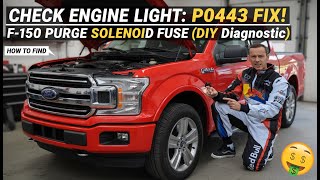
- If you see P0443 with a cluster of other circuit codes (P0010, P0135, etc.), check for a blown fuse first. On a 2016 F-150, this is likely fuse F95.
- The repair is very DIY-friendly, often taking less than 30 minutes with basic tools.
- Symptoms can include a rough idle or trouble starting after getting gas, in addition to the check engine light.
What's Unique About the 2015-2020 Ford F-150
For the 13th generation F-150 (2015-2020), the EVAP purge valve is a very common failure point across all engine options (2.7L/3.5L EcoBoost, 5.0L V8, 3.3L V6). Owners frequently report this code, which can sometimes lead to rough idling or difficulty starting after refueling if the valve sticks open. A key issue found on these trucks is that a shorted purge valve can blow a shared fuse, triggering other circuit-related engine codes simultaneously. Diagnosing this shared fuse first can save significant time and money.
Symptoms You May Notice
- Check Engine Light is on
- Slightly rough or unstable idle
- Difficulty starting the engine immediately after filling the gas tank
- Reduced fuel economy
- A faint fuel odor near the engine (less common)
- Audible rapid clicking or ticking noise from the purge valve solenoid itself.
- Inaccurate or erratic fuel gauge indication or inaccurate distance to empty (DTE) readings, as noted in NHTSA ODI #11443669.
- Replacing the gas cap. A bad gas cap causes EVAP leak codes (like P0455 or P0457), not a circuit code like P0443.
- Performing a smoke test. P0443 is an electrical fault. A smoke test is used to find physical leaks in the EVAP system and is not the correct diagnostic procedure for this code.
Most Likely Causes
- Faulty EVAP Purge Valve/Solenoid 🔴 High Probability → Shop Vapor Canister The purge valve is located on the engine and is subject to constant heat and vibration, leading to the internal solenoid coil failing over time. It is a widely reported failure item on this F-150 generation and related Ford platforms.
How to confirm: With the engine running, disconnect the EVAP line from the purge valve. If you can feel vacuum suction from the valve's port when its electrical connector is unplugged, the valve is stuck open and has failed. Alternatively, a multimeter can be used to check the resistance across the valve's two pins; an open circuit (infinite resistance) or a short (near-zero resistance) indicates failure. A good valve typically has a resistance between 22-30 ohms.
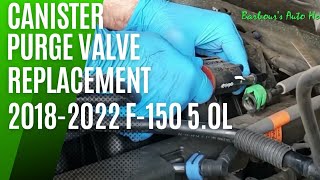
Typical fix: Replace the EVAP purge valve assembly. This is typically a simple, plug-and-play replacement requiring no special tools. 🎬 Watch: Step-by-step purge valve replacement on a 5.0L F-150
Est. part cost: $30 - $150 - Blown Fuse 🟡 Medium Probability On the F-150, the purge valve circuit often shares a fuse with other components like the VCT solenoids and O2 sensor heaters. A short in any of these components can blow the shared fuse, causing multiple circuit codes at once.
How to confirm: If P0443 appears with other circuit codes (like P0010, P0013, P0135), inspect the fuses in the under-hood fuse box. On 2015-2017 models, fuse F95 (a 25A fuse) has been identified as a common culprit in forum discussions. Always check your owner's manual for the correct fuse location for your specific year and engine, as it can vary.
Typical fix: Replace the blown fuse. If the fuse blows again immediately, one of the components on that circuit (most likely the purge valve) has an internal short and needs to be replaced.
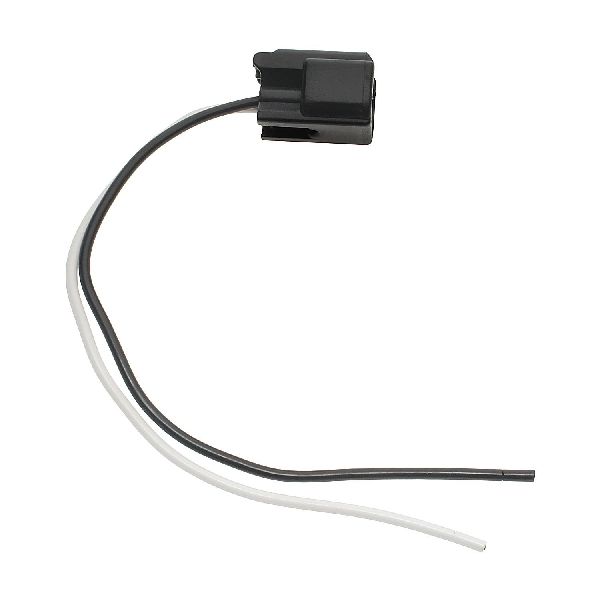
Est. part cost: $1 - $5 - Damaged Wiring or Electrical Connector ⚪ Low Probability The wiring harness in the engine bay is exposed to heat and potential rodent damage. The plastic wire loom can become brittle, and mice or rats are known to chew through the wires leading to the purge valve.
How to confirm: Visually inspect the wires leading to the purge valve for any signs of chafing, melting, or chew marks. Unplug the connector and check for corrosion (green or white powder) or damage on the pins and terminals.
Typical fix: Repair the damaged section of wire or replace the connector pigtail.
Est. part cost: $10 - $30
Rare But Worth Checking
- Faulty Powertrain Control Module (PCM): → Shop Engine Control Module (ECM) This is extremely rare. The PCM's internal driver for the purge valve circuit can fail, often damaged by a shorted-out purge valve. This should only be considered after all other possibilities (valve, wiring, fuses) have been definitively ruled out by a professional.
Diagnosis Steps
- Read the codes with an OBD-II scanner. Note if any other codes are present.
- If multiple circuit codes are present (see 'Often Seen With Codes'), immediately inspect the fuses in the under-hood fuse box. Check your owner's manual for the fuse that powers the 'EVAP Canister Purge Valve' and other related components. For a 2016 model, this is often fuse F95. Replace if blown and re-test.
- Locate the purge valve on the engine, typically on or near the intake manifold.
- Visually inspect the electrical connector and wiring going to the valve. Look for obvious damage like melted wires, corrosion, or signs of rodents.
- With the ignition on and engine off, use a multimeter to check for battery voltage at one of the pins on the electrical connector (harness side).
- Check the other pin for a ground signal from the PCM. You can do this with a scan tool that can command the purge valve to open and close, watching the signal on the multimeter.
- If power and ground signals are present and correct, the wiring and PCM are likely okay, and the purge valve itself has failed.
- If power is missing, trace the circuit back to the fuse box to find the open wire.
Parts You'll Likely Need
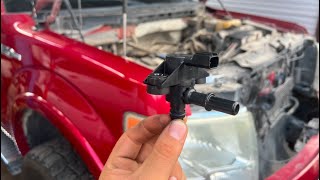
- Vapor Canister Purge Valve / Solenoid
(OEM #JL3Z-9B325-B (replaces older numbers like CX2626))— This is the most common failure for code P0443. The internal solenoid coil fails electrically or the valve becomes stuck.
Trusted brands: Motorcraft, Dorman, Standard Motor Products
OEM price range: $70-$150
Aftermarket price range: $30-$80
Related Codes That Often Appear With This One
- P1450 — This code for 'Unable to Bleed Up Fuel Tank Vacuum' is often caused by a purge valve that is stuck open, a common failure mode that also triggers P0443.
- P0010, P0013, P0020, P0023, P0135, P0141 — These are circuit codes for VCT solenoids and O2 sensor heaters. If they appear with P0443, it strongly indicates a blown fuse that is common to all of these components.
Technical Service Bulletins (TSBs) & Recalls
- TSB 19-2132: Not a direct fix for P0443, but addresses potentially loose EVAP line connections on 2018-2019 2.7L/3.5L EcoBoost engines that can cause other EVAP codes.
- Bulletin #TSB 16-0163: A manufacturer service bulletin notes that P0443 can appear alongside a wide range of other codes including P0010, P0135, and P0141, requiring specific service procedure steps to correct the condition.
Platform-Specific Known Issues
- On 2.7L and 3.5L EcoBoost engines, Ford issued TSB 19-2132 for different EVAP codes (P04F0, P144C) caused by loose EVAP vapor lines. While not for P0443, it highlights that EVAP line connections can be a sensitive point on these engines, so it's wise to ensure all connections are secure when working in the area.
- The shared fuse issue is particularly well-documented on 3.5L EcoBoost models from 2016, where a shorted purge valve blows fuse F95 and triggers a cascade of other circuit codes for VCT solenoids and O2 heaters.
Documented NHTSA Reports
- NHTSA ODI #11725076 describes an instance where the check engine light comes on frequently for code P0443, specifically citing the EVAP purge control valve "a" circuit.
- An owner reported in NHTSA ODI #11633558 that a diagnostic test revealed multiple codes including P0443, P1450, and P0299, which led to a diagnosis of an EVAP system related disconnect on the line.
- NHTSA ODI #11427851 notes that a vehicle exhibited an illuminated malfunction indicator lamp with a cluster of codes including P0443, P1450, P0456, and P0460.
Mechanic-Grade Diagnostic Values
- Canister Purge Valve Solenoid Resistance — expected: 22 to 30 ohms. Failure: A reading near zero ohms (shorted) or infinite/OL (open circuit) indicates a faulty valve coil.
- Scan Tool PID: EVAPCP (EVAP Canister Purge) — expected: 0% duty cycle when commanded closed; 100% duty cycle when commanded fully open.. Failure: The PCM logs P0443 if the commanded state and the circuit's feedback do not match.
- Purge Valve Connector Voltage (Control Wire) — expected: Approximately battery voltage when valve is commanded OFF. Near 0 volts when valve is commanded ON.. Failure: No voltage change when commanded, or voltage that never reaches near-zero, points to a wiring or PCM driver issue.
- Purge Valve Connector Voltage (Power Wire) — expected: Battery voltage (~12V) with Key On, Engine Off.. Failure: No voltage indicates a blown fuse or an open in the power supply wire.
Scan Tool Commands That Help
- Ford IDS, FORScan, or equivalent professional scanner: EVAP Purge Test / Vapor Management Valve Active Command — This bidirectional control is used to command the purge valve solenoid on and off to verify functionality. While commanding the valve open and closed, a technician can check for an audible click from the valve and monitor voltage changes on the control circuit with a multimeter to confirm the PCM driver and wiring are working correctly.
Wiring & Ground Locations
- Fuse F95 (Under-hood) — In the under-hood fuse box (Battery Junction Box), in the row closest to the fender, second fuse up from the bottom on 2015-2017 models.. This 25A fuse often powers the purge valve, VCT solenoids, and O2 sensor heaters. A short in the purge valve is known to blow this fuse, causing P0443 along with a cluster of other circuit codes.
- G104 (Ground) — A primary PCM/engine ground point. Depending on the engine, it can be found on the top right of the cowl area or on the driver's side fender apron, near the battery.. A poor connection at this critical ground can cause erratic voltage signals throughout the powertrain control system, potentially leading the PCM to misinterpret the purge valve circuit's status and set a false P0443.
- Body-to-Frame Ground Strap — Underneath the truck, often below the passenger side door area, connecting the cab body to the frame.. This ground is known to corrode and fail, especially in salt-belt regions. While not directly tied to the purge valve circuit, its failure can cause widespread, difficult-to-diagnose electrical issues that could potentially manifest as various circuit codes.
Real Owner Repair Stories
- f150forum.com user report (2016 Ford F-150 XLT 3.5L EcoBoost) — Sluggishness, lack of acceleration, and a Check Engine Light with codes P0443, P0010, P0013, P0020, P0023, P0135 & P0141.
❌ Tried (didn't work) Replaced the EVAP purge valve.
✅ What actually fixed it The combination of multiple circuit codes pointed to a power supply issue. The actual cause was a single blown 25A fuse in position F95 in the under-hood fuse box. Replacing the fuse resolved all codes.
OEM Part Supersession History
GL3Z-9B325-B→N/A - This is a valid part for specific models.— Part for 2.7L EcoBoost models.
Heads up: This part number is specific to certain engines like the 2.7L EcoBoost and should not be confused with parts for the 5.0L or 3.3L.CX2582, EU5Z9C915B→JL3Z-9B325-B— Part number consolidation and design updates.
Heads up: JL3Z-9B325-B is specified for 2018-2020 models with the 5.0L and 3.3L engines. Using an older part number may result in fitment or performance issues.CX2626 (Motorcraft)→Varies by application— This is a general Motorcraft service part number that covers many Ford vehicles and cross-references to multiple OEM numbers.
Heads up: While it may be listed as compatible, it's critical to verify the specific OEM part number for your truck's exact year and engine before purchasing a service part like this.
Model Year Variations Within This Range
- 2015-2017 vs 2018-2020: The OEM part number for the purge valve can differ based on the engine and model year. For example, a 2015 2.7L may use GL3Z-9B325-B, while a 2018 5.0L uses JL3Z-9B325-B. Always verify the part number with the vehicle's VIN.
- 2015-2017: The location of the shared fuse for the purge valve circuit (F95 in the under-hood fuse box) is well-documented for these years. While it may be the same for later years, fuse box layouts can change with vehicle updates, so consulting the owner's manual is essential for 2018-2020 models.
Diagnostic Flowchart
Other Known Issues on This Vehicle
Issues unrelated to this code that are worth knowing about as an owner of this generation:
- 10R80 Transmission Harsh/Erratic Shifting 🟠 Medium — Very common on 2017-2020 models. Can occur at any mileage. (Ref: Multiple TSBs issued, including 18-2274, 23-2123, and others, which often involve a PCM re-flash or main control valve body overhaul.)
- Excessive Oil Consumption on 5.0L V8 🟠 Medium — Common on 2018-2020 models. Some owners report consumption of 1 quart per 3,000 miles or less. (Ref: TSB 19-2365 was issued to address this by reprogramming the PCM to reduce engine vacuum during deceleration and, in some cases, installing a new dipstick.)
- Frozen Door Latches in Cold Weather 🔴 High — Widespread on 2015-2018 models, leading to doors not opening or not latching shut in freezing temperatures. (Ref: Customer Satisfaction Program 18N03 was issued to install additional sealing and lubricate components. This was an extension of a prior recall.)
- Warped Dashboard 🟡 Low — Common cosmetic issue, especially on trucks exposed to high heat and sun. The dash panel can lift and create gaps near the windshield defrost vents.
- Panoramic Sunroof Drain Tube Clogs 🟠 Medium — Affects models with the optional panoramic sunroof. Clogged drains can lead to water leaking into the cabin, staining the headliner and potentially damaging electronics.
- 3.5L EcoBoost Timing Chain Rattle on Cold Start 🔴 High — More common on earlier 2015-2016 models. Caused by stretched timing chains or faulty phasers, requiring an expensive repair. (Ref: TSB 16-0027 (and others) addressed this issue, often requiring replacement of chains, tensioners, and VCT phasers.)
Used vs. New Parts: Buying Guide for This Vehicle
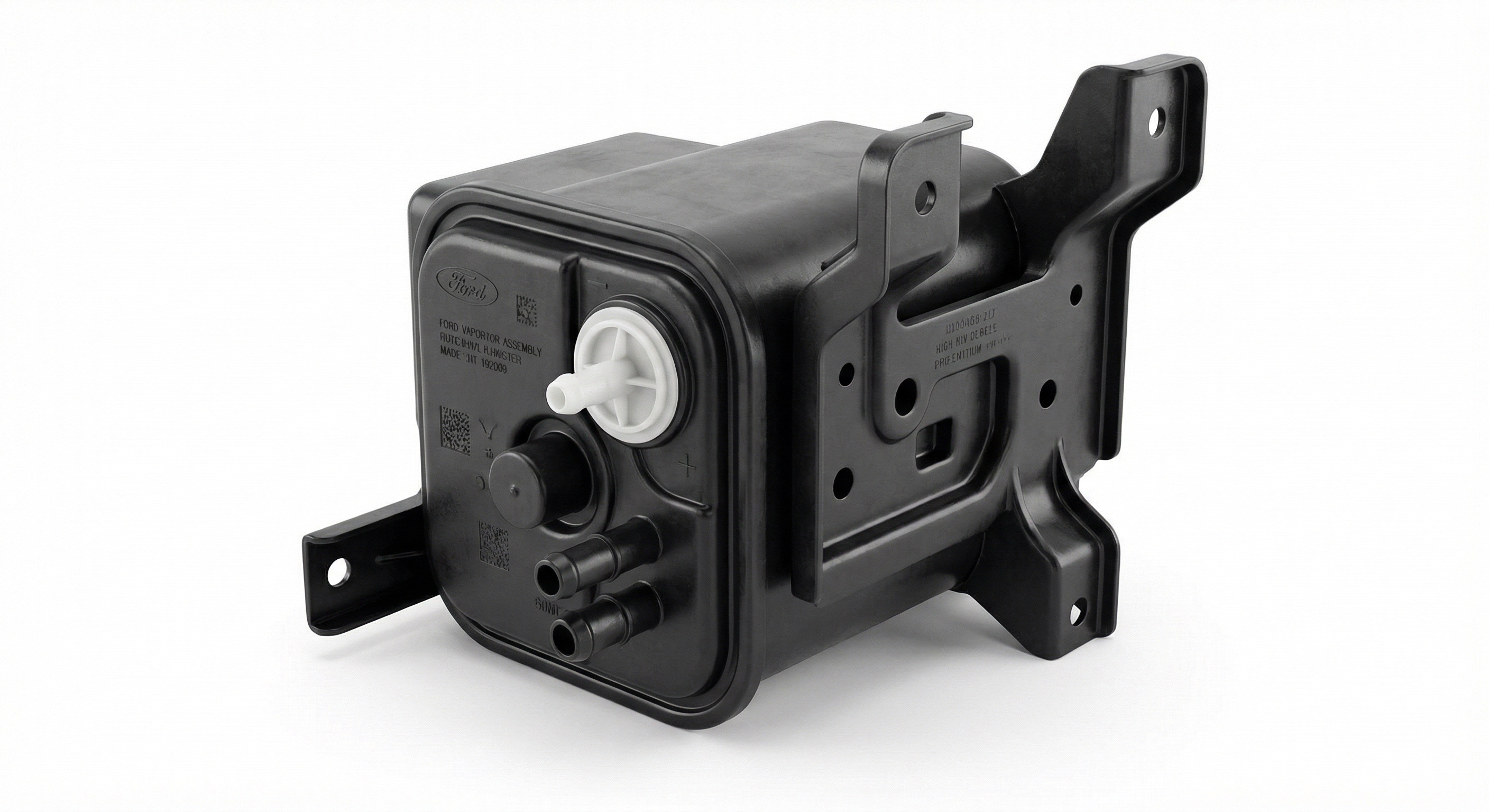
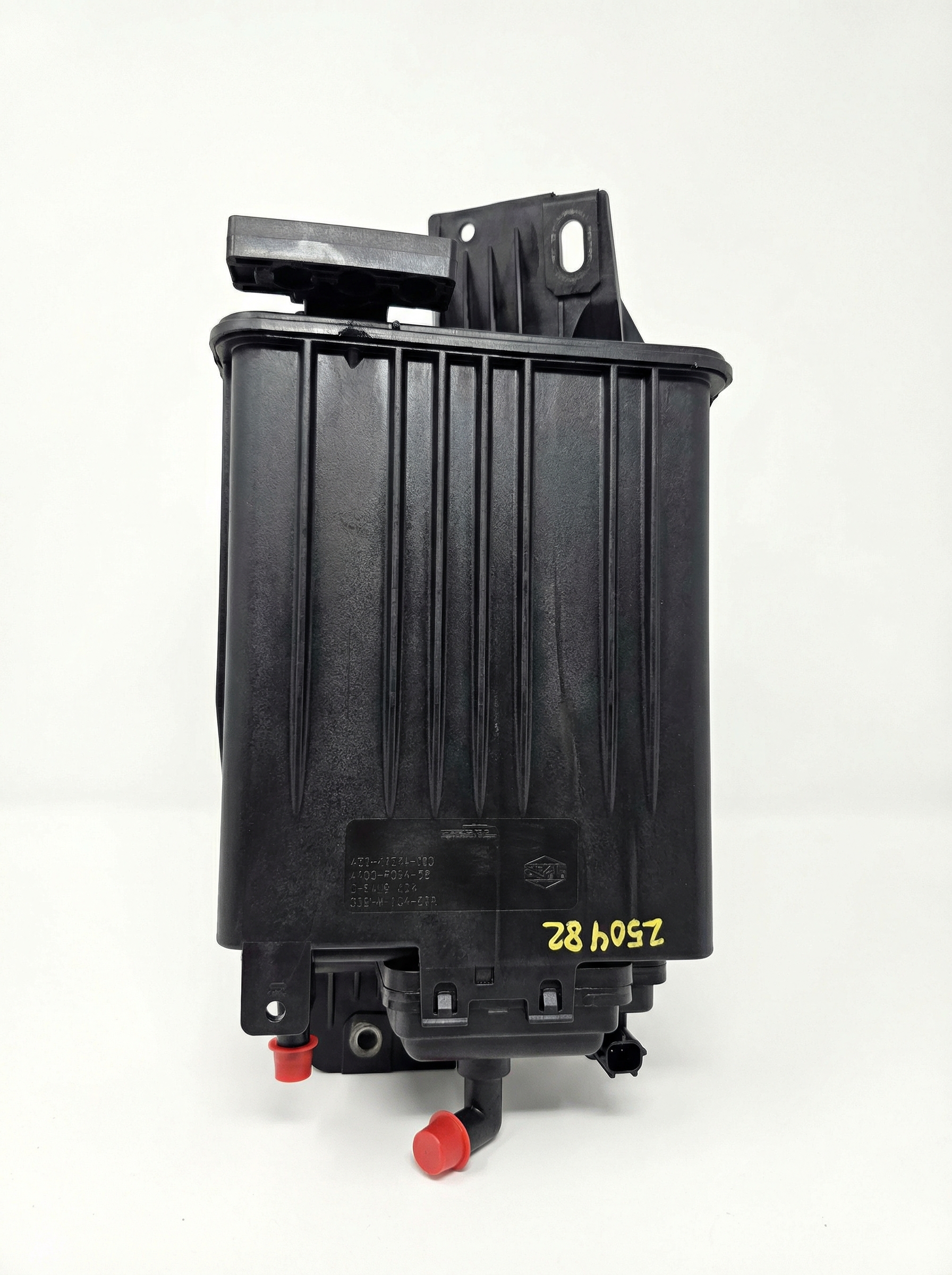
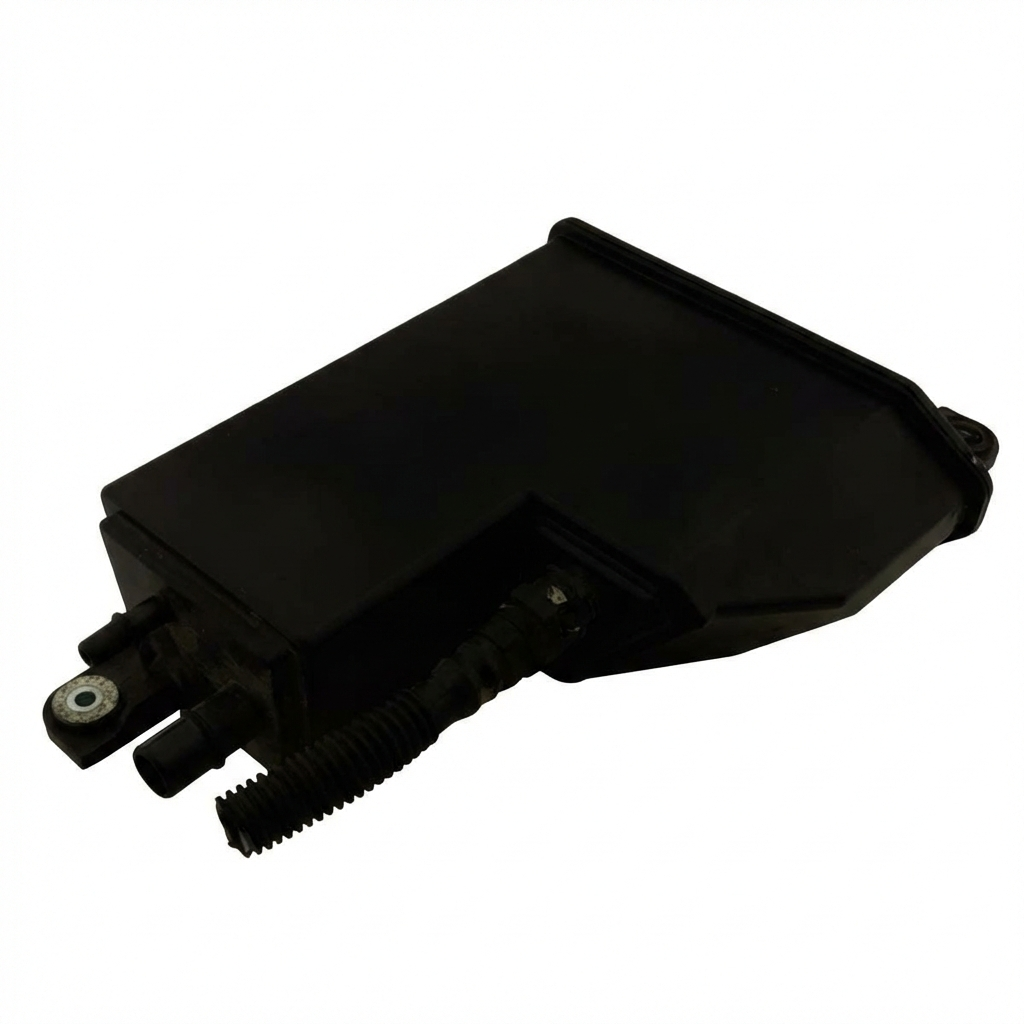
When a used part is the smart pick: A used OEM purge valve from a reputable salvage yard is a reasonable choice for this repair. The part is external to the engine, easy to access, and significantly cheaper than a new OEM part. Given the high failure rate, it's a low-risk gamble for a budget-conscious DIY repair.
Donor-vehicle mileage cap: roughly under 60000 miles for the part to have meaningful remaining life.
What to inspect on the donor part:
- Check for a clean, corrosion-free electrical connector.
- Inspect the plastic housing for any cracks or signs of heat damage.
- Ensure the hose connection nipples are not broken or brittle.
- If possible, ask for the donor vehicle's mileage and avoid parts from high-mileage trucks.
OEM-only on this vehicle (don't cheap out):
- For this specific P0443 repair, no parts are considered 'OEM-only'. Aftermarket solutions are widely available and used.
Aftermarket brands forum-validated for this vehicle:
- Motorcraft (OEM supplier)
- Dorman
- Standard Motor Products (SMP)
Real Owner Stories
Aggregated from forums and TSBs cited above. Mileages and costs reflect what owners reported in those sources.
2016 Ford F-150 3.5L EcoBoost
Symptoms: P0443 present along with multiple other circuit codes.
What fixed it: Replacement of a blown 25A fuse in position F95.
Source hint: f150forum.com: A thread titled 'Code P0443' from December 2025
2009 Ford F-150
Symptoms: P0443 code triggered by electrical fault.
What fixed it: Repairing a wire that a mouse had chewed through inside the plastic loom.
Source hint: f150forum.com: In a thread titled '09 F150 P0443 Code'
1999 Ford F-150
Symptoms: P0443 code; required advanced circuit diagnostics.
What fixed it: Checking for shorts to ground and continuity back to the PCM connector to resolve the electrical fault.
Source hint: ford-trucks.com: A user with a 99 F-150 and code P0443
Related OBD-II Codes
Frequently Asked Questions
Does TSB 19-2132 for the 2.7L and 3.5L EcoBoost engines fix the P0443 code?
Why am I seeing P0443 along with P0010, P0013, and P0135 on my 2016 F-150?
Which fuse should I check for a P0443 code on a 2015-2017 Ford F-150?
Can a faulty purge valve cause my F-150 to stall or have a rough idle even without a code?
Is the P0443 code on my 5.0L V8 F-150 a common issue?
Helpful Videos
Used OEM Parts in Stock
New Aftermarket Parts Available


The information in this article is provided for general reference and educational purposes only. Vehicle specifications, procedures, and part compatibility can vary by production date, trim level, and region. Always consult your vehicle's factory service manual and verify part numbers before purchasing or performing repairs. Safety-critical components such as airbags, seat belts, and braking systems should be installed by a qualified professional.
- Ford F-150:
- 🧭 Diagnostic Flowchart
- 🎬 Helpful Videos
- 🛍️ Shop This Part
- What's Unique About the 2015-2020 Ford F-150
- Symptoms You May Notice
- Most Likely Causes
- Rare But Worth Checking
- Diagnosis Steps
- Parts You'll Likely Need
- Related Codes That Often Appear With This One
- Technical Service Bulletins (TSBs) & Recalls
- Platform-Specific Known Issues
- Documented NHTSA Reports
- Mechanic-Grade Diagnostic Values
- Scan Tool Commands That Help
- Wiring & Ground Locations
- Real Owner Repair Stories
- OEM Part Supersession History
- Model Year Variations Within This Range
- Other Known Issues on This Vehicle
- Used vs. New Parts: Buying Guide for This Vehicle
- Real Owner Stories
- 2016 Ford F-150 3.5L EcoBoost
- 2009 Ford F-150
- 1999 Ford F-150
- Related OBD-II Codes
- Frequently Asked Questions
- 🎟️ Get 5% Off