

P0443 on 2005-2007 Ford Five Hundred: EVAP Purge Valve Circuit Fixes
On a 2005-2007 Ford Five Hundred, code P0443 almost always points to a failed EVAP canister purge valve. This is an inexpensive part, typically costing $25-$65 for an aftermarket replacement, and is relatively easy to replace for a DIYer. The valve is located near the firewall on the passenger side of the engine bay.
- P0443 on a 2005-2007 Ford Five Hundred is an electrical fault in the EVAP purge valve circuit.
- The most probable cause is a failed purge valve solenoid, which is an affordable and easy part to replace, located on the passenger-side firewall.
- Diagnosis involves a simple visual inspection of wires and a resistance check of the valve with a multimeter.
- Do not mistake this code for a loose gas cap; P0443 is an electrical, not a leak, issue.
- You can safely drive the vehicle, but you should fix it to pass emissions and restore optimal engine performance.
What's Unique About the 2005-2007 Ford Five Hundred
The Ford Five Hundred and its 3.0L Duratec V6 engine share their basic EVAP system design with many other Ford models of the era, including the Ford Freestyle and Mercury Montego. For this platform, the P0443 code is a very common and straightforward issue. The failure is most often an internal short or open circuit within the purge valve solenoid itself, rather than a more complex wiring or module problem. This makes diagnosis relatively simple, as the valve is the primary suspect by a large margin. The valve is typically mounted to a bracket on the firewall, making it accessible for testing and replacement.
Symptoms You May Notice
- Check Engine Light is on.
- Slightly rough idle, especially if the valve is stuck open.
- Difficulty starting the engine right after refueling.
- Slight decrease in fuel economy.
- A faint fuel odor around the vehicle.
- Automatic failure of an emissions test.
- Replacing the gas cap. A loose or faulty gas cap will cause an EVAP leak code (like P0455 or P0457), not a circuit code like P0443. Pass 1 was correct in this assertion, and it's a frequent point of confusion for DIYers.
Most Likely Causes
- Faulty Canister Purge Valve (Solenoid) 🔴 High Probability → Shop Vapor Canister The internal coil windings of the solenoid can fail over time due to heat and vibration, causing an open or short circuit. This is a common failure point on many Ford vehicles from this period. The valve can also get stuck open or closed mechanically, though P0443 specifically points to an electrical fault.
How to confirm: Disconnect the electrical connector and measure the resistance across the two pins of the purge valve with a multimeter. A healthy valve should read between 15 and 35 Ohms. A reading of infinity (OL) indicates an open circuit, while a reading near zero indicates a short. You can also use a scan tool to command the valve to open and close; you should hear an audible click. A simple test is to start the engine, disconnect the electrical connector, and feel for vacuum at the valve's port; if vacuum is present, the valve is stuck open and faulty.
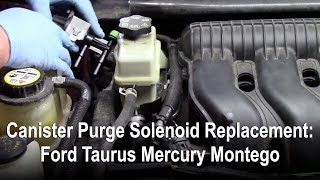
Typical fix: Replace the canister purge valve. This involves disconnecting the electrical connector, two quick-disconnect hose fittings, and sliding the valve off its mounting bracket.
Est. part cost: $25-$65 - Damaged Wiring or Connector 🟡 Medium Probability The wiring harness leading to the purge valve can become brittle from engine heat, or the connector pins can corrode, leading to a poor connection or an open circuit. On some Ford platforms, wiring can chafe against other components, though this is less commonly reported for this specific circuit.
How to confirm: Visually inspect the wiring harness for any signs of cracking, chafing, or melting. Unplug the connector and check for corrosion or bent pins. With the key on and engine off, use a multimeter to verify that one pin in the connector has battery voltage (power) and the other is the control wire from the PCM.
Typical fix: Repair the damaged section of wire or replace the pigtail connector.
Est. part cost: $15-$30
Rare But Worth Checking
- Blown Fuse: A short circuit in the purge valve can sometimes blow the fuse that powers the EVAP system. Always check the relevant fuses in the vehicle's fuse box before replacing parts. The fuse may be shared with other emissions components.
- Faulty Powertrain Control Module (PCM): → Shop Engine Control Module (ECM) This is extremely rare. The PCM's internal driver for the purge valve circuit can fail, but all other potential causes should be exhaustively ruled out before considering PCM replacement. Some companies offer mail-in repair services for Ford PCMs that have failed driver circuits for codes like P0443.
Diagnosis Steps
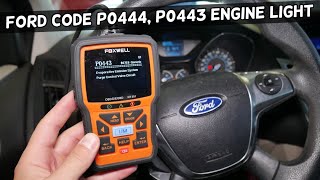
- Read the code with an OBD-II scanner to confirm P0443 is present.
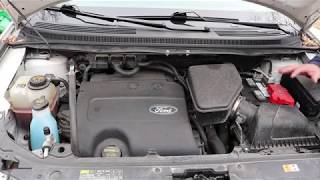
- Locate the canister purge valve. On the 3.0L V6, it is mounted to a bracket on the firewall, near the passenger side, behind the power steering reservoir.
- Visually inspect the electrical connector and wiring harness for any obvious damage, such as cracks, corrosion, or loose connections.
- Disconnect the connector. With the ignition on, use a multimeter to check for battery voltage at one of the pins in the connector.
- With the connector still disconnected, measure the resistance across the two pins on the purge valve itself. A normal reading is typically between 15-35 ohms. An infinite reading (OL) means the valve's internal coil is open and bad. A reading near zero ohms means it's shorted and bad.
- If the resistance is within spec, you can test the valve's mechanical function. Apply 12V directly to the valve's pins; you should hear a distinct click as it opens. You can also use a hand vacuum pump on the inlet port; it should hold vacuum when de-energized and release it when 12V is applied.
- If the valve and wiring test good, check the associated fuse in the vehicle's power distribution box.
- If all other tests pass, the issue may be with the PCM, but this is highly unlikely.
Parts You'll Likely Need
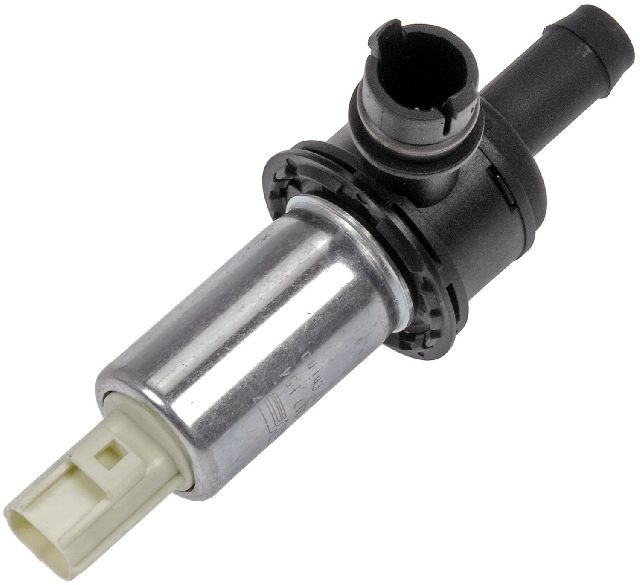
- Vapor Canister Purge Valve / Solenoid
(OEM #6L3Z-9C915-A)— This is the most common failure point for a P0443 code. The internal solenoid coil fails, causing an electrical fault detected by the PCM. This part number supersedes previous versions like 4L3Z-9C915-AB and 5L3Z-9C915-AA.
Trusted brands: Motorcraft (CX-2082), Dorman (911-130), Standard Motor Products (CP524)
OEM price range: $60-$105
Aftermarket price range: $25-$65
Related Codes That Often Appear With This One
- P0444 — This code indicates 'Purge Control Valve Circuit Open,' which is a more specific version of the P0443 general circuit fault. They often point to the exact same failure.
- P0445 — This code indicates 'Purge Control Valve Circuit Shorted.' If the valve's internal coil has shorted out, you may see this code alongside or instead of P0443.
Platform-Specific Known Issues
- The purge valve on the Five Hundred is mounted on the firewall and slides onto a bracket, secured by a small locking tab. It can be removed with a flathead screwdriver to depress the tab, without unbolting the bracket itself.
Mechanic-Grade Diagnostic Values
- Purge Valve Solenoid Resistance — expected: 15 to 35 Ohms (typical range is 20-30 Ohms).. Failure: A reading of infinity (OL) indicates an open coil; a reading near 0 Ohms indicates a shorted coil.
- Voltage at Purge Valve Connector (Power Wire) — expected: Approximately 12V (Battery Voltage) with Key On, Engine Off.. Failure: Zero volts indicates a blown fuse, faulty relay, or an open in the power supply wire.
- Voltage at Purge Valve Connector (Control Wire, Back-probed) — expected: Approximately 5V when the PCM commands the valve to open during an active test.. Failure: Absence of voltage when commanded open by a scan tool points to a wiring issue or a faulty PCM driver.
- Ground Wire Voltage Drop — expected: Less than 0.5V between the valve's ground wire and the chassis ground.. Failure: Voltage greater than 0.5V indicates a high-resistance or poor ground connection that needs to be cleaned or repaired.
Scan Tool Commands That Help
- Ford IDS (Integrated Diagnostic System): Powertrain -> DataLogger -> EVAP Purge Test / Vapor Management Valve Control — This bidirectional command allows a technician to manually open and close the purge valve while monitoring system response. It's used to confirm if the valve clicks when commanded and to check if the PCM driver and wiring are functioning correctly, isolating the fault to the valve itself.
- High-End Aftermarket Scan Tool: Active Test -> EVAP Purge Solenoid — Similar to the IDS function, this allows for commanding the purge valve on and off to listen for an audible click or to check for vacuum flow, verifying the electrical integrity of the control circuit.
Wiring & Ground Locations
- Purge Valve Connector Pin 1 (Power) — At the purge valve electrical connector on the firewall.. This pin should have battery voltage with the key on. A lack of voltage points the diagnosis towards the power supply (fuse, relay) rather than the valve or PCM.
- Purge Valve Connector Pin 2 (Control) — At the purge valve electrical connector on the firewall.. This is the ground-side control wire from the PCM. The PCM pulses the ground to activate the solenoid. Checking for continuity between this pin and the corresponding pin at the PCM connector can identify a broken wire.
- G103 / G105 — Located on the right front of the engine compartment.. These are primary engine compartment ground points. While not exclusively for the purge valve, a corroded or loose ground here can cause a variety of intermittent electrical issues for engine sensors and actuators, including the EVAP system.
- G104 — Located on the right rear of the engine compartment, near the firewall.. This ground point is in the general vicinity of the purge valve and serves various engine control components. A poor connection here could potentially cause a voltage drop or intermittent circuit fault for the purge valve.
OEM Part Supersession History
4L3Z-9C915-AB→5L3Z-9C915-AA— Standard part revision and update by Ford.5L3Z-9C915-AA→6L3Z-9C915-A— Standard part revision and update by Ford. This is the most current primary replacement part number.
Diagnostic Flowchart
Other Known Issues on This Vehicle
Issues unrelated to this code that are worth knowing about as an owner of this generation:
- Electronic Throttle Body Failure 🔴 High — Very common. Often causes a 'wrench' light, limp mode, and erratic idle/acceleration. Can occur at any mileage. (Ref: A customer satisfaction program (12N03) extended the warranty on this part, but it has since expired.)
- Transmission Problems (CVT & 6-Speed) 🔴 High — The CVT transmission in AWD models is known for premature failure. The Aisin 6-speed in FWD models is more reliable but can suffer from harsh shifting and valve body issues, especially at higher mileage. (Ref: Software updates were issued to address some shifting complaints on the 6-speed.)
- Leaking Radiator / Heater Core 🟠 Medium — Premature failure of the radiator and/or heater core is reported, sometimes attributed to electrolysis in the cooling system.
- Blower Motor Resistor/Module Failure 🟡 Low — Common failure causing the HVAC fan to only work on the highest setting (manual climate control) or fluctuate randomly (automatic climate control).
- Premature Rear Brake Wear 🟡 Low — Many owners report that the rear brake pads wear out unusually fast compared to the front pads.
Used vs. New Parts: Buying Guide for This Vehicle
When a used part is the smart pick: A used OEM (Motorcraft) purge valve from a low-mileage donor vehicle is a reasonable choice for this repair. The part is not a major wear item, but rather fails due to electrical coil burnout. A used part can offer OEM quality for less than a new aftermarket part.
Donor-vehicle mileage cap: roughly under 80000 miles for the part to have meaningful remaining life.
What to inspect on the donor part:
- Check the plastic housing for cracks or signs of extreme heat exposure.
- Ensure the electrical connector pins are clean, straight, and free of corrosion.
- If possible, test the resistance with a multimeter before purchase; it should be between 15-35 Ohms.
- Verify the part number on the used component matches the required OEM number or its supersessions.
Aftermarket brands forum-validated for this vehicle:
- Motorcraft (OEM)
- Standard Motor Products (SMP)
Brands owners have reported issues with on this vehicle:
- Dorman: While Dorman offers a direct replacement (911-130) and sometimes creates innovative fixes, their general parts quality can be inconsistent. For a simple and critical emissions component where OEM is not significantly more expensive, sticking with Motorcraft or a reputable brand like SMP is often a safer bet to avoid a repeat repair.
Real Owner Stories
Aggregated from forums and TSBs cited above. Mileages and costs reflect what owners reported in those sources.
2007 Ford Five Hundred SEL 6 cylinder
Symptoms: The user reported 'Car Limp Gear Issues' and had multiple diagnostic trouble codes, including P0443 and U0101, which indicates no connection with the Transmission Control Module.
What fixed it: The owner did not report what fixed the issue.
Source hint: Reddit thread titled 'Car Limp Gear Issues' in r/MechanicAdvice
2007 Ford FIVE HUNDRED 3.0L
Symptoms: The owner had several permanent codes, including P0443.
What fixed it: The owner used a 'Mail-in REPAIR SERVICE ECM PCM ECU' to fix the vehicle's computer.
Source hint: eBay feedback for item 7U7A-12A650-RC | 2007 Ford FIVE HUNDRED 3.0L PROGRAMMED ECM PCM ECU
2007 Ford Five Hundred
Symptoms: The car would suddenly cut out, the security light (an icon of a car with a lock) would illuminate, and the engine would turn off, sometimes when shifting into drive or reverse. Codes P2074 and P0443 were present.
What fixed it: The owner did not specify a fix.
Source hint: Opinautos
Related OBD-II Codes
Frequently Asked Questions
Where is the canister purge valve located on my 2005-2007 Ford Five Hundred 3.0L V6?
Is there a specific trick to removing the purge valve on this vehicle?
What should the resistance reading be for a healthy purge valve on a Ford Five Hundred?
Could my P0443 code be related to the common throttle body issues on this platform?
Why does my Five Hundred struggle to start specifically after I fill up the gas tank?
Is the P0443 issue common to the Mercury Montego as well?
Helpful Videos
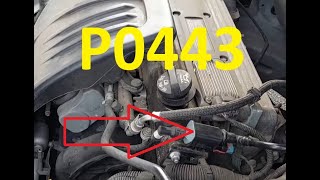
![How to Fix P0443 Engine Code in 3 Minutes [2 DIY Methods / Only $4.53]](https://img.youtube.com/vi/vuBVKjVg1JI/mqdefault.jpg)
We Have This Part in Stock


The information in this article is provided for general reference and educational purposes only. Vehicle specifications, procedures, and part compatibility can vary by production date, trim level, and region. Always consult your vehicle's factory service manual and verify part numbers before purchasing or performing repairs. Safety-critical components such as airbags, seat belts, and braking systems should be installed by a qualified professional.
- Ford Five Hundred:
- 🧭 Diagnostic Flowchart
- 🎬 Helpful Videos
- 🛍️ Shop This Part
- What's Unique About the 2005-2007 Ford Five Hundred
- Symptoms You May Notice
- Most Likely Causes
- Rare But Worth Checking
- Diagnosis Steps
- Parts You'll Likely Need
- Related Codes That Often Appear With This One
- Platform-Specific Known Issues
- Mechanic-Grade Diagnostic Values
- Scan Tool Commands That Help
- Wiring & Ground Locations
- OEM Part Supersession History
- Other Known Issues on This Vehicle
- Used vs. New Parts: Buying Guide for This Vehicle
- Real Owner Stories
- 2007 Ford Five Hundred SEL 6 cylinder
- 2007 Ford FIVE HUNDRED 3.0L
- 2007 Ford Five Hundred
- Related OBD-II Codes
- Frequently Asked Questions
- 🎟️ Get 5% Off