

P0443 on 2010-2019 Ford Taurus: EVAP Purge Valve Circuit Malfunction Causes and Fixes
On a 2010-2019 Ford Taurus, code P0443 almost always points to a failed EVAP purge valve. It's an easy and affordable DIY fix, typically costing $30-$75 for a new valve, which is located on top of the engine.
- P0443 is an electrical circuit code, not a system leak code. Don't replace the gas cap.
- The most likely cause is a failed EVAP purge valve, which is an inexpensive part.
- On the 2010-2019 Taurus, the purge valve is located on top of the engine and is extremely easy to access and replace with basic tools.
- Always check the wiring, connector, and fuse before buying a new part.
- This is a very DIY-friendly repair that can be completed in under 30 minutes.
What's Unique About the 2010-2019 Ford Taurus
For the sixth-generation Ford Taurus, particularly those with the common 3.5L V6 engine, this is a very frequent and straightforward issue. The purge valve is conveniently located right on top of the intake manifold next to the throttle body, making it one of the easiest repairs to perform. Unlike some vehicles where the valve is buried, on the Taurus it is held by just two bolts and is fully accessible in minutes, making it a popular DIY fix.
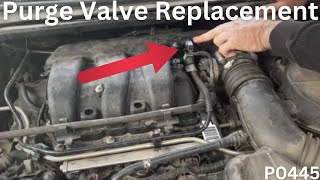
🎬 Watch: A quick walkthrough of the Taurus purge valve replacement.Symptoms You May Notice
- Check Engine Light is on
- Slightly rough idle
- Minor decrease in fuel economy
- Difficulty starting immediately after refueling 🎬 See why a bad valve makes your car hard to start. (if the valve is stuck open)
- A noticeable fuel odor may be present if the valve is stuck open, allowing vapors to escape.
- Replacing the gas cap. A loose or faulty gas cap typically causes a large leak code like P0455 or P0457. P0443 is an electrical circuit code and is not related to the gas cap's seal.
Most Likely Causes
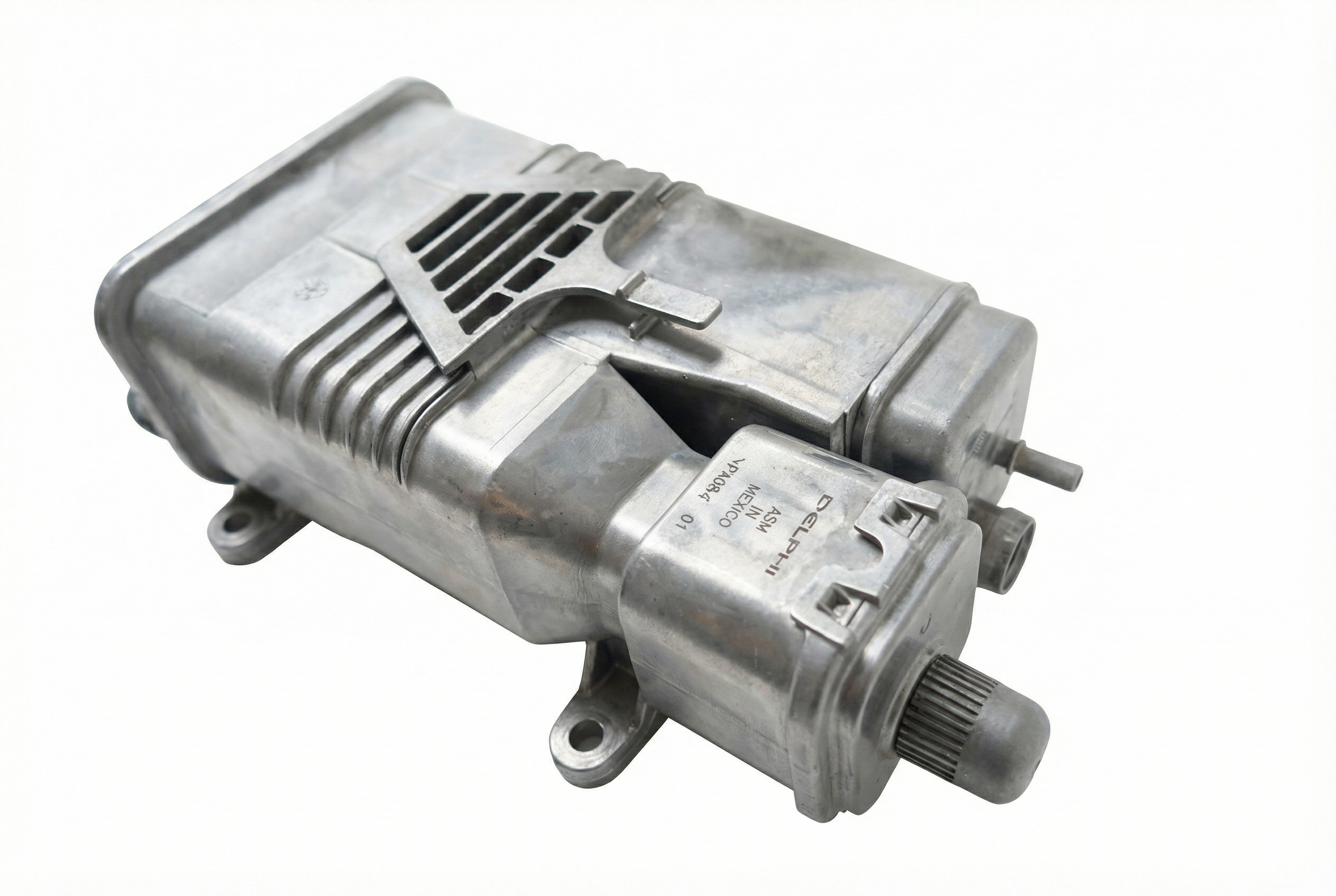
- Faulty EVAP Purge Valve/Solenoid 🔴 High Probability → Shop Vapor Canister The part is subjected to constant engine heat and vibration, and the internal solenoid coil can fail over time. This is a common failure mode for this component across many Ford models that use the same part.
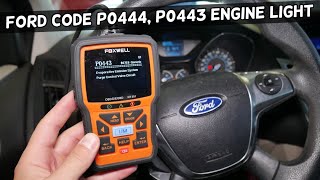
How to confirm: After confirming power and ground signals at the connector, the valve itself is the culprit. 🎬 Watch: How to diagnose P0443 and P0444 engine light codes. You can test the valve's resistance with a multimeter; a typical reading for a good valve is between 22 and 30 ohms, while an open circuit (infinite resistance) indicates failure. A simple blow test also works: if you can blow through the valve when it's disconnected (unpowered), it's stuck open and faulty.
Typical fix: Replace the EVAP purge valve assembly. On the 3.5L V6, it is mounted to the intake manifold with two 8mm bolts.
Est. part cost: $30-$75 - Wiring Harness or Connector Damage 🟡 Medium Probability The wiring harness in the engine bay is exposed to heat and vibration, which can lead to chafed wires or brittle connectors over time. Rodent damage to wiring is also a possibility.
How to confirm: Visually inspect the two-wire connector and the surrounding wires for any signs of cracking, chafing against other components, or corrosion on the connector pins. Use a multimeter to check for 12V power on one wire (with key on) and for a ground signal from the PCM on the other (a scan tool may be needed to command the valve on to test the ground circuit).
Typical fix: Repair the damaged section of wire or replace the connector pigtail.
Est. part cost: $5-$25 - Blown Fuse ⚪ Low Probability
How to confirm: Check the fuse box in the engine compartment for any blown fuses related to the emissions system or PCM. Your owner's manual will have the correct diagram. A blown fuse often indicates a short circuit in the wiring that needs to be found.
Typical fix: Replace the blown fuse. If the fuse blows again immediately, it indicates a short circuit in the wiring that must be found and repaired.
Est. part cost: $1-$5
Rare But Worth Checking
- Faulty Powertrain Control Module (PCM): → Shop Engine Control Module (ECM) This is very rare and should only be considered a last resort. The PCM should only be suspected after all other possibilities, including the valve, its entire circuit, and fuses have been thoroughly tested and ruled out.
Diagnosis Steps
- Read the code with an OBD-II scanner to confirm P0443 is present.
- Locate the EVAP purge valve on the top of the intake manifold, near the throttle body.
- Visually inspect the valve, its electrical connector, and the visible wiring for any obvious signs of damage, like cracks, melting, or chafed wires.
- Disconnect the electrical connector. With the ignition key in the 'On' position (engine off), use a multimeter or test light to verify that one of the pins in the connector has battery voltage (approx. 12V).
- Check the other pin for a ground signal. The PCM provides a pulsed ground to activate the valve. You can test this with a scan tool that can command the valve to activate; when activated, the PCM should provide a ground to this pin.
- If power and ground signals are present, the wiring and PCM are likely okay. The fault is almost certainly the purge valve itself.
- You can confirm a bad valve by measuring the resistance across its two pins with a multimeter. A good valve should read between 22-30 ohms. If it reads as an open circuit (infinite resistance) or a short (zero resistance), the internal coil is broken and the valve must be replaced.
- If the wiring or signals are faulty, trace the harness back to the PCM to find the break or short. Check for a blown fuse in the emissions control circuit.
Parts You'll Likely Need
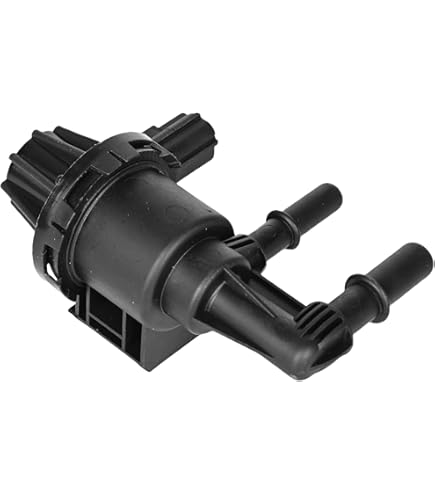
- Vapor Canister Purge Valve
(OEM #9U5Z-9C915-H (may be superseded by 9U5Z-9C915-J))— This is the most common failure point for code P0443. The internal solenoid coil fails or the valve gets stuck. This part is used across a wide range of Ford vehicles.
Trusted brands: Motorcraft, Bosch, Dorman, Standard Motor Products (SMP)
OEM price range: $50-$75
Aftermarket price range: $30-$60
Related Codes That Often Appear With This One
- P0444 — Indicates the purge control circuit is 'Open'. This is a more specific version of the P0443 fault, often pointing directly to a broken wire, unplugged connector, or a failed open solenoid coil.
- P0445 — Indicates the purge control circuit is 'Shorted'. This is another specific version of the P0443 fault, pointing to a wire that has shorted to ground or to another wire, or a shorted solenoid coil.
Platform-Specific Known Issues
- On the 3.5L naturally aspirated V6, the purge valve is extremely accessible, mounted on top of the engine with two 8mm bolts and simple push-connect fittings for the hoses.
- The part number 9U5Z-9C915-H is shared with many other Ford products from this era, including the Edge, Explorer, Flex, and F-150, indicating a common part design and failure mode.
Mechanic-Grade Diagnostic Values
- Purge Valve Solenoid Resistance — expected: 20-30 Ohms. Failure: An open circuit (infinite resistance) or a shorted circuit (near zero Ohms).
- Purge Valve Connector Power Pin Voltage (Key On, Engine Off) — expected: Battery Voltage (approx. 12V). Failure: No voltage or significantly low voltage, indicating a problem with the power supply wire or a blown fuse.
- Scan Tool PID: EVAPCP (Duty Cycle) — expected: 0% when commanded closed, 100% when commanded fully open.. Failure: The PCM detects the circuit state does not match the commanded state.
- Scan Tool PID: EVMV (Current) — expected: 0 mA when closed, ~1,000 mA when commanded fully open.. Failure: Current reading does not match the commanded state.
- Control Wire Voltage Drop (Back-probed) — expected: A voltage drop of at least 3 volts when the valve is commanded fully open by a scan tool.. Failure: Little to no voltage drop when commanded open, suggesting a problem with the valve or the PCM driver.
Scan Tool Commands That Help
- Ford IDS (or equivalent professional scanner): Vapor Management Valve / Canister Purge Valve Control — This bidirectional test allows a technician to manually command the purge valve ON and OFF. It is used to verify if the valve is physically clicking and responding to electrical commands, which helps isolate the problem to the valve itself versus a wiring or PCM issue.
Wiring & Ground Locations
- Purge Valve Connector Pin 1 (Power) — At the two-wire connector on the EVAP purge valve, located on top of the intake manifold.. This pin should receive battery voltage with the key in the ON position. A lack of voltage points to a blown fuse or an open in the power supply wire from the fuse box.
- Purge Valve Connector Pin 2 (Control) — At the two-wire connector on the EVAP purge valve.. This pin is the control circuit, which the PCM grounds to activate the valve. When testing, voltage should be high (near battery voltage) when the valve is off and drop to near zero when a scan tool commands the valve on. A failure to drop indicates an open in the control wire or a faulty PCM driver. A constant ground indicates a short.
Real Owner Repair Stories
- YouTube channel 'GTOger', 1998 Mercury Sable (similar Ford logic) (1998 Mercury Sable) — P0443 code, plus rich running codes (banks 1 and 2) because the purge valve was stuck open.
❌ Tried (didn't work) Confirmed the purge valve solenoid resistance was good (35 ohms)., Confirmed continuity of the wiring harness between the valve and the PCM was good (0.5 ohms).
✅ What actually fixed it The Powertrain Control Module (PCM) had an internal short to ground on the purge valve driver circuit, causing the valve to be energized at all times. Replacing the PCM resolved the P0443 and the rich codes. - YouTube channel 'The Auto Teacher' (2014 Ford Taurus SEL 3.5L) — Check engine light with code P0445 (Purge Control Circuit Shorted), hard starting, and stumbling after refueling.
❌ Tried (didn't work) Diagnosis immediately pointed to the purge valve.
✅ What actually fixed it Replacing the vapor canister purge valve on top of the engine fixed the issue. The video confirms the location and simple replacement process.
"I Checked Everything" — The Actual Cause
- A smoke test is not applicable for a P0443, as it is an electrical circuit code, not a system leak code. The equivalent scenario is when the valve and wiring test good with a multimeter, but the code persists. In these rare cases, the root cause is often a faulty driver circuit within the Powertrain Control Module (PCM), which can provide incorrect voltage or be internally shorted, causing the circuit fault without an obvious wiring or component failure.
OEM Part Supersession History
9U5Z-9C915-D, 9U5Z-9C915-H→9U5Z-9C915-J— Standard part revision by the manufacturer, likely for improved durability or minor design changes.
Heads up: None. The newer part number is a direct, backward-compatible replacement for the older versions.
Diagnostic Flowchart
Other Known Issues on This Vehicle
Issues unrelated to this code that are worth knowing about as an owner of this generation:
- Internal Water Pump Failure (3.5L V6) 🔴 High — Common after 100,000 miles. A failure can leak coolant into the engine oil, causing catastrophic engine damage with little warning.
- Power Transfer Unit (PTU) Failure (AWD Models) 🔴 High — The PTU fluid can overheat and break down, leading to seal leaks and eventual gear failure. The unit is sealed from the factory with no drain plug, making service difficult. (Ref: TSB 09-25-7 addresses seal leaks but not the core issue of fluid breakdown.)
- Transmission Failure / Hard Shifting 🟠 Medium — Some model years, particularly around 2015-2016, reported issues with losing certain gears or complete transmission failure. Less severe issues like delayed shifting can occur on other years.
- Timing Chain Stretch (3.5L EcoBoost) 🔴 High — Primarily affects first-generation 3.5L EcoBoost engines. A rattling noise on cold starts is the primary symptom. If ignored, it can lead to jumped timing and engine damage.
- Electronic Throttle Body Faults 🟠 Medium — Can cause the vehicle to enter 'limp mode' with sudden loss of power. A common issue across many Ford models of the era.
- Rear Suspension Toe Link Fracture Recall 🔴 High — Affects 2013-2018 models. A fractured toe link can cause a sudden loss of steering control. (Ref: NHTSA Recall 19V435000)
Used vs. New Parts: Buying Guide for This Vehicle
When a used part is the smart pick: For a low-cost electronic solenoid that is a common failure item, buying a used part from a junkyard is not recommended. The potential cost savings are minimal (typically under $20) and do not outweigh the risk of the used part failing shortly after installation.
What to inspect on the donor part:
- Not applicable, as a new part is strongly recommended.
OEM-only on this vehicle (don't cheap out):
- No parts for this specific repair are considered 'OEM-only'. The purge valve is a simple component.
Aftermarket brands forum-validated for this vehicle:
- Motorcraft (OEM)
- Bosch
- Dorman
- Standard Motor Products (SMP)
Real Owner Stories
Aggregated from forums and TSBs cited above. Mileages and costs reflect what owners reported in those sources.
2010 Ford Taurus 3.5L V6 — 240000 miles
Symptoms: Owner noted the general reliability of the vehicle over high mileage but discussed the necessity of addressing repairs as the vehicle aged, contrasting it with simpler older vehicles.
What fixed it: Replacement of the EVAP purge valve (consensus from TaurusClub.com for this specific model and engine).
Source hint: BobIsTheOilGuy.com - 2010 Taurus 240k water pump finally failed
2010-2019 Ford Taurus 3.5L V6
Symptoms: Check engine light on with P0443; owners confirmed the part's location on top of the 3.5L engine and the simplicity of the fix.
What fixed it: Quick and easy purge valve replacement using the two 8mm bolts on the intake manifold.
Source hint: TaurusClub.com
Related OBD-II Codes
Frequently Asked Questions
Where is the EVAP purge valve located on my 3.5L V6 Ford Taurus?
Is there a specific Ford part number I should look for when replacing the valve?
Why does my Taurus have trouble starting specifically after I fill up the gas tank?
Does the rear suspension recall on 2013-2018 models have anything to do with my P0443 code?
How can I test if the purge valve itself is bad versus a wiring issue?
Could a blown fuse cause the P0443 code on my Taurus?
Helpful Videos


Used OEM Parts in Stock

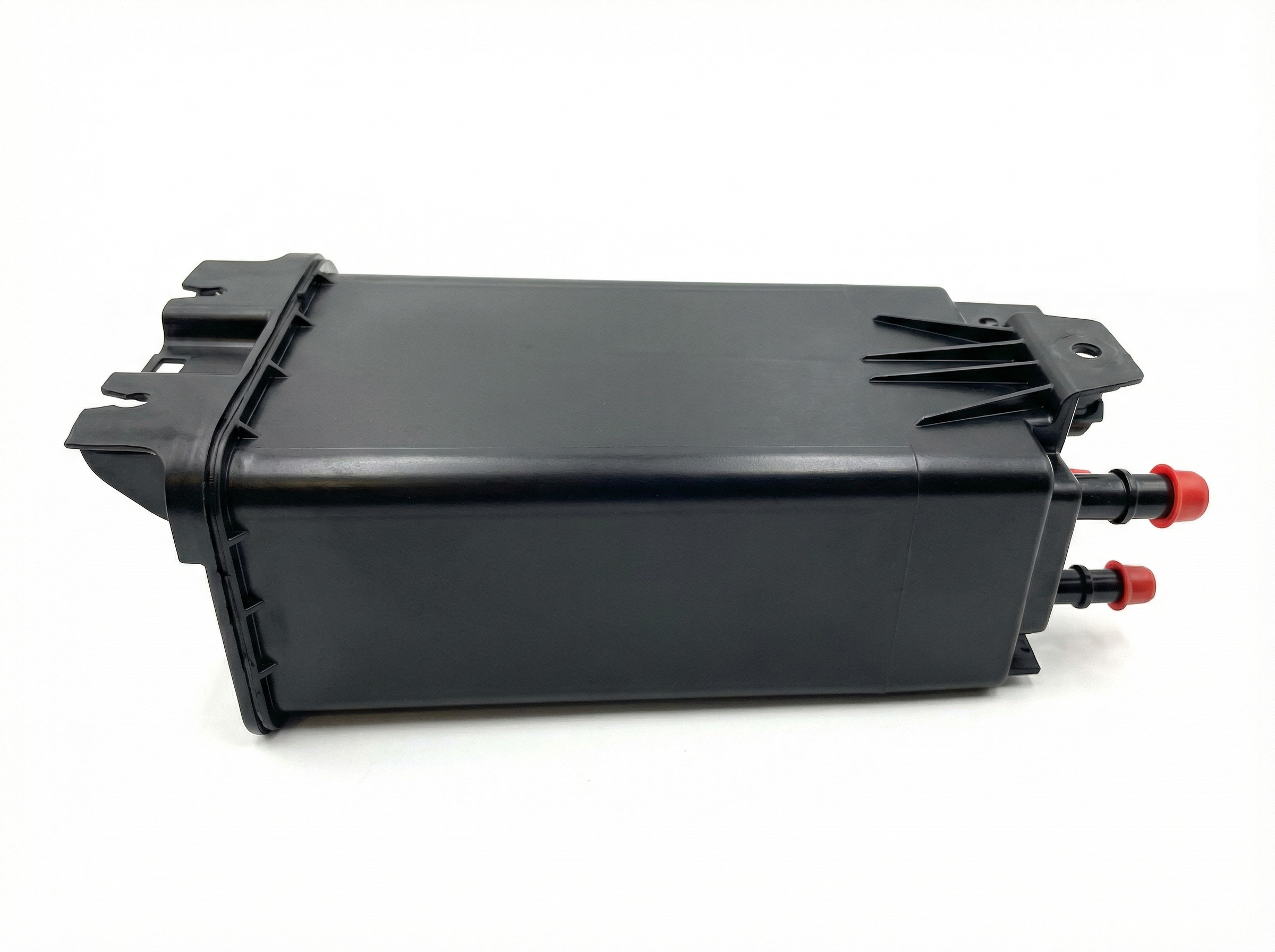
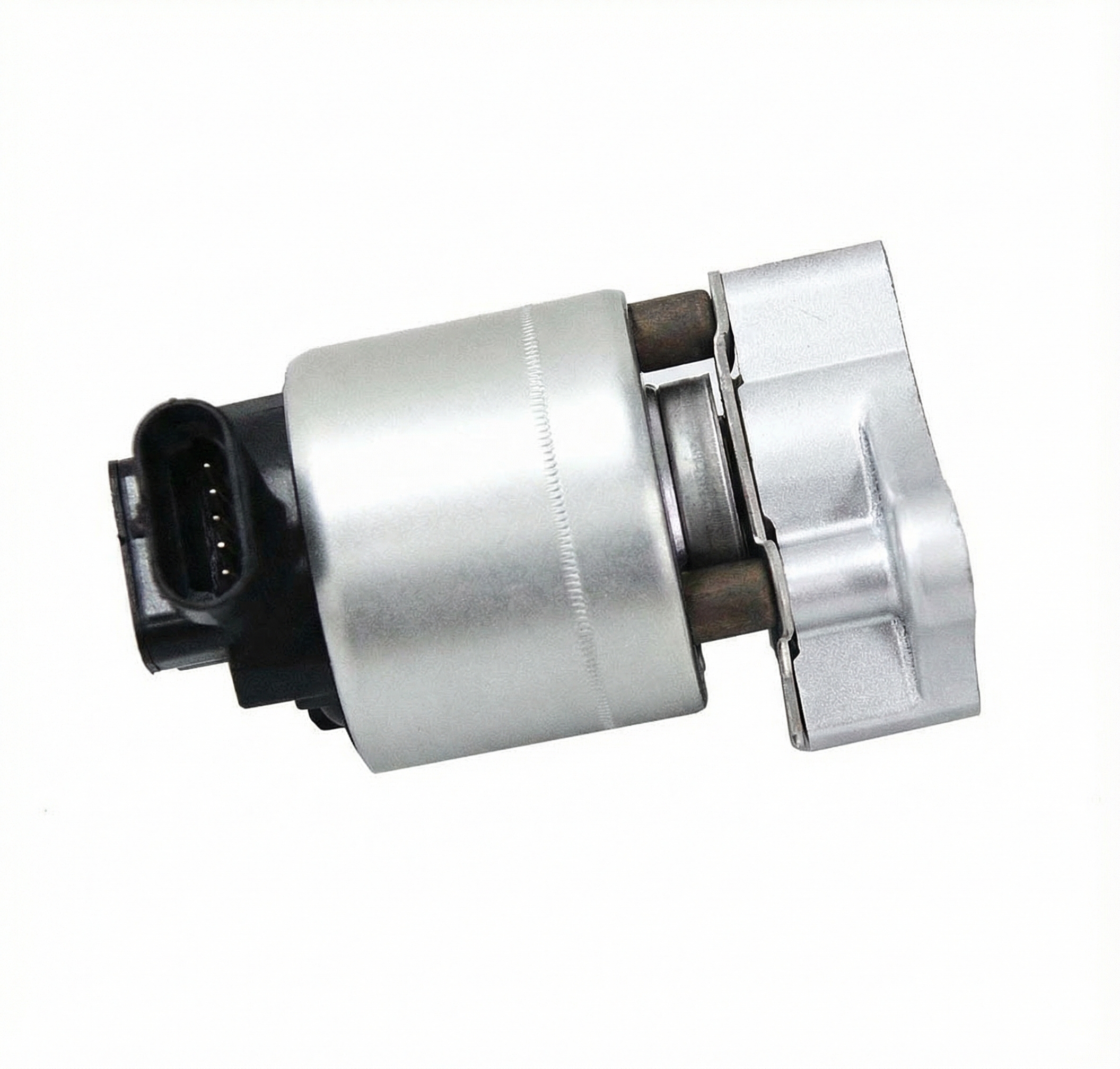
New Aftermarket Parts Available

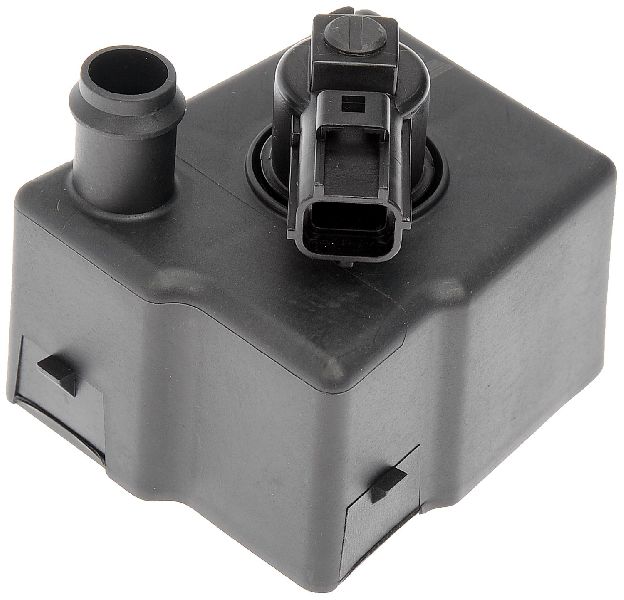
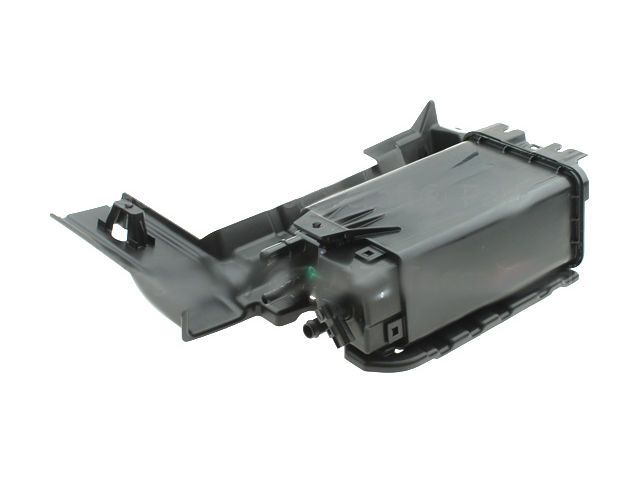

The information in this article is provided for general reference and educational purposes only. Vehicle specifications, procedures, and part compatibility can vary by production date, trim level, and region. Always consult your vehicle's factory service manual and verify part numbers before purchasing or performing repairs. Safety-critical components such as airbags, seat belts, and braking systems should be installed by a qualified professional.
- Ford Taurus:
- 🧭 Diagnostic Flowchart
- 🎬 Helpful Videos
- 🛍️ Shop This Part
- What's Unique About the 2010-2019 Ford Taurus
- Symptoms You May Notice
- Most Likely Causes
- Rare But Worth Checking
- Diagnosis Steps
- Parts You'll Likely Need
- Related Codes That Often Appear With This One
- Platform-Specific Known Issues
- Mechanic-Grade Diagnostic Values
- Scan Tool Commands That Help
- Wiring & Ground Locations
- Real Owner Repair Stories
- "I Checked Everything" — The Actual Cause
- OEM Part Supersession History
- Other Known Issues on This Vehicle
- Used vs. New Parts: Buying Guide for This Vehicle
- Real Owner Stories
- 2010 Ford Taurus 3.5L V6 — 240000 miles
- 2010-2019 Ford Taurus 3.5L V6
- Related OBD-II Codes
- Frequently Asked Questions
- 🎟️ Get 5% Off