

P0443 on 2003-2007 Honda Accord: EVAP Purge Valve Circuit Causes and Fixes
For a 2003-2007 Honda Accord, code P0443 is most often caused by a failed EVAP purge valve solenoid. It's an electrical circuit code, not a leak. Replacing the purge valve is a simple DIY fix, with aftermarket parts costing between $30 and $100. Always check wiring first, but the valve itself is the most common point of failure.
- P0443 is an electrical circuit code, not a system leak code. Do not start by replacing the gas cap or looking for leaks.
- The most likely culprit is a failed EVAP purge valve solenoid, which is a simple and affordable part to replace for a DIYer.
- Always check the wiring and connector for damage before buying a new part.
- Ensure you purchase the correct part for your engine, as the 4-cylinder (2.4L) and V6 (3.0L) engines use different purge valves.
What's Unique About the 2003-2007 Honda Accord
On the 7th generation Honda Accord, the P0443 code is a straightforward circuit fault that is not known for being unusually difficult to diagnose. The purge valves on both the 4-cylinder (K24) and V6 (J30) engines are relatively accessible on or near the intake manifold. While the part itself can fail, it's not considered a widespread pattern failure, but it is a common repair for a vehicle of this age. The key is to remember it's an electrical code, so diagnosis should focus on the valve's coil and its wiring, not on system leaks like a bad gas cap.
Symptoms You May Notice
- Check Engine Light is on
- Failure to pass an emissions/smog test
- Slightly reduced fuel efficiency
- Possible rough idle if the valve is stuck open
- A faint fuel odor near the vehicle
- In some cases, a "Check Fuel Cap" message may appear on the dash, even though the cap is not the issue for this specific code.
- Replacing the gas cap. P0443 is a circuit code, not a leak code. A bad gas cap typically causes codes like P0455 or P0457.
- Performing a smoke test. A smoke test is used to find physical leaks in the EVAP system hoses or canister. It will not identify an electrical circuit fault like P0443.
Most Likely Causes
- Faulty EVAP Purge Valve Solenoid 🔴 High Probability → Shop Vapor Canister After many years and thousands of heat cycles and electrical pulses, the fine wire coil inside the solenoid can break or short out, leading to an open or shorted circuit that the PCM detects.
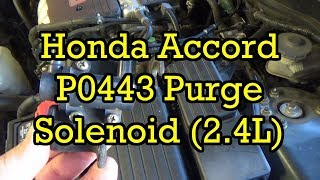
How to confirm: Disconnect the valve's electrical connector and measure the resistance across the two pins on the valve with a multimeter. For the 2.4L engine, a good valve should read between 25 and 55 ohms. A reading that is very high (kilo-ohms or mega-ohms) or shows no continuity (OL) indicates a failed solenoid. You can also briefly apply 12V power to the pins; a healthy valve will make an audible click. An absence of a click confirms an internal failure. 🎬 Watch: Tips and tricks for testing the 2.4L purge solenoid.
Typical fix: Replace the EVAP purge valve solenoid. This is typically a 15-20 minute job requiring only basic hand tools.
Est. part cost: $30-$100 - Damaged Wiring or Electrical Connector 🟡 Medium Probability Engine vibration and heat can cause wires to become brittle and break over time, often right at the connector. The connector pins can also corrode due to moisture, leading to a poor connection. Rodent damage is also a possibility.
How to confirm: Visually inspect the wiring harness leading to the purge valve for any signs of cracking, fraying, or heat damage. Check the inside of the electrical connector for green or white corrosion on the pins. Use a multimeter with the key on (engine off) to check for battery voltage (approx. 12V) on one wire of the connector. Then, check the continuity of the other wire (the control wire) back to the PCM.
Typical fix: Repair the broken wire or clean/replace the electrical connector pigtail.
Est. part cost: $5-$25
Rare But Worth Checking
- Faulty Powertrain Control Module (PCM): → Shop Engine Control Module (ECM) This is extremely rare. Before condemning the PCM, you must exhaustively prove that the purge valve and its entire circuit (power, ground, and signal wires) are in perfect condition. A faulty PCM driver for the purge circuit is the specific internal failure.
Diagnosis Steps
- Scan the vehicle for codes to confirm P0443 is the primary code present.
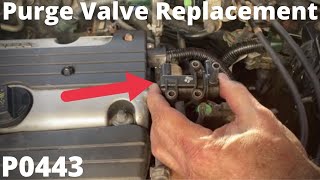
- Locate the EVAP purge valve. On both 4-cylinder and V6 models, it is mounted on or near the engine's intake manifold, usually with two 10mm bolts.
- Visually inspect the electrical connector and wiring harness for any obvious damage, corrosion, or loose connections.
- Disconnect the connector. With the ignition on (engine off), use a multimeter to verify that one pin in the connector has battery voltage (around 12V).
- Test the purge valve itself. Measure the resistance between the two pins on the valve. A reading far outside the manufacturer's specification (e.g., 25-55 ohms for the 2.4L) indicates a bad valve. An open circuit (OL) or very high resistance is a definitive failure.
- If the resistance is good, you can test its mechanical function by applying a 9V or 12V source to the pins and listening for a distinct click. No click means the valve is mechanically seized.
- If the valve and power supply are good, the final step is to check the integrity of the ground control wire running from the valve back to the PCM. This is best done by checking for continuity between the connector and the corresponding pin at the PCM.
- If the valve and all wiring test good, the PCM may be at fault, but this is extremely unlikely and should be confirmed by a professional.
Parts You'll Likely Need
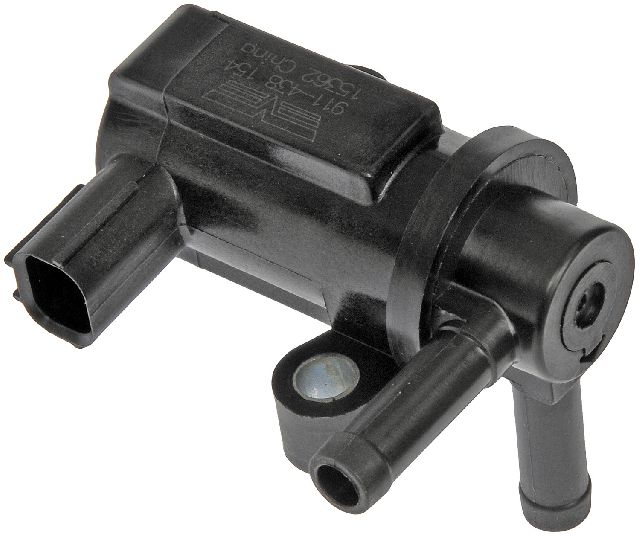
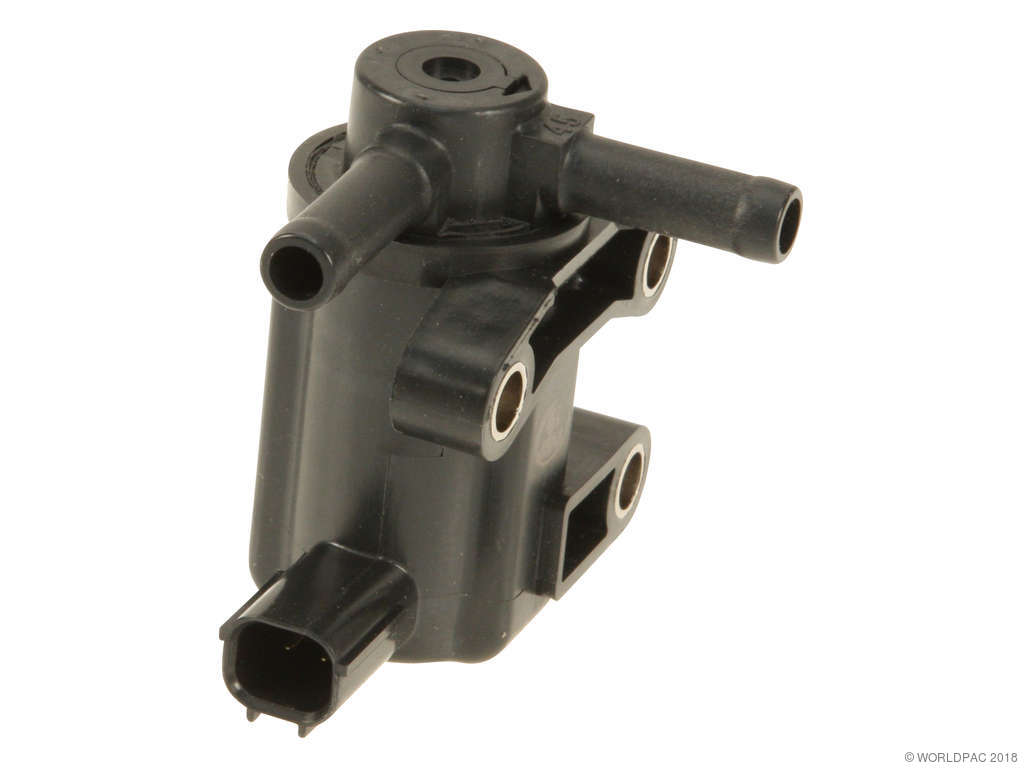
- EVAP Canister Purge Valve (2.4L 4-Cylinder)
(OEM #36162-RAA-A01)— This is the most common failure point for code P0443 on the 4-cylinder Accord. The internal solenoid coil fails electrically.
Trusted brands: Honda (Genuine), Standard Motor Products (CP525), Dorman (911-762), Wells (PV438)
OEM price range: $200-$295
Aftermarket price range: $30-$100 - EVAP Canister Purge Valve (3.0L V6)
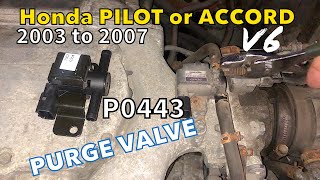
(OEM #36162-RDV-J01)— This is the most common failure point for code P0443 on the V6 Accord. The internal solenoid coil fails electrically.
Trusted brands: Honda (Genuine), Standard Motor Products (CP641), Dorman (911-141), TRQ
OEM price range: $180-$270
Aftermarket price range: $40-$110
Related Codes That Often Appear With This One
- P0444 — P0444 (EVAP Purge Control Valve Circuit Open) is a more specific version of the P0443 fault, indicating a break in the circuit.
- P0445 — P0445 (EVAP Purge Control Valve Circuit Shorted) is another specific version, indicating the circuit has shorted to ground or power.
- P0497 — P0497 (EVAP System Low Purge Flow) can sometimes accompany P0443 if the valve is failing in a way that it is both electrically faulty and physically stuck closed. 🎬 Watch: How to repair and verify a P0497 purge flow code.
Mechanic-Grade Diagnostic Values
- EVAP Purge Valve Solenoid Resistance (2.4L K24 Engine) — expected: 25 to 55 Ohms. Failure: A very high reading (kilo-ohms or mega-ohms) or an open circuit (OL) indicates a failed coil.
- EVAP Purge Valve Solenoid Resistance (3.0L J30 Engine) — expected: ~33 Ohms (at room temperature). Failure: A reading significantly higher or lower than 33 Ohms, or an open circuit (OL), indicates a failed coil.
- Voltage at Purge Valve Connector (Key On, Engine Off) — expected: One pin should have battery voltage (~12V). The other pin (control wire) will show ~12V when plugged in, but 0V when unplugged.. Failure: No voltage on the power wire indicates a blown fuse or wiring issue upstream. If the control wire voltage doesn't drop to near 0V when commanded ON by a scan tool, it points to a PCM driver or wiring fault.
Scan Tool Commands That Help
- Honda HDS (or compatible bidirectional scanner): EVAP Purge Valve Test / EVAP FUNCTION TEST — This command allows the technician to manually cycle the purge valve on and off. It is used to verify if the PCM can control the valve and to check the electrical response of the circuit. When commanding the valve ON, the control wire voltage should drop to near zero, and an audible click should be heard from a healthy valve. This confirms the PCM driver and wiring integrity.
Wiring & Ground Locations
- G101 — On the 2.4L, at the top middle of the engine. On the 3.0L, on the left side of the engine. It is a primary ground for the PCM and multiple engine sensors.. A corroded or loose G101 ground can cause numerous intermittent electrical issues, including erratic sensor readings and incorrect operation of PCM-controlled solenoids like the EVAP purge valve. While not a direct cause of a P0443, a bad main ground can cause the PCM to misinterpret circuit values, making it a critical check-point if direct circuit testing is inconclusive.
- PCM Connector B (Pin 51 on 2012+ models, B21 on some earlier models) — The PCM is located under the center of the dash. The control wire for the EVAP purge valve is a Yellow/Blue wire leading to a specific pin on one of the PCM connectors.. This is the specific pin at the PCM that controls the purge valve. To definitively rule out a wiring issue, a technician can perform a continuity test from this pin to the corresponding pin at the purge valve connector. This confirms the wire is not broken or shorted somewhere in the harness.
Real Owner Repair Stories
- Honda Accord Forum user 'GreyD' (2004 Honda Accord EX 4-cylinder, 205,000+ miles) — Check Engine Light with code P0443.
❌ Tried (didn't work) Tested the original purge valve by applying 9V battery power; it made an audible clicking noise, suggesting the solenoid was functional., Checked for voltage at the connector with a test light, which illuminated, suggesting power was present.
✅ What actually fixed it Despite the original valve clicking during a bench test, the user eventually replaced the EVAP purge valve, which resolved the P0443 code. This indicates that the valve's coil could have had high resistance or an intermittent electrical fault that passed a simple click test but was still out of spec for the PCM.
OEM Part Supersession History
36162-RDM-A01→36162-RDV-J01— Part revision or supplier change.
Heads up: The newer part number 36162-RDV-J01 is the correct replacement for the V6 engine in the 2003-2007 Accord.
Diagnostic Flowchart
Other Known Issues on This Vehicle
Issues unrelated to this code that are worth knowing about as an owner of this generation:
- Automatic Transmission Failure (V6 Models) 🔴 High — Very common, particularly on 2003-2004 models. Often occurs between 70,000 and 120,000 miles. A class-action lawsuit was filed over this issue. (Ref: Honda issued several service bulletins (e.g., 02-062) and extended warranties, but no universal recall for all years.)
- Power Steering Hose Leak (V6 Models) 🔴 High — Widespread enough to trigger a major safety recall. The hose deteriorates from heat, leaking fluid onto the hot catalytic converter, creating a fire risk. (Ref: NHTSA Campaign ID: 12V222000. Honda recalled approximately 572,000 Accord V6 models from 2003-2007 to replace the hose.)
- Radio/HVAC Backlight and Unit Failure 🟡 Low — Extremely common across all 2003-2007 models. The backlight on the radio and climate control display fails, making it unreadable at night. The entire unit can also fail. (Ref: No TSB or recall. The common fix is to re-solder a failed resistor on the internal circuit board or replace the entire head unit.)
- Excessive Oil Consumption (2.4L 4-Cylinder) 🟠 Medium — A well-documented issue where the engine begins to consume oil, often 1 quart per 1,000 miles or more, typically after 70,000 miles. The cause is often attributed to stuck/clogged piston oil control rings. (Ref: No TSB or recall was issued for this generation, though a class-action lawsuit addressed a similar issue in the subsequent (2008+) generation.)
Used vs. New Parts: Buying Guide for This Vehicle
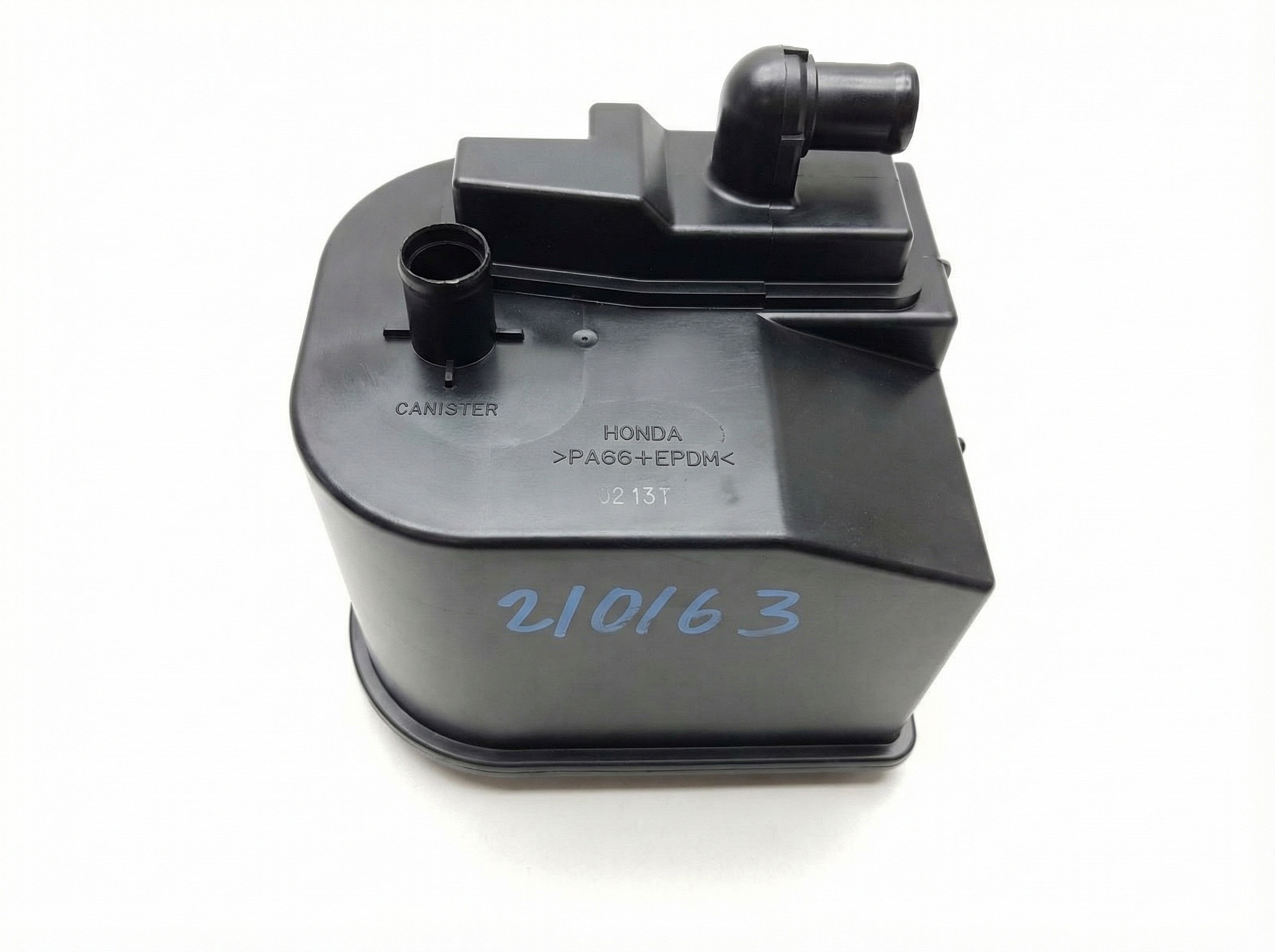
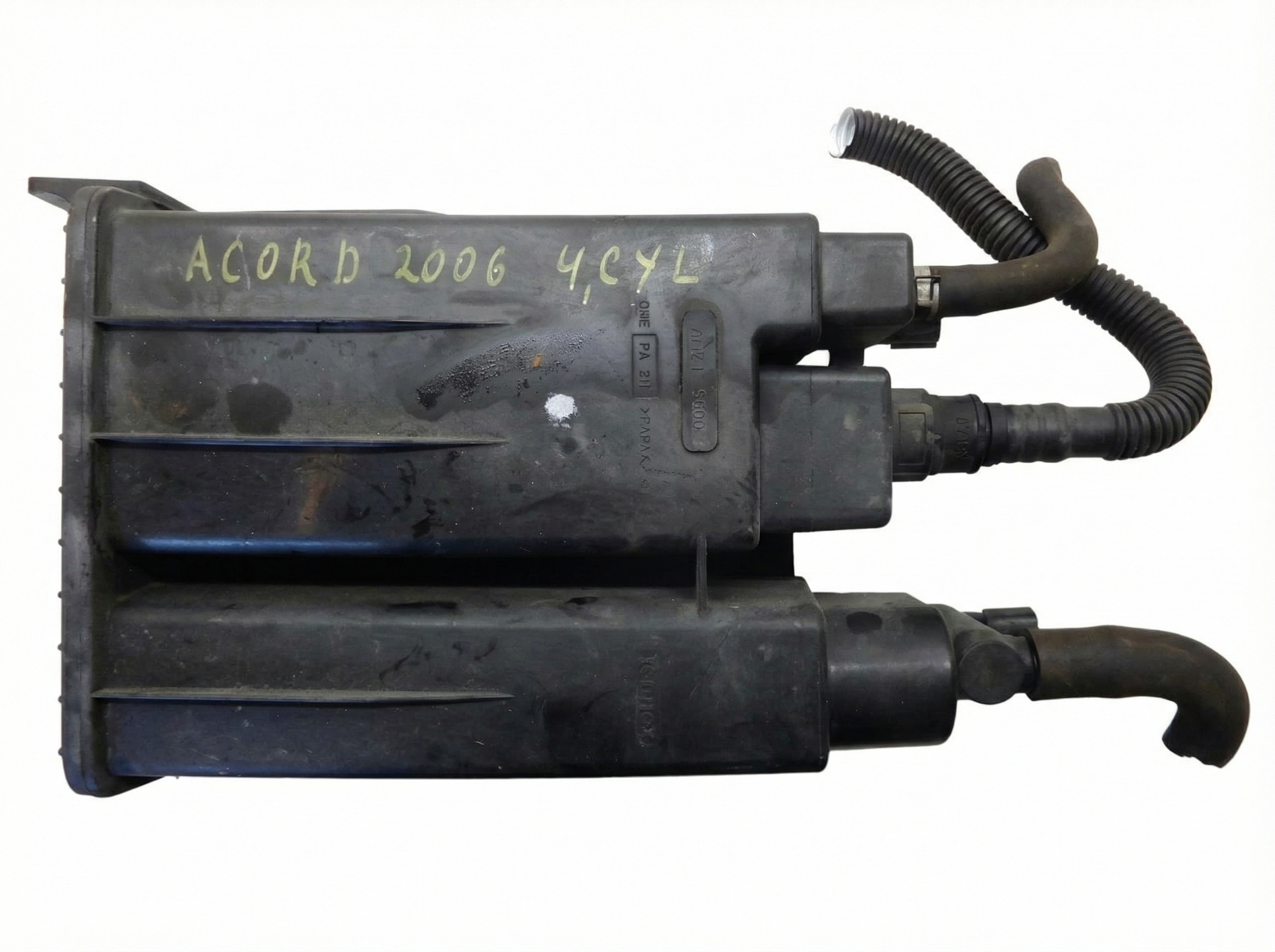
When a used part is the smart pick: A used OEM purge valve from a low-mileage donor vehicle is a reasonable choice for this repair. The part is not a high-wear item, and failure is typically due to electrical coil burnout rather than mechanical wear. A used part can offer OEM quality for a fraction of the price.
Donor-vehicle mileage cap: roughly under 120000 miles for the part to have meaningful remaining life.
What to inspect on the donor part:
- Check for cracks or damage on the plastic housing and hose nipples.
- Ensure the electrical connector pins are clean, straight, and free of corrosion.
- If possible, test the resistance with a multimeter before purchase to ensure it's within spec (approx. 25-55 ohms for 2.4L, ~33 ohms for 3.0L).
- Ask for the VIN of the donor car to verify it's from a compatible year and engine type.
Aftermarket brands forum-validated for this vehicle:
- Standard Motor Products (SMP)
- Dorman
- Wells
Brands owners have reported issues with on this vehicle:
- Unbranded, 'white-box' parts from online marketplaces should be avoided due to inconsistent quality control and high failure rates reported on forums.
Real Owner Stories
Aggregated from forums and TSBs cited above. Mileages and costs reflect what owners reported in those sources.
2004 Accord EX 4 cylinder — 205000 miles
Symptoms: Check Engine Light (CEL) with P0443 code.
What fixed it: The owner performed diagnostics using a 9V battery to confirm the solenoid clicked and checked for continuity on the valve pins, focusing on the connector to avoid unnecessary part replacement.
Source hint: Honda Accord Forum
2004-2008 Acura TL (3.2L V6)
Symptoms: Recurring 'Check Fuel Cap' message followed by a P0443 code.
What fixed it: Replacing the purge control solenoid valve (P/N 36162-RDV-J01). The replacement was described as an easy 10-minute process.
Source hint: Acurazine.com - 'Cel p0443'
2003-2011 Honda Element (2.4L 4-Cyl)
Symptoms: P0443 code triggered on a platform sharing the K-series engine.
What fixed it: Replacing the purge valve (P/N 36162-RAA-A01).
Source hint: Reddit r/HondaElement - 'P0443'
Related OBD-II Codes
Frequently Asked Questions
Is there a recall for the P0443 code on my 2003-2007 Honda Accord?
My dash says 'Check Fuel Cap' but my scanner shows P0443. Is the gas cap actually bad?
What is the correct resistance for the purge valve on the 2.4L engine?
Can I use a purge valve from a Honda Odyssey on my Accord V6 to save money?
Where is the purge valve located on the 2003-2007 Accord?
Is the P0443 code related to the common transmission failures in the 2003-2004 V6 models?
Helpful Videos

Used OEM Parts in Stock
New Aftermarket Parts Available


The information in this article is provided for general reference and educational purposes only. Vehicle specifications, procedures, and part compatibility can vary by production date, trim level, and region. Always consult your vehicle's factory service manual and verify part numbers before purchasing or performing repairs. Safety-critical components such as airbags, seat belts, and braking systems should be installed by a qualified professional.
- Honda Accord:
- 🧭 Diagnostic Flowchart
- 🎬 Helpful Videos
- 🛍️ Shop This Part
- What's Unique About the 2003-2007 Honda Accord
- Symptoms You May Notice
- Most Likely Causes
- Rare But Worth Checking
- Diagnosis Steps
- Parts You'll Likely Need
- Related Codes That Often Appear With This One
- Mechanic-Grade Diagnostic Values
- Scan Tool Commands That Help
- Wiring & Ground Locations
- Real Owner Repair Stories
- OEM Part Supersession History
- Other Known Issues on This Vehicle
- Used vs. New Parts: Buying Guide for This Vehicle
- Real Owner Stories
- 2004 Accord EX 4 cylinder — 205000 miles
- 2004-2008 Acura TL (3.2L V6)
- 2003-2011 Honda Element (2.4L 4-Cyl)
- Related OBD-II Codes
- Frequently Asked Questions
- 🎟️ Get 5% Off