

P0443 on 2017-2020 Hyundai Elantra: EVAP Purge Valve Circuit Causes and Fixes
On a 2017-2020 Hyundai Elantra with the 2.0L engine, code P0443 is almost always caused by a failed canister purge valve. This is an electrical circuit code, not a gas cap issue. The replacement part (OEM #28910-2E000) costs about $25-$40 and can be replaced by a DIYer in under 15 minutes with only a pair of pliers.
- P0443 is an electrical circuit code, not a leak code. Do not replace the gas cap to fix it.
- The most likely cause is a failed canister purge valve, OEM part number 28910-2E000.
- This is a very easy and inexpensive DIY repair that takes less than 15 minutes with basic tools like pliers.
- Symptoms beyond the check engine light can include a rough idle or trouble starting after getting gas.
- You can confirm the valve has failed using a multimeter to check for resistance; a good valve is 15-30 ohms.
What's Unique About the 2017-2020 Hyundai Elantra
For the sixth-generation (AD) Hyundai Elantra and its platform mates with the 2.0L Nu engine, the canister purge valve is a known high-failure item. The failure is typically internal to the valve's solenoid, causing an open or shorted circuit that the ECU immediately detects. Unlike some EVAP codes, this issue is rarely caused by a loose gas cap; the P0443 code points directly to an electrical fault in the purge circuit, making diagnosis straightforward.
Symptoms You May Notice
- Check Engine Light is on.
- Difficulty starting the engine, especially right after filling the gas tank. The engine may crank for an extended period before finally starting.
- Rough or unstable idle. The engine may hunt for idle speed or feel shaky when stopped.
- Slightly reduced fuel economy.
- A faint fuel odor may be noticeable in some cases if the valve is stuck open.
- Replacing the gas cap. A faulty gas cap causes EVAP leak codes (like P0455 or P0456), not an electrical circuit code like P0443.
- Replacing the charcoal canister or vent valve. These components are part of the EVAP system but are not related to the P0443 code, which specifically points to the purge valve's electrical circuit. A failure in these parts would set different codes, like P0441 (incorrect flow) or P0446 (vent control circuit).
Most Likely Causes
- Faulty Canister Purge Valve (Solenoid) 🔴 High Probability → Shop Vapor Canister The internal solenoid coil windings are prone to failing over time due to heat cycles in the engine bay, leading to an open or shorted circuit. This is a very common failure point across many Hyundai and Kia models using this part.
How to confirm: Disconnect the electrical connector from the purge valve. Use a multimeter set to Ohms (Ω) to measure the resistance between the two pins on the valve itself. A good valve should read between 15 and 30 ohms. A reading of infinity (OL) indicates an open circuit, and a reading near zero indicates a short. Both mean the valve is bad and needs replacement.
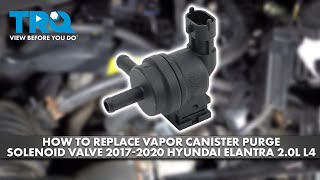
Typical fix: Replace the canister purge valve. This is a simple repair involving disconnecting two spring-clamp hoses and one electrical connector. It typically takes less than 15 minutes. 🎬 Watch this step-by-step guide to replacing the purge valve.
Est. part cost: $25-$45
Rare But Worth Checking
- Damaged Wiring or Connector: Visually inspect the wiring harness and connector leading to the purge valve for any signs of cracking, melting, rodent damage, or corrosion on the pins before replacing the valve.
- Blown Fuse: Check the fuse box in the engine bay for any blown fuses related to the emissions system. This is uncommon but easy to check and could save you from buying an unnecessary part.
- Faulty Powertrain Control Module (PCM): → Shop Engine Control Module (ECM) This is extremely rare and should only be considered after all other possibilities have been exhausted. A PCM failure would likely be accompanied by other trouble codes and drivability issues.
Diagnosis Steps
- Scan the vehicle's computer to confirm P0443 is the active code and check for any other related codes like P0444 or P0445.
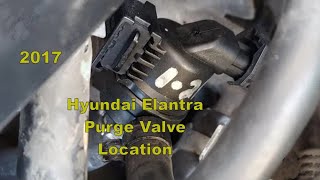
- Locate the canister purge valve. On the 2017-2020 Elantra 2.0L, it is mounted directly on the engine, near the intake manifold on the driver's side, with two hoses and an electrical connector attached.
- Visually inspect the electrical connector and wiring harness for any obvious damage, corrosion, or loose connections.
- Disconnect the electrical connector. Use a multimeter to test the resistance across the two pins of the purge valve itself. The reading should be between 15-30 ohms. If it is 'OL' (Open Loop/infinity) or near 0 ohms, the valve has failed and must be replaced.
- If the valve's resistance is good, check for power at the connector. Turn the ignition to the 'ON' position (engine off). Use a multimeter or test light to check for battery voltage at one of the pins in the harness connector.
- If power is present and the valve's resistance is good, the issue may be in the ground-side control wire going back to the PCM or the PCM itself. This is rare and advanced diagnosis is best left to a professional.
- If the valve is confirmed bad via the resistance test, replace it. This is the outcome in over 95% of cases for this code on this car.
Parts You'll Likely Need
- Canister Purge Valve
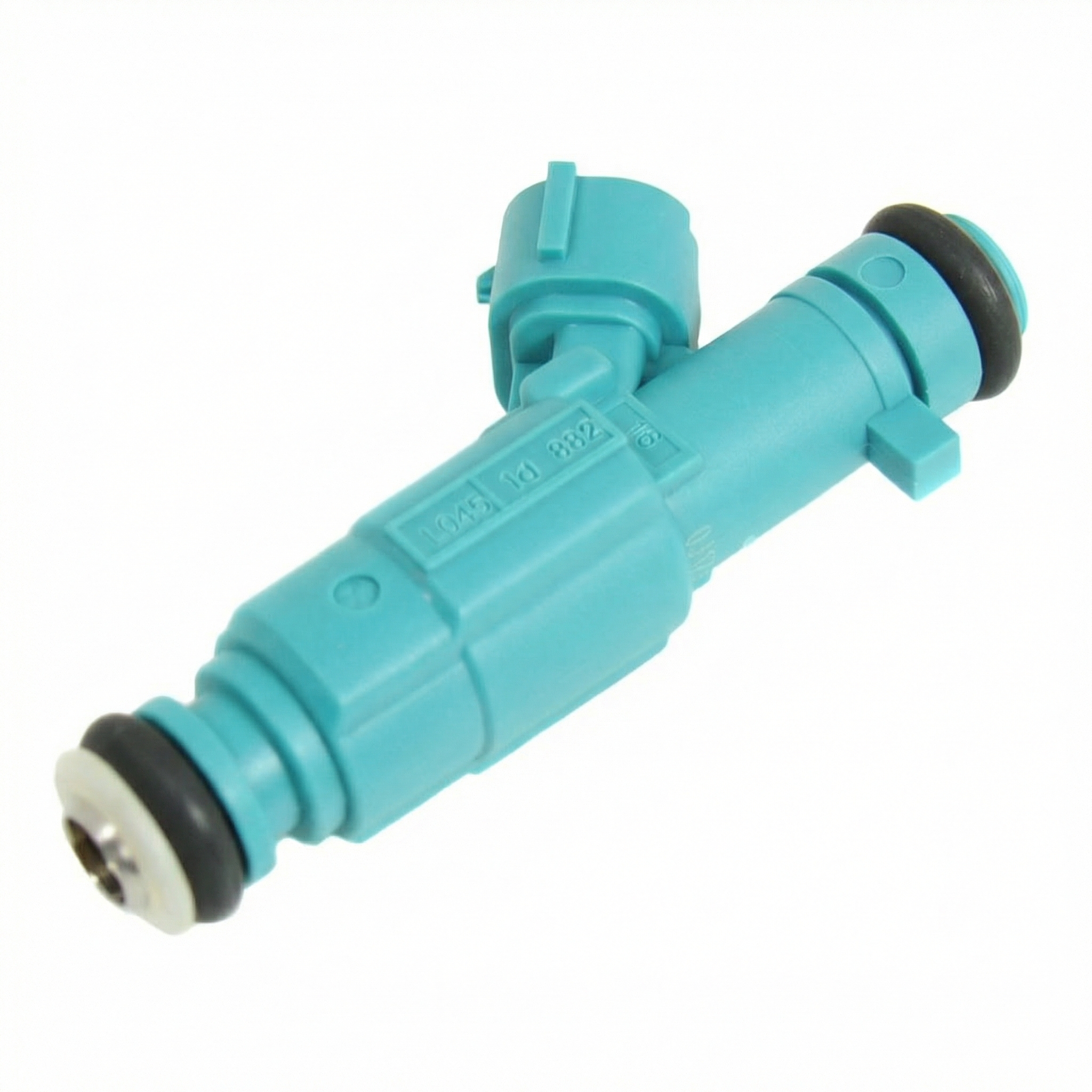
(OEM #28910-2E000)— This is the component that fails electrically, causing the P0443 circuit code. It is a very common failure point on this vehicle and its platform mates.
Trusted brands: Hyundai / Kia (Genuine OEM), Bosch (0 280 142 505), Standard Motor Products (CP756), Dorman (911-383)
OEM price range: $26-$40
Aftermarket price range: $20-$35
Related Codes That Often Appear With This One
- P0444 — Indicates 'Purge Control Valve Circuit Open', which is a more specific version of the P0443 general circuit fault.
- P0445 — Indicates 'Purge Control Valve Circuit Shorted', another specific version of the P0443 fault.
- P0441 — Indicates 'Incorrect Purge Flow'. While P0443 is electrical, a valve that is electrically failing may also cause intermittent flow problems, sometimes causing both codes to appear.
Platform-Specific Known Issues
- Owner Experience: A user on a Hyundai forum with a 2017 Elantra reported getting the P0443 code along with a rough idle. After confirming the gas cap was tight, they tested the purge valve with a multimeter and got an 'open circuit' reading. They replaced the valve (part #28910-2E000) in their driveway in 10 minutes using only pliers for the hose clamps, which resolved the code and the rough idle immediately.
Mechanic-Grade Diagnostic Values
- Canister Purge Valve Solenoid Resistance — expected: 15 to 30 Ohms (Ω) across the two pins on the valve. Some sources indicate a new OEM part may be closer to 29 Ω.. Failure: A reading of infinite ohms (OL - Open circuit) or near-zero ohms (Short circuit) indicates a failed valve solenoid.
- Purge Valve Connector Voltage (Key On, Engine Off) — expected: Approximately 11-14 Volts (battery voltage) on Pin 2 (power supply) of the harness-side connector.. Failure: No voltage or significantly low voltage suggests a problem upstream in the circuit, such as a blown fuse or a wiring break, not the valve itself.
- Purge Valve Control Signal (Scan Tool Commanded ON) — expected: Near 0 Volts on Pin 1 (control wire) of the harness-side connector when the PCM commands the valve ON.. Failure: Voltage does not drop to near zero when commanded, indicating a wiring issue to the PCM or a faulty PCM driver.
Scan Tool Commands That Help
- Hyundai GDS / Professional OBD-II Scanner: EVAP Purge Valve Actuation Test / Output Control — Use this to command the purge valve to open and close manually. A clicking sound from the valve when commanded ON/OFF confirms the PCM driver and wiring are likely good, and the valve's coil is energizing. Lack of a click points to a failure in the valve or circuit. This test can quickly verify function without removing the part.
Wiring & Ground Locations
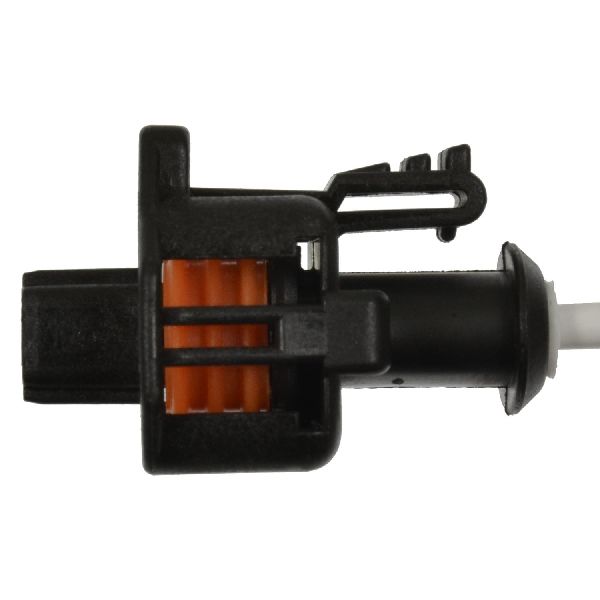
- Purge Control Solenoid Valve (PCSV) Connector — On the purge valve itself, located on the driver's side of the engine near the intake manifold.. This 2-pin connector is where all critical electrical tests are performed. Pin 2 is the power supply (should have battery voltage with key on). Pin 1 is the ground-side control wire that the PCM pulses to open the valve. Testing here differentiates a bad valve from a wiring or PCM problem.
Real Owner Repair Stories
- YouTube User 'Tony' (2017 Hyundai Elantra 2.0L) — Check Engine Light with codes P0443, P0444, P0445, P0441, P0442, P0456.
❌ Tried (didn't work) The user did not report trying other fixes first; they went straight to replacing the purge valve.
✅ What actually fixed it Replacing the vapor purge valve (OEM part #28910-2E000) resolved the check engine light. The user demonstrated the location and simple replacement process using only needle-nose pliers.
Diagnostic Flowchart
Other Known Issues on This Vehicle
Issues unrelated to this code that are worth knowing about as an owner of this generation:
- Excessive Oil Consumption 🔴 High — Widespread issue on the 2.0L Nu MPI engine, can start as early as 60,000 miles. Many owners report consuming over a quart of oil every 1,000-2,000 miles. (Ref: Recall 21V301000 (NHTSA ID) was issued for 2019-2020 models for improperly heat-treated piston oil rings. TSB 21-EM-003H provides guidelines for oil consumption testing.)
- Ignition Coil Failure 🟠 Medium — Common failure item between 50,000 and 90,000 miles, often causing a misfire code (e.g., P0301-P0304) and rough running.
- Piston Slap / Engine Ticking 🟠 Medium — A metallic ticking or knocking noise, especially on cold starts, is a well-documented symptom related to piston wear in the 2.0L Nu engine. It is often a precursor to the excessive oil consumption issue. (Ref: Related to the oil consumption recall and TSBs. Hyundai has a Piston-ring Noise Sensing System (PNSS) software update to detect this.)
- CVT Transmission Failure (2020 models) 🔴 High — Some 2020 Elantras equipped with the CVT (IVT) have experienced premature failure, with symptoms like aggressive slowing when coasting, delayed engagement, and clunking. Some owners report needing multiple transmission replacements.
- Paint Peeling (Especially on White cars) 🟡 Low — A widely reported cosmetic issue where the white paint in particular chips and peels off in large flakes. Hyundai has extended warranty coverage for this issue on certain models. (Ref: Warranty Extension Program (TXXI))
Used vs. New Parts: Buying Guide for This Vehicle
When a used part is the smart pick: For this specific repair, buying a used part is NOT recommended. The canister purge valve is a known high-failure component with a limited lifespan due to internal electrical coil degradation from engine heat cycles.
What to inspect on the donor part:
- Not applicable, as a used part is strongly discouraged. The low cost of a new part (~$25-$40) makes the risk of premature failure from a used part a poor value proposition. One forum user noted that used valves from a junkyard showed wildly inconsistent resistance readings, indicating internal degradation.
OEM-only on this vehicle (don't cheap out):
- While not strictly 'OEM-only', using a Genuine Hyundai/Kia part or a reputable OEM-supplier brand is highly recommended for longevity.
Aftermarket brands forum-validated for this vehicle:
- Bosch
- Standard Motor Products (SMP)
Brands owners have reported issues with on this vehicle:
- Unnamed or 'white-box' brands from online marketplaces may have fitment issues or premature failures. Given the low cost of a quality part, it is not worth the risk.
Real Owner Stories
Aggregated from forums and TSBs cited above. Mileages and costs reflect what owners reported in those sources.
2017 Hyundai Elantra 2.0L
Symptoms: Check engine light with code P0443 and a rough idle. The owner first checked the gas cap but the issue persisted.
What fixed it: Tested the purge valve with a multimeter and found an 'open circuit' reading. Replaced the valve (part #28910-2E000) using only pliers for the hose clamps.
Source hint: vehicle_specific_issues: Owner Experience on a Hyundai forum
Related OBD-II Codes
Frequently Asked Questions
Where is the canister purge valve located on my 2017-2020 Elantra 2.0L?
What is the specific part number I need to fix the P0443 code on my Elantra?
How can I test if the purge valve is actually bad before buying a new one?
Is there a recall for the engine issues like oil consumption on the 2019-2020 Elantra?
Can I use a used purge valve from a junkyard to save money?
Does the P0443 code affect the car's drivability?
Helpful Videos
Used OEM Parts in Stock

New Aftermarket Parts Available


The information in this article is provided for general reference and educational purposes only. Vehicle specifications, procedures, and part compatibility can vary by production date, trim level, and region. Always consult your vehicle's factory service manual and verify part numbers before purchasing or performing repairs. Safety-critical components such as airbags, seat belts, and braking systems should be installed by a qualified professional.
- Hyundai Elantra:
- 🧭 Diagnostic Flowchart
- 🎬 Helpful Videos
- 🛍️ Shop This Part
- What's Unique About the 2017-2020 Hyundai Elantra
- Symptoms You May Notice
- Most Likely Causes
- Rare But Worth Checking
- Diagnosis Steps
- Parts You'll Likely Need
- Related Codes That Often Appear With This One
- Platform-Specific Known Issues
- Mechanic-Grade Diagnostic Values
- Scan Tool Commands That Help
- Wiring & Ground Locations
- Real Owner Repair Stories
- Other Known Issues on This Vehicle
- Used vs. New Parts: Buying Guide for This Vehicle
- Real Owner Stories
- 2017 Hyundai Elantra 2.0L
- Related OBD-II Codes
- Frequently Asked Questions
- 🎟️ Get 5% Off