

P0443 on 2011-2014 Hyundai Sonata: EVAP Purge Valve Circuit Causes and Fixes
For a 2011-2014 Hyundai Sonata, code P0443 almost always points to a failed EVAP canister purge valve. It's an affordable part, typically under $50 for an aftermarket replacement, and is a simple DIY fix for most owners, often taking less than 15 minutes.
- P0443 on a 2011-2014 Sonata is an electrical circuit code for the EVAP purge valve.
- The most likely cause by a wide margin is a failed purge valve itself, which is a known weak point.
- This is a very DIY-friendly repair, taking less than 30 minutes with basic tools, as the valve is easily accessible in the engine bay.
- A classic symptom confirming a bad purge valve is difficulty starting the car right after you get gas.
- Don't misdiagnose this as a gas cap or other EVAP leak issue; P0443 specifically points to the purge valve's electrical circuit.
- Before replacing, you can confirm failure with a multimeter by checking for resistance between 15-30 ohms.
What's Unique About the 2011-2014 Hyundai Sonata
The 2011-2014 Hyundai Sonata (YF generation) is known for having issues with its EVAP purge valve. This component is a frequent failure point, often leading to codes like P0443. The valve is conveniently located on top of the engine's intake manifold, making it exceptionally easy to access and replace compared to many other vehicles where it might be buried. The repair is considered beginner-friendly and can often be completed in under 30 minutes.
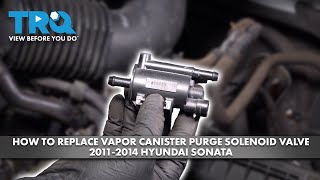
🎬 See this quick walkthrough on how to replace the valve.Symptoms You May Notice
- Check Engine Light is on
- Slightly rough idle, sometimes fluctuating
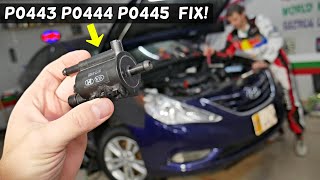
- Difficulty starting the engine immediately after refueling. The engine may crank for an extended time or require throttle input to start. 🎬 Watch why your Sonata won't start after getting gas.
- A faint smell of fuel
- Reduced fuel economy
- Replacing the gas cap. While a loose or faulty gas cap can cause other EVAP codes (like P0455 for a large leak), it will not cause a P0443 circuit code.
- Replacing the charcoal canister or vent valve. These components are part of the EVAP system but are not related to the P0443 circuit code, which specifically points to the purge valve's electrical circuit. A bad vent valve is more likely to cause a P0449 code.
Most Likely Causes
- Faulty EVAP Purge Control Valve 🔴 High Probability The purge valve on this generation of Sonata is a very common failure item. It can get stuck open, stuck closed, or fail electrically due to an internal short or open in the solenoid coil.
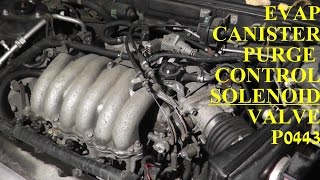
How to confirm: With the engine running, disconnect the hose on the valve that leads to the charcoal canister. There should be no vacuum felt at idle when the engine is cold. If there is suction, the valve is stuck open. You can also test the valve's resistance with a multimeter; disconnect the electrical connector and measure the resistance between the two pins. 🎬 Watch: How to test and replace the purge control solenoid. A good valve should read between 15 and 30 ohms. If the reading is infinite (open) or zero (short), the valve is bad. You can also use a scan tool to command it open and closed while checking for function.
Typical fix: Replace the purge control valve. It is located on top of the intake manifold and is held in place by a simple bracket and connected by two hoses and one electrical connector.
Est. part cost: $25-$75 - Damaged Wiring or Connector 🟡 Medium Probability The wiring harness in the engine bay is exposed to heat and vibration, which can cause wires to become brittle and crack over time. Rodent damage is also a possibility.
How to confirm: Visually inspect the wiring harness and connector going to the purge valve for any signs of cracking, fraying, corrosion, or rodent chew marks. Use a multimeter to check for 12V power at the connector with the key on (one pin should have power). Check for continuity on the ground wire back to the PCM. The PCM provides a pulsed ground to activate the valve, so a test light connected to battery positive should flash when probing the ground side of the connector while the engine is running and being revved.
Typical fix: Repair the damaged section of wire or replace the connector pigtail.
Est. part cost: $5-$25
Rare But Worth Checking
- Blown Fuse: The purge valve circuit is protected by a fuse, often shared with other emissions components. While not common to blow without another issue (like a shorted valve or wire), it's a quick and easy check in the engine bay fuse box before replacing parts.
- Faulty Powertrain Control Module (PCM): → Shop Engine Control Module (ECM) This is extremely rare. The PCM's internal driver for the purge valve circuit can fail, but this should be the absolute last consideration after all other possibilities (valve, wiring, fuse) have been thoroughly ruled out.
Diagnosis Steps
- Scan the vehicle for trouble codes. Confirm P0443 is present and note any other related codes like P0444 or P0445.
- Visually inspect the purge valve, its connector, and the surrounding wiring for any obvious damage, corrosion, or loose connections.
- Check the fuse for the EVAP system in the vehicle's fuse box. Consult the owner's manual for the specific fuse location.
- With the ignition on (engine off), disconnect the purge valve connector. Use a multimeter to verify that one of the pins has battery voltage (approx. 12V).
- Test the purge valve itself. Check the resistance across its two terminals with a multimeter. The reading should be within the typical range of 15-30 ohms. If it's out of spec, the valve is bad.
- If the valve resistance is good, test for mechanical function. Apply 12V and ground directly to the valve's pins; you should hear an audible 'click' as the solenoid activates. If it doesn't click, it's mechanically stuck.
- If the valve and power supply are good, check the ground signal from the PCM. A test light connected to battery positive should flash when probing the ground side of the connector while the engine is running and revved (or commanded by a scan tool). A steady light or no light indicates a wiring or PCM problem.
- If the valve is faulty, replace it. If the wiring is damaged, repair it. If power is missing, trace it back from the fuse. If the ground signal is missing, the issue may be in the wiring to the PCM or the PCM itself (rare).
Parts You'll Likely Need
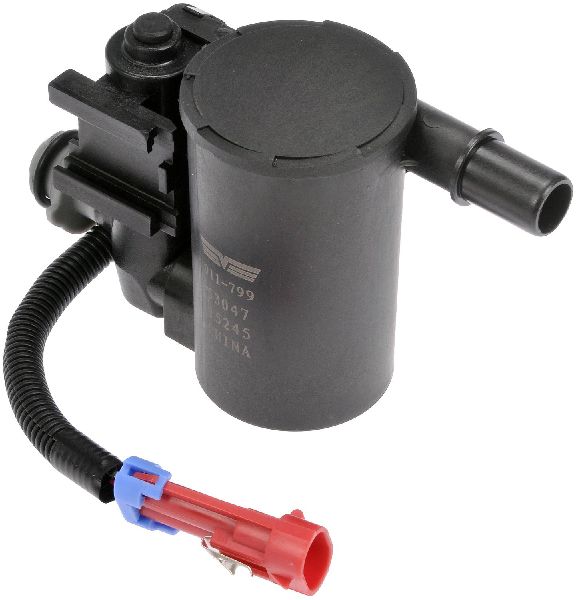
- Vapor Canister Purge Valve
(OEM #28910-2E000)— This is the most common failure point for the P0443 code on this specific vehicle. Note that some earlier or different Hyundai models use part 28910-26900, which looks similar but may have different specifications; 28910-2E000 is correct for this Sonata generation.
Trusted brands: Hyundai (OEM), Standard Motor Products (CP756), Dorman (911-383), Bosch
OEM price range: $60-$80
Aftermarket price range: $25-$50
Related Codes That Often Appear With This One
- P0444 — This code indicates 'Purge Control Valve Circuit Open', which is a more specific version of the P0443 fault, often seen together.
- P0445 — This code indicates 'Purge Control Valve Circuit Shorted', another specific fault related to the same component.
- P0441 — This code for 'Incorrect Purge Flow' can sometimes accompany a P0443 if the electrical fault is intermittent and leads to the valve being stuck open or closed, affecting flow.
Platform-Specific Known Issues
- Owner Experience: A user on Reddit with a 2011 Sonata reported a P0441 code (Incorrect Purge Flow) and the classic symptom of the car not wanting to start after filling the gas tank, which points directly to a faulty purge valve.
- Repair Story: Multiple YouTube videos from channels like 'Auto Repair Guys' specifically address P0443, P0444, and P0445 on 2013 Sonatas, confirming the purge valve as the primary culprit and demonstrating the easy replacement.
- Diagnostic Tip: On forums like hyundai-forums.com, owners frequently advise new members with P0443 to simply replace the purge valve as the first step, as it resolves the issue over 90% of the time for a low cost, often before performing extensive electrical diagnostics.
Mechanic-Grade Diagnostic Values
- Purge Valve Solenoid Coil Resistance — expected: 15 - 30 Ω. Failure: An infinite reading (OL) indicates an open circuit; a zero or near-zero reading indicates a short circuit.
- Purge Valve Connector Power Pin Voltage — expected: Battery Voltage (approx. 12V) with ignition on, engine off.. Failure: No voltage indicates a problem with the power supply wire or the fuse.
- Purge Valve Control Circuit Voltage (PCM Monitoring) — expected: Varies by state. When valve is commanded OFF, voltage should be high. When commanded ON, voltage should be low.. Failure: Code sets if PCM sees < 5.8 V when commanded OFF, or > 11.5 V when commanded ON (values are representative from a similar system).
- Purge Valve Ground Path Integrity — expected: < 0.5 V measured between the valve's ground wire and chassis ground.. Failure: Voltage > 0.5 V indicates high resistance or a poor ground connection that needs to be cleaned or repaired.
Scan Tool Commands That Help
- Hyundai GDS or equivalent professional scan tool: EVAP Purge Solenoid Actuation Test (or similar name like 'Vapor Management Valve Command') — This bidirectional command allows the technician to manually cycle the purge valve on and off to verify its function. While monitoring the valve, you should hear an audible click each time it's activated. This confirms the PCM driver and wiring are capable of operating the solenoid, isolating the fault to a mechanically stuck valve if it clicks but doesn't flow correctly, or an electrical issue if it doesn't click at all.
- Hyundai GDS or equivalent professional scan tool: Monitor Fuel Tank Pressure (FTP) PID during EVAP test — This is used to test for a mechanically stuck-open purge valve. With the engine running, command the purge valve OFF and the canister vent valve ON (closed). Then, monitor the Fuel Tank Pressure sensor reading. If the purge valve is properly sealed, the pressure should remain steady. If the pressure begins to drop (indicating a vacuum is being pulled), it confirms the purge valve is leaking vacuum from the intake manifold into the EVAP system when it should be closed.
Wiring & Ground Locations
- Purge Valve Connector — On the purge valve itself, located on the driver's side of the intake manifold.. This 2-pin connector is the primary point for electrical testing. One pin receives 12V power with the ignition on, and the other is the ground-side control wire that is pulsed by the PCM to activate the valve.
- G01 / GE02 — Main engine compartment ground point, typically located on the left (driver's side) fender or inner structure.. While the purge valve is controlled directly by the PCM, the PCM itself relies on clean chassis grounds. A corroded or loose main engine ground can cause a variety of unpredictable electrical issues, including faulty sensor readings or driver circuit errors. Verifying this ground is clean and tight is a crucial step in diagnosing any complex electrical fault.
- PCM Connector — The Powertrain Control Module (PCM) is located in the engine compartment, typically on the driver's side.. This is the final destination for the purge valve's control wire. If voltage and valve tests are good, a continuity test must be performed on the control wire between the valve connector and the corresponding pin at the PCM connector to rule out a break in the wire.
Real Owner Repair Stories
- Kelley Blue Book Forum User 'Catlady148' (2004 Hyundai Santa Fe (similar EVAP system design)) — Check Engine Light with code P0441 (Incorrect Purge Flow)
❌ Tried (didn't work) Replacing the purge control valve.
✅ What actually fixed it Replacing the gas cap with a new OEM part resolved the code after the new purge valve made no difference.
OEM Part Supersession History
28910-2E000→N/A— This part number appears to be stable and has not been superseded.
Heads up: Multiple parts vendors list this part number as compatible for Hyundai models from 2011 through 2020, indicating no significant revisions or compatibility issues within the 2011-2014 Sonata's generation.
Diagnostic Flowchart
Real Owner Stories
Aggregated from forums and TSBs cited above. Mileages and costs reflect what owners reported in those sources.
2011 Hyundai Sonata
Symptoms: Car not wanting to start after filling the gas tank, accompanied by an Incorrect Purge Flow code.
What fixed it: Replacing the faulty purge valve.
Source hint: Reddit r/MechanicAdvice: 'Strange evap issues (Hyundai sonata 2011)'
2013 Hyundai Sonata
Symptoms: Check engine light illuminated with codes P0443, P0444, and P0445 present.
What fixed it: Replacing the EVAP purge valve.
Source hint: YouTube channel 'Auto Repair Guys' addressing P0443, P0444, and P0445 on 2013 Sonatas
2011-2014 Hyundai Sonata
Symptoms: P0443 code accompanied by a hard-start condition immediately after fueling.
What fixed it: Successful replacement of the purge valve.
Source hint: Hyundai-Forums.com: Numerous threads discuss P0443 and the hard-start-after-fueling symptom
Related OBD-II Codes
Frequently Asked Questions
Why does my 2011-2014 Sonata struggle to start right after I fill up the gas tank?
What is the typical resistance reading for a good purge valve on this generation of Sonata?
I have a P0443 code on my Sonata. Should I do extensive electrical testing first?
Where is the purge control valve located on the 2011-2014 Sonata?
Are there other Hyundai or Kia models that share this exact P0443 purge valve issue?
Helpful Videos

Used OEM Parts in Stock

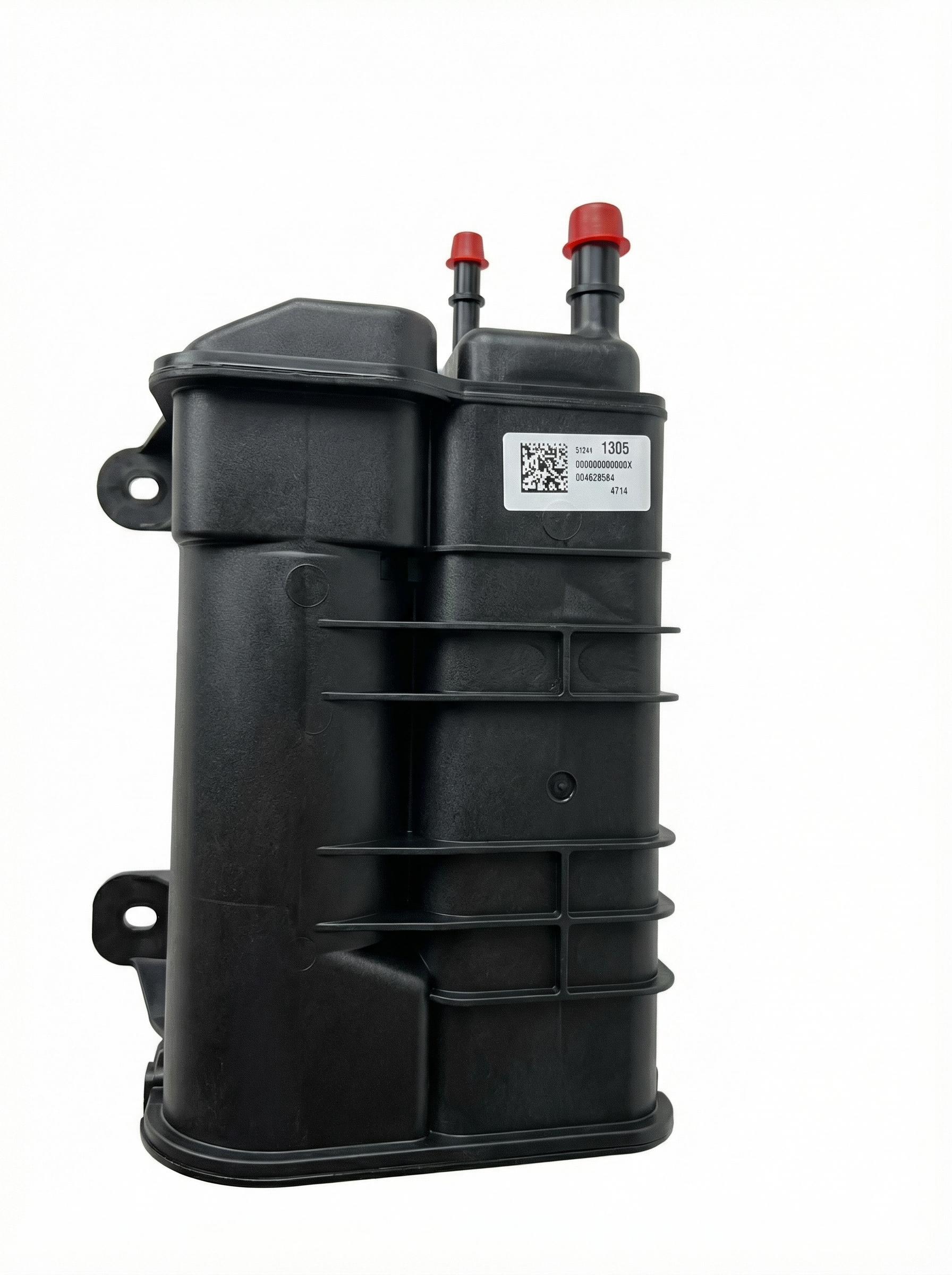
New Aftermarket Parts Available


The information in this article is provided for general reference and educational purposes only. Vehicle specifications, procedures, and part compatibility can vary by production date, trim level, and region. Always consult your vehicle's factory service manual and verify part numbers before purchasing or performing repairs. Safety-critical components such as airbags, seat belts, and braking systems should be installed by a qualified professional.
- Hyundai Sonata:
- 🧭 Diagnostic Flowchart
- 🎬 Helpful Videos
- 🛍️ Shop This Part
- What's Unique About the 2011-2014 Hyundai Sonata
- Symptoms You May Notice
- Most Likely Causes
- Rare But Worth Checking
- Diagnosis Steps
- Parts You'll Likely Need
- Related Codes That Often Appear With This One
- Platform-Specific Known Issues
- Mechanic-Grade Diagnostic Values
- Scan Tool Commands That Help
- Wiring & Ground Locations
- Real Owner Repair Stories
- OEM Part Supersession History
- Real Owner Stories
- 2011 Hyundai Sonata
- 2013 Hyundai Sonata
- 2011-2014 Hyundai Sonata
- Related OBD-II Codes
- Frequently Asked Questions
- 🎟️ Get 5% Off