

P0443 on 2012-2018 Jeep Wrangler 3.6L: EVAP Purge Valve Circuit Fault Causes and Fixes
For a 2012-2018 Jeep Wrangler with the 3.6L engine, code P0443 almost always points to a failed EVAP purge valve/solenoid. This is a very common and easy DIY fix, with the part costing between $40 and $80. The Mopar part number is 04891741AC, which supersedes 04891741AA.
- P0443 on your Wrangler indicates an electrical problem with the EVAP purge valve circuit, not a gas cap leak.
- The most common cause by far is a failed purge valve solenoid.
- This is a very DIY-friendly repair that can be done in under 30 minutes with basic tools.
- The purge valve is located on the driver's side of the engine, making it easy to access.
- Before buying parts, quickly check the fuse and the electrical connector for obvious damage.
What's Unique About the 2012-2018 Jeep Wrangler
This guide specifically covers the Jeep Wrangler JK/JKU models from 2012-2018 equipped with the 3.6L Pentastar V6. The earlier 2007-2011 models used a 3.8L V6, which has a different engine layout and part numbers, though it can also suffer from P0443. On the 3.6L Pentastar, the P0443 code is a very common issue, and the purge valve itself is a frequent failure point that is conveniently located on top of the engine, making it an easy repair for most owners. The 3.8L V6 in the 2007-2011 models also experiences this code, but the valve is located in a slightly different position and may have different diagnostic considerations.
Symptoms You May Notice
- Check Engine Light is on
- Slightly rough idle or engine hesitation, particularly at a stop.
- Difficulty starting the engine, especially after refueling (classic sign of a stuck-open valve).
- Slight decrease in fuel economy.
- Possible fuel odor.
- Engine stalling in severe cases.
- Replacing the gas cap. A loose or faulty gas cap typically causes a P0455, P0456, or P0457 (EVAP leak) code, not a P0443 circuit code.
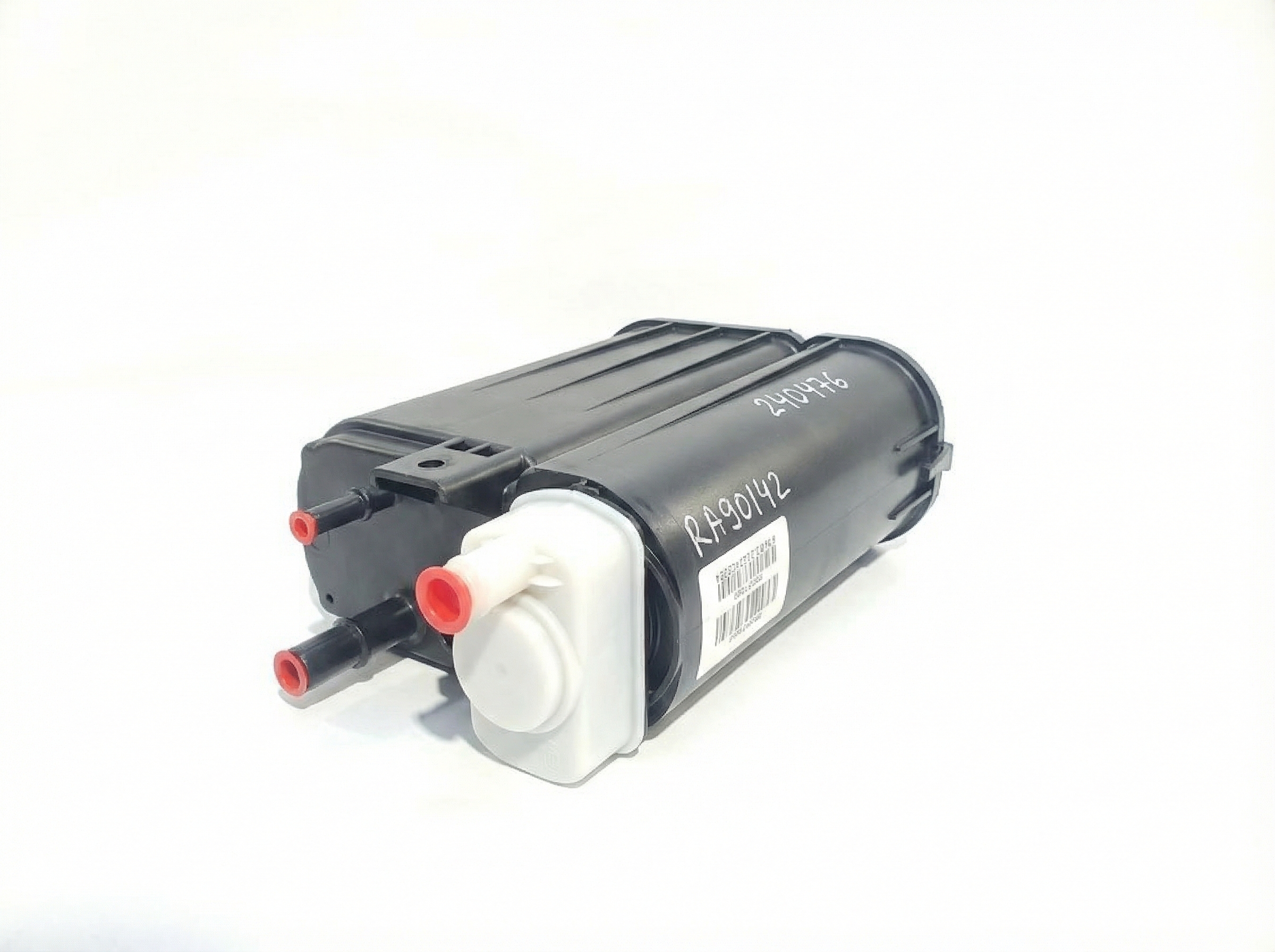
- Replacing the EVAP canister. The canister is a passive component for storing vapors. A P0443 code points to an electrical issue with the purge valve circuit, not the canister itself.
Most Likely Causes
- Failed EVAP Purge Valve/Solenoid 🔴 High Probability → Shop Vapor Canister The purge valve is an electromechanical component that cycles thousands of times, and the internal solenoid coil or mechanical valve is a known failure point on many Chrysler/Jeep vehicles with the 3.6L Pentastar engine. It can fail electrically (causing the P0443 circuit code) or mechanically (getting stuck open or closed).
How to confirm: Use a scan tool with bidirectional controls to command the purge valve open and closed; listen for a clicking sound. Alternatively, disconnect the valve and test the coil's resistance with a multimeter; a typical reading should be between 22-30 ohms. An open circuit (infinite resistance) or a short (zero resistance) indicates a bad solenoid. You can also try blowing through the valve when it's disconnected; no air should pass when it's not energized (in its normally closed state).
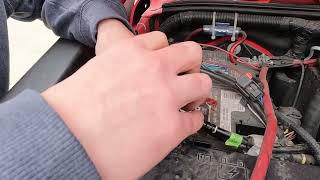
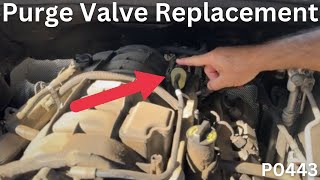
Typical fix: Replace the EVAP purge valve. It is located on the driver's side of the engine and slides onto a bracket, with two hoses and one electrical connector. The replacement is a simple, tool-free job for many. 🎬 Watch: This quick walkthrough shows how to replace the JK purge valve.
Est. part cost: $40-$80 - Damaged Wiring or Connector 🟡 Medium Probability The wiring harness in the engine bay is exposed to heat, vibration, and potential rodent damage, which can cause wires to become brittle, break, or connections to corrode. This can lead to an open or short in the circuit.
How to confirm: Visually inspect the wiring harness and connector going to the purge valve for any signs of cracking, melting, rodent chew marks, or corrosion inside the connector pins. Use a multimeter to check for 12V power at the connector with the key on, and check for a ground signal from the PCM. A test light can also confirm power and ground signals.
Typical fix: Repair the damaged section of wire or clean/replace the electrical connector. In one documented case on a 2007 JK, a user found 12V at the connector but the valve wouldn't activate; the issue was a poor ground connection in the harness.
Est. part cost: $5-$25 - Blown Fuse ⚪ Low Probability
How to confirm: Check the fuse box (Totally Integrated Power Module or TIPM) for any blown fuses related to the emissions system or PCM. Your owner's manual will have a diagram of the fuse layout. A blown fuse often indicates a short circuit in the wiring or the solenoid itself.
Typical fix: Replace the blown fuse. If the fuse blows again immediately, it confirms a short circuit in the system that needs to be diagnosed further.
Est. part cost: $1-$5
Rare But Worth Checking
- Faulty Powertrain Control Module (PCM): → Shop Engine Control Module (ECM) This is extremely rare. The PCM's internal driver for the purge valve circuit can fail. This should only be considered after all other possibilities, including the valve, wiring, and fuse, have been exhaustively tested and ruled out.
Diagnosis Steps
- Read the code with an OBD-II scanner to confirm P0443 is present.
- Perform a visual inspection of the EVAP purge valve, located on the driver's side of the 3.6L engine. Check its electrical connector and nearby wiring for any obvious damage, looseness, or corrosion.
- Check the fuse for the EVAP system in the vehicle's fuse box (TIPM). Replace if blown.
- With the ignition on (engine off), use a multimeter to verify that one of the pins in the purge valve's electrical connector has 12 volts. The other wire is the ground control from the PCM.
- If you have a capable scan tool, use its bidirectional function to command the purge solenoid on and off. You should hear an audible click from the valve.
- If the valve does not click, the valve itself is the most likely failure. If it does click, the problem may be intermittent or there could be an issue with the wiring providing an incomplete circuit.
- If no bidirectional scanner is available, you can test the solenoid's internal resistance with a multimeter (disconnect it first). A good valve should read between 22 and 30 ohms. An open circuit (infinite resistance) or a short (zero resistance) indicates a bad solenoid.
- Based on the high probability of failure, if power is present at the connector and no wiring damage is visible, replacing the purge valve is the most logical next step. The part is relatively inexpensive and the repair is simple.
Parts You'll Likely Need
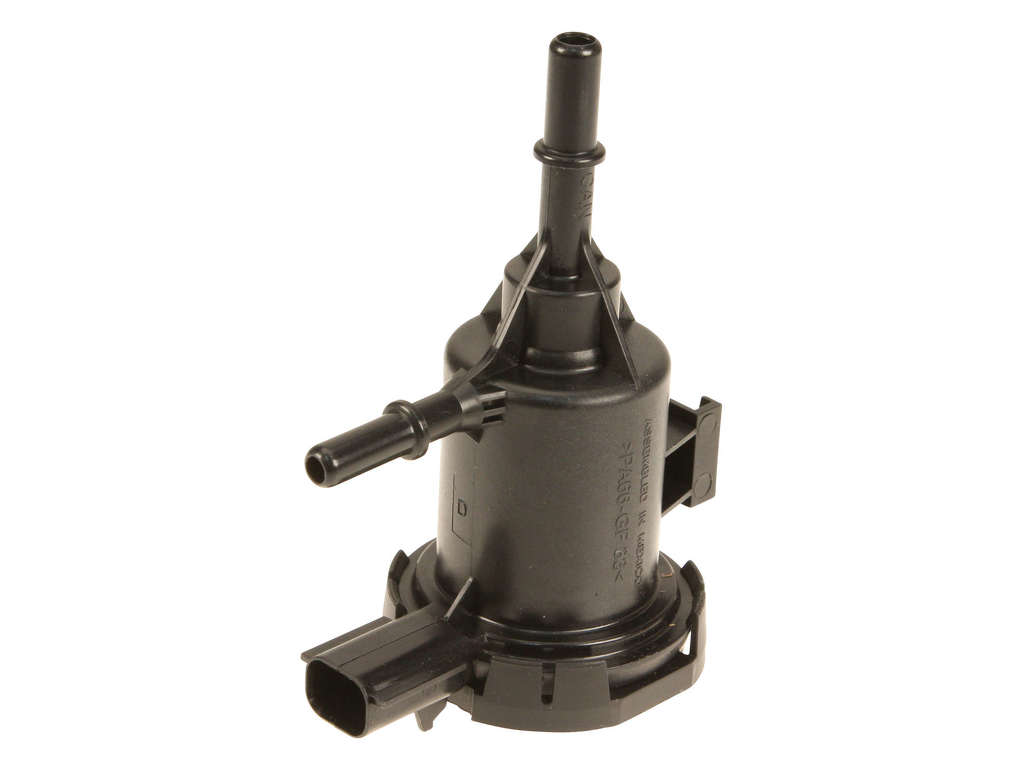
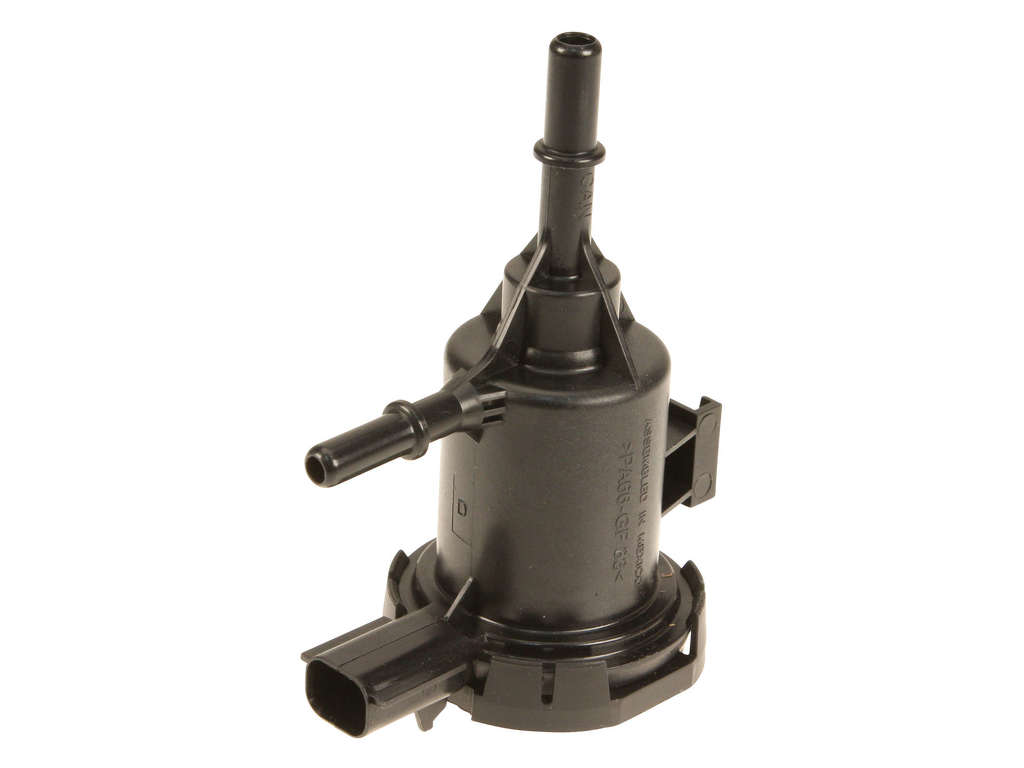
- Vapor Canister Purge Valve / Solenoid
(OEM #04891741AC)— This is the most common failure point for code P0443 on the 3.6L Pentastar engine. The internal solenoid coil fails or the mechanical valve gets stuck. The part number 04891741AC supersedes the earlier 04891741AA.
Trusted brands: Mopar, Dorman (911-482), Standard Motor Products (CP591)
OEM price range: $60-$80
Aftermarket price range: $30-$60
Related Codes That Often Appear With This One
- P0441 — P0441 (Incorrect Purge Flow) can sometimes appear with P0443 if the valve is failing in a way that affects both its electrical integrity and its ability to flow correctly.
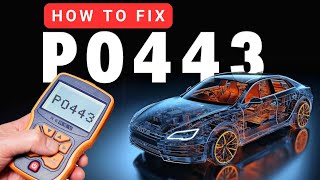
- P0444 — P0444 indicates an 'Open Circuit' for the purge valve, which is a more specific version of the P0443 general circuit malfunction. They both point 🎬 See this guide for diagnosing and fixing P0443 circuit malfunctions. to a problem with the valve's electrical connection or the valve itself.
- P0445 — P0445 indicates a 'Shorted Circuit' for the purge valve. This is a more specific version of the P0443 general circuit fault.
Technical Service Bulletins (TSBs) & Recalls
- TSB 08-255-23: While for newer Jeeps, it notes that a loose ground cable can cause P0443 along with other DTCs, highlighting the importance of checking electrical basics.
- TSB S2025000002: Issued for 2020 Jeep Gladiators (which share the 3.6L Pentastar) for a check engine light with codes P0441, P0443, or P0449, indicating this is a recognized issue by the manufacturer 🎬 Watch: Replacing the purge valve on a 3.6L Pentastar engine. for this engine family. Manufacturer TSB Bulletin #S2025000002 notes that upon inspection for a MIL light, fault codes P0441, P0443, or P0449 may be found active or stored in the PCM.
Platform-Specific Known Issues
- 2007-2011 3.8L vs 2012-2018 3.6L Location: While the P0443 code is common on both the 3.8L and 3.6L engines, the purge valve's location and part number are different. On the 3.6L, it's easily accessible on the driver's side of the engine. On the 3.8L, it is also on the driver's side but mounted lower and can be more difficult to access.
Mechanic-Grade Diagnostic Values
- EVAP Purge Solenoid Coil Resistance — expected: 20-30 Ohms. Failure: A reading outside 15-35 Ohms, an open circuit (infinite resistance), or a short (near-zero resistance) indicates a faulty coil.
- Purge Valve Connector Power Pin Voltage (Key On, Engine Off) — expected: Battery Voltage (~12V). Failure: 0V or significantly low voltage indicates a problem with the power supply from the TIPM/fuse.
- Purge Valve Connector Control Wire Voltage (Engine Running, Warmed Up) — expected: A fluctuating voltage, often averaging 8-10V DC on a multimeter.. Failure: A reading of 0V or a constant voltage when the valve should be active suggests a break in the wire to the PCM or a faulty PCM driver. The PCM sends a pulsed ground signal to activate the solenoid, which a standard multimeter reads as an average voltage.
- Wiring Harness Resistance (Continuity Check) — expected: Under 3 Ohms. Failure: High resistance indicates corrosion or a partially broken wire. An open circuit (infinite resistance) indicates a complete break in the wire between the connector and the PCM.
Scan Tool Commands That Help
- Professional Scan Tool (e.g., Autel, Snap-on, WiTECH): EVAP System Test / Purge Solenoid Active Test — This bidirectional control allows the technician to command the purge solenoid to open and close on demand. It's the fastest way to confirm if the solenoid is mechanically functioning (an audible click should be heard) and if the PCM driver is capable of sending the signal.
Wiring & Ground Locations
- Purge Solenoid Connector (3.8L Engine) — On the purge solenoid itself, located on the driver's side of the engine.. For the 2007-2011 3.8L engine, the wires are Dark Blue/White (control) and Dark Blue/Brown (return). These wires trace back to pins 20 and 29, respectively, on the white PCM connector.
- PCM Connector C1 (White Connector on 3.8L) — On the Powertrain Control Module (PCM) in the engine bay.. A spread or corroded female pin at the PCM connector can cause an intermittent open circuit, triggering P0443 even with a good purge valve and intact wiring. Specifically, on a 2007 JK, pin 29 (Dark Blue/Brown wire) was found to be the culprit in one detailed repair.
- Main Chassis Ground — A welded stud and nut on the body, located in the area of the battery tray. Follow the main negative battery cable to locate it.. While not directly for the purge solenoid circuit, a poor main chassis ground can cause a host of floating voltages and unpredictable electrical issues, including faults in sensitive sensor circuits controlled by the PCM.
Real Owner Repair Stories
- JK-Forum.com thread 356499 (2007 Jeep Wrangler JK (3.8L V6)) — Check Engine Light with code P0443 for two years, preventing passing of emissions test.
❌ Tried (didn't work) Replaced the purge solenoid valve three times., Replaced the charcoal canister., Verified 12V was present at the purge valve connector with the key on.
✅ What actually fixed it The owner traced the two wires (Dark Blue/White and Dark Blue/Brown) from the valve to the white PCM connector. Upon close inspection, the female pin for the Dark Blue/Brown wire (Pin 29) was spread slightly wider than the others, causing a poor connection. Tightening the pin with needle-nose pliers resolved the issue and the code disappeared.
When the Usual Fixes Don't Work
- While replacing the purge valve is the most common fix, there are documented cases where the issue is more complex. In a detailed forum thread for a 2007 JK, an owner replaced the valve three times to no avail. The problem was ultimately a spread pin in the main PCM connector, causing a poor connection that was not immediately obvious. This highlights that for persistent P0443 codes, testing must go beyond the valve itself to include the full integrity of the circuit, from the pins at the solenoid to the pins at the PCM.
OEM Part Supersession History
04891741AA→04891741AC— Standard part revision by the manufacturer. The new part is a direct replacement.
Heads up: There are no known incompatibilities; 04891741AC is the correct service part for the entire 2007-2018 model year range, covering both the 3.8L and 3.6L engines.
Diagnostic Flowchart
Used vs. New Parts: Buying Guide for This Vehicle
When a used part is the smart pick: A used OEM (Mopar) purge valve from a low-mileage donor vehicle is a reasonable choice. Since it is an electromechanical part, failure is common, but it's not a high-precision component that degrades significantly with age alone. It is a simple part to access and replace if the used one fails prematurely.
Donor-vehicle mileage cap: roughly under 75000 miles for the part to have meaningful remaining life.
What to inspect on the donor part:
- Ensure the plastic housing is not cracked or brittle.
- Check that the electrical connector pins are clean, straight, and free of corrosion.
- Verify the vacuum ports are not broken or clogged with debris.
- If possible, ask the seller if the donor vehicle had any EVAP-related trouble codes.
Aftermarket brands forum-validated for this vehicle:
- Standard Motor Products (SMP) is generally well-regarded in forums as a reliable alternative to OEM.
Brands owners have reported issues with on this vehicle:
- Dorman has a mixed reputation; some users report their parts are identical to OEM and work well, while others have experienced premature failures with Dorman's rubber and plastic components in the EVAP system. It is often considered a 'hit or miss' option.
Real Owner Stories
Aggregated from forums and TSBs cited above. Mileages and costs reflect what owners reported in those sources.
2007 Jeep Wrangler JK (3.8L)
Symptoms: Persistent P0443 code that would not clear even after replacing the purge valve multiple times.
What fixed it: The problem was ultimately traced to a wiring issue, specifically a poor ground connection in the harness leading to the purge valve.
Source hint: JK-Forum.com - '2007 JK Wiring short - P0443 Code'
Jeep Wrangler JK (3.6L)
Symptoms: Check Engine Light with code P0443.
What fixed it: The issue was resolved by replacing the EVAP purge solenoid. Owners describe this as a quick and easy DIY job.
Source hint: wranglerforum.com
Related OBD-II Codes
Frequently Asked Questions
Where is the EVAP purge valve located on my 2012-2018 Jeep Wrangler with the 3.6L engine?
Is the P0443 code a common problem on the 3.6L Pentastar engine in Jeeps?
I replaced the purge valve on my Wrangler but the P0443 code came back. What should I check next?
How can I test the purge valve on my Jeep Wrangler myself before buying a new one?
I have a 2007 Wrangler with a P0443 code. Is the part location the same as on the 3.6L models?
What are the most common symptoms of a P0443 code on a 3.6L Wrangler besides the Check Engine Light?
Helpful Videos
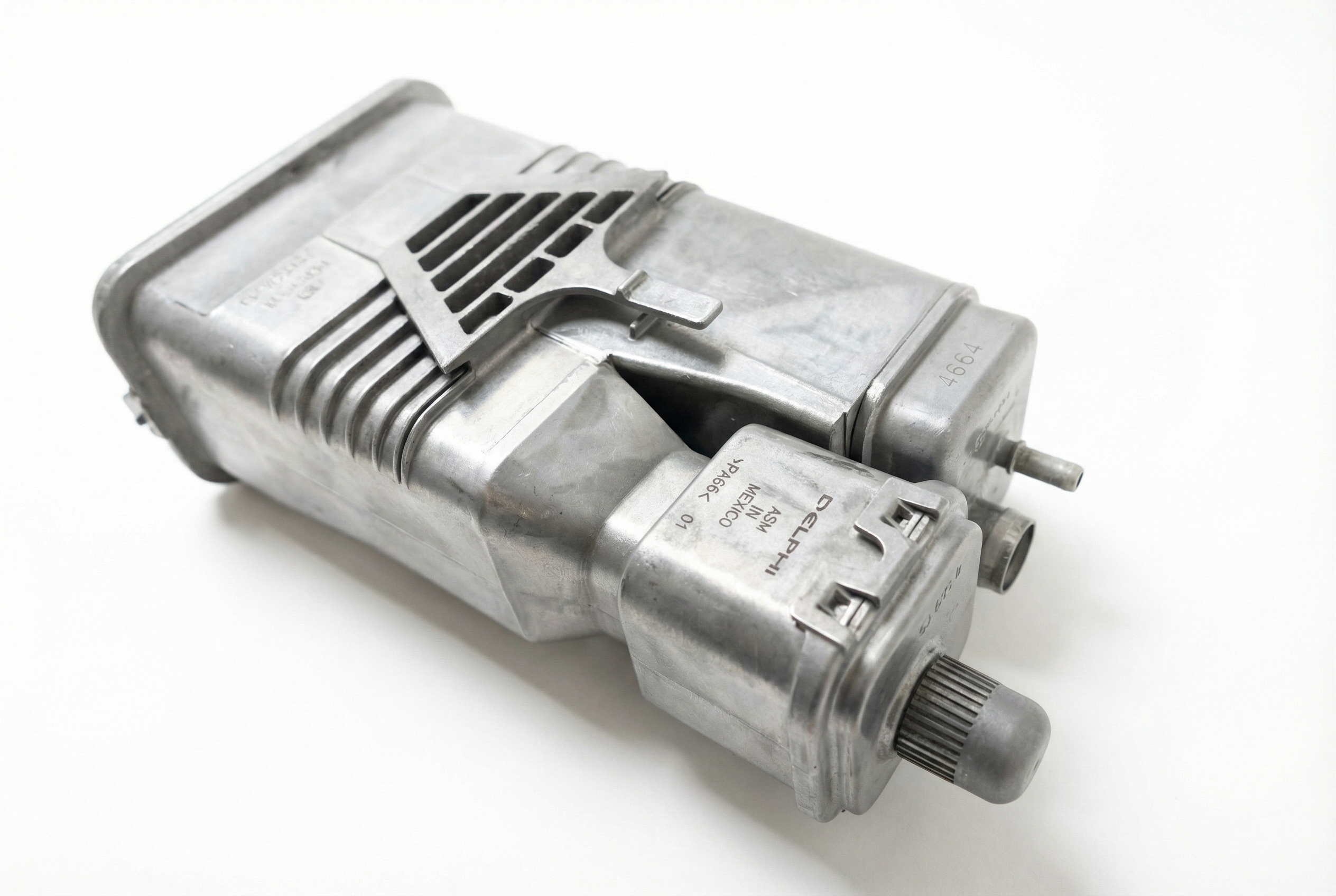
Used OEM Parts in Stock
New Aftermarket Parts Available

The information in this article is provided for general reference and educational purposes only. Vehicle specifications, procedures, and part compatibility can vary by production date, trim level, and region. Always consult your vehicle's factory service manual and verify part numbers before purchasing or performing repairs. Safety-critical components such as airbags, seat belts, and braking systems should be installed by a qualified professional.
- Jeep Wrangler:
- 🧭 Diagnostic Flowchart
- 🎬 Helpful Videos
- 🛍️ Shop This Part
- What's Unique About the 2012-2018 Jeep Wrangler
- Symptoms You May Notice
- Most Likely Causes
- Rare But Worth Checking
- Diagnosis Steps
- Parts You'll Likely Need
- Related Codes That Often Appear With This One
- Technical Service Bulletins (TSBs) & Recalls
- Platform-Specific Known Issues
- Mechanic-Grade Diagnostic Values
- Scan Tool Commands That Help
- Wiring & Ground Locations
- Real Owner Repair Stories
- When the Usual Fixes Don't Work
- OEM Part Supersession History
- Used vs. New Parts: Buying Guide for This Vehicle
- Real Owner Stories
- 2007 Jeep Wrangler JK (3.8L)
- Jeep Wrangler JK (3.6L)
- Related OBD-II Codes
- Frequently Asked Questions
- 🎟️ Get 5% Off