

P0443 on 2010-2024 Kia Forte: EVAP Purge Valve Circuit Malfunction Causes and Fixes
For a 2010-2024 Kia Forte, code P0443 almost always means the canister purge valve has failed electrically. This is a common, inexpensive, and easy DIY fix. Expect to pay $25-$60 for an aftermarket part and $40-$85 for an OEM part. The part is easily accessible on top of the engine.
- P0443 on a Kia Forte points to an electrical failure in the purge valve circuit, not a gas cap leak.
- The most common fix is to replace the canister purge valve, which is an inexpensive part located on top of the engine.
- This is a beginner-friendly DIY repair that usually takes less than 30 minutes with basic tools.
- The part number for the purge valve changes between Forte generations (2010-13, 2014-18, 2019-24), so verify the correct part with your VIN before purchasing.
What's Unique About the 2010-2024 Kia Forte
Across all generations of the Kia Forte, the P0443 code is a very common and straightforward issue. The canister purge valve is a known failure point on many Hyundai and Kia vehicles, not due to a specific design flaw but simply as a common wear item. This issue is so prevalent that it also affects platform mates like the Hyundai Elantra and Kia Soul, which use the same components. The part itself is generally inexpensive and easy to access on top of the engine, making it one of the more DIY-friendly repairs a Forte owner will encounter.
Generation note: The 2010-2024 Kia Forte spans three generations, and the specific part number for the purge valve differs between them: - First Generation (TD, 2010-2013): Commonly uses part number 28910-25100. - Second Generation (YD, 2014-2018): Commonly uses part number 28910-2E000. This part is also shared with many other Hyundai/Kia models. - Third Generation (BD, 2019-2024): May use part numbers like Genuine W0133-3637854 (for 2.0L) or Genuine W0133-2792208 (for 1.6L). Always verify the correct part number with your vehicle's VIN before purchasing.
Symptoms You May Notice
- Check Engine Light is on
- Slightly rough idle
- Difficulty starting the engine, especially after filling the gas tank
- Slight decrease in fuel economy
- Audible clicking noise from the engine bay may stop
- Replacing the gas cap. A bad gas cap typically causes EVAP leak codes (like P0455 or P0456), not an electrical circuit code like P0443.
Most Likely Causes
- Failed Canister Purge Valve (Solenoid) 🔴 High Probability → Shop Vapor Canister This is a very common failure item across many Hyundai and Kia models due to the internal solenoid coil failing electrically over time.
How to confirm: Disconnect the valve and measure the resistance between its two electrical pins with a multimeter. 🎬 Watch: How to test the purge valve with a multimeter A reading that is very high (open circuit, 'OL') or very low (short circuit, near 0 ohms) confirms failure. A good valve typically has a resistance of around 15-30 ohms.
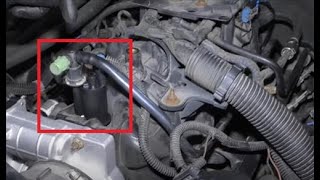
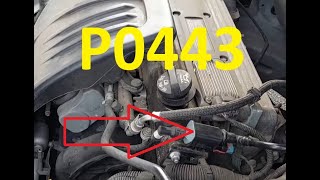
Typical fix: Replace the canister purge valve. It is typically located on or near the intake manifold, attached with one or two bolts, and has two hoses and one electrical connector. 🎬 See this walkthrough for locating and replacing the valve
Est. part cost: $25-$85 - Damaged Wiring or Loose Connector 🟡 Medium Probability The wiring harness in the engine bay is exposed to heat and vibration, which can lead to chafing, breaks, or corrosion in the connector pins over time.
How to confirm: Visually inspect the wiring and connector leading to the purge valve for any signs of damage, corrosion, or loose pins. Use a multimeter to check for battery voltage on one pin of the connector with the key on, and for ground on the other (the ECM provides ground to activate the valve).
Typical fix: Repair the damaged section of wire or clean/replace the electrical connector.
Est. part cost: $5-$25 - Blown Fuse ⚪ Low Probability
How to confirm: Locate the fuse box in the engine bay or cabin. Check the owner's manual or fuse box lid to identify the fuse for the emissions or sensor systems (sometimes labeled 'SENSORS 2') and visually inspect it to see if it has blown.
Typical fix: Replace the blown fuse. If the fuse blows again immediately, it indicates a short circuit in the system that needs to be diagnosed further.
Est. part cost: $1-$5
Rare But Worth Checking
- Faulty Engine Control Module (ECM): → Shop Engine Control Module (ECM) This is extremely rare. The ECM should only be considered after all other possibilities (valve, wiring, fuses) have been exhaustively tested and ruled out.
Diagnosis Steps
- Read the code with an OBD-II scanner to confirm P0443 is present.
- Locate the canister purge valve on the engine. It's a small black plastic valve with two hoses and an electrical connector, usually mounted on or near the intake manifold.
- Inspect the electrical connector and nearby wiring for any obvious signs of damage, corrosion, or loose connections.
- Check the fuse for the EVAP system in the vehicle's fuse box, often labeled for sensors.
- If the wiring and fuse are okay, disconnect the electrical connector from the purge valve.
- Use a multimeter to measure the resistance across the two pins on the valve itself. A healthy reading is typically between 15 and 30 ohms. If the reading is infinite (OL) or zero, the valve's internal coil has failed and the valve must be replaced.
- If the resistance is within spec, check for power at the connector. With the ignition on, one of the pins in the connector should have battery voltage.
- If power is present, the other pin is the control wire from the ECM. The ECM provides a ground to activate the solenoid. A short or open on this wire can also cause the code.
- If all tests pass, the fault may lie with the ECM's driver circuit, but this is highly unlikely and should be the last consideration.
Parts You'll Likely Need
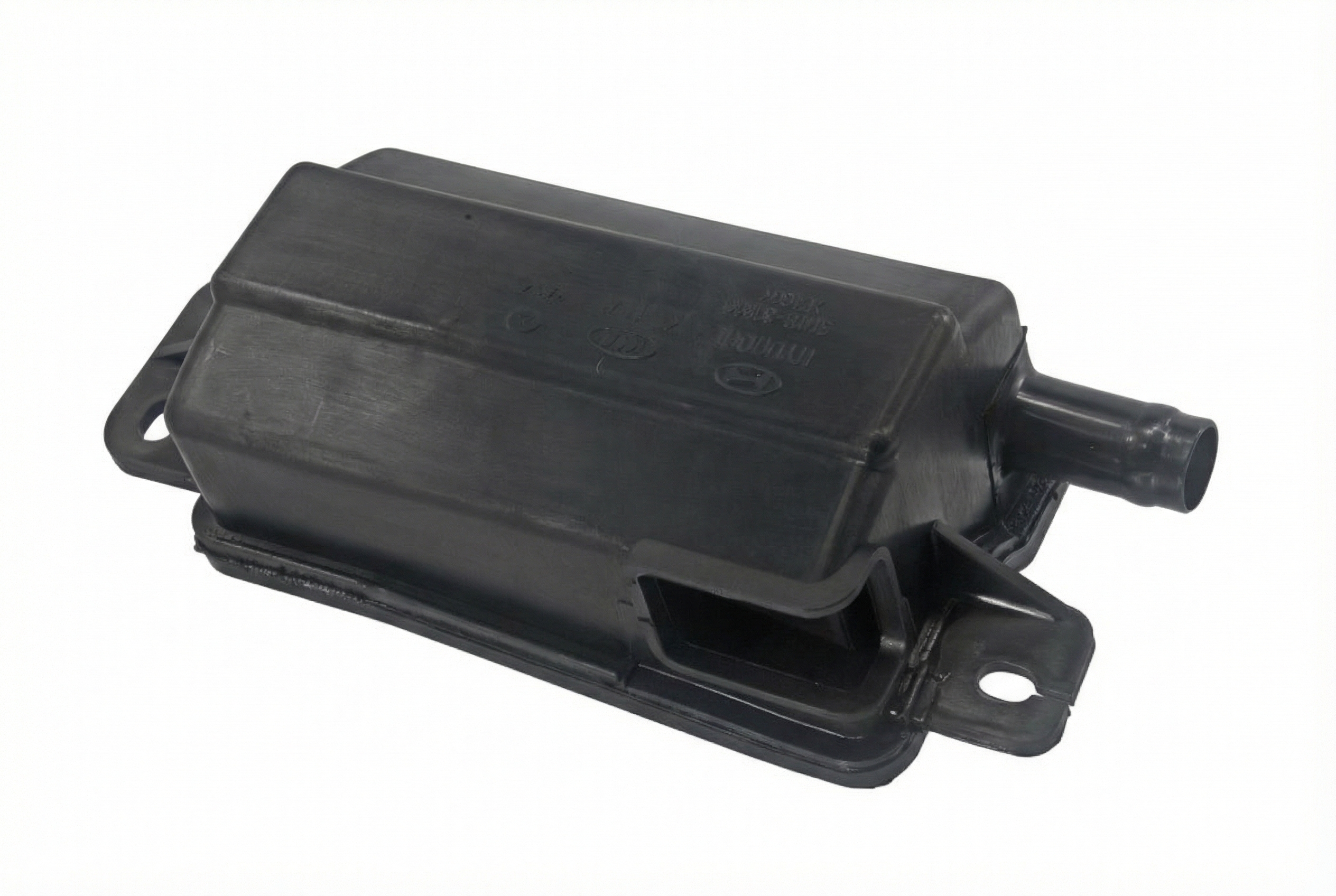
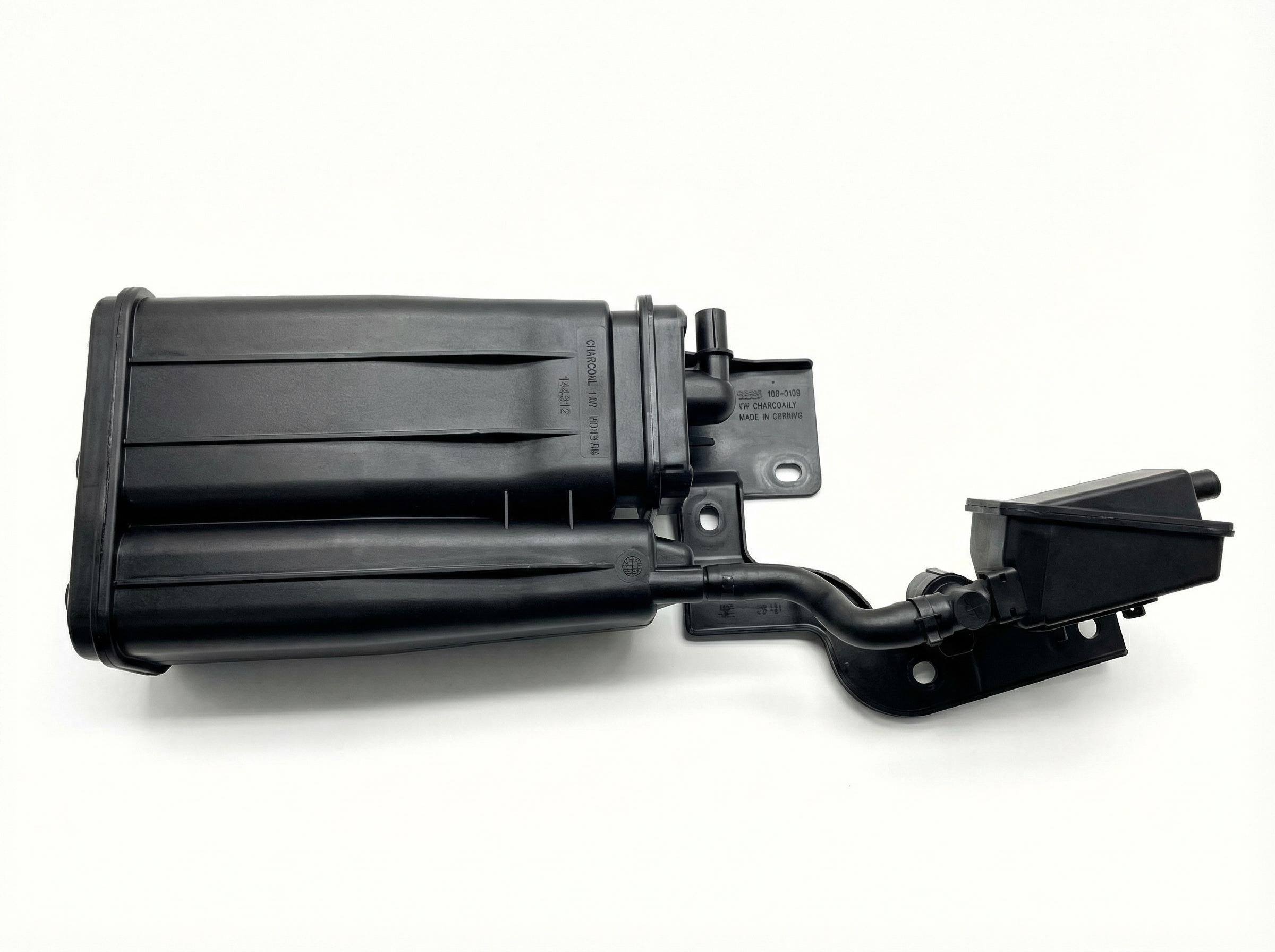
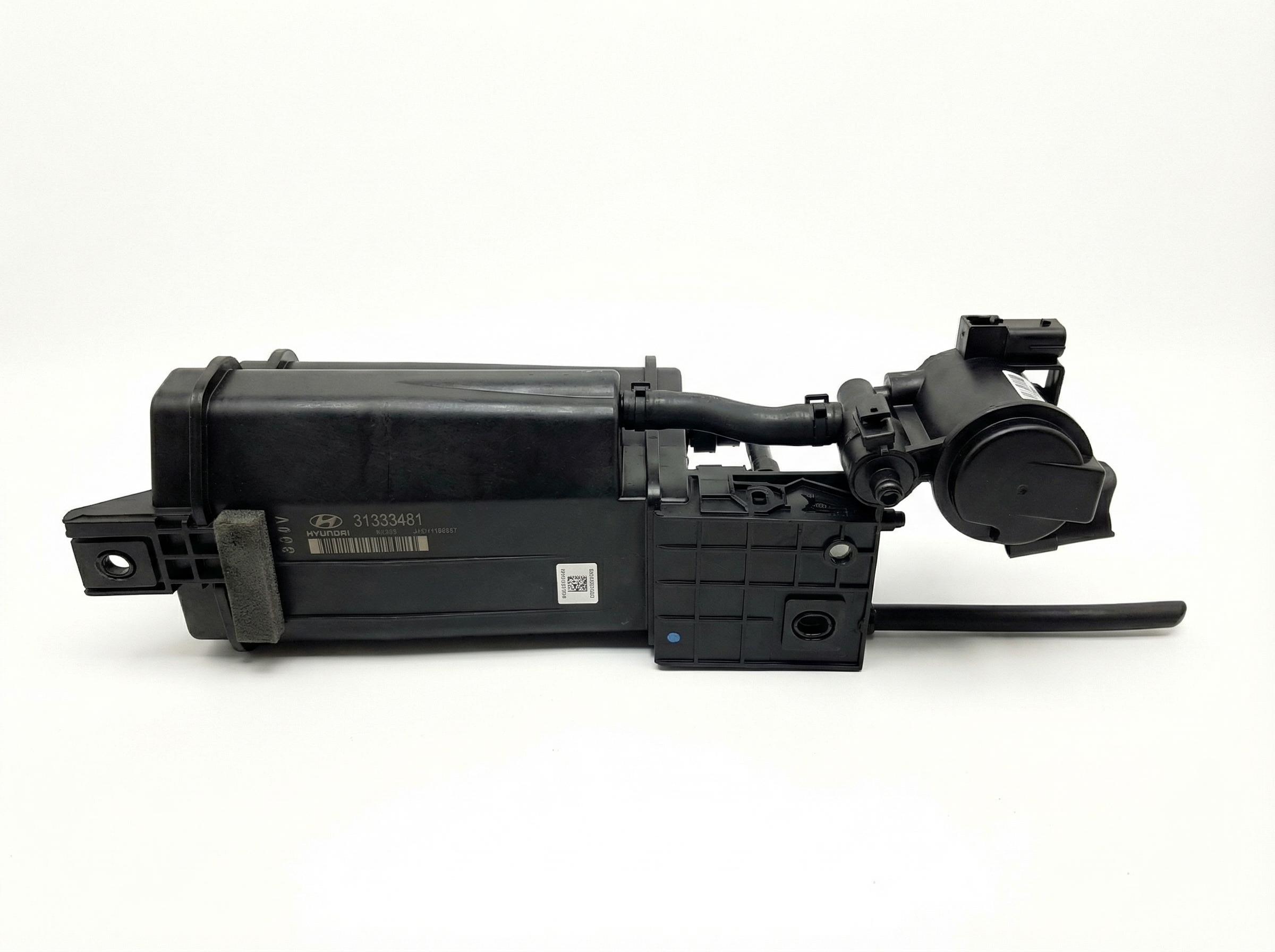
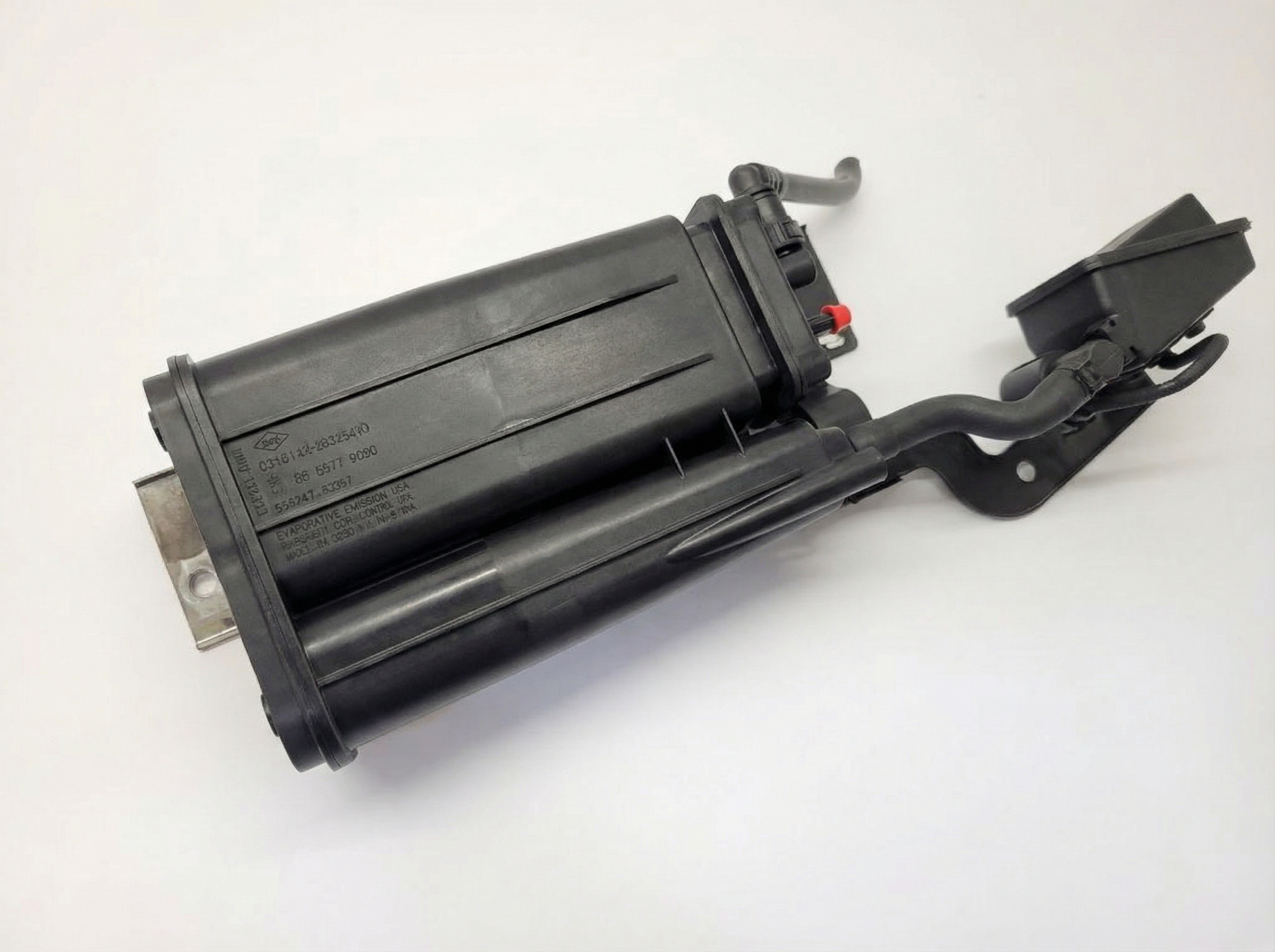
- Canister Purge Valve / Solenoid
(OEM #28910-2E000)— This is the most common failure point for code P0443. The internal solenoid coil fails, creating an open or short circuit.
Trusted brands: Genuine Kia, Dorman, Standard Motor Products (SMP), Bosch
OEM price range: $40-$85
Aftermarket price range: $25-$60
Related Codes That Often Appear With This One
- P0444 — Indicates the purge valve circuit is open. This is often set along with P0443 and points directly to a failed valve coil or broken wire.
- P0445 — Indicates the purge valve circuit is shorted. This also points to an electrical failure within the valve's solenoid or wiring.
Technical Service Bulletins (TSBs) & Recalls
- NHTSA ID: 17V773000 (Recall for engine fire risk, relevant for 2012-2015 models)
- NHTSA ID: 21V622000 (Recall for oil pump failure, relevant for 2017-2018 models with 2.0L Nu MPI engine)
Mechanic-Grade Diagnostic Values
- Canister Purge Valve (Solenoid) Coil Resistance — expected: 15-35 Ω (Ohms). A common value cited for OEM parts is ~26-29 Ω.. Failure: A reading of infinity/OL (Open Loop) or near 0 Ω (short circuit) indicates a failed solenoid coil.
- Voltage at Purge Valve Connector (Power Pin) — expected: Battery voltage (~12V) with the key in the 'ON' position.. Failure: Zero or low voltage indicates a problem with the power supply wire or a blown fuse.
- Voltage at Purge Valve Connector (Control Pin, back-probed) — expected: The ECM/PCM supplies a pulsating ground to control the valve. When commanded ON with a scan tool, the voltage should drop towards 0V. When OFF, it should be near battery voltage.. Failure: Voltage does not change when the valve is commanded ON/OFF by a scan tool, pointing to a wiring issue or a faulty PCM driver.
Scan Tool Commands That Help
- Kia GDS (Global Diagnostic System) or equivalent bidirectional scanner: EVAP Purge Test / Actuation Test — This command allows a technician to manually cycle the purge valve solenoid on and off. It is used to confirm if the valve 'clicks' audibly and to verify that the control circuit is functioning by observing voltage changes at the connector with a multimeter. This helps definitively isolate a bad valve from a wiring or PCM problem.
Wiring & Ground Locations
- PCSV Control Pin at PCM — On a 2020 Kia Forte with the 2.0L Nu engine, the PCSV (Purge Control Solenoid Valve) control wire is located at Pin 71 (Yellow wire) of the PCM connector.. This is the specific pin on the Engine Control Module that sends the ground signal to activate the purge valve. Testing for continuity between this pin and the control pin at the valve connector can confirm if the control wire is intact.
- EVAP System Fuse — In the engine bay fuse box. On many Kia models, this fuse is labeled 'SENSORS 2' (10A).. This fuse supplies the battery voltage to the purge valve solenoid. A blown fuse will create an open circuit and trigger P0443.
- Engine Ground Strap — There are multiple ground points on the engine block, cylinder head, and transmission. A key ground strap often connects the engine/transmission to the chassis near the battery.. While the purge valve circuit is grounded through the PCM, a poor main engine or PCM ground can cause a variety of electrical issues, including circuit codes. Ensuring the main grounds are clean and tight is a crucial step in diagnosing any electrical fault.
Real Owner Repair Stories
- Multiple forum and video reports (Various 2010-2018 Kia Forte models) — Check Engine Light on, code P0443 retrieved.
❌ Tried (didn't work) Clearing the code (it returned quickly), Checking the gas cap
✅ What actually fixed it Replacing the canister purge valve solenoid located on top of the engine. The repair was consistently described as taking 5-15 minutes with basic hand tools.
OEM Part Supersession History
28910-2E000→N/A— This is the standard OEM part number for the second-generation (2014-2018) Kia Forte with 1.8L and 2.0L Nu engines.
Heads up: This part is widely used across many Hyundai and Kia models from the 2010s. Aftermarket cross-reference numbers include Dorman 911-383, Standard Motor Products CP756, and 2M1282.
Diagnostic Flowchart
Other Known Issues on This Vehicle
Issues unrelated to this code that are worth knowing about as an owner of this generation:
- Theta II Engine Failure & Excessive Oil Consumption 🔴 High — Common in 2.0L and 2.4L engines from roughly 2010-2015. Can occur at various mileages, sometimes under 100,000 miles. Caused by manufacturing debris blocking oil passages and leading to bearing failure. (Ref: Multiple recalls and a class-action lawsuit were issued, including for fire risk (NHTSA 17V773000) and oil pump failure (NHTSA 21V622000).)
- Vulnerability to Theft ('Kia Boys' Challenge) 🔴 High — Affects models from approximately 2011-2021 with standard key ignitions (not push-button start) due to a lack of a factory engine immobilizer. (Ref: Kia has offered a free software update and steering wheel locks to affected owners to address the vulnerability.)
- IVT/CVT Transmission Problems 🟠 Medium — Complaints of hesitation, jerking, or premature failure are noted, particularly in the 2019-2021 model years. (Ref: Software updates were released to address some drivability concerns. In some cases, full transmission replacement was required.)
- Engine Knocking / Piston Slap 🟠 Medium — Reported in 1st and 2nd generation Fortes (approx. 2010-2015), attributed to scuffing between cylinders and pistons. Can lead to significant engine repair or replacement. (Ref: This was the subject of a class-action lawsuit initiated by the APA in Canada.)
- Faulty Stop Lamp Switch 🟡 Low — Common on first-generation (2010-2013) models. The switch can fail, causing brake lights to stay on or not illuminate, and can prevent the vehicle from shifting out of Park. (Ref: Kia issued a recall (e.g., NHTSA 15V015000) to replace the faulty switch.)
Used vs. New Parts: Buying Guide for This Vehicle
When a used part is the smart pick: Given the low cost of a new aftermarket part (often under $30) and the fact that this is a common wear-and-tear electrical component, buying a used purge valve from a junkyard is generally not recommended. The risk of the used part failing soon after installation is high.
Donor-vehicle mileage cap: roughly under 50000 miles for the part to have meaningful remaining life.
What to inspect on the donor part:
- If considering a used part, test its resistance with a multimeter before purchase. It must be within the 15-35 Ohm range.
- Avoid parts from vehicles with very high mileage or visible engine bay corrosion.
- Ensure the plastic housing and hose nipples are not cracked or brittle.
Aftermarket brands forum-validated for this vehicle:
- Dorman
- Standard Motor Products (SMP)
- Bosch
Brands owners have reported issues with on this vehicle:
- No-name, unbranded parts from online marketplaces have a higher reported failure rate, though some may function correctly.
Real Owner Stories
Aggregated from forums and TSBs cited above. Mileages and costs reflect what owners reported in those sources.
2014-2018 Kia Forte (YD Generation)
Symptoms: Owners confirmed the P0443 code was present and described the repair as a simple 10-minute job.
What fixed it: Replacing the purge valve (part 28910-2E000).
Source hint: forteforums.com
2010-2024 Kia Forte
Symptoms: Check engine light on with P0443; diagnosis focused on the purge control solenoid valve as the primary culprit.
What fixed it: Replacing the purge control solenoid valve.
Source hint: kia-forums.com
2010-2024 Kia Forte
Symptoms: P0443 code present; needed guidance on testing the fuse, wiring, and the valve's internal function.
What fixed it: Diagnosing the purge valve function and checking the fuse and wiring for power and ground.
Source hint: Whyingo on YouTube
Related OBD-II Codes
Frequently Asked Questions
Is there a specific part number I should look for when replacing the purge valve on my Kia Forte?
My 2014 Forte has a P0443 code and I'm worried about engine fire recalls I've heard about. Are they related?
Can I test the purge valve myself with a multimeter before buying a new one?
I have a 2018 Forte with the 2.0L Nu MPI engine; is there a recall I should know about while fixing this code?
Where is the fuse for the purge valve located on the Forte?
Is it worth getting a used purge valve from a junkyard to save money?
Helpful Videos
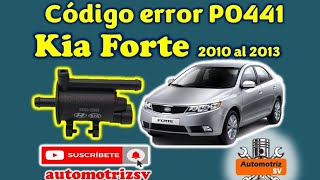
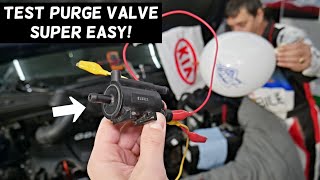
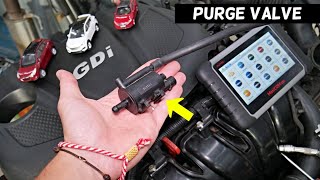

We Have This Part in Stock


The information in this article is provided for general reference and educational purposes only. Vehicle specifications, procedures, and part compatibility can vary by production date, trim level, and region. Always consult your vehicle's factory service manual and verify part numbers before purchasing or performing repairs. Safety-critical components such as airbags, seat belts, and braking systems should be installed by a qualified professional.
- Kia Forte:
- 🧭 Diagnostic Flowchart
- 🎬 Helpful Videos
- 🛍️ Shop This Part
- What's Unique About the 2010-2024 Kia Forte
- Symptoms You May Notice
- Most Likely Causes
- Rare But Worth Checking
- Diagnosis Steps
- Parts You'll Likely Need
- Related Codes That Often Appear With This One
- Technical Service Bulletins (TSBs) & Recalls
- Mechanic-Grade Diagnostic Values
- Scan Tool Commands That Help
- Wiring & Ground Locations
- Real Owner Repair Stories
- OEM Part Supersession History
- Other Known Issues on This Vehicle
- Used vs. New Parts: Buying Guide for This Vehicle
- Real Owner Stories
- 2014-2018 Kia Forte (YD Generation)
- 2010-2024 Kia Forte
- 2010-2024 Kia Forte
- Related OBD-II Codes
- Frequently Asked Questions
- 🎟️ Get 5% Off