

P0443 on 2021-2024 Kia Seltos: EVAP Purge Valve Circuit Causes and Fixes
For the 2021-2024 Kia Seltos, code P0443 almost always points to a failed EVAP Canister Purge Valve, especially on the 2.0L engine. This is a common, inexpensive, and easy DIY fix, with the OEM part (29010-03AA0 for the 2.0L) costing between $20 and $80 and taking less than 30 minutes to replace.
- P0443 on a 2021-2024 Kia Seltos indicates an electrical fault in the EVAP purge valve circuit, not a gas cap leak.
- The most likely cause, by a wide margin, is a failed canister purge valve solenoid, especially on the 2.0L engine (Part #29010-03AA0).
- This is a beginner-friendly DIY repair that typically takes less than 30 minutes and requires basic tools.
- Before buying parts, check the relevant fuse (possibly labeled 'SENSORS 2') and inspect the wiring to the valve for any visible damage.
- Do not replace the gas cap for this code; it will not solve the problem.
- Be aware that this vehicle platform has several significant recalls, including for engine and transmission issues, which should be checked via VIN on the NHTSA website.
What's Unique About the 2021-2024 Kia Seltos
On modern Kia vehicles like the Seltos, the P0443 code is a very common indicator of a failed purge valve solenoid. While wiring or PCM issues are possible, the valve itself is the most frequent point of failure across many Kia and Hyundai models sharing the same engines. The repair is straightforward and accessible, making it a common first major repair for many owners. The specific OEM part for the 2.0L engine is well-documented and shared across several models, confirming its widespread use and failure pattern.
Symptoms You May Notice
- Check Engine Light is on
- Slightly rough idle
- Difficulty starting the engine, especially after refueling
- A faint fuel odor
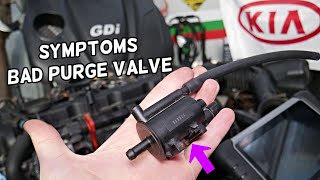
- Drop in engine power or worsening fuel efficiency 🎬 Watch: 7 warning signs of a bad purge valve
- Replacing the gas cap. P0443 is an electrical circuit code, not a system leak code like P0455 or P0456. A bad gas cap will not cause P0443.
- Replacing the charcoal canister or vent valve. The code specifically points to the purge valve circuit, and these other components are part of a different circuit or function.
Most Likely Causes
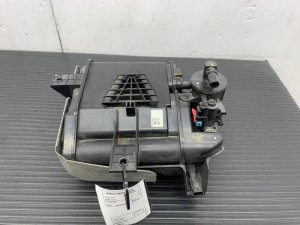
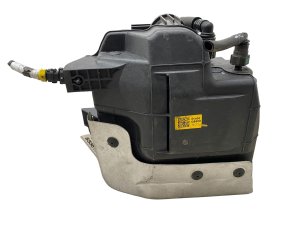
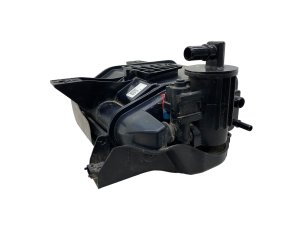
- Failed Canister Purge Valve (Solenoid) 🔴 High Probability → Shop Vapor Canister This is a very common failure point on many modern Kia and Hyundai vehicles, including the Seltos with the 2.0L engine. The internal coil of the solenoid can fail electrically, creating an open or shorted circuit that the PCM detects.
How to confirm: Locate the valve on top of the engine. With the engine off, unplug the electrical connector. Use a multimeter to check the resistance between the two pins on the valve. A reading that is significantly different from the manufacturer's specification (often around 15-30 ohms, though spec should be verified) or shows an open circuit (infinite resistance) indicates a failed valve. A bidirectional scan tool can also be used to command the valve to cycle, and you should hear an audible click.
Typical fix: Replace the canister purge valve. This involves disconnecting the electrical connector and two hoses, removing the valve, and installing the new one. This is typically a 15-30 minute job with basic tools. 🎬 See this step-by-step Kia P0443 fix video
Est. part cost: $20-$80 - Damaged Wiring or Connector 🟡 Medium Probability Engine bay heat and vibrations can cause wiring to become brittle, frayed, or corroded over time, especially at the connector. Rodents can also chew through wires.
How to confirm: Visually inspect the wiring harness leading to the purge valve for any signs of damage, melting, or corrosion. Unplug the connector and check for corrosion or bent pins. Use a multimeter to check for 12V power on one wire (with key on) and test the continuity of the ground-side control wire going back to the PCM.
Typical fix: Repair or replace the damaged section of the wiring harness or the electrical connector pigtail.
Est. part cost: $5-$50 - Blown Fuse ⚪ Low Probability While not specific to this vehicle, a short circuit in the purge valve or its wiring can cause the corresponding fuse to blow, cutting power to the circuit.
How to confirm: Consult the owner's manual or the fuse box diagram to identify the fuse for the EVAP system or emissions components (often labeled 'SENSORS 2' in Kia/Hyundai fuse boxes). Visually inspect the fuse and test it with a multimeter for continuity.
Typical fix: Replace the blown fuse. If the new fuse blows immediately, it indicates a persistent short circuit that must be diagnosed and repaired.
Est. part cost: $1-$5
Rare But Worth Checking
- Faulty Powertrain Control Module (PCM): → Shop Engine Control Module (ECM) This is extremely rare and should be the last resort. The PCM should only be considered after all other possibilities, including the valve, wiring, and fuses, have been thoroughly tested and ruled out. PCM replacement is expensive and requires programming by a dealer or qualified shop.
Diagnosis Steps
- Read the Code: Use an OBD-II scanner to confirm that P0443 is the only code present. If other codes are stored, address them first.
- Inspect the Fuse: Locate the fuse for the emissions or EVAP system in your vehicle's fuse box (check under-hood and interior panels). Check if it's blown and replace if necessary.
- Visually Inspect Wiring: Carefully examine the wiring harness and connector going to the EVAP purge valve. Look for any obvious signs of damage, such as frayed wires, melting, or corrosion. Wiggle the connector to see if it's loose.
- Test the Purge Valve: Disconnect the electrical connector from the purge valve. Use a multimeter set to Ohms (Ω) to measure the resistance across the two pins on the valve itself. Compare this reading to the manufacturer's specification (typically 15-30 Ohms). An open circuit (OL) or a reading far from the spec indicates a faulty valve.
- Test the Circuit: With the key in the 'On' position (engine off), use a multimeter to check for voltage at the connector. One pin should have battery voltage (around 12V). If there is no voltage, the issue is upstream in the wiring or fuse box.
- Command the Solenoid: If you have an advanced bidirectional scan tool, you can command the purge valve to open and close. While doing this, you should hear a clicking sound from the valve, indicating it is mechanically responding.
- Replace the Part: If the valve is confirmed to be faulty, replace it. Clear the code and perform a drive cycle to ensure the Check Engine Light does not return.
Parts You'll Likely Need
- Canister Purge Valve / Purge Control Solenoid
(OEM #29010-03AA0 (For 2.0L Engine))— This is the most common failure point for code P0443 on the Kia Seltos with the 2.0L engine. The internal solenoid coil fails electrically.
Trusted brands: Genuine Kia/Hyundai, Standard Motor Products, Wells, Dorman
OEM price range: $35-$55
Aftermarket price range: $20-$40
Related Codes That Often Appear With This One
- P0444 — Indicates the purge control valve circuit is open. This can be caused by the same issues as P0443, such as a broken internal coil in the valve or a damaged wire.
- P0445 — Indicates a shorted circuit in the purge valve control system. This is often due to a shorted internal coil in the purge valve solenoid or wires that have melted together.
Technical Service Bulletins (TSBs) & Recalls
- No specific TSBs for P0443 on the Seltos were found. However, general diagnostic documents for Kia/Hyundai confirm the common causes and test procedures.
Platform-Specific Known Issues
- While P0443 is the primary focus, owners of 2021-2023 Seltos with the 2.0L Nu MPI engine should be aware of a major recall (NHTSA Campaign ID: 21V259, Kia recall SC209) for improperly heat-treated piston oil rings, which could lead to engine damage or failure. This is unrelated to the P0443 code but is a critical issue for the platform.
Mechanic-Grade Diagnostic Values
- Canister Purge Solenoid Valve (PCSV) internal coil resistance — expected: Approximately 26 Ω at 68°F (20°C). A general acceptable range is 15-30 Ω.. Failure: A reading of infinite resistance (OL) indicates an open coil; a reading near 0 Ω indicates a shorted coil.
- Voltage at PCSV connector power-side pin (Key On, Engine Off) — expected: Approximately 12V (Battery Voltage).. Failure: 0V or significantly low voltage, which points to a blown fuse (e.g., 'SENSORS 2') or an open in the power supply wire.
- Voltage at PCSV connector control-side pin (during active test) — expected: Voltage drops to near 0V when the PCM commands the valve ON (active ground).. Failure: Voltage does not drop when commanded ON, indicating an open in the control wire or a faulty PCM driver.
Scan Tool Commands That Help
- Kia GDS (Global Diagnostic System) or equivalent professional bidirectional scanner: Actuation Test for EVAP Purge Solenoid / EVAP Purge Valve Active Test — This command is used to manually cycle the purge valve to audibly check for a 'click' and to test the electrical circuit's response, confirming if the valve is physically responding to the PCM's command.
Wiring & Ground Locations
- Fuse 'SENSORS 2' — Located in the under-hood fuse and relay box.. This fuse often provides the 12V power supply to the purge control valve solenoid. A short in the circuit can cause this fuse to blow, resulting in a P0443 code.
- Engine Ground Strap — Typically connects from the engine block or timing cover area to the vehicle's chassis/frame rail in the engine bay.. While not specific to this circuit, a corroded or loose main engine ground can cause a host of erratic electrical issues and incorrect sensor readings, and should be checked if multiple, seemingly unrelated electrical faults are present.
OEM Part Supersession History
29010-03AA0→N/A— This is the current and consistently cited OEM part number for the 2.0L engine in the 2021-2024 Kia Seltos.
Model Year Variations Within This Range
- 2021-2024: The Kia Seltos received a significant interior and exterior refresh for the 2024 model year. However, for the base 2.0L engine, the powertrain and associated emissions components, including the purge control valve (PN 29010-03AA0), appear to be unchanged. Therefore, the cause and fix for P0443 on the 2.0L model are consistent across the entire 2021-2024 range.
Diagnostic Flowchart
Other Known Issues on This Vehicle
Issues unrelated to this code that are worth knowing about as an owner of this generation:
- Engine Failure due to Piston Oil Rings (2.0L Nu MPI Engine) 🔴 High — Affects a significant number of 2020-2023 models with the 2.0L engine. Can lead to excessive oil consumption, stalling, and complete engine failure. (Ref: Recall SC209 / NHTSA 21V259.)
- Transmission Failure or Malfunction (IVT and DCT) 🔴 High — Widespread complaints for both the IVT (paired with 2.0L) and 7-speed DCT (paired with 1.6T). Issues include hesitation, jerking, overheating, and premature failure requiring replacement. (Ref: Multiple software updates and service campaigns (e.g., SC199 for IVT logic) have been issued, but problems persist for some owners.)
- Idle Stop & Go Oil Pump Overheating 🟠 Medium — Affects certain 2023-2024 models. Damaged electrical components in the oil pump controller can cause it to overheat, posing a fire risk. (Ref: Recall 23V830000.)
- Engine Problems on Early 1.6L Turbo Models 🟠 Medium — Some 2021 models with the 1.6L turbo engine experienced issues with stalling, hesitation, and, in rare cases, engine failure.
- Unexpected Side Curtain Airbag Deployment 🔴 High — A manufacturing error in some 2023-2024 models can cause side curtain airbags to deploy unexpectedly. (Ref: Recall 23V-582.)
Used vs. New Parts: Buying Guide for This Vehicle
When a used part is the smart pick: For this specific repair, buying a used purge valve from a junkyard is NOT recommended. The part is a known high-failure item, has a low cost when purchased new, and its remaining lifespan is impossible to determine. The labor to replace it is minimal, but having to do the job twice because of a faulty used part negates any small cost savings.
What to inspect on the donor part:
- Not applicable, as purchasing this part used is not advised.
OEM-only on this vehicle (don't cheap out):
- While not strictly OEM-only, using a Genuine Kia/Hyundai part (29010-03AA0) is highly recommended for fitment and reliability, given its reasonable price.
Aftermarket brands forum-validated for this vehicle:
- Standard Motor Products (SMP)
- Dorman
- Bosch
- Wells
Brands owners have reported issues with on this vehicle:
- Avoid unbranded, no-name parts from online marketplaces, as their internal coil quality and durability can be highly questionable.
Real Owner Stories
Aggregated from forums and TSBs cited above. Mileages and costs reflect what owners reported in those sources.
2021 Kia Seltos 2.0L
Symptoms: The owner experienced significant transmission issues, requiring the transmission to be replaced multiple times, highlighting broader reliability concerns with the 2.0L and CVT powertrain.
What fixed it: Complete transmission replacement.
Source hint: Reddit r/cars - Kia Seltos Transmission Issues
2021 Kia Seltos 2.0L IVT
Symptoms: Owner noted the IVT (CVT) transmission was suitable for traffic but lacked enthusiast appeal; part of a long-term review of the 2.0L powertrain platform.
What fixed it: No repair performed; general owner feedback on powertrain characteristics.
Source hint: Team-BHP - 6 months with Kia Seltos IVT
Related OBD-II Codes
Frequently Asked Questions
Is there a recall for the P0443 code on my 2021-2024 Kia Seltos?
Which fuse should I check for the EVAP system on my Seltos?
My Seltos is hard to start specifically after I pump gas; is this related to P0443?
Can I use a purge valve from a Hyundai Kona to fix my Seltos?
What is the typical resistance for a healthy purge valve on the 2.0L Nu MPI engine?
Should I buy a used purge valve from a salvage yard to save money?
Helpful Videos
We Have This Part in Stock

The information in this article is provided for general reference and educational purposes only. Vehicle specifications, procedures, and part compatibility can vary by production date, trim level, and region. Always consult your vehicle's factory service manual and verify part numbers before purchasing or performing repairs. Safety-critical components such as airbags, seat belts, and braking systems should be installed by a qualified professional.
- Kia Seltos:
- 🧭 Diagnostic Flowchart
- 🎬 Helpful Videos
- 🛍️ Shop This Part
- What's Unique About the 2021-2024 Kia Seltos
- Symptoms You May Notice
- Most Likely Causes
- Rare But Worth Checking
- Diagnosis Steps
- Parts You'll Likely Need
- Related Codes That Often Appear With This One
- Technical Service Bulletins (TSBs) & Recalls
- Platform-Specific Known Issues
- Mechanic-Grade Diagnostic Values
- Scan Tool Commands That Help
- Wiring & Ground Locations
- OEM Part Supersession History
- Model Year Variations Within This Range
- Other Known Issues on This Vehicle
- Used vs. New Parts: Buying Guide for This Vehicle
- Real Owner Stories
- 2021 Kia Seltos 2.0L
- 2021 Kia Seltos 2.0L IVT
- Related OBD-II Codes
- Frequently Asked Questions
- 🎟️ Get 5% Off