

P0443 on 2004-2009 Mazda 3: EVAP Purge Valve Circuit Causes and Fixes
On a 2004-2009 Mazda 3, code P0443 is almost always caused by a failed EVAP canister purge solenoid valve. It's an affordable part, typically costing $30-$60 for an aftermarket replacement, and is easy to replace with basic tools. Before replacing, test the valve's resistance; it should be between 22-26 ohms.
- P0443 on your Mazda 3 points to an electrical problem with the purge valve, not a gas cap or hose leak.
- The most likely fix is replacing the purge solenoid valve, which is an easy and inexpensive DIY job.
- Before buying parts, test the valve with a multimeter. A healthy valve should have a resistance of 22-26 ohms.
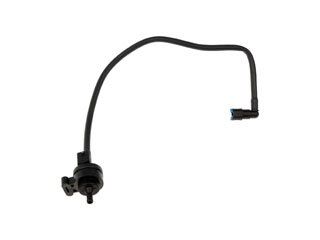
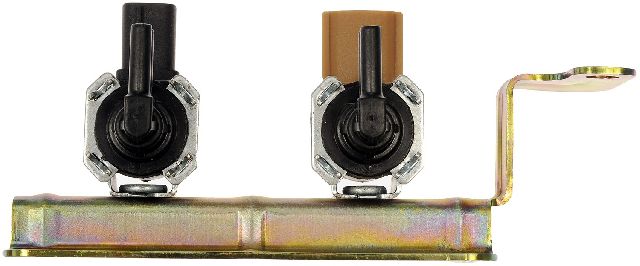
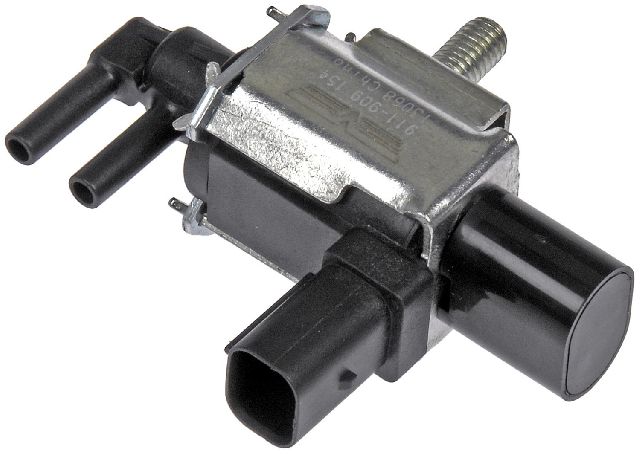
- Be careful when buying aftermarket parts. The correct Dorman valve is part number 911-701, even if catalogs say it's for a different model.
- If a new valve doesn't fix the code, thoroughly inspect the wiring harness and check for bad engine/PCM ground connections before suspecting the rare case of a faulty PCM.
What's Unique About the 2004-2009 Mazda 3
For the first-generation Mazda 3, the P0443 code is a very common and straightforward issue. The purge solenoid valve is a frequent failure point, but it's easily accessible on top of the engine. A notable quirk for this platform involves aftermarket parts; the correct Dorman replacement valve (part #911-701) is often incorrectly listed in catalogs as fitting the Mazda 6, leading to confusion. Owners should be aware of this to ensure they purchase the correct, and more affordable, valve-only component instead of the entire hose assembly.
Symptoms You May Notice
- Check Engine Light is on
- Slightly rough or unstable idle
- Difficulty starting the engine immediately after refueling
- Slight decrease in fuel economy
- A faint fuel odor near the vehicle
- Replacing the gas cap. While a loose gas cap can cause other EVAP codes (like P0455 or P0457), it does not cause a P0443 circuit code.
- Replacing EVAP hoses. P0443 specifically points to an electrical circuit fault, not a physical leak in the system's hoses.
Most Likely Causes
- Failed Canister Purge Solenoid Valve 🔴 High Probability → Shop Vapor Canister The solenoid coil inside the valve is a common failure item due to age and heat cycles from its location in the engine bay. The internal winding can break, creating an open circuit.
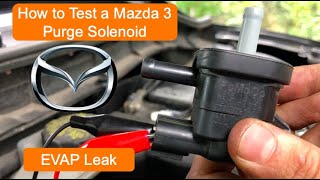
How to confirm: Disconnect the electrical connector and measure the resistance across the two pins on the valve with a multimeter. A healthy valve on this Mazda should read between 22-26 ohms. 🎬 Watch: How to test a Mazda 3 purge solenoid An open circuit (infinite resistance) or a short (near-zero resistance) indicates a bad coil. Alternatively, apply 12V directly to the valve's pins; 🎬 Watch: How to test an EVAP purge valve with no tools a healthy valve will make an audible 'click'.
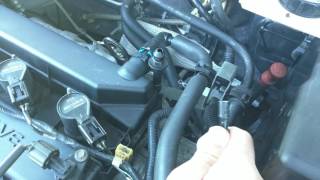
Typical fix: Replace the purge solenoid valve. It is located on the engine and is held in place by a simple bracket, connected by two vacuum hoses and one electrical connector.
Est. part cost: $30-$60 - Damaged Wiring or Connector 🟡 Medium Probability The wiring harness in the engine bay is exposed to heat and vibration, which can cause wires to become brittle and break or connectors to corrode over time. Poor electrical grounds are also a common issue on this platform.
How to confirm: Visually inspect the wiring harness leading to the purge valve for any signs of cracking, fraying, or breaks. Check the connector for corrosion or loose pins. Use a multimeter to check for 12V power at one pin of the connector with the ignition on. The other wire is the control wire that the PCM grounds to activate the valve.
Typical fix: Repair the broken wire or clean/replace the damaged connector. Ensure chassis and PCM ground points are clean and secure.
Est. part cost: $5-$25 - Blown Fuse ⚪ Low Probability
How to confirm: Check the vehicle's fuse box diagram (usually in the owner's manual) for the fuse related to the emissions or EVAP system and visually inspect it to see if it's blown. The purge valve solenoid may share a fuse with other components.
Typical fix: Replace the blown fuse with a new one of the same amperage. If the fuse blows again, it indicates a short circuit in the wiring or the valve itself that must be found.
Est. part cost: $1-$5
Rare But Worth Checking
- Faulty Powertrain Control Module (PCM): → Shop Engine Control Module (ECM) This is extremely rare. The PCM's internal driver for the purge valve can fail, but this should only be considered after all other possibilities (valve, wiring, fuses, grounds) have been exhaustively tested and ruled out. One owner on Reddit replaced the valve and checked wiring continuity to the PCM, only to find the code persisted, pointing towards a potential (though unconfirmed) PCM issue or a very hard-to-find wiring problem.
Diagnosis Steps
- Read the codes with an OBD-II scanner to confirm P0443 is the primary code.
- Locate the purge solenoid valve. On the 2004-2009 Mazda 3, it's typically found on the driver's side of the engine bay, mounted near the intake manifold.
- Inspect the electrical connector and wiring going to the valve. Look for any obvious signs of damage, corrosion, or loose connections.
- Check the fuse for the EVAP system in the fuse box.
- Test the valve's solenoid. Disconnect the connector and use a multimeter to check the resistance between the two pins on the valve. A healthy valve should have a resistance between 22-26 ohms. A reading of infinity (OL) or zero indicates a failed valve.
- Test the circuit. With the ignition on, use a multimeter to verify that one of the pins in the electrical connector has battery voltage (~12V).
- If the wiring has power and the valve's resistance is out of spec, the purge valve is faulty and needs to be replaced.
- If the wiring and valve test good, check for continuity on the control wire between the valve connector and the PCM. Also, check the main engine and PCM ground points for corrosion or looseness, as bad grounds are a known issue on this platform.
- If all wiring, grounds, and the valve are confirmed to be good, the issue may be with the PCM's driver circuit, which is a rare and complex diagnosis.
Parts You'll Likely Need
- Vapor Canister Purge Solenoid Valve
(OEM #LF15-18-741, LF66-18-74X)— This is the most common component to fail, causing the P0443 circuit code. LF15-18-741 is the valve itself, while LF66-18-74X may refer to an assembly with hoses.
Trusted brands: Dorman, Bosch, Standard Motor Products, Genuine Mazda
OEM price range: $70-$95
Aftermarket price range: $30-$60
Related Codes That Often Appear With This One
- P0444 — P0444 (Purge Control Valve Circuit Open) is a more specific version of the P0443 fault, often appearing for the same reasons, like a broken wire or failed solenoid coil.
- P0445 — P0445 (Purge Control Valve Circuit Shorted) indicates a short circuit, which is another possible electrical failure that falls under the general P0443 malfunction.
Technical Service Bulletins (TSBs) & Recalls
- No TSBs specifically for P0443 on this model were found. However, TSB 01-020/10 and 01-040/09 exist for other EVAP codes like P0442, P0455, and P0456, which relate to fuel cap leaks and are not the cause of P0443.
Platform-Specific Known Issues
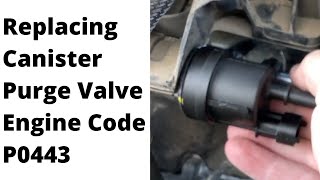
- Aftermarket parts catalogs frequently misidentify the correct purge valve. The Dorman 911-701 is the correct valve-only replacement 🎬 Watch: Step-by-step guide to replacing the purge valve for the 2004-2009 Mazda 3, but is often listed for the Mazda 6. The Dorman 911-700 includes the hose and is more expensive.
Mechanic-Grade Diagnostic Values
- Purge Solenoid Connector - Power Pin Voltage — expected: ~12V (Battery Voltage). Failure: 0V or significantly less than battery voltage indicates a problem with the power supply wire or a blown fuse.
- Purge Solenoid Connector - Ground Pin (PCM Control) — expected: Fluctuating ground signal (visible as a fluctuating voltage or with a test light) when commanded by a scan tool.. Failure: No ground signal when the PCM commands the valve to open indicates a break in the control wire to the PCM or a faulty PCM driver.
Scan Tool Commands That Help
- Professional Scan Tool (e.g., Mazda IDS, Autel, Snap-on): EVAP Purge Solenoid Active Test / Bidirectional Control — This command is used to manually open and close the purge solenoid valve while the engine is running. It's the definitive way to test the entire circuit: if the valve clicks and the engine RPM changes slightly when activated, the valve, wiring, and PCM driver are all functioning correctly. If the valve doesn't click, it confirms a fault in the valve or its wiring.
Wiring & Ground Locations
- Engine Block/Head Ground — Multiple ground straps connect from the chassis to the engine block and cylinder head. A key one is often near the passenger side motor mount.. The PCM and its sensors rely on a solid engine ground. A corroded or loose engine ground can introduce electrical noise and voltage drops, potentially causing the PCM to misinterpret the purge valve circuit status.
- G12 (or similar chassis ground) — Primary chassis ground points are located on the strut towers and near the battery. A wiring diagram for the specific model year should be consulted for the exact ground point used by the PCM.. The PCM itself has a dedicated ground wire. If this ground point is compromised, it can cause a wide range of erratic electrical issues, including setting false circuit codes like P0443.
- Purge Solenoid Connector (C122) — The 2-pin connector plugs directly into the purge solenoid valve on the engine.. This is the final connection point. Pin 1 (typically) receives 12V power with the key on, and Pin 2 is the ground-side control wire that is pulsed by the PCM. All circuit tests are performed at this connector.
Real Owner Repair Stories
- Reddit r/MechanicAdvice (2007 Mazda 3) — Persistent P0443 code.
❌ Tried (didn't work) Replaced the purge solenoid valve (twice), Replaced the PCM, Checked for continuity on the wiring harness between the valve and the PCM connector
✅ What actually fixed it The owner eventually found a bad ground connection. Although the specific ground point wasn't named, cleaning and securing the main engine/chassis grounds resolved the code that multiple part replacements could not.
OEM Part Supersession History
LF15-18-741→L518-18-741— Standard part revision and consolidation across multiple models (Mazda3, 5, 6, MX-5).
Heads up: The parts are generally interchangeable, but it's always best to verify by VIN. The key issue is not OEM supersession but aftermarket catalog errors.
Model Year Variations Within This Range
- 2004-2009: While the function and failure mode are identical, there can be slight differences in the purge valve's mounting bracket and hose orientation between the 2.0L and 2.3L engines. However, the core electrical component (the solenoid valve itself) is the same, which is why the Dorman 911-701 valve-only replacement works for the entire generation.
Diagnostic Flowchart
Other Known Issues on This Vehicle
Issues unrelated to this code that are worth knowing about as an owner of this generation:
- Premature Rust 🔴 High — Very common, especially in the Salt Belt. Rear wheel wells, rocker panels, and underbody are most affected. Affects earlier years (2004-2008) more severely.
- Passenger-Side Engine Mount Failure 🟠 Medium — The hydraulic passenger-side mount is a very common failure item, leading to excessive vibration at idle and in gear. Typically fails after 60,000 miles.
- Cracked Plastic Thermostat Housing 🟠 Medium — The original plastic thermostat housing becomes brittle with age and heat cycles, leading to cracks and coolant leaks. Often fails around 80,000-120,000 miles.
- Failing Transmission Control Module (TCM) 🔴 High — A known issue on automatic transmission models that can cause harsh shifting, getting stuck in gear, and the 'AT' light to illuminate. It is an expensive repair.
- Leaking Rear Shock Absorbers 🟡 Low — Rear shocks are a common wear item and can start leaking at higher mileage, causing a bouncy ride.
Used vs. New Parts: Buying Guide for This Vehicle
When a used part is the smart pick: A used OEM purge solenoid from a low-mileage donor car is a reasonable choice. The part is not a high-wear item in the mechanical sense (it's an electrical coil), but it does fail from heat and age. A used part is a gamble, but a cheap one.
Donor-vehicle mileage cap: roughly under 80000 miles for the part to have meaningful remaining life.
What to inspect on the donor part:
- Check for cracks or damage to the plastic housing and connector.
- Ensure the vacuum nipples are not broken or brittle.
- If possible, test the resistance with a multimeter before purchase; it should be 22-26 ohms.
- Avoid parts from vehicles in regions with heavy road salt use, as corrosion on the connector pins can be an issue.
Aftermarket brands forum-validated for this vehicle:
- Dorman (specifically part 911-701 for the valve only)
- Standard Motor Products (SMP)
- Bosch
Brands owners have reported issues with on this vehicle:
- Unbranded, ultra-cheap parts from online marketplaces can have high failure rates or incorrect internal resistance, causing the code to return.
Real Owner Stories
Aggregated from forums and TSBs cited above. Mileages and costs reflect what owners reported in those sources.
2005 Mazda 3 2.3L — 124000 miles
Symptoms: Rough idle, very poor fuel economy, stalling while pumping gas if engine on, and sometimes stalling when stopped at a light. CEL with multiple codes including P0443.
What fixed it: EVAP Purge Valve replacement was advised by both Mazda and an independent shop.
Cost: $228-$320
Source hint: r/mazda3 owner report
2004-2009 Mazda 3
Symptoms: Owner replaced the purge valve and the PCM without success.
What fixed it: Checking for bad electrical grounds, which are a common issue on this platform.
Source hint: reddit.com/r/MechanicAdvice - Thread 'Loss with P0443 Mazda3'
2004-2009 Mazda 3
Symptoms: Sticking purge valve causing P0443.
What fixed it: Lubricating the sticking valve with air tool oil and cycling it with a 9V battery.
Source hint: mazdaspeeds.org - Thread 'P0443'
2004-2009 Mazda 3
Symptoms: An owner reported that their vehicle continually showed EVAP DTCs including P0443 and P0446, as well as either too rich or too lean fuel mixture and O2 sensor issue codes.
What fixed it: While the owner replaced both O2 sensors, the underlying EVAP circuit issues required further investigation into the purge system.
Source hint: NHTSA ODI #11010363
Related OBD-II Codes
Frequently Asked Questions
Which specific replacement part should I buy for my 2004-2009 Mazda 3 to fix P0443?
Do TSB 01-020/10 or 01-040/09 apply to my P0443 code?
What resistance should I see when testing the purge solenoid on my Mazda 3?
Could a bad gas cap be causing my P0443 code?
Where is the purge solenoid located on the 2004-2009 Mazda 3?
I replaced the valve but the code persists; what else is common on this platform?
Helpful Videos
We Have This Part in Stock


The information in this article is provided for general reference and educational purposes only. Vehicle specifications, procedures, and part compatibility can vary by production date, trim level, and region. Always consult your vehicle's factory service manual and verify part numbers before purchasing or performing repairs. Safety-critical components such as airbags, seat belts, and braking systems should be installed by a qualified professional.
- Mazda 3:
- 🧭 Diagnostic Flowchart
- 🎬 Helpful Videos
- 🛍️ Shop This Part
- What's Unique About the 2004-2009 Mazda 3
- Symptoms You May Notice
- Most Likely Causes
- Rare But Worth Checking
- Diagnosis Steps
- Parts You'll Likely Need
- Related Codes That Often Appear With This One
- Technical Service Bulletins (TSBs) & Recalls
- Platform-Specific Known Issues
- Mechanic-Grade Diagnostic Values
- Scan Tool Commands That Help
- Wiring & Ground Locations
- Real Owner Repair Stories
- OEM Part Supersession History
- Model Year Variations Within This Range
- Other Known Issues on This Vehicle
- Used vs. New Parts: Buying Guide for This Vehicle
- Real Owner Stories
- 2005 Mazda 3 2.3L — 124000 miles
- 2004-2009 Mazda 3
- 2004-2009 Mazda 3
- 2004-2009 Mazda 3
- Related OBD-II Codes
- Frequently Asked Questions
- 🎟️ Get 5% Off