

P0443 on 2008-2013 Mazda 6: EVAP Purge Valve Circuit Malfunction Causes and Fixes
For a 2008-2013 Mazda 6, code P0443 almost always means the EVAP purge control valve has failed electrically. The PCM detects an unexpected voltage condition on the circuit. Replacing this valve is a simple, 20-minute DIY job with the part costing between $30 and $70 for an aftermarket replacement. Common OEM part numbers include Z504-18-741A and LF82-18-741, depending on the engine.
- P0443 is an electrical circuit code, not an EVAP leak code, triggered by an unexpected voltage reading by the PCM.
- The most likely cause is a failed purge control valve, which is an affordable and easy part to replace for a DIYer.
- Diagnosis is straightforward with a multimeter by checking resistance (target: 22-26 ohms) or listening for a click when 12V power is applied.
- You can continue to drive the car, but you will fail an emissions test and may have minor performance issues until it is fixed.
- Ensure you buy the correct part for your specific model year and engine, as part numbers like Z504-18-741A, LF82-18-741, and PE01-18-751 are used across different variations.
What's Unique About the 2008-2013 Mazda 6
The 2008-2013 Mazda 6 model years span two distinct vehicle generations: the second generation (GH; 2008-2012) and the first year of the third generation (GJ; 2013). While the P0443 code's meaning is the same, the exact purge valve part number and its location may differ. For the second-gen V6, the valve is often found on top of the engine near the firewall. For the 4-cylinder models, it is typically located on a bracket near the intake manifold. Owners should always verify the part needed for their specific model year and engine (4-cylinder or V6).
Generation note: This range covers the second generation (2008-2012) and the first year of the third generation (2013) Mazda 6. The function and cause of P0443 are the same, but the specific part number for the purge valve may differ. For the 2nd Gen (2009-2013), a common part is K5T46597 (also known as LF82-18-741). For earlier models, Z504-18-741A is frequently cited. Always confirm fitment before purchasing.
Symptoms You May Notice
- Check Engine Light is on
- Slightly rough idle
- Reduced fuel efficiency
- Difficulty starting the engine immediately after refueling
- A faint fuel odor near the engine bay
- Replacing the gas cap. A faulty gas cap typically causes a large leak code like P0455 or P0457, not a P0443 circuit code.
- Replacing other EVAP system components like the charcoal canister or vent valve. P0443 specifically points to an electrical fault in the purge valve circuit.
Most Likely Causes
- Faulty EVAP Purge Control Valve (Solenoid) 🔴 High Probability The solenoid coil inside the valve is a common failure point due to age and heat cycles, leading to an internal open or short circuit, which the PCM detects as a voltage fault.
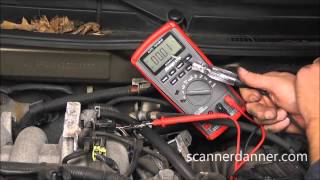
How to confirm: Disconnect the electrical connector and measure the resistance between the two pins on the valve with a multimeter. A reading outside the manufacturer's specification (a typical Mazda spec is around 22-26 ohms) confirms the valve is bad. 🎬 Watch: A mechanic shows you how to test the solenoid. Alternatively, apply 12V directly to the valve's pins; a healthy valve will make an audible 'click'. A bi-directional scan tool can also be used to command the valve on and off to check for the click.
Typical fix: Replace the purge control valve. It is typically mounted on or near the engine's intake manifold, connected by two hoses and one electrical connector.
Est. part cost: $30-$100 - Damaged Wiring or Connector 🟡 Medium Probability Wires in the engine bay are exposed to heat, vibration, and potential rodent damage, which can cause breaks, shorts to ground, or corrosion in the connector pins over time.
How to confirm: Visually inspect the wiring harness leading to the purge valve for any signs of cracking, melting, or fraying. With the key on (engine off), use a multimeter to check for 12V power on the feed wire at the connector. Check the other wire (control wire) for continuity back to the PCM.
Typical fix: Repair the damaged section of wire or replace the connector pigtail.
Est. part cost: $5-$25
Rare But Worth Checking
- Faulty Powertrain Control Module (PCM): → Shop Engine Control Module (ECM) This is extremely rare. The PCM should only be considered after the purge valve and its entire circuit have been thoroughly tested and confirmed to be good. A Reddit user with a Mazda 3 reported swapping the PCM did not fix their P0443 issue, pointing to how uncommon this is as a root cause.
Diagnosis Steps
- Verify the code P0443 is present using an OBD-II scanner.
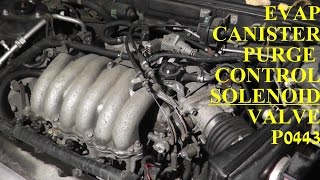
- Locate the EVAP purge control valve. On the 2.3L/2.5L 4-cylinder, it's often on a bracket on the intake manifold. On the 3.0L/3.7L V6, it's frequently on top of the engine toward the firewall. 🎬 Watch: See the exact purge valve location on the V6 engine.
- Inspect the electrical connector and wiring for any visible damage, corrosion, or loose connections.
- Disconnect the connector. With the ignition in the 'ON' position, use a multimeter to check for 12V power at one of the pins in the harness-side connector (the power feed wire).
- If power is present, turn the ignition off. Set the multimeter to measure resistance (Ohms) and test the two pins on the purge valve itself. Compare the reading to the manufacturer's specification (typically 22-26 ohms for this part). An infinite reading (OL) means the coil is broken and the valve is bad.
- If the resistance is within spec, the valve may be mechanically stuck. You can try applying 12V and ground directly to the valve's pins to listen for a click. No click indicates a bad valve.
- If the valve clicks and the resistance is good, check the control wire (the non-power wire) for continuity back to the PCM. Also check it for a short to ground.
- After replacing any parts, clear the code with the scanner and drive the vehicle through a full drive cycle to ensure the Check Engine Light does not return.
Parts You'll Likely Need
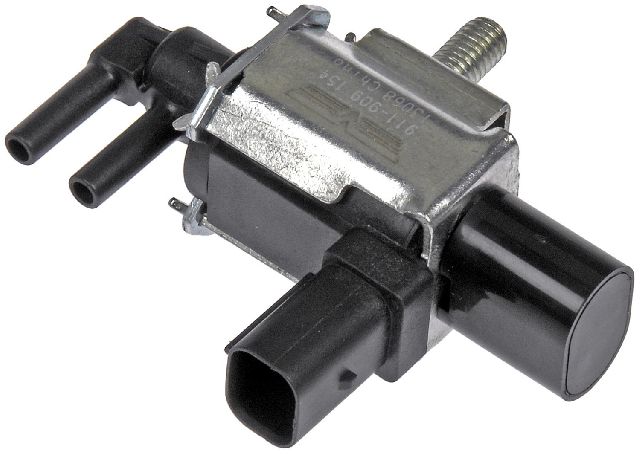
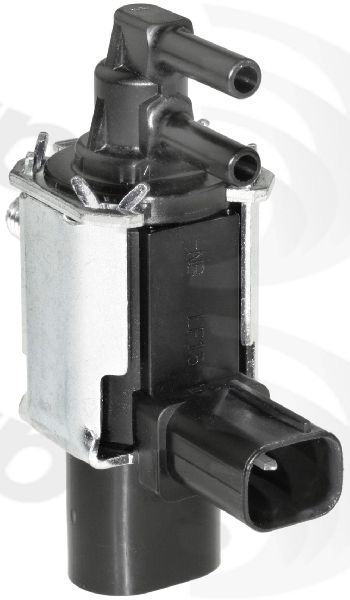
- Vapor Canister Purge Valve / Solenoid
(OEM #Z504-18-741A (or Z504-18-741) for some models, LF82-18-741 (also K5T46597) for others, PE01-18-751 for 3rd gen.)— This is the most common failure for a P0443 code, as the internal solenoid coil burns out over time.
Trusted brands: Mazda (OEM), Denso, Bosch, Standard Motor Products (e.g., CP720), Dorman (e.g., 911-706)
OEM price range: $80-$120
Aftermarket price range: $30-$70
Related Codes That Often Appear With This One
- P0444 — P0444 indicates 'Purge Control Valve Circuit Open'. It is a more specific version of P0443 and often points directly to a failed solenoid coil or a broken wire.
- P0445 — P0445 indicates 'Purge Control Valve Circuit Shorted'. This is another specific variant of P0443, pointing to a short in the wiring or solenoid.
Platform-Specific Known Issues
- Location on 3.0L V6: On the first-generation Mazda 6 with the 3.0L V6 (prior to the 2008 model year, but relevant context), a user on MazdaForum detailed replacing the P0443-causing solenoid valve (Part #Z504-18-741A). They found it on the very top of the engine, slightly to the right, accessible without removing the engine cover. This provides a likely location for the similar V6 in the 2008 model year.
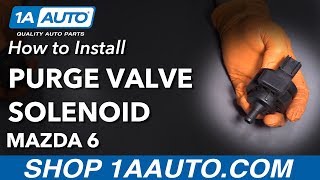
- Replacement on 2.3L I4: A YouTube video from 1A Auto shows the replacement process on a 2007 Mazda 6 with the 2.3L engine. The purge valve is shown mounted via a rubber bushing to a metal bracket on the driver's side of the engine bay, near the intake. The replacement is demonstrated using only a pair of needle-nose pliers to move the hose clamps. 🎬 See this step-by-step replacement walkthrough for the 4-cylinder model.
Mechanic-Grade Diagnostic Values
- Purge Valve Solenoid Coil Resistance — expected: 22-26 Ohms. Failure: A reading outside this range, or an open circuit (infinite resistance), indicates a faulty solenoid coil.
- Purge Valve Connector Power Wire Voltage (Key On, Engine Off) — expected: Battery Voltage (approx. 12V). Failure: No voltage indicates a problem with the power supply, such as a blown fuse or broken wire.
- Purge Valve Connector Control Wire Voltage (Key On, Engine Off, Valve NOT Commanded) — expected: Battery Voltage (approx. 12V). Failure: A reading of 0V when the valve is not commanded on points to an open circuit within the solenoid's coil.
- Purge Valve Connector Control Wire Voltage (During Bidirectional Test, Valve Commanded ON) — expected: Near 0V. Failure: Voltage remaining high (near battery voltage) when the valve is commanded on indicates a faulty PCM driver or an open in the control wire.
Scan Tool Commands That Help
- Professional Scan Tool (e.g., Mazda IDS, Forscan): EVAP Purge Solenoid (or similar name) Bidirectional Control / Actuator Test — This command allows the technician to manually open and close the purge valve from the scan tool. It is used to verify the integrity of the control circuit wiring, the PCM driver, and the mechanical function of the solenoid (an audible click should be heard).
Wiring & Ground Locations
- Engine Bay Ground Points — Common ground points for the Mazda 6 (GH) include a point on the passenger side frame rail near the power steering reservoir, a ground on the transmission housing near the starter, a point on the passenger side motor mount, and a multi-wire ground point on the frame underneath the driver's side headlight.. A corroded or loose engine ground can cause a variety of electrical issues, including intermittent voltage drops in sensor circuits. While not a direct cause of P0443, verifying major ground points are clean and tight is a crucial step in diagnosing any electrical fault code.
- Purge Valve Connector Pinout — The two-wire connector on the EVAP purge valve solenoid.. One pin is the power supply (should have battery voltage with key on). The other is the control wire, which is ground-side switched by the PCM. Knowing which is which is essential for correctly diagnosing whether the fault is in the power supply, the solenoid itself, or the PCM control circuit.
Real Owner Repair Stories
- ScannerDanner YouTube Channel (2002 Mazda 626 2.0L (demonstrates a universally applicable diagnostic process)) — Check Engine Light with code P0443.
✅ What actually fixed it Diagnosis revealed an open circuit inside the purge solenoid coil. With the key on, the power feed wire had 12V, but the control wire read 0V instead of the expected 12V (which would pass through the coil). A test light connected to battery positive did not light up when touching the control wire pin, confirming no continuity through the coil. The fix was replacing the purge solenoid. - NHTSA ODI #11010363 (Mazda platform reference) — An owner reported that their vehicle continually showed EVAP DTCs including P0443 and P0446, as well as either a too rich or too lean fuel mixture and O2 sensor issue codes.
OEM Part Supersession History
Z504-18-740, Z504-18-741→Z504-18-741A— Standard part revision and consolidation.
Heads up: This part is generally for earlier Mazda models (pre-2009) but is often confused. It is also listed for the RX-8 and Miata.LF82-18-740→LF15-18-741— Part update by manufacturer.
Heads up: LF82-18-741 and LF15-18-741 are listed for the 2009-2013 Mazda 6 with the 2.5L engine. Always verify with VIN as there can be overlap.N/A→PE01-18-751— Part for the 3rd generation (GJ/GL) Mazda 6, which began in 2013 in some markets.
Heads up: This part is for the newer SkyActiv engines and is not compatible with the second-generation (GH) 2008-2012 models.
Model Year Variations Within This Range
- 2008-2012 (Gen 2): These models typically use purge valve part numbers like LF82-18-741 or LF15-18-741 for the 2.5L I4 engine.
- 2013 (Gen 3 Start): The 2013 model year marks the beginning of the third generation (GJ) with SkyActiv engines. These vehicles use a different purge valve, such as part number PE01-18-751. It is critical for 2013 owners to verify their engine type before ordering.
Diagnostic Flowchart
Used vs. New Parts: Buying Guide for This Vehicle
When a used part is the smart pick: A used OEM purge valve from a low-mileage donor vehicle is a reasonable choice for this repair. The part is not a major wear item in the mechanical sense, but rather fails electrically. A part from a newer, wrecked vehicle can offer OEM quality for less than a new part.
Donor-vehicle mileage cap: roughly under 80000 miles for the part to have meaningful remaining life.
What to inspect on the donor part:
- Check for cracks or damage to the plastic housing and hose nipples.
- Ensure the electrical connector pins are clean, straight, and free of corrosion.
- If possible, test the resistance with a multimeter before purchase; it should be within the 22-26 ohm range.
- Ask about the donor vehicle's mileage and check for signs of excessive engine bay heat (discoloration, brittleness).
Aftermarket brands forum-validated for this vehicle:
- Standard Motor Products (SMP)
- Dorman
- Bosch
- Denso
Brands owners have reported issues with on this vehicle:
- No-name, unbranded parts from online marketplaces may have a higher failure rate and are best avoided unless no other option is available.
Real Owner Stories
Aggregated from forums and TSBs cited above. Mileages and costs reflect what owners reported in those sources.
Pre-2008 Mazda 6 V6
Symptoms: Check Engine Light with code P0443.
What fixed it: Replacing the purge control valve solenoid (part Z504-18-741A). The owner noted its location on the very top of the engine.
Source hint: MazdaForum.com: A user with a V6 Mazda 6 experiencing P0443 shared photos and a description of replacing the valve solenoid (part Z504-18-741A)...
Related OBD-II Codes
Frequently Asked Questions
Where is the EVAP purge valve located on my 2008-2013 Mazda 6?
How can I test the purge valve myself to confirm it's the cause of P0443?
Is the P0443 code on my Mazda 6 caused by a loose gas cap?
What is the most common fix for P0443 on this generation of Mazda 6?
Are there any recommended aftermarket brands for the purge valve?
I have a V6 model. Is there a specific part number I should look for?
Can I use a purge valve from a Ford Fusion to fix my Mazda 6?
Helpful Videos

We Have This Part in Stock

The information in this article is provided for general reference and educational purposes only. Vehicle specifications, procedures, and part compatibility can vary by production date, trim level, and region. Always consult your vehicle's factory service manual and verify part numbers before purchasing or performing repairs. Safety-critical components such as airbags, seat belts, and braking systems should be installed by a qualified professional.
- Mazda 6:
- 🧭 Diagnostic Flowchart
- 🎬 Helpful Videos
- 🛍️ Shop This Part
- What's Unique About the 2008-2013 Mazda 6
- Symptoms You May Notice
- Most Likely Causes
- Rare But Worth Checking
- Diagnosis Steps
- Parts You'll Likely Need
- Related Codes That Often Appear With This One
- Platform-Specific Known Issues
- Mechanic-Grade Diagnostic Values
- Scan Tool Commands That Help
- Wiring & Ground Locations
- Real Owner Repair Stories
- OEM Part Supersession History
- Model Year Variations Within This Range
- Used vs. New Parts: Buying Guide for This Vehicle
- Real Owner Stories
- Pre-2008 Mazda 6 V6
- Related OBD-II Codes
- Frequently Asked Questions
- 🎟️ Get 5% Off