

P0443 on 2016-2024 Mazda MX-5 Miata: Purge Valve Circuit Malfunction Causes and Fixes
For a 2016-2024 Mazda MX-5 Miata, code P0443 almost always points to a faulty vapor canister purge valve. It's an easy DIY replacement that costs about $60-$120 for the part and can be completed in under 30 minutes.
- P0443 on your Miata is an electrical circuit code for the purge valve, not a system leak code.
- The most common cause by a wide margin is a failed purge valve solenoid (part #PE01-18-751).
- It's a beginner-friendly DIY repair that takes less than 30 minutes with basic tools.
- Symptoms can include a rough idle and difficulty starting after getting gas, in addition to the Check Engine Light.
- Always check that the gas cap is tight first, as it's a simple and free check, though less likely to be the cause for this specific code.
What's Unique About the 2016-2024 Mazda MX-5 Miata
The 2016-2024 Mazda MX-5 Miata belongs to the 'ND' generation. While P0443 is a generic code, the specific purge valve part is unique to this generation and differs from the previous 'NC' Miata (up to 2015). Based on owner forums and repair data, failure of this part is not an extremely common issue on the ND Miata, but it is the most likely cause when code P0443 does appear. The repair is straightforward and the valve is easily accessible in the engine bay, making it a simple DIY task.
Symptoms You May Notice
- Check Engine Light is on
- Rough or unstable idle
- Difficulty starting the engine, especially right after refueling
- Slightly reduced fuel economy
- Strong fuel odor near the vehicle (if the valve is stuck open)
- Replacing the charcoal canister. The P0443 code points to an electrical circuit issue with the purge valve, not the canister itself or a system leak.
- Replacing other EVAP system components before testing the purge valve circuit directly.
Most Likely Causes
- Faulty Vapor Canister Purge Valve (Solenoid) 🔴 High Probability → Shop Vapor Canister The internal coil of the solenoid can fail over time, creating an open or short in the circuit, or the valve mechanism can get stuck open or closed.
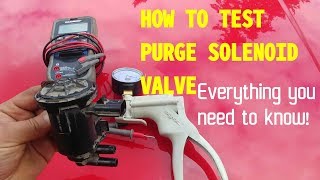
How to confirm: Disconnect the electrical connector and measure the resistance across the two pins on the valve with a multimeter. A reading outside the manufacturer's specification (often around 22-26 ohms for similar Mazda parts) indicates a failure. You can also apply 12V directly to the pins; a healthy valve will make an audible click. A bidirectional scan tool can also command the valve to cycle, and you should hear it clicking.
Typical fix: Replace the vapor canister purge valve.
Est. part cost: $60-$120 - Damaged Wiring or Loose Connector 🟡 Medium Probability Rodents can chew through wires in the engine bay. Connectors can also become corroded or have pins back out, causing an intermittent or permanent open circuit.
How to confirm: Visually inspect the wiring harness and connector going to the purge valve for any signs of corrosion, breaks, or loose pins. Use a multimeter to check for 12V power at the connector with the key on. The PCM provides a duty-cycled ground to activate the valve.
Typical fix: Repair the damaged section of the wiring harness or clean/replace the electrical connector.
Est. part cost: $5-$50 - Loose or Faulty Gas Cap ⚪ Low Probability While a loose gas cap typically causes leak-related EVAP codes (like P0455), it's a simple and free check that should always be performed first. An old, worn seal can also fail to seal properly.
How to confirm: Ensure the gas cap is tightened until it clicks at least once. Inspect the cap's seal for cracks or damage.
Typical fix: Tighten or replace the gas cap.
Est. part cost: $15-$30
Rare But Worth Checking
- Faulty Powertrain Control Module (PCM): → Shop Engine Control Module (ECM) This is extremely rare. The PCM should only be considered after all other possibilities, including the valve and its entire circuit, have been thoroughly tested and ruled out.
- Blown Fuse: The purge valve circuit is protected by a fuse. If other components on the same circuit have failed, or if there was a short, the fuse could blow, cutting power to the valve. This is uncommon but possible.
Diagnosis Steps
- Check the Gas Cap: Ensure it is tight and the seal is intact. Clear the code and see if it returns.
- Visually Inspect: Locate the purge valve in the engine bay, typically near the intake manifold. Inspect its electrical connector and wiring for any visible damage, corrosion, or looseness.
- Test the Purge Valve: Disconnect the electrical connector. Use a multimeter to measure the resistance between the two pins on the valve. Compare this to the manufacturer's specification. If it's out of range, the valve is bad.
- Test the Circuit: With the connector unplugged and the ignition on, use a multimeter to check for battery voltage at one of the pins in the harness connector. The other pin is the ground, which is controlled by the PCM. If voltage is missing, there is a wiring or fuse issue upstream.
- Command the Valve (Optional): If you have a bidirectional scan tool, you can command the purge valve to open and close while the engine is running to see if it functions (you should hear clicking) and affects the engine idle.
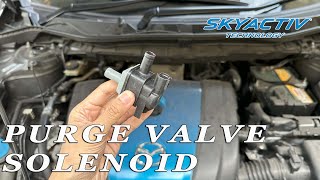
- Replace the Purge Valve: If the valve fails the resistance test or does not click when 12V is applied, it is the most likely culprit. Replacement is typically straightforward, involving disconnecting the connector and two hoses. 🎬 See: Mazda purge valve replacement walkthrough
- Clear Codes and Test Drive: After replacing the part, clear the DTC with a scanner and perform a drive cycle to ensure the Check Engine Light does not return.
Parts You'll Likely Need
- Vapor Canister Purge Valve
(OEM #PE01-18-751)— This is the component whose electrical circuit is monitored by the P0443 code. Failure of its internal solenoid coil is the most common cause.
Trusted brands: Mazda (OEM), Bosch, Standard Motor Products, Dorman
OEM price range: $90-$140
Aftermarket price range: $60-$90
Related Codes That Often Appear With This One
- P0441 — P0441 (Incorrect Purge Flow) can appear if the purge valve is stuck open or closed, which can be a mechanical result of the same electrical failure that triggers P0443.
- P0444 — P0444 indicates the purge control valve circuit is open. This is a more specific version of the P0443 circuit fault and often points directly to a bad solenoid coil or a broken wire.
- P0445 — P0445 indicates the purge control valve circuit is shorted. This is another specific version of the P0443 fault, pointing to a short in the wiring or the valve's internal coil.
Technical Service Bulletins (TSBs) & Recalls
- As of early 2026, no specific TSBs or recalls have been issued by Mazda for the purge valve or code P0443 on the 2016-2024 MX-5 Miata. General searches for Mazda TSBs confirm this.
Platform-Specific Known Issues
- Real Owner Experience on Mazdaspeeds.org: A user on the Mazdaspeeds.org forum suggested a potential fix for a binding purge valve by applying 9V from a battery to cycle it and adding a few drops of air tool oil. While replacement is the standard fix, this indicates the failure mode is often mechanical binding within the solenoid.
Mechanic-Grade Diagnostic Values
- Purge Valve Solenoid Coil Resistance — expected: 15 Ω to 35 Ω. Failure: A reading of 0 Ω (short circuit) or infinite/OL (open circuit), or any reading outside the 15-35 Ω range.
- Purge Valve Connector - Power Supply Pin — expected: Battery Voltage (~12V) with ignition on, engine off.. Failure: 0V or significantly low voltage indicates a problem with the fuse or wiring from the power source.
- PCM Output Pin for Purge Valve (Back-probed) — expected: Approximately 5V when the PCM is commanding the valve to open (duty cycle active).. Failure: Absence of voltage when a scan tool commands the purge valve on suggests a faulty PCM driver.
Scan Tool Commands That Help
- Mazda IDS or professional bidirectional scanner: EVAP Purge Test / Purge Valve Control — Use this active test to command the purge valve solenoid to cycle on and off. Listen for an audible click from the valve. With the engine running, commanding the valve open should cause a brief change in idle and a rich reading on the upstream O2 sensor, confirming both electrical function and mechanical flow.
Wiring & Ground Locations
- Purge Solenoid Valve — Located directly on the intake manifold.. This is the component being monitored. Its location is needed for visual inspection, testing, and replacement.
- EVAP System Fuse — In the engine compartment fuse box. The specific fuse may be shared with other components; a diagram for the vehicle should be consulted. A likely candidate is a fuse labeled for engine components or injection systems.. A blown fuse will cut power to the purge valve, causing an open circuit fault and triggering P0443.
- PCM Ground — The PCM provides the switched ground for the purge valve circuit. The main PCM ground points are critical but their exact locations require a factory service manual. A common ground point for accessories on the ND Miata is a chassis bolt behind the driver's side kick panel.. A poor PCM ground can cause a variety of erratic electrical issues, including faults on circuits the PCM controls, though this is a rare cause for a single P0443 code.
"I Checked Everything" — The Actual Cause
- This diagnostic pattern is not relevant for code P0443. A smoke test is used to find physical leaks in the EVAP system (which trigger codes like P0455, P0456). P0443 is an electrical circuit malfunction code, indicating a problem with the purge valve's solenoid or its wiring, which a smoke test cannot detect.
OEM Part Supersession History
PE01-18-751→No known supersession.— N/A
Heads up: The part number PE01-18-751 is used consistently across a wide range of Mazda models from approximately 2012 to 2024, including the entire 2016-2024 ND Miata generation. No incompatible revisions have been noted.
Model Year Variations Within This Range
- 2016-2024: While the ND Miata received an engine update in 2019 (moving from ND1 to ND2), the vapor canister purge valve (PE01-18-751) and its location on the intake manifold remain the same across all model years in this range.
Diagnostic Flowchart
Other Known Issues on This Vehicle
Issues unrelated to this code that are worth knowing about as an owner of this generation:
- Manual Transmission Weakness/Failure 🔴 High — Most common on early ND1 models (2016-2017), particularly with 2nd-to-3rd gear shifts. Failures often occur early in the vehicle's life (<30k miles). Later models (ND2) are considered more robust but not immune. (Ref: A TSB (05-001/17) was issued for 2016-2017 models for grinding noises and difficulty shifting.)
- Infotainment Screen Delamination/Cracking 🟠 Medium — Common issue where the screen layers delaminate or develop spiderweb-like cracks, especially in the corners. Often attributed to temperature changes. It has been seen on both ND1 and ND2 models and was frequently replaced under warranty. (Ref: No official TSB, but widely acknowledged and addressed by dealers under warranty. A class-action lawsuit regarding infotainment malfunctions was noted by owners.)
- Soft Top Wear at Pinch Points/Frame 🟡 Low — The canvas soft top can develop wear or small tears at the points where the frame folds and pinches the fabric during operation. Mazda's owner manual advises against operating the top in very cold temperatures (below 41°F/5°C) to prevent damage. (Ref: No TSB, but some owners have reported successful warranty claims for premature wear.)
- Infotainment System Ghost Touches/Rebooting 🟠 Medium — The MZD Connect system can suffer from random reboots, freezing, or 'ghost touches'. This is sometimes traced to a faulty or corrupt navigation SD card, which can be fixed by cleaning or replacing the card. (Ref: A class-action lawsuit regarding various infotainment malfunctions has been reported by owners.)
- A/C Cooler Pipe (High-Pressure Line) Crack 🟠 Medium — Affects 2016-2018 models built before March 2018. The high-pressure A/C line can crack due to engine vibration, causing a loss of refrigerant and warm air from the vents. (Ref: TSB 07-004/18 was issued, detailing a repair procedure with an updated, more durable pipe.)
Used vs. New Parts: Buying Guide for This Vehicle
When a used part is the smart pick: For this specific repair, a used part is not recommended. The purge valve is a relatively inexpensive electro-mechanical part that fails due to internal coil burnout or mechanical sticking. The savings from a used part are minimal compared to the risk of a short remaining service life.
What to inspect on the donor part:
- If a used part must be sourced, inspect for any cracks in the plastic housing.
- Ensure electrical pins are straight and free of corrosion.
- Test the resistance with a multimeter before purchase; it should be within 15-35 ohms.
OEM-only on this vehicle (don't cheap out):
- No parts for this specific P0443 repair require OEM-only sourcing. The purge valve is a simple component with reliable aftermarket options.
Aftermarket brands forum-validated for this vehicle:
- Standard Motor Products (Standard Ignition)
- Dorman
- Bosch
Brands owners have reported issues with on this vehicle:
- No specific brands were consistently reported as problematic in owner forums for this part on this vehicle.
Real Owner Stories
Aggregated from forums and TSBs cited above. Mileages and costs reflect what owners reported in those sources.
Mazda MX-5 Miata Skyactiv-G
Symptoms: The purge valve was binding mechanically, causing issues with the EVAP system.
What fixed it: The owner applied 9V from a battery to cycle the valve and added a few drops of air tool oil to resolve the mechanical binding.
Source hint: Mazdaspeeds.org forum member
Mazda Owner Diagnostic Experience
Symptoms: An owner reported that their vehicle continuously showed EVAP DTCs including P0443 and P0446, along with fuel mixture (rich/lean) and O2 sensor codes.
What fixed it: While the O2 sensors were replaced, the presence of P0443 alongside mixture codes often points to a purge circuit failure affecting the engine's air-fuel ratio.
Source hint: NHTSA ODI #11010363
Related OBD-II Codes
Frequently Asked Questions
Is there a specific TSB for the P0443 code on my 2016-2024 Mazda MX-5 Miata?
What is the specific part number for the purge valve if I need to replace it on my ND Miata?
I'm having trouble starting my Miata right after I fill up the gas tank; is this related to P0443?
Can I test the purge valve myself with a multimeter?
Does the 2016-2017 Miata TSB 05-001/17 relate to the EVAP system?
Could a bad gas cap be causing this code on my MX-5?
Helpful Videos
Used OEM Parts in Stock
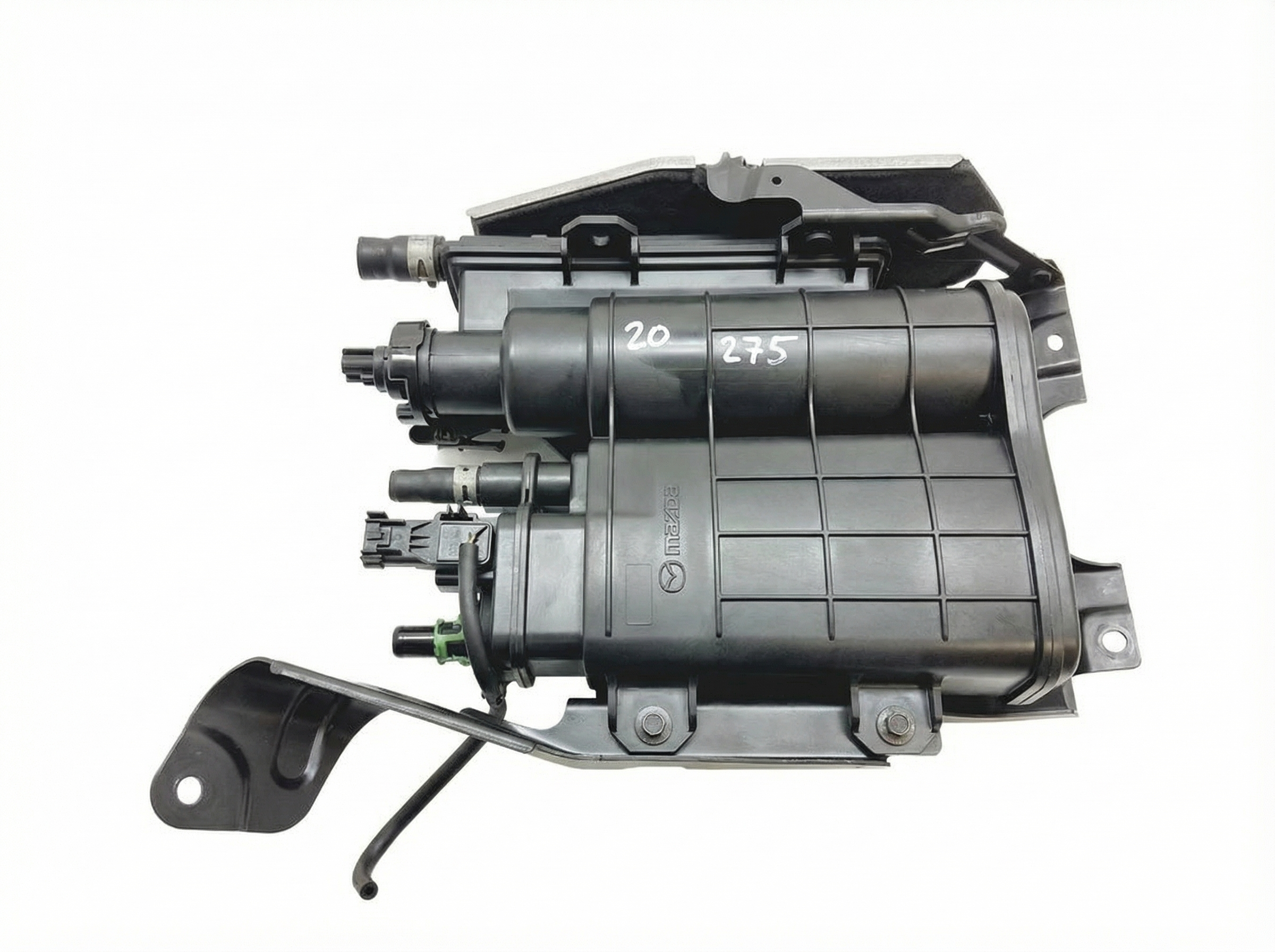
New Aftermarket Parts Available


The information in this article is provided for general reference and educational purposes only. Vehicle specifications, procedures, and part compatibility can vary by production date, trim level, and region. Always consult your vehicle's factory service manual and verify part numbers before purchasing or performing repairs. Safety-critical components such as airbags, seat belts, and braking systems should be installed by a qualified professional.
- Mazda MX-5 Miata:
- 🧭 Diagnostic Flowchart
- 🎬 Helpful Videos
- 🛍️ Shop This Part
- What's Unique About the 2016-2024 Mazda MX-5 Miata
- Symptoms You May Notice
- Most Likely Causes
- Rare But Worth Checking
- Diagnosis Steps
- Parts You'll Likely Need
- Related Codes That Often Appear With This One
- Technical Service Bulletins (TSBs) & Recalls
- Platform-Specific Known Issues
- Mechanic-Grade Diagnostic Values
- Scan Tool Commands That Help
- Wiring & Ground Locations
- "I Checked Everything" — The Actual Cause
- OEM Part Supersession History
- Model Year Variations Within This Range
- Other Known Issues on This Vehicle
- Used vs. New Parts: Buying Guide for This Vehicle
- Real Owner Stories
- Mazda MX-5 Miata Skyactiv-G
- Mazda Owner Diagnostic Experience
- Related OBD-II Codes
- Frequently Asked Questions
- 🎟️ Get 5% Off