

P0443 on 2008-2015 Nissan Rogue: EVAP Purge Valve Circuit Causes and Fixes
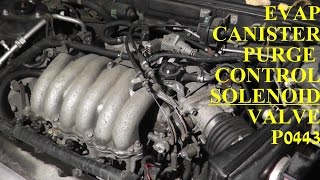
On a 2008-2015 Nissan Rogue, code P0443 is almost always caused by a failed EVAP purge control valve located on top of the engine. It's an affordable part, typically costing $30-$80 for an aftermarket replacement, and is a simple DIY fix (Difficulty 1/5). The valve itself is a known high-failure item across many Nissan models.
- P0443 is an electrical circuit code, not a leak code. Do not replace the gas cap.
- The most likely fix is replacing the EVAP purge valve located on top of the engine.
- The repair is very simple and requires basic hand tools, making it an excellent DIY task that can be completed in under 30 minutes.
- Always check the electrical connector for damage or corrosion before replacing the part.
- Ensure you purchase the correct part number, as it may differ between the first generation (2008-2013) and second generation (2014-2015) Rogue.
What's Unique About the 2008-2015 Nissan Rogue
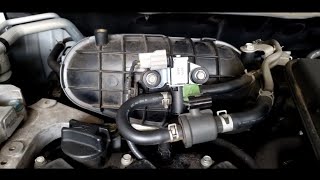
The 2008-2015 Nissan Rogue, across both its first (S35) and second (T32) generations, uses a very common EVAP purge valve. Like many other Nissan models sharing the QR25DE engine, this valve is a frequent failure point, making it the primary suspect for a P0443 code. Unlike some vehicles where wiring issues are equally probable, on the Rogue, the valve itself is the most likely culprit. The part is inexpensive and easily accessible on top of the engine in both generations, making for a quick diagnosis and repair.
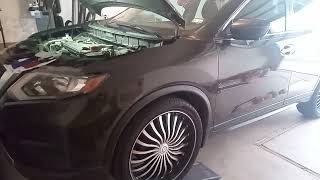
🎬 Watch: 2008-2015 Nissan Rogue purge valve replacement walkthroughGeneration note: This range covers two generations of the Nissan Rogue: - First Generation (S35): 2008-2013, plus the 2014-2015 "Rogue Select" models. The purge valve is on top of the intake manifold, easily visible after removing the engine cover. - Second Generation (T32): 2014-2015 models (excluding the "Rogue Sele 🎬 Watch: Second-generation Nissan Rogue purge valve replacementct"). The purge valve is located on the top, front side of the intake manifold, similarly accessible. The cause, symptoms, and repair are virtually identical for both generations covered.
Symptoms You May Notice
- Check Engine Light is on
- Slightly rough idle
- Minor decrease in fuel economy
- Difficulty starting the engine immediately after refueling (rare, but possible if the valve is stuck open)
- A faint fuel odor (rare)
- Failed emissions test
- Replacing the gas cap. A loose or faulty gas cap will cause an EVAP leak code (like P0455 or P0456), not a circuit code like P0443.
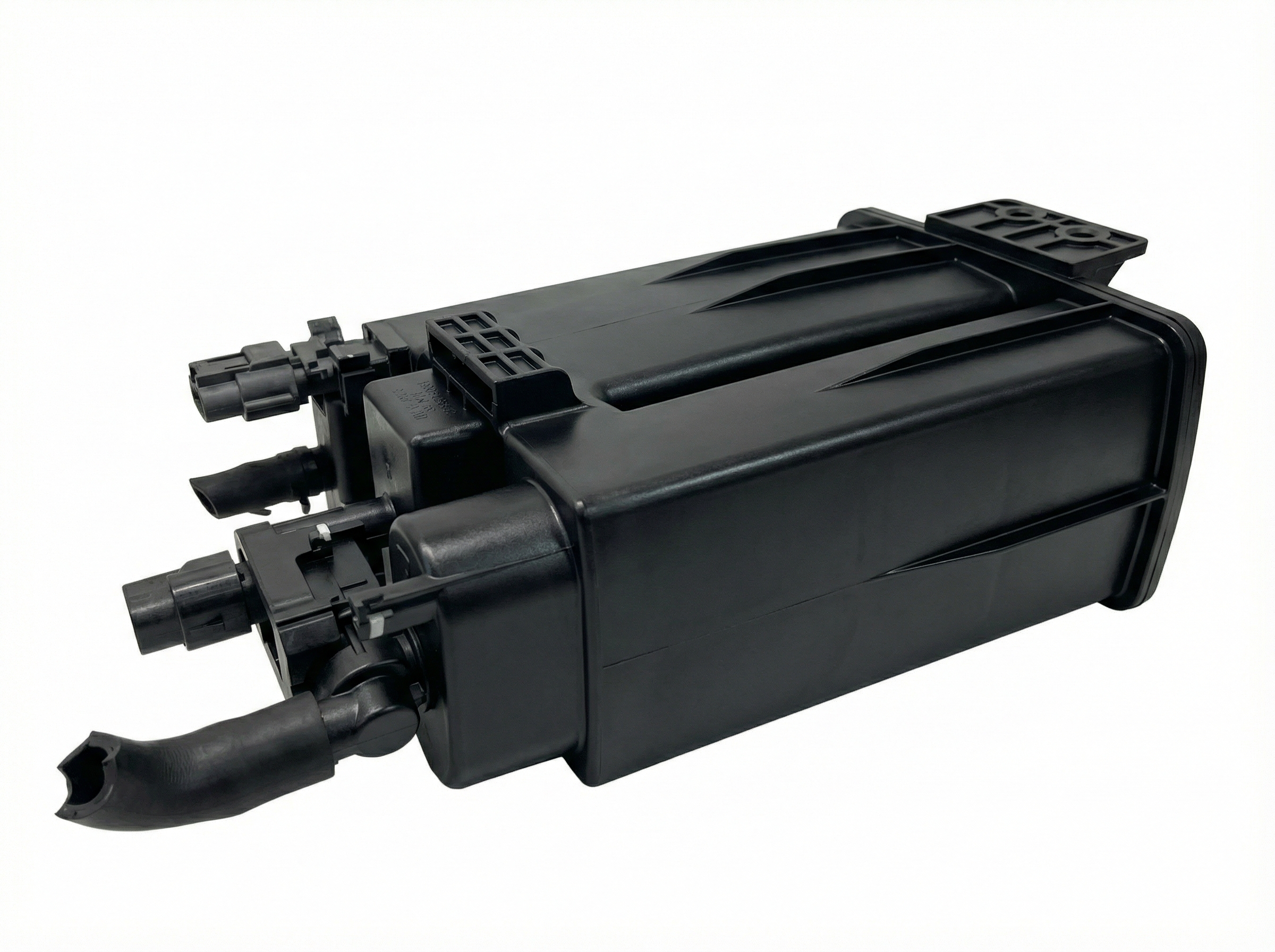
- Replacing the EVAP canister or vent valve. These components are located at the rear of the vehicle near the fuel tank and have their own specific trouble codes (e.g., P0448 for the vent valve). P0443 points specifically to the purge valve circuit in the engine bay.
Most Likely Causes
- Faulty EVAP Purge Control Valve/Solenoid 🔴 High Probability The internal coil of the solenoid is a known high-failure item on many Nissan vehicles of this era due to heat and vibration, causing it to burn out or develop an internal short/open circuit.
How to confirm: Locate the valve on top of the engine. With the engine off, disconnect the electrical connector and measure the resistance between the two pins on the valve using a multimeter. A good valve should read between 15-35 ohms. You can also apply 12V directly to the pins; a healthy valve will make an audible 'click'. If it's out of spec (open/infinite resistance or shorted/zero resistance) or doesn't click, it's bad.
Typical fix: Replace the EVAP purge control valve.
Est. part cost: $30 - $80 - Damaged Wiring or Corroded Connector ⚪ Low Probability The wiring harness is routed near hot and vibrating engine components, which can cause wires to fray or break over time. The connector pins can also develop corrosion.
How to confirm: Visually inspect the wiring harness and connector going to the purge valve for any signs of cracking, fraying, or green/white corrosion on the pins. With the key on and engine off, unplug the connector and use a multimeter to verify that one wire (typically Yellow) has battery voltage (around 12V).
Typical fix: Repair the damaged section of wire or clean the connector terminals. If the connector is badly damaged, it may need to be replaced.
Est. part cost: $5 - $25 - Blown Fuse ⚪ Low Probability
How to confirm: Check the fuse box in the engine compartment (IPDM E/R) for a blown fuse related to the emissions system. Consult your owner's manual for the specific fuse location, often labeled 'ENG CONT' or similar.
Typical fix: Replace the blown fuse. If the fuse blows again immediately, it indicates a short circuit in the wiring or the purge valve itself that must be found and repaired.
Est. part cost: $1 - $5
Rare But Worth Checking
- Faulty Engine Control Module (ECM): → Shop Engine Control Module (ECM) This is very rare. Before suspecting the ECM, all other possibilities (valve, wiring, fuse) must be exhaustively tested and ruled out. A faulty driver circuit inside the ECM can prevent it from correctly grounding the purge valve circuit, which can be diagnosed by a professional with advanced tools.
Diagnosis Steps
- Scan for Codes: Confirm P0443 is the primary code. Note any other codes present, such as P0444, P0445, or P0171.
- Visual Inspection: Locate the purge valve on top of the engine. Check that its electrical connector is plugged in securely. Inspect for any corrosion on the pins and obvious damage to the wiring harness (chafing, melting, rodent damage).
- Check for Power: Turn the ignition to 'ON' (engine off). Unplug the connector and use a multimeter to test for battery voltage (approx. 12V) on the harness-side connector. On these Nissans, this is typically the Yellow wire.
- Test the Purge Valve Resistance: Disconnect the connector. Set your multimeter to Ohms (Ω) and measure the resistance across the two pins on the valve itself. A reading between 15-35 ohms is expected. An open circuit (infinite resistance) or a short (near zero resistance) means the valve is faulty and needs replacement.
- Bench Test the Valve (Click Test): Using jumper wires, carefully apply 12V power and a ground to the two pins on the valve. You should hear a distinct 'click' as the solenoid activates. No click means the valve is seized or burned out.
- Check the Ground Signal Wire: If the valve and power supply are good, the issue may be the signal wire to the ECM. Reconnect the valve. Back-probe the signal wire (usually a Tan wire on Nissans) with a multimeter. At idle, it should show battery voltage. As you raise RPM to 2500-3000, the ECM should start to pulse the ground, and you will see the voltage drop or fluctuate, indicating the ECM is trying to control the valve. If the voltage never changes, there may be a break in the wire or a faulty ECM driver (rare).
- Replace the Faulty Component: Based on your findings, replace the purge valve, repair the wiring, or replace the fuse.
Parts You'll Likely Need
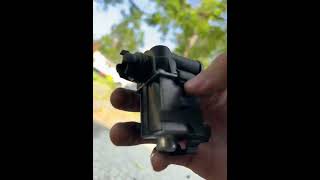
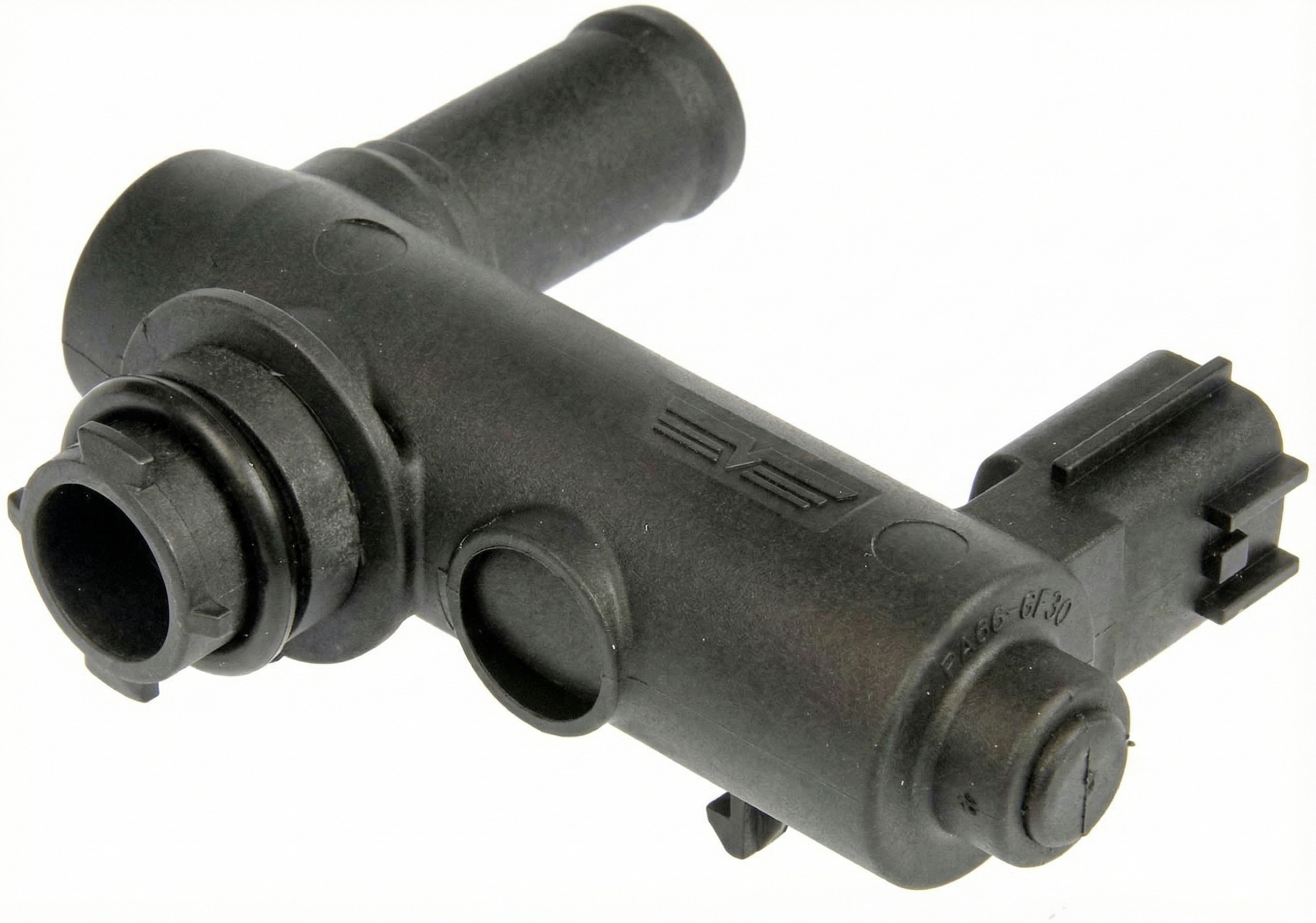
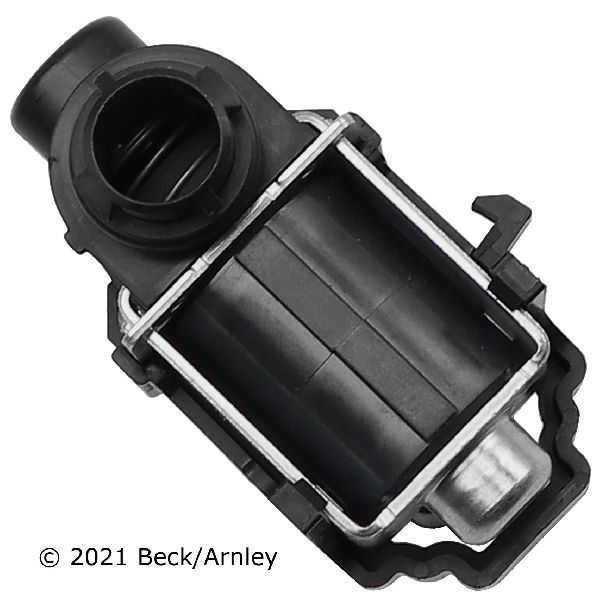
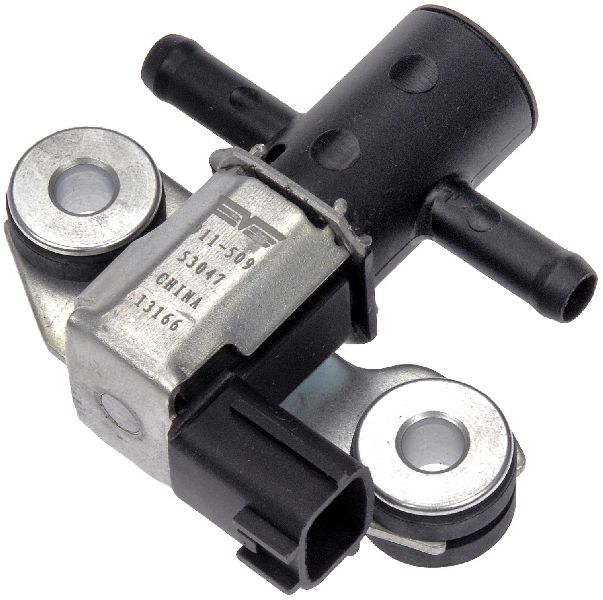
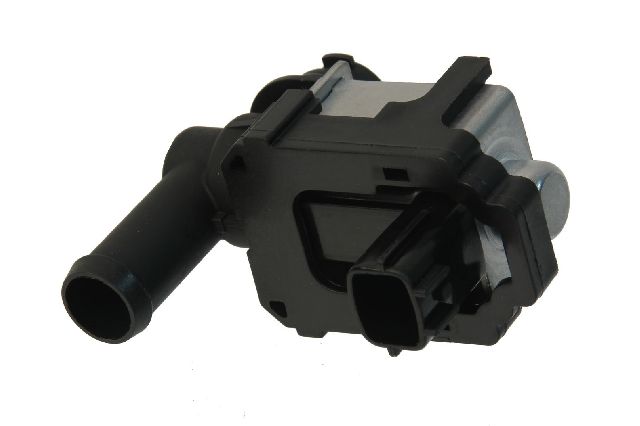
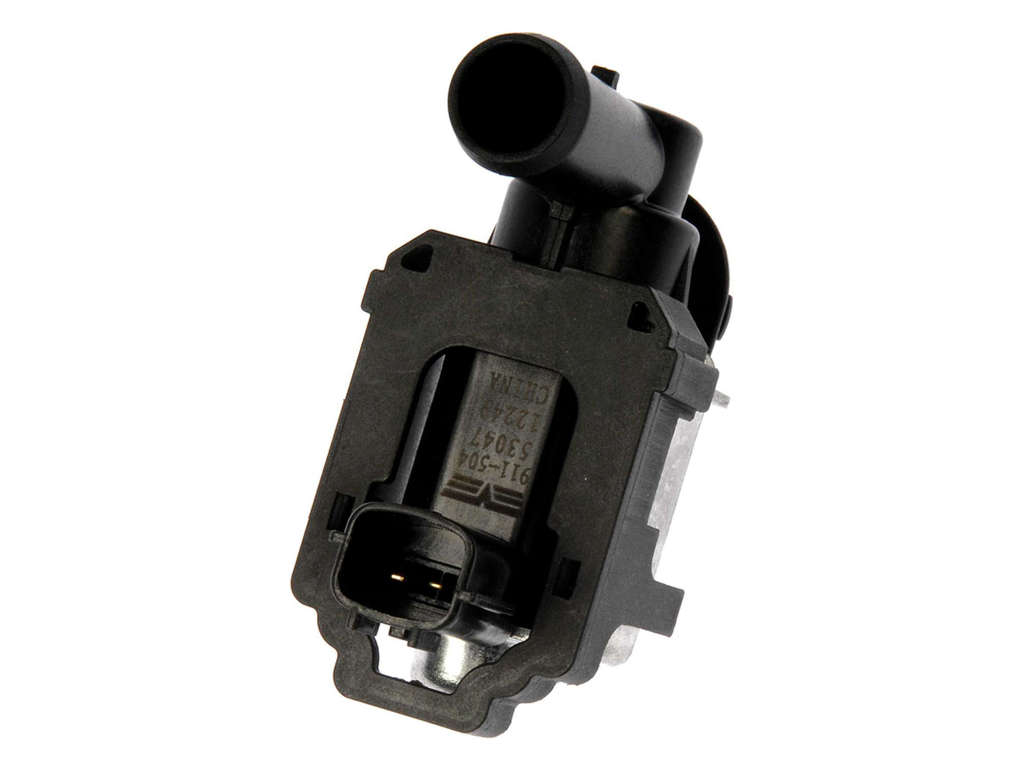
- EVAP Canister Purge Valve / Solenoid
(OEM #14930-EN20A (supersedes 14930-JA10D, 14930-JA10E))— This is the most common failure point for code P0443 on this vehicle. The internal solenoid coil fails from heat and age.
Trusted brands: Nissan (OEM), Hitachi (often the OEM supplier), Dorman, Standard Motor Products (SMP)
OEM price range: $80-$110
Aftermarket price range: $30-$80
Related Codes That Often Appear With This One
- P0444 — P0444 (Purge Control Valve Circuit Open) is often seen when the connector to the valve is unplugged during diagnosis or if the internal coil has failed completely, creating an open circuit.
- P0445 — P0445 (Purge Control Valve Circuit Shorted) can occur if the internal coil windings have shorted together or if the signal wire is shorted to ground.
- P0171 — P0171 (System Too Lean Bank 1) can sometimes accompany P0443 if the purge valve is stuck open, creating a vacuum leak that allows unmetered air/fuel vapor into the intake manifold.
Platform-Specific Known Issues
- Owner Experience: Persistent Code After Replacement: In a thread on NissanForums.com, a user with a 2014 Rogue reported a persistent P0443 even after replacing the purge valve. The issue was resolved after performing a detailed electrical diagnosis that traced the fault to the ECM's control signal, highlighting the importance of testing the full circuit if a simple part swap doesn't work.
Mechanic-Grade Diagnostic Values
- EVAP Purge Control Valve Solenoid Resistance — expected: 15 - 35 Ohms. Failure: A reading of infinity (Open Loop) or near zero ohms indicates a failed coil.
- Voltage at Purge Valve Connector (Key On, Engine Off) — expected: Approximately 12V (Battery Voltage) on the Yellow wire.. Failure: No voltage suggests a blown fuse or a break in the power wire from the IPDM E/R.
- Voltage on Purge Valve Ground Control Wire (Back-probed at idle) — expected: Battery voltage. The ECM supplies ground to activate the valve, so at idle (when the valve is off), the meter reads the supply voltage through the coil.. Failure: A reading of 0V could indicate the control wire (Tan) is shorted to ground.
- Voltage on Purge Valve Ground Control Wire (Back-probed at 2500-3000 RPM) — expected: Voltage should begin to drop or fluctuate after about 30 seconds as the ECM pulses the ground to activate the purge cycle.. Failure: Voltage remaining constant at battery voltage indicates the ECM is not commanding the valve to open, which could be a wiring break or a faulty ECM driver.
Scan Tool Commands That Help
- Nissan CONSULT or advanced aftermarket scanner (e.g., Autel): EVAP Purge Volume Control Valve Test / Work Support — This bidirectional command allows the technician to manually command the purge valve to open and close. It's used to verify if the valve clicks, if the ECM driver is working, and to check for vacuum flow when the valve is commanded open, confirming the entire circuit's functionality without having to manually apply voltage.
Wiring & Ground Locations
- IPDM E/R (Intelligent Power Distribution Module Engine Room) — In the engine compartment, typically next to the battery. It integrates the fuse and relay box.. The IPDM E/R supplies the 12V power to the EVAP purge valve. A failure within this module or a blown fuse housed within it can cause a P0443 code.
- Purge Valve Power Wire — Yellow wire at the purge valve connector.. This wire provides the constant 12V supply to the valve. Verifying battery voltage here is the first step in diagnosing the electrical circuit.
- Purge Valve Control Wire — Tan wire at the purge valve connector, running to the ECM.. The ECM grounds this wire to activate the solenoid. A short or open in this wire will prevent the valve from operating and set a P0443.
- Ground Point E21 — Left front of the engine compartment.. This is a primary engine compartment ground point. While not directly for the purge valve's control circuit (which is grounded by the ECM), a poor ground here can cause a variety of electrical issues and voltage drops that could indirectly affect sensor readings and module performance.
Real Owner Repair Stories
- nicoclub.com forum user 'mellotron' (2014 Nissan Rogue S AWD) — P0443 Check Engine Light, would clear on its own in cold weather and return in warm weather.
❌ Tried (didn't work) Replacing the purge control valve (new part confirmed working with a battery test)., Replacing the vent valve., Blowing out the vacuum lines.
✅ What actually fixed it The user was guided to perform advanced electrical checks. The final fix was not posted in the thread, but the critical diagnostic path pointed towards testing the Tan control wire for a short to ground or an open circuit back to the ECM, and ultimately testing the ECM driver itself as the final possibility if all wiring tested good. This story highlights that a simple part swap is not always the fix.
OEM Part Supersession History
14930-ET000→14930-EN200, then 14930-EN20A— Standard part evolution for improved reliability or manufacturing changes.
Heads up: The parts are generally cross-compatible for this application. 14930-EN20A is the most current and widely available version.14930-JA10D, 14930-JA10E→14930-EN20A— Part consolidation and updates. The JA10x series was also used on V6 models like the Murano but has been superseded by the EN20A for Rogue applications.
Heads up: While physically similar, it is always best to use the latest recommended part number (14930-EN20A) to ensure correct flow and electrical characteristics.
Diagnostic Flowchart
Other Known Issues on This Vehicle
Issues unrelated to this code that are worth knowing about as an owner of this generation:
- Catastrophic CVT Transmission Failure 🔴 High — Extremely common across all 2008-2015 models. Failures often occur between 60,000 and 120,000 miles, manifesting as shuddering, whining, hesitation, or total loss of power. (Ref: Nissan extended the CVT warranty for many models to 10 years/120,000 miles due to widespread issues and class-action lawsuits.)
- Air Conditioning (A/C) Compressor Failure 🟠 Medium — Commonly reported, especially in 2008-2013 models, often failing around 60,000-80,000 miles. Symptoms include weak or no cold air.
- Excessive Oil Consumption (QR25DE Engine) 🟠 Medium — While more severe on earlier (2002-2006) QR25DE engines due to a pre-catalyst issue, some 2008+ models can still consume oil. This can be exacerbated by faulty aftermarket valve covers with poorly designed baffles. (Ref: A recall existed for 2006 models (NHTSA ID: 06V442000), but later models can still be affected.)
- Premature Suspension Wear / Noisy Rear Struts 🟡 Low — Owners report clunking or rattling noises from the rear suspension, often caused by worn strut mounts or shock absorbers, sometimes appearing before 100,000 miles.
- Inaccurate Fuel Gauge Sender 🟡 Low — A well-documented issue where the fuel gauge reads incorrectly or shows empty after a fill-up. This is typically caused by a faulty fuel level sending unit inside the gas tank.
Used vs. New Parts: Buying Guide for This Vehicle
When a used part is the smart pick: A used OEM purge valve from a low-mileage donor vehicle is a reasonable choice. Since this is a simple solenoid and not a complex electronic module, a functional used part from a reputable salvage yard (e.g., via car-part.com) can be a cost-effective alternative to a new aftermarket part.
Donor-vehicle mileage cap: roughly under 80000 miles for the part to have meaningful remaining life.
What to inspect on the donor part:
- Check for cracks in the plastic housing.
- Ensure the electrical connector pins are clean, straight, and free of corrosion.
- Verify the vacuum ports are clear and not blocked with debris.
- If possible, ask the seller to confirm it was pulled from a vehicle that did not have EVAP-related codes.
Aftermarket brands forum-validated for this vehicle:
- Hitachi (often the original OEM supplier)
- Standard Motor Products (SMP)
- Bosch
Brands owners have reported issues with on this vehicle:
- Unbranded, no-name parts from online marketplaces should be avoided, as their internal coil windings may not meet the precise resistance and durability specifications, leading to a quick return of the P0443 code.
Real Owner Stories
Aggregated from forums and TSBs cited above. Mileages and costs reflect what owners reported in those sources.
2014 Nissan Rogue
Symptoms: Persistent P0443 code even after the purge valve was replaced with a new part.
What fixed it: A detailed electrical diagnosis traced the fault to the ECM's control signal rather than the valve itself.
Source hint: Nissan Forum (nicoclub.com) thread titled 'p0443-engine-code'
2012 Nissan Rogue
Symptoms: Check engine light with codes P0443 and P0171 (System Too Lean) appearing together.
What fixed it: Identified as a stuck-open purge valve causing a secondary lean condition.
Source hint: Reddit (r/Mechanic) thread 'p0171_and_p0443'
Related OBD-II Codes
Frequently Asked Questions
Is the P0443 code on my 2008-2015 Nissan Rogue related to the common gas cap issue?
Where is the EVAP purge control valve located on the Rogue's QR25DE engine?
My 2012 Rogue has a P0443 and a P0171 code; are they related?
Which fuse should I check for P0443 on a Nissan Rogue?
What are the specific wire colors for the purge valve connector on a 2014 Rogue?
Why is the purge valve a high-failure item on the 2008-2015 Rogue?
Helpful Videos
Used OEM Parts in Stock
New Aftermarket Parts Available


The information in this article is provided for general reference and educational purposes only. Vehicle specifications, procedures, and part compatibility can vary by production date, trim level, and region. Always consult your vehicle's factory service manual and verify part numbers before purchasing or performing repairs. Safety-critical components such as airbags, seat belts, and braking systems should be installed by a qualified professional.
- Nissan Rogue:
- 🧭 Diagnostic Flowchart
- 🎬 Helpful Videos
- 🛍️ Shop This Part
- What's Unique About the 2008-2015 Nissan Rogue
- Symptoms You May Notice
- Most Likely Causes
- Rare But Worth Checking
- Diagnosis Steps
- Parts You'll Likely Need
- Related Codes That Often Appear With This One
- Platform-Specific Known Issues
- Mechanic-Grade Diagnostic Values
- Scan Tool Commands That Help
- Wiring & Ground Locations
- Real Owner Repair Stories
- OEM Part Supersession History
- Other Known Issues on This Vehicle
- Used vs. New Parts: Buying Guide for This Vehicle
- Real Owner Stories
- 2014 Nissan Rogue
- 2012 Nissan Rogue
- Related OBD-II Codes
- Frequently Asked Questions
- 🎟️ Get 5% Off