

P0443 on 2007-2012 Nissan Sentra: EVAP Purge Valve Circuit Causes and Fixes
On a 2007-2012 Nissan Sentra, code P0443 is almost always caused by a failed EVAP Purge Solenoid Valve located on the engine. It's an inexpensive part (around $30-$90 for aftermarket, $85+ for OEM) and is a very easy 15-minute DIY fix. The vehicle will fail an emissions test but is safe to drive.
- P0443 on a 2007-2012 Sentra is an electrical circuit code, not a gas cap or EVAP leak issue.
- The most likely cause by a wide margin is a faulty EVAP Purge Solenoid Valve on the engine.
- The repair is very simple, takes about 15-30 minutes, and requires only basic hand tools.
- The correct OEM replacement part is Nissan P/N 14930-EN20A, which supersedes the original, less reliable 14930-ET000.
- Do not replace the gas cap or EVAP canister for this code; focus on testing and replacing the purge solenoid on the engine.
What's Unique About the 2007-2012 Nissan Sentra
While P0443 is a generic code, it is a very common issue on Nissan vehicles from this era, including the B16 generation Sentra. The failure of the purge solenoid valve itself is the most frequent cause, more so than wiring or other system components. The part is easily accessible on top of the engine, making diagnosis and replacement a very common and straightforward DIY repair for Sentra owners.
Symptoms You May Notice
- Check Engine Light is on
- Rough or uneven idle
- Difficulty starting the engine, especially immediately after getting gas
- Slightly reduced fuel economy
- Possible fuel odor
- Engine may stall when coming to a stop
- Replacing the gas cap. A faulty gas cap typically causes EVAP leak codes, such as P0455 or P0457, not an electrical circuit code like P0443. 🎬 Watch: Understanding the P0443 code causes and fixes
- Replacing the EVAP canister or vent valve. These components are located near the fuel tank and have their own specific trouble codes (e.g., P0448 for the vent valve). P0443 points specifically to the purge valve circuit on the engine.
Most Likely Causes
- Faulty EVAP Canister Purge Volume Control Solenoid Valve 🔴 High Probability → Shop Vapor Canister This specific solenoid is a known high-failure item across many Nissan models of this period due to internal electrical failure of the coil windings from heat and vibration.
How to confirm: Test the solenoid's resistance with a multimeter. A good valve should read between 15 and 38 ohms. A reading of 0 ohms (short) or infinite/OL (open) indicates a failed solenoid. You can also apply 12V power and ground to the terminals to listen for an audible 'click'. If it doesn't click, it has failed mechanically.
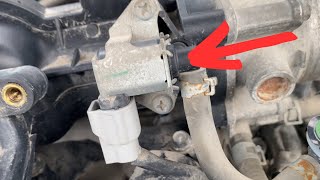
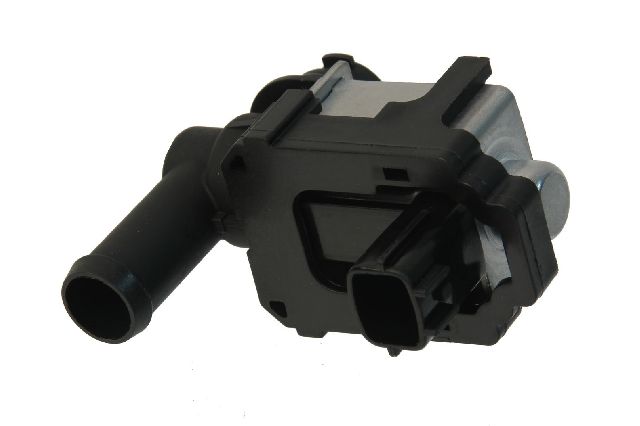
Typical fix: Replace the EVAP purge solenoid valve. It is mounted on top of the engine with two hoses and one electrical connector.
Est. part cost: $30-$90 - Damaged Wiring or Electrical Connector ⚪ Low Probability The wiring harness connector can become brittle or wires can fray over time, leading to a poor connection. The locking tab on the connector is notoriously fragile and can break during removal.
How to confirm: Visually inspect the connector and wiring going to the purge solenoid for cracks, corrosion, or breaks. Use a multimeter to check for battery voltage at the connector with the key on, engine off. One wire (typically yellow) should have ~12V.
Typical fix: Repair the damaged section of wire or replace the pigtail connector.
Est. part cost: $10-$25 - Blown Fuse ⚪ Low Probability
How to confirm: If there is no power at the purge solenoid connector, check the fuse box in the engine bay (IPDM E/R) for a blown fuse related to the emissions system. For the 2007-2012 Sentra, this may be linked to fuses for the ECM or fuel pump.
Typical fix: Replace the blown fuse. If it blows again, a short circuit exists that must be diagnosed.
Est. part cost: $1-$5
Rare But Worth Checking
- Faulty Powertrain Control Module (PCM): → Shop Engine Control Module (ECM) This is extremely rare. The PCM should only be considered after the purge valve, wiring, and fuses have all been thoroughly tested and confirmed to be good.
Diagnosis Steps
- Scan the vehicle for trouble codes to confirm P0443 is the primary code.
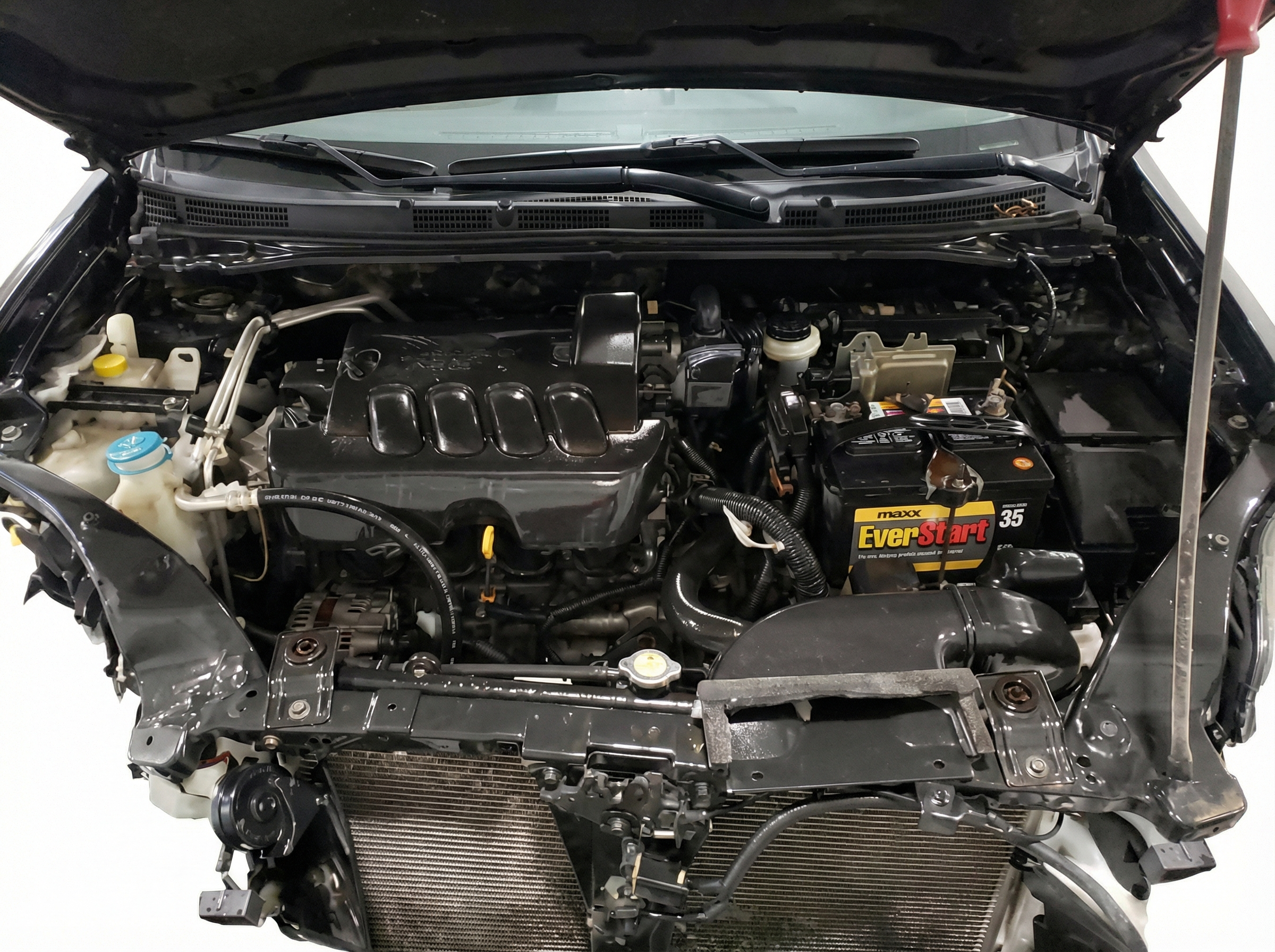
- Locate the EVAP purge solenoid on the top right side of the engine, near the intake manifold.
- Visually inspect the electrical connector and wiring harness for any signs of damage, corrosion, or loose connections.
- Disconnect the connector. With the ignition on (engine off), use a multimeter to verify that one pin (usually on a yellow wire) has battery voltage (~12V).
- With the connector still disconnected, switch the multimeter to Ohms (Ω) and measure the resistance across the two pins on the solenoid itself. A good solenoid will read between 15-38 ohms. A reading of 0 ohms (short) or infinite/OL (open) indicates a bad solenoid. 🎬 Watch: How to replace the purge valve
- If the solenoid resistance is within spec, you can test its mechanical function. Apply 12V power and ground directly to the solenoid's pins and listen for a distinct 'click'. No click means it's mechanically stuck.
- If the solenoid and power supply are good, check the ground-side control wire (usually a tan wire) for continuity back to the ECM. This is an advanced step and usually not necessary.
- If all tests pass, the most likely cause is an intermittent failure of the solenoid. Given its high failure rate and low cost, replacement is often the most practical next step.
Parts You'll Likely Need
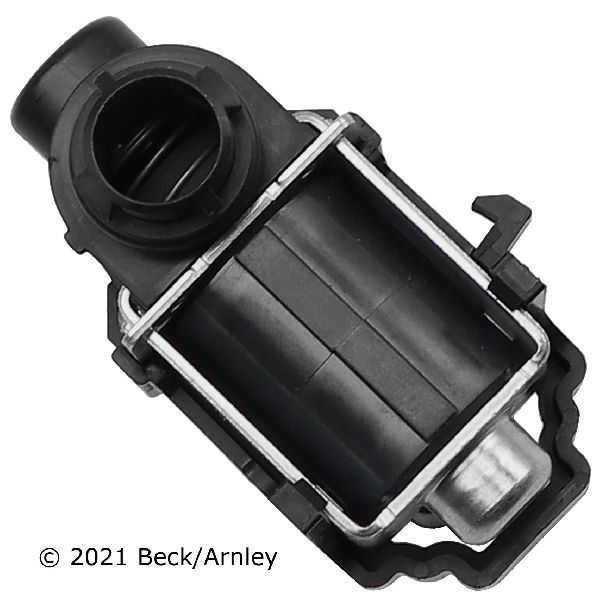
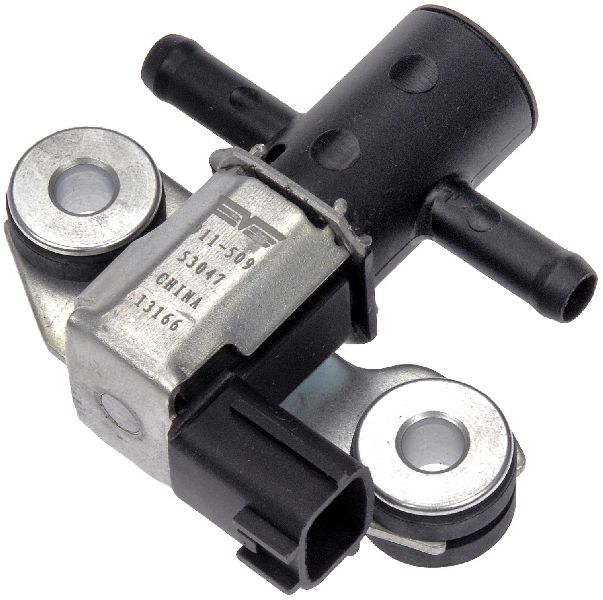
- EVAP Canister Purge Volume Control Solenoid Valve
(OEM #14930-EN20A)— This is the most common failure point for code P0443 on this vehicle. The original part number was 14930-ET000, which was superseded by the more robust 14930-EN20A.
Trusted brands: Nissan (Genuine), Hitachi (often the OEM supplier), Dorman, Standard Motor Products (SMP), Beck/Arnley
OEM price range: $85-$120
Aftermarket price range: $30-$90
Related Codes That Often Appear With This One
- P0444 — P0444 (Purge Control Valve Circuit Open) can appear if the connector is unplugged during diagnosis or if the internal coil of the solenoid breaks completely.
- P0445 — P0445 (Purge Control Valve Circuit Shorted) can appear if the internal coil of the solenoid shorts out or if the wiring is shorted to ground.
Platform-Specific Known Issues
- Owner Experience: Stalling after Refueling: A common owner complaint on forums for the B16 Sentra with P0443 is that the car is difficult to start or stalls immediately after filling the gas tank. This is a classic symptom of a purge valve that is stuck open, allowing unmetered fuel vapor to flood the engine at idle. Replacing the purge solenoid valve resolves this specific symptom.
Mechanic-Grade Diagnostic Values
- EVAP Purge Valve Solenoid Coil Resistance — expected: 15 to 38 Ohms. Failure: A reading of 0 Ohms (short) or OL/infinite Ohms (open circuit) indicates a failed solenoid.
- Voltage at Purge Valve Connector (Power Wire) — expected: Battery Voltage (~12V) with ignition ON, engine OFF.. Failure: No voltage suggests a blown fuse or a break in the power supply wire from the IPDM E/R.
- Voltage at Purge Valve Connector (ECM Control Wire) — expected: Should show battery voltage when the valve is OFF (not commanded by ECM) and drop to near 0V when the ECM commands it ON (typically above idle, engine warm).. Failure: Voltage does not drop when commanded ON, indicating a wiring issue to the ECM or a faulty ECM driver.
- Voltage at ECM 'PRG' Terminal to Ground — expected: 9 to 14 V with ignition switch ON.. Failure: Low or no voltage could indicate a faulty ECM, but requires ruling out all other circuit components first.
Scan Tool Commands That Help
- Nissan CONSULT-II / CONSULT-III: Active Test: EVAP Canister Purge Volume Control Solenoid Valve — This function allows a technician to manually command the purge valve ON and OFF to verify its mechanical operation. While commanding it ON, you should hear an audible click from the valve and feel suction on the canister-side port. This directly tests the valve's response to an ECM signal.
Wiring & Ground Locations
- IPDM E/R (Intelligent Power Distribution Module Engine Room) — Located in the engine bay, typically a black box assembly near the battery containing fuses and relays.. The power supply for the EVAP purge solenoid originates from a fuse within this module. A loss of power at the solenoid connector often points back to a blown fuse (e.g., 15A fuse #53 for ECM) in the IPDM E/R.
- Engine Ground (Main) — A primary ground strap often runs from the intake manifold to the battery negative terminal or chassis. Another may run from the cylinder head to the firewall.. A poor engine ground can cause a variety of electrical issues and codes, including P0443. While not a direct cause, ensuring the main engine grounds are clean and tight is a crucial step in diagnosing any electrical fault.
- ECM Connector — The Engine Control Module (ECM) is typically located behind the glove compartment.. The ground-side control wire for the purge solenoid runs directly to a pin on the ECM connector. Advanced diagnosis requires checking for continuity on this wire between the solenoid and the ECM.
OEM Part Supersession History
14930-ET000→14930-EN20A (also listed as 14930-EN200)— The original part was prone to premature failure. The superseding part is a more robust design to improve longevity.
Heads up: The new part is a direct fit replacement with no known incompatibility issues.
Model Year Variations Within This Range
- 2007-2012: There were no significant changes to the EVAP system or the P0443 diagnostic procedure within the B16 generation. A minor styling refresh occurred in 2010, but it did not affect the engine or emissions components related to this code.
Diagnostic Flowchart
Other Known Issues on This Vehicle
Issues unrelated to this code that are worth knowing about as an owner of this generation:
- CVT Transmission Failure 🔴 High — Very common, especially on 2012 models. Can occur at any mileage, but more frequent after 60,000 miles. Symptoms include shuddering, hesitation, whining, and complete loss of power. (Ref: Nissan extended the warranty on these CVTs for many owners and faced class-action lawsuits. A recall was issued for some 2012-2017 Sentras for CVT failure.)
- Cracked Exhaust Manifold with Integrated Catalytic Converter 🟠 Medium — A common issue on the MR20DE engine. Cracks develop in the manifold, causing a loud exhaust leak from the engine bay and can lead to a P0420 code.
- Blower Motor and/or Resistor Failure 🟡 Low — Owners report the fan for heat and A/C stops working on some or all speeds. The blower motor is difficult to access, requiring removal of the gas and brake pedals.
- Mass Airflow (MAF) Sensor Failure 🟡 Low — A failing MAF sensor can cause a rough or fluctuating idle and a check engine light. It is a relatively common and easy part to replace.
- Engine Stalling and Misfires 🟠 Medium — Can be caused by failing camshaft or crankshaft position sensors, or faulty ignition coils. Leads to rough running and potential stalling.
Used vs. New Parts: Buying Guide for This Vehicle
When a used part is the smart pick: A used OEM purge valve from a low-mileage donor vehicle is a reasonable choice for this repair. Since the part is electronic and mechanical, its failure is not strictly tied to mileage, but a lower-mileage part is generally preferable. Given the low cost of new aftermarket parts, the savings may be minimal.
Donor-vehicle mileage cap: roughly under 80000 miles for the part to have meaningful remaining life.
What to inspect on the donor part:
- Check for cracks or damage to the plastic housing and hose ports.
- Ensure the electrical connector pins are straight and free of corrosion.
- If possible, test the resistance with a multimeter before purchase; it should be between 15-38 ohms.
- Ask the seller if the donor vehicle had any EVAP-related trouble codes.
OEM-only on this vehicle (don't cheap out):
- For this specific repair, OEM is not strictly necessary, as quality aftermarket brands perform well.
Aftermarket brands forum-validated for this vehicle:
- Hitachi (often the original OEM supplier)
- Standard Motor Products (SMP)
- Beck/Arnley
Brands owners have reported issues with on this vehicle:
- While Dorman is a common choice and often works, some users report mixed reliability with their electronic parts and rubber components, making it a 'hit or miss' option.
Real Owner Stories
Aggregated from forums and TSBs cited above. Mileages and costs reflect what owners reported in those sources.
2009 Nissan Sentra
Symptoms: The vehicle keeps getting a trouble code for a purge valve Evap leak. The part has already been replaced twice and the code continues to return.
What fixed it: The source indicates a struggle with a recurring code despite part replacement, suggesting a need to check for a short circuit or an intermittent electrical failure.
Source hint: BAT Auto Technical forum report
2007-2012 Nissan Sentra (B16)
Symptoms: The car is difficult to start or stalls immediately after filling the gas tank.
What fixed it: Replacing the EVAP purge volume control solenoid valve.
Source hint: Vehicle-specific issues: Owner Experience: Stalling after Refueling
2014 Nissan Rogue (QR25DE)
Symptoms: Check engine light for P0443; owner needed to verify if the issue was the solenoid or the circuit control.
What fixed it: Testing the circuit for 12V on the yellow wire and ground control on the tan wire to confirm electrical integrity before replacing the solenoid.
Source hint: Nissanclub.com - P0443 engine code
Nissan Sentra (MR20DE)
Symptoms: A year-long struggle with a persistent P0443 code after replacing multiple parts.
What fixed it: The owner eventually suspected a failed ECU (ECM) after all other diagnostic steps for the circuit were exhausted.
Source hint: Nicoclub.com - Evap code P0443 year long struggle
Related OBD-II Codes
Frequently Asked Questions
Is there a recall for the CVT transmission on my 2012 Nissan Sentra?
My Sentra stalls right after I fill up the gas tank; is this related to code P0443?
Where is the EVAP purge solenoid located on the 2007-2012 Sentra engine?
What resistance should I see when testing the purge valve on my Sentra?
Can a cracked exhaust manifold cause other codes on my MR20DE engine?
Which wire should I check for power at the purge solenoid connector?
Helpful Videos
Used OEM Parts in Stock
New Aftermarket Parts Available


The information in this article is provided for general reference and educational purposes only. Vehicle specifications, procedures, and part compatibility can vary by production date, trim level, and region. Always consult your vehicle's factory service manual and verify part numbers before purchasing or performing repairs. Safety-critical components such as airbags, seat belts, and braking systems should be installed by a qualified professional.
- Nissan Sentra:
- 🧭 Diagnostic Flowchart
- 🎬 Helpful Videos
- 🛍️ Shop This Part
- What's Unique About the 2007-2012 Nissan Sentra
- Symptoms You May Notice
- Most Likely Causes
- Rare But Worth Checking
- Diagnosis Steps
- Parts You'll Likely Need
- Related Codes That Often Appear With This One
- Platform-Specific Known Issues
- Mechanic-Grade Diagnostic Values
- Scan Tool Commands That Help
- Wiring & Ground Locations
- OEM Part Supersession History
- Model Year Variations Within This Range
- Other Known Issues on This Vehicle
- Used vs. New Parts: Buying Guide for This Vehicle
- Real Owner Stories
- 2009 Nissan Sentra
- 2007-2012 Nissan Sentra (B16)
- 2014 Nissan Rogue (QR25DE)
- Nissan Sentra (MR20DE)
- Related OBD-II Codes
- Frequently Asked Questions
- 🎟️ Get 5% Off