

P0443 on 2005-2010 Pontiac G6: EVAP Purge Solenoid Circuit Causes and Fixes
P0443 on a Pontiac G6 almost always means the EVAP Purge Solenoid Valve has failed. This is a very common, inexpensive, and easy part to replace yourself in about 15 minutes. The part typically costs between $20 and $50. A less common but notable cause is a broken wire right at the solenoid's connector.
- P0443 on a Pontiac G6 points to an electrical issue with the EVAP Purge Solenoid, not a leak.
- The most likely cause by far is a failed purge solenoid valve, which is a common and inexpensive part.
- This is a very easy DIY repair, typically taking less than 20 minutes with basic tools.
- Before replacing the part, take a moment to inspect the wiring and connector, as breaks near the connector are the second most likely cause.
- Do not waste money on a new gas cap or a smoke test, as they will not fix a P0443 circuit code.
What's Unique About the 2005-2010 Pontiac G6
The Pontiac G6, along with its GM Epsilon platform mates like the Chevrolet Malibu and Saturn Aura, has a very high failure rate for the EVAP purge solenoid. Fortunately, on all G6 engines (2.4L, 3.5L, 3.6L, 3.9L), the valve is located in a very accessible position on top of the engine, making it an exceptionally easy DIY repair that often requires only a 10mm socket. The issue is so common that most owner discussions point directly to replacing this part as the immediate fix.
Symptoms You May Notice
- Check Engine Light is on
- Rough or unstable idle
- Difficulty starting the engine, especially after filling the gas tank 🎬 Watch: How to diagnose a hard start after fueling.
- Slight decrease in fuel economy
- A faint fuel odor (less common)
- Audible clicking noise from the engine bay (if the valve is rapidly cycling due to an intermittent fault)
- Replacing the gas cap. A bad gas cap causes EVAP leak codes (like P0442 or P0455), not a circuit code like P0443.
- Replacing the EVAP Vent Solenoid. This is a different part located near the fuel tank and charcoal canister. P0443 specifically points to the purge solenoid circuit in the engine bay.
- Performing a smoke test. A smoke test is used to find physical leaks in the EVAP system, not electrical circuit faults like P0443.
Most Likely Causes
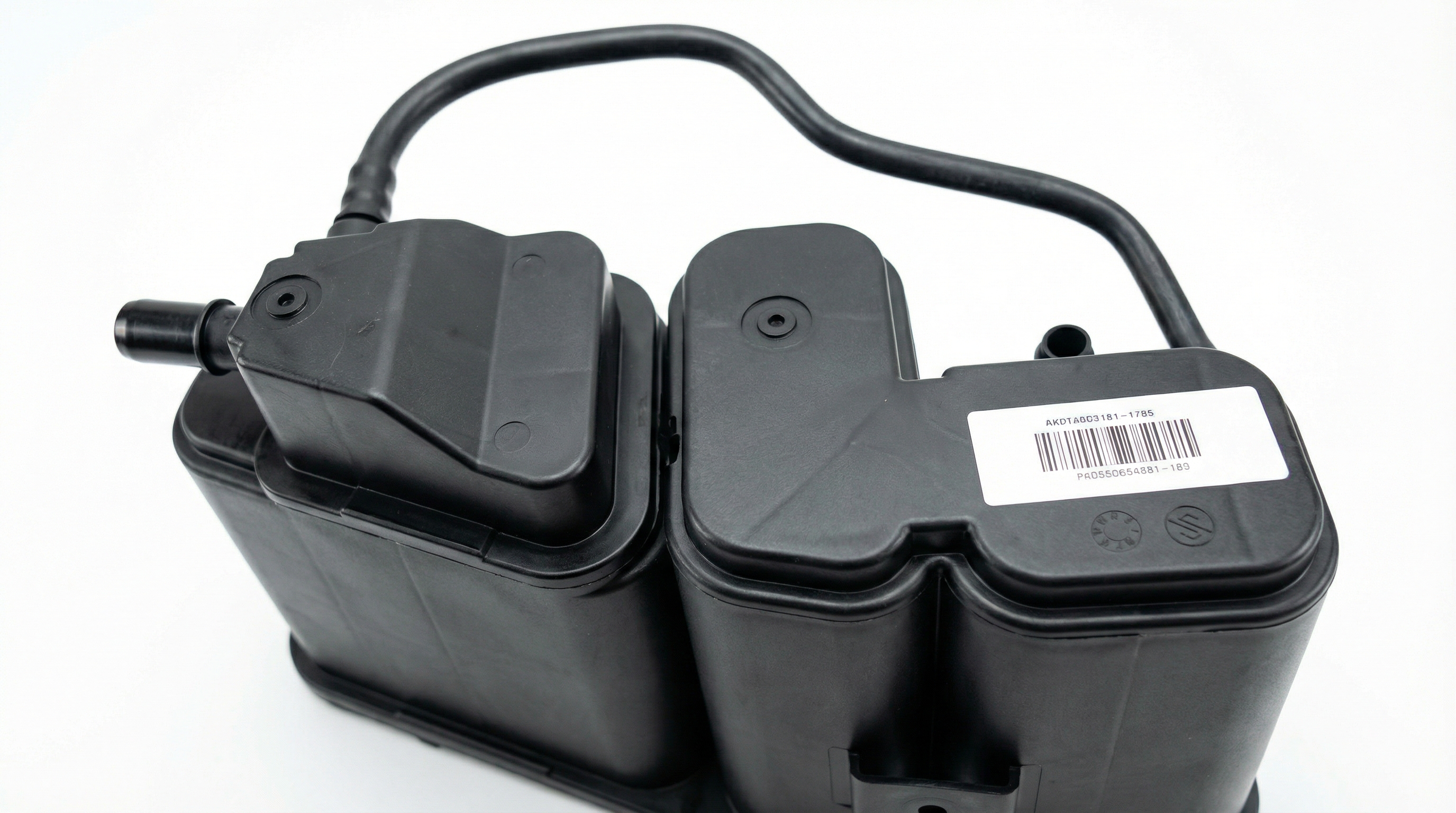
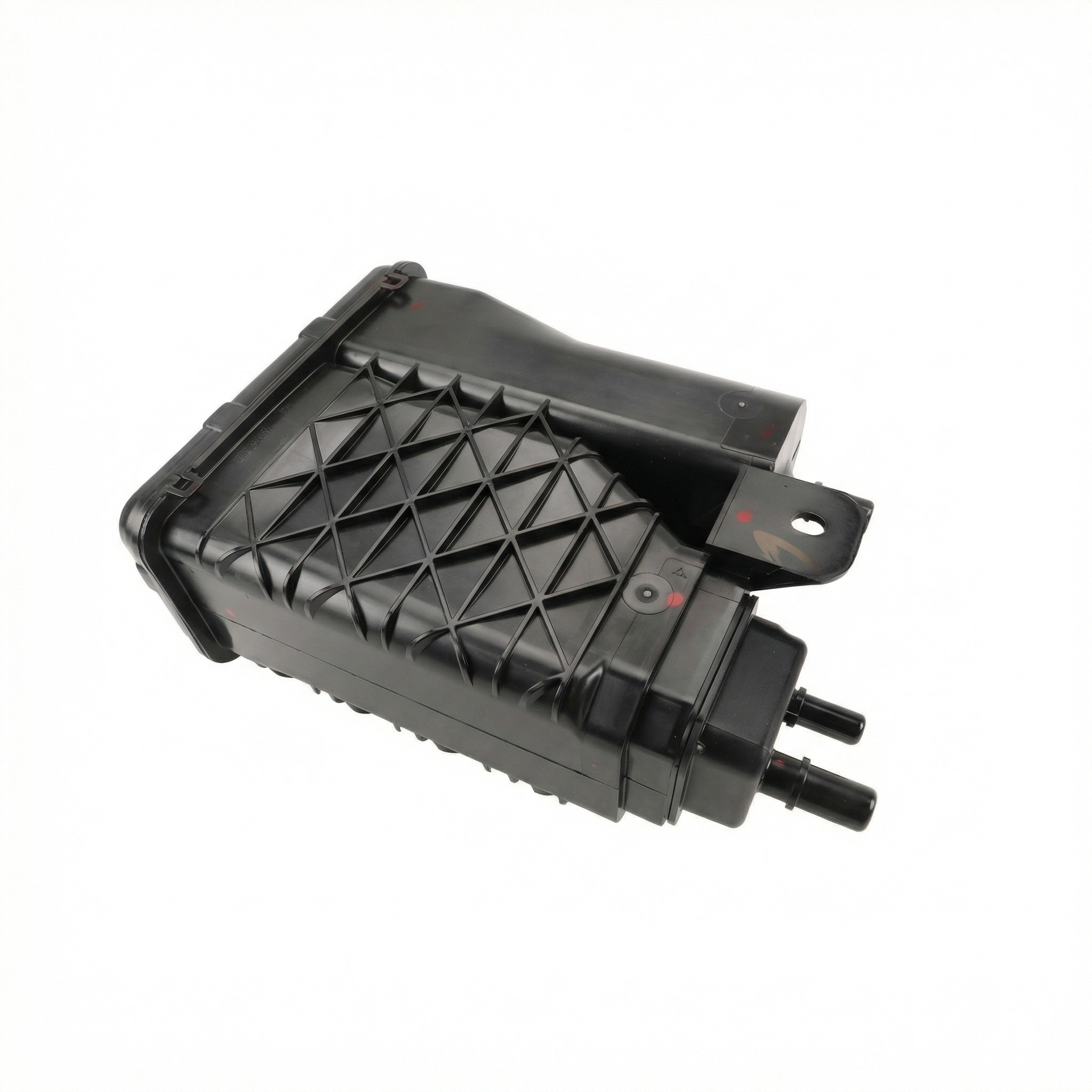
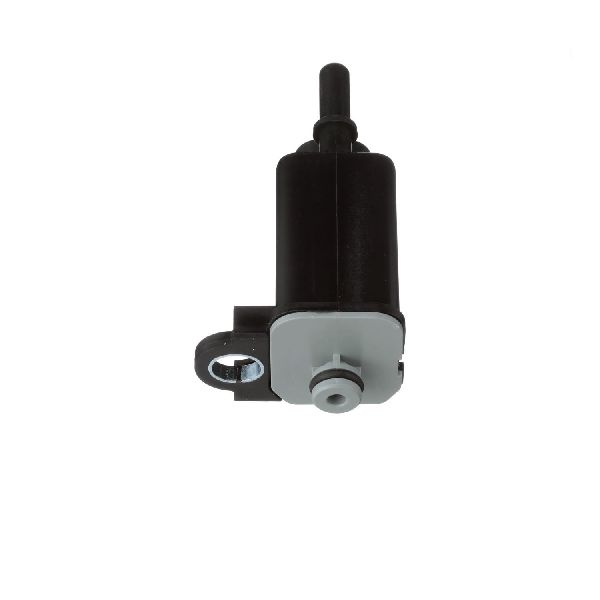
- Failed EVAP Purge Solenoid Valve 🔴 High Probability → Shop Vapor Canister This is a very common failure item on this GM platform due to age, heat cycles in the engine bay, and the original part's design.
How to confirm: Use a scan tool with bidirectional controls to command the purge valve to cycle; you should hear an audible clicking. If there's no click, it has likely failed electrically. You can also test the solenoid's internal resistance with a multimeter (disconnect it first); an open circuit (infinite resistance) or a direct short (zero resistance) confirms failure. A good solenoid will have a specific resistance value, which can vary but is typically in the range of 19-24 ohms for similar GM components.
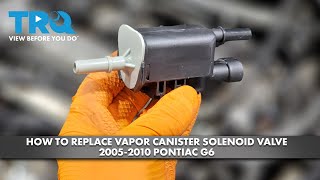
Typical fix: Replace the EVAP purge solenoid valve. It is mounted directly on the engine, held by a single 10mm bolt, making it easy to access after removing the plastic engine cover. 🎬 See this step-by-step solenoid replacement walkthrough.
Est. part cost: $20-$60 - Damaged Wiring or Connector 🟡 Medium Probability Engine vibration and heat cause the wires near the connector to become brittle and break over time, often inside the insulation right at the connector.
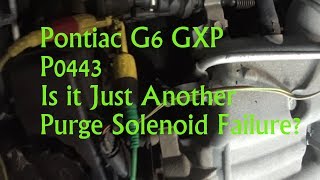
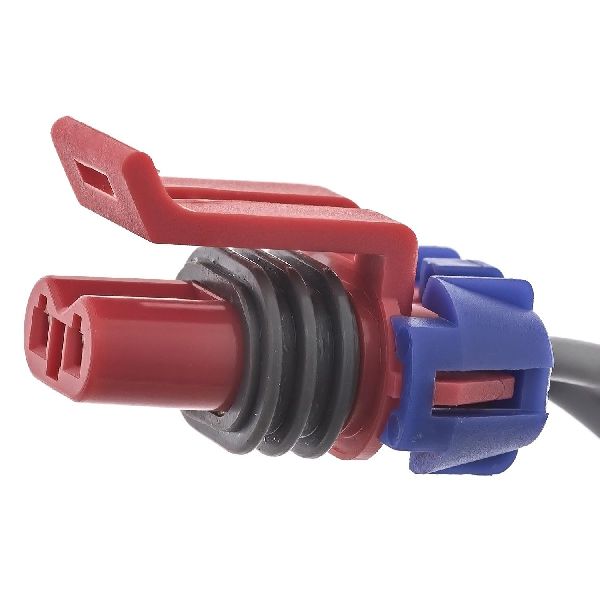
How to confirm: Visually inspect the wiring harness and two-wire connector for the purge solenoid. Gently wiggle the wires near the connector while the engine is running; if the idle changes or you can replicate the code, you have a wiring fault. A video by a technician diagnosing a G6 GXP with P0443 shows pulling gently on the wire and having it break off completely, revealing the hidden damage. 🎬 Watch: A technician finds this hidden wiring break on a GXP. Check for battery voltage at the power wire (typically pink) with the ignition on and the connector unplugged.
Typical fix: Repair the broken wire or replace the connector pigtail. Splicing in a new pigtail is a common and durable repair.
Est. part cost: $10-$25
Rare But Worth Checking
- Blown Fuse: The EVAP purge solenoid shares a fuse with other emissions components. If other codes are present, check the fuse box. While a specific fuse isn't universally named, it's often part of a circuit labeled 'EMISSIONS' or 'ECM'.
- Faulty Engine Control Module (ECM): → Shop Engine Control Module (ECM) This is very rare. The ECM's internal driver for the purge solenoid circuit can fail. This should only be considered after the valve and wiring have been definitively proven to be good through testing. Diagnostic procedures often state to replace the ECM if all other circuit tests pass.
Diagnosis Steps
- Read the code with an OBD-II scanner to confirm P0443 is present.
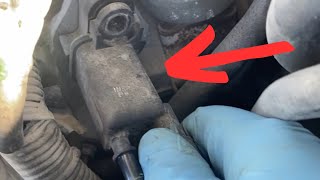
- Remove the plastic engine cover to locate the EVAP purge solenoid. It's mounted on the engine with one bolt (typically 10mm), two hoses, and a two-wire electrical connector.
- Visually inspect the electrical connector and nearby wiring for any signs of damage, corrosion, or breaks. As documented in forums and videos, gently tug on the individual wires at the connector; they are known to break internally while the insulation appears intact.
- If you have a capable scan tool, command the EVAP purge solenoid to 50%. Listen and feel for a distinct clicking sound from the valve. No click strongly suggests a failed solenoid or a complete loss of power/ground.
- Disconnect the electrical connector. With the Ignition ON, Engine OFF, use a multimeter or test light to check for battery voltage at the power supply wire in the connector (typically the pink wire on GM vehicles).
- If power is present, the issue is likely the solenoid or the control circuit. If no power is present, check the related 'EMISSION' or 'ECM' fuse and trace the power wire for a break.
- To definitively test the solenoid, disconnect it and measure the resistance across its two pins. A reading of open-loop (OL) or 0 ohms confirms it's bad. A good solenoid should have a resistance, often between 19-24 ohms on similar GM parts.
- If the solenoid and power supply are good, the final step is to check the control wire (ground side, typically green) for continuity between the solenoid connector and the ECM. A break in this wire will cause P0443.
Parts You'll Likely Need
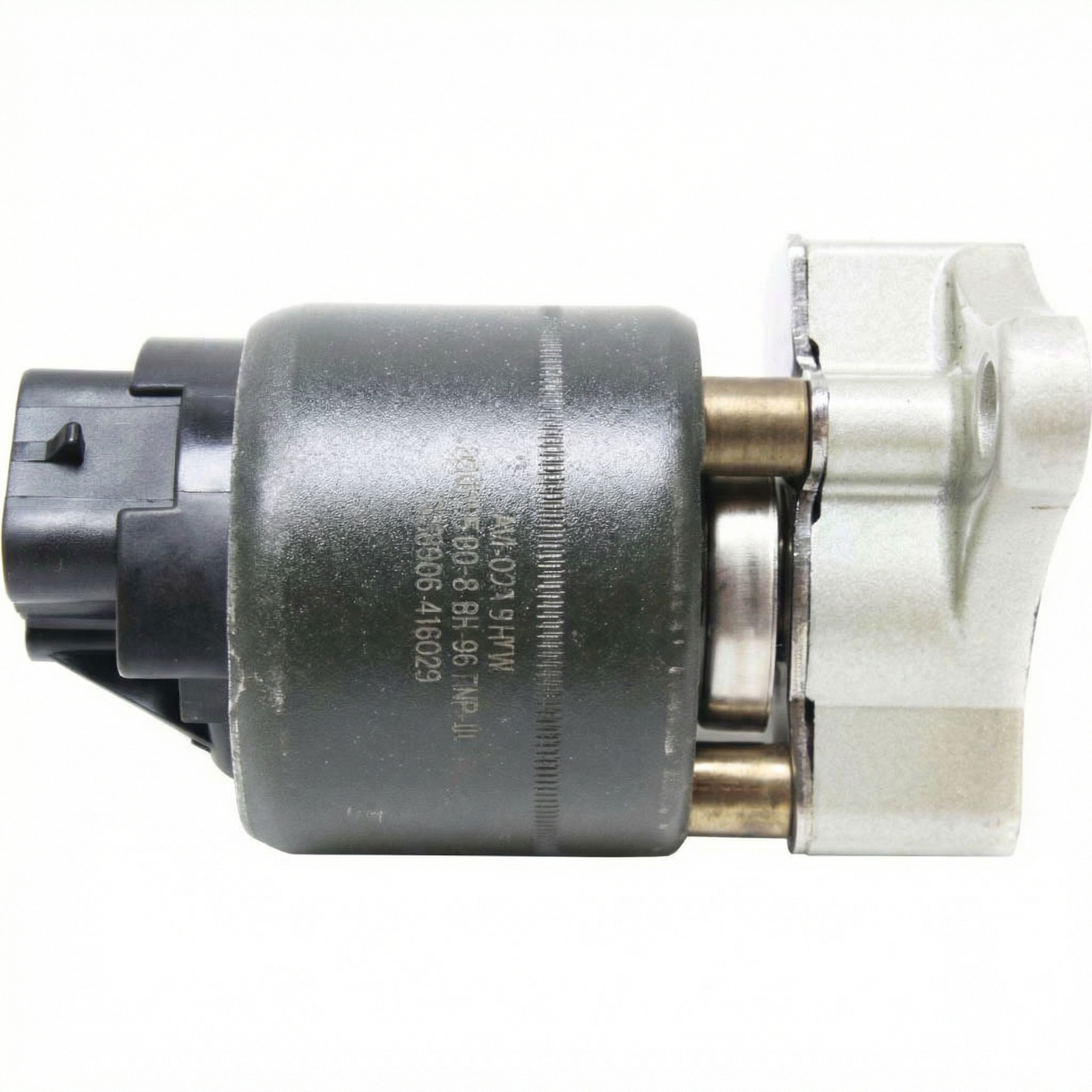
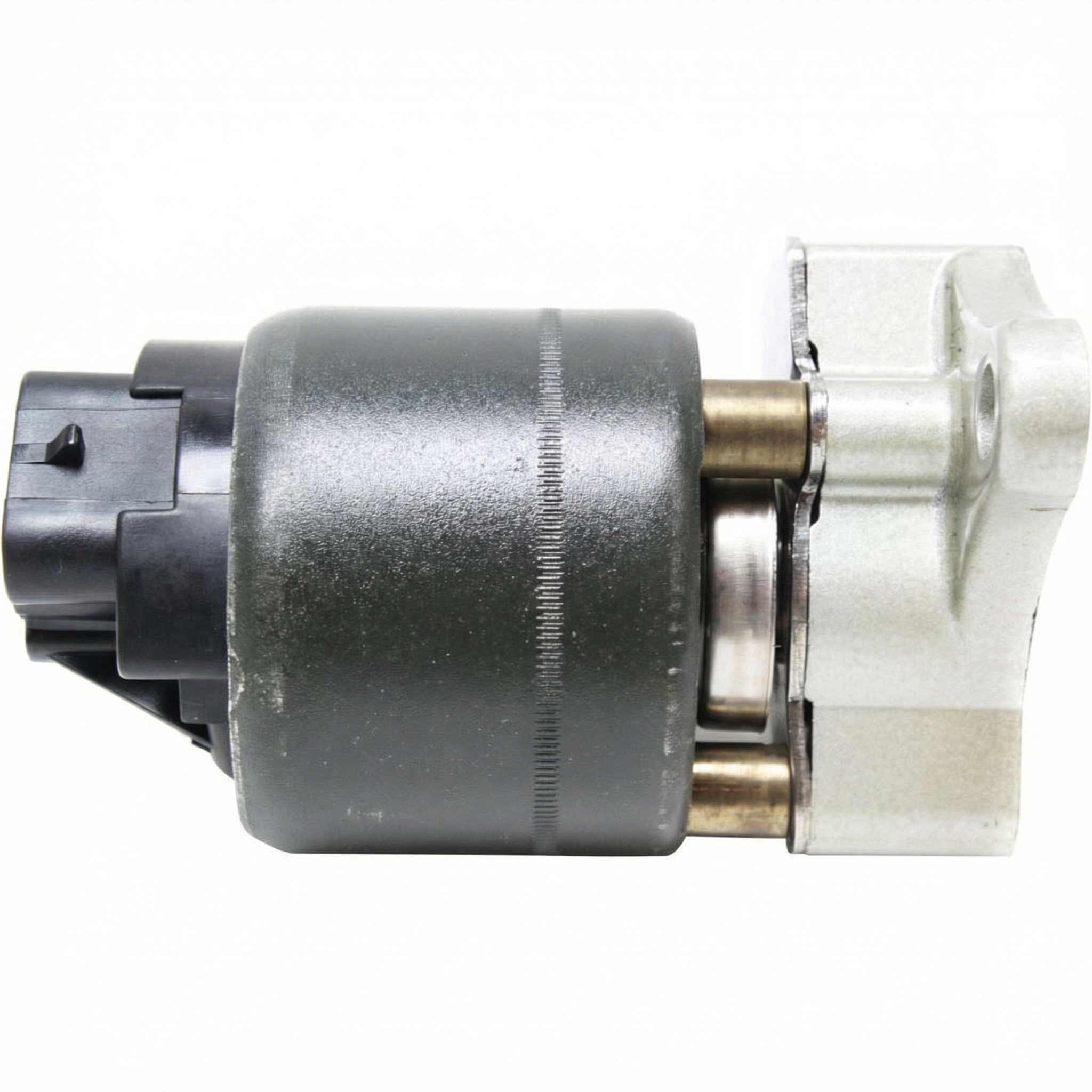
- Vapor Canister Purge Solenoid Valve
(OEM #ACDelco 214-1680 (GM 12597567))— This is the most common failure point for code P0443 on the Pontiac G6 and related GM vehicles.
Trusted brands: ACDelco (OEM), Delphi, Standard Motor Products (SMP), Dorman
OEM price range: $40-$60
Aftermarket price range: $20-$45
Related Codes That Often Appear With This One
- P0496 — P0496 indicates 'EVAP Flow During a Non-Purge Condition,' which is often caused by the same purge valve being stuck open mechanically, while P0443 indicates an electrical fault. They frequently appear together when the valve fails internally.
- P0449 — This code relates to the EVAP Vent Solenoid circuit, located near the tank. While a different part, a wiring issue in a shared harness or a blown fuse that powers multiple EVAP components could potentially trigger both codes.
Platform-Specific Known Issues
- The wiring at the purge solenoid connector is a known weak point. Due to engine vibration, the wires can break internally right at the connector, even if the insulation looks intact. A gentle pull test on the wires is a key diagnostic step.
- The solenoid is held on by a single 10mm bolt, making physical replacement extremely fast once the engine cover is off.
Mechanic-Grade Diagnostic Values
- EVAP Purge Solenoid Coil Resistance — expected: 20-30 Ohms. Failure: A reading outside 15-35 Ohms, an open circuit (OL), or a direct short (near 0 Ohms) indicates a failed solenoid coil.
- Voltage at Purge Solenoid Connector (Power Wire) — expected: Battery Voltage (~11-14V) with ignition ON. Failure: No voltage indicates a blown fuse or a break in the power supply wire.
- Continuity of Control Circuit Wire — expected: Less than 5.0 Ohms. Failure: High or infinite resistance (OL) indicates an open wire between the solenoid connector and the ECM.
Scan Tool Commands That Help
- Tech2 / GDS2 (or equivalent professional scanner): EVAP Purge Solenoid Valve Command — Use this bidirectional control to command the solenoid to a specific duty cycle (e.g., 0% and 50%). You should hear/feel the valve clicking as it cycles, confirming it is mechanically responding to electrical commands. A lack of clicking when commanded points to a failed solenoid or a loss of power/ground.
Wiring & Ground Locations
- Purge Solenoid Connector Pin A — The two-wire connector on the EVAP purge solenoid valve.. This is the voltage supply circuit pin, typically a Pink wire. It should have battery voltage with the ignition on.
- Purge Solenoid Connector Pin B — The two-wire connector on the EVAP purge solenoid valve.. This is the control circuit pin, typically a Green wire. The ECM pulses a ground signal to this pin to activate the solenoid.
- G105 / G106 — For the 3.5L V6, G106 is on the front of the engine at a transmission stud. For other engines, ground packs are located on the transmission housing or on the left rear side of the engine.. The Engine Control Module (ECM) relies on a clean ground connection to function. A corroded or broken ground wire at these common locations can cause various issues, including intermittent or persistent P0443 codes, even if the solenoid and its direct wiring test good.
Real Owner Repair Stories
- YouTube channel 'A2Z Auto Masters' (2007 Pontiac G6 3.5L) — No Crank, No Start, multiple communication codes including U-codes.
❌ Tried (didn't work) Initial diagnosis pointed towards a bad ECM or TCM.
✅ What actually fixed it The primary ground wire bundle for the ECM and TCM, which bolts to the top of the transmission housing, had broken off from its terminal due to corrosion. Re-establishing this ground connection resolved the issue. - YouTube channel 'Fix It Carter' (2003 Chevy Silverado (similar GM wiring)) — Check Engine Light with code P0443.
❌ Tried (didn't work) The purge valve had already been replaced by a previous person, but the code remained.
✅ What actually fixed it A broken wire was found inside the wiring harness loom near a junction point. The wire had become brittle and snapped, but the break was hidden by the loom and tape. Repairing the broken wire fixed the code.
OEM Part Supersession History
12597567→12735397— Standard part evolution and consolidation by GM.
Heads up: The ACDelco service part number 214-1680 corresponds to the original GM part 12597567 and is a direct fit for the 2005-2010 G6. No incompatibilities are noted for this specific application.
Diagnostic Flowchart
Other Known Issues on This Vehicle
Issues unrelated to this code that are worth knowing about as an owner of this generation:
- Electric Power Steering (EPS) Failure 🔴 High — Very common, typically occurs around 70,000-100,000 miles. Can result in a sudden loss of steering assist. (Ref: Multiple recalls, including GM recall #14772 and NHTSA campaign 14V153000, were issued to address failures in the torque sensor or EPS motor.)
- Steering Column Clunk/Noise 🟠 Medium — Extremely common problem causing a clunking or popping noise when turning at low speeds. (Ref: Often caused by a faulty intermediate steering shaft. GM TSB 06-02-32-007G addresses this and other related noise issues.)
- 4T45-E Automatic Transmission Problems 🔴 High — Common in 4-cylinder and some V6 models. Issues include failed shift solenoids, TCC solenoid failure, and delayed/harsh shifting, often appearing after 100,000 miles. (Ref: Recalls were issued for shift cable failures (NHTSA 12V460000, 09V073000), which could lead to rollaway risk.)
- Leaking Sunroof Drains 🟠 Medium — Very common issue where drain tubes clog or disconnect from the sunroof cassette, causing water to leak into the headliner, A-pillars, and floorboards. (Ref: No recall, but a widely documented problem. The fix involves cleaning the drains with compressed air or reattaching the disconnected tubes by partially lowering the headliner.)
- Body Control Module (BCM) Connector Issues 🟡 Low — Corrosion or poor connection at the BCM connector can cause strange electrical problems, most notably malfunctioning tail lights. (Ref: A recall (NHTSA 14V252000) was issued for BCM resistance issues affecting the brake lights.)
- Front Wheel Hub Bearing Failure 🟠 Medium — Commonly fails, causing a loud humming or 'helicopter' noise that changes pitch when turning.
Used vs. New Parts: Buying Guide for This Vehicle
When a used part is the smart pick: Given the extremely high failure rate of this specific part and the low cost of a new, quality aftermarket or OEM replacement (typically $20-$50), buying a used purge solenoid from a junkyard is NOT recommended. The risk of the used part failing soon after installation is very high.
What to inspect on the donor part:
- Not applicable as a used part is not recommended for this repair.
OEM-only on this vehicle (don't cheap out):
- No parts for this specific P0443 repair are strictly OEM-only.
Aftermarket brands forum-validated for this vehicle:
- ACDelco (GM Original Equipment or Professional series)
- Delphi
- Standard Motor Products (SMP)
- Dorman (often a cost-effective option with wide availability)
Brands owners have reported issues with on this vehicle:
- Unbranded, no-name parts from online marketplaces should be avoided. While they may be cheaper, they have a higher likelihood of premature failure, leading you to do the repair again.
Real Owner Stories
Aggregated from forums and TSBs cited above. Mileages and costs reflect what owners reported in those sources.
2009 Pontiac G6 GXP
Symptoms: The owner diagnosed a P0443 code. Upon inspection, the technician found that the wiring near the connector was the culprit rather than the valve itself.
What fixed it: The technician performed a pull test on the wires, which caused a broken wire to pull completely out of the insulation. The fix was repairing the wiring pigtail.
Source hint: YouTube - 'EVAP P0443 Pontiac G6 GXP P0443 Diagnosis' (2019-06-19)
2005-2010 Pontiac G6
Symptoms: Owners on community forums frequently report the Check Engine Light coming on with P0443, often noting how simple the physical repair is.
What fixed it: Replacing the purge solenoid valve, which is mounted on the engine with a single 10mm bolt.
Cost: $20-$60
Source hint: g6ownersclub.com: Multiple threads
Related OBD-II Codes
Frequently Asked Questions
Is there a recall for the EVAP purge solenoid on my 2005-2010 Pontiac G6?
I'm seeing P0443 on my G6 GXP; could it be something other than the valve itself?
What is the correct resistance for a new purge solenoid (ACDelco 214-1680) on the Pontiac G6?
Why does my G6 struggle to start specifically after I fill up the gas tank?
Which fuse should I check if my purge solenoid has no power?
Does the 2.4L Ecotec engine in the Pontiac G5 share this P0443 issue with the G6?
Helpful Videos

Used OEM Parts in Stock
New Aftermarket Parts Available


The information in this article is provided for general reference and educational purposes only. Vehicle specifications, procedures, and part compatibility can vary by production date, trim level, and region. Always consult your vehicle's factory service manual and verify part numbers before purchasing or performing repairs. Safety-critical components such as airbags, seat belts, and braking systems should be installed by a qualified professional.
- Pontiac G6:
- 🧭 Diagnostic Flowchart
- 🎬 Helpful Videos
- 🛍️ Shop This Part
- What's Unique About the 2005-2010 Pontiac G6
- Symptoms You May Notice
- Most Likely Causes
- Rare But Worth Checking
- Diagnosis Steps
- Parts You'll Likely Need
- Related Codes That Often Appear With This One
- Platform-Specific Known Issues
- Mechanic-Grade Diagnostic Values
- Scan Tool Commands That Help
- Wiring & Ground Locations
- Real Owner Repair Stories
- OEM Part Supersession History
- Other Known Issues on This Vehicle
- Used vs. New Parts: Buying Guide for This Vehicle
- Real Owner Stories
- 2009 Pontiac G6 GXP
- 2005-2010 Pontiac G6
- Related OBD-II Codes
- Frequently Asked Questions
- 🎟️ Get 5% Off