

P0443 on 2007-2010 Saturn Aura: EVAP Purge Valve Circuit Malfunction Causes and Fixes
P0443 on a Saturn Aura indicates an electrical problem with the EVAP Purge Control Valve circuit. The most common fix is replacing the purge valve solenoid itself, which is an easy DIY job located on top of the engine. Expect to pay between $25 and $75 for the part. Before replacing, check the wiring connector for corrosion and verify the fuse is intact.
- P0443 is an electrical circuit code, not a system leak code. Do not replace the gas cap or perform a smoke test first.
- The most likely cause is a failed EVAP purge valve solenoid, which is a common and inexpensive part to replace.
- The repair is very DIY-friendly, located on top of the engine and requiring only basic tools.
- Always check the wiring and connector for damage before replacing the part.
- Driving with this code is safe, but it will cause an automatic failure on an emissions test.
What's Unique About the 2007-2010 Saturn Aura
The Saturn Aura shares its platform (GM Epsilon) with the Chevrolet Malibu, Pontiac G6, and Saab 9-3, making issues and repairs very similar across these models. For this generation of GM vehicles, the EVAP purge valve solenoid is a known common failure point. The part is generally located in an accessible position on top of the engine, making it a straightforward repair for most owners. The failure is so common that numerous owner forums and repair videos for its platform mates document the exact same P0443 cause and solution.
Symptoms You May Notice
- Check Engine Light is on
- Slightly reduced fuel economy
- Rough idle, especially after refueling
- Difficulty starting the engine after filling the gas tank
- Possible fuel smell
- Failing an emissions test
- Replacing the gas cap. A bad gas cap typically causes an EVAP leak code (like P0442 or P0455), not a circuit code like P0443.
- Performing a smoke test. A smoke test is used to find physical leaks in the EVAP system, but P0443 is an electrical fault code.
Most Likely Causes
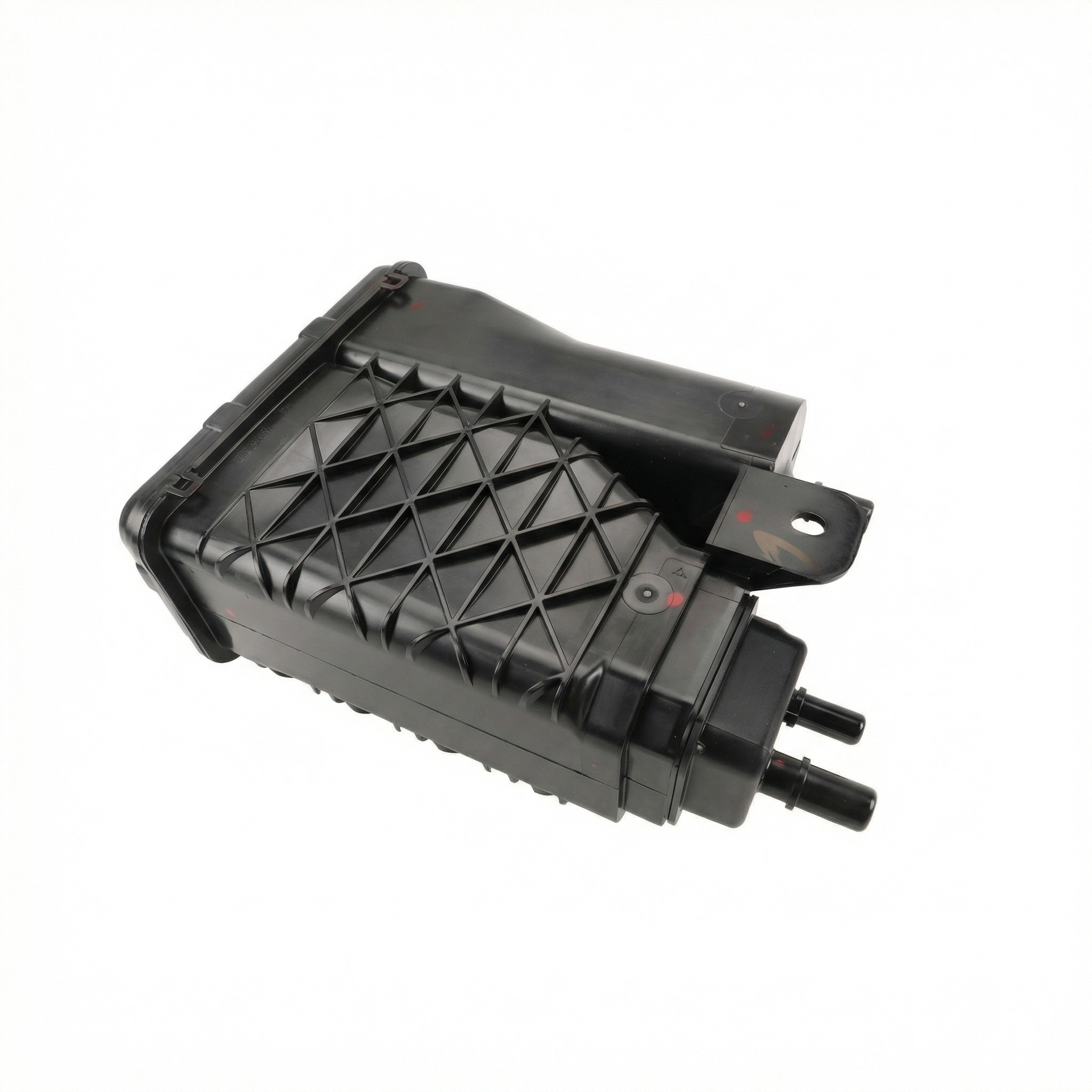
- Faulty EVAP Purge Valve/Solenoid 🔴 High Probability → Shop Vapor Canister This is a common failure part on many GM vehicles from this era due to wear and tear of the internal coil or the mechanical valve getting stuck. The part is exposed to constant engine heat and vibration, leading to eventual failure.
How to confirm: Use a bidirectional scan tool to command the valve on and off while listening for a click. You can also apply 12V and ground directly to the valve's pins to see if it actuates. Resistance across the two pins should be within the manufacturer's specification (typically 15-40 ohms for GM vehicles). An open circuit (infinite resistance) or a short (near-zero resistance) indicates a failed valve.
Typical fix: Replace the EVAP purge valve solenoid. This is a 10-minute job for most DIYers.
Est. part cost: $25-$75 - Damaged Wiring or Connector 🟡 Medium Probability The wiring harness in the engine bay is exposed to heat and vibration, which can lead to chafed wires, loose pins, or corrosion in the connector over time. The connector's locking tab can also become brittle and break, leading to a poor connection.
How to confirm: Visually inspect the wiring harness and the connector at the purge valve for any signs of damage, melting, or green corrosion. Use a multimeter with the ignition on to check for battery voltage at the power wire (often pink on GM vehicles) and for a proper ground signal from the PCM on the control wire (often green/white).
Typical fix: Repair the damaged section of the wire or replace the connector pigtail.
Est. part cost: $10-$30 - Blown Fuse ⚪ Low Probability
How to confirm: Check the fuse panel for a blown fuse related to the emissions or EVAP system (often labeled 'EMISS' or similar). The owner's manual should have a diagram of the fuse box.
Typical fix: Replace the blown fuse. If it blows again, there is a short circuit in the wiring or the solenoid itself that must be diagnosed.
Est. part cost: $1-$5
Rare But Worth Checking
- Faulty Powertrain Control Module (PCM): → Shop Engine Control Module (ECM) This is very rare. The PCM should only be suspected after all other possibilities (the valve, wiring, and fuses) have been thoroughly tested and ruled out. A failure of the internal driver circuit for the purge solenoid can cause this code.
Diagnosis Steps
- Scan the vehicle for trouble codes to confirm P0443 is the primary code.
- Visually inspect the EVAP purge solenoid, its connector, and the surrounding wiring for any obvious damage, corrosion, or loose connections.
- Check the fuse for the EVAP system (e.g., 'EMISS') in the vehicle's underhood fuse box.
- With the ignition on and engine off, disconnect the connector and use a multimeter to verify that battery voltage is present at the power supply wire (typically pink).
- Use a bidirectional scan tool to command the purge solenoid ON and OFF. Listen for an audible click from the valve. Alternatively, you can test the control circuit by connecting a test light between the power and ground wires in the connector and commanding the valve on; the light should illuminate or pulse.
- If the valve doesn't click, disconnect it and test the resistance of the solenoid coil with a multimeter. Compare the reading to the manufacturer's specification (typically 15-40 ohms). An open circuit (infinite resistance) or a short (near-zero resistance) indicates a failed valve.
- If the valve itself tests good, check the control circuit (often a green/white wire) between the valve and the PCM for continuity and for shorts to ground or power.
- If the valve and wiring are confirmed to be good, the issue may be with the PCM driver, which is a rare occurrence.
Parts You'll Likely Need
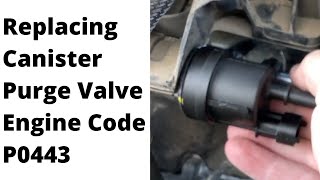
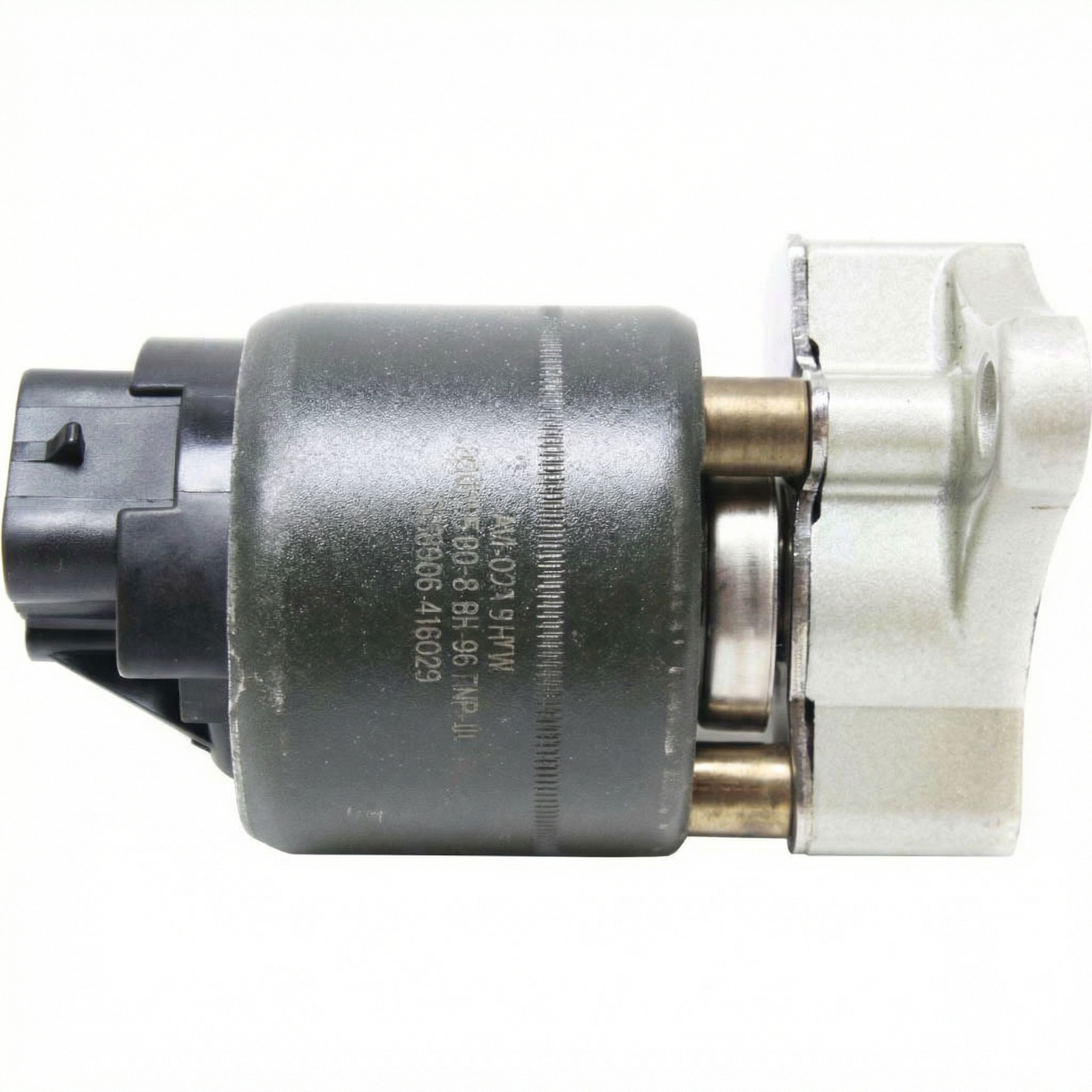
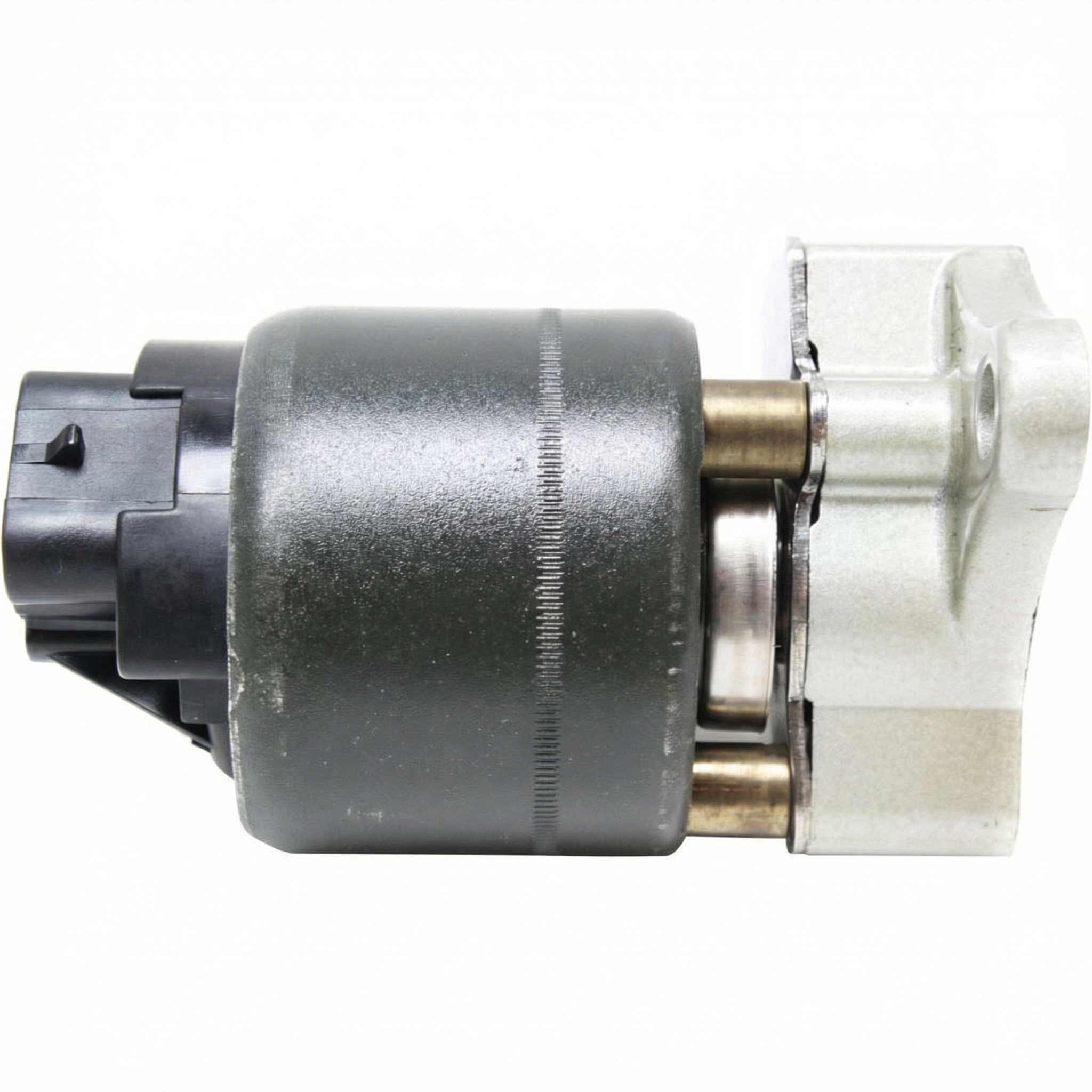
- Vapor Canister Purge Valve Solenoid
(OEM #12597567)— This is the most common failure point for a P0443 code. The internal electronics or mechanical valve fail over time. The original GM part 12597567 has been superseded by ACDelco 214-1680 and GM 12610560.
Trusted brands: ACDelco (OEM), Delphi, Dorman (p/n 911-030), Standard Motor Products (SMP)
OEM price range: $40-$75
Aftermarket price range: $25-$50
Technical Service Bulletins (TSBs) & Recalls
- TSB #PIP4128F: This bulletin discusses diagnostic steps for when a P0443 code appears after a PCM has been replaced or reprogrammed, which is a rare but documented scenario.
Platform-Specific Known Issues
- Slight Location Difference by Engine: The purge valve is always located on or near the intake manifold. On the 2.4L 4-cylinder engine, it is easily accessible on top. On the 3.5L and 3.6L V6 engines, it is also on top but may be situated slightly differently. In all cases, it is held by one 10mm bolt and has one electrical connector and two hose connections, making for a quick replacement.
Mechanic-Grade Diagnostic Values
- EVAP Purge Solenoid Coil Resistance — expected: 15 - 40 ohms. Failure: A reading of infinite ohms (open circuit) or near-zero ohms (short circuit) indicates a failed solenoid.
- Voltage at Purge Solenoid Connector Power Pin (Key On, Engine Off) — expected: 11V - 14V (Battery Voltage). Failure: A reading below 11V suggests a power supply issue, such as a blown fuse or a problem in the wiring from the fuse block.
- Voltage at Purge Solenoid Connector Control Pin (Commanded ON with Scan Tool) — expected: Near 0V - 1V. Failure: If the voltage does not drop to near zero when the PCM commands the valve on, it indicates a problem with the PCM driver or the control wire.
Scan Tool Commands That Help
- GM Tech2 / GDS2 or equivalent professional scanner: EVAP Purge/Seal or EVAP Purge Solenoid Output Control — This bidirectional command allows the technician to manually command the purge solenoid on and off (or to a specific duty cycle) to test its functionality. While commanding it on/off, you can listen for the solenoid to click and check for voltage changes at the connector, confirming the entire circuit's integrity from the PCM to the valve.
Wiring & Ground Locations
- Engine Control Module (ECM) — In the engine compartment on the left (driver's) side, located behind or in front of the battery depending on the engine.. The ECM contains the driver that sends the ground signal to activate the purge solenoid. All circuit tests for the control wire ultimately lead back to the ECM connector.
- Underhood Fuse Block — In the engine compartment on the left (driver's) side, next to the battery.. This fuse block contains the fuse (often labeled 'EMISSION' or similar) that provides 12V power to the purge solenoid. A blown fuse here is a possible, though uncommon, cause of P0443.
- G106 / G107 / G110 — These are engine block or chassis ground points located in the engine bay. For the 2.4L, G110 is near the oil fill cap. For the 3.5L, G106 is above the oil filter.. While the purge solenoid is controlled by a PCM driver, the PCM itself relies on a solid connection to chassis ground. A corroded or loose main engine ground can cause a wide range of erratic electrical issues, including intermittent circuit codes like P0443.
- Purge Solenoid Connector — Directly on the purge solenoid, which is on top of the engine near the intake manifold.. This 2-pin connector is the primary test point. One pin is the 12V supply (often pink), and the other is the control ground from the ECM (often green/white). Corrosion or damage here is a common cause of the code.
Real Owner Repair Stories
- SaturnFans.com Forum (2008 Saturn Aura XE 3.5L) — Check Engine Light with code P0443.
❌ Tried (didn't work) Initially, the owner was unsure of the cause.
✅ What actually fixed it The user replaced the EVAP Purge Solenoid (part number 12597567). The user reported the job was very easy, taking only 15 minutes, and it successfully cleared the code.
OEM Part Supersession History
12597567→12610560, ACDelco 214-1680— Standard part evolution, often for minor manufacturing process improvements or cost reduction. No significant functional changes reported that would cause incompatibility.
Heads up: The original part 12597567 was also replaced by 12735397, and itself replaced older numbers like 12570469 and 12597341. All are generally interchangeable for this application.
Diagnostic Flowchart
Other Known Issues on This Vehicle
Issues unrelated to this code that are worth knowing about as an owner of this generation:
- 6T70/6T75 Transmission 3-5-R Wave Plate Failure 🔴 High — Very common, especially on V6 models. Can occur from 60,000 miles onward. Leads to loss of 3rd, 5th, and Reverse gears and requires a transmission rebuild. (Ref: Special Coverage Adjustment #14404B extended warranty to 10 years/120k miles (now expired).)
- Premature Timing Chain Stretch (3.6L V6 LY7) 🔴 High — Extremely common on the 3.6L V6 engine. Often sets codes P0008, P0017, P0018, or P0019. Repair is labor-intensive and expensive. (Ref: TSB #12-06-01-009F acknowledges the issue and details updated parts.)
- Fractured Transmission Shift Cable 🟠 Medium — Common enough to warrant a recall. The cable end tab can break, preventing the driver from shifting gears or the gear selection may not match the indicator. (Ref: NHTSA Recall #14V252000.)
- Power Steering Loss / Intermediate Shaft Noise 🟠 Medium — Complaints of sudden power steering loss are common. A separate, frequent issue is a clunking noise from the steering column, caused by the intermediate steering shaft. (Ref: Multiple recalls and special coverage programs were issued for power steering issues across GM platforms.)
Used vs. New Parts: Buying Guide for This Vehicle
When a used part is the smart pick: Never. The EVAP purge solenoid is an inexpensive, high-failure-rate electronic and mechanical part. A new aftermarket part costs as little as $25-$30 and comes with a warranty. A used part from a junkyard has unknown remaining life and offers no significant cost savings.
What to inspect on the donor part:
- Not applicable as new purchase is strongly recommended.
Aftermarket brands forum-validated for this vehicle:
- ACDelco (Professional or OE line)
- Delphi
- Standard Motor Products (SMP)
- Dorman
Brands owners have reported issues with on this vehicle:
- No-name, unbranded parts from online marketplaces without warranties or seller history should be avoided, as quality control can be poor.
Real Owner Stories
Aggregated from forums and TSBs cited above. Mileages and costs reflect what owners reported in those sources.
2009 Saturn Aura 2.4L
Symptoms: Rough idle and 'reduced power' message on the dashboard, along with code P1682 and P0443.
What fixed it: Replacing a faulty underhood fuse box, as an internal failure was affecting multiple circuits.
Source hint: saturnfans.com owner report
2007-2010 Saturn Aura
Symptoms: Check Engine Light with code P0443.
What fixed it: Replacing the purge valve solenoid (part number 12597567).
Source hint: SaturnFans.com Forum - 'Check Engine Light Code P0443'
Related OBD-II Codes
Frequently Asked Questions
Is there a specific part number I should look for when replacing the purge valve on my Saturn Aura?
How long does it typically take to fix the P0443 code on a 2.4L Aura?
My Aura has a P0443 and a 'Reduced Power' message with code P1682. Could these be related?
Does the 3.6L V6 engine have the same purge valve location as the 2.4L?
Could a blown fuse cause this code on my Saturn?
Is there a TSB for P0443 if I just had my PCM replaced?
Helpful Videos
We Have This Part in Stock

The information in this article is provided for general reference and educational purposes only. Vehicle specifications, procedures, and part compatibility can vary by production date, trim level, and region. Always consult your vehicle's factory service manual and verify part numbers before purchasing or performing repairs. Safety-critical components such as airbags, seat belts, and braking systems should be installed by a qualified professional.
- Saturn Aura:
- 🧭 Diagnostic Flowchart
- 🎬 Helpful Videos
- 🛍️ Shop This Part
- What's Unique About the 2007-2010 Saturn Aura
- Symptoms You May Notice
- Most Likely Causes
- Rare But Worth Checking
- Diagnosis Steps
- Parts You'll Likely Need
- Technical Service Bulletins (TSBs) & Recalls
- Platform-Specific Known Issues
- Mechanic-Grade Diagnostic Values
- Scan Tool Commands That Help
- Wiring & Ground Locations
- Real Owner Repair Stories
- OEM Part Supersession History
- Other Known Issues on This Vehicle
- Used vs. New Parts: Buying Guide for This Vehicle
- Real Owner Stories
- 2009 Saturn Aura 2.4L
- 2007-2010 Saturn Aura
- Related OBD-II Codes
- Frequently Asked Questions
- 🎟️ Get 5% Off