

P0443 on 2002-2007 Saturn Vue: EVAP Purge Valve Circuit Causes and Fixes
This code points to an electrical fault in the EVAP Purge Control Valve circuit. The most common fix is replacing the purge valve/solenoid itself. Expect to pay $25-$60 for an aftermarket part. It's a straightforward DIY replacement for most owners. Verify your engine (2.2L, 3.0L, or 3.5L) before ordering, as parts differ.
- P0443 is an electrical circuit code, not a leak code. Don't replace the gas cap.
- The most likely cause is a failed EVAP purge valve/solenoid.
- The repair is simple and accessible for DIY, typically taking less than 30 minutes.
- Verify your engine (2.2L, 3.0L, or 3.5L) before buying a replacement part, as the location and part number will differ significantly.
What's Unique About the 2002-2007 Saturn Vue
For the 2002-2007 Saturn Vue, the key difference depends on the engine. This generation used a 2.2L Ecotec I4, a 3.0L GM V6, and a 3.5L Honda-sourced V6. The location of the purge valve and the specific part number will vary significantly between these engines. For the V6 models (3.0L and 3.5L), the valve is often located on top of the intake manifold or near the firewall. On the 2.2L I4, it's typically more accessible on the side of the engine, mounted to the intake manifold. The 3.5L V6 uses a Honda-style purge valve, which is a common failure item on many Honda/Acura products of the same era.
Symptoms You May Notice
- Check Engine Light is on.
- Rough idle, especially if the valve is stuck open.
- Difficulty starting the engine, particularly right after filling the gas tank.
- Slightly reduced fuel economy.
- Possible fuel smell if the valve is stuck open and vapors are escaping.
- Engine hesitation or stalling in some cases. 🎬 Watch: A breakdown of common bad purge valve symptoms.
- Replacing the gas cap. A loose or faulty gas cap will typically cause an EVAP leak code (like P0442, P0455, or P0440), not a circuit code like P0443.
- Replacing the EVAP Vent Valve/Solenoid. This is a different component, usually located near the charcoal canister at the rear of the vehicle, which controls fresh air entering the system. P0443 specifically points to the Purge Valve circuit in the engine bay.
Most Likely Causes
- Faulty EVAP Purge Valve/Solenoid 🔴 High Probability → Shop Vapor Canister The internal coil windings of the solenoid can fail over time due to heat and vibration, creating an open or short circuit that the PCM detects. This is a very common failure part across all engine variants.
How to confirm: After confirming power and ground signals are reaching the connector, the valve itself is the culprit. You can test it by applying 12V power and ground to its pins; a healthy valve will make an audible 'click'. With no power, you should not be able to blow air through it. 🎬 See how to test and diagnose the solenoid operation. You can also measure the resistance across the two pins with a multimeter; it should be within a specific range (typically 14-38 ohms for similar solenoids). An infinite reading indicates an open coil, and a reading near zero indicates a shorted coil.
Typical fix: Replace the EVAP canister purge valve. This involves disconnecting the electrical connector, one or two vacuum hoses, and removing it from its mounting bracket or intake port.
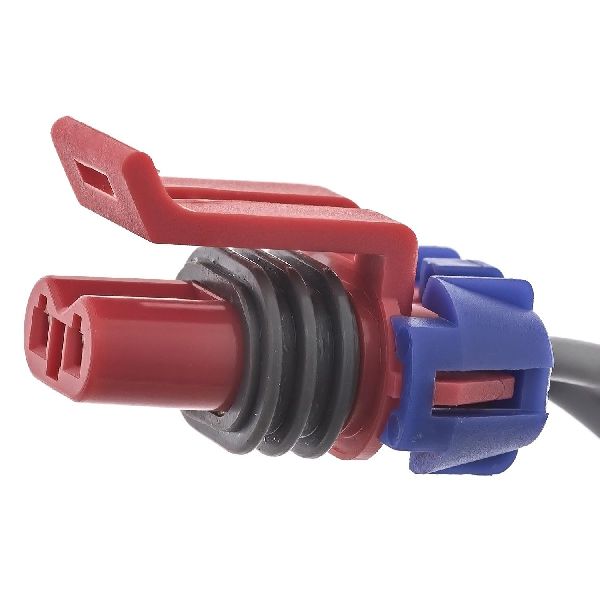
Est. part cost: $25-$60 - Damaged Wiring or Connector 🟡 Medium Probability Wires in the engine bay are exposed to heat and vibration, which can cause them to break, chafe against other components, or corrode over time. The plastic connector can also become brittle and crack, leading to a poor connection.
How to confirm: Visually inspect the wiring harness leading to the purge valve for any signs of damage, melting, or corrosion at the connector pins. Use a multimeter to check for 12V power on one wire (usually with the key on) and a pulsing ground signal from the PCM on the other with the engine running. Wiggle the harness while testing to see if the voltage changes, indicating an intermittent break.
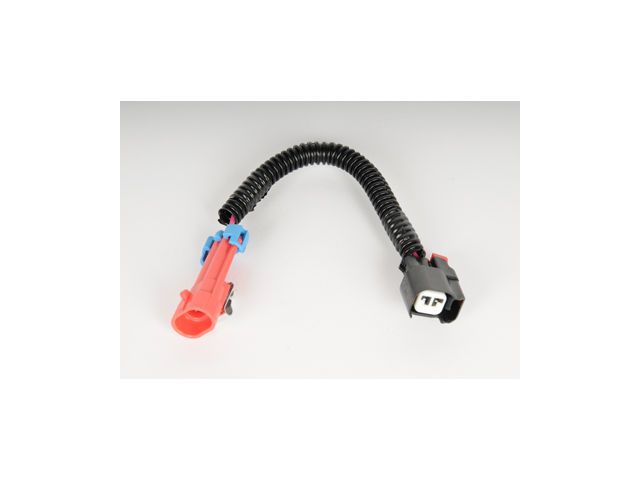
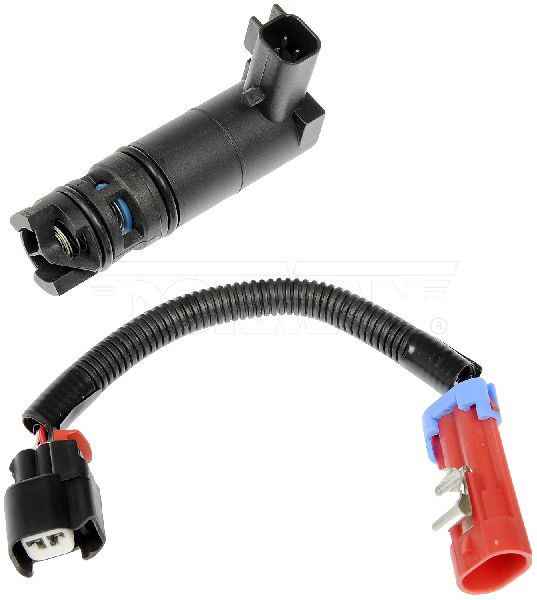
Typical fix: Repair the broken or shorted wire. If the connector is damaged, it will need to be replaced with a new pigtail connector. Pigtails like Dorman 85137 or Standard Motor Products S-1350 are common replacements.
Est. part cost: $15-$30 for a pigtail connector. - Blown Fuse ⚪ Low Probability
How to confirm: Check the vehicle's under-hood fuse box for a blown fuse labeled 'EMISS'. This fuse powers the Canister Purge Solenoid, Vent Solenoid, and Oxygen Sensors. The owner's manual will have a diagram of the fuse layout.
Typical fix: Replace the blown fuse. If the fuse blows again immediately, it indicates a short circuit in one of the components on that circuit that needs to be traced and repaired.
Est. part cost: $1-$5
Rare But Worth Checking
- Faulty Powertrain Control Module (PCM): → Shop Engine Control Module (ECM) This is very rare. Before condemning the PCM, all other possibilities (valve, wiring, fuses) must be exhaustively ruled out. A faulty PCM driver will fail to provide the ground signal to the valve. A replacement PCM for a 2.2L Vue can be found under part numbers like 12202143.
Diagnosis Steps
- Scan for codes to confirm P0443 is the primary code and note any other codes present.
- Locate the EVAP purge valve. On the 2.2L engine, it's on the driver's side of the engine near the intake. On the 3.5L V6, it's on top of the engine near the throttle body. 🎬 Watch: 3.5L V6 purge valve replacement walkthrough. On the 3.0L V6, it's often near the firewall.
- Inspect the electrical connector and wiring going to the valve for any obvious damage, corrosion, or loose connections. Ensure the connector is fully seated.
- Check the under-hood fuse box for a blown 'EMISS' fuse.
- With the ignition on (engine off), use a multimeter to verify that one of the pins in the connector has battery voltage (approx. 12V). This is the power feed from the EMISS fuse.
- With the engine running, use a multimeter set to DC volts or a test light connected to the positive battery terminal to check for a pulsing ground signal from the PCM on the other pin. A scan tool that can command the purge valve duty cycle is very helpful here.
- If power and a pulsing ground are present at the connector, the wiring and PCM are likely good. The purge valve itself is faulty and should be replaced.
- If 12V power is missing, trace the power wire back to the fuse box/relay to find the open circuit.
- If the ground signal is missing (and power is present), there may be a break in the wire to the PCM or a rare PCM fault.
Parts You'll Likely Need
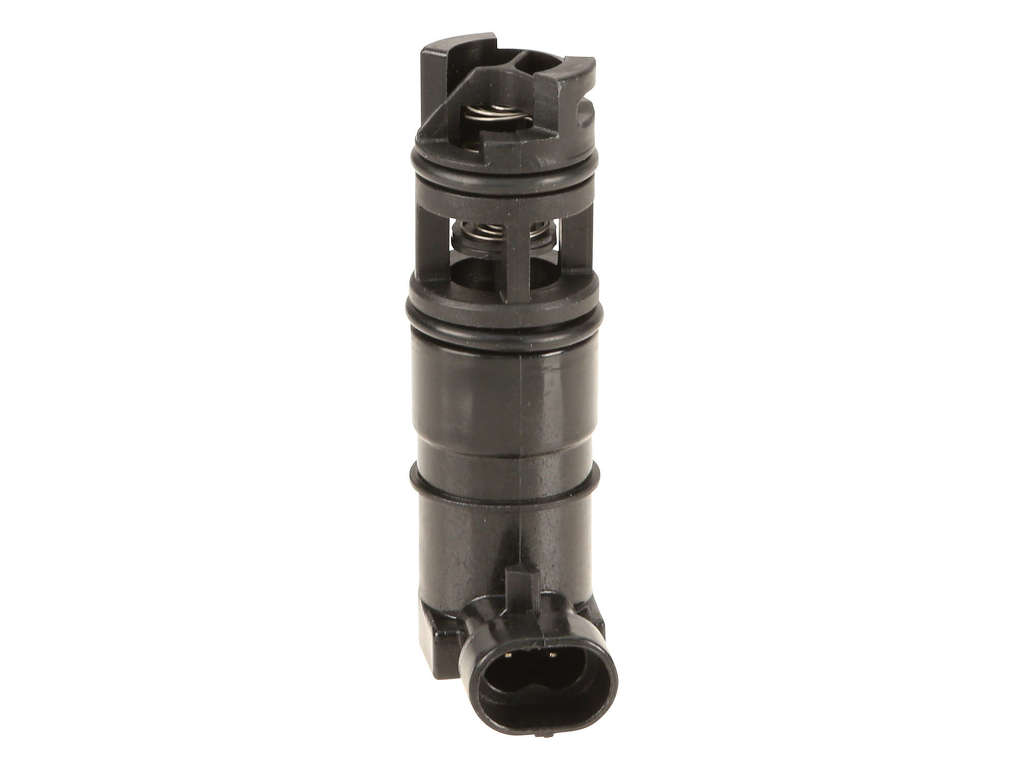
- Vapor Canister Purge Valve / Solenoid
(OEM #Varies by engine. 3.5L V6: Honda part 36162-RDV-J01. 2.2L I4: GM part 12597567. 3.0L V6: GM part 12581369.)— This is the most common failure point for a P0443 code. The internal electronics of the solenoid fail, causing the circuit fault.
Trusted brands: ACDelco, Delphi, Standard Motor Products (SMP), Dorman
OEM price range: $50-$90
Aftermarket price range: $25-$60 - Purge Valve Connector Pigtail
(OEM #e.g., Standard Motor Products S-1350, Dorman 85137)— Needed if the original connector is cracked, corroded, or has broken wires at the connector body.
Trusted brands: Dorman, Standard Motor Products (SMP), ACDelco
OEM price range: $25-$40
Aftermarket price range: $15-$30
Related Codes That Often Appear With This One
- P0444 — P0444 indicates 'Purge Control Valve Circuit Open', which is a more specific version of the P0443 general circuit fault, pointing directly to a break in the wiring or a failed-open solenoid coil.
- P0445 — P0445 indicates 'Purge Control Valve Circuit Shorted', another specific fault that falls under the P0443 umbrella, pointing to a short to ground or a short within the solenoid coil.
Platform-Specific Known Issues
- Engine-Specific Part Differences: It is critical to identify the engine in the Vue before ordering parts. The 2.2L (GM L61), 3.0L (GM L81), and 3.5L (Honda J35A3) use completely different purge valves and have different mounting locations. The 3.5L V6 uses a Honda part, which is a known failure item across many Honda and Acura models.
Mechanic-Grade Diagnostic Values
- EVAP Purge Valve Solenoid Coil Resistance — expected: 14 to 38 Ohms (general specification for similar solenoids).. Failure: A reading of near 0 Ohms indicates a shorted coil. A very high or infinite (O.L.) reading indicates an open coil.
- Purge Valve Connector Power Pin Voltage — expected: Battery Voltage (approx. 12.6V) with Key On, Engine Off.. Failure: Little to no voltage indicates a blown 'EMISS' fuse or a break in the power supply wire.
- Purge Valve Connector Control Pin Signal — expected: A pulsing ground signal when the PCM is commanding the valve to open (viewable with a multimeter on DC volts or a test light connected to battery positive). A scan tool can command this signal for testing.. Failure: A constant ground or no ground when commanded indicates a wiring fault or a problem with the PCM driver circuit.
Scan Tool Commands That Help
- GM Tech2: EVAP Purge Solenoid Control — After verifying power to the solenoid connector, use this bidirectional control to command the solenoid's duty cycle from 0% to 100%. This confirms if the PCM is sending the signal and if the solenoid clicks in response. The path is typically: Powertrain > Special Functions > Engine Output Controls > EVAP System > EVAP Purge Solenoid.
Wiring & Ground Locations
- EMISS Fuse — Located in the under-hood fuse block.. This fuse provides the 12V power to the EVAP purge solenoid. If it's blown, the solenoid will have no power, triggering P0443. It also powers other emissions components, so a failure may set other codes.
- Purge Solenoid Connector — Directly on the EVAP purge solenoid in the engine bay.. This two-pin connector is a common point of failure due to corrosion or damaged wires. One pin is 12V+ from the EMISS fuse (Key On), the other is the ground-side control from the PCM.
- G107 (For 3.5L V6) — Located at the rear of the engine.. Engine control components require a solid ground to function. While the purge valve is controlled via a PCM driver, the PCM itself relies on main engine grounds like G107. A poor ground here can cause various unpredictable electrical issues, including driver malfunctions.
"I Checked Everything" — The Actual Cause
- A smoke test is not a valid diagnostic procedure for a P0443 code. This code indicates an electrical circuit fault (open, short, or general malfunction), not a physical leak in the EVAP system. A smoke test is used for leak-related codes such as P0442 (small leak) or P0455 (large leak).
OEM Part Supersession History
36162-RDV-J01 (For 3.5L V6)→36162-RJA-A01— Cost-saving alternative.
Heads up: The part 36162-RJA-A01, specified for the Honda Odyssey, is reported by owners to be a direct-fit, functional replacement for the more expensive 36162-RDV-J01 found on the Acura TL and Saturn Vue with the Honda 3.5L engine. No modification is required.
Diagnostic Flowchart
Used vs. New Parts: Buying Guide for This Vehicle
When a used part is the smart pick: A used OEM purge valve from a reputable auto recycler is a reasonable choice for this repair. The part is not a major wear item, but rather fails electronically. A used part from a lower-mileage donor vehicle can provide significant cost savings with good reliability.
Donor-vehicle mileage cap: roughly under 100000 miles for the part to have meaningful remaining life.
What to inspect on the donor part:
- Check for physical integrity: no cracks in the plastic housing or connector.
- Ensure connector pins are clean, straight, and free of corrosion.
- If possible, test the resistance with a multimeter before purchase; it should fall within the 14-38 ohm range.
- Ask the recycler about the donor vehicle's mileage and if it was involved in a front-end collision.
OEM-only on this vehicle (don't cheap out):
- For this specific P0443 repair, no parts are strictly 'OEM-only'. Quality aftermarket solenoids are widely available and perform well.
Aftermarket brands forum-validated for this vehicle:
- ACDelco (for GM engines)
- Delphi
- Standard Motor Products (SMP)
- Dorman
Brands owners have reported issues with on this vehicle:
- No-name, deeply discounted parts from online marketplaces may have higher failure rates and are best avoided.
Real Owner Stories
Aggregated from forums and TSBs cited above. Mileages and costs reflect what owners reported in those sources.
2004 Saturn Vue
Symptoms: The primary symptom was the car would not start after getting gas. The check engine light was on with codes P0446 and a pending P0455.
What fixed it: The owner discovered that a brand-new Dorman purge solenoid had failed within a week. Replacing that faulty part with another new purge solenoid from a different brand (SKP SK911141) resolved all the EVAP codes.
Source hint: YouTube - EVAP Purge Solenoid Fails in a week! P0446 & P0455?!? (04 Saturn Vue Project)
Related OBD-II Codes
Frequently Asked Questions
Where is the EVAP purge valve located on my 2002-2007 Saturn Vue?
My Vue has trouble starting right after I fill up with gas. Is this related to the P0443 code?
I have the 3.5L V6 engine. Do I need a special purge valve?
What fuse should I check for the P0443 code?
I'm testing my purge valve with a multimeter. What resistance reading is considered good?
The wiring connector to my purge valve is broken. What part do I need to fix it?
Helpful Videos
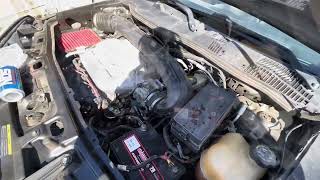
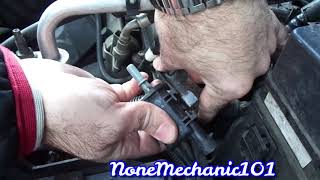

Used OEM Parts in Stock
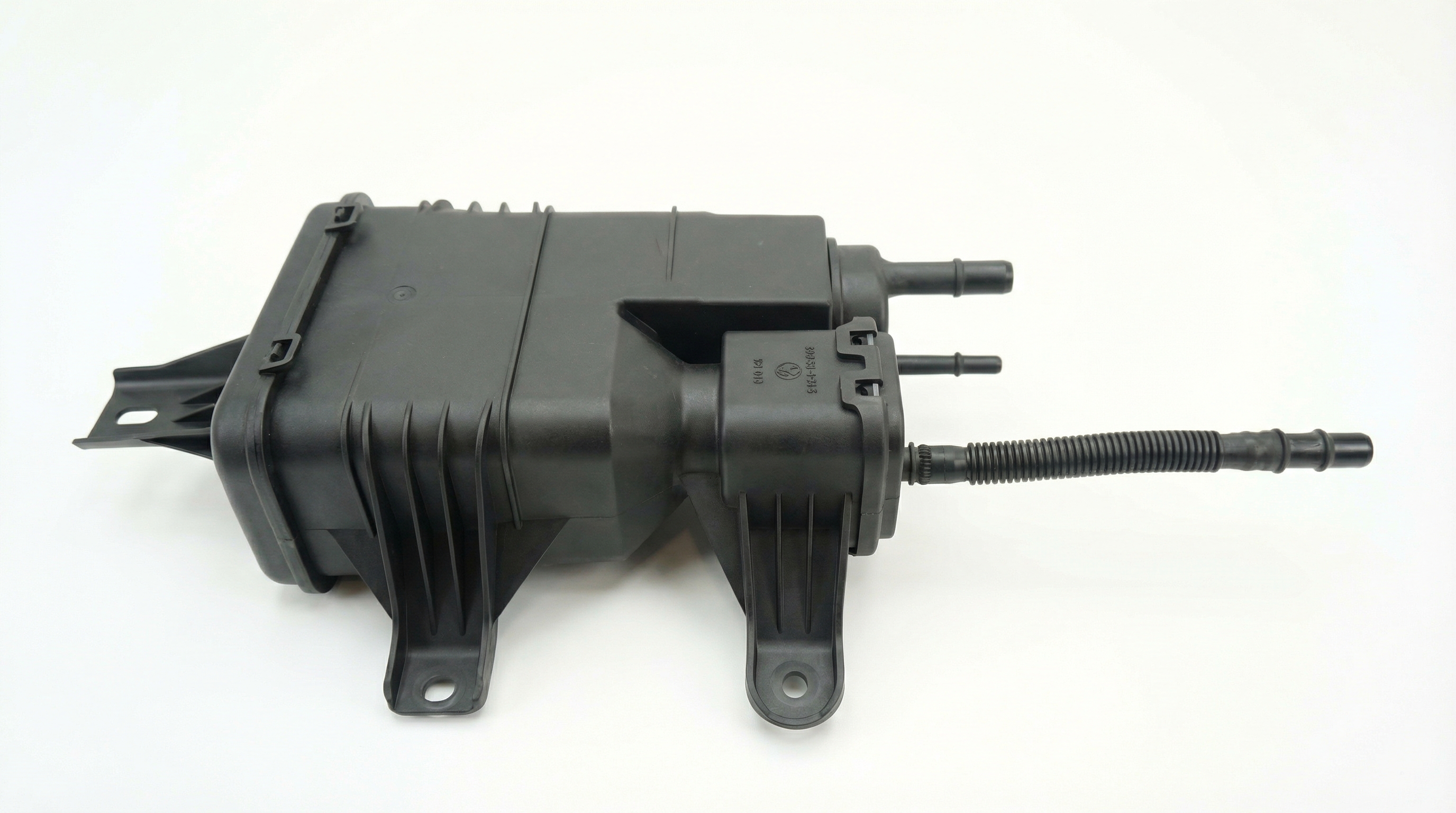
New Aftermarket Parts Available


The information in this article is provided for general reference and educational purposes only. Vehicle specifications, procedures, and part compatibility can vary by production date, trim level, and region. Always consult your vehicle's factory service manual and verify part numbers before purchasing or performing repairs. Safety-critical components such as airbags, seat belts, and braking systems should be installed by a qualified professional.
- Saturn Vue:
- 🧭 Diagnostic Flowchart
- 🎬 Helpful Videos
- 🛍️ Shop This Part
- What's Unique About the 2002-2007 Saturn Vue
- Symptoms You May Notice
- Most Likely Causes
- Rare But Worth Checking
- Diagnosis Steps
- Parts You'll Likely Need
- Related Codes That Often Appear With This One
- Platform-Specific Known Issues
- Mechanic-Grade Diagnostic Values
- Scan Tool Commands That Help
- Wiring & Ground Locations
- "I Checked Everything" — The Actual Cause
- OEM Part Supersession History
- Used vs. New Parts: Buying Guide for This Vehicle
- Real Owner Stories
- 2004 Saturn Vue
- Related OBD-II Codes
- Frequently Asked Questions
- 🎟️ Get 5% Off