

P0443 on 2008-2014 Subaru Impreza: EVAP Purge Valve Circuit Fault Causes and Fixes
This code almost always points to a failed EVAP Purge Control Solenoid Valve located in the engine bay or its wiring. It's an electrical circuit fault, not a system leak. Replacing the solenoid is a common, straightforward DIY fix costing between $45 and $120 for the part. The specific part and location varies slightly between the 2008-2011 (EJ253 engine) and 2012-2014 (FB20 engine) generations.
- P0443 is an electrical circuit code, not a leak code. Don't rush to replace the gas cap.
- The most likely culprit is the EVAP Purge Control Solenoid Valve located on the engine's intake manifold.
- You can confirm a bad solenoid in minutes with a multimeter by checking its resistance. A reading outside the 20-30 ohm range (especially 'OL' or infinite) means it's broken.
- The repair is very DIY-friendly, requiring basic hand tools and about 30 minutes. On 2012-2014 models, the air intake duct must be removed for access.
- Ensure you buy the correct part number, as it differs between the 2008-2011 (2.5L, part 42084FG060) and 2012-2014 (2.0L, part 16131AA060) models.
What's Unique About the 2008-2014 Subaru Impreza
For the 2008-2014 Impreza, this is a very common and straightforward code. The vehicle range spans two distinct generations (Gen 3 and Gen 4) with different engines, so the exact part number and location for the purge solenoid differs. However, the cause and diagnostic procedure are virtually identical for both. The issue is almost always the purge solenoid itself failing electrically, making it a frequent topic in owner forums. The solenoid on the FB20 engine (2012-2014) is known to be tucked under the intake manifold, making access slightly more difficult than on the earlier EJ253.
Generation note: This range covers two generations of the non-turbo Impreza: - Third Generation (2008-2011): Uses a 2.5L SOHC engine (EJ253). The purge valve is typically easier to access on this engine. - Fourth Generation (2012-2014): Uses a 2.0L DOHC engine (FB20B). The purge valve is located on the driver's side of the intake manifold, underneath the throttle body, requiring removal of the air intake duct for access.
Symptoms You May Notice
- Check Engine Light is on.
- Slightly rough idle or engine hesitation, particularly if the valve is stuck open.
- Difficulty starting after refueling (less common).
- Audible clicking from the engine bay may stop if the solenoid has failed completely.
- Noticeable fuel odor, especially if the valve fails in the open position.
- Reduced fuel economy.
- Replacing the gas cap. A bad or loose gas cap will cause an EVAP gross leak code (like P0455 or P0457), not a circuit malfunction code like P0443.
Most Likely Causes
- Faulty EVAP Purge Control Solenoid Valve 🔴 High Probability → Shop Vapor Canister The internal coil windings of the solenoid can break or short over time from engine heat and vibration, causing an electrical open or short circuit that the ECM detects.
How to confirm: Disconnect the electrical connector and measure the resistance across the two pins on the valve with a multimeter. A healthy valve should have a specific resistance, typically around 30 ohms at 68°F for many Subarus. An infinite reading (OL) means it's open, and a reading near zero means it's shorted. You can also apply 12V directly to the pins; a healthy solenoid will make an audible 'click'.
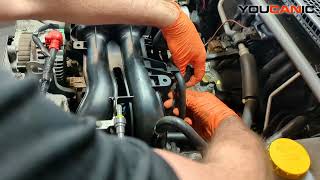
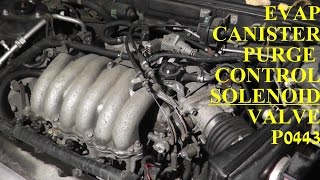
Typical fix: Replace the purge control solenoid valve. 🎬 Watch: How to test and replace the purge solenoid valve.
Est. part cost: $45-$120 - Damaged Wiring or Connector 🟡 Medium Probability The wiring harness in the engine bay is exposed to heat, vibration, and potential rodent damage. The connector itself can also become corroded (green crust) or have pins back out, causing an intermittent or permanent open circuit.
How to confirm: Visually inspect the wiring harness leading to the purge valve for any signs of chafing, melting, or breaks. Unplug the connector and check for corrosion or damage on the pins and terminals. Check for battery voltage on the supply wire with the key on.
Typical fix: Repair the damaged section of wire or clean/replace the electrical connector.
Est. part cost: $5-$25 - Blown Fuse ⚪ Low Probability
How to confirm: Consult your owner's manual to locate the fuse for the emissions or EVAP system in the under-hood or in-cabin fuse box. Visually inspect the fuse to see if it is blown.
Typical fix: Replace the blown fuse. If it blows again immediately, a short circuit exists in the wiring or the solenoid itself that must be traced.
Est. part cost: $1-$5
Rare But Worth Checking
- Faulty Engine Control Module (ECM): → Shop Engine Control Module (ECM) This is very rare. The ECM's internal driver for the purge circuit can fail. This should only be considered after the valve, wiring, and fuses have been proven to be good.
Diagnosis Steps
- Scan the vehicle for codes to confirm P0443 is the primary code present. Note any other codes like P0444 or P0445.
- Locate the EVAP purge control solenoid. On the 2008-2011 (EJ253), it's on the intake manifold. On the 2012-2014 (FB20), it's on the driver's side of the intake manifold, below the throttle body. It will have two hoses and a two-wire electrical connector.
- Inspect the electrical connector and nearby wiring for any obvious signs of damage, corrosion, or loose connections.
- Check the fuse for the EVAP system in the vehicle's fuse box.
- If the visual inspection passes, disconnect the electrical connector from the solenoid.
- Use a multimeter set to Ohms (Ω) to measure the resistance between the two pins on the solenoid itself. Compare to the typical spec of around 30 ohms. If the reading is infinite (OL - Open Loop) or near 0, the solenoid is bad and must be replaced.
- As an alternative test, use fused jumper wires to apply 12V and ground directly to the solenoid's pins. A healthy solenoid will produce an audible click. No click means it's failed.
- If the solenoid tests good, check the wiring harness. With the key on and engine off, use a multimeter to check for battery voltage at one of the pins in the wiring harness connector. The other pin is the ground control from the ECM.
- If power is missing, trace the power wire back from the fuse. If power is present but the code persists, the issue may be in the ground control wire running back to the ECM, or a rare ECM fault.
Parts You'll Likely Need
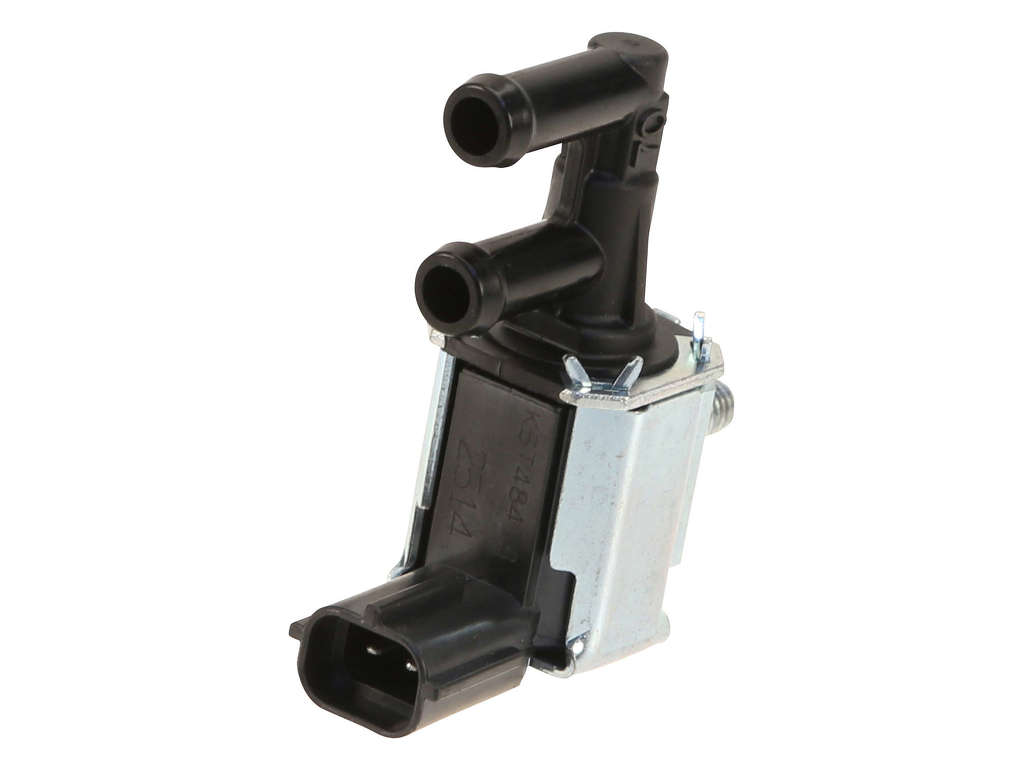
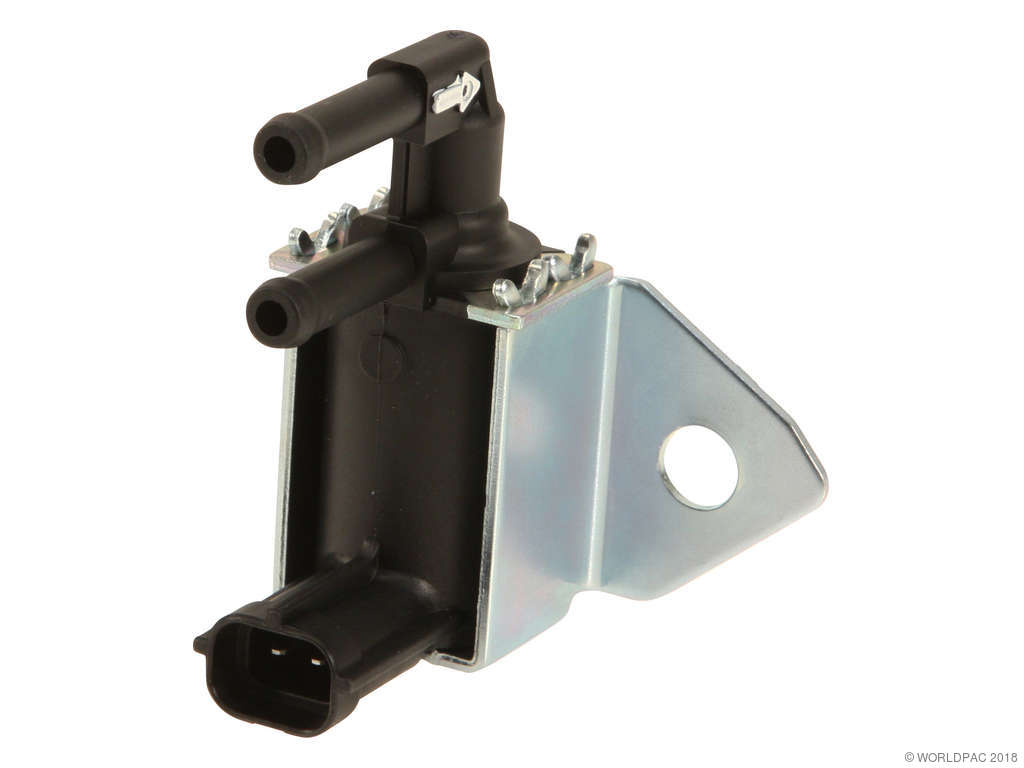
- EVAP Purge Control Solenoid Valve
(OEM #42084FG060 (for 2008-2011 2.5i) or 16131AA060 (for 2012-2014 2.0i))— This is the most common failure point for code P0443. The internal coil fails, causing an electrical fault detected by the ECM.
Trusted brands: Subaru (OEM), Denso (often the OEM manufacturer), Standard Motor Products, Dorman
OEM price range: $60-$120
Aftermarket price range: $45-$80
Related Codes That Often Appear With This One
- P0444 — P0444 indicates 'Purge Control Circuit Open,' which is a more specific version of the general P0443 fault, often pointing directly to a broken coil winding in the solenoid or a broken wire.
- P0445 — P0445 indicates 'Purge Control Circuit Shorted,' another specific fault type related to P0443, pointing to a short in the solenoid coil or wiring.
Platform-Specific Known Issues
- Access on 2012-2014 (FB20) Models: On the 2.0L FB20 engine, the purge solenoid is located under the intake manifold near the throttle body on the driver's side. Access requires removing the main air intake snorkel/duct that runs from the air filter box to the throttle body. It is held in by a single 8mm or 10mm bolt. While not difficult, it is more hidden than on previous models.
- Owner Repair Experience: A common owner experience shared on forums involves getting the P0443 code, sometimes accompanied by P0444. The owner tests the resistance of the original valve and gets an 'OL' (open) reading. After replacing the valve (a 10-30 minute job depending on the generation) and clearing the code, the check engine light does not return, confirming the fix.
Mechanic-Grade Diagnostic Values
- Purge Control Solenoid Coil Resistance — expected: Approximately 30 Ω at 68°F (20°C).. Failure: Infinite resistance (OL) indicates an open coil; near-zero resistance indicates a shorted coil.
- Voltage at Purge Solenoid Connector (Power Pin) — expected: Battery voltage (~12V) with Key On, Engine Off.. Failure: 0V or significantly low voltage indicates a problem with the power supply circuit or fuse.
- Voltage at Purge Solenoid Connector (Control Pin) — expected: This is a PWM ground signal from the ECM. When the valve is commanded ON with a scan tool, voltage should drop to near 0V. When OFF, it should read near battery voltage.. Failure: Voltage does not change when commanded, or is always at 0V (short to ground) or always at battery voltage (open in control wire).
Scan Tool Commands That Help
- Subaru Select Monitor (SSM) or equivalent professional scan tool: Active Test: 'Activate the VSV for Evap Control' or similar function. — This command allows the technician to manually cycle the purge solenoid on and off. It is used to verify if the solenoid clicks when commanded and to check for correct voltage changes at the control wire, confirming the ECM driver and wiring are functional.
Wiring & Ground Locations
- Purge Control Solenoid Valve Connector (2012-2014 FB20) — On the intake manifold, driver's side, below the throttle body. It is a 2-pin connector.. This is the primary connection point to test the solenoid and the circuit from the ECM. The connector has two terminals for the 20-gauge wires.
- Engine Ground Points (General Subaru) — The main ECU grounds are on the top of the intake manifold. Additional critical grounds are on the engine block itself and the alternator housing.. A poor ground connection at the intake manifold can cause a variety of strange electrical issues, as the ECU relies on this point for its reference ground. While less likely to cause a specific circuit code like P0443, it's a known weak point in Subarus that can lead to intermittent electrical faults.
- GB-7 / GB-11 (2012 Impreza) — GB-7 is a ground point located near the right 'C' pillar. GB-11 is located under the center console.. These are chassis ground points identified in the 2012 Impreza wiring diagrams. While not directly for the purge solenoid, a fault in a shared ground circuit could potentially cause issues, though it is a very low probability cause for P0443.
Real Owner Repair Stories
- Subaru Legacy International forum user 'blankdeluxe' (Subaru Legacy (similar EJ engine architecture)) — Check Engine Light with code P0443, engine dying when coming to a stop, and a rolling idle between 250-750 RPM.
❌ Tried (didn't work) Visually checking vacuum lines.
✅ What actually fixed it The user tested the resistance across the purge solenoid's pins and found it was reading 'open' (infinite resistance). Replacing the purge solenoid resolved the P0443 code. (Note: The idle issue was a separate, unrelated problem with a leaking BOV).
OEM Part Supersession History
136200-7130 (Denso part number)→16131AA060 (Subaru OEM part number)— This is a direct OEM replacement for the original Denso-manufactured part used in many 2.0L and 2.5L Subarus.
Heads up: No incompatibility noted; this is a direct cross-reference.
Model Year Variations Within This Range
- 2010-2012: For some 2.5L non-turbo models in these years with California emissions, part number 16131AA060 is specified, which is the same part used in the later 2012-2014 2.0L models. This indicates a mid-generation part change for certain emissions packages before the full engine switch.
Diagnostic Flowchart
Used vs. New Parts: Buying Guide for This Vehicle
When a used part is the smart pick: A used OEM purge solenoid from a reputable salvage yard is a reasonable choice for this repair, especially if from a low-mileage donor vehicle. The part is not a major wear item and failure is primarily electrical. Given the high cost of a new OEM part, a used one can offer significant savings.
Donor-vehicle mileage cap: roughly under 80000 miles for the part to have meaningful remaining life.
What to inspect on the donor part:
- Check the plastic housing for cracks or signs of extreme heat stress.
- Ensure the electrical connector pins are clean, straight, and free of corrosion.
- If possible, test the resistance with a multimeter before purchase; it should be around 30 ohms.
- Ask for the VIN of the donor car to verify its year and model to ensure compatibility.
Aftermarket brands forum-validated for this vehicle:
- Denso (often the original equipment manufacturer)
- Standard Motor Products (SMP)
- Dorman
Brands owners have reported issues with on this vehicle:
- Unbranded, no-name parts from online marketplaces should be avoided, as their internal coil quality and durability can be questionable.
Real Owner Stories
Aggregated from forums and TSBs cited above. Mileages and costs reflect what owners reported in those sources.
2008-2014 Subaru Impreza
Symptoms: Check Engine Light on with code P0443, sometimes accompanied by P0444. Testing the original valve's resistance showed an 'OL' (open) reading.
What fixed it: Replacing the purge solenoid valve and clearing the codes resolved the issue, and the check engine light did not return.
Source hint: sl-i.net (Subaru Legacy International) - A user documented diagnosing P0443 by testing the resistance of the purge solenoid and finding it was open, confirming the fix.
2008-2014 Subaru Impreza
Symptoms: Check Engine Light with code P0443.
What fixed it: Owners frequently confirm that replacing the purge solenoid resolves the code.
Source hint: NASIOC (North American Subaru Impreza Owners Club) - Multiple threads discuss P0443 as a common and easy fix, overwhelmingly pointing to the purge solenoid as the cause.
Related OBD-II Codes
Frequently Asked Questions
Where is the EVAP purge solenoid located on my 2013 Subaru Impreza?
What resistance should the purge solenoid have on my Impreza when I test it?
Is P0443 a common issue on the 2008-2014 Impreza?
I have a 2016 Crosstrek with code P0443. Is the diagnosis the same as for the Impreza?
How can I test the purge solenoid if I don't have a multimeter?
Are there any recommended aftermarket brands for the purge solenoid valve?
My Impreza is sometimes hard to start after I fill it up with gas. Is this related to the P0443 code?
Helpful Videos
Used OEM Parts in Stock
New Aftermarket Parts Available


The information in this article is provided for general reference and educational purposes only. Vehicle specifications, procedures, and part compatibility can vary by production date, trim level, and region. Always consult your vehicle's factory service manual and verify part numbers before purchasing or performing repairs. Safety-critical components such as airbags, seat belts, and braking systems should be installed by a qualified professional.
- Subaru Impreza:
- 🧭 Diagnostic Flowchart
- 🎬 Helpful Videos
- 🛍️ Shop This Part
- What's Unique About the 2008-2014 Subaru Impreza
- Symptoms You May Notice
- Most Likely Causes
- Rare But Worth Checking
- Diagnosis Steps
- Parts You'll Likely Need
- Related Codes That Often Appear With This One
- Platform-Specific Known Issues
- Mechanic-Grade Diagnostic Values
- Scan Tool Commands That Help
- Wiring & Ground Locations
- Real Owner Repair Stories
- OEM Part Supersession History
- Model Year Variations Within This Range
- Used vs. New Parts: Buying Guide for This Vehicle
- Real Owner Stories
- 2008-2014 Subaru Impreza
- 2008-2014 Subaru Impreza
- Related OBD-II Codes
- Frequently Asked Questions
- 🎟️ Get 5% Off