

P0443 on 2005-2009 Subaru Outback: EVAP Purge Valve Circuit Malfunction Causes and Fixes
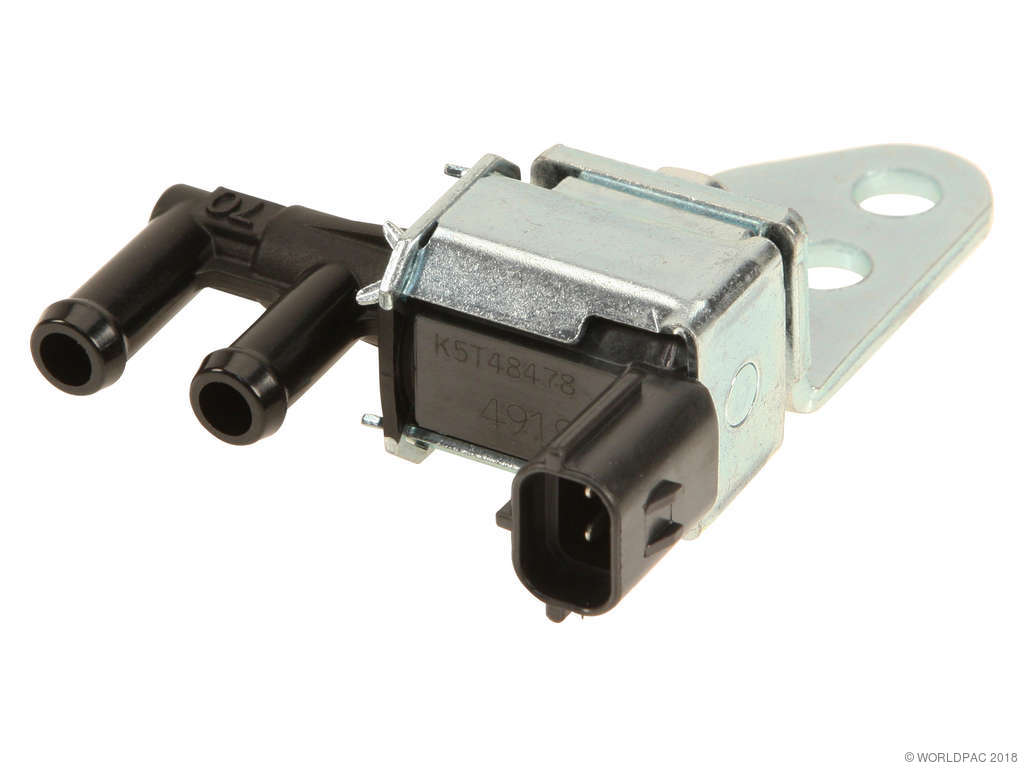
This code almost always points to a failed EVAP Purge Control Solenoid Valve. It's an electrical fault, not a leak. Replacing the valve is a simple DIY fix that takes less than an hour, with the part costing between $40 and $90.
- P0443 is an electrical circuit problem, not a gas cap or vacuum leak issue.
- The most likely cause is a failed purge control solenoid valve located on the engine's intake manifold.
- You can confirm a bad valve in minutes with a multimeter by testing its resistance; a good valve should be 29-35 Ohms.
- Replacing the valve is a very easy and affordable DIY repair that typically takes less than 30 minutes.
What's Unique About the 2005-2009 Subaru Outback
On the third-generation Subaru Outback (and its platform mates with the naturally aspirated EJ253 engine), the P0443 code is a very common and straightforward issue. The design places the purge control solenoid right on top of the intake manifold, making it exceptionally easy to access, test, and replace. Unlike some vehicles where the valve is buried, on this Outback it's one of the most likely and easiest-to-fix codes you'll encounter.
Symptoms You May Notice
- Check Engine Light is on
- Slightly rough idle or engine stumbling (if the valve is stuck open)
- Potential for a faint fuel odor
- Reduced fuel economy
- Stalling or rough running immediately after refueling (a classic symptom if the valve is stuck open, allowing raw fuel vapors to flood the intake)
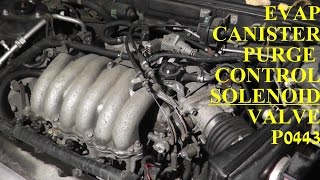
- Replacing the gas cap. P0443 is an electrical circuit code, not a system leak code (like P0455 or P0457). A new gas cap will not fix it. 🎬 See this video explaining the P0443 circuit malfunction
Most Likely Causes
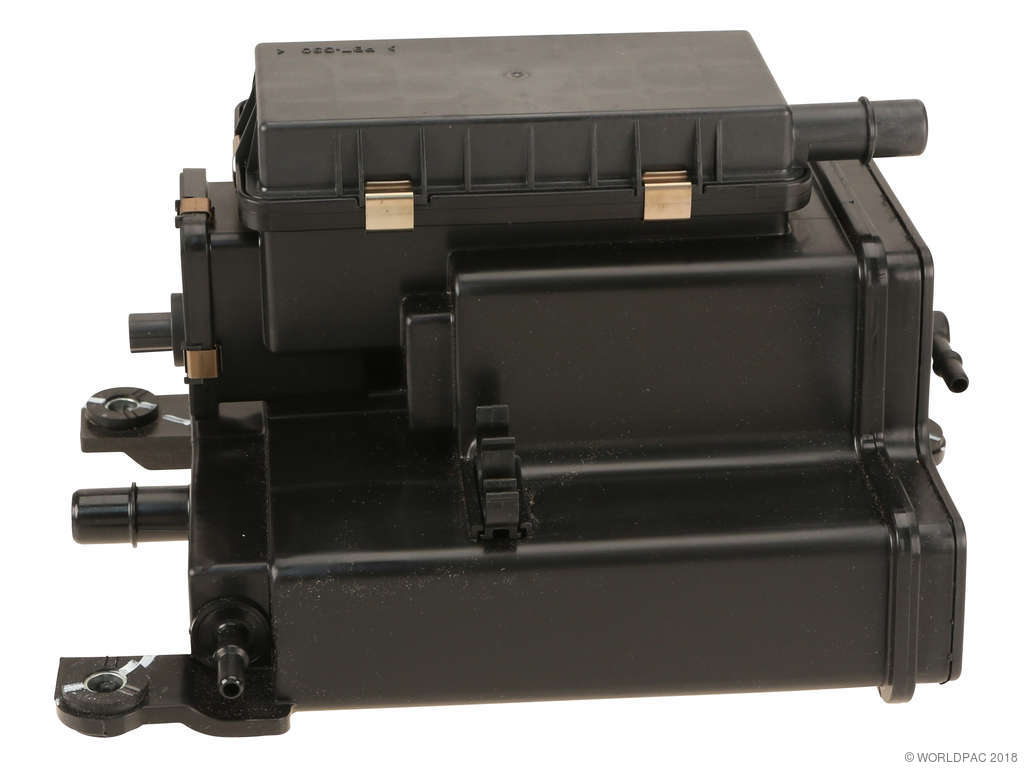
- Failed EVAP Purge Control Solenoid Valve 🔴 High Probability → Shop Vapor Canister The solenoid coil inside the valve is a common failure point due to age and engine heat cycles. It can develop an internal short or an open circuit, which is the most frequent reason for this code on the 2005-2009 Outback.
How to confirm: Disconnect the electrical connector and measure the resistance across the two pins on the valve with a multimeter. A healthy valve for this Subaru generation should read between 29-35 ohms. A reading of infinity (OL) or near-zero indicates a failed coil. You can also briefly apply 12V power to the pins; a good solenoid will make an audible 'click'.
Typical fix: Replace the purge control solenoid valve.
Est. part cost: $40-$90 - Damaged Wiring or Corroded Connector 🟡 Medium Probability The wiring harness in the engine bay is exposed to heat and vibration, which can cause wires to become brittle and break or chafe over time. The connector itself can also accumulate moisture and corrode. Rodents are also known to chew on these wires.
How to confirm: Visually inspect the wiring leading to the purge valve connector for any signs of cracking, chafing, or breaks. Check the connector itself for green/white corrosion or pushed-out pins. Use a multimeter to check for battery voltage (approx. 12V) on one wire with the key in the 'ON' position, engine off.
Typical fix: Repair the damaged section of wire or clean/replace the electrical connector.
Est. part cost: $5-$25 - Blown Fuse ⚪ Low Probability An electrical short in the circuit can cause the related fuse to blow, cutting power to the valve. While less common, it's a quick check before replacing parts.
How to confirm: Consult your owner's manual or the fuse box cover to locate the fuse for the emissions or EVAP system and visually inspect it to see if it has blown. On many Subarus of this era, this circuit may be tied to other components.
Typical fix: Replace the blown fuse. If it blows again, a short circuit is present that must be diagnosed and repaired.
Est. part cost: $1-$5
Rare But Worth Checking
- Faulty Powertrain Control Module (PCM): → Shop Engine Control Module (ECM) This is extremely rare. The PCM driver that controls the valve can fail, but all other potential causes should be exhaustively ruled out before considering PCM replacement.
Diagnosis Steps
- Scan the vehicle's computer to confirm P0443 is the active code and check for any other related codes.
- Locate the EVAP purge control solenoid valve. On the 2005-2009 Outback with the 2.5L non-turbo engine, it is mounted directly on the driver's side of the intake manifold, with two vacuum hoses and one electrical connector, making it very easy to find.
- Visually inspect the electrical connector and the wires going to it. Look for any obvious signs of damage, corrosion, chafing against other components, or loose connections.
- Disconnect the electrical connector. With the ignition on (engine off), use a multimeter to verify that one of the pins in the connector has battery voltage (approximately 12 volts).
- With the connector still unplugged, switch the multimeter to measure resistance (Ohms). Measure across the two pins on the purge valve itself. The reading should be between 29 and 35 Ohms for a healthy valve on this model. If the reading is infinite (OL - Open Loop) or near zero, the valve's internal coil has failed and the valve must be replaced.
- As a final confirmation, you can apply 12V and ground directly to the valve's pins using jumper wires. A good valve will make an audible 'click' when power is applied.
- If the valve's resistance is good, it clicks with power, and the connector has voltage, the problem likely lies in the ground control wire running back to the ECM or the ECM itself (which is very rare).
Parts You'll Likely Need
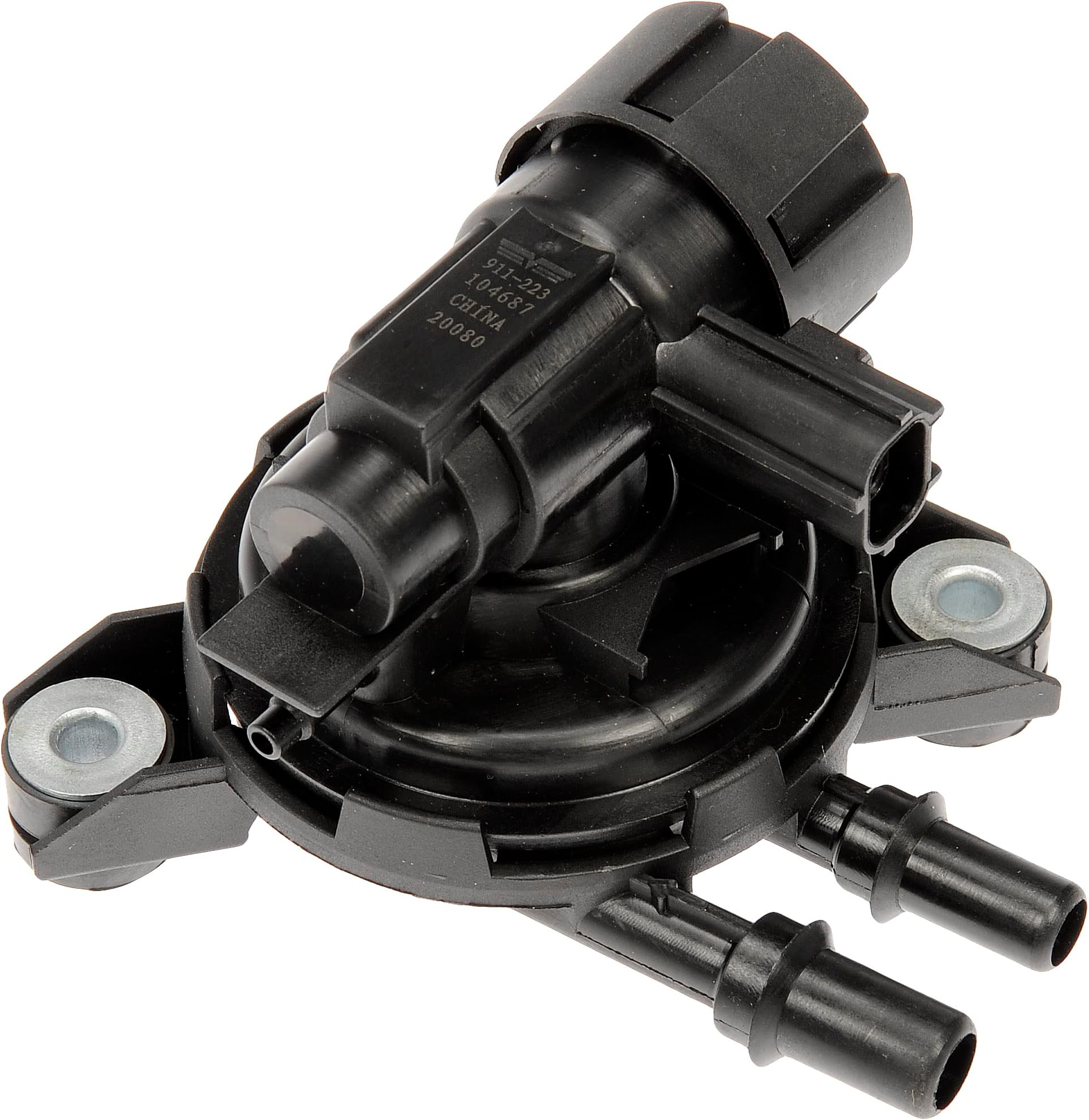
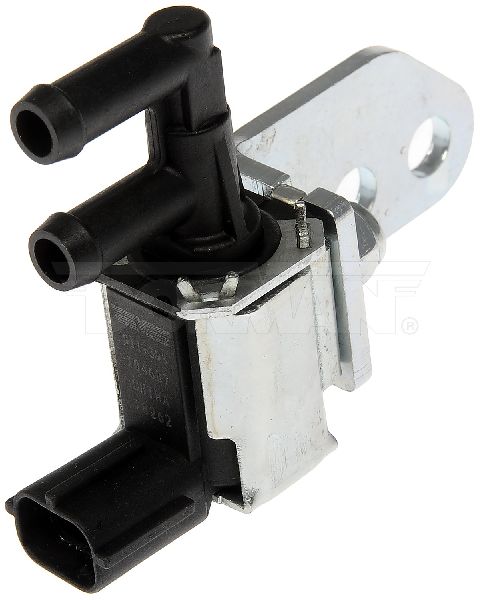
- Vapor Canister Purge Solenoid Valve
(OEM #16102AA490 (supersedes 16102AA400))— This is the most common failure point for code P0443. The internal solenoid coil burns out, creating an open or short circuit that the ECM detects.
Trusted brands: Subaru (Genuine), Dorman (911-393), Standard Motor Products (CP847), Denso
OEM price range: $70-$110
Aftermarket price range: $40-$90
Related Codes That Often Appear With This One
- P0444 — This code indicates 'Purge Control Valve Circuit Open,' which is a specific type of electrical fault that also triggers the more general P0443.
- P0445 — This code indicates 'Purge Control Valve Circuit Shorted,' another specific electrical fault that can cause P0443 to be stored.
- P0171 — If the purge solenoid fails by getting stuck open, it creates a constant vacuum leak, allowing unmetered air and fuel vapor into the intake. This can lead to a 'System Too Lean (Bank 1)' code.
Platform-Specific Known Issues
- Owner confirmation of resistance test: An owner on the Subaru Legacy International forum confirmed that their P0443 code was resolved after their multimeter showed an open circuit on the purge solenoid, validating the resistance test as a definitive diagnostic step.
- Easy access on non-turbo models: Multiple sources and owner forums confirm the purge solenoid is located directly on top of the intake manifold on the 2.5L non-turbo (EJ253) engine, making it a very simple 15-minute replacement 🎬 Watch: Step-by-step EVAP purge valve repair guide with basic hand tools.
Mechanic-Grade Diagnostic Values
- Purge Control Solenoid Coil Resistance — expected: 29-35 Ohms at 68°F (20°C). Failure: A reading of infinity (OL) indicates an open circuit, while a reading near zero indicates a shorted coil.
- Voltage at Purge Solenoid Connector (Key On, Engine Off) — expected: One pin should show 11-14V (battery voltage). The other pin is the ground control from the ECM.. Failure: No voltage suggests a blown fuse or an open in the power supply wire from the main relay.
- Scan Tool Live Data: Purge Control Solenoid Duty Ratio — expected: Varies from 0% to ~95% depending on engine conditions (load, speed, temperature).. Failure: A value that is fixed at 0% or 100% when it should be modulating, or a value that doesn't match the commanded state, can indicate a circuit or ECM driver problem.
Scan Tool Commands That Help
- Subaru Select Monitor (or equivalent professional scanner): Active Test: 'Activate the VSV for Evap Control' or 'Evaporative purge system test' — This command allows the technician to manually turn the purge solenoid ON and OFF to verify its operation. With the valve activated, you should hear it click and, if a vacuum gauge is attached, see the vacuum change, confirming the valve is mechanically functional and the ECM driver is working.
Wiring & Ground Locations
- Purge Solenoid Connector (B20) — On the purge solenoid itself, top of the driver's side of the intake manifold.. This is the primary point for electrical testing. Pin 2 is the 12V power supply from the main relay, and Pin 1 is the ground-side control wire that goes to the ECM.
- ECM Connector (B39) — At the Engine Control Module, typically located in the passenger footwell area behind the glove box.. Pin 62 (PRG) on this connector is the control wire for the purge solenoid. Checking for continuity between this pin and Pin 1 of the solenoid connector can identify a break in the control wire.
Real Owner Repair Stories
- CarsNToyz YouTube Channel (Subaru (model year not specified, but ~13 years old with 180k miles, consistent with this generation)) — Demonstrating how to test for P0443-related codes (P0458/P0459).
✅ What actually fixed it The video demonstrates a successful test procedure. A healthy valve measured 36 Ohms (close to the 29-35 spec, accounting for temperature). It also clicked audibly when 12V was applied and allowed air to pass only when energized. This confirms the standard diagnostic procedure is effective. - YouTube user 'Auto Information Series' (2001 Subaru Outback (similar EJ25 engine and EVAP design principles)) — Check engine light, likely for an EVAP code. Noted that a bad purge valve typically causes hard starting after refueling.
✅ What actually fixed it The user found a torn and loose vacuum hose connected to the purge valve. Replacing the hose was the implied fix for the vacuum leak, though it was unclear if it also resolved a P0443. This highlights the importance of inspecting the attached hoses for physical damage during the repair.
OEM Part Supersession History
16102AA400→16102AA490— Standard part revision and improvement by the manufacturer.
Heads up: The new part number (16102AA490) is a direct replacement for the old one and is fully compatible.
Diagnostic Flowchart
Other Known Issues on This Vehicle
Issues unrelated to this code that are worth knowing about as an owner of this generation:
- Head Gasket Failure (EJ253 Engine) 🔴 High — Very common, typically occurs between 100,000 and 150,000 miles. Affects non-turbo 2.5L engines from 1999-2011. The failure mode is often an external oil or coolant leak.
- Catalytic Converter Inefficiency (P0420) 🟠 Medium — Common at higher mileage (100,000+ miles). Can be caused by engine issues or simply age. Subaru issued warranty extensions and service programs (e.g., WVI-19) for some vehicles to address this. (Ref: Service Program WVI-19, Federal Emissions Warranty Extension (10yr/100k miles for some cases))
- Torn Front CV Axle Boots 🟠 Medium — Frequent failure item, especially the inner boot on the passenger side due to proximity to the hot exhaust. Grease slings out, causing a burning smell and eventual CV joint failure if not addressed.
- Vibration or Shudder on Acceleration 🟡 Low — A widely reported issue that can be caused by worn transmission mounts, torque converter issues, or using non-OEM front axles.
- Takata Airbag Recalls 🔴 High — Affects a massive range of Subaru vehicles from this era, including the 2005-2009 Outback. The recall involves replacing dangerous airbag inflators. (Ref: Multiple NHTSA recalls related to Takata inflators.)
Used vs. New Parts: Buying Guide for This Vehicle
When a used part is the smart pick: A used OEM purge solenoid from a low-mileage donor vehicle can be a cost-effective option, as this part is generally reliable until its coil fails from age and heat cycles. Given the low cost of new aftermarket parts, used is only recommended if the price is significantly lower.
Donor-vehicle mileage cap: roughly under 80000 miles for the part to have meaningful remaining life.
What to inspect on the donor part:
- Test the resistance with a multimeter before purchase; it must be within the 29-35 Ohm range.
- Inspect the plastic housing for cracks or heat damage.
- Ensure the electrical connector pins are clean, straight, and free of corrosion.
- Check that the vacuum ports are not cracked or broken.
Aftermarket brands forum-validated for this vehicle:
- Denso (often the original equipment manufacturer)
- Standard Motor Products (SMP)
- Dorman
Brands owners have reported issues with on this vehicle:
- No-name, unbranded parts from online marketplaces should be avoided, as their coil winding quality and durability can be questionable.
Real Owner Stories
Aggregated from forums and TSBs cited above. Mileages and costs reflect what owners reported in those sources.
2005 Subaru Outback XT Limited — 103000 miles
Symptoms: Check engine light with codes P0451 and P0443; another scan previously showed P0440 in the evap system.
What fixed it: The user identified the codes as part of a list of current problems including EVAP pressure sensor and purge control valve circuit issues.
Source hint: MNSubaru forum report cited in owner_reports
2005-2009 Subaru Legacy (2.5L non-turbo)
Symptoms: Check engine light (P0443).
What fixed it: The owner tested the resistance of the purge solenoid and found it was an open circuit. Replacing the solenoid resolved the code.
Source hint: Subaru Legacy International - 'P0443 Help?'
Related OBD-II Codes
Frequently Asked Questions
Where is the EVAP purge control solenoid valve located on my 2005-2009 Outback with the 2.5L non-turbo engine?
What resistance reading should I see when testing the purge valve on this Subaru generation?
Is there a specific part number for the replacement purge solenoid for my Outback?
Could my P0443 code be related to the Takata airbag recalls for the 2005-2009 Outback?
My Outback is also throwing a P0420 code; is this covered under a special warranty?
Why does my Outback stall or run roughly specifically after I fill up the gas tank?
Helpful Videos

Used OEM Parts in Stock
New Aftermarket Parts Available


The information in this article is provided for general reference and educational purposes only. Vehicle specifications, procedures, and part compatibility can vary by production date, trim level, and region. Always consult your vehicle's factory service manual and verify part numbers before purchasing or performing repairs. Safety-critical components such as airbags, seat belts, and braking systems should be installed by a qualified professional.
- Subaru Outback:
- 🧭 Diagnostic Flowchart
- 🎬 Helpful Videos
- 🛍️ Shop This Part
- What's Unique About the 2005-2009 Subaru Outback
- Symptoms You May Notice
- Most Likely Causes
- Rare But Worth Checking
- Diagnosis Steps
- Parts You'll Likely Need
- Related Codes That Often Appear With This One
- Platform-Specific Known Issues
- Mechanic-Grade Diagnostic Values
- Scan Tool Commands That Help
- Wiring & Ground Locations
- Real Owner Repair Stories
- OEM Part Supersession History
- Other Known Issues on This Vehicle
- Used vs. New Parts: Buying Guide for This Vehicle
- Real Owner Stories
- 2005 Subaru Outback XT Limited — 103000 miles
- 2005-2009 Subaru Legacy (2.5L non-turbo)
- Related OBD-II Codes
- Frequently Asked Questions
- 🎟️ Get 5% Off