

P0443 on 2004-2009 Toyota Prius: EVAP Purge Valve Circuit Malfunction Causes and Fixes
On a 2004-2009 Prius, code P0443 is almost always caused by a failed EVAP purge solenoid valve in the engine bay. It's an electrical circuit fault, not a leak. Replacing the valve (Part #90910-12259) is a simple, 15-minute DIY job, with the part costing around $60-$90 for an OEM Denso or Aisin component.
- P0443 is an electrical circuit code, not a leak code. Do not replace the gas cap.
- The most likely cause on a 2004-2009 Prius is a failed EVAP Purge Solenoid Valve (Toyota VSV).
- The correct OEM part number is 90910-12259.
- This is a very simple and inexpensive DIY repair that requires basic tools and takes less than 30 minutes.
- Always test the valve with a multimeter (expect 20-40 ohms) or 9V battery (expect a 'click') before buying a new one to confirm it has failed.
What's Unique About the 2004-2009 Toyota Prius
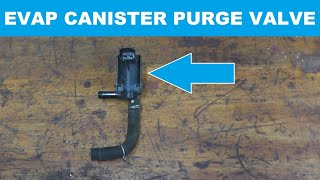
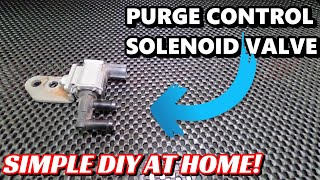
For the second-generation Prius (2004-2009), the P0443 code has a very high probability of being the purge valve itself. This component, located conveniently in the engine bay, is a well-documented failure point. Unlike EVAP leak codes (like P0456 or P0442) which can be time-consuming to diagnose, P0443 is a straightforward electrical fault that is easy to confirm and fix with basic tools. 🎬 Watch: A quick 3-minute guide to fixing the P0443 code. Forum posts from owners consistently confirm that replacing this specific valve resolves the code.
Symptoms You May Notice
- Check Engine Light is on
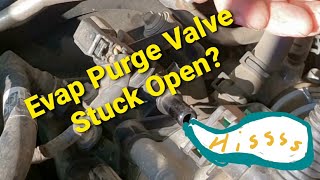
- Slightly rough idle in some cases, particularly if the valve is stuck open 🎬 Watch: A quick and easy test for a stuck open valve.
- Potential for slightly reduced fuel economy
- Vehicle will fail an emissions/smog test
- Replacing the gas cap. A P0443 code is an electrical circuit fault, not a system leak. A bad gas cap would typically cause codes like P0455, P0456, or P0442, but not P0443. Multiple forum users confirm swapping the cap does not fix P0443.
Most Likely Causes
- Faulty EVAP Purge Solenoid Valve (VSV) 🔴 High Probability → Shop Vapor Canister The solenoid coil inside the valve is a common failure item due to age and engine heat cycles, leading to an open circuit.
How to confirm: Disconnect the valve's electrical connector. Use a multimeter to check the resistance between the two pins on the valve. The typical resistance for a good valve is between 20-40 ohms. A reading of infinite resistance (OL) means the coil is open and the valve is bad. Alternatively, apply power from a 9V or 12V battery to the pins; a healthy valve will make an audible 'click'. No click means it has failed.
Typical fix: Replace the EVAP purge solenoid valve.
Est. part cost: $50-$90 - Damaged Wiring or Connector 🟡 Medium Probability Wires and plastic connectors in the engine bay can become brittle and break over time due to heat and vibration. Rodent damage is also a possible cause.
How to confirm: Visually inspect the wiring harness and connector leading to the purge valve for any signs of cracking, fraying, rodent chew marks, or corrosion on the pins. Use a multimeter to check for 12V power on one wire (with key on) and a ground signal from the ECM on the other wire when the engine is running (the ground may be pulsed).
Typical fix: Repair the broken wire(s) or replace the connector pigtail.
Est. part cost: $5-$20 - Blown Fuse ⚪ Low Probability
How to confirm: Check the fuse box diagrams for the fuse related to the emissions or EFI system. On a Gen 2 Prius, this is often the 'EFI' fuse in the engine room R/B. Pull the relevant fuse and inspect it to see if it has blown.
Typical fix: Replace the blown fuse. If it blows again, this indicates a short circuit in the system that needs to be diagnosed.
Est. part cost: $1-$5
Rare But Worth Checking
- Faulty Engine Control Module (ECM): → Shop Engine Control Module (ECM) This is extremely rare. The ECM should only be considered after the valve, wiring, and fuses have all been thoroughly tested and confirmed to be good. A faulty ECM driver for the purge circuit would trigger this code.
Diagnosis Steps
- Read the code with an OBD-II scanner to confirm P0443 is the only code present.
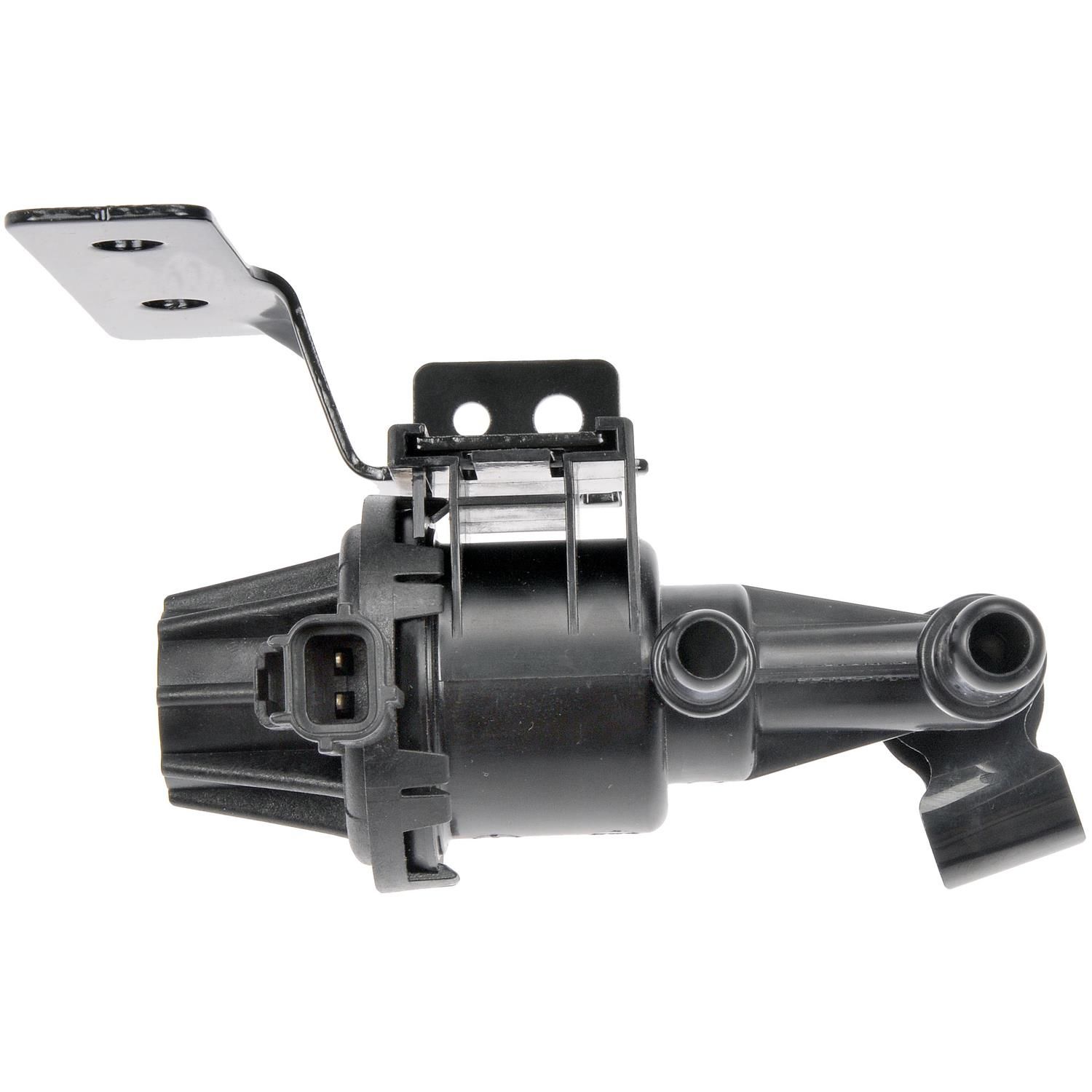
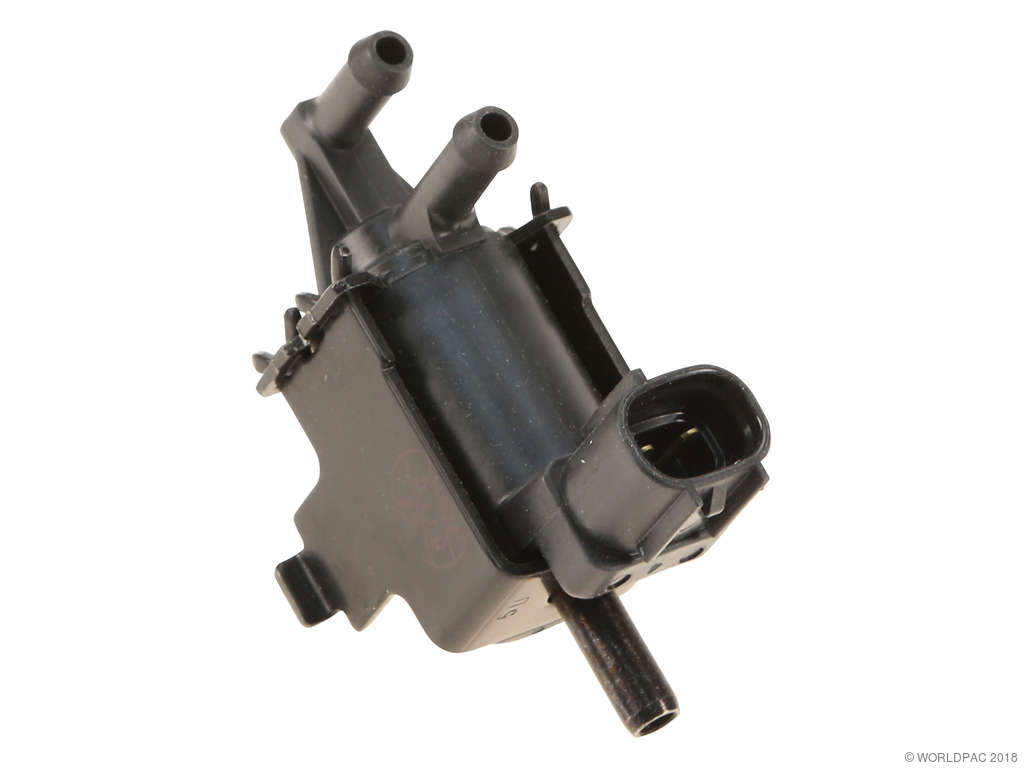
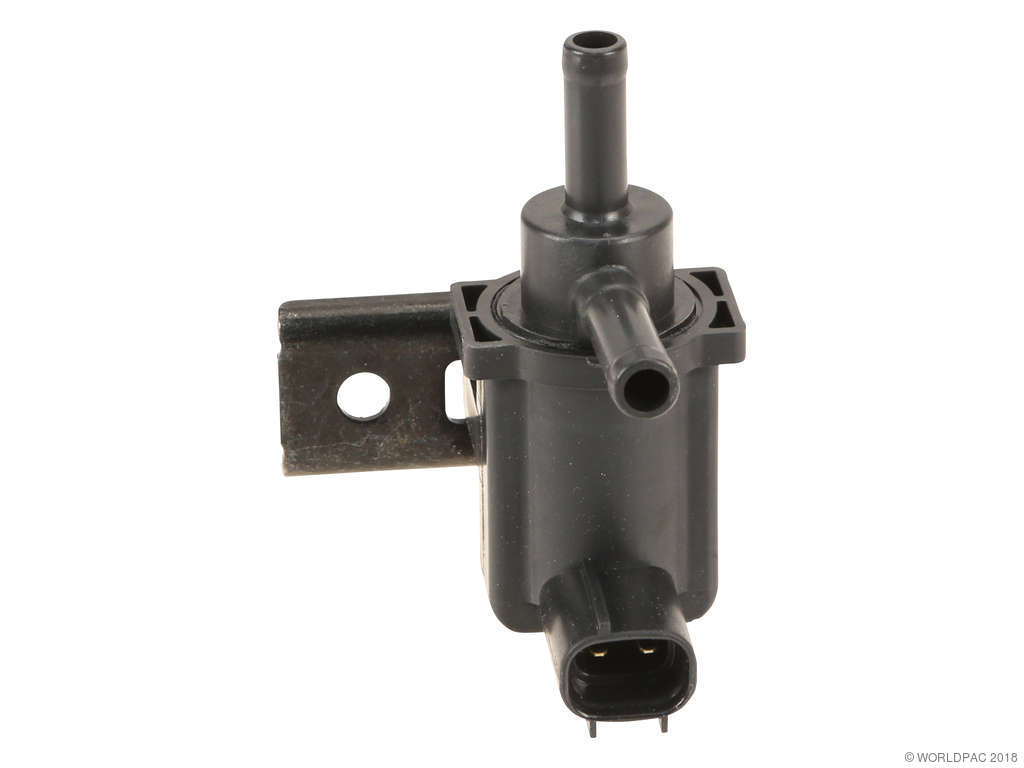
- Locate the EVAP purge solenoid valve (VSV) in the engine bay. On the Gen 2 Prius, it's mounted to a bracket on the intake manifold, just below the main air intake tube. It has two vacuum hoses and one electrical connector.
- Inspect the electrical connector and wiring going to the valve. Look for any obvious damage, corrosion, or loose connections.
- Test the valve's solenoid. Disconnect the connector and use a multimeter set to Ohms (Ω) to measure the resistance across the two pins of the valve. A good valve should read between 20-40 Ohms. An open circuit (OL or infinite resistance) confirms the valve has failed.
- (Alternate Test) Use a 9V battery and two small wires to apply power directly to the valve's pins. You should hear a distinct 'click' as the solenoid activates. If there is no click, the valve is bad.
- If the valve tests good, check the circuit. With the key on, use a multimeter to check for battery voltage (~12V) at the connector's power wire. The other pin is a ground controlled by the ECM.
- Check the fuse for the EVAP/EFI system in the fuse box.
- If the valve, wiring, and fuse are all good, the problem may be with the ECM, but this is highly unlikely.
Parts You'll Likely Need
- EVAP Purge Solenoid / Vacuum Switching Valve (VSV)
(OEM #90910-12259)— This is the most common failure point for code P0443 on this vehicle. The internal solenoid coil fails, creating an open circuit.
Trusted brands: Toyota (Genuine), Denso, Aisin
OEM price range: $70-$95
Aftermarket price range: $25-$70
Platform-Specific Known Issues
- source — A user with a 2004 Prius reported code P0443. After confirming a new gas cap didn't fix the issue, they tested the original purge valve (VSV) with a 9V battery and heard no click. They replaced it with a salvaged part for £15, which did click when tested. The repair was described as 'Really easy to replace, just one screw, and you don't even have to remove the air intake pipe.' The part number was confirmed as 90910-12259. The Check Engine Light did not return after the fix.
Mechanic-Grade Diagnostic Values
- EVAP Purge VSV (Solenoid) Resistance — expected: 30 to 38 ohms at cool temperatures.. Failure: Infinite resistance (Open circuit) or a value significantly outside the specified range.
- Voltage between Purge VSV connector and ECM — expected: 9 to 14 V between terminal EVP1 (E4-14) and E1 (E4-28) at the ECM connector with the power switch ON (IG).. Failure: Voltage outside of the 9-14V range indicates a wiring or ECM issue.
Scan Tool Commands That Help
- Toyota Techstream: Active Test: "Activate the VSV for Evap Control" — This command allows a technician to manually open and close the purge valve to test its mechanical function. With the engine running and a vacuum hose disconnected from the valve, you can confirm if it opens (applies suction) and closes (no suction) on command.
- Toyota Techstream: Utility: "Evaporative System Check" — While primarily for leak codes (P0442, P0456), this utility runs a full system check that includes actuating the purge valve. If the P0443 code is intermittent or accompanied by other EVAP codes, running this test can help verify the entire system's operation after a repair.
Wiring & Ground Locations
- E4, E5, E6, E7 — Connectors for the Engine Control Module (ECM), located behind the right end of the dashboard.. The purge valve circuit originates here. Specifically, terminal 14 on connector E4 (EVP1) is the control wire for the purge VSV.
- V1 (or V10) — The 2-pin electrical connector on the EVAP Purge VSV itself, in the engine bay on the intake manifold.. This is the primary point for testing voltage supply from the EFI relay and the ground signal from the ECM.
- Engine Room R/B — The main fuse and relay box in the engine compartment, on the left side.. This box contains the 'EFI' fuse and 'EFI MAIN' relay which supply power to the purge valve circuit. A failure here would cut power to the valve.
- Ground Points EA, EB, EC — Located on the engine block and cylinder head in the engine compartment.. These are the main grounding points for the engine control system. While not directly tied to the purge valve's control wire (which is ground-switched by the ECM), a poor engine ground can cause a variety of electrical issues, including erratic ECM behavior.
Real Owner Repair Stories
- PriusChat user 'kenoarto' (2004 Toyota Prius) — Check Engine Light with code P0443.
❌ Tried (didn't work) Swapping the gas cap with one from another Prius.
✅ What actually fixed it Replaced the EVAP VSV solenoid (Part #90910-12259) with a salvaged part from eBay for £15. The user noted the repair was extremely easy, requiring only one screw to be removed.
OEM Part Supersession History
90910-12272→90910-12259— Standard part consolidation and revision by Toyota.
Heads up: The parts are interchangeable for this application. 90910-12259 is the current recommended replacement for the older 90910-12272.90910-12276→90910-TC001— Standard part consolidation and revision. This part is often listed for other Toyota models but may not be the primary one for the Prius.
Heads up: While functionally similar, 90910-12259 is the most commonly cited and confirmed part for the 2004-2009 Prius. 90910-TC001 is a valid VSV but may have slight physical differences. Always verify fitment by VIN.
Diagnostic Flowchart
Other Known Issues on This Vehicle
Issues unrelated to this code that are worth knowing about as an owner of this generation:
- Combination Meter Failure 🟠 Medium — Very common. The display for the speedometer and fuel gauge goes blank, especially in cold weather. Can be intermittent at first. Often triggers code B1271. (Ref: T-SB-0172-09 Rev2. Toyota also had a Warranty Enhancement Program (ZE1) for this issue.)
- Hybrid Inverter Coolant Pump Failure 🔴 High — Common failure, especially on 2004-2007 models. The pump fails, causing the hybrid system to overheat and shut down, triggering code P0A93. (Ref: Recalls were issued (e.g., LSC A0N) to replace the pump due to an internal manufacturing defect.)
- ABS Brake Actuator Failure 🔴 High — A well-documented and expensive failure. Symptoms include a loud, frequent buzzing/pumping noise from the actuator, and illumination of ABS, VSC, and brake warning lights. Can lead to a loss of braking assist. (Ref: Toyota issued a Warranty Enhancement Program (ZGE) extending coverage for this component.)
- HID Headlight Failure 🟡 Low — Common for models equipped with HID headlights. The bulbs or ballasts fail, causing flickering or complete loss of one or both headlights.
- Excessive Oil Consumption 🟠 Medium — Some 1NZ-FXE engines can begin to consume oil as they age, typically after 100,000 miles. It is often attributed to piston ring design.
- Main Hybrid Battery (HV) Degradation 🔴 High — Inevitable with age and mileage. Individual cells within the battery pack fail, leading to reduced performance, poor fuel economy, and the P0A80 trouble code.
Used vs. New Parts: Buying Guide for This Vehicle
When a used part is the smart pick: For this specific repair, a used OEM part from a reputable salvage yard or online seller is a very reasonable and cost-effective option. The failure mode is typically a simple electrical open in the solenoid, which is easy to test before installation. Given the high cost of a new OEM part relative to the simplicity of the component, a tested used part offers significant savings.
Donor-vehicle mileage cap: roughly under 150000 miles for the part to have meaningful remaining life.
What to inspect on the donor part:
- Test the part before purchase/installation using a 9V or 12V power source; it must make an audible 'click'.
- Use a multimeter to check resistance; it should be within the 20-40 ohm range.
- Visually inspect the plastic housing for cracks or heat damage.
- Ensure the vacuum ports are clear of debris and not broken.
Aftermarket brands forum-validated for this vehicle:
- Denso (often the original OEM manufacturer)
- Aisin
Brands owners have reported issues with on this vehicle:
- Unbranded, no-name parts from online marketplaces should be treated with caution. While they may work, their longevity is questionable, and a premature failure is common.
Real Owner Stories
Aggregated from forums and TSBs cited above. Mileages and costs reflect what owners reported in those sources.
2004 Toyota Prius 1NZ-FXE
Symptoms: Check engine management light on with fault code P0443. The owner noted it relates to a similar diagnosis for P0440 and P0446.
What fixed it: Replaced the Evap VSV solenoid (Toyota part #90910-12259) with a salvaged part from eBay. The owner confirmed the fix by testing the old part with a 9v battery and finding it no longer clicked.
Cost: $20-$20
Source hint: PriusChat: A thread from 2020 titled 'Fixed - Gen 2 Prius P0443 Evaporative Emission Control System Purge Control Valve Circuit'
Related OBD-II Codes
Frequently Asked Questions
Where is the EVAP purge solenoid valve (VSV) located on my Gen 2 Prius?
What is the correct resistance for a healthy purge valve on a 2004-2009 Prius?
Can I test the Prius VSV without a multimeter?
Is there a specific fuse I should check for P0443 on my Prius?
What is the Toyota part number for the replacement purge valve?
Will a loose gas cap cause code P0443 on my 2004 Prius?
Helpful Videos
![How to Fix P0443 Engine Code in 3 Minutes [2 DIY Methods / Only $4.53]](https://img.youtube.com/vi/vuBVKjVg1JI/mqdefault.jpg)
Used OEM Parts in Stock
New Aftermarket Parts Available


The information in this article is provided for general reference and educational purposes only. Vehicle specifications, procedures, and part compatibility can vary by production date, trim level, and region. Always consult your vehicle's factory service manual and verify part numbers before purchasing or performing repairs. Safety-critical components such as airbags, seat belts, and braking systems should be installed by a qualified professional.
- Toyota Prius:
- 🧭 Diagnostic Flowchart
- 🎬 Helpful Videos
- 🛍️ Shop This Part
- What's Unique About the 2004-2009 Toyota Prius
- Symptoms You May Notice
- Most Likely Causes
- Rare But Worth Checking
- Diagnosis Steps
- Parts You'll Likely Need
- Platform-Specific Known Issues
- Mechanic-Grade Diagnostic Values
- Scan Tool Commands That Help
- Wiring & Ground Locations
- Real Owner Repair Stories
- OEM Part Supersession History
- Other Known Issues on This Vehicle
- Used vs. New Parts: Buying Guide for This Vehicle
- Real Owner Stories
- 2004 Toyota Prius 1NZ-FXE
- Related OBD-II Codes
- Frequently Asked Questions
- 🎟️ Get 5% Off