

P0443 on 1998-2000 Volvo V70 XC: EVAP Purge Valve Circuit Causes and Fixes
On a 1998-2000 Volvo V70 XC, code P0443 almost always points to a failed EVAP Purge Valve Solenoid. This is a simple, DIY-friendly repair that typically costs between $35 and $100 for a new valve. The valve is easy to access in the engine bay.
- P0443 on a 1998-2000 V70 XC is an electrical circuit code, not a leak code. Don't waste money on a new gas cap.
- The most likely cause is a failed EVAP Purge Valve, which is a common and inexpensive part to replace. The Bosch OEM part (0280142300) is a cost-effective choice.
- This is a very DIY-friendly repair, requiring basic hand tools and about 30 minutes.
- Always inspect the small vacuum hoses connected to the valve for cracks when you replace it; they often fail at the same time.
What's Unique About the 1998-2000 Volvo V70 XC
The first-generation (P80 platform) Volvo V70 XC is known for the EVAP purge valve being a common failure item. The good news is that its location is consistent and accessible across these model years, unlike on later Volvo platforms where the location varies significantly by engine. On these V70s, the valve is typically mounted in the engine bay, making it a straightforward part to inspect and replace for DIY mechanics. The 1998 model often has the valve on the radiator fan shroud, while 1999-2000 models usually have it under the intake snorkel near the throttle body.
Symptoms You May Notice
- Check Engine Light is on.
- Rough or unstable idle, particularly if the valve is stuck open.
- Difficulty starting the engine, especially after refueling.
- Slightly reduced fuel economy.
- Audible clicking from a malfunctioning valve or no click when testing.
- Replacing the gas cap. A faulty gas cap will typically cause EVAP leak codes (like P0455 or P0442), not a P0443 circuit code.
- Replacing the charcoal canister. The charcoal canister is part of the EVAP system, but P0443 points specifically to an electrical fault with the purge valve circuit, not the canister itself.
Most Likely Causes
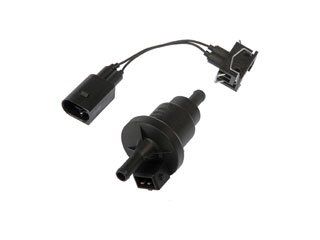
- Failed EVAP Purge Valve Solenoid 🔴 High Probability → Shop Vapor Canister The internal coil of the solenoid can fail over time due to heat and age, causing an open or short circuit. It is a very common failure point on Volvos of this era.
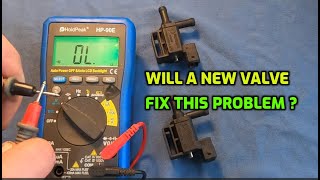
How to confirm: Disconnect the electrical connector and measure the resistance across the two pins on the valve with a multimeter. A functional valve should have a specific resistance 🎬 See: How to diagnose Volvo EVAP codes and valves (typically 21-30 ohms). An infinite reading means an open circuit, and near-zero means a short. You can also apply 12V directly to the pins; a good valve will make an audible 'click'.
Typical fix: Replace the EVAP purge valve solenoid.
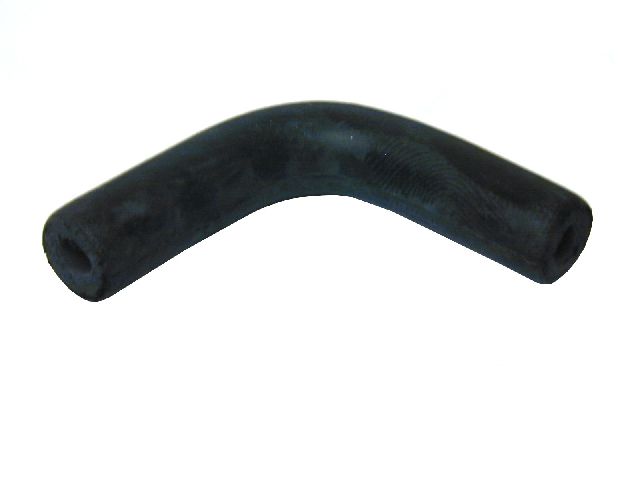
Est. part cost: $35-$100 - Cracked or Disconnected Vacuum Hoses 🟡 Medium Probability → Shop Vacuum Hose The small rubber vacuum hoses connected to the purge valve become brittle and crack over time due to engine heat and age, which is common on older vehicles.
How to confirm: Visually inspect the vacuum lines attached to the purge valve for any cracks, splits, or loose connections. A small piece of hose can be tested by bending it to see if it cracks. Often the ends become loose where they connect.
Typical fix: Replace the affected vacuum hose sections. This is often done at the same time as replacing the purge valve.
Est. part cost: $5-$20 - Wiring or Connector Issue ⚪ Low Probability While less common than valve failure, the wiring harness leading to the valve can become damaged, or the connector pins can corrode from moisture and age.
How to confirm: Visually inspect the electrical connector and wiring for any signs of damage, corrosion, or breaks. With the key on (engine off), use a multimeter to check for 12V at one of the pins in the connector harness. The other pin is a switched ground from the ECM.
Typical fix: Repair the damaged wire or clean/replace the electrical connector.
Est. part cost: $10-$30
Rare But Worth Checking
- Faulty Powertrain Control Module (PCM): → Shop Engine Control Module (ECM) This is extremely rare. The PCM driver that controls the purge valve can fail, but this should only be considered after all other possibilities (valve, wiring, hoses) have been thoroughly ruled out.
Diagnosis Steps
- Confirm the code P0443 is present using an OBD-II scanner. A Volvo-specific scanner may show the corresponding code ECM-211A.
- Locate the EVAP purge valve. On 1998 models, it is often mounted to the radiator fan shroud on the driver's side. On 1999-2000 models, it is more commonly found under the intake horn/snorkel that goes to the air filter housing.
- Visually inspect the electrical connector and wiring going to the valve for any obvious damage, corrosion, or loose connections.
- Inspect the small vacuum hoses attached to the valve for cracks, brittleness, or disconnections. Pay close attention to the ends.
- Test the valve itself. Disconnect the electrical connector and use a multimeter to measure the resistance between the two pins on the valve. Compare the reading to the manufacturer's specification (typically 21-30 ohms). An out-of-spec reading indicates a faulty valve.
- Alternatively, apply 12V and ground directly to the valve's pins. A functioning valve will produce a distinct 'click'. No click means it has failed.
- If the valve's resistance is good, test the circuit. Turn the ignition to the 'ON' position (engine off). Use a multimeter to check for 12-volt power at one of the pins in the electrical connector harness. The other pin is the ground control wire from the ECM.
- If power is present and the valve tests good, a wiring issue between the valve and ECM is possible but rare. Check for continuity on the ground wire back to the ECM.
- Based on the test results, replace the faulty component, which is most often the purge valve itself.
Parts You'll Likely Need
- EVAP Purge Valve Solenoid
(OEM #9135196, 9135444)— This is the most common component to fail, causing the P0443 code by developing an internal electrical fault.
Trusted brands: Bosch (OEM), Hella, Standard Motor Products
OEM price range: $80-$120
Aftermarket price range: $35-$100 - Vacuum Hose — The hoses connected to the purge valve often become brittle and crack, and should be inspected and replaced as needed when servicing the valve.
OEM price range: $10-$25
Aftermarket price range: $5-$15
Platform-Specific Known Issues
- Purge Valve Location Variance: → Shop Vapor Canister The location of the purge valve can differ slightly. On 1998 models, it is commonly found mounted on the driver's side of the radiator fan shroud. For 1999 and 2000 models, it is more frequently located under the plastic intake snorkel that runs from the airbox to the throttle body. Always visually confirm the location before purchasing parts.
- Owner Experience: Simple Swap Fix: A 1999 V70 XC owner on volvoXC.com reported getting a P0443 code three weeks after buying the car. After confirming the valve was the likely culprit, they replaced it. The valve was located under the intake horn to the air cleaner housing. The replacement solved the problem, and the code did not return.
Mechanic-Grade Diagnostic Values
- EVAP Purge Valve Solenoid Resistance — expected: 21-30 Ohms. Failure: A reading of infinity (open circuit) or near-zero ohms (short circuit) indicates a failed coil.
- Voltage at Purge Valve Connector Power Pin — expected: ~12V (Battery Voltage) with ignition ON, engine OFF.. Failure: Low or no voltage points to a wiring issue or blown fuse upstream of the valve.
- Voltage at Purge Valve Connector Control Pin (Back-probed) — expected: This is a switched ground circuit. The voltage will be high (~12V) when the valve is commanded OFF and will drop to near 0V when the ECM commands it ON (providing ground).. Failure: Voltage does not change when the valve is commanded ON/OFF with a scan tool, indicating a broken wire to the ECM or a failed ECM driver.
Hidden / Shadow Codes Worth Checking
- ECM-211A: This is the Volvo-specific Diagnostic Trouble Code (DTC) for 'EVAP canister purge (CP) valve - Signal too high / Signal too low / Signal missing'. It directly corresponds to the generic P0443 code and confirms an electrical fault in the purge valve circuit. (see via A Volvo-specific diagnostic tool like VIDA/DICE.)
Scan Tool Commands That Help
- Volvo VIDA: Component Activation > EVAP Canister Purge Valve — This bidirectional command allows a technician to manually cycle the purge valve on and off. It is used to verify the integrity of the entire circuit: if the valve clicks, it confirms the wiring, ECM driver, and the valve's solenoid are all functional.
Wiring & Ground Locations
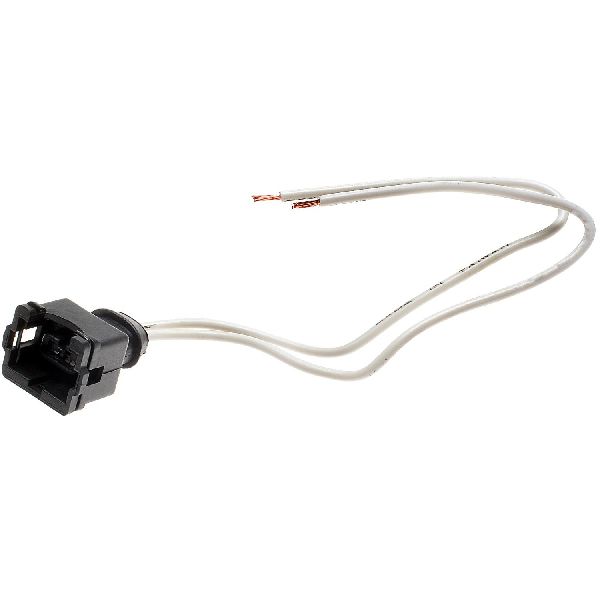
- Purge Valve Electrical Connector — Directly on the EVAP purge valve solenoid.. This 2-pin connector is the primary test point. One pin receives ~12V power with the key on. The other pin is the ground path, which is switched on and off by the Engine Control Module (ECM) to operate the valve. Testing for power and ground signal here is the most direct way to diagnose the circuit.
- Engine Bay Ground Points — Main engine bay grounds on P80 Volvos are typically located on the strut towers and from the engine block to the chassis.. While P0443 is rarely caused by a main ground failure (which would cause multiple other issues), ensuring the primary engine-to-chassis ground strap is clean and tight is good practice when troubleshooting any electrical code.
Real Owner Repair Stories
- volvoXC.com user 'c900s' (1999 Volvo V70 XC) — Check Engine Light illuminated, code read as P0443. The code returned after being cleared.
❌ Tried (didn't work) Clearing the trouble code without replacing any parts.
✅ What actually fixed it Replacing the purge control valve. The user confirmed the location on their '99 model was under the intake horn leading to the air cleaner housing, and swapping the valve permanently resolved the code.
Diagnostic Flowchart
Other Known Issues on This Vehicle
Issues unrelated to this code that are worth knowing about as an owner of this generation:
- Electronic Throttle Module (ETM) Failure 🔴 High — Extremely common on 1999-2001 models. Failure often occurs between 80,000 and 150,000 miles, causing limp-home mode and erratic engine behavior. (Ref: Volvo issued an extended warranty (10 years/200,000 miles) and a software update recall to address the issue.)
- ABS/TRACS Control Module Failure 🟠 Medium — Very common across all P80 models. Caused by cracked solder joints on the circuit board, leading to an illuminated ABS light, loss of speedometer, and non-functional odometer. (Ref: No recall, but a well-documented DIY repair and many third-party rebuild services are available.)
- AWD Angle Gear/Sleeve Failure 🔴 High — A known weak point in the P80 AWD system. The splined collar connecting the transmission to the angle gear can strip, resulting in loss of AWD. This is often caused by mismatched tire wear but can also happen from age. (Ref: No recall, but replacement sleeves and rebuilt angle gears are common repairs.)
- PCV System Clogging 🟠 Medium — The Positive Crankcase Ventilation system is prone to clogging, especially on turbocharged models. If not serviced, it can lead to high crankcase pressure, blowing out engine seals (like the rear main seal).
- Heater Core Leakage 🟠 Medium — The heater core O-rings and the core itself can fail, leading to coolant leaking into the passenger footwell. If ignored, the coolant loss can cause engine overheating.
Used vs. New Parts: Buying Guide for This Vehicle
When a used part is the smart pick: A used EVAP purge valve is a very reasonable choice for this repair. It is a simple, external solenoid, not a complex electronic module or high-wear item. Sourcing one from a reputable salvage yard or a low-mileage donor car can be a cost-effective and reliable solution.
Donor-vehicle mileage cap: roughly under 100000 miles for the part to have meaningful remaining life.
What to inspect on the donor part:
- Check the plastic body of the valve for any cracks or signs of heat damage.
- Inspect the electrical connector pins to ensure they are straight and free of corrosion.
- Examine the hose nipples to make sure they are not cracked or broken.
- If possible, test the resistance with a multimeter before purchase; it should be within the 21-30 Ohm range.
OEM-only on this vehicle (don't cheap out):
- For general P80 platform maintenance, the Electronic Throttle Module (ETM) and PCV system components are parts where new OEM or high-quality rebuilt units are strongly recommended. However, for the P0443 fault, no parts require a strict OEM-only approach.
Aftermarket brands forum-validated for this vehicle:
- Bosch (OEM supplier)
- Hella
- Standard Motor Products (SMP) / Standard Ignition
Real Owner Stories
Aggregated from forums and TSBs cited above. Mileages and costs reflect what owners reported in those sources.
1999 Volvo V70 XC
Symptoms: The owner reported getting a P0443 code three weeks after purchasing the vehicle.
What fixed it: The owner replaced the purge valve, which was located under the intake horn to the air cleaner housing. The replacement solved the problem and the code did not return.
Source hint: volvoXC.com: 'OBD II Code P0443 - Purge Control Valve Malfunction'
Related OBD-II Codes
Frequently Asked Questions
Where is the purge valve located on my 1998 V70 XC compared to the 1999-2000 models?
Is there a Volvo-specific fault code that corresponds to P0443 on this platform?
What resistance should I look for when testing the purge valve on my V70 XC?
Are there any known issues with the throttle system on the 1999-2000 V70 XC that I should check while diagnosing engine codes?
Could my P0443 code be related to the AWD system issues common on the V70 XC?
Can I test the purge valve without a multimeter?
Helpful Videos
We Have This Part in Stock


The information in this article is provided for general reference and educational purposes only. Vehicle specifications, procedures, and part compatibility can vary by production date, trim level, and region. Always consult your vehicle's factory service manual and verify part numbers before purchasing or performing repairs. Safety-critical components such as airbags, seat belts, and braking systems should be installed by a qualified professional.
- Volvo V70 XC:
- 🧭 Diagnostic Flowchart
- 🎬 Helpful Videos
- 🛍️ Shop This Part
- What's Unique About the 1998-2000 Volvo V70 XC
- Symptoms You May Notice
- Most Likely Causes
- Rare But Worth Checking
- Diagnosis Steps
- Parts You'll Likely Need
- Platform-Specific Known Issues
- Mechanic-Grade Diagnostic Values
- Hidden / Shadow Codes Worth Checking
- Scan Tool Commands That Help
- Wiring & Ground Locations
- Real Owner Repair Stories
- Other Known Issues on This Vehicle
- Used vs. New Parts: Buying Guide for This Vehicle
- Real Owner Stories
- 1999 Volvo V70 XC
- Related OBD-II Codes
- Frequently Asked Questions
- 🎟️ Get 5% Off