

P0443 on 2002-2014 Volvo XC90: EVAP Purge Valve Circuit Malfunction Causes and Fixes
For a 2002-2014 Volvo XC90, code P0443 almost always points to a failed EVAP purge valve solenoid. It's a common failure item, and replacing the valve itself usually solves the problem. Expect to pay between $40 and $100 for a quality aftermarket part. This is an electrical circuit code, not a system leak code.
- P0443 is an electrical circuit code, not an EVAP leak code.
- The most likely cause on a 2002-2014 XC90 is a bad EVAP purge valve.
- The location of the valve is different for each engine option (V8, 3.2L, T6, 2.5T), so verify your engine before you begin.
- This is a DIY-friendly repair with a difficulty of 2 out of 5.
- Always check the wiring and connector for damage before replacing the valve. A resistance test on the old valve (spec: 15-30 ohms) can confirm failure.
What's Unique About the 2002-2014 Volvo XC90
On the first-generation Volvo XC90, the P0443 code is a straightforward and common issue, almost always leading to the purge valve solenoid. However, the XC90 was offered with multiple engines over its long production run, and the location of this valve varies significantly. For V8 models, it's at the rear of the engine, requiring removal of an engine brace and cover for access. On 6-cylinder models (like the T6 and 3.2L), it's typically mounted to the radiator fan shroud. On the 5-cylinder 2.5T, it's found near the air filter housing, under the intake horn. Always confirm your engine type before ordering parts or starting the repair.
Symptoms You May Notice
- Check Engine Light is on
- Slightly rough idle or engine hesitation, particularly if the valve is stuck open
- Hard starting immediately after refueling (a classic symptom of a purge valve stuck open).
- Slight decrease in fuel economy
- A faint fuel odor near the engine bay
- Vehicle will not pass an emissions test 🎬 Watch: Common symptoms of a bad purge valve
- Replacing the gas cap. While a loose gas cap can cause other EVAP codes (like P0455 or P0457), it will not cause a P0443 circuit code.
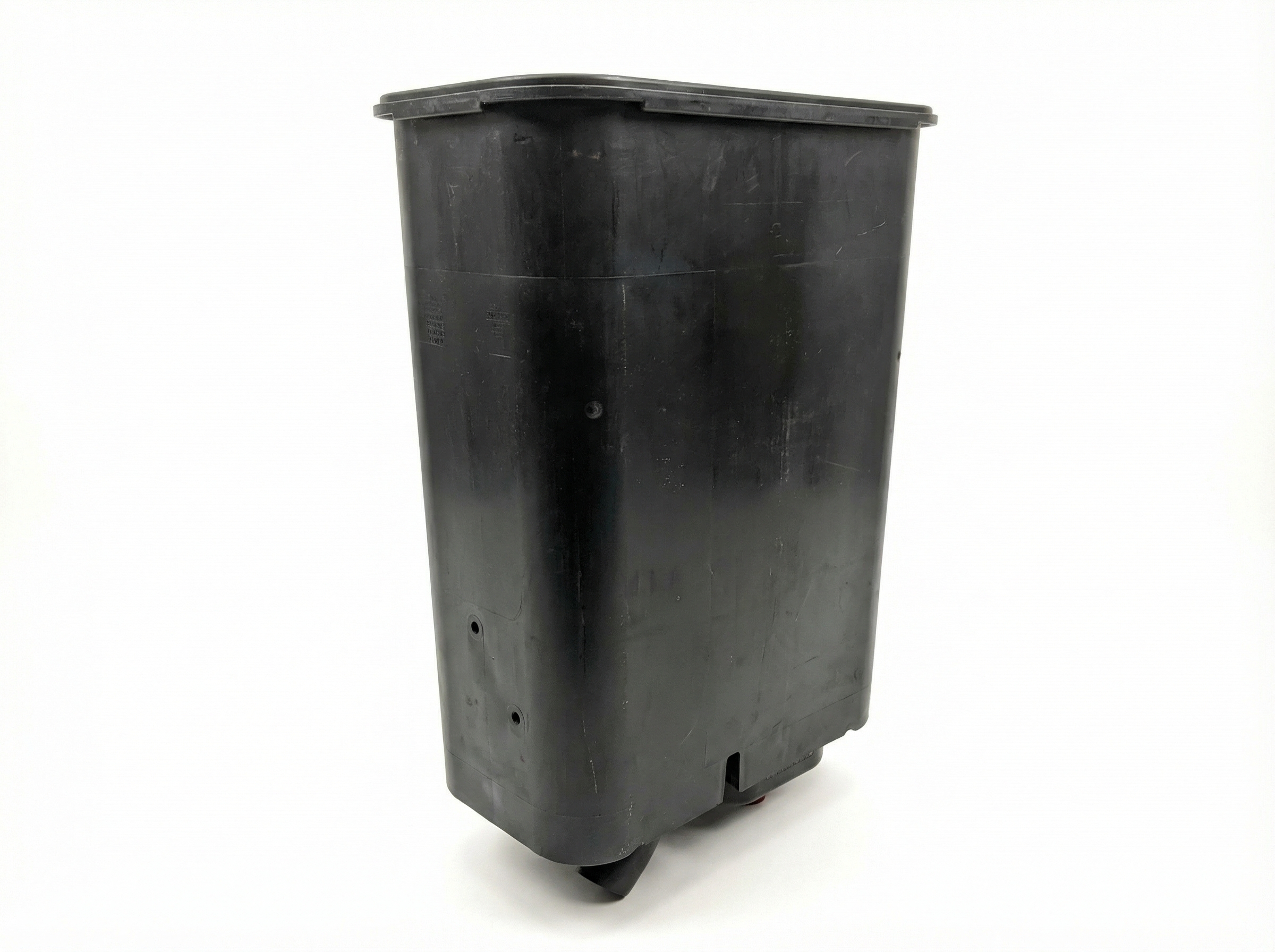
- Replacing the charcoal canister. The canister is part of the EVAP system, but P0443 points specifically to 🎬 Watch: Understanding P0443 circuit malfunction codes an electrical fault with the purge valve circuit, not the canister itself.
Most Likely Causes
- Faulty EVAP Purge Valve Solenoid 🔴 High Probability → Shop Vapor Canister The internal coil of the solenoid can fail over time due to heat cycles and age, which is a common failure mode for this type of component across many vehicles, including the XC90. The plastic housing can also become brittle and the connected vacuum lines can crack.
How to confirm: Test the solenoid's internal resistance with a multimeter; a healthy valve should read between 15 and 30 ohms. An open circuit (infinite resistance) or short (near-zero resistance) indicates failure. You can also apply 12V and a ground to the pins to listen for a 'click'. If it doesn't click, it's bad.
Typical fix: Replace the EVAP purge valve solenoid. It is wise to also replace the small connected vacuum hoses, as they are often brittle and prone to cracking.
Est. part cost: $40-$100 - Damaged Wiring or Corroded Connector 🟡 Medium Probability The engine bay environment exposes wiring and connectors to heat, vibration, and moisture, which can lead to corrosion on the connector pins or breaks in the wires over time. On V8 models, the harness is routed in a tight space at the rear of the engine, making it susceptible to chafing.
How to confirm: Visually inspect the wiring harness and connector leading to the purge valve for any signs of cracking, fraying, or green/white corrosion. Use a multimeter to check for battery voltage (~12V) at the power pin on the connector with the key on.
Typical fix: Repair the broken wire or clean/replace the electrical connector.
Est. part cost: $5-$25 - Blown Fuse ⚪ Low Probability While not specific to the vehicle, a short circuit in the EVAP system or another component on the same circuit can cause the fuse to blow, cutting power to the purge valve.
How to confirm: Locate the fuse for the EVAP system in the vehicle's fuse box (consult the owner's manual for the specific location). Visually inspect the fuse to see if it has blown. A test light can quickly check all fuses.
Typical fix: Replace the blown fuse. If it blows again, further diagnosis is needed to find the short circuit.
Est. part cost: $1-$5
Rare But Worth Checking
- Faulty Engine Control Module (ECM): → Shop Engine Control Module (ECM) This is extremely rare. The ECM's internal driver for the purge valve circuit can fail. This should only be considered after all other possibilities (valve, wiring, fuses) have been exhaustively tested and ruled out.
Diagnosis Steps
- Scan the vehicle with an OBD-II scanner to confirm P0443 is the only code present. If other codes exist, address them first. A Volvo-specific scanner may show the code ECM-211A.
- Locate the EVAP purge valve. Its location depends on your engine (V8: rear of engine; T6/3.2L: on fan shroud; 2.5T: near airbox).
- Inspect the electrical connector and wiring going to the purge valve. Look for any obvious signs of damage, corrosion, or loose connections.
- With the ignition on and engine off, use a multimeter to check for battery voltage at one of the pins on the connector. The other pin is the ground control from the ECM.
- Test the purge valve itself. Disconnect it and measure the resistance across its two pins. A reading between 15-30 ohms is expected. A reading of infinity (open circuit) or near zero (short circuit) indicates a failed valve.
- Alternatively, use jumper wires to briefly apply 12V and ground to the valve's pins. You should hear an audible click. No click means the solenoid is bad.
- If the valve and wiring seem good, check the fuse for the EVAP system in the fuse panel.
- If all else fails, the issue may be with the ECM, but this is highly unlikely and requires professional diagnosis.
Parts You'll Likely Need
- EVAP Canister Purge Valve / Solenoid
(OEM #Volvo 31392303 (supercedes older numbers, often a Bosch part))— This is the most common failure point for the P0443 code. The internal solenoid coil fails electrically, causing the circuit fault.
Trusted brands: Bosch (Often the OEM supplier), Delphi, Standard Motor Products
OEM price range: $80-$150
Aftermarket price range: $40-$100
Platform-Specific Known Issues
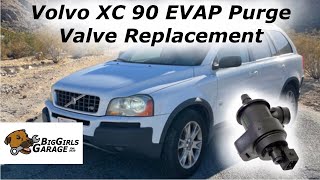
- Owner Experience: Kinked Hose on V8 Model: A user in the 'Big Girls Garage' YouTube video noted that the factory routing of the vacuum hose to the purge valve on the 4.4L V8 can cause it to kink. During replacement, they intentionally left the valve mounted slightly higher to allow for a smoother hose bend and prevent future flow issues.
- Owner Experience: Simple Swap on 2.5T: A user on volvoXC.com with a 1999 V70 XC (a platform mate with the same 2.5T engine family) confirmed the fix was a simple valve swap. The valve was located under the intake horn to the air cleaner housing. Clearing the code after replacement solved the issue permanently.
Mechanic-Grade Diagnostic Values
- EVAP Purge Valve Solenoid Resistance — expected: 15 - 35 Ω. Failure: A reading of infinity (open circuit) or near-zero (short circuit).
- Voltage at ECU connector 'PRG' terminal to body ground — expected: 9 - 14 V (with ignition ON). Failure: No voltage indicates an open in the power supply wire or a blown fuse.
- Voltage at Purge Valve Connector (Power Pin) — expected: ~12 V / Battery Voltage (with ignition ON). Failure: Low or no voltage points to a wiring issue or blown fuse upstream.
- Back-probed voltage at ECM ground control pin — expected: ~5 V (when purge is commanded ON by a scan tool). Failure: Absence of voltage when commanded suggests a faulty ECM driver.
Scan Tool Commands That Help
- Volvo VIDA: Advanced > Quick test of fuel tank system — This function runs a system test to check for major or minor leaks, which can help diagnose the overall health of the EVAP system, although P0443 is a circuit code.
- Volvo VIDA: Activation > EVAP Canister Shut-Off Valve — While not the purge valve itself, professional scan tools allow activation of various EVAP components. A technician can command the purge valve to cycle on and off to verify its mechanical operation and listen for the characteristic 'click'.
- Volvo VIDA: Configuration Test — If software corruption or a communication mismatch between modules and Volvo's central database is suspected, this function synchronizes the vehicle's data. It's a dealer-level step used to resolve persistent, unexplained electronic faults.
Wiring & Ground Locations
- Purge Valve Connector — Directly on the EVAP purge valve solenoid.. This 2-pin connector is a common failure point. Pin 1 receives ~12V power with the key on. Pin 2 is the ground-side control, which is pulsed by the ECM to operate the valve. Corrosion or damage here directly causes a P0443.
- ECM Connector 'PRG' Terminal — At the Engine Control Module (ECM). The exact location of the ECM varies by engine.. This is the specific pin on the ECM that provides the control signal for the purge valve. Testing voltage here can help determine if the fault is with the ECM itself or the wiring to the valve.
Real Owner Repair Stories
- volvoXC.com user 'c900s' (1999 Volvo V70 XC (P80 platform, but uses the same 5-cylinder engine family and principles as the early P2 XC90 2.5T)) — Check Engine Light with code P0443 that returned after being cleared.
❌ Tried (didn't work) Resetting the trouble code multiple times.
✅ What actually fixed it Replacing the purge control valve. The user confirmed the location was under the intake horn leading to the air cleaner housing, replaced the valve, cleared the code, and the problem was solved.
When the Usual Fixes Don't Work
- If the P0443 code returns immediately after replacing the EVAP purge valve, the fault almost certainly lies in the wiring harness or the electrical connector. The replacement part is unlikely to be faulty out of the box. Before suspecting the rare ECM failure, perform a thorough continuity and voltage drop test on the two wires running from the ECM to the purge valve connector. Pay close attention to the connector pins for any signs of corrosion or poor terminal tension that would prevent a solid connection with the new valve.
Diagnostic Flowchart
Other Known Issues on This Vehicle
Issues unrelated to this code that are worth knowing about as an owner of this generation:
- T6 Transmission Failure (GM 4T65EV) 🔴 High — Extremely common on 2003-2005 T6 models, often failing between 60,000 and 120,000 miles. Less common on later years but still a weak point. (Ref: No recall, but subject of a class-action lawsuit.)
- AWD Spline Sleeve / Angle Gear Failure 🟠 Medium — Common across all engine types, particularly on earlier models. The splined collar connecting the transmission to the angle gear wears out, resulting in loss of AWD.
- V8 Engine Balance Shaft Bearing Failure (2005 models) 🔴 High — Specific to early 2005 V8 (B8444S) engines. A lack of a drain hole could allow water to pool and destroy a key bearing, leading to catastrophic engine failure. Most have either failed or been fixed by now. (Ref: A service bulletin existed for dealers to drill a drainage hole.)
- Central Electronic Module (CEM) Failure due to Water Leak 🔴 High — Affects earlier models (approx. 2003-2006). A poorly sealed cowl or clogged sunroof drains can allow water to drip onto the CEM, causing widespread and bizarre electrical failures. (Ref: Covered under Federal Emissions Warranty in some cases if under 8 years/80,000 miles.)
- 3.2L SI6 Engine Oil Consumption 🟠 Medium — Some 3.2L engines can develop high oil consumption due to issues with piston rings. Volvo addressed this under warranty for some vehicles, but it can be an issue for higher-mileage examples. (Ref: Internal service campaigns addressed some vehicles, often involving piston and ring replacement.)
Used vs. New Parts: Buying Guide for This Vehicle
When a used part is the smart pick: A used purge valve from a reputable salvage yard is a reasonable choice for this repair. It is a relatively simple electro-mechanical solenoid, not a complex electronic module. Sourcing one from a low-mileage, rear-ended donor vehicle can be a cost-effective alternative to a new part.
Donor-vehicle mileage cap: roughly under 80000 miles for the part to have meaningful remaining life.
What to inspect on the donor part:
- Check for a clean, corrosion-free electrical connector.
- Inspect the plastic housing for cracks or heat damage.
- Ensure the vacuum line nipples are intact and not brittle or broken.
- If possible, perform a resistance test on the spot (should be 15-35 ohms).
OEM-only on this vehicle (don't cheap out):
- For a P0443 repair, no components are considered strictly 'OEM-only'. The purge valve is a standard component available from reputable aftermarket manufacturers.
Aftermarket brands forum-validated for this vehicle:
- Bosch (often the original equipment manufacturer)
- Delphi
- Pierburg
Real Owner Stories
Aggregated from forums and TSBs cited above. Mileages and costs reflect what owners reported in those sources.
1999 Volvo V70 XC 2.5T
Symptoms: Check Engine light appeared three weeks after purchase.
What fixed it: A simple valve swap. The valve was located under the intake horn to the air cleaner housing. Clearing the code after replacement solved the issue permanently.
Source hint: volvoXC.com: 'OBD II Code P0443 - Purge Control Valve Malfunction'
Volvo XC90 V8 4.4L
Symptoms: P0443 code and potential flow issues due to vacuum hose routing.
What fixed it: Replaced the purge valve and intentionally mounted it slightly higher than the factory position to prevent the vacuum hose from kinking.
Source hint: Big Girls Garage YouTube video
Related OBD-II Codes
Frequently Asked Questions
Where is the EVAP purge valve located on my XC90 V8?
My XC90 2.5T has a P0443 code; where should I look for the valve?
Is there a Volvo-specific code that corresponds to P0443?
Could a water leak cause electrical issues like this on my 2004 XC90?
Why does my XC90 struggle to start only after I fill up the gas tank?
Is there a specific hose issue I should check for on the V8 model?
Helpful Videos


We Have This Part in Stock

The information in this article is provided for general reference and educational purposes only. Vehicle specifications, procedures, and part compatibility can vary by production date, trim level, and region. Always consult your vehicle's factory service manual and verify part numbers before purchasing or performing repairs. Safety-critical components such as airbags, seat belts, and braking systems should be installed by a qualified professional.
- Volvo XC90:
- 🧭 Diagnostic Flowchart
- 🎬 Helpful Videos
- 🛍️ Shop This Part
- What's Unique About the 2002-2014 Volvo XC90
- Symptoms You May Notice
- Most Likely Causes
- Rare But Worth Checking
- Diagnosis Steps
- Parts You'll Likely Need
- Platform-Specific Known Issues
- Mechanic-Grade Diagnostic Values
- Scan Tool Commands That Help
- Wiring & Ground Locations
- Real Owner Repair Stories
- When the Usual Fixes Don't Work
- Other Known Issues on This Vehicle
- Used vs. New Parts: Buying Guide for This Vehicle
- Real Owner Stories
- 1999 Volvo V70 XC 2.5T
- Volvo XC90 V8 4.4L
- Related OBD-II Codes
- Frequently Asked Questions
- 🎟️ Get 5% Off