

P0446 on 2015-2024 Audi Q7: EVAP Vent Control Circuit Malfunction Causes and Fixes
P0446 on an Audi Q7 typically points to a faulty EVAP vent valve or a problem with the Leak Detection Pump (LDP), often located near the charcoal canister in the rear passenger-side wheel well. Expect to pay between $150 and $300 for the replacement part, with DIY difficulty rated at 3/5.
- P0446 on a 2015-2024 Audi Q7 points to an electrical or blockage issue with the EVAP system's vent control, which is part of the Leak Detection Pump (LDP) assembly.
- The most likely culprit is a failed Leak Detection Pump, followed by damaged wiring to the pump.
- The LDP is located near the charcoal canister, typically in the passenger-side rear wheel well.
- While you can continue driving, the issue will cause an automatic emissions test failure and should be addressed.
- Do not confuse the vent valve/LDP at the rear of the car with the N80 purge valve in the engine bay, which is a different part.
What's Unique About the 2015-2024 Audi Q7
On many Audi models, including the Q7, the EVAP system uses a Leak Detection Pump (LDP) as part of its testing and venting assembly. This is slightly different from the simpler vent solenoid found on some other manufacturers' vehicles. A failure of the LDP assembly is a common cause for EVAP codes on these vehicles. Forum discussions for the Q7 and its platform mates often point towards a faulty LDP as the culprit for various EVAP leak and circuit codes. The components are typically located in the rear passenger-side wheel well, which can expose them to road debris and moisture over time.
Generation note: The 2015-2024 year range covers two generations of the Audi Q7: the end of the first generation (Typ 4L, through 2015) and the second generation (Typ 4M, 2016-2024). While the EVAP system's core function is the same, specific part numbers and locations differ. The first generation Q7 (4L) is known to have the EVAP canister and LDP in the right rear wheel well. This general location is consistent for the second generation (4M), though the LDP part itself is a different design.
Symptoms You May Notice
- Check Engine Light is on 🎬 Watch: Understanding the causes and fixes for the P0446 code.
- Slight fuel odor, especially after refueling
- Difficulty refueling (fuel pump nozzle clicks off prematurely)
- Failed emissions inspection
- Replacing the N80 Purge Valve in the engine bay. The P0446 code specifically refers to the vent circuit at the rear of the vehicle, near the canister, not the purge valve 🎬 Watch: How to differentiate between purge valve and vent issues. (which often causes code P0441).
Most Likely Causes
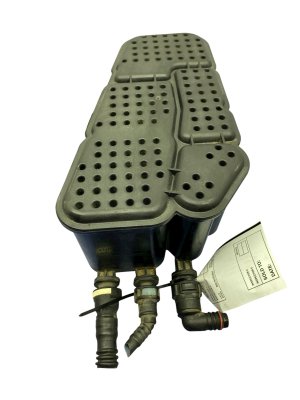
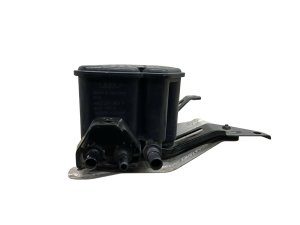
- Faulty EVAP Leak Detection Pump (LDP) / Vent Valve 🔴 High Probability → Shop Vapor Canister The LDP assembly contains the vent valve and is a common failure point on Audis. Internal solenoids can fail, or the unit can become clogged or damaged from its location near the wheel well, which is exposed to road salt and moisture.
How to confirm: Use a capable OBD-II scanner to command the vent valve to open and close. Listen for a clicking sound. You can also test the solenoid's coil for proper resistance with a multimeter or apply 12V directly to see if it actuates. The pump itself can also be tested for operation.
Typical fix: Replace the entire Leak Detection Pump assembly. It is typically sold as a single unit with the integrated vent valve.
Est. part cost: $150-$350 - Damaged or Corroded Wiring/Connector 🟡 Medium Probability The LDP is located under the vehicle, exposing its wiring harness to moisture, road salt, and debris, which can lead to corrosion or physical damage over time. A visual inspection of the connector pins for green or white crust is a key diagnostic step.
How to confirm: Visually inspect the wiring harness and connector leading to the Leak Detection Pump for any breaks, chafing, or green/white corrosion on the pins. Use a multimeter to check for 12V power and a good ground at the connector with the key on.
Typical fix: Repair the damaged section of wire or clean/replace the connector pigtail.
Est. part cost: $10-$50 - Clogged or Blocked EVAP Canister or Vent Hose ⚪ Low Probability → Shop Vapor Canister Dust, dirt, or even insects can build nests in the vent hose, causing a blockage. This is more common in dusty environments. In rare cases, the charcoal canister itself can become saturated with fuel or break down, sending debris into the vent valve.
How to confirm: Disconnect the vent hose from the LDP and inspect it for blockages. Try to blow air through it. A smoke test on the EVAP system can also reveal a blockage if the smoke doesn't exit the vent.
Typical fix: Clean or replace the blocked vent hose. If the charcoal canister is the source of the blockage, both the canister and the LDP/vent valve should be replaced.
Est. part cost: $20-$400 - Loose or Faulty Gas Cap ⚪ Low Probability → Shop Fuel Tank Cap While more commonly associated with small leak codes (like P0456), a very poor seal can sometimes confuse the system and contribute to other EVAP codes. It's a simple, cheap first step to check.
How to confirm: Ensure the gas cap is tightened until it clicks. Inspect the rubber O-ring on the cap for cracks or damage.
Typical fix: Tighten or replace the gas cap.
Est. part cost: $20-$50
Diagnosis Steps
- Verify the code with an OBD-II scanner. Note any other codes present.
- Check the gas cap to ensure it is tight and the seal is in good condition.
- Raise the vehicle and locate the EVAP canister and Leak Detection Pump (LDP) assembly, typically in the right rear wheel well area, behind the fender liner. 🎬 See this walkthrough for accessing and replacing the LDP assembly.
- Visually inspect the LDP, hoses, and electrical connector for any obvious damage, cracks, or corrosion.
- Disconnect the electrical connector from the LDP. With the ignition on, use a multimeter to verify that one pin has battery voltage (12V) and another has a good ground.
- If power and ground are present, suspect the LDP itself. You can use a capable scan tool to command the vent valve to cycle and listen for a click.
- If no power is present, inspect the wiring for breaks and check the relevant fuse in the vehicle's fuse box.
- If the LDP and wiring seem okay, disconnect the vent hose and check it for blockages. A common TSB for other brands with P0446 notes that dust and debris can clog the vent line, especially in rural or dusty areas.
- If the cause is still not found, a professional smoke test may be needed to check for blockages or leaks in the canister itself.
Parts You'll Likely Need
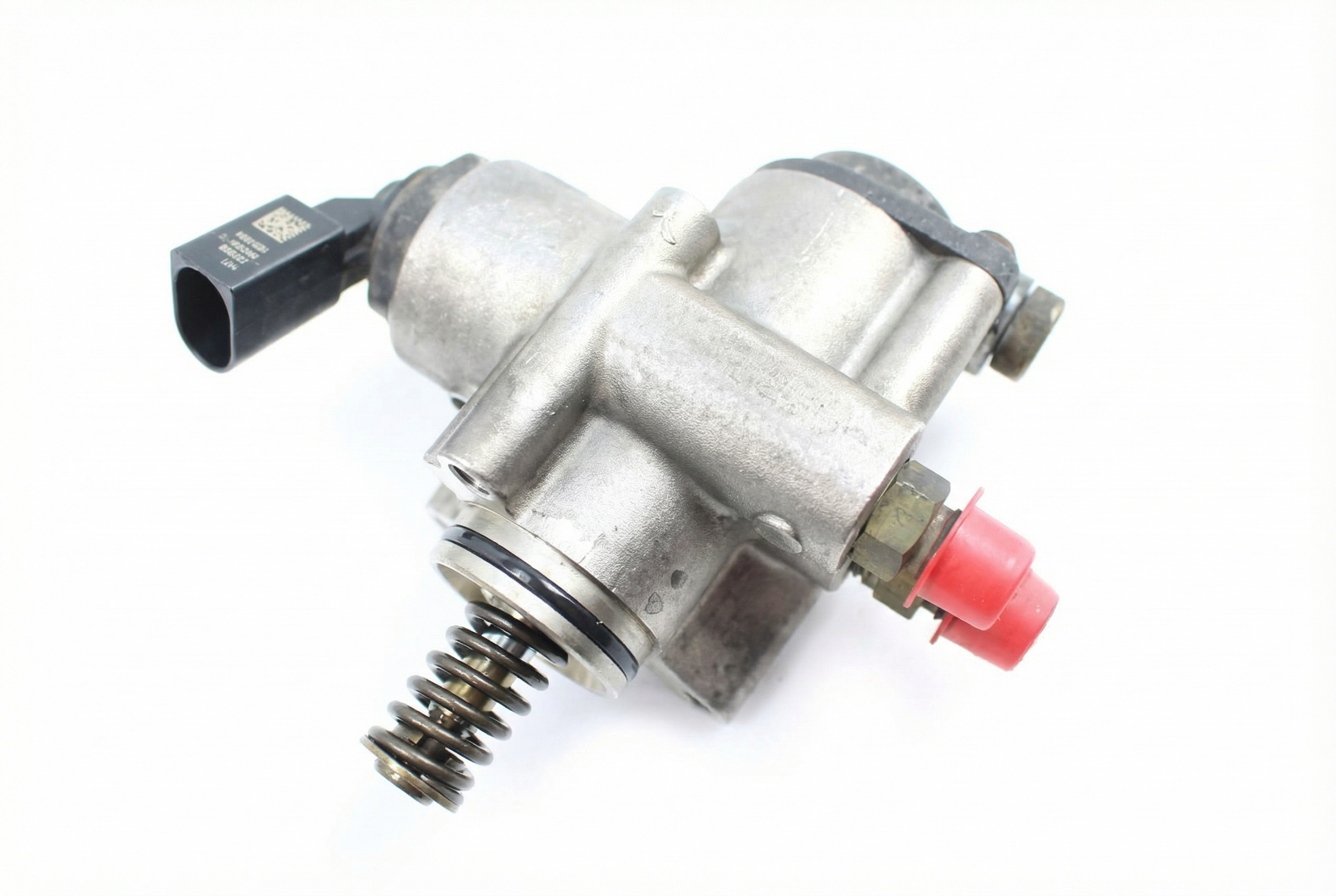
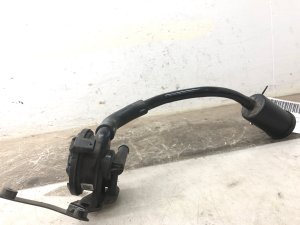
- EVAP Leak Detection Pump (LDP)
(OEM #Gen 1 (4L, 2015): 7L8906271A. Gen 2 (4M, 2016-2024): 4M0906253B or 8K0906253N.)— This assembly contains the vent valve solenoid that is the most common failure point for a P0446 code on this vehicle. Part numbers vary by generation.
Trusted brands: Bosch, Genuine Audi
OEM price range: $250-$350
Aftermarket price range: $150-$250 - Fuel Cap — A worn or damaged gas cap seal is a simple and inexpensive item to rule out, although it's a less common cause for this specific code.
Trusted brands: Genuine Audi, Blau
OEM price range: $40-$60
Aftermarket price range: $20-$40
Related Codes That Often Appear With This One
- P2404 — This code also relates to the EVAP Leak Detection Pump Sense Circuit, indicating a problem with the LDP's diagnostic switch. It often appears with P0446 when the LDP assembly is failing.
- P0455 — Indicates a large EVAP system leak. If the vent valve is stuck open, the system will interpret this as a major leak, triggering P0455 alongside the P0446 circuit code.
- P0456 — Indicates a small EVAP system leak. This can sometimes be triggered along with P0446 if the LDP is failing intermittently or cannot properly seal the system for a test.
Technical Service Bulletins (TSBs) & Recalls
- TSB 19-23-45 (2070349) - While not for P0446 directly, this TSB is critical for the platform. It addresses coolant loss from the water pump on V6 TFSI engines and instructs technicians to check the vacuum line for coolant ingress, a major issue on 2020+ models.
Platform-Specific Known Issues
- Owner Experience with LDP Replacement: On AliExpress, a user with a 2010 Q7 3.0 TDI (first generation, 4L) reported failing an emissions test due to a small EVAP leak. After being quoted over $800 by a dealership, they successfully replaced the LDP (part # 7L8906271A) themselves. The repair involved removing the rear passenger-side wheel and liner to access the pump, disconnecting two hoses and one electrical connector, and swapping the unit.
Scan Tool Commands That Help
- VCDS (VAG-COM) / OBDeleven: Basic Settings - Group 070 (EVAP Canister Purge Regulator Valve Test) — To initiate a self-test of the N80 purge valve system. The display should cycle between 'Test ON' and 'Test OFF', concluding with 'EVAP OK' if the purge side is functioning. This helps differentiate a vent-side fault (P0446) from a purge-side fault (P0441).
- VCDS (VAG-COM) / OBDeleven: Basic Settings - Group 071 (EVAP Tank Leak Test) — This command initiates the LDP to pressurize the tank and check for leaks. It's a comprehensive test of the entire sealed system. A failure here after confirming wiring integrity strongly points to a faulty LDP, canister, or a physical leak. The test takes about 60 seconds and should display 'System OK' on completion.
- VCDS (VAG-COM) / OBDeleven: Output Tests - Engine Controller (01) — Within the output test sequence for the engine controller, you can manually cycle individual components, including the Leak Detection Pump (V144). This is a direct way to confirm if the pump motor runs and if the solenoid clicks when commanded, isolating the component from the system's automated test logic.
Wiring & Ground Locations
- Ground Point 675 — In the right luggage compartment area, behind the side panel trim.. This is a primary ground point for components located in the rear right of the vehicle. A corroded or loose connection here could cause intermittent or complete failure of the LDP's electrical circuit, leading to a P0446 code.
- Fuse SB6 (Plenum Chamber Fuse Box) — In the fuse panel located in the plenum chamber (under the hood, near the base of the windshield).. On some 4M Q7 models, fuse SB6 (15A) in the plenum chamber fuse box provides power to multiple EVAP components, including the N80 Purge Valve and potentially the LDP circuit. Checking this fuse is a critical first step if you find no power at the LDP connector.
- LDP Connector (V144) — At the Leak Detection Pump, located in the right rear wheel well.. This is the final connection point. A wiring diagram for a Gen 1 Q7 shows a 3-pin connector. Pin 1 is typically ground, Pin 2 is the signal from the ECM, and Pin 3 is the 12V power supply. Verifying power, ground, and signal integrity at this connector is the most direct electrical test for the circuit.
Real Owner Repair Stories
- AliExpress Product Q&A (2010 Audi Q7 3.0 TDI (Gen 1, 4L)) — Failed emissions inspection due to a 'small EVAP leak'.
❌ Tried (didn't work) The owner did not report trying other fixes first, but noted the dealership quoted over $800 for the repair.
✅ What actually fixed it The owner replaced the Leak Detection Pump (part # 7L8906271A) themselves. The repair involved removing the rear passenger wheel and liner to access and swap the pump, which resolved the issue.
OEM Part Supersession History
7L8-906-271→7L8-906-271-A— Component revision or manufacturer change for the first-generation (4L) Q7.
Heads up: The 'A' revision is the current replacement for the original part. Using the older, non-A part if found as new-old-stock is not recommended.4H0201799B→4H0201801A— Part update for the vapor canister assembly on second-generation (4M) models.
Heads up: While this is for the canister, it's relevant as the LDP is often replaced with it. It is crucial to match part numbers exactly for these models as hose connections can differ.
Model Year Variations Within This Range
- 2015 (Gen 1) vs 2017-2019 (Gen 2): The entire vehicle platform changed. The Gen 1 (4L) used engines like the 3.0L supercharged V6. The Gen 2 (4M) launched with a revised 333-hp 3.0L supercharged V6 and a 2.0L turbo four-cylinder. The LDP and EVAP system components are not interchangeable between these generations.
- 2020-2024 (Gen 2 Facelift): For the 2020 model year, the 3.0L supercharged V6 was replaced by a 3.0L turbocharged V6 with 335 hp. While the fundamental EVAP system design remained similar, engine control software and some ancillary components may have changed, potentially altering diagnostic triggers for EVAP codes.
Diagnostic Flowchart
Other Known Issues on This Vehicle
Issues unrelated to this code that are worth knowing about as an owner of this generation:
- Premature Water Pump Failure (3.0T Engine) 🔴 High — Common failure, can occur as early as 40,000-60,000 miles. Affects both supercharged (CREC) and turbocharged (EA839) 3.0T engines. A class action lawsuit was filed regarding this issue. (Ref: TSB 19-23-45 (2070349) addresses coolant loss and checking the vacuum system for coolant.)
- Front Upper Control Arm Bushing Wear 🟠 Medium — Very common, often requiring replacement between 50,000 and 100,000 miles. Symptoms include clunking/popping noises over bumps and unstable steering feel. (Ref: Audi has reportedly offered warranty extensions for this issue on some model years.)
- MMI Infotainment System Glitches/Failure 🟡 Low — Frequently reported issue across the 4M generation (2017+). Symptoms include black screens, freezing, slow startup (2-5 minutes), and connectivity problems. Often requires a hard reset or dealer software update.
- Oil Consumption & Carbon Buildup (3.0T CREC Engine) 🔴 High — Affects the 2016-2019 3.0T supercharged (CREC) engine. Clogged oil control rings can lead to excessive oil consumption, carbon buildup, and in severe cases, burnt valves requiring engine replacement.
- Coolant Leak into Vacuum System (EA839 3.0T/2.9T) 🔴 High — A specific failure mode on 2020+ models with the turbocharged V6 where the water pump leaks coolant internally into the vacuum lines, contaminating and destroying numerous vacuum-actuated components (brake booster, turbo actuator, etc.). (Ref: TSB 19-23-45 (2070349))
Used vs. New Parts: Buying Guide for This Vehicle
When a used part is the smart pick: A used LDP is generally not recommended. It is a relatively inexpensive part new, and it's a combination of plastic, rubber diaphragms, and electronics that are exposed to harsh conditions under the car. The risk of a used part failing soon after installation is high.
Donor-vehicle mileage cap: roughly under 40000 miles for the part to have meaningful remaining life.
What to inspect on the donor part:
- Inspect for any cracks in the plastic housing.
- Check that the electrical connector pins are clean, straight, and free of any green or white corrosion.
- Ensure hose connection ports are not broken or brittle.
- If possible, ask for the donor vehicle's history to avoid parts from salt-belt or flood-damaged cars.
OEM-only on this vehicle (don't cheap out):
- While not strictly OEM-only, using a Genuine Audi or OEM-supplier (Bosch) part for the Leak Detection Pump is strongly advised. Cheaper, no-name aftermarket units have a higher reported failure rate for EVAP components.
Aftermarket brands forum-validated for this vehicle:
- Bosch (often the original equipment manufacturer for Audi)
Brands owners have reported issues with on this vehicle:
- Unbranded, low-cost parts from online marketplaces without significant positive reviews.
Real Owner Stories
Aggregated from forums and TSBs cited above. Mileages and costs reflect what owners reported in those sources.
2010 Audi Q7 3.0 TDI
Symptoms: Failed an emissions test due to a small EVAP leak; dealership quoted over $800 for the repair.
What fixed it: DIY replacement of the Leak Detection Pump (part # 7L8906271A) by removing the rear passenger-side wheel and liner to access the unit.
Cost: $150-$350
Source hint: vehicle_specific_issues - Owner Experience with LDP Replacement (AliExpress/Forum report)
2011-2018 Porsche Cayenne (958)
Symptoms: P0446 code present, traced back to the vent valve and solenoid functionality.
What fixed it: Replacement of the vent valve/solenoid assembly.
Source hint: forum_citations - Rennlist & 6SpeedOnline
Related OBD-II Codes
Frequently Asked Questions
Where is the Leak Detection Pump (LDP) located on my Audi Q7?
Why does my Q7 have difficulty refueling and the pump nozzle clicks off prematurely?
Could a coolant leak be related to my EVAP system issues on a 2020+ Q7?
Is it possible that just a loose gas cap is causing the P0446 code?
Can I replace the Leak Detection Pump myself to save money?
Does the Q7 share this EVAP vent control issue with other vehicles?
Helpful Videos

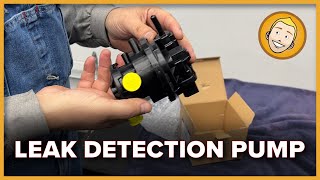
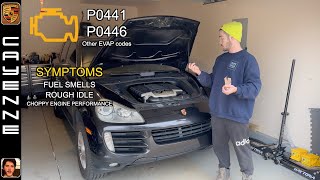
We Have This Part in Stock
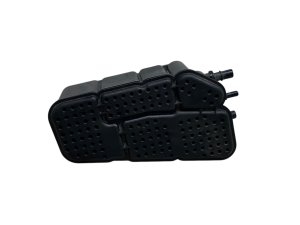
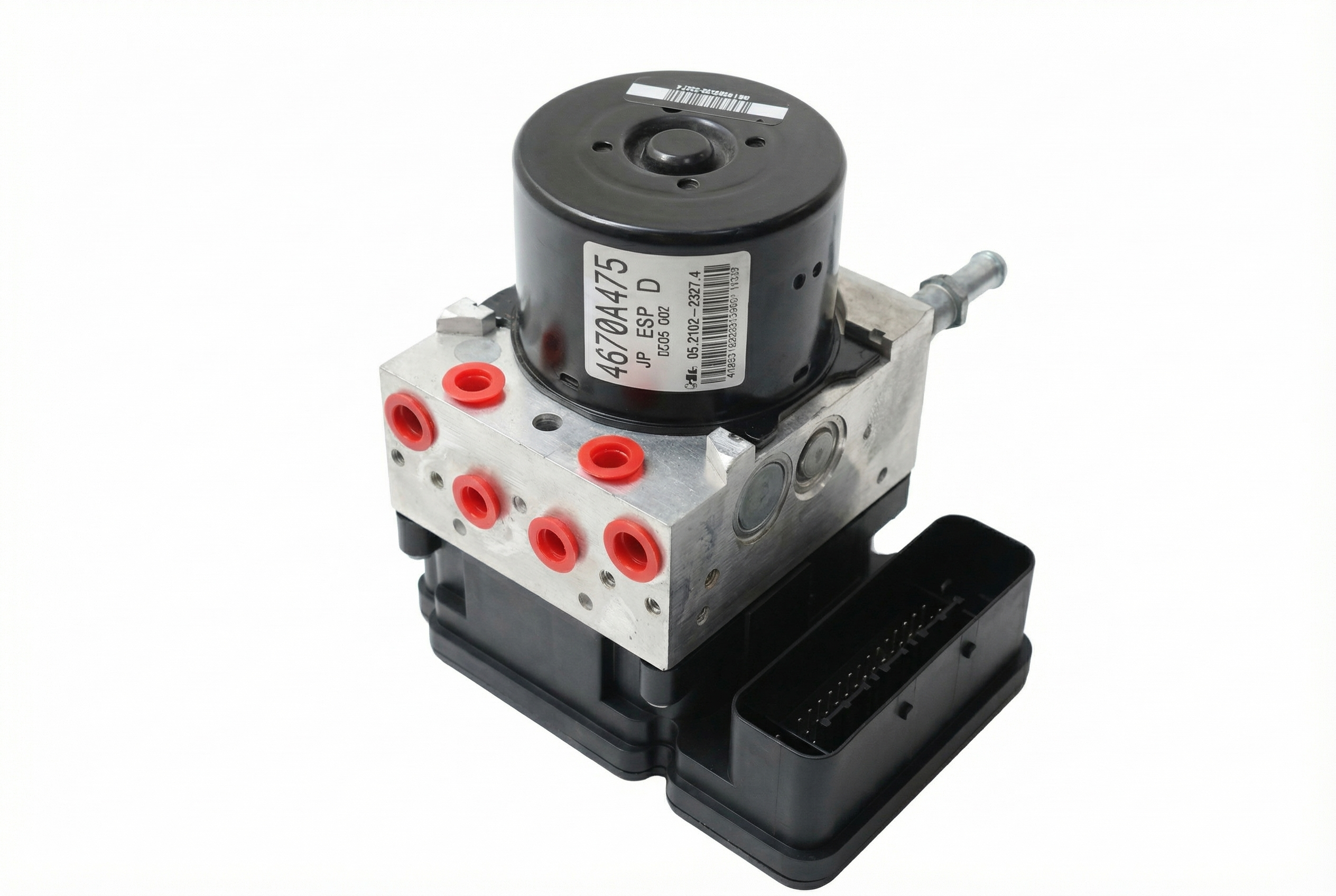

The information in this article is provided for general reference and educational purposes only. Vehicle specifications, procedures, and part compatibility can vary by production date, trim level, and region. Always consult your vehicle's factory service manual and verify part numbers before purchasing or performing repairs. Safety-critical components such as airbags, seat belts, and braking systems should be installed by a qualified professional.
- Audi Q7:
- 🧭 Diagnostic Flowchart
- 🎬 Helpful Videos
- 🛍️ Shop This Part
- What's Unique About the 2015-2024 Audi Q7
- Symptoms You May Notice
- Most Likely Causes
- Diagnosis Steps
- Parts You'll Likely Need
- Related Codes That Often Appear With This One
- Technical Service Bulletins (TSBs) & Recalls
- Platform-Specific Known Issues
- Scan Tool Commands That Help
- Wiring & Ground Locations
- Real Owner Repair Stories
- OEM Part Supersession History
- Model Year Variations Within This Range
- Other Known Issues on This Vehicle
- Used vs. New Parts: Buying Guide for This Vehicle
- Real Owner Stories
- 2010 Audi Q7 3.0 TDI
- 2011-2018 Porsche Cayenne (958)
- Related OBD-II Codes
- Frequently Asked Questions
- 🎟️ Get 5% Off