

P0446 on 2002-2006 Chevrolet Avalanche: EVAP Vent Circuit Causes and Fixes
For a 2002-2006 Avalanche, code P0446 is most often caused by a failed EVAP vent solenoid located above the spare tire. This part gets clogged with dirt and debris due to its exposed location. Replacing the solenoid, often with an aftermarket kit that relocates the air filter to a cleaner spot, is the most common and effective fix. Expect to pay $25-$75 for the part.
- P0446 on a 2002-2006 Avalanche almost always points to a problem with the EVAP vent solenoid by the gas tank, not the purge valve on the engine.
- The most likely symptom, besides the Check Engine Light, is the gas pump clicking off constantly when you try to refuel.
- The repair is DIY-friendly for most, with the main part located above the spare tire.
- When replacing the vent solenoid, choose a kit that includes a relocation hose for the filter to prevent the same problem from happening again.
What's Unique About the 2002-2006 Chevrolet Avalanche
On this generation of GM trucks (GMT800 platform), including the Avalanche, the P0446 code is exceptionally common. The primary reason is the factory placement of the EVAP vent solenoid. It is located under the truck, near the spare tire, where it is highly exposed to road dirt, water, and debris, which causes the valve to clog or fail over time. This issue was so prevalent, especially in dusty environments, that GM issued a Technical Service Bulletin (TSB 02-06-04-037H) recommending the replacement of the solenoid and sometimes relocating the vent's filter to a cleaner, more protected location. Many aftermarket replacement parts now include a kit to relocate the vent's filter to a cleaner location, such as near the fuel filler neck or high on the transmission bellhousing.
Symptoms You May Notice
- Check Engine Light is on.
- Difficulty refueling (gas pump nozzle clicks off repeatedly and fills slowly). 🎬 Watch: How to fix refueling issues and replace the vent solenoid.
- Vehicle will fail an emissions inspection.
- Possible fuel odor, although less common for this specific code.
- A 'whoosh' sound of pressure releasing when opening the gas cap.
- Replacing the gas cap is often the first step owners take, but it rarely fixes a P0446 code on this vehicle.
- Replacing the EVAP purge solenoid/valve (located on the engine intake manifold) instead of the EVAP vent solenoid (located at the rear by the tank). These are two different parts with distinct functions and locations.
Most Likely Causes
- Faulty EVAP Vent Solenoid/Valve 🔴 High Probability → Shop Vapor Canister The solenoid is mounted in a vulnerable location under the truck above the spare tire, exposing it to road dirt and moisture which causes it to clog or fail internally. This is the most common failure for P0446 on the GMT800 platform.
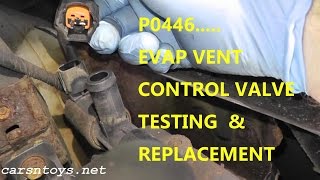
How to confirm: Locate the solenoid near the charcoal canister above the spare tire. Check for 12V power at the connector with the key on. You can also use a capable scan tool to command the valve to open and close to check for an audible click. A more direct test is to apply 12V directly to the solenoid's terminals and listen for a click, confirming the solenoid itself is working. 🎬 See this walkthrough on testing and replacing the vent control valve.
Typical fix: Replace the vent solenoid. It is highly recommended to use an aftermarket kit that includes a hose to relocate the filter to a higher, cleaner location, such as up near the fuel filler neck or along the frame rail.
Est. part cost: $25-$75 - Clogged or Blocked Vent Hose/Filter 🟡 Medium Probability For vehicles operated in dusty or muddy environments, dirt and debris can clog the vent hose or the solenoid's filter box, causing a restriction that triggers the code. GM issued TSB 02-06-04-037H specifically for this issue, especially on trucks used in farming or mining. Manufacturer TSB Bulletin #23-NA-073 further confirms that dust intrusion into the evaporative canister is a primary cause for P0446 and related EVAP codes.
How to confirm: Disconnect the vent hose from the solenoid and inspect it and the solenoid's air inlet port for blockages like dirt, mud, or insect nests. Sometimes the filter box itself, often located near the fuel filler neck on later or relocated designs, can be removed and cleaned out.
Typical fix: Clean any debris from the hose and solenoid port. If the hose is brittle or damaged, replace it. If the filter box is clogged, it can often be blown out with compressed air or washed.
Est. part cost: $10-$30 - Damaged Wiring or Electrical Connector ⚪ Low Probability
How to confirm: Visually inspect the wiring harness and connector leading to the vent solenoid for any signs of corrosion, breaks, or loose pins. Use a multimeter to confirm 12V power on one wire and check for continuity to ground on the other wire when the ECM commands the valve on (requires a scan tool).
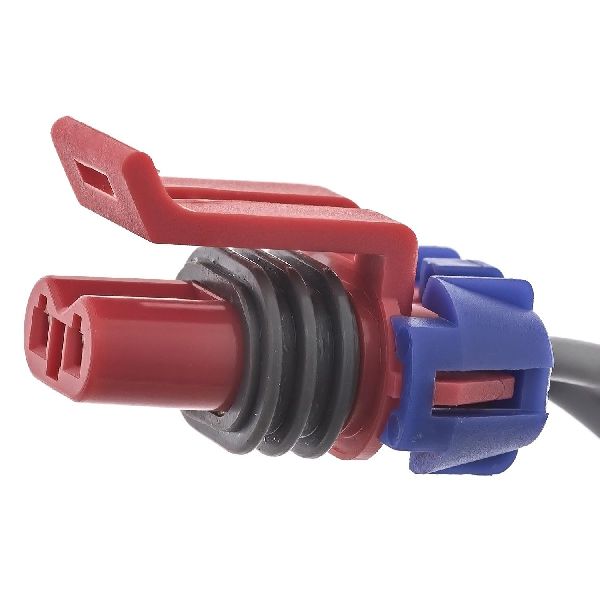
Typical fix: Repair the damaged section of wire or replace the connector pigtail. The connector is a common point of corrosion due to its location.
Est. part cost: $15-$40
Rare But Worth Checking
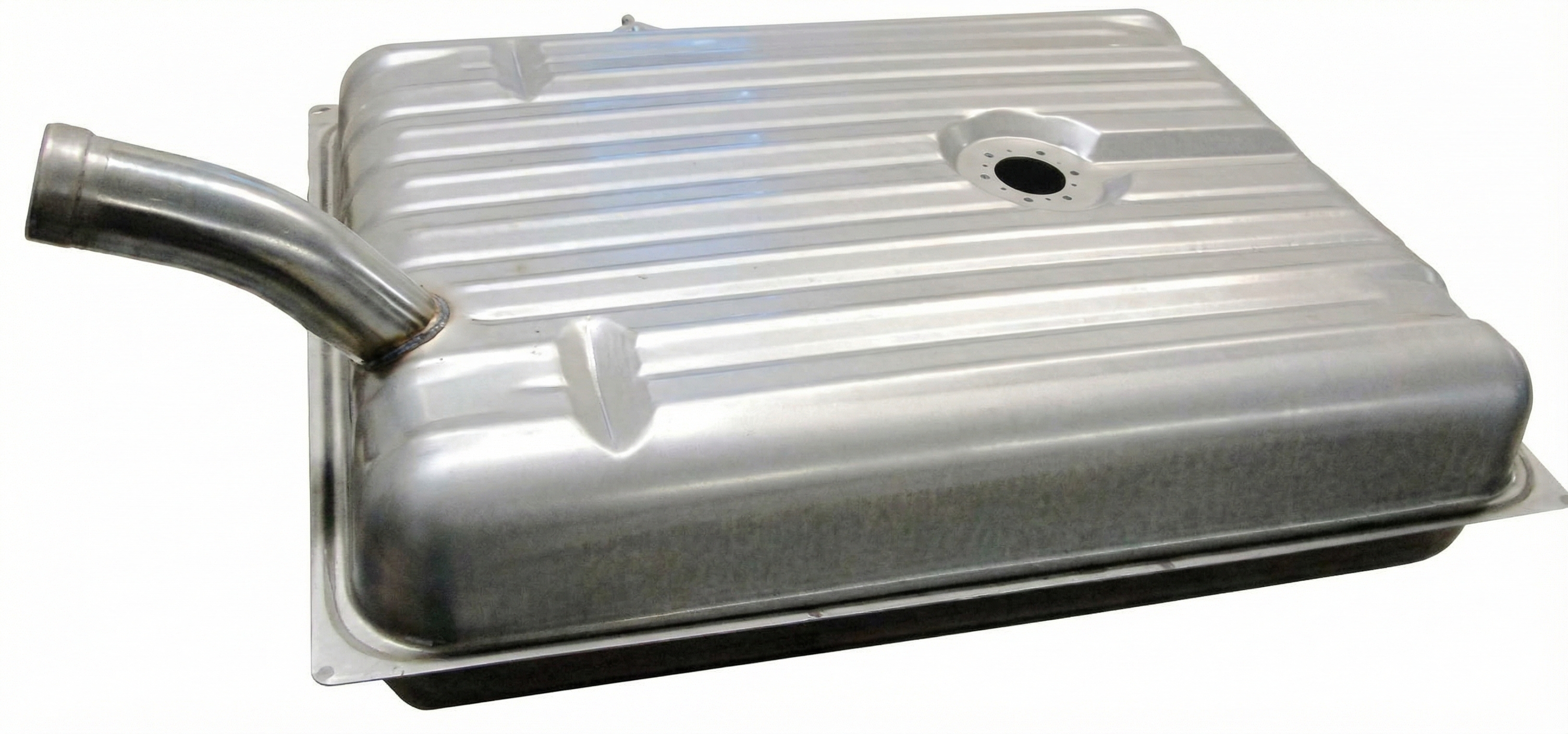
- Faulty Fuel Tank Pressure (FTP) Sensor: → Shop Fuel Tank While less common, a failing FTP sensor can provide incorrect data to the computer, causing it to set a P0446 code even if the vent path is clear. A stuck FTP sensor might report a constant pressure value, tricking the ECM into thinking the vent is blocked when it's not. One forum user noted this as the final fix after a vent solenoid replacement didn't solve the issue.
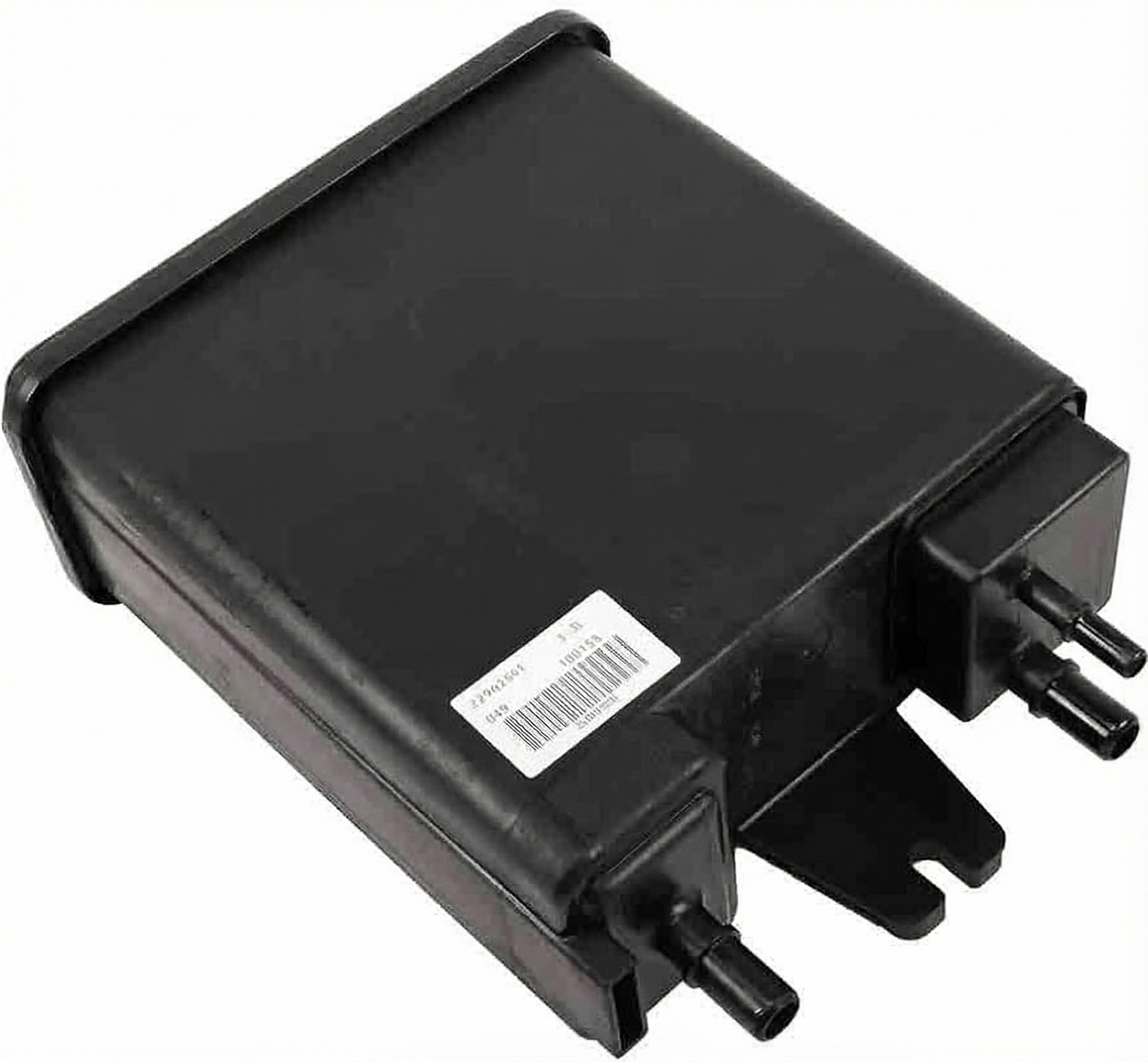
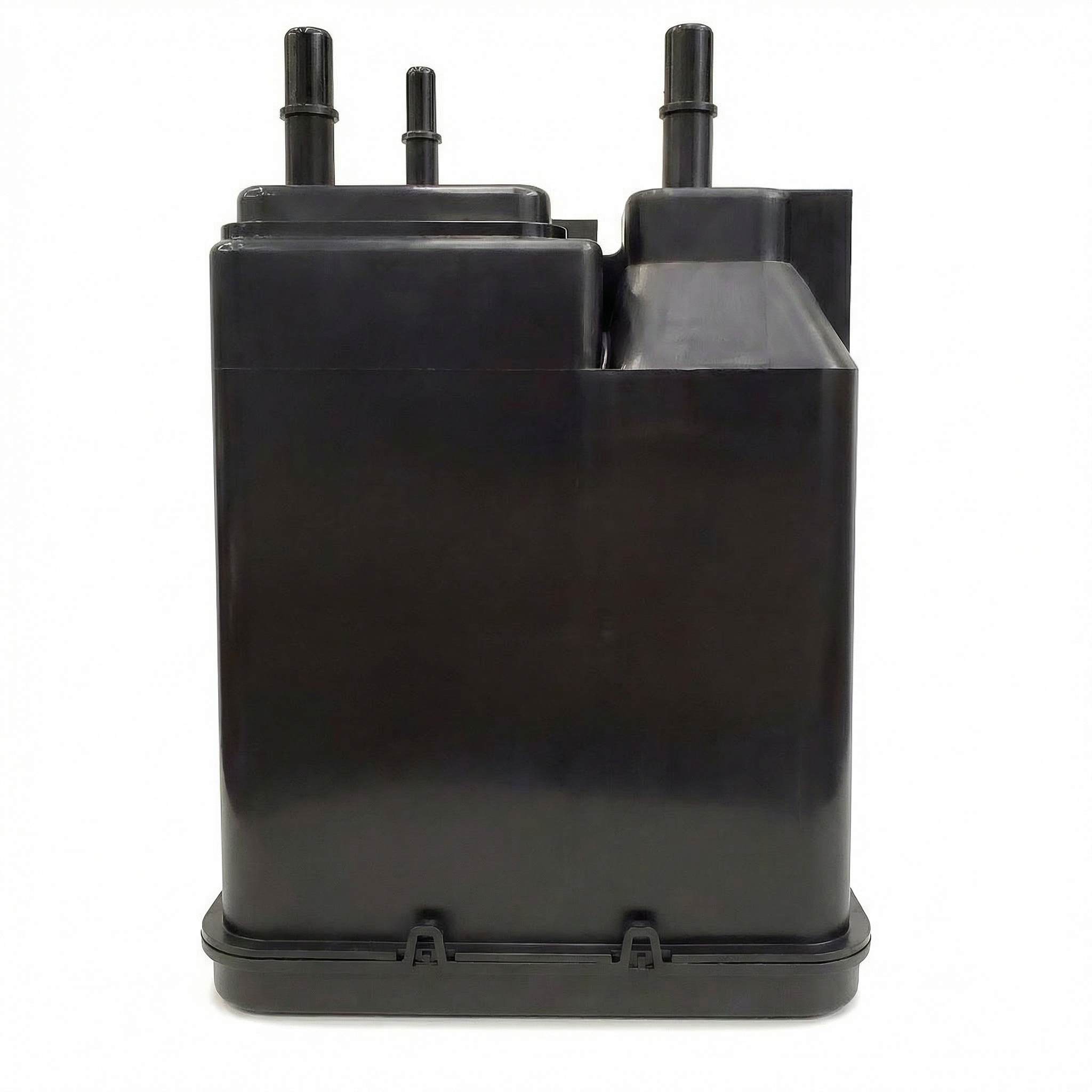
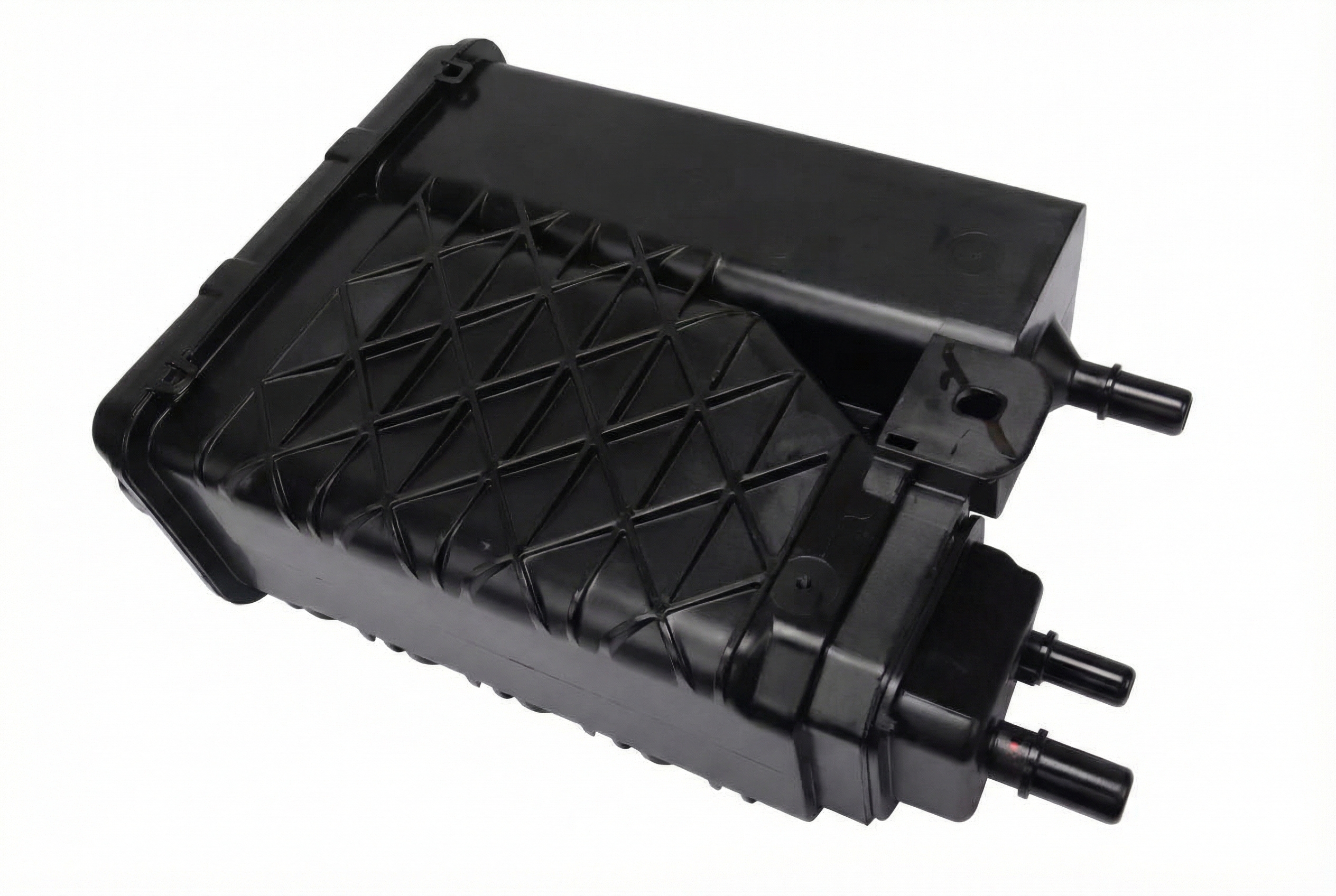
- Cracked or Clogged Charcoal Canister: → Shop Vapor Canister The canister itself can become saturated with fuel or clogged with debris if the vent system has been compromised for a long time, restricting airflow and triggering the code. This is usually a secondary failure resulting from a bad vent solenoid that allowed dirt and water to enter.
- Faulty Gas Cap: → Shop Fuel Tank Cap While a bad gas cap typically causes a large leak code (like P0455), it is part of the EVAP system. It's an easy and inexpensive item to check, though it's an unlikely cause for P0446 specifically, a fact confirmed by many owners who replace it without success.
- Structural Leaks or Stressing: In some cases, structural stressing can cause leaks at the tank or fuel pump module connector. NHTSA ODI #11363765 describes a situation where P0446 was associated with an EVAP leak located in the top tank port and secondary cracking of the plastic fuel supply.
Diagnosis Steps
- Read the code with an OBD-II scanner and check for any other related codes, like P0449 or P0455.
- Inspect the gas cap to ensure it is tight and the seal is not cracked or worn. While unlikely to be the cause, it is a simple first check.
- Lower the spare tire to gain access to the EVAP system components at the rear of the truck.
- Locate the EVAP vent solenoid, which is attached to a crossmember near the black plastic charcoal canister.
- Inspect the vent solenoid and its connected rubber hose for any obvious blockages like mud, dirt, or spider nests.
- Disconnect the electrical connector from the solenoid. With the ignition key in the 'On' position (engine off), use a multimeter to verify there are 12 volts at the power wire in the connector.
- If power is present, the issue is likely the solenoid itself or a blockage. If no power is present, inspect the wiring and the corresponding fuse for damage.
- If you have a bidirectional scanner, command the vent solenoid to close. A functional solenoid should make an audible click. Attempting to refuel with the solenoid commanded closed should be very difficult, confirming it is sealing. 🎬 Watch: Using scan data to diagnose a P0446 code like a pro.
- If the solenoid is suspected to be faulty, remove it and test it on the bench by applying 12V and ground to its terminals. It should click open and closed. You should be able to blow through it when de-energized (normally open) and not be able to when energized (closed).
- If the solenoid is determined to be faulty, replace it. It is highly recommended to install a kit that relocates the filter to a less exposed area.
Parts You'll Likely Need
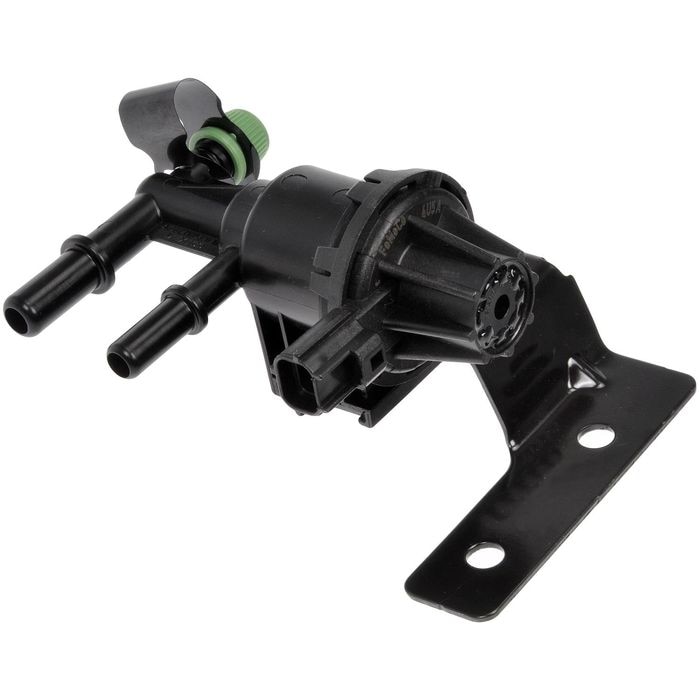
- EVAP Vapor Canister Vent Solenoid
(OEM #25932571)— This is the most frequent failure point for code P0446 on this platform due to its vulnerable mounting location.
Trusted brands: ACDelco (GM Genuine) - Part #214-2149, Dorman - Part #911-070, Standard Motor Products
OEM price range: $50-$80
Aftermarket price range: $25-$60
Related Codes That Often Appear With This One
- P0449 — P0449 is a very similar code, specifically for the "EVAP Vent Valve/Solenoid Circuit Malfunction." They are often caused by the exact same part failure, the vent solenoid, and for diagnosis purposes are treated almost identically on this platform.
- P0455 — This code indicates a "Large EVAP System Leak." If the vent solenoid is stuck open (rather than clogged/stuck closed for P0446), it can be interpreted by the system as a large leak, sometimes causing both codes to appear.
- P0171 and P0174 — These codes indicate the engine is running lean on Bank 1 and Bank 2. While not directly related to the vent solenoid, a stuck-open purge valve (not vent valve) could cause these codes by creating a vacuum leak. It's possible to have multiple faults at once.
Technical Service Bulletins (TSBs) & Recalls
- GM TSB #02-06-04-037H: Addresses DTC P0446 on trucks used in dusty environments. It details how dirt intrusion clogs the EVAP canister vent hose assembly, causing a restricted airflow condition. The fix involves replacing the vent valve with a sealed unit and adding a remote filter box in a cleaner location.
- Manufacturer TSB Bulletin #23-NA-073: Provides repair information to correct customer concerns regarding EVAP DTCs including P0442, P0446, P0455, and P0449, specifically caused by dust intrusion into the evaporative canister.
Platform-Specific Known Issues
- A GM Technical Service Bulletin (TSB 02-06-04-037H) addresses DTC P0446 caused by dust intrusion in severe environments, recommending the installation of a remote filter kit. This TSB has been revised multiple times, indicating it's a long-standing issue. The fix involves replacing the solenoid and running a hose to a new filter box mounted in a cleaner location, sometimes as far away as the transmission bellhousing.
- Owner experiences on forums like ChevyAvalancheFanClub.com and GM-Trucks.com consistently point to the vent solenoid as the fix, with many DIY success stories.
Mechanic-Grade Diagnostic Values
- EVAP Vent Solenoid Coil Resistance — expected: 20 to 50 Ohms. Failure: A reading of infinity (open circuit) or zero (short circuit) indicates a failed solenoid.
- Fuel Tank Pressure (FTP) Sensor Voltage (KOEO) — expected: 1.3 to 1.7 Volts with the gas cap on and system at atmospheric pressure.. Failure: A voltage that is stuck (e.g., at 0.22V) and does not change when the gas cap is removed indicates a faulty sensor. The PCM may not set an FTP sensor-specific code unless the voltage drops below 0.1V for 5+ seconds.
- FTP Sensor Power Supply at Connector — expected: 5 Volts (reference voltage from PCM).. Failure: Significantly lower or no voltage indicates a wiring or PCM issue, not a sensor failure.
Scan Tool Commands That Help
- GM Tech 2 / High-End Bidirectional Scanner: EVAP Service Bay Test — This is a comprehensive functional test found under 'Special Functions' that commands the entire EVAP monitor to run, cycling the vent and purge solenoids to test the system's ability to create a vacuum and vent properly. It's used to verify a repair without having to perform a full drive cycle.
- Bidirectional Scanner: EVAP Vent Solenoid ON/OFF — Used to directly test the vent solenoid's mechanical function. Commanding it ON (closed) and OFF (open) should produce an audible click from the solenoid. This confirms the solenoid is receiving the command and is not seized.
- Bidirectional Scanner: EVAP Purge/Seal — This command closes the vent solenoid and opens the purge solenoid to draw a vacuum on the tank. It's used to confirm the system can seal and that the FTP sensor is reading the resulting vacuum. This helps differentiate a restriction (P0446) from a large leak (P0455).
Wiring & Ground Locations
- EVAP Vent Solenoid Connector — At the vent solenoid, located above the spare tire near the charcoal canister.. This 2-pin connector is exposed to the elements and is a common point for corrosion or damage. One pin should have 12V+ with key-on (often a pink wire), and the other is the control wire (often white) that the PCM grounds to activate the solenoid.
- Fuel Tank Pressure (FTP) Sensor Connector — On top of the fuel tank, typically accessed by lowering the tank or through an access point under the truck bed.. A bad connection here can mimic a failed sensor. It is a 3-wire connector: Pin 1 is the 5V reference from the PCM, Pin 2 is the low reference (ground back to PCM), and Pin 3 is the signal wire.
Real Owner Repair Stories
- GM Forum user (2000 Bonneville SSEI (Similar GM EVAP system)) — P0446 code
❌ Tried (didn't work) Replaced gas cap, Replaced EVAP vent valve, Inspected charcoal canister and hoses, Replaced EVAP purge valve
✅ What actually fixed it Replacing the Fuel Tank Pressure (FTP) sensor finally cleared the code. - YouTube Commenter on a P0446 diagnostic video (Chevy/GMC Truck) — P0446 code, check engine light, and gas pump nozzle constantly clicking off.
❌ Tried (didn't work) Dealer replaced gas cap, Dealer replaced charcoal canister, Dealer replaced fuel pressure sensor, Dealer replaced vent valve (some parts twice)
✅ What actually fixed it The owner took all the EVAP lines off the canister and vent valve and used a shop vac/compressor to blow through all the lines, including the fuel filler neck line. This cleared a hidden obstruction (suspected spider web or debris), and the code did not return.
Documented NHTSA Reports
- An owner reported in NHTSA ODI #10494422 that their dealership found a bulletin for DTC P0446 (restricted/blocked EVAP vent path) and resolved the check engine light by replacing the EVAP vent valve solenoid.
- NHTSA ODI #10457176 describes a vehicle that failed emissions testing with a P0446 code for "EVAP Vent Performance," requiring diagnosis at a local dealership.
- A report in NHTSA ODI #11363765 notes that structural stressing caused leaks at the tank and fuel pump module connector, resulting in DTC codes P0446 and P0451.
"I Checked Everything" — The Actual Cause
- A smoke test is used to find leaks (which cause codes like P0455 or P0442), but P0446 is a restriction code, meaning something is clogged, not leaking. Therefore, a smoke test will almost always be 'clean' or show no faults for a P0446. The actual cause is typically a clogged vent solenoid filter, a blocked hose, or a faulty Fuel Tank Pressure (FTP) sensor that is providing incorrect readings to the PCM. In one documented case, a truck with a P0446 that already had its vent solenoid replaced was ultimately fixed by replacing the FTP sensor, which was stuck at 0.22 volts and couldn't see the vacuum release when the vent opened.
When the Usual Fixes Don't Work
- While the vent solenoid is the cause in the vast majority of cases, it is not always the root problem. In one instance, a vehicle owner went through multiple part replacements (gas cap, vent valve, purge valve) to no avail. The ultimate fix was a new Fuel Tank Pressure (FTP) sensor, demonstrating that a sensor providing faulty data can mislead the PCM into setting a P0446 code. In another extreme case, after a dealership replaced nearly every component in the EVAP system, the owner fixed the issue by simply blowing out all the EVAP hoses with compressed air, which dislodged a hidden blockage that even new parts couldn't fix.
OEM Part Supersession History
25932571→ACDelco 214-2149— Standard service replacement part.
Heads up: No known incompatibilities. The ACDelco part is the direct replacement.Original Vent Valve Assembly→Service Kit P/N 19207762 (for 1999-2003 models)— To address the dust/dirt intrusion issue per TSB 02-06-04-037. The kit includes a new sealed valve and a remote filter box to move the air intake to a cleaner location.
Model Year Variations Within This Range
- 2002-2003: The official GM service kit specified in the TSB for these earlier years is Part Number 19207762. While the function is the same, using the specific kit for the model year range ensures correct fitment of the included hoses and brackets for the filter relocation.
Diagnostic Flowchart
Real Owner Stories
Aggregated from forums and TSBs cited above. Mileages and costs reflect what owners reported in those sources.
2002 Chevrolet Avalanche
Symptoms: Triggered a P0446 EVAP code. Owner was unsure if it was the purge valve or gas cap.
What fixed it: A forum moderator correctly identified the vent valve located by the spare tire as the likely culprit, dismissing the purge valve and gas cap, and cited the relevant GM TSB for the repair.
Source hint: Chevrolet Forum - Chevy Enthusiasts Forums: Thread title 'Evap help' from 2012
2006 Chevrolet Silverado
Symptoms: Check Engine Code P0446. The owner replaced the common EVAP vent solenoid, but the replacement failed to clear the code.
What fixed it: Further diagnosis revealed that a faulty Fuel Tank Pressure (FTP) sensor was actually causing the code, highlighting a common misdiagnosis when shops just replace the vent solenoid without testing.
Source hint: Reddit r/MechanicAdvice: A 2021 thread titled 'Check Engine Code P0446 ('06 Chevy Silverado) - solenoid vent replacement failed, now ECM replacement?'
Chevrolet Avalanche
Symptoms: Check engine light came on with a P0446 code. The owner tried replacing the gas cap first, but it did not resolve the issue.
What fixed it: Community members advised the owner to check and replace the valve canister assembly located under the truck, as it is the most frequent cause after a gas cap is ruled out.
Source hint: Reddit r/ChevyAvalanche: A thread from 2022 titled 'Check engine light P0446 code'
Related OBD-II Codes
Frequently Asked Questions
Does GM TSB 02-06-04-037H apply to my 2002-2006 Avalanche?
Why is my Avalanche so hard to refuel with the P0446 code?
I replaced the gas cap on my Avalanche but the P0446 code came back. What's next?
Can I just clean the EVAP vent solenoid instead of replacing it?
Are other GM trucks from this era prone to the same P0446 issue?
Helpful Videos

Used OEM Parts in Stock

New Aftermarket Parts Available


The information in this article is provided for general reference and educational purposes only. Vehicle specifications, procedures, and part compatibility can vary by production date, trim level, and region. Always consult your vehicle's factory service manual and verify part numbers before purchasing or performing repairs. Safety-critical components such as airbags, seat belts, and braking systems should be installed by a qualified professional.
- Chevrolet Avalanche:
- 🧭 Diagnostic Flowchart
- 🎬 Helpful Videos
- 🛍️ Shop This Part
- What's Unique About the 2002-2006 Chevrolet Avalanche
- Symptoms You May Notice
- Most Likely Causes
- Rare But Worth Checking
- Diagnosis Steps
- Parts You'll Likely Need
- Related Codes That Often Appear With This One
- Technical Service Bulletins (TSBs) & Recalls
- Platform-Specific Known Issues
- Mechanic-Grade Diagnostic Values
- Scan Tool Commands That Help
- Wiring & Ground Locations
- Real Owner Repair Stories
- Documented NHTSA Reports
- "I Checked Everything" — The Actual Cause
- When the Usual Fixes Don't Work
- OEM Part Supersession History
- Model Year Variations Within This Range
- Real Owner Stories
- 2002 Chevrolet Avalanche
- 2006 Chevrolet Silverado
- Chevrolet Avalanche
- Related OBD-II Codes
- Frequently Asked Questions
- 🎟️ Get 5% Off