

P0446 on 2004-2011 Chevrolet Aveo: EVAP Vent Circuit Malfunction Causes and Fixes
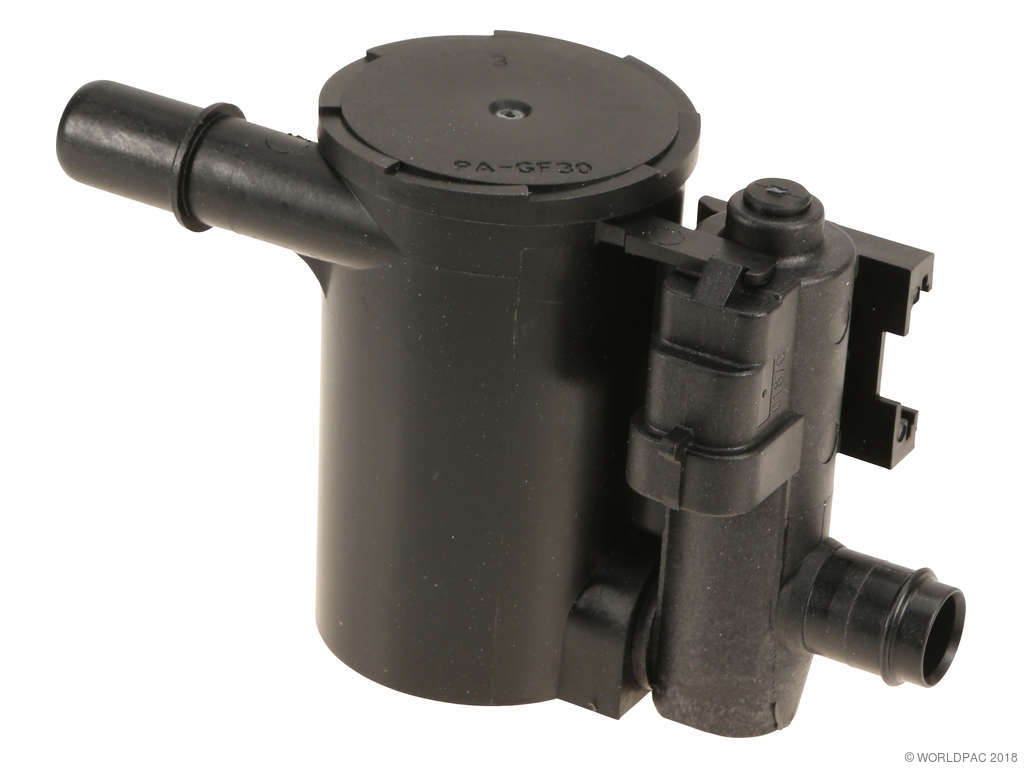
For a 2004-2011 Chevrolet Aveo, code P0446 is most often caused by a faulty EVAP vent valve, also known as a vent solenoid, located on the charcoal canister near the fuel tank. The valve gets stuck or fails electrically, preventing the system from sealing for a self-test. Replacing the vent valve is the most common fix, with parts costing between $20 and $60.
- P0446 on a 2004-2011 Aveo almost always points to a problem with the EVAP vent valve located at the rear of the car by the gas tank.
- The most likely fix is replacing the EVAP vent valve solenoid, a task that is accessible and can be done by a DIYer with basic tools.
- Before replacing parts, always inspect the rubber and plastic hoses connected to the valve and canister for cracks or broken retaining clips, as this is another common point of failure.
- Do not confuse the vent valve (at the rear) with the purge valve (in the engine bay). P0446 specifically relates to the vent valve circuit.
- Avoid overfilling your fuel tank, as this can damage the charcoal canister and lead to more complex and expensive EVAP system repairs.
What's Unique About the 2004-2011 Chevrolet Aveo
On the first-generation Chevrolet Aveo (T200/T250), the P0446 code is a straightforward and common issue. 🎬 Watch: Overview of common causes and fixes for code P0446 The primary culprit is almost always the vent valve solenoid, which is conveniently located on the charcoal canister behind the passenger-side rear wheel. Unlike some vehicles where these components are buried, the Aveo's design makes access relatively simple for diagnosis and replacement. Owners frequently report success with a DIY replacement of the valve. However, brittle plastic hoses and their retaining clips are also a known failure point that can complicate the job or be the actual cause of the code.
Generation note: The 2004-2011 year range covers the entire first generation of the Chevrolet Aveo, including the original T200 models (2004-2007) and the facelifted T250 models (2007-2011). The location and function of the EVAP vent valve and related components are consistent across this generation and its platform mates like the Pontiac G3/Wave.
Symptoms You May Notice
- Check Engine Light is on.
- Difficulty filling the fuel tank (the pump nozzle clicks off repeatedly).
- A faint fuel odor near the rear of the vehicle (less common).
- In some cases, no noticeable symptoms other than the Check Engine Light.
- Replacing the gas cap. While a faulty gas cap can cause other EVAP codes (like P0455 for a large leak), it is not a typical cause for the P0446 vent circuit code, which points specifically to the vent valve's function rather than a system leak.
- Replacing the purge valve solenoid. The purge valve is located in the engine bay and has its own set of diagnostic codes (e.g., P0443, P0496). While part of the EVAP system, its failure does not typically cause P0446 on this vehicle.
Most Likely Causes
- Faulty EVAP Canister Vent Valve/Solenoid 🔴 High Probability → Shop Vapor Canister The valve is exposed to road debris and moisture under the car, and the solenoid can fail electrically or get stuck mechanically over time. Forum users report this as the most frequent fix. NHTSA ODI #10494422 notes that a dealership bulletin specifically identifies a restricted or blocked EVAP vent path as a reason to replace the vent valve solenoid.
How to confirm: Locate the valve on the charcoal canister behind the passenger rear wheel. With a bidirectional scan tool, command the valve to open and close; listen for a clicking sound. Alternatively, apply 12V power directly to the valve's terminals to see if it actuates. The valve should be normally open; if you remove it and cannot blow through it, it is stuck closed and has failed.
Typical fix: Replace the vent valve solenoid. It is often attached directly to the charcoal canister and can be replaced separately.
Est. part cost: $20-$60 - Cracked or Disconnected EVAP Hoses 🟡 Medium Probability The plastic and rubber hoses become brittle with age and heat cycles. The plastic retaining clips on the hose connectors are known to break, causing a loose connection even if the hose itself is intact. NHTSA ODI #11363765 describes how structural stressing can cause leaks at the fuel pump module connector and fuel supply hose, leading to P0446.
How to confirm: Visually inspect all EVAP hoses running from the fuel tank to the charcoal canister and from the canister to the vent valve. Pay close attention to the connectors and look for cracks, breaks, or loose fittings. A user on AveoForum.com specifically noted that a broken lock on the hose connector caused their persistent P0446 code even after replacing the valve.
Typical fix: Replace the damaged hose section or the entire hose assembly. One user on AveoForum.com cited a part number for an EVAP end hose as 96800402. Ensure new retaining clips are used if the old ones are broken.
Est. part cost: $15-$50 - Clogged Charcoal Canister ⚪ Low Probability → Shop Vapor Canister Consistently overfilling the fuel tank ('topping off') can force liquid gasoline into the charcoal canister, saturating the carbon pellets and causing a blockage that restricts airflow. Manufacturer TSB Bulletin #23-NA-073 notes that P0446 can also be caused by dust intrusion into the evaporative canister.
How to confirm: If the vent valve and hoses are confirmed to be good, the canister is the next suspect. It may feel heavy or you may see evidence of charcoal pellets in the EVAP lines. This is a diagnosis by elimination after checking the more common failures.
Typical fix: Replace the charcoal canister. This is more expensive and should only be done after ruling out the vent valve and hoses.
Est. part cost: $70-$150 - Damaged Wiring or Connector ⚪ Low Probability The wiring to the vent valve is located under the car and is susceptible to corrosion, damage from road debris, or animal chewing. The connector pins can corrode, or wires can break near the connector.
How to confirm: Unplug the connector at the vent valve. With the key on, use a multimeter to check for 12V power on one pin and check for continuity to ground on the other (when commanded by the ECM). Inspect for green corrosion, broken wires, or a damaged connector housing.
Typical fix: Repair the broken wire section or replace the connector pigtail.
Est. part cost: $10-$25
Diagnosis Steps
- Read the code with an OBD-II scanner to confirm P0446 is the only code present.
- Inspect the gas cap to ensure it is tight and the seal is not cracked. While not the main cause, it's a simple first check.
- Locate the EVAP canister and vent valve behind the passenger-side rear wheel.
- Visually inspect the vent valve, its connector, and all attached rubber and plastic hoses for obvious cracks, damage, or disconnections. Pay special attention to the plastic locking clips on the hose connectors.
- If you have a bidirectional scanner, command the vent valve to close. Listen for an audible click from the valve. No click suggests a bad valve or a wiring issue.
- If no scanner is available, disconnect the electrical connector from the vent valve. Use a multimeter to check for 12 volts at the connector with the ignition on.
- If power is present, test the valve itself. Remove it from the canister and apply 12V and ground to its pins using jumper wires. It should click. If it doesn't, the valve is faulty.
- If the valve clicks, check if it's mechanically stuck. It is normally open, so you should be able to blow through it when no power is applied. If you can't, it's stuck closed and needs replacement.
- If the valve and wiring seem okay, carefully inspect the charcoal canister for signs of saturation (liquid fuel) or damage. Also check the vent hose leading from the valve for blockages from insects or debris.
- If all components test good, a smoke test may be required to find a small, hard-to-see leak in a hose. This is often a professional step.
- If all else fails, the issue could be a rare fault in the Engine Control Module (ECM), but this should be considered a last resort.
Parts You'll Likely Need
- EVAP Canister Vent Valve Solenoid
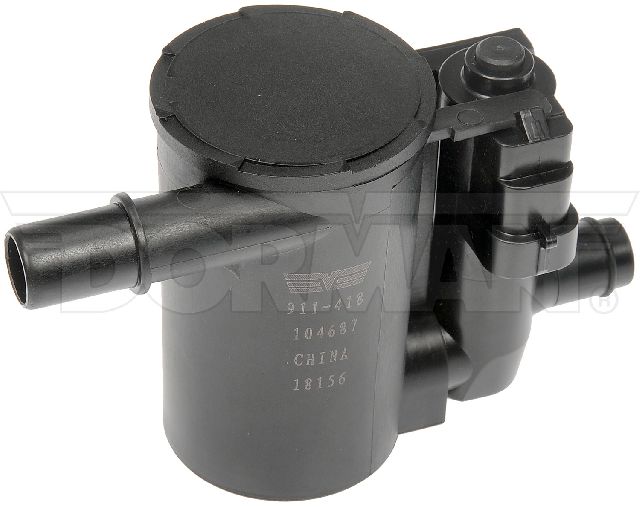
(OEM #25950499)— This is the most common failure point for code P0446. The solenoid fails electrically or becomes stuck, preventing the EVAP system from sealing for its self-test. Note: Part number 25950499 is a common GM vent valve but does NOT fit the Aveo. The correct valve for the Aveo is typically sold with the canister or as a specific aftermarket part. Dorman 911-035 is a compatible aftermarket part for other GM vehicles but is often misidentified as fitting the Aveo; it is a purge valve, not a vent valve for this application.
Trusted brands: ACDelco, Dorman (911-035), Standard Motor Products
OEM price range: $45-$70
Aftermarket price range: $20-$40 - EVAP Vapor Canister
(OEM #96554016)— This part fails if it becomes saturated with fuel from overfilling the gas tank or if it cracks. It can become clogged, restricting airflow and triggering the P0446 code. The vent valve is often replaced with the canister.
Trusted brands: ACDelco / GM Genuine Parts, Standard Motor Products
OEM price range: $120-$180
Aftermarket price range: $70-$120 - EVAP Hose Assembly
(OEM #96800402)— Hoses can become brittle and crack, or the plastic connectors can break, causing a leak or restriction that triggers P0446. A user on AveoForum.com identified this part number for a specific hose.
Trusted brands: GM Genuine Parts
OEM price range: $25-$50
Aftermarket price range: $15-$35
Technical Service Bulletins (TSBs) & Recalls
- While no TSB is specific to P0446 on the Aveo, manufacturer TSB Bulletin #23-NA-073 addresses similar EVAP DTCs including P0446 across other GM models, attributing the fault to dust intrusion into the canister.
Platform-Specific Known Issues
- Broken Hose Retaining Clips: A common point of failure is not the hose itself, but the small plastic clips that lock the EVAP hoses onto the canister or valve. A user on AveoForum.com reported chasing a P0446 code that was ultimately caused by a broken hose lock, which prevented a proper seal even after replacing the vent valve.
- Weather Sensitivity: Some owners have reported that the P0446 code appears more frequently in cold weather. One user on AveoForum.com noted the code would trigger every 3 days in winter but only every 40 days in summer, suggesting that temperature changes may affect the performance of a failing valve or the seal of aging plastic/rubber components.
Mechanic-Grade Diagnostic Values
- EVAP Vent Valve Solenoid Power Supply Voltage — expected: 12V (Battery Voltage) with Key On, Engine Off. Failure: Less than 12V indicates a wiring or fuse issue upstream of the valve.
- EVAP Vent Valve Solenoid Control Circuit — expected: The ECM/PCM supplies ground to close the normally-open valve. Voltage should drop to near 0V when commanded closed by a scan tool.. Failure: Voltage does not drop when commanded, or shows a constant ground or open circuit.
Scan Tool Commands That Help
- Tech2 / GDS2: EVAP Service Bay Test — This function allows a technician to force the vehicle's computer to run the EVAP self-test sequence in the shop, without needing to perform a full drive cycle. It commands the vent and purge valves to operate and monitors the system's ability to seal and hold a vacuum. This is extremely useful for verifying a fix or diagnosing an intermittent problem.
- Tech2 / GDS2 / Advanced Bidirectional Scanner: Vent Valve Solenoid ON/OFF Command — Used to directly test the functionality of the vent valve. A technician can command the valve to close and should hear an audible click. If no click is heard, it points to a faulty valve or a wiring issue.
Wiring & Ground Locations
- G401/G402 — Wiring diagrams for the Aveo show ground points G401 and G402 located in the rear of the vehicle, often behind trim panels in the trunk or near the tail light assemblies.. The EVAP vent valve is located at the rear of the vehicle near the fuel tank. A poor ground at one of these locations could cause intermittent or total failure of the vent valve circuit, triggering a P0446 code even if the valve itself is functional.
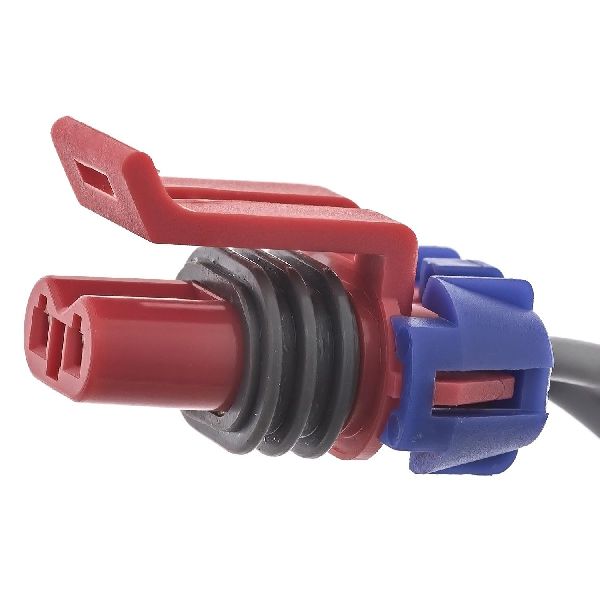
- EVAP Vent Valve Connector — On the EVAP canister vent valve, located behind the passenger-side rear wheel.. This 2-pin oval connector provides power and ground control to the valve. One pin should have 12V with the key on (power supply), and the other is the control wire that the ECM grounds to activate the valve. Checking for power and control signal here is a primary diagnostic step.
Real Owner Repair Stories
- NHTSA ODI #10457176 — An owner reported that their vehicle failed emissions testing specifically due to code P0446, described as "EVAP Vent Performance," requiring a visit to the local dealership for diagnosis.
- AveoForum.com user 'drmagieed' (Chevrolet Aveo (year not specified, but within 2004-2011 range)) — P0446 code that would appear more frequently in winter (every 3-7 days) than in summer (every 30-45 days).
❌ Tried (didn't work) Replacing the EVAP vent valve.
✅ What actually fixed it The user discovered a broken plastic locking clip on the EVAP hose connecting to the canister. This prevented the hose from sealing properly, even though the hose itself was not cracked. Replacing the hose assembly or securing the connection resolved the code. - iATN (International Automotive Technicians Network) (2009 Chevrolet Malibu (similar GM EVAP system design)) — P0446 Evap Vent Performance code.
❌ Tried (didn't work) Initial inspection did not reveal obvious faults.
✅ What actually fixed it Upon inspection of the vent valve and its fresh air intake hose, a spider had built a web and laid an egg sac inside, creating a blockage. This prevented the system from venting properly when the valve was commanded open, triggering the P0446 code. Cleaning out the obstruction fixed the issue. - Chevrolet Forum user 'POE' (Chevrolet Colorado (similar GM EVAP system design)) — P0446 code after driving on dirt roads.
❌ Tried (didn't work) Clearing the code.
✅ What actually fixed it The breather line filter box, located behind the gas filler head, was found to be packed solid with dirt and dust. This clogged the fresh air intake for the entire EVAP system. Cleaning the filter box and its two internal sponges, along with replacing the vent solenoid, resolved the code.
"I Checked Everything" — The Actual Cause
- A P0446 code can occur even if a smoke test passes. The code indicates a vent *circuit* or *flow* problem, not necessarily a leak. If the vent valve is stuck closed or the vent path is blocked (by dirt, debris, or a spider web), the system will hold pressure perfectly during a smoke test, showing no leaks. However, when the ECM runs its self-test, it commands the vent valve open to depressurize the system. If the pressure doesn't drop as expected due to the blockage, it will set a P0446.
OEM Part Supersession History
Unknown→96554016— This is the current GM Genuine part number for the vapor canister assembly for the specified Aveo model years.
Model Year Variations Within This Range
- 2004-2011: The first generation Aveo is split into the T200 (2004-~2007) and the facelifted T250 (~2007-2011). While they are cosmetically different, the underlying EVAP system, including the location and function of the canister and vent valve, remained largely consistent. Part numbers for the canister assembly, like 96554016, often cover the later T200 and all T250 models. Always verify part fitment with a VIN.
Diagnostic Flowchart
Other Known Issues on This Vehicle
Issues unrelated to this code that are worth knowing about as an owner of this generation:
- Premature Timing Belt Failure 🔴 High — Very common. Belts can fail well before the recommended 60,000-mile interval, sometimes as early as 50,000-75,000 miles. This is an interference engine, so failure almost always results in catastrophic engine damage (bent valves, damaged pistons).
- Leaking Valve Cover Gasket 🟠 Medium — Extremely common. The gasket is prone to hardening and leaking oil onto the exhaust manifold (creating a burning smell) and into the spark plug wells (causing misfires).
- Faulty Ignition Coils 🟠 Medium — A frequent cause of engine misfires, rough running, and poor acceleration. Often fails alongside spark plugs.
- Daytime Running Light (DRL) Module Overheating 🔴 High — Affects 2004-2008 models. The DRL module in the dashboard can overheat, melt, and pose a fire risk. (Ref: NHTSA Recall #14V261000)
- Automatic Transmission Problems 🟠 Medium — Owners report issues with slipping, harsh shifting, or complete failure, particularly in 2009 models.
- Brake Fluid Corrosion in ABS Module 🔴 High — Affects 2009-2010 models. Non-compliant brake fluid used at the factory can cause ABS valves to corrode, potentially leading to increased brake pedal travel and reduced braking performance. (Ref: NHTSA Recall #14V460000)
Used vs. New Parts: Buying Guide for This Vehicle
When a used part is the smart pick: For this repair, sourcing a used EVAP charcoal canister assembly from a junkyard can be a cost-effective option, especially since it often includes the vent valve. Given the relatively low failure rate of the canister plastic itself (compared to the valve or hoses), a used part is a reasonable gamble.
Donor-vehicle mileage cap: roughly under 80000 miles for the part to have meaningful remaining life.
What to inspect on the donor part:
- Visually inspect the canister for any physical cracks or damage.
- Check that all hose connection points and mounting tabs are intact and not broken.
- Look at the electrical connector on the vent valve for corrosion or broken pins.
- If possible, shake the canister. Hearing loose charcoal pellets rattling around can be a sign of internal failure, often caused by fuel saturation.
- Avoid parts from vehicles that show signs of significant rear-end collision damage.
Aftermarket brands forum-validated for this vehicle:
- ACDelco (for OEM replacement)
- Standard Motor Products (often a reliable alternative)
Brands owners have reported issues with on this vehicle:
- Be cautious of unbranded, 'white-box' parts from online marketplaces, as the quality of the solenoid and internal charcoal can be inconsistent.
Real Owner Stories
Aggregated from forums and TSBs cited above. Mileages and costs reflect what owners reported in those sources.
2004-2011 Chevrolet Aveo
Symptoms: The P0446 code persisted even after the vent valve was replaced. The owner discovered the code was triggered by a broken plastic lock on the hose connector, which prevented a proper seal.
What fixed it: Ensuring a proper seal by addressing the broken hose connector lock (part number 96800402).
Source hint: AveoForum.com - Thread: 'P0446'
2004-2011 Chevrolet Aveo
Symptoms: Check Engine Light with code P0446. The owner performed a detailed troubleshooting journey including cleaning hoses and checking wiring.
What fixed it: Replacement of the vent valve solenoid (Duralast PV497).
Source hint: AveoForum.com - Thread: 'P0446 Evap Code - Any suggestions'
2004-2011 Chevrolet Aveo
Symptoms: The owner initially suspected an EVAP canister or vent solenoid issue, but the vehicle was also throwing other codes.
What fixed it: Diagnosis revealed the primary issue was actually a P2135 TPS code rather than the EVAP components.
Source hint: ChevroletForum.com - Thread: 'Aveo EVAP Canister/ EVAP vent solenoid valve'
Related OBD-II Codes
Frequently Asked Questions
Where is the EVAP canister vent valve located on my Chevrolet Aveo?
Why does the gas pump nozzle keep clicking off when I try to fill my Aveo?
Is there a specific part number for the EVAP hose if the connector clip breaks?
Can I test the vent valve solenoid myself without a professional scan tool?
Does the weather affect how often the P0446 code appears on the Aveo?
What specific vent valve solenoid should I look for if I need a replacement?
Helpful Videos

We Have This Part in Stock


The information in this article is provided for general reference and educational purposes only. Vehicle specifications, procedures, and part compatibility can vary by production date, trim level, and region. Always consult your vehicle's factory service manual and verify part numbers before purchasing or performing repairs. Safety-critical components such as airbags, seat belts, and braking systems should be installed by a qualified professional.
- Chevrolet Aveo:
- 🧭 Diagnostic Flowchart
- 🎬 Helpful Videos
- 🛍️ Shop This Part
- What's Unique About the 2004-2011 Chevrolet Aveo
- Symptoms You May Notice
- Most Likely Causes
- Diagnosis Steps
- Parts You'll Likely Need
- Technical Service Bulletins (TSBs) & Recalls
- Platform-Specific Known Issues
- Mechanic-Grade Diagnostic Values
- Scan Tool Commands That Help
- Wiring & Ground Locations
- Real Owner Repair Stories
- "I Checked Everything" — The Actual Cause
- OEM Part Supersession History
- Model Year Variations Within This Range
- Other Known Issues on This Vehicle
- Used vs. New Parts: Buying Guide for This Vehicle
- Real Owner Stories
- 2004-2011 Chevrolet Aveo
- 2004-2011 Chevrolet Aveo
- 2004-2011 Chevrolet Aveo
- Related OBD-II Codes
- Frequently Asked Questions
- 🎟️ Get 5% Off