

P0446 on 2010-2015 Chevrolet Camaro: EVAP Vent Circuit Causes and Fixes
On a 2010-2015 Camaro, code P0446 is almost always a faulty EVAP vent solenoid. The part is inexpensive (~$30-$60), but it's in a very difficult location above the rear subframe, making labor the biggest cost. Expect a shop bill of $350-$700 for this repair.
- P0446 on a 5th-gen Camaro almost always points to the EVAP vent solenoid, not the purge solenoid on the engine.
- The main symptom, besides the Check Engine Light, is the gas pump clicking off constantly during refueling.
- This is not a DIY-friendly repair for most people due to the part's location above the rear subframe, which significantly increases labor.
What's Unique About the 2010-2015 Chevrolet Camaro
The defining characteristic of a P0446 code on the 5th generation Camaro is the notoriously difficult location of the EVAP vent solenoid. While on many vehicles this is an easy-to-reach part, Chevrolet placed it above the rear suspension subframe on the passenger side. This poor design choice turns a simple and cheap part replacement into a labor-intensive and costly repair, as a mechanic may need to lower the entire rear subframe for access.
Symptoms You May Notice
- Check Engine Light is on.
- Difficulty refueling (gas pump nozzle clicks off repeatedly).
- A faint fuel odor near the rear of the vehicle.
- In rare cases, fuel may spill from the filler neck area during refueling if the system is unable to vent properly.
- Replacing the EVAP Purge Solenoid. This is the most common misdiagnosis. The P0446 code refers to the VENT solenoid located at the rear of the car by the fuel tank, NOT the PURGE solenoid located on the engine. Replacing the purge solenoid will not fix a P0446 code.
Most Likely Causes
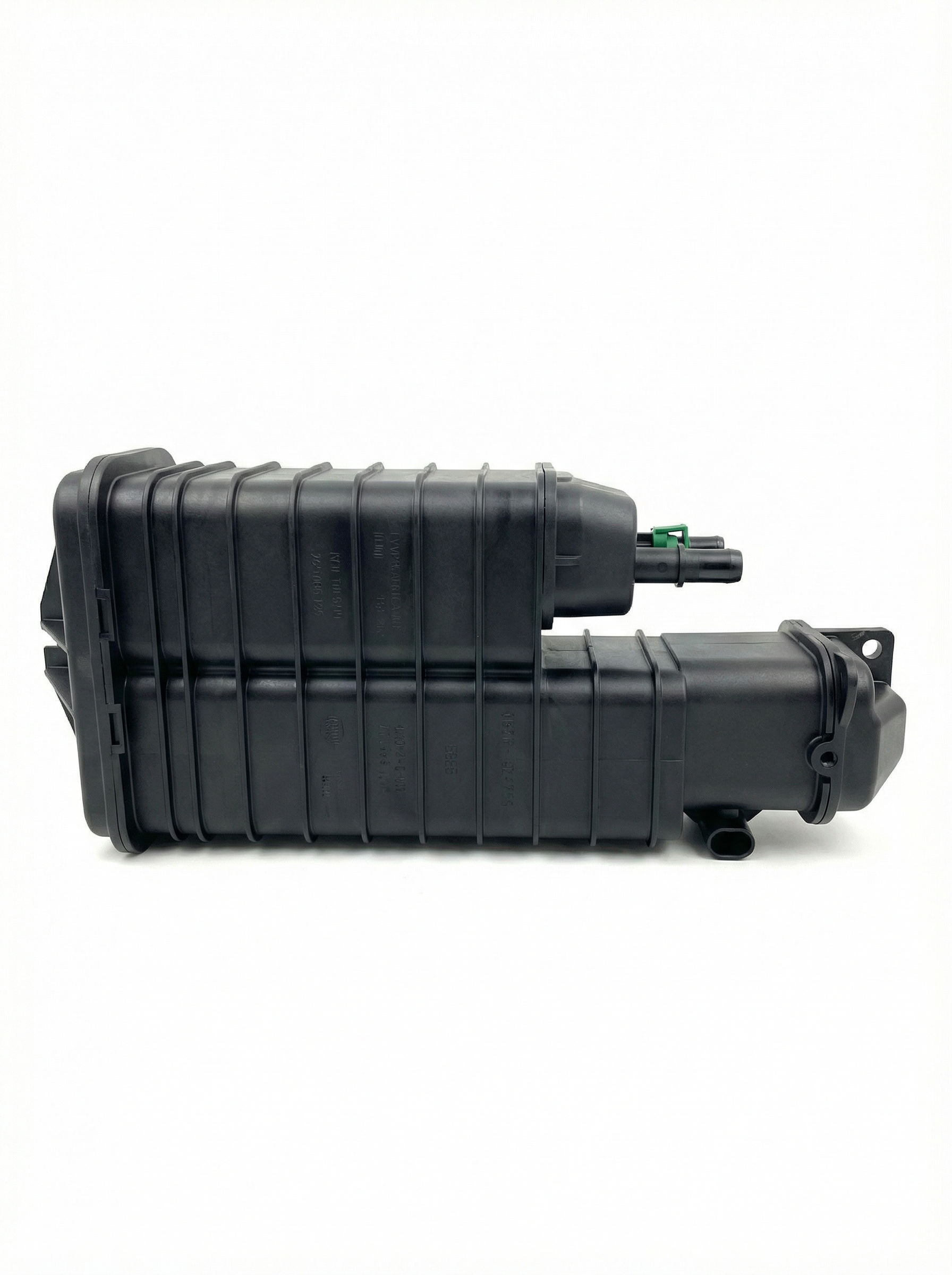
- Faulty EVAP Vent Solenoid 🔴 High Probability → Shop Vapor Canister The part is known to fail by either sticking internally or through electrical failure. Its location exposes it to road debris and moisture over time, and it is a widely reported failure item on Camaro forums.
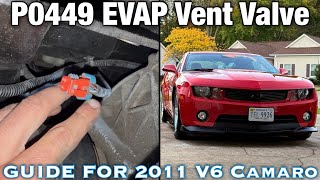
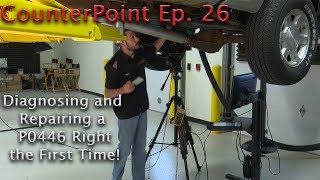
How to confirm: Use a bi-directional scan tool to command the solenoid on and off; a 'click' should be audible. If no click, 🎬 Watch: A professional guide to diagnosing and fixing P0446 correctly. test the connector for 12V power and a ground signal from the ECU. This is difficult due to the part's location, often requiring lowering the rear subframe just to access the connector for testing.
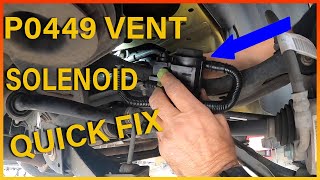
Typical fix: Replace the EVAP vent solenoid. This is labor-intensive and requires lowering the rear subframe for access. Some mechanics may attempt to create an access hole in the trunk floor as a shortcut, but this is not the standard procedure. 🎬 Watch: A quick fix method for accessing the vent solenoid.
Est. part cost: $25-$75 - Blocked EVAP Vent Hose or Filter 🟡 Medium Probability The vent hose inlet, located underneath the car, can become clogged with dirt, debris, or insect nests, restricting airflow and tricking the system into thinking the valve has failed. GM issued a TSB (23-NA-073) for other vehicles regarding this issue in dusty environments, suggesting a filter relocation kit may be a viable preventative measure.
How to confirm: Visually inspect the vent hoses connected to the charcoal canister and vent solenoid for blockages or kinks. Attempt to blow low-pressure air through them to check for flow. This may require partial disassembly to access the hoses.
Typical fix: Clean the blockage from the hose or replace the clogged hose/filter assembly.
Est. part cost: $20-$50 - Damaged Wiring or Electrical Connector ⚪ Low Probability
How to confirm: Visually inspect the wiring harness leading to the vent solenoid for any breaks, corrosion, or loose pins at the connector. Check for continuity from the ECU to the solenoid connector. This is extremely difficult without first lowering the rear subframe.
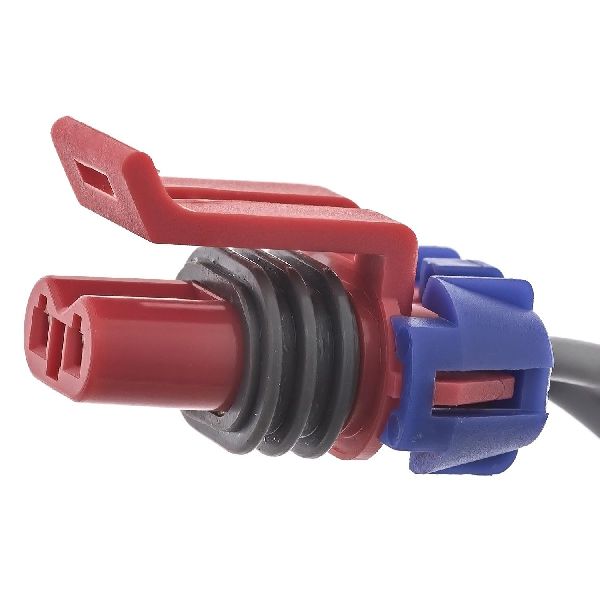
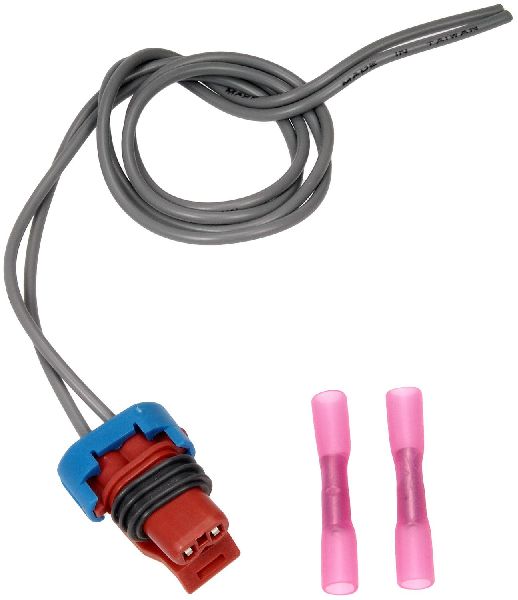
Typical fix: Repair the damaged section of wire or replace the connector pigtail.
Est. part cost: $10-$30
Rare But Worth Checking
- Failed Charcoal Canister: → Shop Vapor Canister If the canister becomes saturated with fuel from overfilling the tank, or if the activated charcoal breaks down, it can send debris into the vent solenoid or block passages, causing a P0446 code.
- Faulty Fuel Tank Pressure (FTP) Sensor: → Shop Fuel Tank A failing FTP sensor can provide incorrect pressure readings to the computer, leading it to misinterpret the vent valve's state. This will usually be accompanied by other codes like P0451, P0452, or P0453.
Diagnosis Steps
- Verify the code with an OBD-II scanner. Note any other codes present, such as P0449 or P0451.
- Inspect the capless fuel filler door to ensure the flap seals correctly and is free of debris. A poor seal can cause other EVAP codes.
- Attempt to command the EVAP vent solenoid closed using a bi-directional scan tool. Listen for an audible click from the rear passenger side of the vehicle, near the fuel tank.
- If a click is heard, the issue may be an intermittent connection or a blockage in the vent path. Inspect the vent hoses for clogs from dirt or insects.
- If no click is heard, gain access to the vent solenoid connector. This is the most difficult step and will likely require lowering the rear subframe.
- Check for 12-volt power on one wire and a ground signal on the other when the valve is commanded closed by the scan tool.
- If power and ground are present but the valve doesn't operate, the vent solenoid is faulty and needs to be replaced.
- If power or ground is missing, trace the wiring back towards the Engine Control Module (ECM) to find the open or short in the circuit.
Parts You'll Likely Need
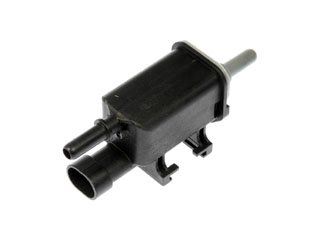
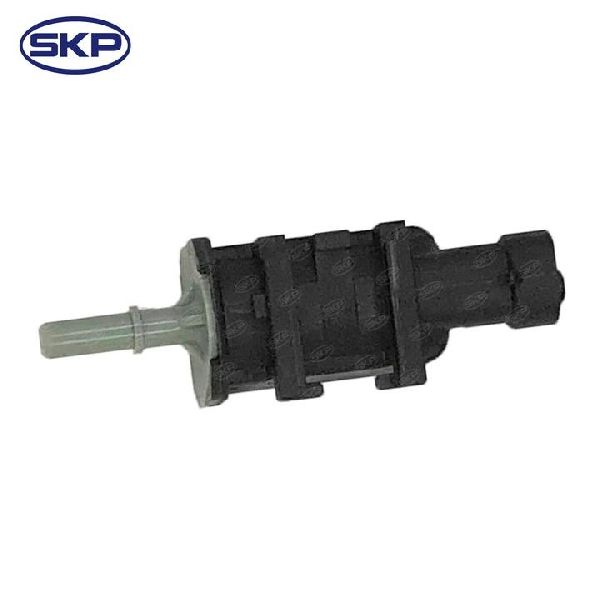
- EVAP Vapor Canister Vent Solenoid
(OEM #84524035)— This is the component that most commonly fails, either mechanically (stuck) or electrically, directly causing the P0446 code. The ACDelco part number is often listed as 214-2149, which has been superseded by other numbers but is a common cross-reference.
Trusted brands: ACDelco, Dorman, Standard Motor Products
OEM price range: $40-$60
Aftermarket price range: $25-$50
Related Codes That Often Appear With This One
- P0449 — This code is nearly identical to P0446 and often used interchangeably by manufacturers to indicate a fault in the EVAP vent solenoid circuit. Some owners report getting P0449 for the same issue.
- P0455 — Indicates a large EVAP leak. A vent solenoid stuck open can sometimes be interpreted by the system as a large leak.
- P0451 — Indicates a fault with the Fuel Tank Pressure (FTP) sensor. This can sometimes appear with P0446 if the system is confused about the source of the pressure issue.
Technical Service Bulletins (TSBs) & Recalls
- 23-NA-073: While not listing the Camaro specifically, this GM TSB addresses P0446 caused by dust intrusion in dusty environments and recommends installing a remote filter kit. This is relevant as a preventative measure for Camaro owners in similar conditions.
- Bulletin #23-NA-073 (dated 2025-03-13) provides repair information to correct customer concerns regarding EVAP DTCs P0442, P0446, P0455, or P0449 caused by dust intrusion into the evaporative canister.
Platform-Specific Known Issues
- The primary vehicle-specific issue is the placement of the vent solenoid above the rear subframe, making access extremely difficult. Many owners and mechanics report having to lower the rear suspension and/or subframe to perform the replacement, significantly increasing labor time and cost.
- A thread on Camaro5 forums titled 'PITA' (Pain In The A**) discusses a user's experience where fuel dumped on the ground during refueling, which was linked back to the faulty EVAP system and P0446/P0451 codes, highlighting a potential safety concern.
Documented NHTSA Reports
- NHTSA ODI #10494422 describes a situation where a check engine light occurred and the dealership found a bulletin for DTC P0446 (restricted/blocked EVAP vent path) which required replacing the EVAP vent valve solenoid.
- NHTSA ODI #10457176 reports a vehicle failing an emissions test with a P0446 code for EVAP vent performance.
- NHTSA ODI #11363765 notes that structural stressing can cause leaks at the tank and fuel supply hose, leading to DTC codes P0446 and P0451.
Mechanic-Grade Diagnostic Values
- EVAP Vent Solenoid Coil Resistance — expected: 20-24 Ω. Failure: Reading of O.L. (Open Loop/infinite resistance) or a value significantly outside the expected range.
- EVAP Vent Solenoid Connector Voltage (Key On, Engine Off) — expected: One pin should have ~12V (battery voltage), and the other (control wire) should also show ~12V when the solenoid is unplugged but connected to the harness, as the voltage passes through the coil.. Failure: Reading 0V on the control wire with the solenoid plugged in suggests an open in the solenoid's coil. Missing voltage on the power feed wire indicates a wiring or fuse issue upstream.
- Fuel Tank Pressure (FTP) Sensor Voltage (Live Data) — expected: Approximately 1.5V with the gas cap off (at atmospheric pressure).. Failure: A voltage reading that is significantly different from 1.5V with the cap off, or a reading that does not change when the cap is removed, points to a faulty FTP sensor.
Scan Tool Commands That Help
- GDS2/Tech2 or equivalent bi-directional scanner: EVAP Vent Solenoid On/Off Command — This is the primary diagnostic step to determine if the solenoid is mechanically functioning. Commanding it 'Closed' (energized) should produce an audible click. If no click is heard, it points to a failed solenoid or a wiring/ECM driver issue.
- GDS2/Tech2 or equivalent bi-directional scanner: EVAP System Test — This automated test commands the purge and vent solenoids to seal the system and monitors the FTP sensor to check for pressure decay. A failure during the venting phase of this test can specifically point to a P0446-related fault (restricted vent path).
Wiring & Ground Locations
- EVAP Vent Solenoid Connector — Above the rear differential/subframe, on the passenger side of the vehicle.. This is the primary connection point for testing voltage, ground, and resistance of the vent solenoid. Access is extremely limited.
- EVAP Vent Solenoid Control Wire — This wire runs from the vent solenoid connector to the Engine Control Module (ECM). On some GM models, this is a White wire.. An open or short-to-ground in this wire will prevent the ECM from controlling the solenoid and will set a P0446/P0449. A common failure point is right at the connector due to stress and exposure.
- Rear Frame Grounds (G401/G402) — General Motors often uses ground points on the frame rails in the rear of the vehicle, accessible from the wheel wells or under the car. For example, G401 is often on the left-hand (driver's side) frame rail.. While the vent solenoid is controlled by the ECM, a poor chassis ground in the vicinity can cause intermittent electrical issues and contribute to control circuit faults. Checking that rear grounds are clean and tight is a valid, though less common, diagnostic step.
Real Owner Repair Stories
- GM-Trucks.com forum user 'gto0188' (2001 GMC Sierra (similar GM EVAP system design)) — Persistent P0446 code.
❌ Tried (didn't work) Planned to replace the EVAP vent solenoid., Planned to replace the EVAP purge solenoid.
✅ What actually fixed it The issue was ultimately resolved by replacing the Fuel Tank Pressure (FTP) sensor, which was accessible by moving the driveshaft. - Camaro5 forum user '6bangerBOOM' (2012 Chevrolet Camaro) — Persistent Check Engine Light for an EVAP issue for over a year.
❌ Tried (didn't work) A repair shop replaced the EVAP vent solenoid, but the Check Engine Light returned two days later.
✅ What actually fixed it The user received a special coverage letter from Chevrolet for a known issue with the solenoid valve on 2012 models, indicating a potential part defect or design issue for that specific year. The final resolution was a dealer repair under this new coverage.
"I Checked Everything" — The Actual Cause
- In the context of P0446, a smoke test is less relevant as the code indicates a vent circuit/blockage issue, not necessarily a leak. A technician may perform one to rule out accompanying leak codes (like P0455). If the smoke test shows no leaks but P0446 persists, the fault is almost certainly within the vent solenoid's electrical circuit (solenoid coil, wiring, ECM driver) or a physical blockage in the vent path (clogged filter, stuck-closed valve).
OEM Part Supersession History
25932571→ACDelco 214-2149, then GM 84524035— Standard part evolution and potential design updates.
Heads up: The ACDelco part number 214-2149 is a widely referenced service part that fits many GM vehicles from this era. The latest genuine GM part number appears to be 84524035. When purchasing, ensure the part comes with the necessary adapter harness if the connector style was updated. Some aftermarket versions, like Dorman 911-140, explicitly include this adapter.
Model Year Variations Within This Range
- 2012: A special coverage adjustment was issued by Chevrolet for some 2012 models concerning the EVAP vent solenoid, suggesting a higher-than-normal failure rate for that specific model year. Owners were eligible for free repairs and reimbursement for previous incorrect repairs.
Diagnostic Flowchart
Other Known Issues on This Vehicle
Issues unrelated to this code that are worth knowing about as an owner of this generation:
- Premature Timing Chain Wear (V6 Models) 🔴 High — Common on 2010-2011 3.6L LLT engines, typically appearing between 50,000-100,000 miles. Caused by stretched chains due to a combination of chain design and overly optimistic oil life monitor calibration. (Ref: While other GM vehicles with the same engine had extended warranties (e.g., Special Coverage Adjustment 12313), the Camaro was notably excluded, causing owner frustration.)
- Torque Converter Shudder (A8 Automatic) 🟠 Medium — Affects V8 models with the 8-speed automatic transmission (primarily 2015 models, but more common in early 6th gen). Causes a vibration or shudder at cruising speeds. (Ref: TSB 18-NA-355 outlines a procedure to flush the transmission fluid with an updated Mobil 1 formula to resolve the issue. If the flush doesn't work, torque converter replacement may be necessary.)
- Air Conditioning System Failure 🟡 Low — Owners report intermittent A/C, blowing warm air randomly. Often traced to faulty HVAC actuators, sensors, or control modules. Can be difficult to diagnose.
- Key Stuck in Ignition 🟡 Low — A common annoyance where the key cannot be removed from the ignition switch even when in Park. Often caused by a faulty shifter interlock or related microswitch. (Ref: Related to recalls for the ignition switch on other GM vehicles, but often a separate mechanical failure on the Camaro.)
- Passenger Airbag Sensor Mat Failure 🟠 Medium — The passenger seat occupancy sensor can fail, causing the passenger airbag to be disabled and the airbag warning light to illuminate. (Ref: Subject of GM Customer Satisfaction Program and some recalls for specific model years.)
- AFM Lifter Failure (V8 L99 Engine) 🔴 High — The Active Fuel Management (AFM) system on the L99 V8 (automatic SS models) can have lifters collapse or fail, causing misfires, ticking noises, and potential engine damage.
Used vs. New Parts: Buying Guide for This Vehicle
When a used part is the smart pick: For this specific repair, a used part is strongly discouraged. The vent solenoid is a known failure item and the labor to access it is extremely high. Installing a used part with unknown remaining life carries a significant risk of having to repeat the costly repair in the near future.
Donor-vehicle mileage cap: roughly under 10000 miles for the part to have meaningful remaining life.
What to inspect on the donor part:
- Not applicable due to the high risk and low part cost.
OEM-only on this vehicle (don't cheap out):
- While not strictly 'OEM-only', using a new, quality part from ACDelco or a reputable aftermarket brand like Standard Motor Products is highly recommended over a used part to avoid repeat labor costs.
Aftermarket brands forum-validated for this vehicle:
- ACDelco (Professional/GM Genuine)
- Standard Motor Products (SMP)
- Dorman (Often includes necessary wiring adapters)
Brands owners have reported issues with on this vehicle:
- Unbranded, low-cost parts from online marketplaces should be avoided. Forum discussions show mixed reliability with Dorman parts in general, but for this specific component, it is a commonly used alternative.
Real Owner Stories
Aggregated from forums and TSBs cited above. Mileages and costs reflect what owners reported in those sources.
2010-2015 Chevrolet Camaro
Symptoms: The owner experienced a 'PITA' situation where fuel dumped on the ground during refueling and the gas pump kept clicking off.
What fixed it: The issue was linked to a faulty EVAP system (codes P0446 and P0451), requiring the vent solenoid to be replaced by dropping the tank/subframe.
Source hint: camaro5.com: Thread 'PITA' (https://www.camaro5.com/forums/showthread.php?t=519311)
2015 Chevrolet Camaro
Symptoms: Owner reported an 'Evaporative Emission system Vent Control Circuit' Check Engine Light.
What fixed it: Forum members confirmed the difficulty of the repair and suggested dealer or warranty repair as the best path due to the labor-intensive nature of accessing the solenoid.
Source hint: camaro5.com: Thread 'Evaporative Emission system Vent Control Circuit - CEL' (https://www.camaro5.com/forums/showthread.php?t=401933)
2010-2015 Chevrolet Camaro
Symptoms: Check Engine Light with P0446; owner inquired about the feasibility of a DIY replacement for the vent solenoid.
What fixed it: Replacement of the EVAP vent solenoid, with users confirming the part's difficult location above the rear subframe.
Source hint: camaro5.com: Thread 'has anyone replaced the evap vent solenoid?' (https://www.camaro5.com/forums/showthread.php?t=404203)
Related OBD-II Codes
Frequently Asked Questions
Does GM TSB 23-NA-073 apply to my Chevrolet Camaro if I'm getting a P0446 code?
Why is the labor for replacing the EVAP vent solenoid so expensive on the 2010-2015 Camaro?
Can I replace the vent solenoid myself without dropping the subframe?
Is the P0446 code related to the fuel spilling out when I try to gas up my Camaro?
Are there any other common issues I should look out for on my 2010-2011 V6 Camaro while fixing this?
Could a problem with my capless fuel filler cause EVAP codes?
Helpful Videos
Used OEM Parts in Stock
New Aftermarket Parts Available


The information in this article is provided for general reference and educational purposes only. Vehicle specifications, procedures, and part compatibility can vary by production date, trim level, and region. Always consult your vehicle's factory service manual and verify part numbers before purchasing or performing repairs. Safety-critical components such as airbags, seat belts, and braking systems should be installed by a qualified professional.
- Chevrolet Camaro:
- 🧭 Diagnostic Flowchart
- 🎬 Helpful Videos
- 🛍️ Shop This Part
- What's Unique About the 2010-2015 Chevrolet Camaro
- Symptoms You May Notice
- Most Likely Causes
- Rare But Worth Checking
- Diagnosis Steps
- Parts You'll Likely Need
- Related Codes That Often Appear With This One
- Technical Service Bulletins (TSBs) & Recalls
- Platform-Specific Known Issues
- Documented NHTSA Reports
- Mechanic-Grade Diagnostic Values
- Scan Tool Commands That Help
- Wiring & Ground Locations
- Real Owner Repair Stories
- "I Checked Everything" — The Actual Cause
- OEM Part Supersession History
- Model Year Variations Within This Range
- Other Known Issues on This Vehicle
- Used vs. New Parts: Buying Guide for This Vehicle
- Real Owner Stories
- 2010-2015 Chevrolet Camaro
- 2015 Chevrolet Camaro
- 2010-2015 Chevrolet Camaro
- Related OBD-II Codes
- Frequently Asked Questions
- 🎟️ Get 5% Off