

P0446 on 2004-2012 Chevrolet Colorado: EVAP Vent System Causes and Fixes
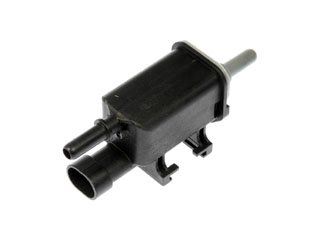
On a 2004-2012 Colorado, P0446 is almost always caused by a faulty EVAP canister vent solenoid. It's a common failure due to its location under the truck, exposed to dirt and debris. Expect to pay $30-$60 for an aftermarket part (like Dorman 911-070) and about 30 minutes to replace it. Key symptoms include a Check Engine Light and difficulty filling the gas tank.
- P0446 on a 2004-2012 Colorado almost always points to a bad EVAP vent solenoid located near the spare tire.
- Key symptoms are a Check Engine Light and difficulty refueling (the gas pump clicks off constantly).
- This is a common, DIY-friendly repair that usually takes less than an hour with basic tools.
- Before buying parts, check the 'CAN VENT' fuse in the under-hood fuse box and inspect the solenoid's wiring for damage.
- The most reliable fix is replacing the vent solenoid (ACDelco part 20907779 or equivalent). Don't bother with the gas cap first.
What's Unique About the 2004-2012 Chevrolet Colorado
The first-generation Chevrolet Colorado (and its twins, the GMC Canyon and Hummer H3) is known for this specific code. The primary reason is the location and design of the EVAP canister vent solenoid. It's mounted to the charcoal canister on a bracket, typically above the spare tire, where it's highly exposed to road debris, dust, mud, and moisture. This exposure often leads to the valve's plunger mechanism getting clogged with dirt or corroding, causing it to stick shut and trigger the P0446 code. It is one of the most common failures on this platform.
Generation note: The 2004-2012 model years cover the entire first generation of the Chevrolet Colorado. The causes and fixes for P0446 are consistent across this generation and its platform mates, the GMC Canyon and Hummer H3.
Symptoms You May Notice
- Check Engine Light is on
- Difficulty filling the fuel tank (gas pump nozzle clicks off repeatedly before the tank is full).
- Fuel gurgles or splashes back during refueling.
- Hard starting immediately after refueling (due to pressure imbalance).
- Slight fuel odor near the rear of the vehicle.
- Audible 'whoosh' sound of pressure releasing when opening the gas cap.
- Replacing the gas cap. While a bad gas cap can cause other EVAP codes (like P0455 for a large leak), it is rarely the cause of P0446, which is specific to a vent-side restriction, not a system leak.
- Replacing the purge valve solenoid. The purge valve is located in the engine bay and controls vapor flow to the engine. A failure here typically results in different codes (like P0496) and symptoms, such as a rough idle.
Most Likely Causes
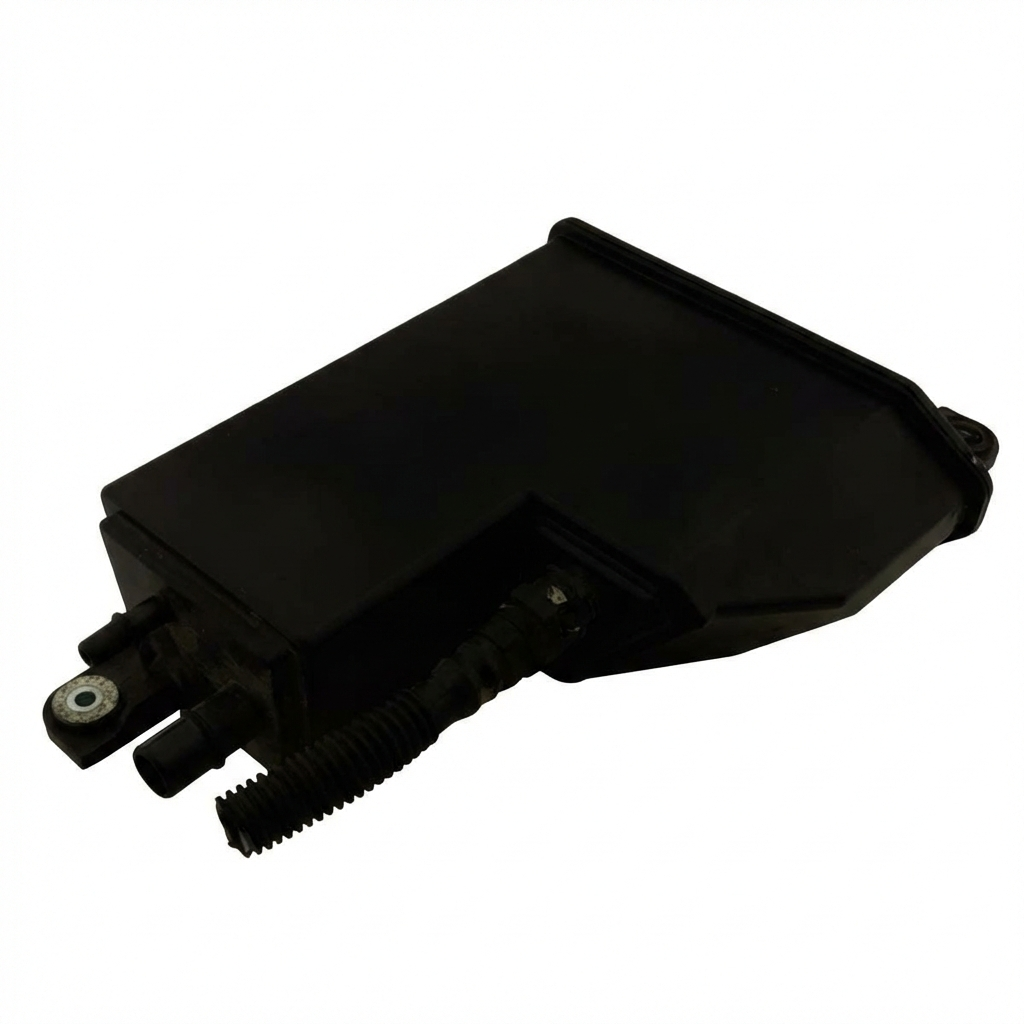
- Faulty EVAP Canister Vent Valve Solenoid 🔴 High Probability → Shop Vapor Canister The solenoid is located under the truck near the spare tire, making it highly susceptible to dirt, dust, and corrosion, which causes it to stick closed. This is the most common point of failure for P0446 on this platform.
How to confirm: Inspect the solenoid for visible damage or blockages. Use a scan tool with bidirectional controls to command the valve open and closed; you should hear a clicking sound. You can also remove the solenoid and apply 12V power directly to its terminals to test for function; if it doesn't click, it has failed. Often, simply removing it and finding it full of dirt is confirmation enough.
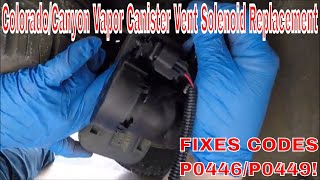
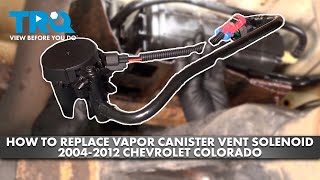
Typical fix: Replace the EVAP canister vent solenoid. 🎬 Watch: A step-by-step guide to replacing the vent solenoid. The replacement part often includes a new wiring harness adapter, as the plug design was updated. Cleaning the old solenoid with electrical cleaner is sometimes a temporary fix but replacement is recommended for reliability.
Est. part cost: $30-$75 - Clogged or Blocked Vent Hose/Filter 🟡 Medium Probability The vent hose inlet can get clogged with dirt, mud, or even spider webs, causing a restriction that triggers the code. This is especially common on trucks used in dusty or off-road environments.
How to confirm: Visually inspect the hoses connected to the vent solenoid and charcoal canister for blockages, dirt, or insect nests. Disconnect the hose from the solenoid and attempt to blow air through it. If it's restricted, it's clogged.
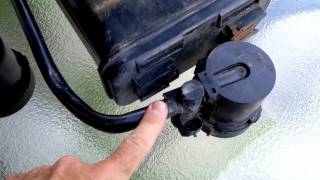
Typical fix: Clean out the blockage from the hose or filter. If the hose is damaged or brittle, it should be replaced. Some owners proactively relocate the vent hose inlet to a higher, more protected location. 🎬 See how to relocate the vent valve to prevent future clogs.
Est. part cost: $0-$20 - Damaged Wiring or Electrical Connector ⚪ Low Probability The wiring to the vent solenoid is also exposed to the elements and can become corroded, frayed, or damaged by road debris. The connector pins can corrode, or the wire can break inside the insulation near the connector.
How to confirm: Inspect the wiring harness and connector leading to the vent solenoid for any signs of damage, corrosion on the pins, or loose connections. Use a multimeter to check for 12V power on one wire and ground on the other at the connector with the key on. A wiring diagram can confirm which wire is which.
Typical fix: Repair the damaged section of wire or replace the connector pigtail. Many replacement solenoids come with a new pigtail adapter.
Est. part cost: $10-$30
Rare But Worth Checking
- Faulty Fuel Tank Pressure (FTP) Sensor: → Shop Fuel Tank This is less common for P0446 specifically, as a bad FTP sensor often triggers other codes. However, if it provides incorrect readings to the ECM, it can lead the computer to misdiagnose the vent system's performance. Some owners have replaced this sensor, located on top of the fuel tank, to resolve persistent codes, though it's a much more involved repair requiring lifting the truck bed or dropping the fuel tank.
- Cracked or Saturated Charcoal Canister: → Shop Vapor Canister Overfilling the gas tank repeatedly can force liquid fuel into the charcoal canister, saturating the carbon pellets and causing a blockage that restricts airflow. A physical impact from road debris can also crack the canister housing, though this would more likely cause a leak code (P0455).
Diagnosis Steps
- Verify the code with an OBD-II scanner.
- Inspect the gas cap to ensure it is tight and the seal is intact, although this is an unlikely cause for P0446.
- Locate the EVAP canister and vent solenoid assembly, mounted on a bracket above the spare tire. Lowering the spare tire provides much better access. 🎬 Watch: This video shows exactly how to access and test the valve.
- Visually inspect the vent solenoid, charcoal canister, and all attached hoses for obvious cracks, damage, or blockages from dirt/debris.
- Inspect the electrical connector and wiring going to the vent solenoid for corrosion, breaks, or loose connections.
- If you have a capable scan tool, command the vent solenoid to open and close. Listen for an audible click. No click suggests a bad solenoid or a wiring issue.
- If no scan tool is available, remove the solenoid. It is typically held to the canister bracket with a simple clip. Apply 12V from the battery to the solenoid's terminals to see if it actuates. If it doesn't click, the solenoid has failed.
- If the solenoid clicks, check the vent port and hoses for any physical blockages. Try blowing through the solenoid; if it was commanded closed or is stuck closed, no air will pass.
- If the solenoid and hoses are clear, use a multimeter to check for 12V power at the solenoid connector (with the key on, engine off) and for continuity to ground on the other wire.
- Clear the codes and perform a drive cycle after the repair to confirm the fix.
Parts You'll Likely Need
- EVAP Canister Vent Valve Solenoid
(OEM #20907779 (supersedes 10386359))— This is the most frequent failure point for code P0446 on this truck due to its exposed location under the vehicle, leading to clogging and corrosion.
Trusted brands: ACDelco (OEM), Dorman (911-070)
OEM price range: $50-$80
Aftermarket price range: $30-$60
Related Codes That Often Appear With This One
- P0449 — P0449 (EVAP Vent Solenoid Control Circuit) is nearly identical to P0446 and points to the same root cause—a faulty vent solenoid or its wiring. Some model years or software versions may favor one code over the other for the same fault.
Technical Service Bulletins (TSBs) & Recalls
- 09-06-04-028D: While not written specifically for the Colorado, this TSB for 2007-2010 GM SUVs (Escalade, Tahoe, etc.) describes the exact same problem: MIL on with EVAP codes (including P0446) and difficulty fueling due to water/debris in the vent solenoid. The official fix is to replace the solenoid and install a new vent hose with a pre-filter, routing it higher to prevent future contamination. This validates the repair strategy used by many Colorado owners.
- Bulletin #23-NA-073: A manufacturer service bulletin for other GM models notes that P0446 can be caused by dust intrusion into the evaporative canister, reinforcing the known environmental vulnerabilities of the GM EVAP system design.
Platform-Specific Known Issues
- Due to the high frequency of this failure, many owners of first-generation Colorados and Canyons will experience a P0446 or P0449 code at some point.
- Some owners in extremely dusty or muddy environments have noted repeated failures. While no official recall exists for the Colorado, a TSB for other GM trucks (09-06-04-028D) addresses the same issue of debris intrusion causing EVAP codes. This TSB recommends a filter relocation kit, a strategy some Colorado owners have adopted by extending the vent hose to a cleaner location, like behind a tail light or inside the bed wall.
Mechanic-Grade Diagnostic Values
- EVAP Canister Vent Valve Solenoid Coil Resistance — expected: Approximately 20-30 Ohms. Failure: An open circuit (infinite resistance) or a direct short (zero resistance) indicates a failed solenoid coil.
- Voltage at EVAP Vent Solenoid Connector — expected: 12V+ on one pin (typically Pink wire) with Key On, Engine Off. The other pin is the control wire, which the PCM grounds to close the valve.. Failure: No voltage indicates a wiring or fuse issue upstream. If voltage is present but the valve doesn't work, the valve itself or the control circuit ground is suspect.
- Fuel Tank Pressure (FTP) Sensor Voltage — expected: 1.3 to 1.7 Volts with the gas cap off (atmospheric pressure) and key on, engine off.. Failure: A voltage stuck high (e.g., 5V) or low (e.g., 0.2V) indicates a faulty sensor or wiring, which can confuse the EVAP monitor and incorrectly set a P0446 code.
Scan Tool Commands That Help
- GM Tech2 / Professional Bidirectional Scanner: EVAP System Test / Vent Solenoid Command — This command, found in the special functions or output controls menu, allows a technician to manually command the vent solenoid to open and close. This is used to listen for the solenoid's audible click, confirming the electrical circuit and the solenoid's mechanical plunger are functional. It's a primary step before physically removing the part.
Wiring & Ground Locations
- EVAP Vent Solenoid Connector — On the EVAP vent solenoid itself, located above the spare tire.. This 2-pin connector and its wiring are highly exposed to road debris and moisture, making them a common point of failure due to corrosion or physical damage, which can directly cause a P0446 circuit code.
- G103 / G104 — Common ground points located on the left side of the engine block.. While the vent solenoid is at the rear, its control circuit originates at the Powertrain Control Module (PCM), which relies on clean engine and chassis grounds. A poor engine ground can cause erratic behavior in various sensors and actuators, including the EVAP system, although it would likely be accompanied by other codes.
Real Owner Repair Stories
- YouTube channel 'Bad Luck Garage' (First-generation Chevrolet Colorado (daughter's truck)) — Check Engine Light with P0446/P0449, fuel sloshing out of the filler neck before the tank is full, and hard starting immediately after refueling.
❌ Tried (didn't work) Checking the gas cap, which was found to be sealing correctly.
✅ What actually fixed it Replacing the EVAP canister vent solenoid located above the spare tire. The video documents the entire replacement, which took less than 15 minutes and resolved all symptoms. - YouTube channel 'Mike's Garage' (2003 GMC Jimmy (similar GM EVAP system)) — Check Engine Light with P0446 and hard starting after refueling.
❌ Tried (didn't work) The EVAP vent solenoid was replaced first, which was corroded and clogged., The EVAP purge solenoid was replaced, which fixed the hard start issue but did not clear the P0446 code.
✅ What actually fixed it The final fix was replacing a faulty Fuel Tank Pressure (FTP) sensor that was stuck at a low voltage reading (0.2V). The bad sensor prevented the computer from correctly verifying the vent system's operation, leading it to set the P0446 code even though the vent solenoid was new.
Documented NHTSA Reports
- NHTSA ODI #10494422 describes a situation where a dealership identified a bulletin for a restricted or blocked EVAP vent path setting the P0446 code, requiring the replacement of the EVAP vent valve solenoid.
- An owner reported in NHTSA ODI #10457176 that their vehicle failed emissions testing specifically due to code P0446, described as "EVAP Vent Performance."
- NHTSA ODI #11363765 notes a case where P0446 was accompanied by structural stressing causing leaks at the tank and fuel pump module connector, specifically mentioning secondary cracking of the plastic fuel supply.
"I Checked Everything" — The Actual Cause
- A smoke test is designed to find system leaks (codes like P0455 or P0442) by pressurizing the system and looking for where smoke escapes. Code P0446, however, indicates a vent *restriction*, not a leak. Therefore, a vehicle with a classic P0446 fault (a vent solenoid stuck closed) will pass a smoke test because the system is sealed, which is what the solenoid is supposed to do during the test. The actual cause is that the solenoid fails to *open* when commanded, blocking fresh air from entering. The proper diagnostic is to use a scan tool to command the vent open and check if system pressure returns to atmospheric (0 inH2O or ~1.5V on the FTP sensor). If it remains in a vacuum, the vent path is restricted.
OEM Part Supersession History
10386359→20907779 (also cross-references to ACDelco 214-2149)— The original design was highly prone to failure from debris and moisture. The updated part is a more robust design to improve longevity.
Heads up: CRITICAL: The updated part 20907779 / 214-2149 uses a different electrical connector than the original factory harness on most 2004-2012 models. A separate jumper harness (pigtail adapter), such as ACDelco P/N 19257603, is required to connect the new solenoid. Many aftermarket kits, like the Dorman 911-070, include this adapter harness.
Model Year Variations Within This Range
- 2004-2012: The primary variation is not year-to-year from the factory, but rather in the service parts. The original EVAP vent solenoid connector style used on early-to-mid production trucks is obsolete. All modern replacement parts (OEM and aftermarket) use an updated connector style, requiring a wiring adapter for installation on an unmodified original harness.
Diagnostic Flowchart
Other Known Issues on This Vehicle
Issues unrelated to this code that are worth knowing about as an owner of this generation:
- Cylinder Head Valve Seat Failure (3.5L & 3.7L I5) 🔴 High — Very common on 2004-2007 3.5L L52 engines, less common but still occurs on 2007-2012 3.7L LLR engines. Often presents as a P0300 random misfire code at idle. (Ref: TSB PIP4013D, Special Coverage #07123.)
- PassLock Anti-Theft System Failure 🟠 Medium — Common across all years. The truck will crank but fail to start, and the security light will be illuminated or flashing. Often requires a 10-minute 'relearn' procedure to start.
- Failed Blower Motor Resistor 🟡 Low — Extremely common. Results in the HVAC fan only working on the highest setting (or not at all). The resistor is located under the passenger side dash and is a simple DIY replacement.
- Failing Engine Fan Clutch 🟠 Medium — A common issue as the trucks age. Symptoms include a loud 'roaring' or 'jet engine' sound from the engine bay that rises with RPM, or overheating in stop-and-go traffic.
- Cracked Exhaust Manifold 🟠 Medium — Common on the I4 and I5 engines, causing loud exhaust leak noises from the engine bay and potentially 'reduced power' warnings. (Ref: Special Coverage #13388 for 2009-2010 2.9L engines, extending warranty to 10 years/120k miles.)
- Faulty Fuel Level Sensor 🟡 Low — Common failure where the fuel gauge reads inaccurately, often showing 1/8 or 1/4 tank when it is actually empty. Requires replacing the fuel pump module.
Used vs. New Parts: Buying Guide for This Vehicle
When a used part is the smart pick: For the EVAP vent solenoid causing P0446, a used part is strongly NOT recommended. The failure is caused by exposure to dirt, debris, and moisture under the truck. A used part from a junkyard has suffered the same environmental exposure and is likely near failure itself, making it a poor value.
What to inspect on the donor part:
- Not applicable as used part purchase is not advised for this component.
OEM-only on this vehicle (don't cheap out):
- No parts for this specific P0446 repair are considered 'OEM-only'. Quality aftermarket replacements are widely available and effective.
Aftermarket brands forum-validated for this vehicle:
- Dorman (specifically part number 911-070, which often includes the necessary wiring adapter).
- Standard Motor Products (SMP).
Brands owners have reported issues with on this vehicle:
- No specific brands are consistently cited as problematic, but owners should be cautious of unbranded, low-cost parts from online marketplaces that may have questionable quality control.
Real Owner Stories
Aggregated from forums and TSBs cited above. Mileages and costs reflect what owners reported in those sources.
2009 Chevrolet Colorado
Symptoms: Check engine light on with code P0446 and experiencing fuel blow-back (gas splashing back) during fill-ups at the station.
What fixed it: Replacement of the EVAP canister vent solenoid.
Source hint: GM-Trucks.com thread titled 'P0446 Code, Problems Filling Gas Tank'
Related OBD-II Codes
Frequently Asked Questions
Does TSB 09-06-04-028D apply to my 2004-2012 Chevrolet Colorado?
Why does the gas pump nozzle keep clicking off when I try to fill my Colorado?
Where is the EVAP canister vent solenoid located on a 2004-2012 Colorado?
Will I need to modify my wiring to install a new vent solenoid?
Can I just clean the vent solenoid instead of buying a new one?
Is there a way to prevent P0446 from coming back if I drive in dusty conditions?
Helpful Videos
Used OEM Parts in Stock
New Aftermarket Parts Available


The information in this article is provided for general reference and educational purposes only. Vehicle specifications, procedures, and part compatibility can vary by production date, trim level, and region. Always consult your vehicle's factory service manual and verify part numbers before purchasing or performing repairs. Safety-critical components such as airbags, seat belts, and braking systems should be installed by a qualified professional.
- Chevrolet Colorado:
- 🧭 Diagnostic Flowchart
- 🎬 Helpful Videos
- 🛍️ Shop This Part
- What's Unique About the 2004-2012 Chevrolet Colorado
- Symptoms You May Notice
- Most Likely Causes
- Rare But Worth Checking
- Diagnosis Steps
- Parts You'll Likely Need
- Related Codes That Often Appear With This One
- Technical Service Bulletins (TSBs) & Recalls
- Platform-Specific Known Issues
- Mechanic-Grade Diagnostic Values
- Scan Tool Commands That Help
- Wiring & Ground Locations
- Real Owner Repair Stories
- Documented NHTSA Reports
- "I Checked Everything" — The Actual Cause
- OEM Part Supersession History
- Model Year Variations Within This Range
- Other Known Issues on This Vehicle
- Used vs. New Parts: Buying Guide for This Vehicle
- Real Owner Stories
- 2009 Chevrolet Colorado
- Related OBD-II Codes
- Frequently Asked Questions
- 🎟️ Get 5% Off