

P0446 on 2006-2016 Chevrolet Impala: EVAP Vent System Causes and Fixes
Code P0446 on a 2006-2016 Impala most often means the EVAP vent solenoid is faulty. This part gets stuck or clogged, making it difficult to fill the gas tank. Replacing the vent solenoid is the most common fix, with the part costing around $25-$60.
- P0446 on your Impala almost always points to a problem with the EVAP vent system, not the gas cap.
- The most common symptom, besides the Check Engine Light, is the gas pump repeatedly shutting off during refueling.
- The most likely failed part is the EVAP vent solenoid, located near the gas tank, which gets clogged with dirt and debris.
- Replacing the vent solenoid is a relatively simple and inexpensive DIY job for many owners.
- If you drive frequently on dirt or gravel roads, inspect the vent hoses for blockages from dust or even spider nests.
What's Unique About the 2006-2016 Chevrolet Impala
On many GM vehicles of this era, including the Impala, the P0446 code is a very common issue. The EVAP vent solenoid is typically located underneath the vehicle near the fuel tank and driver's side rear wheel, making it highly susceptible to dirt, moisture, and road debris. A known symptom directly related to this failure is the fuel pump nozzle clicking off repeatedly when trying to refuel, a complaint frequently cited by owners. This exposure often leads to the valve becoming clogged with dust or failing electronically, which restricts airflow and triggers the code.
Generation note: This range covers two Impala generations: the ninth (2006-2013, and 2014-2016 as the 'Impala Limited' for fleets) and the tenth (2014-2016). While the root cause is often the same, the exact location and part numbers for EVAP components like the vent solenoid may differ between these two distinct body styles. The 9th gen is particularly noted for this issue.
Symptoms You May Notice
- Check Engine Light is on
- Difficulty filling the fuel tank (gas pump nozzle shuts off frequently)
- Possible fuel odor
- A long crank time on cold startups if the issue has caused secondary failure of the purge valve.
- Replacing the gas cap. A bad gas cap typically causes a leak code (like P0455 or P0457), not a vent restriction code like P0446.
- Replacing the EVAP Purge Solenoid. The purge solenoid is located in the engine bay and controls vapor flow to the engine. P0446 specifically points to the vent side of the system, which is near the fuel tank.
Most Likely Causes
- Faulty EVAP Vent Solenoid/Valve 🔴 High Probability → Shop Vapor Canister The solenoid is mounted under the vehicle, where it is exposed to road debris, dust, and moisture, causing it to clog or fail. This is a well-documented issue on many GM platforms from this period, with numerous owner accounts and repair videos confirming it as the primary culprit. NHTSA ODI #10494422 describes a similar situation where a dealership confirmed a restricted/blocked EVAP vent path and recommended replacing the evaporative emission vent valve solenoid.
How to confirm: With a capable scan tool, command the vent solenoid to open and close; you should hear a clicking sound. If it clicks but doesn't allow airflow (can be tested with a smoke machine or by blowing through it), it is stuck. If it doesn't click, test for 12V power and a ground signal at the connector to rule out a wiring issue. A simple bench test involves applying 12V power to the terminals; the valve should close and prevent air from being blown through.
Typical fix: Replace the EVAP vent solenoid. Some replacement parts, like ACDelco 214-2149, are updated and require a new wiring harness adapter (pigtail) to be spliced in or connected.
Est. part cost: $25-$60 - Clogged or Kinked EVAP Vent Hose 🟡 Medium Probability Insects (especially spiders) can build nests in the vent hose, or the hose can become clogged with dust and mud, particularly on vehicles driven on gravel or dirt roads. A Reddit user with a 2009 Impala who drove on gravel roads experienced this exact scenario, with the P0446 code and fueling issues persisting after replacing the vent solenoid, pointing to a blockage elsewhere in the vent path.
How to confirm: Visually inspect the entire length of the vent hose from the charcoal canister to the vent solenoid for blockages, nests, or sharp bends. Disconnect the hose and attempt to blow air through it. If air cannot pass freely, there is a blockage.
Typical fix: Clear the blockage from the hose using compressed air or a flexible brush. Replace the hose if it is damaged, brittle, or kinked.
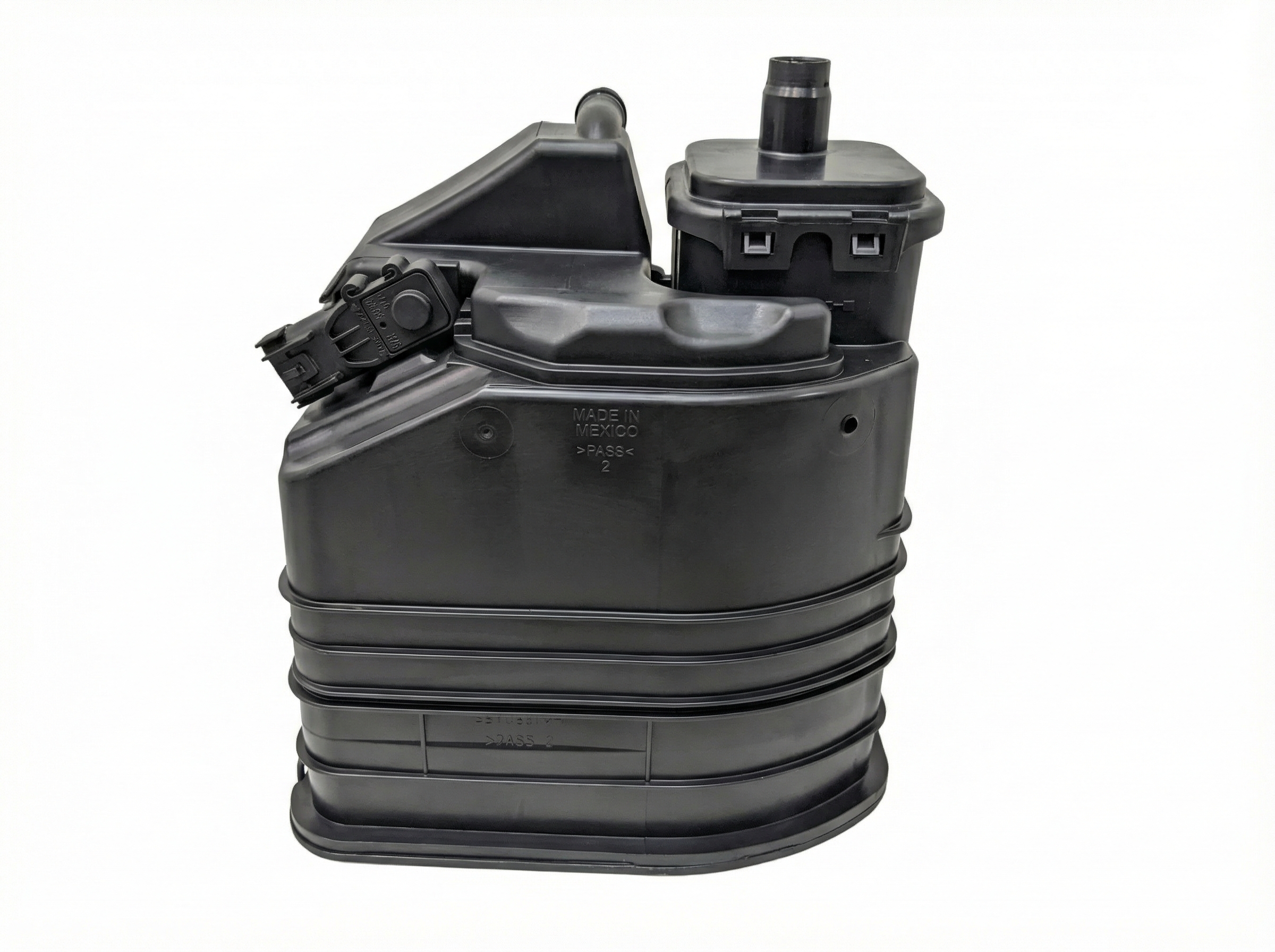
Est. part cost: $10-$30 - Failed or Saturated EVAP Charcoal Canister ⚪ Low Probability → Shop Vapor Canister If the vent system is blocked for a long time, or if the fuel tank is consistently overfilled, the charcoal canister can become saturated with liquid fuel or clogged with debris, preventing vapor flow. In a documented case on a 2012 Impala used as a farm vehicle, the canister was completely plugged with dirt, repeatedly causing P0446 and even destroying the new vent and purge valves due to excessive pressure. 🎬 See how a clogged canister can cause repeat failures
How to confirm: If the vent solenoid and hoses are confirmed to be clear and functional, the canister is the next likely point of restriction. It may be visibly damaged or feel heavy with fuel. A smoke test will show no flow through the canister, or you may be unable to blow air through it when disconnected.
Typical fix: Replace the charcoal canister assembly.
Est. part cost: $100-$250
Rare But Worth Checking
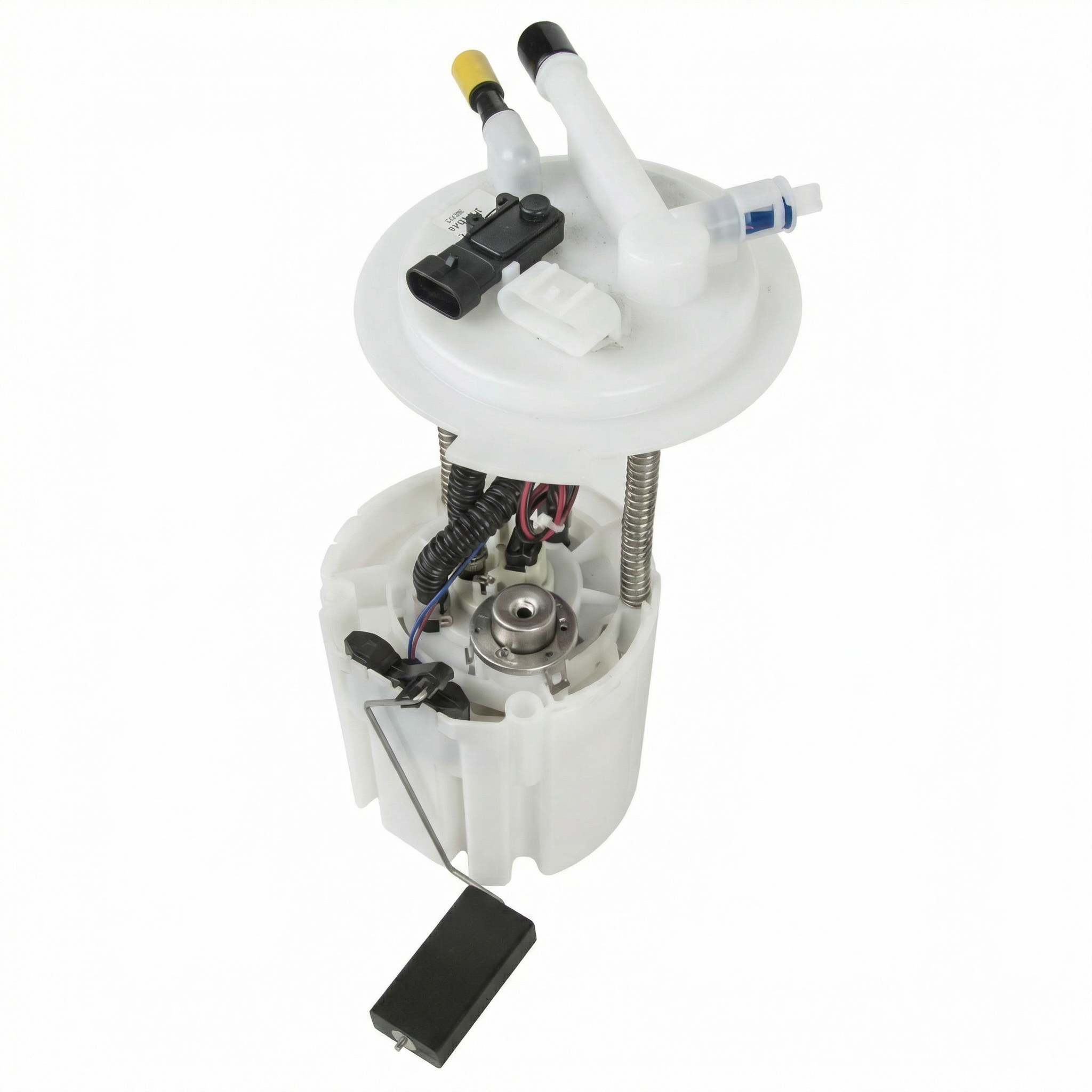
- Faulty Fuel Tank Pressure (FTP) Sensor: → Shop Fuel Tank This sensor can sometimes fail and cause related EVAP codes. If the sensor provides incorrect pressure readings to the computer, it can lead to a false P0446 code. It is often seen with codes P0451 or P0452. A video for a 2007 Impala showed the FTP sensor was stuck at 0.2 volts, causing the EVAP monitor to fail and set the code. NHTSA ODI #11363765 notes a case where structural stressing caused leaks at the tank and fuel pump module connector, resulting in codes P0446 and P0451.
- Damaged Wiring to Vent Solenoid: The wiring harness leading to the vent solenoid is also exposed under the vehicle and can be damaged by debris or corrosion, leading to an open or short circuit. Some replacement solenoids come with an updated pigtail connector that must be spliced in, which can be a point of failure if not done correctly.
Diagnosis Steps
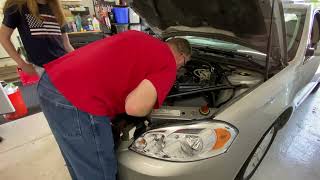
- Read the code with an OBD-II scanner and verify that P0446 is present. 🎬 Watch: A complete diagnosis and repair for code P0446 Note any other codes.
- Attempt to fill the fuel tank. If the gas pump nozzle clicks off repeatedly, it strongly suggests a vent path restriction.
- Locate the EVAP vent solenoid and charcoal canister. On the Impala, this is typically located in the rear of the vehicle, behind the driver's side rear wheel.
- Visually inspect the vent solenoid, canister, and all associated hoses for obvious damage, cracks, kinks, or blockages. Pay close attention to the vent hose outlet for spider webs or mud dauber nests.
- Use a capable scan tool to command the vent solenoid to close. While it is commanded closed, use a smoke machine to introduce smoke into the EVAP system's service port. If the solenoid is working and the system is sealed, no smoke should escape from the vent outlet.
- Command the solenoid to open. Smoke should now freely exit the vent outlet. If it does not, there is a blockage in the solenoid itself or the vent hose/canister.
- If the solenoid does not click when commanded, disconnect the electrical connector and test for 12V power (typically on a Red/White wire) and a ground signal from the computer (typically a White wire). If power and ground are present but the solenoid doesn't work, the solenoid is bad. If they are not present, there is a wiring issue.
- If the solenoid works but flow is blocked, disconnect the hoses and check for blockages in the charcoal canister and vent tubing individually by attempting to blow air through them.
Parts You'll Likely Need
- EVAP Vapor Canister Vent Solenoid
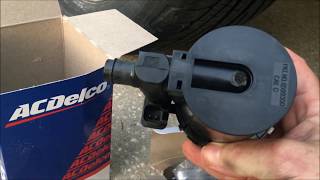
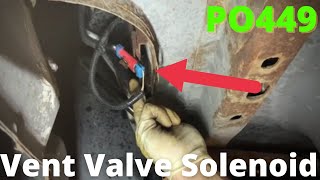
(OEM #ACDelco 214-2149 (replaces 20952523, may require harness adapter 19257603))— This is the most common failure point for the P0446 code on this vehicle due to its location and susceptibility to debris. Many owners and repair videos confirm this is the first part to replace. 🎬 Watch: Step-by-step guide to replacing the vent valve solenoid
Trusted brands: ACDelco, Dorman (e.g., 911-070, though fitment may vary), Standard Motor Products
OEM price range: $40-$70
Aftermarket price range: $25-$50
Related Codes That Often Appear With This One
- P0449 — On many GM vehicles, P0449 is an almost identical code for the EVAP Vent Solenoid Control Circuit, and they often appear together or mean the same thing. A YouTube repair for a 2007 Impala with fueling issues specifically addressed a P0449 code by replacing the vent solenoid.
- P0451 — This code indicates a problem with the Fuel Tank Pressure (FTP) sensor's performance. A faulty FTP sensor can accompany P0446 if it's unable to correctly measure pressure changes during the EVAP test.
- P0455 — A large EVAP leak code can sometimes be triggered if the vent valve is stuck open, although P0446 is more commonly associated with a stuck-closed or restricted valve. One owner reported a P0455 on their 2007 Impala and fixed it by replacing the vent solenoid.
Technical Service Bulletins (TSBs) & Recalls
- Bulletin #23-NA-073: Describes dust intrusion into the EVAP system on vehicles in dusty environments, causing codes like P0442, P0446, P0455, or P0449, and recommends a filter retrofit to correct the concern.
- 09-06-04-028: Describes water intrusion into the EVAP vent solenoid on GM trucks and SUVs, causing P0446 and hard-to-fill conditions, recommending a revised valve and filter. While for trucks, the cause and symptoms are identical.
Platform-Specific Known Issues
- GM issued a technical service bulletin (Bulletin #23-NA-073) for various vehicles, noting that operation in dusty environments can cause dust to clog the EVAP canister and vent solenoid, leading to codes like P0446. The bulletin suggests retrofitting a filter to the vent hose as a customer-pay alteration.
- A special coverage adjustment (N192210240) was issued for some 2016-2017 Impala models for a faulty EVAP *purge* valve, not the vent valve. While this is a different part, it shows that the EVAP system on these vehicles has known issues.
- Owner experiences on forums like Reddit specifically mention driving on gravel roads as a precursor to the P0446 code, with dust clogging the gas cap and vent system.
Mechanic-Grade Diagnostic Values
- EVAP Vent Solenoid Coil Resistance — expected: 10 - 50 Ohms. Failure: A reading of 0 Ohms indicates a short; an infinite (OL) reading indicates an open circuit.
- EVAP Vent Solenoid Connector Voltage (Power Wire) — expected: ~12V (Battery Voltage) with Key On, Engine Off on the Red/White wire.. Failure: No voltage indicates a blown fuse or a break in the power wire from the underhood fuse block.
- EVAP Vent Solenoid Connector Voltage (Control Wire) — expected: With the solenoid connected, ~12V when OFF (open circuit from ECM), drops to ~0V when commanded ON (grounded by ECM).. Failure: Voltage not changing when commanded, or staying at 0V, indicates a wiring or ECM driver issue.
- Fuel Tank Pressure (FTP) Sensor Voltage (Key On, Gas Cap Off) — expected: Approximately 1.5V at atmospheric pressure.. Failure: A reading stuck high (e.g., 4.8V) or low (e.g., 0.2V) that doesn't change when the cap is removed indicates a faulty sensor or wiring.
Scan Tool Commands That Help
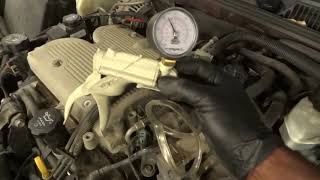
- GM Tech2 / GDS2 or equivalent: EVAP Purge/Seal Test — This function commands the vent solenoid closed and the purge solenoid open to create a vacuum in the tank, then seals the system to monitor for vacuum decay. It's the primary test to verify the function of both solenoids and check for leaks.
- GM Tech2 / GDS2 or equivalent: EVAP Solenoid (Vent) Open/Close Command — This is a simple bidirectional control to command the vent solenoid on and off. It's used to listen for an audible click from the solenoid and to check for voltage changes at the connector, confirming the circuit's integrity.
Wiring & Ground Locations
- G111 — On a transaxle-to-engine bolt, located above the starter (non-5.3L) or below the starter (5.3L V8).. This is a primary engine and transmission ground point. While not directly for the EVAP vent solenoid (which is grounded by the ECM), a poor G111 can cause erratic behavior in the ECM and other sensors, potentially leading to misdiagnosis.
- Vent Solenoid Connector — At the EVAP vent solenoid, near the charcoal canister by the driver's side rear wheel.. This is the primary test point. Pin A (Red/White wire) should have constant 12V power. Pin B (White wire) is the control wire that the ECM grounds to activate the solenoid.
Real Owner Repair Stories
- YouTube video by 'klowny1969' (2007 Chevrolet Impala) — Check Engine Light with codes P0446 and P0451.
❌ Tried (didn't work) Initial diagnosis pointed towards the common vent solenoid failure.
✅ What actually fixed it The Fuel Tank Pressure (FTP) sensor was faulty and stuck at a reading of 0.2 volts. Replacing the FTP sensor, which is located on top of the fuel pump module inside the tank, resolved both codes. - YouTube video by 'Pauly's Auto' (2012 Chevrolet Impala (used as a farm vehicle)) — Persistent P0446 code, long crank time on cold starts, and extreme difficulty refueling.
❌ Tried (didn't work) Replacing the vent solenoid did not fix the issue; the code returned.
✅ What actually fixed it The EVAP charcoal canister was completely plugged solid with dirt and clay from being used in a dusty farm environment. This restriction caused the P0446 and also destroyed the new vent valve and the purge valve due to excessive pressure buildup. Replacing the clogged charcoal canister was the final fix. - Reddit user on r/Cartalk (2009 Chevrolet Impala, 82,000 miles) — P0446 code, gas pump nozzle constantly shuts off when refueling.
❌ Tried (didn't work) Replacing the purge valve solenoid., Replacing the vent valve solenoid.
✅ What actually fixed it The user noted the previous owner drove on gravel roads extensively and the car was covered in dust. The final fix was not explicitly stated in a follow-up, but the strong implication from the symptoms (persisting after solenoid replacement) and vehicle history points to a clogged charcoal canister or vent hose, consistent with other documented cases. - NHTSA ODI #10457176 — An owner reported that their vehicle failed emissions testing with a P0446 code for EVAP vent performance and required dealership diagnosis.
"I Checked Everything" — The Actual Cause
- In cases where a P0446 is caused by a faulty Fuel Tank Pressure (FTP) sensor, a smoke test will show no leaks. The system will appear perfectly sealed, but the code persists because the ECM never receives the correct pressure signal to verify that the vent valve is working. A technician who relies only on a smoke test would miss this, as seen in a 2007 Impala case where the FTP sensor was stuck at a low voltage reading.
When the Usual Fixes Don't Work
- While the vast majority of P0446 codes on the Impala are fixed by replacing the vent solenoid, a significant minority of cases are not. In a well-documented instance on a 2007 Impala, the code was accompanied by P0451 and the true cause was a failed Fuel Tank Pressure (FTP) sensor that was stuck at 0.2 volts. The vent solenoid was functioning perfectly, but the ECM could not verify its operation because the pressure sensor never reported a change. This highlights the importance of checking FTP sensor live data before replacing hardware.
OEM Part Supersession History
ACDelco 214-2149 (or GM 15839552)→ACDelco 23481275 (or GM 22963841)— Updated design to improve durability and resistance to water and debris intrusion.
Heads up: The updated solenoid (23481275) has a different electrical connector. When replacing an original solenoid on a 2006-2008 model with the new part, a wiring harness adapter (GM p/n 19257603) is required.N/A→Service Kit P/N 19207762 or similar— GM TSB #02-06-04-037H recommends replacing the original vent valve with a new assembly that includes a remote filter box to prevent dust and water intrusion.
Heads up: This kit relocates the vent intake away from the wheel well area to a cleaner location, often requiring additional hose and routing modifications.
Model Year Variations Within This Range
- 2006-2013 (9th Generation): These models are particularly prone to the original vent solenoid design failing. The replacement part often requires the 19257603 harness adapter if using the updated solenoid design. The ground location G111 is on the transaxle stud.
- 2014-2016 (10th Generation): While the system functions similarly, the physical location and mounting of the EVAP canister and vent solenoid may differ from the 9th generation. These models may have come from the factory with the updated vent solenoid design, but are still susceptible to clogging.
Diagnostic Flowchart
Other Known Issues on This Vehicle
Issues unrelated to this code that are worth knowing about as an owner of this generation:
- Premature Timing Chain Stretch (3.6L LFX V6) 🔴 High — Common on 2012+ models, often appearing around 100,000-150,000 miles. Caused by chain design and potentially long oil change intervals. (Ref: GM TSB 12-06-01-009F (updated timing chain kits))
- 4T65-E Transmission Failure/Harsh Shifting 🔴 High — Very common on 9th gen (2006-2011) models. Issues include failed pressure control solenoids (PCS) causing harsh shifts (DTC P1811), slipping, and complete failure.
- HVAC Blend Door Actuator Failure 🟡 Low — Extremely common across all years. Owners report a loud clicking/ticking noise from the dashboard as the plastic gears inside the actuator strip.
- Excessive Oil Consumption (Multiple Engines) 🟠 Medium — Reported in both the 9th gen V6 engines and the 10th gen 2.5L. Often caused by worn piston rings or valve seals.
- Leaking Power Steering Lines/Rack 🟠 Medium — Common on 9th gen models. High-pressure lines are prone to leaking, and the rack itself can develop leaks into the boots, causing whining and loss of fluid.
- PassLock Security System Failure 🟠 Medium — A frequent issue on 9th gen Impalas where the PassLock anti-theft system malfunctions, preventing the car from starting.
Used vs. New Parts: Buying Guide for This Vehicle
When a used part is the smart pick: For this repair, used parts are generally not recommended. The primary failure parts (vent solenoid, canister) fail due to age, wear, and contamination. A used part from a junkyard is likely to have similar wear and contamination and may fail soon after installation.
Donor-vehicle mileage cap: roughly under 50000 miles for the part to have meaningful remaining life.
What to inspect on the donor part:
- If considering a used part, inspect the vent solenoid's port for any signs of dust, mud, or corrosion.
- For a charcoal canister, check that it feels light and that you can blow air through it with minimal resistance.
- Avoid parts from vehicles that show signs of being driven in heavily salted or dusty regions.
Aftermarket brands forum-validated for this vehicle:
- ACDelco (OEM)
- Standard Motor Products (SMP)
- Dorman
Brands owners have reported issues with on this vehicle:
- Unbranded, no-name parts from online marketplaces should be avoided as their internal components may not meet OEM specifications for flow and sealing, leading to the code returning.
Real Owner Stories
Aggregated from forums and TSBs cited above. Mileages and costs reflect what owners reported in those sources.
2009 Chevrolet Impala
Symptoms: Check engine light (CEL) on, difficulty filling the gas tank with the pump nozzle clicking off repeatedly, and a history of driving on gravel roads.
What fixed it: The owner found a blockage in the vent path after replacing the vent solenoid did not resolve the issue.
Source hint: reddit.com/r/Cartalk thread titled 'Impala with Code P0446 and difficulty filling gas tank.'
2012 Chevrolet Impala
Symptoms: P0446 code and long crank times on cold startups; vehicle was used as a farm vehicle.
What fixed it: Replacement of the charcoal canister, which was completely plugged with dirt and had destroyed the new vent and purge valves due to excessive pressure.
Source hint: Article context reference
Related OBD-II Codes
Frequently Asked Questions
I drive my 2014 Impala on gravel roads and now have a P0446 code. Is there a specific fix for this?
Does the special coverage adjustment N192210240 for the 2016 Impala cover my P0446 vent solenoid issue?
Why does the gas pump nozzle keep shutting off when I try to fill my 2009 Impala?
I'm replacing the vent solenoid on my 9th gen Impala with ACDelco part 214-2149. Why doesn't the plug match?
Where are the EVAP components located on my Chevrolet Impala?
Can a bad vent system cause my Impala to have trouble starting?
Helpful Videos
Used OEM Parts in Stock

New Aftermarket Parts Available


The information in this article is provided for general reference and educational purposes only. Vehicle specifications, procedures, and part compatibility can vary by production date, trim level, and region. Always consult your vehicle's factory service manual and verify part numbers before purchasing or performing repairs. Safety-critical components such as airbags, seat belts, and braking systems should be installed by a qualified professional.
- Chevrolet Impala:
- 🧭 Diagnostic Flowchart
- 🎬 Helpful Videos
- 🛍️ Shop This Part
- What's Unique About the 2006-2016 Chevrolet Impala
- Symptoms You May Notice
- Most Likely Causes
- Rare But Worth Checking
- Diagnosis Steps
- Parts You'll Likely Need
- Related Codes That Often Appear With This One
- Technical Service Bulletins (TSBs) & Recalls
- Platform-Specific Known Issues
- Mechanic-Grade Diagnostic Values
- Scan Tool Commands That Help
- Wiring & Ground Locations
- Real Owner Repair Stories
- "I Checked Everything" — The Actual Cause
- When the Usual Fixes Don't Work
- OEM Part Supersession History
- Model Year Variations Within This Range
- Other Known Issues on This Vehicle
- Used vs. New Parts: Buying Guide for This Vehicle
- Real Owner Stories
- 2009 Chevrolet Impala
- 2012 Chevrolet Impala
- Related OBD-II Codes
- Frequently Asked Questions
- 🎟️ Get 5% Off